Lightbulb Moments Rebecca Ricardo
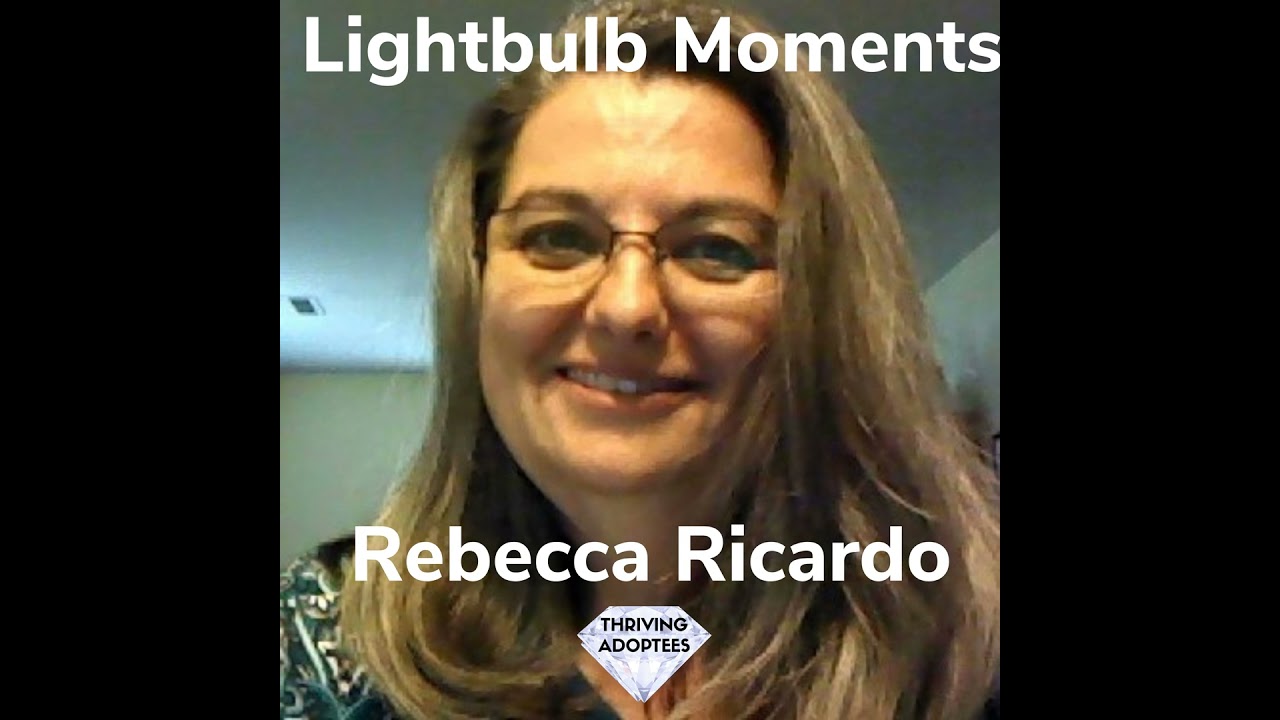
Rebecca Ricardo, a birth mother, adoptee, and clinical social worker, talks about healing through relationships and shared experience. She describes two turning points: at 15, she started sending medical updates through the adoption agency that eventually led to contact with her son; and a therapy session where one question shifted how she saw her own birth mother. She's now pushing Virginia lawmakers to let adult adoptees access their original birth certificates.
Chapters
Hello everybody, welcome to another episode of the Thriving Adoptees Podcast. Today I'm delighted to be joined by Rebecca, Rebecca Ricardo. Looking forward to our conversation, Rebecca.
I am too.
Um, it's like 3 months since we last spoke. Um, yeah, a lot of water under the bridge, aren't we? We're into 2024. It's an Olympic year. It's a leap year. Yeah, um, so, uh, so ladies and gentlemen, listeners, if you haven't come across Rebecca so far, um, she is a— she's an adoptee, uh, she is a birth mother, and she's also an adoption professional, so a licensed clinical social worker and a therapist. So, um, yeah, as, as, as, uh, Laurie and, um, Damon Damien Davis from Who Am I Really? He's like a whole source of wisdom in one person. So we're looking forward to diving into that today.
Yeah, this is going to be fun. I'm looking forward to it.
So healing, we all talk about it. What's becoming clear as I focus in on Healing for the Thriving Adoptee podcast is that we've all got a completely different definition of it. Um, so how do you, how do you see healing?
Um, so, you know, I— it looks different for everyone. Um, how you get there is different for everyone. There are some common threads and themes. I think a lot of, uh, for me, either helping someone heal or my own healing is around Feeling settled and comfortable with, you know, where you are in your life and in your choices and in your relationships. I'm a big relationship person. I want to have good, healthy, functional relationships, and where I can work hard at that and people will also work hard with me, I am pretty successful. But because it looks different for everyone, not everyone's at the same place at the same time. Not everyone can do the work together at the same time. But I do think relationships are key to healing. I think, you know, we don't do well as human beings being all on our own and not connected to people. I think we need connections. But I think adoption really has complicated relationships for a lot of us. And, um, and so it makes that part of healing really hard, uh, you know, trusting others, relying on others, um, letting other people help us, helping other people, um, listening, being heard. Those are all parts of, of healing and are often challenged because of what adoption does to us. And, and really, I, I'll have to say, I don't know that it's It is adoption that does it to us. But what really does it to us is the moving us away from one family, plunking us down in another family. Like, even if you didn't have the legal construct of adoption and you did that to children, you'd still have all these complications. You'd still have all these difficulties. You'd still have all these potential rifts in attachment, et cetera. So it isn't the legal construct of adoption that does it to us. It's just the easiest word for us to use because that's what's happened to us. But it's because we've been moved from one family to another, uh, in a way that the system of adoption in the United States at least has been mostly secret and underground and, um, not well— people haven't been well vetted, people haven't been well supported, people weren't well trained. Um, so, you know, our system of adoption, particularly in the United States, which is the only system I really know well, um, has complicated what was already a complicated issue, is when one— when a child doesn't get to get raised in their biological intact family, there is going to be a consequence.
Yeah.
You know?
Yeah.
No doubt about it. That was a very long answer to what does healing mean to me. Sorry.
Yeah. Um, I, I think the key, you know, the key focus there is on the kind of the, the relationships. And people talk, and the, the severing of, the changing of relationships. I think I, I'm— I heard something a while ago about, you know, it takes an experience to counter an experience.
Mm-hmm.
So if, if the relation— if a relationship has been severed, the, the loss of a birth moms, then it's, it's going to be— it takes another relationship or it takes another experience to kind of counter that. So you can't— so I, I would say, so one of my big things about what helps us heal is, um, is insights. So the stuff, you know, when we have a change in our when it— when we have a change in our beliefs. And, and I can point out lots of important moments when, when my beliefs have been shown to be completely untrue.
Mhm.
And that's, that's one level of— that's one level of healing. But it can be a little bit— it can be a little bit intellectual. Whereas an experience, you know, the feeling of the feeling— so like going to an adoptee group in person. And connecting with people and hearing them talk about the same, sharing our experiences and being together. It's the experience that does it. It's not an intellectual thing. It's not even an emotional thing. It's actually something that we do. So it— I, you know, I think I've probably made the understanding— I, I, I've probably underestimated the importance of experience in healing. I've perhaps overemphasized the intellectual and the emotional side rather than the practical side.
You know, experience gives the opportunity, at least, for your intellectual and your emotional to, uh, become congruent, which is often why we walk away from being around other adoptees, being around other birth moms, um, with this sense of, oh, like I just felt connection and heard and validated. And, you know, all the things is because often what we get reflected around us with people who understand presumably, is finally what's going on in my, my brain and what my body's experiencing. So feeling and, and thought can finally come together, like it makes sense. And a lot of times when we're sitting alone with ourselves, we don't let that happen quite so easily. You know, like, I think this, but I feel this, and they don't match. And, and it's Hard to do that internal, you know, self— that's why, you know, self-talk eventually does work because it is a part of your brain trying to help your emotional state come together and make sense. And it's really hard work to do by yourself. It's really hard work to do when nobody is reflecting back that, yeah, that makes sense. Yeah, that actually, that kind of sounds normal, not abnormal. And Being around other adoptees, being around other birth moms, that's often what's happening for us. So, you know, I think that that's true. Experience is sort of the other avenue to healing that you need. And when I, when I talk to a lot of adoptees or birth moms who have felt very— not felt, I should say, who have been isolated, like they're coming to my group and saying, this is the first time I've ever met anyone else who's a birth mom. or this is the first time I've ever sat with someone else who's an adoptee. What you realize is that that's a whole lifetime that how they felt was never reflected in anyone else around them. Like, that's huge. That, that's phenomenal. That, you know, like, well, so no wonder you think you're a little like this crazy abnormal person, because in your circle so far, you haven't had your experience. reflected back into you as something normal, not abnormal. And, and what freedom they feel in like, oh my God, like, I'm not the only one who feels this way, or I'm not the only one who worried about that or thought about that or wondered about that. Here are 10 other people who did it. And, and as soon as you open yourself up to those 10 other people in a group, and then you maybe go to a conference, and it's 50 other people, And then maybe you get on an online place and it's, you know, hundreds of other people. You know, you just all of a sudden you're like, oh my God, this is not odd and unusual and pathological how I've been feeling about my adoption experience. This is actually fairly common. And, and I would say a normal reaction to an abnormal situation. You know, that's really what's happened to us. And yet that's not the way the rest of the world thinks about adoption.
Yeah.
They, they think our reactions, our negative responses to, to our adopted experiences are abnormal and pathological when they are actually quite the opposite. It's a, it's a no-duh. Of course we would feel this way when you really look at what happened to us. Uh, you know, we were taken from one family, plunked down in a completely different family. and then offered no help, no support, no guidance, no roadmap, no nothing. And, you know, the whole expectation of you should be grateful, you should be thankful, this is far better. And then it wasn't. Like, there's a lot of adoptees where it was not better, it was just different. And in a lot of cases, far worse. I mean, then we— I'm sure you've heard plenty of stories. I know I've heard plenty of stories. Where come to find out your adoptive family was much worse than what you would have experienced in your birth family, like abuse and alcoholism and addiction. And, you know, all, all the things that you come to find your birth family and go, well, none of that was happening there. But it was definitely happening in my adoptive family, who was supposed to have been checked out and vetted and all that. So Um, you know, we, we have to have experiences with other people in order to start making this all make sense to us. Um, and I do think that there are a lot of adoptees who are out there flailing around on their own. I think there's a lot of birth parents, because so much secrecy is built around being a birth parent, that are flailing around on their own. Uh, and, you know, you go into survival mode as a person, and if all that's too hard to manage on your own, what do you do? You shut down, you shut off, you cut off.
Yeah.
You act like it's no big deal. I'm fine. Everything's fine because you have to survive. And, and that's, you know, makes it that much harder then to, to come out of all that and, and get to a place where I can start working on some of this stuff when you've been, you know, I mean, my— I think that my birth mother is an example of that. I don't know this for sure. She's the only one who can really speak her truth, but I think she's a person who, because she spent so many years in complete denial about having given birth to 2 children that she chose not to parent while she was actively parenting 3 children, um, I just think she can't come back from that. I think she's just not able to do it. Um, and that's, you know, I, um, in my most empathetic moments, I just feel real true. Compassion for that. That's a rough place to be, that you're so shut down that you can't recover and just, you know, enjoy that you, you actually have 5 successful children, not just 3 successful children, you know. Um, I mean, that's really where I feel like she's cut herself off from. But, um, but she's not— I don't think has had enough experiences with, uh, other adoption-connected people to come out from underneath that, or she just isn't able to do it. I don't know. I don't have the answer to that. That's her journey, not mine.
So. So what healing moments come to mind for you on your own healing journey?
You know, I've had quite a few light bulb moments that didn't necessarily in the moment felt like healing, but eventually became, I think, catalysts to healing. Um, and, and really one of the first is, is as I was a teenager, um, placing my son for adoption, you know, a particularly painful and poignant moment for me was coming home from the hospital. And I was 15 years old, very young. Um, I would not say particularly savvy on anything at 15. But what I came home and vividly remember telling my mother, as I have just come home from the hospital, walking away from my son, is my primary worry and concern and reality check was, if something happens to my son, I now will never know about it. Like if he were to suddenly die or have You know, a major medical illness, or like I understood adoption as a 15-year-old enough to go, oh my God, I'm never going to know that because I was not given the opportunity for an open adoption. It was, you know, and I got it like I was 15 years old and I understood that about adoption. Now, in the moment, was that healing? Hell no, that wasn't healing at all. That was awful. That wasn't— I remember the weight of that recognition. And but it then caused me to do things differently than I think maybe some other birth parents wouldn't have thought to do. So in my attempt to say, well, you know what, is that really true that I could never know? I don't know. But what I can do is I can tell the agency life-altering moments for me. And maybe that information will get to him, or at least be there for him one day. And so because I was so young, you know, I hadn't— nothing had happened to me yet. I didn't have any medical history because I'm an adoptee, and I didn't know anything. So as things happened, medical information, I would write to the agency and say, you need to know this, please share it with his family. I graduated, you know, make sure his family knows, like, I finished I finished college, I finished graduate school. Like, you know, I just kept writing back to the agency. And because I did that, when he was probably around 10 or 11, his mother wrote back to me because the agency had passed on the information to them. And so then I did get a chance to know how he was doing. And fortunately, it was good news. It wasn't catastrophic. news, as my fear had always been, is I'd only hear, you know, I would never hear if something awful happened to him. But I got the opportunity to hear, uh, that he was doing fine. And, um, and it, you know, it opened up an opportunity for us to have some communication through the agency through his adolescence. And then ultimately, you know, he was only 20 when we got a chance to actually connect with each other. So, um, so eventually that became healing, because having that realization in that moment of coming home without a baby, it, it prompted for me to do some things I might not have otherwise done, that then led to a much more healing experience for my son and I to, to have with each other over the years. So, so that's one. And I would say the other, my next sort of really big lightbulb moment of my healing was when I I did experience that my birth mother did not, uh, enjoy being found, had wished I had not found her. Um, you know, sent me into therapy because I was miserable. Um, I, I was literally doing, uh, search and reunions at my work and couldn't do them anymore because I could not face making that call to someone else's birth mom and having them say no. Um, it was, it was too painful. So I had to stop doing part of my job, which fortunately worked with people who understood I needed to stop doing that. But it was really, it was really hard. I mean, I, I needed to go to therapy because I was not handling this secondary rejection well at all. But I remember my therapist saying, you know, so what's sort of your worst-case scenario? And I said, well, that she'll never change her mind about this and she will always not want to know me. And she said, well, what will that do for you if that's what happens? And I was like, Well, it will completely alter my worldview. And she said, so what does that mean? And I was like, oh shit, like, what does that mean? Like, that's what I thought, is it will completely alter my worldview. And then she pushed me to go kind of like, so? Like, and then I had to go back and go, well, huh, would it change my worldview? And if it did, is that such a bad thing? Maybe my worldview needed to be changed. I don't know. And, and I don't think that it necessarily, like, shifted me from, like, I'm an optimist and now I'm a pessimist or anything like that. But it did, it shifted a lot. Like, it did shift a lot of, like, whoa, like, what does this mean that I have to figure out how her experience with adoption is just as valid as mine? And that this does not feel good, that her experience with adoption isn't going to be congruent with my experience with adoption, and that we may not ever come to, you know, resolve that rift. And we haven't. I mean, I'm— that was all happened in 1993, '94, and we're in 2024, and I still don't have a relationship with my birth mom. You know, I know who she is. I know where she is. I've met her a few times. I do know my siblings, but I don't know her. So, you know, that was, that was a pivotal moment. And, you know, that realization of what I feared, the change in my worldview, I actually didn't need to fear because it ended up being okay that it changed my worldview. I needed to take a look at a few other things. I needed to have a little bit different perspective on adoption. And I was just thinking, you know, I was just being like, oh, it's going to make everything different kind of perspective. And my therapist was kind of like, so it makes everything different. And I was like, what? What? You know, sometimes that's all it takes is someone saying something really simple like that, and you're suddenly in a completely different mindset about it. And, and it was startling, and it was— but it was my takeaway from therapy at that time was like, wow, that asking me that one question was— it was changed. It changed everything. It changed everything about how I thought about it and how I could eventually get sort of settled with it. And then I say eventually, it was years and years and years later before I got settled with it. But, but, you know, it started me on that path of, of getting settled with it.
Yeah. So that, um, you were holding your— what do people talk about? Um, holding your beliefs less tightly, holding on less tightly to your beliefs. Fair.
Yeah. There's a lot of, uh, belief holding in adoption that, uh, has been drummed into us, ingrained into us, um, forced onto us that, um, you know, it's a lot of unhinging from that of, you know, what I thought I understood about adoption. Is any of that really true? Um, and, you know, it's what I come across right now. What's pivotal in my life at this moment is I'm actively working in the Virginia legislative system to try to Pass a bill to allow adult adoptees access to their original birth certificate. What I'm coming across is legislators, senators, and delegates who think they know about adoption, and they know nothing. You know, they make these statements about, yeah, but isn't adoption blah blah blah? And you're like, no, it's actually not. And you know, you don't necessarily have enough time to say, can we please sit down and deconstruct why you think that's what's true about adoption? But it's a lot of trying to put in front of them in very quick soundbite nuggets. What you think about adoption is actually wrong. It's factually wrong. But the belief system in the United States has led you to think this is what's true about adoption. And so systemically we have that problem, and individually we have that problem, because we're raised to think about our adoption in one or 2 or 3 or 5 particular ways. And there's, I think, a few dozen themes that we all have heard. You're either the chosen child, or you needed to be grateful, or, you know, you, you better be thankful that I have you because where you came from was trash, or, you know, all the, all the tropes, all the themes, all the whatevers. And so that's what we're all sitting with. We're all sitting with what we think we know about adoption. Until somebody, or we allow somebody— that's the other thing is we've got to allow it in— we allow somebody to challenge us just enough for us to go, oh, wait a minute, like, maybe I don't really know about that. I mean, your story is a perfect example of that, of your shift in, wait a minute, maybe what my birth mother was trying to do, you know, with, with the story that you shared about, you know, the teddy bear. And I mean, it was like I thought it was this, but maybe it could be this. And the second that you are able to let yourself think maybe it could be something else, now you have a whole range of things that it could be. But if you never allow yourself to think about, can I challenge my beliefs about adoption, you never get a chance to think about some of those other things. And I do think some of the people who are kind of dogmatically entrenched in adoption has to be abolished, or adoption has to be saved, or, you know, we should encourage adoptions, adoptions should be easier. I'm literally getting that from a senator in Virginia. I want adoptions to be easier. And I'm like, what? Like, why? Or, you know, adoption should never happen. Like, it, it just needs to be eliminated today. None of that's realistic, first of all, and, and doesn't get us to, well, what else is out there? What are our other opportunities and options? And so when you get stuck in, it must be one of these things or the other, you shut yourself off from, well, what else could it be? And you at least have to think about what else could it be. And a lot of people get very I, I say stuck. I don't know that that's a fair word, but it seems stuck in a particular position and they don't want to move from it. Um, and, you know, I just think it's, it's, it's a blessing and a curse that I have to look at adoption from multiple, multiple angles and viewpoints, um, because I live it from multiple angles and viewpoints. And so I'm always open to, well, yeah, but what could it be? I mean, I don't, I don't disagree that I think adoption should be radically changed. I don't think it could ever be abolished. I don't— you can call it something else, it'll still be the same impact. Just like I said earlier, if you move a kid from one family to another, if you never put a legal construct around it, you have still done the same damage.
Yeah.
Potentially, like, you potentially will have done the same damage if you still aren't trying to figure out how to Make sure truth and transparency happens. If you still aren't tending to the child's feelings about having been moved from one family to another, if you still aren't tending to the losses in identity that are inherent in moving a child from one family to another, if you never do any of that work, it doesn't matter what you called it— guardianship, custody, adoption, you know, family sharing, you know, it takes a village— whatever words you put to it. The, the impact is the same. Um, and that's what we need to take care of, is can we try to prevent all of that? Um, and, and you can't really prevent it if you're going to move a child and move a child, then you have to know these are the consequences of moving a child. And the best you can do is the truth and transparency, the holding of feelings, the, um, honoring of feelings, the acknowledgement of Some parts of your life are going to be harder because you were not raised in your intact biological family, and I will help you with the harder. Um, that's— you can't prevent it, you know.
So what, if anything, do you think has, uh, hindered, stopped you, presented a barrier to you on your healing journey?
Other people's lack of willingness to go there with me.
Yeah.
Um, you know, other people's, uh, unwillingness, inability, hesitation to have hard conversations with me. Um, other people not being willing to be on the same path that I'm on.
Um, Could you give us, uh, I mean, could you give us an example of that?
Well, I mean, my birth mother's one obvious example. You know, I, I would love to have an in-depth conversation with her in person of, can we just talk it through? Like, tell me what happened from your— tell me your story. Tell me how this happened for you. Tell me your decision-making. Um, why did you feel like you had to keep it secret? Why couldn't you tell anyone? Or is that even true? I don't even know if that's true. Maybe she did tell people and I just don't know it. You know, I would love to do that. It does not seem like that's going to happen. But I never say never until she's, you know, dead and gone. It's, I guess, an option that could happen. But it hasn't happened yet. In all these years.
Yeah.
So, you know, that's a barrier. I don't think I really can feel— and I don't know that— I don't know that I'm— are you ever 100% healed? Doubt it, because there's always new stuff happening to you, right?
Yeah.
We are literally onions, you know, there's always something else to peel and look at. And, but, you know, I think I would be a little more settled. It will be a disappointment to me if I, you know, end my life never really ever having had a discussion with my birth mother about my About her pregnancy with me, about her birth of me, and about her placement of me, and, and sort of why she handled it the way she handled it. So that's, you know, that's one person who's clearly on a very different path than I'm on, and it, and it, it impacts me that she isn't in the same place that I am. I could probably say the same about all of my siblings too, for that matter. You know, my birth half-siblings I mean, they just are all in completely different— like, this doesn't matter to them the way it matters to me, right? They weren't the ones placed. And so there's a bit of a disconnect with them too around— they don't really want to sit down and they don't have a curiosity about me the way I have a curiosity about them. Does that make sense?
Yeah.
Like, they don't seem like I would ask 1,000 questions if I was going to be that kind of person, which I'm not. I'd like to be, but I'm not that kind of person. Um, but they never seem to be interested in asking me anything. You know, it's like, because they haven't spent their life wondering about their birth family. They didn't know I existed. They didn't know that there was a sibling out there to wonder about. And so you know, they didn't have a lifetime of wondering the way I think a lot of us as adoptees have spent a lifetime wondering. Well, I wonder about my birth family. Um, so—
You were talking about that before, uh, about that, um, the need to know and the curiosity and the, um, and the information seeking and your persistence in this. Admirable, you know, like, but you've got no choice, right?
Some people would say annoying, Simon.
Well, I mean, one— what do they say? What, you know, one person's, um, freedom fighter is another person's terrorist. It's all— it is all about the point of view, right? It's the point of view, and, and it's that, and, and our own point of view changes. So, you know, one of the things that I picked up on from my dad, my adopted dad, is it's a passion stroke obsession about work. And when you're in a good mood, when I'm in a good mood, it's a passion.
Yeah.
When I'm in a bad mood, It's an obsession.
Yeah.
So like our own take on our own stuff, my, my own take on my own stuff changes from— changes with, with my mood, changes with my mood. And then, and then we look at, you know, tiredness or, um, you know, coming back, coming back, uh, flying back from holiday overnight Being tired, being at the being on the week at the weekend, being out late, getting up early to go fishing. Like, what am I doing here? Da da da. You know, like it's all it's all very moment. It's all very moment to moment. How we how we see this, how we see this.
You know, you you swing from feeling very functional to very dysfunctional, and then my husband and I. have laughed about we're functionally dysfunctional at times, you know, because, you know, that's just, that's just truth. Like, sometimes we look really well put together and that we're handling like all this extra stuff that we have, and, and we, we both have like extra stuff in our families. Um, and then other times it just looks like a big old mess and you're just like, we are not handling this at all. Uh, so we, we laugh and call it Functionally dysfunctional. Because we are still functioning. It's just sometimes it looks very messy.
The first therapist I had, you know, gave me her notes after a few sessions, and one of them said high functioning, you know. So, so yeah, sometimes. Yeah.
I will have to say, Simon, because I've noticed myself laughing a lot as I talk about this. Sense of humor is really helpful to healing.
It is, yeah.
I mean, it doesn't heal you, but it allows you to keep at it. You know, if you can have a sense of humor, if you can laugh at yourself, if you can laugh at the sometimes ridiculousness of the circumstances that we find ourselves in, even if it's sort of, you know, a little dark humor and humor that no one else gets. I mean, like therapists are, we are very prone to some Sometimes very dark humor because of what we're hearing all the time. I mean, it just, it does help. It does help to just have some levity around it every now and then and try not to have it be so serious 100% of the time because it's so hard when it's hard and you got to figure out a way to lighten it somehow, some way. So yeah, I do. I have a good sense of humor. It may be a weird sense of humor, but I have a good sense of humor.
Yeah, I was just thinking about the old, you know, the old adverts, you know, before we were finding partners through web apps, you know, used to have the columns and it was always GSOH, wasn't it? Good sense of humor.
Good sense of humor.
Yeah, you paid per letter, you know, an advert, you paid per letter. So everything, yeah, everything got—
This generation thinks they came up with acronyms and they did not. It's all the people who did this newspaper ads early, the ones who did it, who didn't pay for full words. Yeah.
Has the world, does the world need more TLAs?
Right.
3-letter acronyms.
Exactly.
Um, the, uh, there's, there's something, there's, there's something there, uh, uh, about connecting 2 of the things that you've said. So you've talked about your, um, your birth mother as an obstacle to healing, and, and what you, and what the therapist, the, the realization that your therapist got you to about you change there. Um, uh, you know, it is— it— the— so it was as if the real— how it sounded to me was the realization, if the worst thing that happens is my belief changes, it isn't— isn't a bad thing, right?
It was. It was a lot about suddenly going, oh, would that really be that bad? Hang on, like, maybe it wouldn't. And yet I was holding on to it would, like, it would be awful.
Yeah.
Like, I just, I would, and I think I was thinking it would mean I'd be a completely different person. And then a part of you kind of goes, but isn't that sort of life? Like, aren't we supposed to be constantly growing and evolving and changing? And you know, hopefully becoming better, becoming more insightful, more at peace with ourselves and in our relationships. And, and the world keeps changing. I mean, you know, I'm, I'm a mother also, you know, not just to my son who's in his 40s now, but my daughter who's 19. I mean, she's just starting out being an adult now. And My parenting journey is surprising me. Like, I thought the hard part was over. Holy crap, this is much harder. You know, helping her navigate launching is— takes a lot more skill and awareness and being present in her life to help her with that than it felt like it ever was when she was a toddler. And you'd think, oh, the toddler years, that's hard. I'm like, give me toddler again. And I love it. And it's joyful to watch her do it. But I did not expect this part of parenting to be as challenging as it has been. I mean, I'm sort of loving the challenge at the same time, but it has been a little surprising. You know, you kind of think, oh, I successfully got my kid through school and she's happily going off to higher education and she's She's going to do great things and do— and then it's like, oh my God, she still needs her mom. And she needs her mom in a way that she didn't need me before. And it's like, oh, OK, well, we can pivot and do this. But it's been fascinating. So life keeps happening and keeps surprising you. And you have to keep thinking, well, OK, well, oh, that wasn't what I thought it was going to be. And now let me pivot and try to do that better. You know, attend to it more than I thought I was going to have to, so that I can get through this next phase. And I'm sure there'll be another phase that I'll be dealing with. I mean, I know that I'll be dealing with the death of my mother sooner rather than later. She's 91 years old. Like, it's, it's not— she's not going to be with me forever. That will be huge. That will be another transition I'll need to face and deal with. So, you know, life keeps happening.
Yeah.
So, you know, your healing journey sort of never ends. I don't think you're ever done. And I do think a lot of people approach healing from a, well, tell me how to get there. And I'm like, I don't know that there's a there that you get to. I think you keep working at it and you got to figure out how can you keep working on it? What are you capable of doing? What are you willing to do? What are you interested in letting other people help you do to keep you on the journey of healing? But I don't think it's a destination. I think it's a process and a journey. Um, that you don't really have an endpoint. Um, so.
So the biggest insight I had on this point last year was to look at healing on 2 levels. Um, on one level, the level that I think you're talking about, which is kind of emotional or psychological— would you— is that about right? Would you call that—
Yeah, I think that's—
yeah. So that's ongoing, and that's gonna— that's gonna go— that's gonna go on for the rest of our lives.
Yeah.
And, and that doesn't—
we should sort of want it to, shouldn't we? Like, yeah, we should— well, we shouldn't be fearing that or shying away from it or going, oh God, I hope I don't have to heal for the rest of my life. Like, we should be going, thank goodness I have the chance to heal for the rest of my life. I love that. I mean, it's a different perspective to have about it.
That's brilliant. That's brilliant. Yeah. I'm, uh, yeah, I'm really concerned about some catalysts. that lie ahead of me.
Yeah.
I'm really concerned about the insights. Oh, I don't think I can, I, I can't take another belief shift. Um, yeah.
And you, you have to know that you can because you have. And I think that's the other thing that is important for all of us as we, if we get to whatever age we are, we have already lived through some stuff, which means we're capable of living through some stuff.
Yes.
And I think, you know, sure, we get tired and we're like, oh please, I don't want another like big life upheaval. But then, then what? You're just doing nothing then. I mean, life just isn't happening.
And, you know, it's a vegetative state. Sounds like a vegetative state too.
So I, I think it's, it's helpful to, to carry that with you in some way, shape, or form of, yeah, I've been through some really awful stuff and wow, I've been through some really awful stuff, which means I have the capacity to keep doing it. Um, but I can always try to do it differently. I can always try to manage it and to have a different outcome potentially. I can always let new people in to help me. Um, you know, I mean, like, there's, there's things you can change about it, but to think that we're never going to have to deal with hard stuff again because we're healed, it just seems like, well, that doesn't seem realistic at all.
Yeah. And so healing on psychological, emotional level, whatever you want to call it, is, is going to be lifelong and it's ahead of us. And on another level, we were and already we are and, and always were whole.
I mean, fair enough.
Underneath. Underneath this, and we're not our psychology, we're not our emotions, we're not our thoughts, we're not our trauma. Just that, that true essence of who we are.
That it's not all of who we are. It's, you know, it's parts of us, but you're right, it's not all of who we are. And I do think that we can get very caught up in adoption is all I am, it's shaped everything. And it has, it has shaped everything, but it is also not everything, or it doesn't have to be, but I know it feels that way. I mean, I know I've felt that it feels that way, particularly when you have connections to it on, on multiple levels. Feels very much like, oh my God, like I can't ever imagine introducing myself without saying I'm an adoptee and a birth mother and an adoption professional. I do, like I do, I introduce myself to people all the time who have no idea.
Yeah.
But I also, because I'm very open, And obviously, you know, believe in openness about it. I also do frequently introduce myself that way, but not always. And, you know, so it isn't always all of us all the time, but it feels that way. I get it. It does feel that way for us. It feels all-consuming.
Fantastic. Thanks, Rebecca. Thanks a lot. Thanks, listeners. I hope you've enjoyed this, and we'll speak to you again very soon. Take care. Bye.
More from Simon







Weathering Storms With Joanne Morales, Jennifer Hartwig and Rebecca Dominguez


