Nothing Wrong With Me With Sheila Jaffe
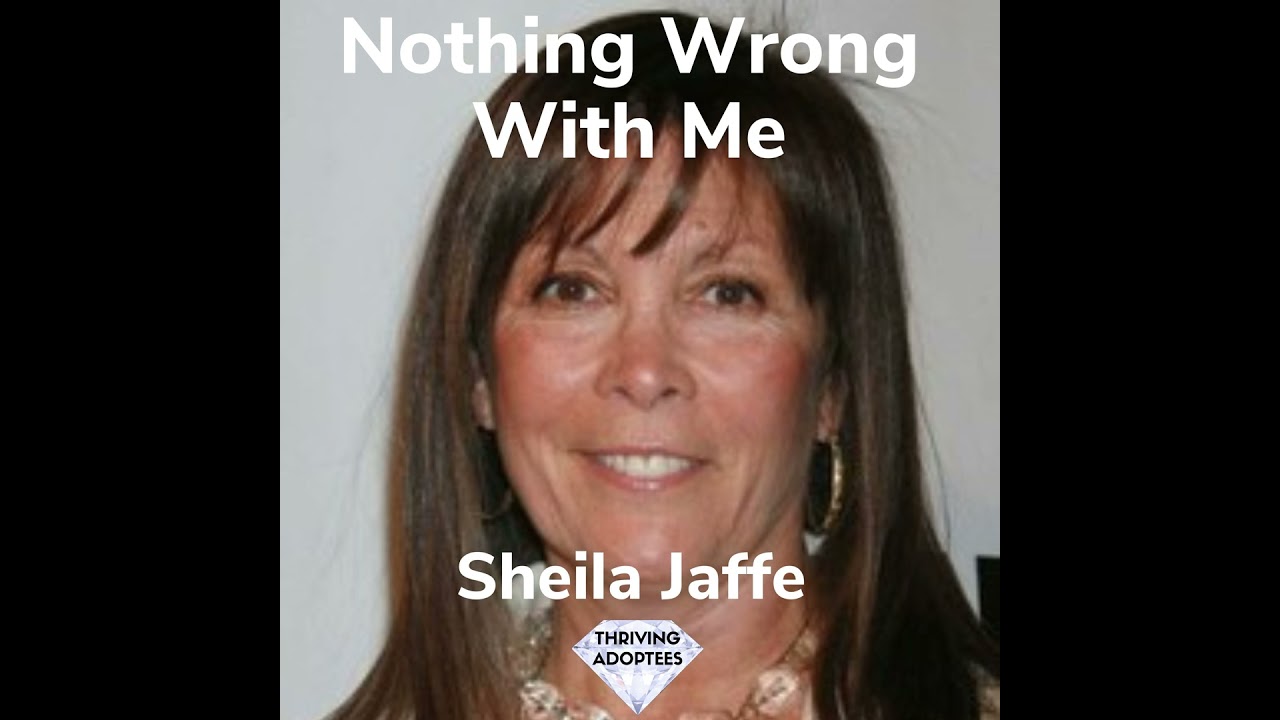
Sheila Jaffe, an adoptee and co-founder of the Felix Organization, talks about discovering she was adopted at 11, the lasting feelings of abandonment and identity confusion, and how founding a nonprofit with Run-DMC's Darryl McDaniels became a catalyst for healing and advocacy.
Chapters
Hello everybody, welcome to another episode of Thriving Adoptees Podcast. Today I'm delighted to be joined by Sheila, Sheila Jaffe. I'm really looking forward to our conversation, Sheila. You're such a lovely person to, to chat with.
Oh, thank you.
Yeah, and a fellow dog lover, right? It's the, it's the, it's the dog pillows as they call them in the States, or cushions. they are often remarked upon. Sheila has a little doggy called Tilly who's 13 and a rescue. So that's, you know, like it brings— there's so many, so much stuff that that brings up for us adoptees. Sheila is an adoptee and she is also the co-founder of the Felix Organization, where I found out about her, which she started with Darryl McDaniel from Run-DMC. People of that kind of vintage music will know which sort of vintage— Run-DMC is kind of early, early '90s, would it? Late '80s?
Yeah, early days of hip-hop. They kind of crossed the barrier between rock and roll and hip-hop with Walk This Way. There was that famous video of Aerosmith And, uh, doing Walk This Way, which is their song, and DMC breaking down the wall and joining them. So it was like a combination of 2 genres of music.
I think that was '80s actually, but I'm not 100%.
I think it was the '80s too. I think you're right, the '90s.
Yeah. So, um, Sheila, as an adoptee, um, The dog stuff, right? I, I— what does it bring up for you?
The dog stuff? Well, you know, it's like Tilly. I always, always had rescue animals, and, um, it's kind of like— not that I want to say we're like— well, it's kind of similar scenario. It's just like when you are there available for adoption, it's because There was no parent to take you home. And then you were fortunate enough to get taken home. Not everybody does, you know. And so the dog, it kind of, you know, it's full circle for me. Yeah.
Me and my wife's first dog was a rescue puppy in the sense that There was a charity that took in dogs that were going to give birth and kept the puppies until I found, you know, a house.
Oh, that's so sweet. No, that's a good idea. Tilly was in a shelter and it was— she was about— well, they always tell you they're about between 1.5 and 2, so I think she's 13. She could be, you know, 12, she could be 14. But she had been in foster care. You know, they had foster— because when they're in the shelter, she was on the to-kill list because nobody claimed her.
Oh.
So this rescue group found her a foster home, and then they had an adoption fair. And I had been thinking about— I had had 3 cats who passed away. And I was thinking about another animal and that maybe it was time for a dog again. I've like alternated in my life, dog, cat, dog, cat.
Yeah. And Sheila was telling me before we started recording that the first day that you got her, she ran home. She ran back to the foster home. Yeah. Is that— yeah.
She ran to where the pet fair was, where her foster family had dropped her off. And she, I think, was looking for them because she had lived with them for, I think, 4 weeks. And that's what made me fall in love with her, really. I saw her picture online, you know, and I knew she was going to be at this rescue. And I was passing by the rescue place and I thought, oh yeah, that's where that dog is going to be today. Let me, you know, go meet her. And I saw her come in with her foster family, and they put her in this cage. And I went over to the cage, and the foster family went away, and I started trying to play with her, and she was like non-responsive. Nothing. Didn't look at me. Just looked away from me. The water fell over in the cage. She didn't even wet her paw. She didn't move. I thought there's something wrong with the with the dog. Like what's wrong with her? And then. she saw her foster mom and she got so excited and so loving and recognized her from down the aisle, you know, where the foster mom was walking. And I was like, I love this dog because she's so loyal. She's so in love with, you know, with this woman. And she was just looking for her. And so that, that, that was it for me and Tilly. I was like, yeah, you were coming with me. And I took her and She was a little dirty, so I brought her in to get a bath, and I picked her up from the bath and had her on the leash, and she slipped her head out of the lead— the collar— and bolted. And she was heading back towards where the adoption fair was, looking, I think, for that woman, you know. Like, and she ran and ran, and I had somebody chase her. The guy who had just given her a bath came out of the store, and he was chasing her, and he couldn't catch her. And she crossed major streets. He said, I had eyes on her. I couldn't find— couldn't get her. It was about 15, 20 minutes later, and nothing— no collar, no nothing on her. And I called the adoption place. They sent a car out looking for her. And all of a sudden, I was standing by my parked car. It was in LA, and I saw her running down the street towards my car. And she wouldn't come to me. She went to the car. And fortunately, there were these 2 young guys getting out of their car, and she went to them like, help me, you know? And they picked her up and they said, is this your dog? And I was like, I don't know. I don't— I mean, I just got her. I said, I don't know. But yeah, yeah, put her in my car. And that was it. So it was— she was trying to get back to something familiar. And she was so smart, and her— I guess, I don't know, her scent was so great that she didn't know me, she didn't know the car, but she knew she had been in there, and came back running down the street fast, like a bullet. I mean, it was traumatic. And it brought back a lot of abandonment issues for me, and, you know, fear of losing something, and just thinking I was a terrible mother. And I just was— Oh, my God. It was traumatic, but we got through it.
And how how was the bonding process?
Slow, very slow. Nobody trusted anybody from that for that next week. I didn't breathe. She didn't breathe. And I was telling friends of mine, "I don't know if I can do this. I don't know if I can. I don't think this is a good fit. I just can't do it. I can't take the responsibility. What if she runs away again?" Ba ba ba ba. It was really, really hard. And I had a friend over one night after I had Tilly with me for a week, and she hardly looked at me. We didn't communicate. She didn't bark. She didn't— she was happy I fed her. That was nice. But it wasn't like, you know, I mean, she had just come from, you know, losing her family, then losing her foster family, then being in a shelter. And I tried everything I could. And then finally, a friend of mine said, look, if you need to rehome her, I'll help you. You know, I said, I think I might have to. And other friends of mine tried to make me feel very guilty, like, how can you give back an animal? How can you do that? How do you take somebody home? And, you know, and it brought up all kinds of, obviously, adoption feelings. Like, how can somebody— like, what if somebody gave me back because I was crying or I was colic or something? I said, Oh, no, this one was a mistake. So I was really torn and confused. And so my friend was there. And I said— she said, she's so cute, you know, are you so happy? I said, no, I'm not that happy. And I don't know, I don't think I'm going to keep her. And she was on the— I was in a studio apartment in LA. And she was on the bed, and I was on the couch. And she said, really? And I said, yeah, I think tomorrow I'm gonna, you know, Try to find a new home. I just don't think I'll be doing the right thing for her. And we're not communicating, we're not anything. And she jumped off the bed, came to the couch, came over to me and kissed me. And I said, well, I guess that's the end of that. I think I'm gonna keep her. So that was that. So she knew, you know, I don't know, it was just magic. And then we bonded.
You bonded?
Yeah. Yeah.
When you gave up, when you were on the point of giving up, she came to you?
Yes. I don't know how she knew. I mean, I just said it to my friend and she was like, uh-oh, I better stay here. This lady is like a food machine. I better stay with her. That's where her food comes.
Well, we've got 2 Labradors, right? Yeah. Food machine. Yeah, yeah, or maybe it just took that long to click.
It did, it did. And, you know, it just, there's just, it just takes a lot of patience. And I guess it's the same, you know, look, I'm going to relate it to adoption, you know, like when, when, when our parents adopt us, our mother, our adoptive mother, If she never had children before, was never pregnant, doesn't know, you know, wasn't used to anything about a baby or anything, I'm sure they went through the same kind of feelings. Like, what do I do? This is now in my life forever. This being, I'm responsible for this being, which, you know, there was no sense of knowing each other prior to that. I mean, I've never been pregnant, but I can imagine that you're pregnant, you feel something inside of you, it's part of you. You know, so our, our adoptive parents didn't have that experience with us, nor us with them.
No.
You know.
So, uh, we're on dogs 3 and 4 now, right? So, um, our first dog was the one that I was mentioning. She was— that was Nelly. The first time I saw her, she was surrounded. She was in a foster home, and she was the the last of the litter that the only one left really. And the but the place was full of the house was full of cats, and like. Anyway, um, Nelly— she didn't have the name Nelly at that point— but she came over to say hello and just kind of closed her teeth on my finger. You know, she didn't bite me, but she, she just— not even a nip, but that felt like, this, this one's ours, right? And maybe we were just there because we were taking away from the cats. And we were devastated when she died. So long— we lasted 2 weeks before we were going to check out another one. And when we went to see the second one, she did the same thing.
Oh, wow.
She did the same thing. And that brought tears to my eyes. To my eyes.
Oh, I'm sure.
Um, and but I remember— I don't remember the first dog crying on the first night, but the second dog, Lexi, she cried on the first, on the first night. And I don't know how many nights after that she cried, but When I hear— when I heard that, I thought, was I like that?
Right. And well, not necessarily.
Well, we'll never know, will we? I was 5 weeks old, so I don't know.
You were 5 weeks old, yeah. I was 6 days old, but I would know I was in the hospital for those 6 days. And I often think like, what was that like? Like with my dog, with Tilly, The first week I had her before we did kind of bond, she would sleep far away from me under something in a curled up little ball, like under a desk or under something. And if I went, she wouldn't bite me, but she would like let me know that she could bite me. She'd make a little growl and turn her head, but you know, didn't nip or anything. But it was just like, leave me alone. And I think about, for those 6 days, who held me? Just the nurse on duty? I mean, what kind of emotional support did this little baby get for 6 days? Just different nurses. Like, there was no grandma or grandpa or, you know, mommy or daddy holding and loving and kissing. So I think that is a very, Very primal wound for, to quote that book, for us adoptees. Those minutes that you come out, just those seconds that you're in the world. Nothing's familiar. No smell.
Nothing's familiar.
And if it's a different nurse for the 5 weeks that you were wherever you were, and I was in the hospital for the 6 days, they all had different smells. So you don't know where you belong. Nothing's consistent.
Don't you think that the creativity of our brains can really go to town on this? Like make a mountain out of a molehill or molehill of a mountain. We have no clue, do we?
We have no clue. Here's what I know in my life. Whenever I had a new boyfriend Or a new friend of any kind. And anytime I was invited to their home to meet their parents, I adapted— just one letter different from adoption. Adoptees can adapt. And I adapted to their environment to the point where they all always wanted me to be part of their family. It's like a skill set that we develop. To fit in, to belong. For me, that's true. I don't know if you've experienced that. But they all always, like, any boyfriend I had, they're like, oh my God, she's part of the family. And they also then claim me, you know, genetically. Oh no, you're Italian. Oh no, no, you're Spanish. Oh no. And whatever they told me, I believed. You know, I was like, yeah, yeah. Oh yeah, I could be. I'm Italian. I'm Irish. I'm this, I'm that. So I always was trying to fit in. And I think that's the creativity. Like, you know how to, like, do that. You can fit into different scenarios.
And we can view that as a good thing or a bad thing or a good thing and a bad thing or a—
It's a thing. It's just a thing. I think it's something that we have to come to terms with. It's our need, I think, to feel that we are worthy to be here, and we exist. And, you know, I mean, you know, because I think there's really no language for adoption. I mean, when you find out you're adopted, the language is usually something like, you were given up for adoption. So all that sticks in my head when I heard was given up, you're just given up. It's a negative. It's not— it's too cumbersome to say in any other way. Your birth mother wanted a better life for you, so she looked for a better home. And it's also kind of bullshit, you know? That's not the case, that they searched to get the great home for you. Maybe some did. Mine didn't. It was just like, oh, here's a baby. These other people wanted a baby. And so I think that You know, the language is just— it's just, you feel given up on. I mean, you know, in my case, I was— just came out and never saw that lady again. Never knew who she was. Didn't know anything about my chapter 1. I think we all have a chapter 1, adoptees. We start our life on— it's chapter 2. Sheila Jaffe is chapter 2. That's not— I was not born Sheila Jaffe. Yeah, you know, I do have a chapter 1.
And, and yet, as you've been sharing what you've been sharing, we've been talking about the, the dogs and the, and, and the abandonment issues and all those sorts of things. There's, there's been a smile on your face as you've been talking about that.
Well, because I've been dealing with it for so many years, it's kind of like I'm at a point, I think, in my life where it's like you're resolved to it. And you come out, you know, it's destiny. I was destined to be Sheila Jaffe. And I'm glad I was. You know, I've learned great lessons from my father. Less from my mother, because everything about adoption that was negative was her fault. Not my father's fault. It was my mother's fault. Because I guess I found out when I was like 11. So I don't know, I just blamed my mother. I mean, girls and their mothers, I think, like, you know, have a commonality of, you know, a time where they don't get along and stuff. And I have remorse about it, how I treated her. But it was also part of me was like, I didn't want to believe that I didn't belong to the Jaffe's. Like, where did I belong? Who did I belong to? So I clung to my father. I could lose one of them, but I couldn't lose both of them. So I had this whole little fantasy in my head. Oh, my father had an affair with somebody. She got pregnant. I'm really my father's daughter. You know, I tried to make sense of everything on my own because my parents never talked to me about being adopted. Because it was a long time ago, and adoption was a negative. It was a negative. It wasn't like people were proud to say, I'm adopted. It wasn't like a good thing.
Right.
It was different, and it was a minority. I didn't know one other person who was adopted growing up. And it was a secret. Like, don't tell her. You know? That's my message. I didn't find out till I was 11, 'cause don't tell her. She can't know. There's something wrong with it. And I think, you know, I think why I smile now is 'cause there's nothing wrong with it. And now, if I ever meet another adoptee, I tell everybody, oh, he's adopted. I just blurt it out. You're out of the closet. And it's not— I don't want it to be a negative thing. I mean, I know some people that had bad experiences with their adoptive family, but, you know, they might have had worse experience with their birth family. I don't know the answer to that. For me, I now know who my birth family was, and I'm glad I grew up the way I grew up. I'm glad I'm a Jaffe. Yeah.
Why?
What? I just had good parents, and I just had parents that filled me with a lot of common sense. My father was very— he just had a lot of good life lessons. He was just— they were simple people. They were working-class people. But I don't know, he had a good sense of humor. He You know, he taught me important little things. And knowing— when I found out, I think my birth father was like kind of similar. It's weird. I think he was kind of— I didn't meet him, but I met a brother. And, you know, from what he told me, he seemed like a decent guy who was a restaurant owner. That's another thing that was weird. So my birth father— I was in the restaurant business for years. And when I met my birth brother, I told him, and he said, well, it doesn't surprise me because everybody in our family was in the restaurant business. My father owned a restaurant in Arizona. I mean, it just— everybody was in the restaurant business. And from what I learned about my birth mother, she wasn't particularly a nice person, and she was plagued with depression after giving up a child for adoption. Like she never dealt with it. And she, you know, she knew my name. She never looked for me. You know, I had to do all the work. They both were— had passed by the time I found them because, you know, all my records were sealed. I think where you come from, they're open when you're 18. Now in New York, the records are open, but they weren't for years.
Yeah, it varies state to state. Yeah, in the, in the US, as I understand it. And I think it's the same across, you know, we, we, um, across the United Kingdom, right? England, Scotland, Ireland, um, Wales, Northern Ireland, Wales. Um, I think it's the same, the same law applies because, uh, basically London has more power than, than Washington.
Yeah, yeah. It's just odd to me that they aren't open because most of us, when we start looking, are older than the woman was when she gave birth to us, but yet her rights are much more important than our rights, you know?
Yeah, yeah. And that's another reason to get cheesed off about that, to put it bluntly, about the situation, right?
Yeah, I think, I think what would be nice is if, like, when a woman— I, I don't pretend to think it's easy for a woman to make that decision to place a child up for adoption. I, you know, I'm sure it's difficult on many levels. I mean, some women may be too young, may just be at their wit's end, some just can't afford it, whatever. But I think a really nice thing would be is if part of the adoption process— I wasn't through an agency, I was a private adoption— but if the birth mother had to, as part of giving up the rights to the child, write a letter to the child so the child doesn't feel like, I was just thrown away. You know, these are the circumstances surrounding your birth, and this is why—
Yeah.
I had to find another home for you. I think that would be like something to hold to our heart, you know, just to know that We weren't that disposable. Because I think that plagues us, you know, somewhat, even if you go to years of therapy and everything. It's still, it's a kind of icky feeling.
Yeah. And yet, you know, that you've, you've said that your birth mother was depressed off the back of that.
She was depressed. She never dealt with it. And my brother, when I found him, said, He said meeting me explained a lot about how his mother was, or our mother, our shared mother, was towards him. Like, she was not loving, she was not cuddly, she didn't want to— and when he had a child, she didn't want to hold it. She didn't like being around infants, you know, so she never dealt with her own, you know, issues about it. I'm sure it was hard. She wasn't young, she was 26, so she wasn't a baby. You know, but she was an unmarried woman at the time. And I guess, you know, in a— I don't know, I think her family disowned her. I don't know the whole story about her.
I want to go back to the smiling through the difficulty, right? This that you've been doing for our— along for this conversation today. Have you heard of Have you heard of this term psychological flexibility?
No.
Sounds good, doesn't it? Um, it's, uh, it's about a change in how we feel about our feelings. So to me, it sounds like there's been a change about how you feel about your feelings.
Well, I think— well, the change for me really was coming to terms with it and doing something for people that didn't get adopted and starting an organization to work with kids in foster care. So for me, in a way, I'm happy I was adopted because it opened my eyes to this whole other thing to do in life. You know, I met another adoptee, Darryl McDaniels, And we had never— neither one of us had really talked to another adoptee about our feelings. And it was really interesting because we had so many— I do that. Oh, yeah. Do you get like— it was just a lot of shared things, you know, like I was talking before about fitting in with families or be— and this need to excel in whatever you're doing, to be good at it.
You know?
He's like a pioneer of rap music. I won an Emmy for casting. You know, like, we have a need to prove our worth, you know? And then, through meeting him, we were like— we came to this conclusion that we were really fortunate that we got taken home, because it is luck of the draw. I'm in the bed next to you. It's not like— You know those books that they give you? You were chosen, you're special. No, no, you weren't chosen. You weren't a melon in a supermarket that they picked that melon instead of that melon. You were just available. You were fortunate that it was you and not the kid next to you. So we both came to that conclusion that we were fortunate. And there were kids that, you know, don't get taken home, that wind up in foster care or in group homes or you know, years ago, orphanages, which they— nobody has any. Well, they have in some countries, but not here. And it enabled us to start doing something for these kids. And I think it really enhanced my life and Darryl's life. And I think it kind of made us okay and proud even to be adopted. So I took the negative of like, you know, you're adopted, you're the only one in the room. I mean, I don't know who— if a lot of adoptees are listening, but we are a minority. And even if you're in a room with— I don't know, you're at a lecture, you're at a play, and somebody says, who here is adopted? Not a lot. There's not a lot of us. You know, there's just not. You know, and it's a minority that has never been, like, I don't know, acknowledged the right way and still has a negative thing. Because when I tell people I'm adopted, which I blurt out, it's like almost the first thing you'll know about me. Oftentimes, the person I'm telling says, oh, I'm so sorry. Like, that's the knee-jerk reaction. Do you know your real mother? That's the next question. And you're like, yes, I do. The real mother is the mother who took care of me when I was sick, who fed me, who, you know, it's like with the dog. It's like, now I'm the real mother. No, I don't know. That is the real mother. So there is still no language, to go back to what I said at the beginning, about adoption, you know?
Yeah.
And I don't know why I'm laughing and smiling about it, but I guess that term that you said, like, yes, I've come to that place in my life where I just accept Who I am and, and my circumstances, and they don't define me. I think for many years adoption defined me in my own psyche. I was like, oh, I'm adopted. Oh, I'm adopted. She's not. Nobody else is adopted. I'm adopted. And it was like, oh, woe is me. And I don't feel that way anymore. Yeah.
And was the, was the Felix, finding the Felix organization with Darryl was That the change point or—
I think that was the catalyst. And also, after many failed attempts at searching because the records were sealed, so you had to search, you had to be sometimes in a position to hire someone to help you search, an investigator, private investigator. It made— it was very difficult. But I think finding all my pieces helped also. I don't know if I would be so relaxed if I never knew my chapter 1, where I came from, what, what, what in my— who was my birth mother, my birth father, what ethnicity, what religion, what anything, just information, medical history. Don't you all get really annoyed when you go to a doctor and they say any family history in that stupid questionnaire and they never say If you're adopted, skip this thing. Like, just don't make us go through that because you— we have to write, I don't know, I am adopted, you know.
Yeah. Well, we say in— we say here in Britain, you know, if you don't— this isn't adoption specific, right? This is, this is a cultural thing, right? If you don't laugh, you cry.
Correct. Yeah. So, I mean, I'm through with the crying. I mean, I honestly, I cried enough tears over not knowing, you know. I think, you know, your teenage years are the worst. And, you know, like, I mean, it— and then finding out, I, I don't know, it's just so interesting. Like, When Darryl and I started getting into this adoption thing, I decided I was going to do a documentary, right? And I would— I ran around interviewing adoptees. Nothing ever happened with it because I didn't have a B-roll. I'm not a filmmaker. I just— but it was very therapeutic for me. I interviewed all these adoptees to find out how they felt about things. And there were some adoptees that, like, didn't get adopted till they were 2. There were some adoptees that got adopted at birth. There were some that always knew. There were some that didn't know till they were 21. Darryl didn't know till he was 35. I didn't know till I was 11. And some people actually had whole other names, like the woman who gave birth to them actually named them. Like, their name was Mary until they got adopted, and then their name was, you know, Susan. Or something. And like, to find that out about yourself, it's like weird. It's like I was Female Shaq when I was born. She didn't name me, just Female Shaq. But then that was that half of me. Here's like Female Shaq, and then this part was Sheila, and I could step into either. I mean, how many names do you have? One, right? If you get married, maybe you change your last name. But I had this whole other image of there's this female Shaq who grew up in LA, her mother was a schoolteacher. I wouldn't be Sheila Jaffe, who grew up in New York, who was exposed to all— it's like just so bizarre. And then like, and then I think about people that actually had whole names. Like somebody took enough time to think about what's her name gonna be? And then, you know, Didn't bother to raise her. I don't know; it's kind of crazy. Is there a lot of things? There's still a lot of like weird adoption things, but yeah, we all made it through, right? We're all doing okay.
So yeah, she she my birth mother Pat gave me a name.
Yeah. Why? You know what I mean? Like, why? Did you ever meet her and ask her?
No, no. I, I, I know why though.
She want— she was going to keep you?
I can— well, um, no, she wasn't. She wasn't going to keep me. The, the she had made a plan. Uh, I haven't talked about this recently, but, um, I got a— it's a bit of a weird metaphor story. Um, between school and college, I, I worked in a coffee factory, and, um, the coffee would come on a conveyor belt, and then— and it's all in the little vacuum-sealed bricks of coffee, right?
Right.
And then just before it The packs got put into a box, a device would test the vacuum, right? And then if the vacuum had gone somehow in the production process, this little arm would come out and knock the coffee into a box, right? Knock it off so it didn't get— knock it into a bin.
Right, right.
Rather than allowing it to be passed.
Yeah, right.
Um, so it was, it was rejected, right? So, um, so when I heard about my story and the fact that she'd made an adoption plan before I was born, I, I— that meant, oh, that meant to me that she didn't reject me I didn't come out and she said, I don't want this one. The decision was made before I was— before she'd given birth to me. And that meant something to me. It meant that it wasn't personal. What happened wasn't personal. Does that sound— I mean, you mentioned weird. That does sound a bit weird, but yeah, it's true, right?
Well, I think that however you have to piece your feelings and your story together makes sense to you, you know. I mean, I, I think my birth mother had a plan because it was through a doctor, you know, that she went to Who set it up with an aunt of mine who knew that my parents were trying to have a baby and my mother couldn't conceive. So she had a plan, but I was kind of out of desperation. I don't know. I wasn't through an agency. It was like— were you through an agency?
Yeah, I don't— I think that's just where they get— people get signposted to, right? Um, you get, you know, you ask a—
It was like private, like it was a hush-hush, I don't know, different. They don't have—
they didn't have the internet, right, to go and find out.
No, they didn't have it.
They just like the first person that said, right, this is the route to go, they probably went that route.
Yeah, they probably went down that route.
They probably went down that route, whether it's an agency or a doctor, you know.
Yeah, yeah.
They didn't know.
They didn't know what to do. Was your birth mother young?
22.
Yeah, so not a baby. I mean, some were really young and desperate, like 16. And I remember when I first started dabbling into the world of adoption, getting curious about— I've searched on and off my whole life up until I found Daria. I mean, there were like 4, like door number 1, door number 2, door number 3. You know, it was like, Door number 1 was wrong. Door number 2 was wrong. Door number 3 was wrong. You know, but finally, I, you know, I persisted, but with years of gaps in between, because it took a lot of strength and resolve to start again. Because when you go down that rabbit hole and nothing happens, you know, it depletes you. You're like, I don't know what to do. I don't, you know, and you kind of put it on a back burner. Until something for me kicks up. Some people never want to search. I, I was too curious. I always wanted to know, did anybody look like me? Who did I look like? What was my, you know, medical history? What was my ancestry? I just, I was curious. I needed to know. I needed to know everything about myself. Some people just like, no, I don't care. My mother's my mother. I'm Not looking. But I'd be always like, don't you want to know who you look like? Don't you look— didn't you ever— you never saw anybody that you looked like in your whole family, you know?
Yeah. I mean, I guess it's a spectrum of curiosity, isn't it? Yeah.
I used to sit on the subway and look at people and think, oh, she looks like me. Maybe that's my cousin. Oh, he looks like me. Maybe that's like a brother. You know, and I also, because I was an only child, wanted to know, did I have brothers or sisters? That was always a thing that I wanted to— I really did. I wanted to know if I had. And then I found out I have 2 brothers, one on each side.
Was it— people call it mother hunger, right? Was it Was a lot of it related to wanting a different, or was any of it related to wanting a better mother than your adoptive mother?
Yeah, yeah, yeah. I had a hard time with my mother. Yeah. I wanted Ava Gardner to be my mother. I wanted somebody glamorous and beautiful to be my mother. I think all adoptees have that fantasy. For me, it was Frank Sinatra and Ava Gardner. They were my parents. They had me when they were, you know, after they broke up and they didn't want it, you know. But I had a friend whose fantasy was to be a princess, and her mother— and she was royalty. She found out she was German royalty. You know, that her— the royal mother had an affair with the gardener or something and couldn't keep the baby. So she was royalty. But I think we all have that fantasy. You know, a friend of mine wanted Harry Belafonte was her father. You know, we just come up with these, you know, fantasies and like so much better than, you know.
Yeah.
Yes, I did. I did have that. But, you know.
But that's your creative streak, is it, as well?
I guess. I guess. I don't know. My mother was never, you know, I just judged her so hard, man. She, when I found out I was adopted, she Unfortunately, said the wrong thing to me, and I held it against her for many years. She— when I found out I was adopted, they brought me to a doctor, and the doctor took me into his office. I was 11. And told me. Now, I had heard from a girl on the street that was mad at me. She blurted out, you're adopted. Your mother doesn't care about you anyhow. And I was like, what is she talking about? I'm adopted. Like, but, you know, like, why is she saying that to me? I confronted my mother, who said to me, well, what would be so terrible if you were? And I knew then that she didn't have the courage to tell me. I knew it was true. That confirmed it for me because that was a strange response. And she remained silent for a really long time. And then when she said that, what would be so terrible if you were— I wanted to hurt her. And so I said, it would be the worst thing in the world. And I left the room. And then she and my father told me the next day I had to go to see the doctor. Now, the doctor was a man that I only associated with pain, needles, illness, sickness. So they took me to the doctor and they took me inside the room. Now, at Those days, the doctor, I'm sure, family doctor, was, I'll handle it when the time comes. I'll tell her. Because my parents were at a loss. They didn't— they were fearful. They didn't want me not to love them. They waited too long. They didn't know how to incorporate talking about adoption throughout my younger years. And the doctor told me this story that I just thought was, you know, horrible. and made no sense, you know. And— but I was the good little adoptee, and I just sat there quiet, you know, listening to him in terrible, terrible agony and torture. My parents are outside. The doctor says to me, you know, your parents love you very much. I hear them through the door saying, that's right, we do. And I just— it was just, you know, talking about it right now, it just, like, brings back such anxiety and such horrible, horrible, horrible— Memory, so I'm like trying to speed through it because I don't want to dwell. The point being, when I came out, I ran to my mother and I said, "Who is my real mother? That's all I want to know. Who is my mother?" You know, I've just been told that you're not my parents. You're not my mother and father. My whole life has been a lie. Like you know, like I have another mother. Like who who who are these people? And she unfortunately, out of her own fear and And now I recognize it and I know it. But then I was just— I was the child. She needed to comfort me. She said, well, any cat can have kittens. And that did it for me in my relationship with my mother. I went, don't you call my mother a cat. That was me being angry and hurt and misunderstood and a child. I didn't know better. She needed to know better, and I held it against her for many, many, many years, and I clung to my father because he didn't say anything. He was just there. Period. The end. That's the horror of my adoption story. And I feel bad, and I know my mother suffered. You know, she didn't know that she said anything wrong. She just didn't know.
I, uh, a good friend of mine in the adoptee community, um, Jude, who's been on the show a couple of times, um, she said, my adoptive mother told me that I was adopted the first time she held me. which was at the hospital, right? Because she knew that if she didn't tell me then, she'd never have the courage to say it. And I've, I've got goosebumps as I say that because I just can't help but Feeling it would— what if, what if your adoptive mum had done that for you?
No, they kept it a secret. They kept it a secret. And they kept it a secret for many reasons, which I found out later, like when I have all my adoption papers now. The birth mother never signed the second release. So she never in the eyes of the law in New York, relinquished her rights to me. They were supposed to sign it twice, once right at birth, and then they give them 30 days in case they change their mind. And she left town. And my parents— so I lived in their home As a foster kid, which I never knew. But I was not— I didn't have a birth certificate. I wasn't approved for filing for the first 5 years of my life. And my parents lived in fear that I was going to be taken from them. So I think that's why they kept it a secret. They didn't want anyone to know, including me, you know. But I— I didn't find this out till way later, way later. I was never allowed to talk about being adopted. If I said, do you know anything? Have you ever met the mother? My father would get up from the table. That's it. You don't love us. And my mother would go in the bathroom and cry. Now, I think she was crying because the fear that somebody from the state was going to come knock on the door and say, sorry, the house isn't big enough. You know, you don't make enough money, we're taking, you know, the child. So I think they lived in secret of— it was like the whole thing was a secret. Having me there was a secret. Looking for the birth mother to get the, you know, piece of paper signed. They had to do all that until I was about 5, 4 and a half or 5. And they went to the— and finally, the judge...
The judge?
found for them said, you know, the birth mother has, you know, the, the adoptive parents, the foster parents have done all they could to locate the birth mother, and the birth mother cannot be found. They had a private investigator, this, that. She left no forwarding address, and, you know, They said, you know, but they still didn't tell you at that point.
No, your parents didn't tell you.
They never told me. Weird, right? I think, boy, it's fear.
I mean, I, I connected with my birth father 3, 3 years ago, right, on the phone. I rang him out of the blue.
You did? What'd you say? No, I know what you said. I have reason to believe. Do we all say that? I have reason to believe we might be related.
Anyway, the guy didn't want to know. So, and I, like you, I had that. It helped me see that I was fortunate. helped me see my good fortune.
Right, right.
You know, um, because of the way that, that the guy was. Um, and I, I think one of the challenges we have is, you know, you, you said that people tell you, you sh— you know, uh, they, um, they're concerned about you, or, you know, where's your real mum, or What, isn't that a shame, or whatever. Um, the other, the other thing that people can do is, oh, you, you should be grateful that you got—
Oh yeah, yeah.
That kind of forced gratitude thing. Um, and I, I think, I think it makes us, as adoptees, it, it, it can, it can make us allergic to gratitude in any part of our lives. It's so— we've got like, we've, we've got an internal anti-gratitude campaign going on.
I think you're right. I think you're right.
Um, and, uh, I, I know for, for me, I, I, uh, I, I have historically often focused on what's missing. Rather than what isn't.
I understand that. Did you always know you were adopted?
Yeah. So the shame thing and the— I think it's greatly reduced, but I also think we've all got different levels of curiosity and creativity. And we've got— we all react differently to a lack of knowledge.
Yeah.
Some of us, some of our creativity. Yeah. I don't know.
For me, I guess I always thought it was shameful and it was something bad. And I remember when I Found out I had always been kind of like a good girl, you know, hung out with good girls. I only wanted to hang out with the bad people in the neighborhood, you know, the, the people that weren't that bright and that were like tough, or, you know, like, because I just thought I was, you know, I should be bad. Like I wasn't really wanted by anybody, you know, so I would hang out with them. Like in the Bronx, there were like tough guys that had gangs and girls that were left back 5 times. Those are the people I wanted to hang out with.
But something changed at some point, did it?
Yeah, it changed. It was half and half. I had one foot in each world. You know, I thought I belonged. And yeah, it was a confusing time for me. It was really confusing. And it stayed confusing for so long. The first time I tried to find out who my birth mother was, I was like 14 years old. I went to the hospital where— that was the only thing my parents told me finally. I was like, where was I born? What time was I born? Who, you know, all these questions. They said, oh, you were born in this hospital. I went to the hospital and I asked them for my birth certificate. I said, I was born here, I'm adopted. I was 14 years old, got all dressed up, made my girlfriend go with me. And I was like, and I want to know who my mother is. And I remember the lady at the desk was like, she was very nice. She went, well, honey, I don't have those records. I said, well, but no, I was I was so— I was like, to me it was so simple. I was born here. The woman was here, gave birth to me. Here's when I was born. Here's the time my parents told me and the day. And who is she? And it was hard for this woman, I remember, to say, those records are sealed. You— I don't have that information. And my friend reminded me of this. I forgot about it, actually. And I saw her like Quite a few years ago, and she said, don't you remember you went there? And she said, you were devastated that you couldn't get it. And we took the subway home and you could barely talk. Because I just thought, like, why can't I have this? And then I just shut down. I didn't look for a really long time. And then, you know, kind of reared its head again.
Keep going. Keep at it.
Come back to it.
You know.
And then I went and kept— and I looked, you know, I kept looking. I started again, but years later. I had to lick my wounds.
Yeah.
But I love what your friend's mother did when she held her for the first time saying, you're adopted. Because somebody asked me that. They said, well, when do you think you should tell a child? I said, from the minute they're born. Just like, you know, when you have a doll as a little girl, you adopted that doll. You love that doll. There's nothing wrong with it. That's your doll. That's your baby. I think too, for adoptees, it might be a question of telling them you're adopted and you're safe. Because I think safety is an issue for us because any minute that maybe, maybe somebody's going to tell you they're not their real— they're not your parents.
Yeah.
You know, finding that out is pulling the plug. Rug from out under you.
You— your parent— your adoptive parents didn't feel safe.
So no, they didn't feel safe.
So I didn't feel safe. So neither did you.
Wow. Everybody was living in, um, fear and trepidation.
So the resolution of the early stage of the birth family, that was clearly huge for you and setting up—
Looking for them. Yeah, yeah. Finding them, going to the wrong place. It became comical, honestly, because I would go to these places. There was one place I went to I met this family, and they weren't my family, and we knew it right away. I don't know why we thought it was. I went to their house. I had flowers. I had chocolates with me. It was just a joke. It was ridiculous. It was like I was going on a date, and I brought— and I traveled. I went to Long Island, and I slept over their house because I missed the last train, and they were strangers. And I was like, Again, another dead end. So it became— did you ever see that movie Flirting with Disaster?
No.
Okay, you have to see this movie. It's Ben Stiller and I think Patricia Arquette, and David O. Russell directed it. And David O. Russell is a really good director, and his sister was adopted. And I think he chose to do this movie because she went on a search. And they look for their parents. Ben Stiller is going on a search for his parents. And it's really funny. And, you know, as with everything in life, there's humor in everything. And the searching, yes, it can be devastating to a 14-year-old. It can be heartbreaking, like you're in the wrong family. It could be awful because you find out your birth family are horrible people, or they're great people and your adopted family was horrible. But the whole thing, at the end of the day, it's, you know, like everything in life, it has humor. Yeah. Yeah.
Feels like a good place to bring it in, Sheila.
Okay.
Thank you very much.
Thank you very much. And thank you for doing this and shedding light on something that not a lot of people get a chance to talk about and to explore. So thank you.
You're welcome. Thank you, listeners. We'll speak to you again very soon. Take care. Bye-bye. Bye.
More from Simon







Weathering Storms With Joanne Morales, Jennifer Hartwig and Rebecca Dominguez


