Open To Learning with Rashunda Williams
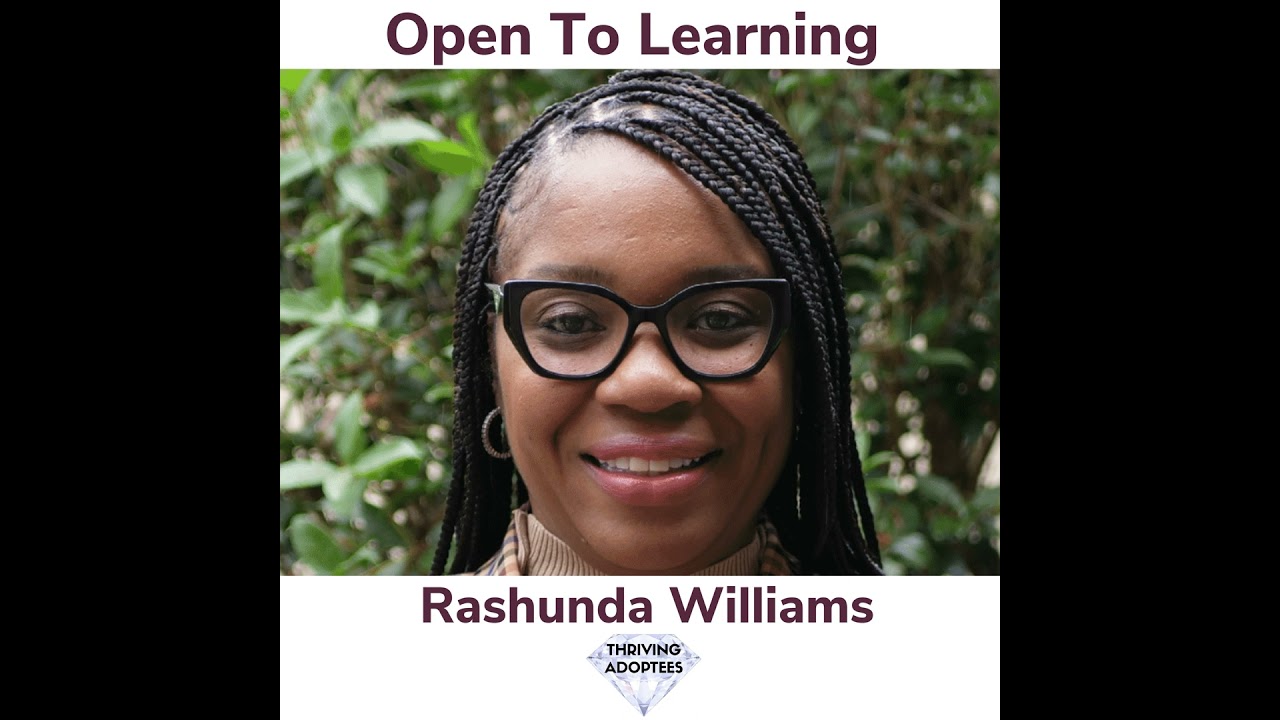
Rashunda Williams, who adopted three teenage siblings from foster care, talks about thriving as openness and lifelong learning. She describes how consistent support can break cycles of mistrust, and how CRIS180 is shifting toward trauma-informed care with post-adoption therapists, peer groups, and giving adoptees a voice in placement decisions. Georgia has over 10,000 children in care.
Chapters
Hello everybody, welcome to another episode of the Thriving Adoptees podcast. Today I'm delighted to be joined by Rashunda. Rashunda Williams, looking forward to our conversation today. Rashunda, I know it's a busy time of the year, so thank you for making time for us.
Yes, yes, Simon, absolutely. I'm excited.
Yeah, so Rashunda is the Director of Foster Care and Adoption at CRIS180 in Atlanta, and she's also a mum through adoption. So you've got, you've got 2— is it 1 or 2 biological children? I've got 2.
I have 3 adoptive.
Yeah, 3 adoptive. Yeah, okay. I couldn't read my own notes for a Sunday. It's a couple of months since we, since we spoke. So you're the 3 that are adopted. They, they came to you from foster care.
So yes. Absolutely. They came to me through foster care, um, teenagers.
Yes.
Which is kind of surprising for, um, to get 3 teenagers all at once. But yeah, I was excited.
Yeah.
And they're a sibling group of 3.
Yeah. And they weren't— sorry, they were a sibling group?
No. Yeah, they are. They're a sibling group. Cool.
Cool. So that, that, uh, we, we love exploring the richness of the lived experience as, as, as, as mums and dads, right? And that professional eye that you've got as well. So I really love to, to dive, dive in, really. Um, so what, what comes to mind when you hear the word thriving, Rashonda?
Thriving. And I think of it from maybe both lenses as an adoptive parent, but also an employee.
Yeah.
Through the system, the foster care system. So I think of showing openness, humility, commitment, definitely a commitment, lifelong learning.
Yeah.
I think of when I— from the time I adopted my children to now, I'm still learning. Peeling back the unlayering, being open, creating a just a creative space, being safe, allowing a person or myself to be whole emotionally or culturally, relationally. I think those are all, um, key areas of being, of thriving.
Yeah. Well, there's lots to pick out there. I'm kind of like a kid in a sweet shop or a kid in a candy store, right? As you would say over there. I used to work in a sweet shop when I was a kid, actually.
Oh, nice.
Yeah. Um, so yeah, I, I didn't get paid very much. So some, some candies found the way into my, um, into my hands and my mouth, right? Um, But, uh, so the, the one that really, uh, jumped out for me is— was the creative part. You talked about creative. What, what do you mean by that?
Yeah, creating a space of— I think when you— each individual person, um, is their own unique person. So being able to uniquely create a space of openness for that particular person or that child Um, whatever that is, you know, everyone learns differently. Everyone's behavior or reaction is different. So being able to create a space that's open, non-judgmental, is important.
Yeah. So it's kind of aligned to that unconditional love.
Absolutely. Absolutely. Um, and I think it's also surrounded with supporting that healing and that patience. Compassion area is important as well.
Yeah. Do patience and humility come together? You mentioned humility.
Yes, definitely. Being able to understand that path. Every child that comes into either foster care or adoption, at some point at birth, there's trauma. So being ripped away from your family or being removed from your family, or in some cases, that birth parent decides they're unable to care for that child. Whatever that is, there's still trauma. In that area. So being able to be open, understanding, um, of the complexity of that process, I think, is important. Yeah.
And you mentioned the word life, the phrase lifelong learning. So it is what that— we often think of that on the show as kind of capacity. capacity for our kids, openness for our kids. What does it mean for— what does it mean for you beyond the kind of the, the, the trauma education? I, I mean, I mean, you're learning from— you're learning from lived experience, right? This isn't— this isn't theory. This is— this is the real deal.
Yeah, absolutely. Um, My children, again, were teenagers. This, you know, stereotype, systemic way that people think would say, you know, they're damaged, no one wants them, they're difficult. So for me, being able to learn where they came from, what happened, and being able to pull those layers back and letting them know that I'm here, I'm available, I'm— I love you for whatever that looks like for you. Um, has carried on even now. They're adults, they've went through college, they have their careers. My daughter has 2 children, but still lifelong learning. Um, difficult for her in a way, and I'm sharing some of her information, but as a mother, you know, her making sure, am I a good parent? Really trying hard not to, um, do some of the things that her parents did to her. So for me, life learned, long learning, still communicating parenting, and she's an adult.
Yeah.
Um, but providing that nurturing and care and support, it never ends. Yeah, you never stop worrying. They never stop asking for advice. So yeah, it's continuous.
Yeah. Well, I'm 58 and my mum keeps telling me to take care, right? So take care there, take care there, you know, like, yeah, take care driving, take care going there, everywhere she goes, you know, take care. Um, this, this, this damaged, um, thing, right? Feeling like other people's perceptions of them.
Yes.
And then I, I think, I think it's really dangerous because I think we I saw this once, uh, it was in a, it was in a, in a, in a setting, in a, it was actually in a church, and they were talking about brokenness and, and broken kids.
Yes.
I, I think, I thought that they made it specific, I thought that they meant it specifically to, uh, regarding the, the kids, some of the kids in the congregation who were there, who were in this, um, this children's home that had a church because the adoptions had, you know, broken down. But yeah, they, they— I, I think they were making— they were coming from a bigger religious point that everybody's broken.
Mm-hmm.
However, I, I think the— these ideas that we have about kids can be very dangerous if they take them on board, you know.
Absolutely.
They, they, they, they, yeah, they suck them on board. They suck— I often think about kids being sponges, right? They suck up whatever it is. They suck up the good, they suck up the bad. But this idea that they've been damaged somehow, if that takes hold within them, then that's gonna lead to some tricky, tricky stuff.
Yeah, absolutely. Um, my oldest child, before I adopted him, he had been in 23 different foster homes. Um, In and out of foster care because the system, obviously reunification with the parent, birth parents, is the ultimate goal. Um, so when mom and dad completed the case plan, the judge, okay, you can go back home. And the parents would do it over again, and he's in another foster home, in another foster home. So when you speak of damaged, that stigma absolutely was attached to his name. And so those behaviors, you think of the behaviors or the trauma that he experienced in all 23 homes before he was finally adopted into a home that he felt Um, and great is my best child. So grateful, so smart, so bright, respectful. But again, that stigma— oh, I, I can't take— I don't want him, he, he's a teenager, um, he's damaged, or what kind of behaviors did he inherit at all these different homes? So it's just that difficulty, but I always, from an employee, a staff member that supports families, I always tell them, you know, what you see on paper may not be that what that child is. Give them an opportunity to come in your home and you share your experience, your knowledge, your love. You may be that perfect match. But But I definitely encourage adoptive parents not to be frightened by what they see on paper because that's what happened at that home does not mean that happens at every home that that child has experienced or lived in.
Yeah. Did— how did you— well, It's just, it's such a big question, right? Did, did he see, did he see himself as damaged in, in any way?
Yes, absolutely. Um, and I think I always say to him, well, early on I would say, is it desperation? Because I didn't ask to be an adoptive parent. That was nowhere in my life or equation. I was simply an employee for the foster care system.
Mm-hmm.
And he reached out to me and said, everyone loves you. You're so good to us when we see you. Could you adopt me and my siblings, my older siblings? It was a family of 12.
Yeah.
He has 11 siblings, but he knew that the oldest, the teenagers, they were being passed through the system. No one wanted them. And of course, my husband was deployed at the time, and I said, yes, I will. You know, just to think desperation, you know. I think at his wit's end, you know, can somebody adopt me? Can someone love me or care for me and my siblings? I, I have nowhere else to go. Um, and I think it was for me, I said it's God's way, um, because they helped me. I've learned so much. Um, they love my biological daughter, you know. I soon after had my biological daughter. But yeah, I think it was, um— and I tell them, they say, you helped me, you, you blessed us. I said, you know, it works both ways. Um, so many things I learned, um, from all of my kids. But yeah, yeah.
That's got to make a difference, hasn't it? I mean, For him to, to be the instigator of it.
Yes, yes. And definitely, um, my middle child, at first he's like, no, I don't, I don't want you to, to adopt me. I don't care, you know, I'm gonna go back to my mom and dad eventually. I'll go to another home. Because that was the learned behavior the path that he's lived for most of his life. So, I know I'm gonna— I, I will go to a foster home because I know eventually I'll go back home to my mother, even though I know this is going to be a vicious cycle. He was willing to, um, take that chance because no matter what, even though, you know, we can say it's an unhealthy home, a child was removed for whatever reason, abuse or neglect, that child still loves their parents.
Yeah.
For whatever— it's that learned behavior, you know. Early on, they don't know that that's unhealthy behavior. They know that's my parents. So that was a tough time, um, that he went through, is learning that that's that's an unhealthy relationship for you. Um, and let me show you how a parent can love you and nurture you and value you and respect your feelings and, you know, provide you with, you know, basic stuff that you are— you need, but also some of the good stuff and fun stuff. Um, so, but yeah.
Yeah. So did, did your youngest Persuade him then?
Is that how it works? Yeah, my girl. Yeah, my youngest, um, my daughter, she's like, we're going and you're going too. So it was the youngest, which is my daughter, and the oldest persuaded the middle child. Yeah, we, we need to go give it a chance. Um, we think it's a good thing. Rashonda loves us, and you know we feel like it's a safe space, and all you know all of that. And it turned out well. I was this was many years ago, so definitely I was a young parent, and all of the resources that we now have today I did not have. What was able to advocate luckily because of me being. Being employed in the foster care system, I had some advocacy behind, um, everything. So, but definitely I say it's challenges, ups and downs, and no different than your, your biological child, that teenage—
Yeah.
Learning myself, thinking I'm an adult, all of that. Um, but I would— I wouldn't trade it for anything.
Yeah, I was going to say, would it have been tricky for you to persuade him, you know, against— to break that cycle he was in, that learned bit, you know, he was in that cycle of placement, back to parents, placement, back to parents, placement, back to parents?
Yeah, I think once, um, they all transitioned to my house, um, at the same time And just me trying to gain that trust early on, it took a period of time, um, I'll admit, for him. But I think maybe the, the turning point was he had an incident at school, um, where I had to go to the school and speak with the principal. Um, there was You know, possibility of him being expelled from school. And I didn't turn away, and that was the breaking point— me wanting to know, how can we fix this? I'm here. Yes, you did something that was, you know, not good. However, we're gonna work through this. Yes, you're gonna— you, you can't hang out with your friends, but I'm not turning you away. And I think that was our breaking point because historically through all the other homes that he had been through, if I get in trouble, if I do something that's considered bad, then my foster parent will say she doesn't want— they don't want me and I'll go to another home. But it didn't happen this time. So I believe that was our pivotal moment where he understood that I'm in it, I'm your parent, um, I love you, I'm not gonna turn you away, and I'm going to support you, um, throughout whatever.
So it's about trust then in that moment?
Yeah, trust and safety. You know, it's a safe space, um, You can still come home. You still have your room.
Yeah.
You're still— everything that you had before you had this incident at school remains. We'll address it. We'll work through it and discuss what happened. How could we have avoided this situation? And that's the education piece. But you're still at home with me, your dad, And your siblings? Nothing's changed?
Nothing's changed. Was he testing?
Yes and no. Um, yes, where— because he had previously, you know, tested using profanity in the home, or maybe not cleaning his home, the bedroom, or talking back, or what are you gonna do? Are you gonna send me back to foster care situations? But in this particular situation, it was him in a fight with another child at school. So, yeah. Yes, could be, could be not, but just behavior, not having that self-control or Being able to understand his feelings at school. So yeah.
One of the themes that keeps on coming back as I speak to more and more adoptive mums and dads, it is the truth that raising these kids isn't about fixing them, right? Because they're not broken. It's about growing us.
Absolutely.
And that, that's what people tell me in, in different sorts of ways. They tip me in different ways. And a lot of parents don't see that till later. So they'll, they'll say that, they'll say that what things like, um, We want, we want more support about how we can— for coping strategies with, with our kids, with our kids' behaviour. So they, they, they think it— they think it's about— they think they need one thing, but actually they need to do something completely different.
Absolutely. Um, Early on, just that piece of them being comfortable in themselves was important to me to letting them know that just being grounded in your identity, being empowered to just tell your story and having no shame behind it, And you're right, I can't— it's not a fix. It's a, you know, being able to have that humility, that understanding. That's why the education and training piece for adoptive parents or foster parents is so important because I've— And I'm putting on my work hat now. You know, parents come in and they want to adopt a child. And it's for whatever reason, but they have to understand, one, again, the trauma behind how this child came into care. And then just having realistic expectations. The child's, you know, grief, how to nurture, how to manage different behaviors. It's not a fix. You know, if you have a big, beautiful home and a lot of money, that's not— the child doesn't care about that.
Yeah.
They want that love, understanding, that trust, that safety is important to them. That nurturing is huge. Respect and trust, that advocacy piece, all those things are important. Not, um, the materialistic piece or the fixing. You can't, you can't fix a person. Yeah.
So how has what you've learned personally as a mum, how, how has that changed your work professionally?
Well, me now, um, as the vice president of Chris180, I definitely have lived the experience, so I know what I didn't receive when I was going through the process. So I would have loved to have all of the trainings that we offer now at our organization for our parents. That communication piece, it was extremely easy. for me to adopt my children versus now, for my organization, I'm intentional with the adoption process and orientation process and the trainings. There's several trainings. There's an analysis before a parent is even onboarded to be an adoptive parent, because I want to make sure that you are well equipped and aware of the, the dos and don'ts and what could or could not happen. Is important. I wish I would have had that. And then even after you adopt a child, we provide post-adoptive supports. So you still have that connection piece to our organization. Case managers, therapists, huge, very important during the process and even after you sign the papers, you still have that support system, which is hugely important. And then our parents within my organization, we have a lot of support groups, vested, Um, true support groups that parents that have experienced adopted, foster, that are be— that are be— that are able to share that information, um, with our parents. So, but yeah, lots of things I wish I had that I've implemented now.
Yeah.
Yeah.
And you've talked to me a couple of times about learnings. Clearly, that moment when your son was in trouble at school was a pivotal point. What other pivotal points were there in terms of your learnings or your kids' learnings?
For me, understanding grief and loss of a parent. I didn't really understand the impact of that. It was huge for me to understand, yes, their parents did some terrible things, but the trauma behind that for my kids and the grief So we went through a lot of therapy, a lot of training for me, but definitely just being able to communicate with them what that feeling is to have that separation from a birth parent. So, and being able to understand it and what it, what it looked— I didn't know that early on. Because I'm thinking you're a teenager, um, you, you've been through in and out of foster care, you know what, what happened, you know what your parents did, but not understanding clearly how to, um, foster that in the home and, and assist my kids through that process. Understanding their identity was part of that grief as well. Because again, like my middle child wanting to mimic or model some of the behaviors that he learned from his, his dad and his mom, um, and not understanding, you know, you have a future. So I tie that all into grief. That was a huge, um, A huge experience for me, or on just understanding it and being able to help them through that as well.
What about their, their wholeness? And, you know, we've got, we've, we've got this— we started the conversation with this idea that some people view these kids as, as damaged. If the flip side of that is wholeness, what— or maybe there's another word there, but what's that about? Because I can think of how I would try and communicate wholeness when I'm leading a training, for example, right? But as a mum, what, what, what, what, what sort of things— is whole— first off, is wholeness a good word?
Yes, yes, it is. Yeah.
Um, and so, so secondly, secondly, you talked about communication. How do you share that? How do you help your kids see their wholeness, the fact that Though that they've been through this trauma, that they, they are whole underneath that trauma.
Yeah, I think it's— it goes back to, um, making them understand that their experience is not, um, something that they should shy away from. or be ashamed of. Grounded in their identity, as I said before, and I say that to them all the time, having that respect. You say what?
Sorry, what do you say to them, Rashonda?
Being grounded in their identity.
How would you communicate that to— how did you communicate to them all those years ago?
Yeah, yes, you, um, no, you're not with your birth parents, um, but you are— you're with me. I love you, um, you have a safe space here. You're open to share your feelings, however, express them however that means for you at this time, um. Communicating with them how we can work through their experiences or their feelings, not being able— not shying away from their feelings. You know, you may have a good day or a bad day. You may think about your parents or want to go back to your parents, but being able to communicate what you're experiencing and your feelings, um, in that safe space with no judgment.
So no, no judgment of them, no judgment of their feelings, no invalidation of those feelings.
No judgment of their parents, um, not being— and not being afraid, not, not being embarrassed by their parents as well. Um, for me, eventually, um, I did develop a relationship with their mom. Um, and periodically she would come over or we would go see her, and she was very thankful, um, and apologized to her kids and even said, hey, this is, this is where you should be, you know, or maybe I had you because to— so you can be with Rashonda. Um, but just, I think that was closure for them as well, knowing that I'm not turning my back on my parents because I'm staying with Rashonda and she's now adopted me. Um, I still have that connection piece with my parents where I can talk because she, the mom, she got to a point where she was clean and off of drugs, so she was able to I felt safe where she can speak with them and we can visit her. Um, so that was a great pivotal point as well where she can provide them with some closure that it's okay that you are where you are, that that's where you should be.
Um, so this is, um, another theme that keeps on coming up in terms of, uh, not, not dissing birth parents because they— if they see— if we're dissing the parents, then we're dissing them in an indirect way.
Absolutely.
And it keeps on coming up again and again, both as this is best practice now, and also it comes up again as this bad practice was common in the past, you know.
Yes.
Lots of adult adoptees— somebody that I interviewed yesterday for the podcast, um, you know, that there was, uh, lots of, uh, shaming leveled at, at this, this adoptee's birth, uh, birth mum back in, uh, back in the '60s and the '70s. So I think it's one of those things that we seem to have got wise to, and it's part of the, uh, it's the part of the bad old days that seems to be, you know, totally on the way out. Um, what other changes have you seen in those years? You've talked a lot about the Implementing the things that you felt were missing when you became a mum through adoption. What else is— what else has changed?
I think probably there's more resources, definitely, um, more so the wraparound support for the families as well, the parents as well as the children. So I can definitely appreciate the support supports that we now provide to the parents. And it goes back to trauma, whatever the reason is that the kids came into care, you know, parenting, teenage parents or substance abuse or whatever, we now provide supports to those parents to give them an opportunity to right their wrongs, I say. I think that's important. Sometimes someone, a parent, can have them make a mistake and turn it around for good. And I think we should definitely allow that opportunity. But also for our kids, you know, we're providing more therapy and counseling. We're understanding the effects of a child coming into care. Or a child transitioning from foster home to foster home. I think that it's kind of slowed down from back way back in, in my day, so that the effects of that transitioning from a home to a home, I think that has decreased, which is great. And then the education for our parents being more vigilant on our selection process for foster parents or adoptive parents. We want to make sure, you know, if they are removed from their home for whatever reason, that we're putting them in a safe space.
Yeah.
It is important. So lots of, lots of stuff, lots of resources are available now, definitely from a financial standpoint that we did not have, I would say, in 2000 or the '90s. So We're making progress.
You mentioned therapy a couple of times. Um, how do you see this, the, the, the two, the two parts of therapy, like, so therapy for the child and therapeutic parenting, how, how do you see those, uh, combining together for this?
Yeah, definitely for the child, making sure they have someone, a safe Again, a safe space away from their parents, adoptive parent, away from their foster parent, but that therapy piece, safe person, safe space that they can speak to and receive different tools on how to cope with their emotions and their feelings is important. When I speak of trauma-informed care, It goes back to education and being able to have that wraparound support in those homes, adoptive home or foster home. Lots of tools and education and supports, therapy also for the foster parent or adoptive parent, all the tools that they need, case managers, care coordinators is what We also call our supports and specialists that go into the home and help the parents navigate through that transition process, the parenting piece. Okay, we've signed the papers and adopted the child, now what? You know, that honeymoon phase is over and now we're in it. What do we do now? So that post-adoptive piece is important, all wrapped into trauma-informed care. So ongoing training because things happen, trends. I mean, now we're in AI.
Yeah.
So the kids are learning how to navigate through technology. So that ongoing training to make sure the parents are up to speed, On how to parent, navigate, and communicate with their children effectively.
So if, as you look back on, uh, on a life— you talked about lifelong learning— what have been the, the biggest learns for you?
Biggest learns.
Hmm.
I would say I've definitely learned a lot— patience and understanding, not being quick to judge or assume something. Because of course, that education piece, you know, you think of, okay, I'm I have a degree, I'm in this field, I can figure, you know, I know this child from textbook. No, that's not how it works.
Yeah.
So not thinking that I know everything, but making it an individualized interaction. Creativity is something that I mentioned also, learning how to be creative and learning that child. That was the biggest piece and not just, okay, this is what it says in a textbook. So this is how I, you know, if he does this, I need to do this. No, it doesn't work that way. So.
So it's kind of more like art versus science.
Absolutely. Absolutely.
And what are you learning now? What is it that you've kind of focused in on For now and for the future?
For now, as it relates to my children, of course, lifelong learning, just being there for them as a parent and now grandmother. But being a vice president over foster care and adoption, just making sure our parents receive all the resources that they can, pouring in that education piece. We do a lot of training and making sure that they're supported as well as our kids.
Yeah.
So wrapping the family with all of the possible resources that we can, being available to them, educating the parents to make sure they can be the best parents that they can be, but also providing that support to the child as well. So, um, mutual agreement between the parents. So, but yeah, making sure that that child has an open space, um, and feeling, you know, empowered and, um, able to speak their truth as well. Yeah.
And how do you see that training changing going forward? I mean, you, you've, you mentioned AI and technology and stuff. What, what other areas do you see things developing in?
I think it's changing daily. Um, I can remember it's maybe 2 or 3 years ago, um, organizations weren't providing trauma-informed care Or trainings to their parents. Yeah, there's standard trainings that all foster parents or adoptive parents have to go through, but those additional educational pieces, agencies were not necessarily providing those, and now they are. So I think we're growing as a system. in support of the kids. And then that piece for the kids, making sure that they're heard and being able to advocate for themselves. So same thing, you know, if a decision is made that a parent wants to adopt a child, that child has a voice too.
Yeah.
They can say, yeah, you like me and you want to adopt me, but I don't want to go to your home. So making sure that they have that piece of empowerment and decision, um, to control where they want to be or where they feel safe.
What about empowering kids to understand trauma?
Yes, definitely. Um, and that's, that's the therapy behind it. Um, that is the piece of them speaking their truth, their identity, and being okay with it, not being embarrassed or feeling less than if they speak their truth. So that comes with being— having that wraparound support, making sure they're clear. Yes, this happened to you, but look at the The end path. I always think, I think back now for my kids, um, we, we talked about where do you want to be? Where do you want to be? And let's, let's develop a board or checklist of what do we need to do to get there. So, and that's, that's the route we'll go. Not where you are right now. Where do you want to be? And let's work on how how to get there. Um, and that's important. And I think my, my team does a good job at communicating that pathway for our kids, um, and our parents as well.
Yeah, because you're breaking that, you know, that idea that the history determines the future.
Exactly, exactly. Yeah.
Wow, we covered a lot of ground, Rashonda.
Yeah, we did.
What, what, what would you like to share that I've not asked you about?
I think you asked me a lot, Simon. I would say just, um, I encourage people to Look into adopting or fostering or providing some type of mentorship for children that are in foster care. It's important for them to connect with the community. Going back to identity and being grounded, knowing that, you know, this person volunteered To show me how to plant seeds, or this organization has provided these resources to us. And even though, you know, I'm in foster care and they've still provided this, I think that's important for a child to know that their love can— love supported and in the community. So just That advocacy piece, letting people in the community know that there's kids in care. There's over 10,000 kids in care in Georgia, and they all need a safe space. They all need to be supported in the community. They want to see faces that are loving, caring, and supportive. They're not damaged. Yeah, yeah, they didn't ask to be in foster care.
Fantastic. Thanks, Rashunda.
Thank you.
Thank you, listeners. We'll speak to you again very soon.
Take care. Bye-bye.
More from Simon







Weathering Storms With Joanne Morales, Jennifer Hartwig and Rebecca Dominguez


