Reconstructing Our View Of Adoption With Marcella Moslow
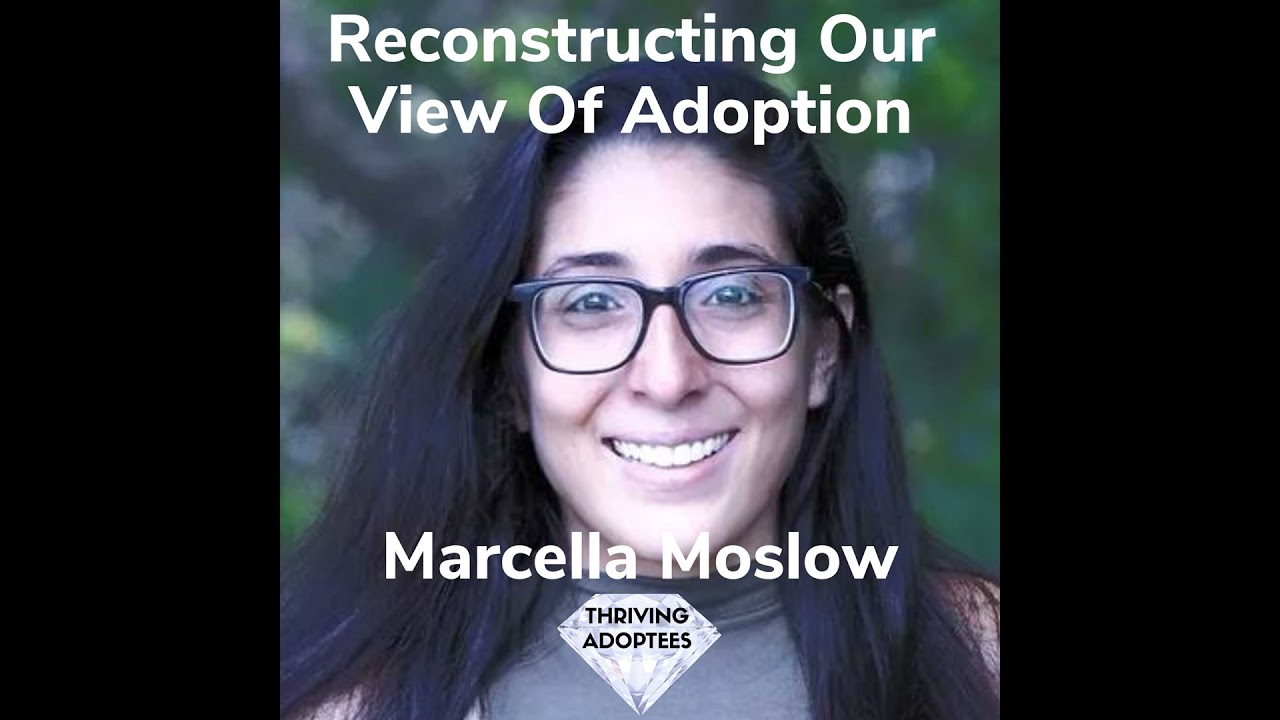
Therapist and adoptee Marcella Moslow describes how adoption trauma lives in the nervous system, triggering hypervigilance, dissociation, substance use, and isolation. She argues adoption is often commodified, the loss of biological connection creates an unfillable void, and healing requires ongoing safety and regulation, not a linear cure.
Chapters
Hello everybody, welcome to another episode of the Thriving Adoptees Podcast. So today I'm delighted to be joined by Marcella, Marcella Moslow. I pronounced that right? Yeah.
Yeah.
Yes, uh, Moslow. It sounds a bit like Maslow, doesn't it?
And like, I think it does. I know I get people that get confused with that all the time. I mean, it's, it's not technically my last name anyway, so I just let people go with it.
Go with it. Okay, cool. Yeah. So, um, Marcella is an adoptee. You're also a therapist too, so, um, I'm really looking forward to diving in. We've got a big topic that, uh, we, we talked about last time, or a kickstarter really. So, um, you, you said, uh, you said though, as we opened up in our conversation last week, that you'd deconstructed your view of adoption.
So Why?
What was the start of— yeah, what was this? What was the kind of the starting point for that realization that you needed to deconstruct it?
Yeah, it's, it's a big question, right? I think that for, for me, there was not necessarily one specific day when I came to that realization. I think for me it was kind of a pileup over many, many years of my life of hearing a narrative or hearing information that didn't necessarily feel like it totally resonated, and it didn't feel like information that I had come to on my own, right? I think that myself and a lot of adoptees that I see, we are given a narrative, usually by our adoptive parents or by society on what adoption is, on how we should feel about that. And it honestly wasn't until I was in graduate school myself and going through a social work program, learning more about trauma and neurobiology and just attachment and the way that the nervous system works, that I kind of had an aha moment of, oh, maybe this is why some of those things that I had been hearing and repeating over the years just didn't really feel like it was, uh, it didn't feel like it fit, or it didn't feel like it was true to, you know, my experience with things. And so that was kind of the start of my deconstruction and diving really deep into, well, how do I actually view adoption? How has this experience been for me? What is the science behind all of these different things that we as adoptees go through. And that has really shifted the way that I now view adoption, how I speak about my experience, and then ultimately how I work with other adoptees as a therapist.
Yeah. So we use this phrase in, in the UK. So it— we say it was the straw that broke the camel's back. Have you heard that?
Yes. Yes.
So it sounds like there was an accumulation.
Yes.
And then, as you said, over time it built up, and then there was just that one thing that tipped over the edge, that broke the back in— what, something that you heard in grad school? And that led to the aha moment. Yeah. Um, so just to kind of deconstruct what I'm trying to do with the podcast is essentially to— but this is— I'm talking to you and the listeners, right? So what I'm trying to do is I'm trying to hold up the guests' insights and their aha moments and say, look, Marcela had this aha moment. Um, does that aha moment resonate with you?
Right.
Can that prompt other aha moments for you? Can that catalyze insights within you? So that, that's what I'm trying to do, listeners. That's what I'm trying to do. Because, and the reason why I'm trying to do that is because it's those aha moments that change our lives, right? So, um, when the accumulation Um, gets too much. I'm thinking like of a, um, like a, a big buildup of water in a, you know, behind a, like a dam, and, and then suddenly there's a little fissure in the dam and then whoosh, all the water comes through, right?
Right.
Uh, yeah, that's a pretty destructive one. Maybe I should think of a more constructive one.
Well, you know, to be fair, I think that there is, there is truth to that. I think when a lot of adoptees get to a place where they are ready and open to truly exploring things and seeing kind of more of the both-and approach, or being able to look at some of the parts of adoption that maybe aren't so pretty, it can really feel like the floodgates are opening. It can feel very overwhelming. It can feel very, um, just, just overwhelming because there's— it's in such direct contradiction to what we're typically told, Right? So it's kind of like this earth-shattering thing that we have to come to terms with. And so for some, it can be like the floodgates are just opening and we have to kind of figure out a way to stay afloat.
Yeah. And I guess the concern is, you know, to continue with the floodgates metaphor or the dam metaphor, that we're going to actually drown. We're going to drown in this, um, previously subconscious trauma.
Right.
These—
we—
and that's the, that's the scary bit, that we're going to be, um, we're going to be overwhelmed. And, uh, I've mentioned this maybe once before, but it— I'm gonna— I don't have to mention to you, I'll last time we spoke, but have you heard of a, a guy called King Canute?
No.
Oh, okay. So this was, uh, I don't know, it was a legend or a true thing, but in the— it was a British, a Brit monarch guy, King Canute, in the Middle Ages, and he tried to put his hand out to stop the waves crashing on the beach, right?
Hmm.
So what, what we're trying to do is, it is we're trying to push away— sometimes we're trying to push away this, this trauma that has been previously subconscious. It, it comes into our consciousness, we become aware of it, we're worried that we're going to drown with it, and we put this weedy little arm out with this weedy little hand, and it's got no chance, right? It's got, it's got no chance of holding the, the water back. The, the cat is out of the bag. The water has broke— burst the dam. And now we're, we're scared and we're thinking, well, um, as you say, like, how am I going to stay afloat? I'm feeling like I'm going to drown in this stuff. Um, and, you know, can, can somebody, uh, throw me a, throw me a lifeline?
Right, right. Well, and I think that that's what You know, would be wonderful if society would be able to throw that lifeline a little bit. I think that any way that you cut it, right, trauma is, is very scary. It is overwhelming to our nervous system. It is something that fundamentally we are not equipped to cope with. And for us as adoptees, many of us who were quite young when this trauma first happened, we were not equipped to do this. The, the struggle that I think makes it even more scary for people, and I see this with, with many people I work with, is when it's not talked about, when we're not validating and making space for the fact that adoption is rooted in grief and loss and trauma. It makes this, this, this water even more scary because we don't know what it is. It's just this unknown question mark that we are very validly feeling and we're experiencing and we're like in the aftermath of it. But if nobody's talking about it, or if nobody's giving us words to describe those experiences to help us make sense of it, because what's happening is actually like very, very normal. Our bodies are responding in very normal ways, exactly in the way that our nervous systems are designed to. But if nobody's talking about it, we feel like we're crazy, or we feel like there's something wrong with us. about how we're reacting or responding to certain situations. And so it makes this undeniably very scary floodgate-opening moment even scarier because we don't, we don't know what we're looking at. We don't know what we're dealing with. No.
Um, the, the other thought that comes to mind on this is, is that, um, there's a societal time lag. So why, you know, like, if, if we look at it I guess we could look at the fact, well, it's misdirection, you know, it's misdirection by an industry that wants to make money. I mean, a lot of them, a lot of the agencies are nonprofits, but that doesn't mean non-cost, right? Not in the US. Did I mention this last time that in the UK, the For, for a domestic adoption.
Yeah.
There's no— the, the government pays the adoption agencies, so they're state-funded, um, which I think, um, makes it— it, it means that American adoptees are— have got another extra layer of trauma because there's that idea of that a price on our heads. Um, you talked about last time commodification, you know, like how far are we going? You know, we could go— we go down the trafficking, the slave route, you know, the price on our heads. And, and I mentioned this quite a lot, um, on, on the podcast, but I saw a price list for adoptees, um, uh, last year, I think. I don't know how I came across it. But I was almost sick when I saw it and that commodification. So on one hand, and it might be an and both thing that you mentioned, I think it may be about that industry trying to stay afloat, you know, keeping business. make money. Um, and also there's a time lag. So if we think about The Primal Wound, like, Primal Wound, it only came out early '90s, didn't it?
Mm-hmm.
Only came out in the early '90s. So we're 30 years on from this coming out. It took too— and that seems a really long time in the internet age. Like, we're thinking What? Do you know, like, we're instant— we have instant information. But if we think about how slowly, uh, society changes its, its view, like, it took them 2,000 years for, for to, to go from an Earth-centered universe to a solar-centered universe.
Right.
It took 2,000 years to go from the flat Earth, um, theory to the kind of spherical, you know.
Yeah, it takes too long. Bottom line, it takes too long, right, for some of these shifts to happen. And I think when we're talking about adoptees, um, you know, we, we don't necessarily have the luxury of time like that. This is stuff that adoptees are dealing with Mental, emotional, physical health-wise on a day-to-day basis. There are, you know, and I stress this with people that I speak to, like, they're— this, this is a life or death thing for adoptees. And being able to attune to this trauma, this massive loss, this grief that society is really resistant to leaning into and naming is It's, it's like it's a life or death situation. If society doesn't get its act together, quite frankly, and figure out a way to start acknowledging this more, the same thing that we've been seeing is going to happen. We're going to be seeing more adoptee suicides. We're going to be seeing more adoptees who are being placed in institutionalized care. We're going to see more adoptees represented in substance use programs, in prisons, in all sorts of areas, because you're— society is still fundamentally just refusing to acknowledge kind of the crux of the reality of being adopted, which is we lose a lot of things that we need to grieve over, and society isn't really on board with, you know, going there.
Yeah.
And so I, I do agree with you that it takes a lot of time for society to come to terms with things. I, I think that in terms of the adoptee community, we, we just don't have the luxury of time because these are people's lives.
Yeah, I, I agree. And, and the, um, the, the, the, the substance abuse is, is one way that people cope with that overwhelm, that overwhelming, um, feelings, the overwhelming trauma, that cocktail of, uh, of insecurity, fear, and, and anger. And so if the, the substance abuse, the numbing, is a, a reaction to that What, what other reactions do you, do you see, Marcella, to that?
Yeah, I, I, the, the trauma therapist in me, right, I, I address and attune to any behavior that an adoptee will engage in as it's protective, right? So for some, that may be substance abuse or numbing with some kind of other substance. For some, that may be overworking and taking on more perfectionistic tendencies. For some people, that may be lashing out or keeping people at arm's length in order to keep themselves safe. For some, that may be just isolating and not wanting to be around other people or getting into those really depressive lows. For some people, it's going into having a full-blown panic attack, right? Like, there is this spectrum of ways in which our nervous system is equipped to help us manage and continue to survive despite going through really difficult traumatic things. So I, I really encourage, because so many times adoptees will become pathologized for those very normal protective responses, and that I think is another, you know, whole episode or whole hurdle of just those things being so mislabeled. And it's really not at the end of the day. Our nervous system is beyond beautiful and creative in the ways that it will go to bat for us to defend against future harm, especially if we've already experienced big traumatic things. And so I hold the view that any of those, you know, ways to cope with it are adaptive. They are ways to try and figure out a way to keep safe and to keep protected. Does it mean that there's not going to be fallout from some of those parts being really, you know, active? No, there probably is going to be fallout. But when it comes to, oh, there might be fallout versus this is going to help me survive, our nervous systems are wired to pick, I'm going to do what helps me survive until you can convince me that there's some other way that we could do this that works just as well, if not better.
Yeah. Um, so when you say pathologized, do you mean, um, that there's something wrong with us? Um, is that what you mean? I hear this phrase from the— what does the Bruce Perry and the Oprah book— is it, it's what, it's what happened to you? Is it, it's that normal reaction to an abnormal—
Right.
To an abnormal situation?
Right, right. So, right, I know the book you're talking about. I think that in order to get away from pathologizing, right, and in the clinical realm which I am in, pathologizing kind of means more like we're slapping a diagnosis on someone, or, you know, saying that they need all sorts of medications, we're placing them into, um, you know, restrictive residential care facilities or things like that. When we're talking more societally, it's when we mislabel somebody's behaviors or responses because there's just this fundamental misattunement, right? So the book you're talking about is we want to shift from the what's wrong with you approach to what happened to you, because these things don't just come out of nowhere. Nobody wakes up one day and decides, oh, I would love to just be super anxious when I'm around people all the time. Nobody wakes up and says, I would love to have a substance use issue. Nobody wakes up and said, I would love to like not be able to leave my house and just stay in bed all day. They come from somewhere. Those behaviors are trying to communicate a need, are trying to keep us safe. There's a purpose. And too often, even not in the clinical realm, when it comes to adoptees, we're labeled, right? We're labeled the angry adoptee, the ungrateful adoptee, you know, the dangerous adoptee, right? Whatever these things are, when those are really not accurate and we're missing the way to understand, well, what happened to this person that is maybe causing them to feel like they have to behave or respond in a certain way? So that is— there's a lot of different versions of pathologizing. Mine might be a little different because I'm in the clinical realm and I see that a lot just in terms of care provided to adoptees, but society as a whole, with this kind of warped view we hold of what adoption should like, really easily pathologizes adoptees when they don't fit into that mold.
Yeah, so, um, that, that book, that Bruce Perry book, I thought it said this— I thought it took 8 hours to say what it said in the title. Really? Have you read it?
Of course, yes. Love Bruce Perry.
Yeah, yeah. But it's like, it read— it just— it, to me, it just went trauma, trauma, trauma, but there is, there is, um, there is, uh, the blame, the— we have neuroplasticity, so, uh, so that's all okay. And then it went trauma, trauma, trauma. It didn't really give— it didn't, to me, didn't give me any answers other than putting a very strong case for what it says in the title. It is what happened to us. Yeah. Yeah. Have you got a more constructive view of that book? Because my view seems a bit, even to myself, to be negative.
I mean, I think books in general, right? I think that there's, you know, you take what resonates, and some things resonate more with others than not. I think through my lens and just like as, as a trauma therapist, I do think that that book provides a lot of just fundamental baseline knowledge because there's still— even not in the realm of adoption, just in general— people still don't have a solid hold on what trauma means. There still is this stigma, oh, it's, you know, you had to have been in this horrific car accident, or it's what happened on 9/11 when the planes crashed the Twin Towers, there still is not a lot of space for the spectrum of what is trauma and how that impacts our brains, our bodies, our nervous systems. So that is a book that I, I, I do recommend to a lot of people that are needing some of that just foundational knowledge of trauma is not just this like event that happens to you one day and then it's over and done with. It's something that will have lifelong effects, and it's the experience of that trauma that for us as adoptees is still very alive and well within our systems, and it will find a way to continue to come out until there is some level of healing that's able to be done.
Yeah, so I am being hypercritical. Um, yeah, maybe my, my, um, expectations— or to be kinder to myself, maybe my expectations were a little bit off. reading the, reading the book, maybe.
Yeah, I mean, I can understand. I mean, the book does— it's not like there, there is no happy ending, right? Like, there is no, oh hey, this is trauma and this is the to-do list of what you have to do to get rid of it. I don't think that that book exists. I don't think that that's, you know, just in the nature of how we go through a healing journey. But I think that for those that are interested in finding out more about the impacts of trauma and what that does in terms of our systems and how that can impact us present day, I think that that book has a lot of really good information.
Yeah.
Okay.
So, um, you mentioned the 2 golden words there, or 3, the healing journey. So, um, what, what, what do you mean by— well, first off, what do you mean by healing?
Oh, well, I think that that is— I think that's a subjective word. I do not think that any human's, any adoptee's healing looks the same because we all have our own unique experiences. I think that, you know, if I were to make it as generalized as possible, I think healing for us as adoptees is a return to levels of safety within ourselves, within our relationships with other people, and just within— the world in general. So being able to work towards being able to feel more safe in those different contexts.
Yeah. So in, in 2 massively oversimplified words, feeling safer.
Yeah.
Yeah. Yeah.
A lot of this hinges on, hinges on safety. Yeah.
Absolutely. Safety.
Okay.
So rather than being hypervigilant, that's, I guess, the opposite. We're looking at transition from— we're looking at a reduced layer of vigilance.
It could— I mean, that's one end of the spectrum, right? Some adoptees experience that hypervigilance, that anxiety, that always having to be on guard. But then we do have a lot of adoptees who are on kind of the other end of the spectrum, which is like you're just kind of turned off, Right? Like you are not present in your system, you're not present in the environment, you're kind of just operating on, I call it like autopilot. And sometimes for adoptees that ebbs and flows, right? Sometimes they are more on that hypervigilant end of the spectrum, and then something happens and they, you know, swoop right into that just kind of more dissociated, checked out portion.
Yeah.
So ideally, we wanna figure out a way to, be able to access safety because safety will ultimately help us to feel more regulated within our systems. It doesn't mean that we're never going to go into that hypervigilant state or we're never going to go into that checked out state. But when we do, we want to be able to still have a point of access for safety and regulation.
Yeah, I've never heard that. I mean, I'm on, what, 320-odd episodes of the podcast and I've never or heard, or not— maybe it's been said and I've not remembered it because clearly I'm, uh, fallible. But I love that. I love that spectrum from the disassociation and the hypervigilance. So is, is, is safety in the middle of that place, or is, is it on, on that spectrum, or do you see that as like, um, uh, different axes. Do you know what I mean? Like, you know what I mean? If you do a graph, it's got an x-axis and a y-axis. I might be trying to overcook it here, right? Just tell me if I am.
Well, no, no. I think that, you know, when we, when we look at it, and the lens that I use a lot is, you know, Stephen Porges and polyvagal theory, and just what we know about our nervous system, is there— it is possible to still have access to regulation but also be in some of those other ends of the spectrum, right? Like, that is possible. Very, very few times are we just solely in one of those zones. We kind of ebb and flow, and over the course of an hour, over the course of a day, our nervous system is constantly kind of moving between those different states of regulation versus dysregulation. And I think what's really important, and a lot of times when people are going into therapy, right, they have this idea of like, well, I want to be calmer, I want to not you know, get as anxious, or I want to not get as angry. I just want to be calm. And when I'm talking about regulation and safety, that doesn't equal calm, right? Calm is kind of this like buzzword that's gone around, whereas the core of what we're wanting for those of us who have, you know, really vulnerable traumatized nervous systems is we want to get to a place where regulation and safety is accessible, where we can have like a little touchpoint of that. Even if then we have to go back into a hypervigilant space or an anxious space or a kind of zoned out space, we want to be able to have a little bit of a touchpoint. And that is a lot of what, you know, healing in terms of my practice looks like, is we're having to help people expand their ability to tolerate some of the dysregulation, but also know and be able to gravitate toward some of that safety and those regulation points.
Yeah, I was thinking of, for some reason, what popped into my head was the analogy of, you know, you see a reporter on the telly, Particularly the more serious current affairs and news programs where they ask the politician a question and they the politician is trying to dodge the question, and and and the and the and and the the reporter is going is is trying to push the buttons and push the buttons and. And it's quite an aggressive kind of— it's an aggressive conversation where the reporter's trying to get to clarity and the politician's trying to cover, trying to fudge it and get into— but the politician is staying calm whilst being goaded and pursued by the reporter. Does that make— so they're trying to act, but they are remaining calm under pressure. Is that the sort of— is that a useful analogy, or am I a little bit off track? A lot off track?
I mean, I think it depends, right? I think it depends on the situation. Again, the goal, in my view, isn't necessarily calm, right? I think we have this view of calm as like somebody who's meditating and like doing yoga and they're taking all these deep breaths. And like, that's the societal kind of view of calm, which is not always realistic, right? Like my version of regulation, or I talk with parents, many of the kids that I work with, their version of being regulated or quote unquote calm is not sitting there laying down, like being totally still. They are moving, they are playing, they are jumping, they are, you know, having their voice get louder and then softer, right? Like that would not be the societal view of calm, but they are totally regulated, right? They have a capacity to be connected. They have a capacity to engage. They have a capacity to access whatever levels of higher-level brain functioning that they're developmentally, you know, have with them at that point. So it's different. I think a lot of times there can be this masking of like somebody can appear, quote unquote, calm on the outside, but inside their nervous system might be going all over the place. And sometimes that can actually cause more harm because if what we're doing on the outside isn't matching our internal experience, that doesn't feel safe, right? That doesn't feel safe when those things are mismatched. Just like if you're a parent and a caregiver, if you're telling this baby, oh, you know, everything's fine, everything's fine, like you're good, you're— but you have a mean face on, right? Or your body language is not very kind or very inviting. That doesn't feel safe, right? Our systems are literally wired to assess millions and millions and millions of cues of safety and cues of danger every hour, every minute, every day, right? And so when things don't match, and kind of like I was talking about earlier with my own deconstruction of adoption, Things that I was being told or things that I was kind of spoon-fed was not matching my internal experience. And that led to problems, that led to a lot more distress because those things were not adding up. They weren't matching.
Yeah. So the, the ultimate that we're after then is this, or is potentially this Feeling safer more of the time, not, not, not feeling, um, like we're at risk.
Yeah, right, right. And I think connection is a fundamental part of that, right? We as human beings are wired for connection. We're not wired to just be in our own little bubbles. And so this safety piece, a huge part of that is connection, like I mentioned, being able to be more connected and safe within ourselves. with other people that we're in relation with, and just within the context of the world and the environments that we're in, in general. We have to be able to feel genuinely, authentically connected in those different spaces in order for our systems to feel safe and know, oh, it's okay for us to kind of put some of the guards and the defenses down. Yeah.
And, and so that, that connection to me seems to have two, two things pop into my head based on some stuff that you mentioned earlier on, was the, um, uh, the, the language part of connection, you know, the spoken word, the, the, the validation rather than negation. Um, so the connection has two, two parts. It has the, the linguistic part, I guess, and, and then Sometimes you've like just hugging somebody, right?
Right.
There's some— you were alluding also into sort of, um, we're not alluding, you mentioned the body language thing. So the words are saying one thing, but the language is saying— is the body language is saying something else. And we know that the, the words are the bit that are false. Yeah, it's the body language gives is the sign to the truth rather than the words. The words may be just— um, so, uh, can you talk a little bit more about the, that connection thing, put a bit more, uh, flesh on the, on the bones of that?
Yeah, so in, in terms of the adoptee experience in particular, right, we're, we're talking about a lot of different losses of connection, right? And that's individualized depending on the adoptee experience. It's loss of biological family. It can be loss of, you know, ancestral lines. It can be a loss of culture, a loss of, you know, birth country, a loss of, you know, just medical history, right? There's so many losses that kind of force an adoptee to be out of connection with all of these different people, places, things. Right? And that is a massive blow to the system because like I mentioned, we are wired to connect. We are wired to be in connection with other people, places, and things in order to feel safe, in order to feel regulated, in order to do the things that we need to do in the world. So when that— and for a lot of us, you know, this starts very, very young— when that is taken, when those first connections are ruptured and there is no acknowledgement of it or there is no validation of it. It's just expected like, oh, you were a baby, right? Like, you're fine. Business as usual. That doesn't line up. Just like, you know, and some of this trauma continues even after adoptees are in their adoptive homes, right? When adoptive parents refuse to acknowledge that their child might be of a different race or a different cultural background, right, than they are and just want to raise them you know, in the same way that they were raised, or when there is a resistance to talking about biological family or, you know, certain aspects of the adoption experience, right? There's all of these additional ruptures in connection, which then, you know, it's not a shocker that a lot of adoptees really struggle with relationships, struggle with trust, struggle with Being able to kind of trust their gut instincts on things because so many really vital connections have been ruptured. So we learn this really difficult lesson of, oh, connecting isn't safe, but we're still wired for it. So we're in this like constant limbo of like, oh, it would be really nice to connect. Like sometimes that would feel like a really amazing thing. But don't forget. That usually doesn't end well, and that's really terrifying to connect, and it's more dangerous, and like, we don't want to take that risk, right? So you see a lot of this ping-ponging tug-of-war back and forth for adoptees when, you know, number one, connections are ruptured, and number two, when connections are ruptured and there is no repairing those ruptures that happen. That's really kind of the, the land in which a lot of adoptees live in, is we've had these connections that have just been severed out of our control. And we also have never had any kind of repairing or acknowledgement of the fact that these connections were, you know, severed or lost.
Yeah. So the, the rupture— so to put it Simply, am I right in saying that the ruptured connections reduce safety?
Correct.
So that's why you're talking about, um, the repairing, the repair of connections to increase safety. Yeah.
Yes, yes. Or to, to help, you know, the repairing. I tell parents, I tell people that I work with, the repairing doesn't mean that you're gonna fix or erase the difficult thing that happened, right? For us as adoptees, No amount of words, no amount of anything is going to fill the void of what we lost, right? Or is going to make up for the fact that we had to go through these things. What repairing has the power to do is help the nervous system to have different experiences with being out of connection, right? For most of us, as you know, children, when we're adopted, We just have to kind of figure out a way to deal with what happens to us, whatever that may look like on the spectrum of options. And that can be a big challenge because we're having to deal with all of that in isolation. Nobody's really, you know, walking us through that, giving us language, telling us that what we're feeling is really, really normal. And, you know, that, that can be really difficult because we are, we're wired to get through difficult things in, in connection.
Yeah. So do you see anything filling the void?
No, I don't think it's possible to fill a void of something that should have been there all along that we've lost access to. I think it's possible to figure out how to not have that be the focus all the time and have that be the fundamental, you know, thing that you're looking at every single aspect of life through. But no, I don't think that there is something that is going to be the filler of that, of those voids.
Yeah. What do you see the void as being made of? Void, void. It's a really weird question because you Well, the void, it's what—
there's nothing. Yeah, I think, I think that each adoptee would describe that differently, right? When we think of the span of losses that adoptees have to endure, for some the void is, I will never know members of my biological family. For some it's, I will never be able to go back in time and make up for all of that lost time. For some it's, I now don't have access to my birth culture, my birth language, my birth country, any of those kinds of things. For some, the void is, I will never be fully understood because my adoptive family is of a different race, ethnicity, whatever than I am, right? That void can— again, everything's on a spectrum. That void can encapsulate a whole bunch of different things. And I think the power of some of that repair work is, you know, we're human beings at the end of the day, right? We are going to get out of connection with people, or there are going to be ruptures. But when we repair, we're making a conscious choice to say, you know what, like, you're important enough for us to work through this instead of what our first experiences were with You know, a separation or a rupture in attachment or connection, which was, oh my gosh, I'm like in survival mode, right? It's either life or death because this is like the worst kind of pain imaginable. What we offer when we try to connect and repair those ruptures is I'm gonna give your nervous system a little teeny tiny dose of a different experience with being out of attachment instead of saying like, oh, you're out of attachment, like go deal with it, figure it out. I'm kind of like you were mentioning earlier, giving you this, this lifeline of, yeah, we got out of connection and that really, really sucked, but like, here's a way that we can get back on track and you don't have to do that alone.
Yeah. So are we talking really then about a— if the, if the, if the void can't be filled, and I, uh, I love your point about it being specific. Uh, to, um, personal to every, uh, every adoptee. Um, are we really then talking about coming to terms with, with that void, um, rather than— yeah, is that, is that what we're talking about? Is it, is it, it, you know, like, because for me there's the, um, the similarities with grief here, you know, like, so Mm-hmm. Uh, I did a— I, I started the, the, the, the, um, the show notes to one of the podcasts, the podcasts that I published today. Um, time isn't the greatest healer, right? So if there's this thing, right, time— when, when you think about, when you think about grief, you say, okay, well, time is the, is the greatest healer. Um, you, you mourn the loss. I mourn the loss of my dad 6 years ago, but it's somehow it get— I, I get— I come to terms with over time. And, um, and, and so people say, well, time, time's the greatest healer. Well, it's not, it's not that time's healed it, it's that my perspective has changed.
Right.
And I have, um, come to terms, right, with it.
Uh, I—
that's the thing that pops into my head in terms of— so we've, we've got a, a void that's never going to be filled. We're— so we are coming to terms with that. We are coming to terms with that void. we are having a, um, a shift in the pain associated with that void. Um, yeah, what— how would you see that? How would you see that?
Yeah, I mean, I think again, it is— it's, it's an individualized journey for any adoptee. I think that, you know, for some, coming to terms and that terminology maybe doesn't resonate. Or I've seen that before with people when, you know, people say, oh, well, I've got to learn to accept it, right? Like, I think for a lot of adoptees in particular, like, the word like accept is, is really difficult because then it's like, oh, but you're saying I have to like accept that all of these really difficult things happen to me? So I, I do think that there is a really big importance in adoptees using language that resonates for them.
Yeah.
I, I do agree with what you said kind of in terms of the grief, in terms of coming to, you know, new beliefs or new insights about adoption and how that impacts somebody. It's, you know, it, it ebbs and flows over time. I don't think that it ever— like, the size of it doesn't necessarily shrink, just like the size of, like, when somebody passes away. We are always going to miss them incredibly, but our world around it kind of shifts and changes. Right? So our support system may change. The things that we do to take care of ourselves may change. The way that we show ourselves compassion throughout that journey may change. So I think it's less about, you know, quote unquote, coming to terms with the fact that, well, I'm adopted and this is just where I'm at. And so I have to accept it and I have to learn to deal with it, and more about being able to acknowledge You know what, I did go through this experience that was really challenging, that I had no say in, that, you know, was filled with all of these big emotions. And if I choose, I can, you know, decide how I want that to impact the rest of my life moving forward, right? To what degree am I going to address that? To what degree am I going to speak about that? To what degree am I going to learn more about that? Right? That is a personal choice for For any adoptee. But I think what is important to focus on is that it never— it's never gonna magically go away, but we can significantly shift the amount of bandwidth that we use to protect ourselves from that trauma, that there is healing that's possible in terms of not having to just use all of these really exhausting Protective strategies all the time.
Yeah, the there was a funny thing happened about with I was just I was trying to pin it up. No, sorry, I'm waffling a bit. Hold me. Yeah, so I was just thinking about grief and and my dad and. I remember driving back from the appointment with the surgeon when the guy said— the consultant, rather— when the consultant said, look, you know, the condition is terminal.
Mm-hmm.
And then I remember driving home, and I sat at the traffic lights and And there was a little quiet voice said to me, you can handle this, Simon. It wasn't like an empowered, right?
It wasn't like a pep talk. It wasn't, yeah.
Yeah, I wasn't pep talking myself. It was a quiet voice saying, no, you can handle this. Not like a cheerleader at the side saying, you can do it. And then, so I, I felt some peace in, in that, in that time. And but then I remember a week later there was something going on with the, the treatment and the communication within the hospital, and I was going— I was climbing the walls. I was getting very, very frustrated.
Mm-hmm.
So I, I— but that had come— that came a week after I'd had this moment, this, this, this calming voice, you know.
Yeah.
It's not, it's not a linear thing. And I was thinking really, you know, I use that word coming to terms, is it's not like— I couldn't imagine myself saying that to anybody. I mean, oh, well, yeah, you're going to come to terms. You know, yeah, I lost my dad. You've just lost your dad. I lost my dad 6 years ago. I've come to terms with it. You'll come to terms with it too. You just— I just wouldn't— we just wouldn't say it, would we?
Right.
We just wouldn't say it. I think what I was looking for really was, what's the— if the void is unfillable, then where's Where is there any hope? Where do we find the hope? What is it? And yeah, that's what I was looking for. And they're coming to terms with the first thing that came, kind of came to my mind. Yeah.
Well, I think for some maybe that the coming to terms fact feels, I think in my experience, what I've heard from people is it can feel a little minimizing of like, oh, well, they're just waiting for me to get over this, right? Or they're waiting for me to come to terms with it so this won't be a thing anymore. And I think that just from all that I have seen and experienced personally and professionally, like, if you are an adoptee, like, it's never not going to be a thing, right? Like, being adopted is never just gonna, like, not be a thing. Um, and so I think for some, for some, that's why that terminology can be a little bit difficult.
I, I was really talking about something that came to me. It was a spontaneous thing that came to me. It wasn't a thing I tried to tell myself, and it's not a thing that I would try and tell anybody else about, right, being adopted or, um, being adopted or any sort of loss. It was— and I'm, I'm struggling really here, aren't I? Um, I guess Where's the— if the void— is there any hope? If this void is unfillable, is there any hope? Is kind of my question. Or where is the hope?
Well, I think that where people have to center is like, what is the hope? Is the hope that for someday this is all gonna go away? I would say that's not a realistic hope, right? Is there hope in the sense that you can find community and people that will validate you and people that will hold space for you, and that there is hope to be able to connect with yourself and others in a way that is meaningful and in a way that feels safe. Absolutely right. I think that, you know, in, in, in mental health, and when people talk about therapy or healing processes or anything like that, There is still this idea of like, okay, if I just go through these steps, I'm going to reach the finish line, and then I can wash my hands of this and it won't bother me anymore, right? I don't think that when we're talking about traumatized systems, that that is a reality. I think it's figuring out, and again, it's, it's individualized for everyone. What is it that they would maybe want to see a little bit different? Is it I want to be able to be more vulnerable with people that I'm close with? Is it that I want to be able to help myself when I'm in the throes of a panic attack? Is it that I want to be able to not feel like I just have to numb myself out all of the time because I'm too scared to feel things, right? Like, those are all different things to work toward. But as an adoptee, it's, it's going to be a lifelong journey of working towards those things and maintaining them.
Yeah, I think we've got a different view on that, but I don't think I'm, uh, I don't think I can express mine as eloquently as you by a long, a long, a long stretch.
That's okay, I've had a lot of practice.
Yeah, yeah. To me, it, it feels a little bit like, um, the warmth of The warmth of community and the warmth of insight, it has a— and the warmth of consciousness, right? You know, we've kept this stuff hidden so long, or we haven't kept it hidden so long. We haven't— it hasn't been a conscious decision.
Right.
That we have— coming out of the fog is when we become conscious of our trauma. And we then— I should— the only way, the only way I can do it is through metaphor on this, really. You know, we, we, we come out of the fog The fog, the fog thin. It goes. We come out of the fog. The fog has lifted. We see our clear. We we see our our pain as a dark cloud. hanging over us that we couldn't see. We couldn't see the cloud because it was hidden by a— by the fog. We see that cloud and then we realize that we are the sky and the trauma is the cloud.
Right, that, that— yeah, that, that's not the entirety of us, right? I'm not suggesting by any means that those who have experienced trauma, that is their identity, that that is all of them, right? But it is, I think, an ongoing journey, right? When I have kids that I work with that are 8 years old, we can move through some of those things, but likely when they're 25, they're gonna have to kind of go through some different things. When they're 60, they're gonna have to go through some different things. So I, I understand why a lot of people gravitate toward that terminology of like coming out of the fog, where I think it can get a little bit sticky is that I think that it similarly to people's viewpoint of therapy and that kind of healing journey is it kind of alludes to this like endpoint of like, well, once I'm out of the fog, then I never have to go back there, which, you know, I can speak from personal experience, from professional experience, like we might be in that fog at a couple different points, and we might have to navigate fog that's a little bit different and that we deal with a little differently because we're at different stages or different ages of our lives. And so I think that it is a, it is a constant ongoing journey for us as adoptees and those that are in our lives supporting us to go through all of that. It's not just like a one-and-done.
One-and-done, no. Um, I totally agree with you on that. Uh, did you distinguish us between— did you make a distinction in that, in those last, uh, in that last, um, thing that you said? But you— did you separate us from our trauma? Is that what you did? Did, did you, did you make a distinction, as in we are not our trauma, as in— Um, I, I came up with this a couple of weeks ago. Uh, yeah, trauma is a toxic cocktail of insecurity, anger, fear, and a host of other stuff, I guess. Uh, shame. But we are the— we are the glass. We are the cocktail glass. We're not the contents of the glass.
Correct. Yes. No, I think that no, no human is defined by the trauma that they have experienced. But what I think is inevitable is that trauma that we experienced is going to shape and mold the way that we view ourselves and view the rest of the world, right? Those things, until there is able to be some separation, because especially for young children that have experienced trauma, they are unable to separate. I'm not this. If this is happening to me, then I internalize it and it's about me. That's just how young humans are, you know, that's just how they function. They're trying to make sense of it. So yes, ultimately we want to be able to have a little bit of a distinction of like we are not one and the same, but those things that you've experience that have been really difficult and overwhelming and scary and traumatic are inevitably going to impact the way that you move through the world.
Okay, cool. Um, coming into land now, is there anything else that you'd like to share? As always, listeners, there's links to Marcela's, uh, website and socials in, uh, in the, in the show notes. Is there anything else that you'd like to, to share, something that I've not Given you a chance to, to talk about it.
No, I appreciate the conversation. I think that this is, this is where levels of healing can come from, right? Of, I know when I was growing up that there were not platforms and things that were having conversations like this. And I think that that for many people can be part of the healing process of just being able to hear from other people, you know, taking what resonates If things don't resonate, that's always okay. Um, but I think that, you know, there's— there is no right way to heal, right? I think that that's something that is a really important thing for adoptees to know, is you are absolutely worthy and deserving of healing in whatever way that looks to you. But there is and never has been just a one-size-fits-all policy.
Healing is a personal thing. Yeah, um, I— what I didn't mention, um, is that obviously people have got this far, they're into the podcast, they've listening to— been listening to us for an hour. Uh, Marcella is also, um, you're a co-host, aren't you?
Yes, yes, Amy, fellow adoptee and therapist Amy Wilkerson and I have our own podcast, Adoptees Dish, um, that we co-host together.
Okay, so there'll be links to that of course in the show notes, listeners, so you can check out about Marcella's stuff because, as you know, she's got the lived experience, the professional experience here, and her ability to communicate it a little bit better than me. I'm a newbie, still a newbie in this thing. I don't even have those qualifications that you do. So yeah, thank you very much for sharing what you've shared. Oh, just one last thing. I sometimes ask this, sometimes I don't. Woods, can you think of a title for this? Does a title come to you?
Oh, a title for this. Oh my goodness, you're putting me on the spot here. You were just really talking me up, and now I'm gonna like totally flub this with thinking of a title. That's a good question.
I don't—
yeah, we kind of got off of the deconstructing topic, didn't we?
Well, we could say constructing, couldn't we?
There you go. I mean, I trust what you come up with.
Yeah. Okay. Thank you.
It's hard. There's a lot of all-encompassing topics that we do.
I think I'll go with— I think at this stage, I might change my mind before time, but I think we'll go with something like constructing our own view of adoption.
There you go.
Or, or reconstructing. Yeah, reconstructing, something like that. Yeah, thank you very much.
I think that works. Absolutely. Thank you.
You're a star. Thanks again, listeners, and we'll speak to you very soon.
Take care.
Bye-bye.
More from Simon







Weathering Storms With Joanne Morales, Jennifer Hartwig and Rebecca Dominguez


