How Abi Jones Lost 4.5 Stone Without Dieting | Slimpod Success Story & Life-Changing Transformation
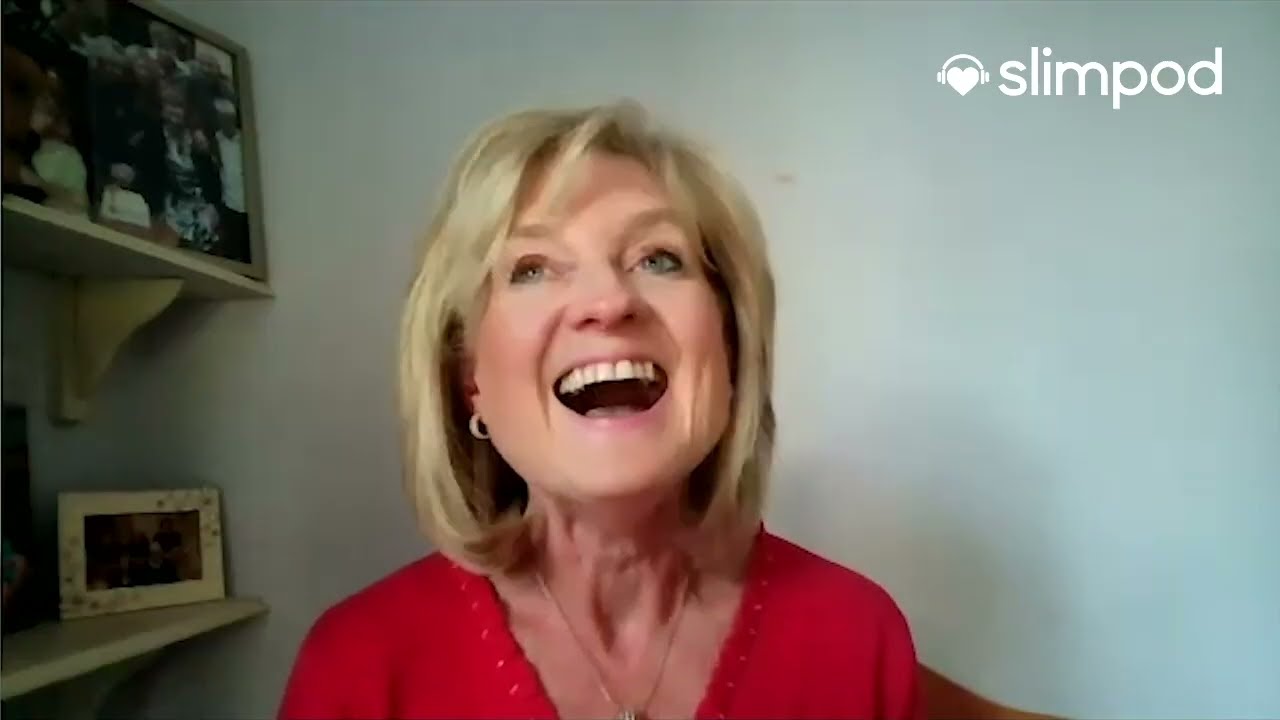
Abi Jones lost 4.5 stone through SlimPod by shifting her mindset around food and building daily habits. Her steps jumped from 1,000 to 13,000-14,000 per day, she runs three times weekly, and a structured goal-mapping system called Project Abbey kept her consistent without traditional dieting.
Chapters
So, hello Abby. Um, today I've got Abby with me, and Abby has lost quite a lot of weight. Um, but she's got a fantastic story, and, uh, it's, it's, it is, it is truly lovely. Um, so I'm going to just talk to Abby about her, um, her journey for the last year, because you've been on the SlimPod program now. It was your anniversary recently and you've lost 4.5 stone, which is great, but that's only a small part of the story, isn't it?
Definitely, yes.
Yeah. So the other day you posted in our private group and you said that words, you know, you haven't really got the words to describe how much of a difference SlimPod and you and yourself has, you know, has made to your life over the past year. And so I'm going to challenge you now, if you did have words to describe what difference things, you know, how things have become different and what a difference SlimPod and you working with SlimPod, obviously, because, you know, that's part of the process. But if you did have words to describe it, what would you say?
I think I feel like a different person, and I feel kind of much happier and calmer and more confident. And I kind of— I didn't know I could feel like this. I didn't, you know, I didn't know that existed. It's so different to how I used to feel about myself and the world. It's just, I feel, yeah, I feel better than I ever thought I could, I think.
Amazing. So that wasn't kind of a goal, right? I want to be happy because you don't have— people don't actually know sometimes what, you know, what happiness feels like because they've forgotten, um, or, you know, how happiness in themselves really. Um, so that wasn't your goal, but you knew how you felt before. I mean, you were, you were a yo-yo dieter, weren't you?
Yeah. Oh yes. Yeah. Um, But then it came to the point where I'd kind of even given up dieting because I thought, well, you know, nothing works and this is the way it is. I'm just going to be like this, you know, forever, really. So, yeah, I didn't think I deserved really investing in, you know, I think, yeah, I got to that point.
That's what happens with a lot of people. I think, you know, it's a really familiar story and it's just so sad because it really penetrates down into your identity, doesn't it? And you just, you you feel as though you're not worth the effort.
Yeah. Oh yeah, I definitely felt like that. Yes.
Yeah.
And, you know, I've been so busy because I was studying full-time as well as working full-time, and I'd been so busy that I just— you don't take time to think about yourself, do you, or your wellbeing, really. You just get what needs doing done, you know.
Absolutely. So how's your relationship with food now?
I'm in control of it and it's not in control of me anymore. I can tell you that. It's astonishing really, because I just used to snack constantly, especially, I don't know, while I was cooking. My husband does night shifts and I'd be alone a lot. And I think I kind of replaced him with food.
Poor man. But yeah.
But from very early days, I just didn't want to snack at all. Admittedly, now it's been a year, I do snack a little bit more, but I think it's because I started running, and as I'm running more, I get hungrier. And, but I've come to terms with that. I've sat and thought about what it means, because when I snack now, it's, it's healthy. It's, it's healthy stuff, you know, grab a few grapes, grab some seeds, because that's what My mind tells me at once.
Fantastic. And were you an emotional eater before?
I think I was. I think I was. I think it was loneliness and a bit of boredom, I think. And I found it quite a satisfying thing to do, I suppose, you know. But now I don't get time to sit and snack anymore because I'm always doing stuff. I do quite a lot of exercise. So yeah.
So exercise has replaced the boredom.
Yeah, definitely, definitely has. Yes, I really enjoy it. I'm not doing it because I think, oh, I've got to be good, I've got to do this. I just want to do it. First thing I do when I get up every morning, you know, like you do. I think you do your exercise, don't you, in the morning? I do mine. Yeah, yeah, absolutely.
So a lot of people probably say, well, snacking is easy to stop if you've got the willpower. Did you use willpower at all?
No, not at all. I've got my, um, my WINs log here and I've been looking back over it right from the beginning. I think it's about the second day in, it was like, I didn't snack. I didn't want to, I didn't even think about it. So, um, yeah. So no, I wouldn't say it was willpower at all. It just didn't enter my mind to think about it, you know? So yeah, not, not willpower.
Fantastic. So, um, you've already said about the moving thing. You, pre-Slimpod, you didn't actually move much at all, did you? Tell us, tell us about when you did move. What, what kind of context was the moving happening? Was it, uh, something to do with dancing perhaps?
No. Um, what, so what, since I started Slimpod?
Before you started Slimpod.
Before I started, but I didn't move. I didn't. I went to Morrison's You know, because we were in lockdown and couldn't go out a lot anyway, and my daily movement would be— I'd think going to Morrison's was quite exhausting, thank you very much. And, um, and I know, and it's true because, um, I've looked back on my, um, iPhone that records your steps every day, and before I started SlimPod, it was about 1,000 steps a day, which isn't— that's about 10 minutes, isn't it? That's not, it's not long. But now it's about 13,000, 14,000 steps a day. So yes, it's changed big time.
Wow. And so a lot of people would say, right, well, how have you found that time in your day? Because going from, uh, what, what, what kind of, you know, where have you found the time and what's replaced, uh, what has the time that you're spending on your steps replaced? Is it, is it, was that the snacking?
No, a little bit, but mostly actually, to be honest, it's been about working from home because what I thought early on is I'm— because I go, used to go to work on the bus and that was probably about an hour a day just sitting there. And I thought, well, I'll replace that with exercise because that's sort of time where you're not doing anything. So it's kind of, yeah, replaced really my work travel time. So I've been lucky with that because I'm still working at home. I'm very lucky with that. But, um, And also another benefit of working from home is every time there's a big conference at work, I used to sit and watch it, but now I listen to it on my phone and I go out walking. So that's another extra hour of movement sort of thing. So yeah, I think it's what I've replaced it. Yeah, I've replaced my travel time and a bit of snacking time with exercise.
Yeah. Amazing. So really your default now has become exercise rather than food.
Oh yes, definitely. Yes, it definitely has. Yeah.
Yeah. The reason I said dancing was that there was a lovely post from you in Slimming World Club saying that, saying that the most you used to exercise before was when you'd had a couple of glasses of wine, you were on the dance floor.
Yeah. Yes. Yes. I did do that. Yes. Thought I was brilliant as well. That's it. The more I drank. But yes, that used to be my most strenuous exercise. Honestly did. That was my most strenuous. Wow, amazing.
And so it wasn't a conscious decision to move more then, it was literally just something that happened? How did it, how did that kind of come about?
I'll tell you how it happened. It used to be, when, you know, this is a year ago now, but when I was first listening to the pods, the main pod, the SlimPods, yeah, the SlimPods, What I'd noticed is lots of people on Facebook were saying, isn't it lovely and relaxing, I'm falling asleep. I have the opposite reaction. And what would happen, would I just, I'd start thinking, oh no, hang on, I could do the Figure 8 Dance Programme. I kept getting ideas while I was listening, literally while I was listening to it. And it didn't send me to sleep because then I'd get all excited and motivated and I want to get up and do something. So yeah, that's how it, that's how it started. And I also, I would recommend do stuff you enjoy. I haven't done anything that I haven't enjoyed. I know what I wouldn't enjoy and I deliberately haven't done it. So, you know, yeah, so yeah, it was quite exciting. I just had these ideas and went with them, you know, I'd have an idea, I'd get up and do a goal map and then I'd follow it through, you know.
So goal map was an important part of what you of your journey as well.
Yes, I'm about to do my 5th one. Yes, I've got them. I've got them somewhere. It's quite—
I know this is such a big deal because, yeah, when I speak to people, you know, who have succeeded, most people are succeeding and, you know, on their journey and all the rest of it. And I ask them the secrets of their success. A lot of people do say, I did a goal map and goal mapping has been one of the keys to it. And then if I talk to people who are struggling a bit, they haven't done one. And there is a real difference. There is a real difference because it's all part of, you know, the reticular activating system in our brain and showing it the way. And we've— our brains are goal-seeking missiles. So why wouldn't you want to harness the natural power of it.
Yeah, and it's helped me logically because I launched this thing called Project Abbey and I found that the, you know, the goal maps were like just part of the project work for me and that also really helped me because it kind of took the emotional element away and I was quite practical about it, right, I'm going, you know, I'm going to do this, this is my I think in project planning they call it gateways. This is my next gateway is to complete this goal map. So I found it helpful for the logical part of my brain as well. But yes, and it's nice— I know this might sound weird, but it's nice to have something to look at, like, what am I doing? Just to refocus, you know. So that helped as well.
Yeah, no, absolutely, absolutely. And yeah, I mean, we spoke before and you did say about Project Abbey, and I just think that that is such a brilliant, brilliant idea because it actually you know, it creates something tangible, doesn't it? It is something that is a project and it just really makes it real.
Yeah, yeah, it really does. And it's, you know, it's just— I can't explain, it's part of what you're doing. You're not— if I was doing— because I am a project manager— if I was doing a project to work, I wouldn't be really scared I was going to fail and I wouldn't be good enough. I'd just try and get it done. And I think that transferred across to me at home, just trying to get it done. I didn't think, "You're going to fail, Abi." I didn't think, "Don't bother," which I've done before on previous diets. I've been like, "What's the point? You know, what is the point? I'm going to fail." But that hasn't happened with SlimPod at all. That's never even crept in, you know.
Fascinating. That's a really, really great tip, actually. Really, really great tip because you're, you're disassociating yourself, aren't you, from, as you said, the emotion of it, etc. You are, when you label it as a project and do your goal map and, you know, all the steps as if you were project managing something, then it literally detaches you from it. And yeah, fantastic. Really, really great tip. Well done. So you've got something hanging around your neck, haven't you?
Showing off. Yes, I just did. My first ever run for charity. And I got a medal. I got a medal. It's for breast cancer now. And I'm wearing this all week because I can't believe I've done it. I've never done anything. I've never had a medal. I've never— I used to try and get off doing PE at school, for goodness sake, you know, using my hay fever as an excuse and everything, because I always got chosen last for everything. And now I've done it.
Absolutely the same.
Yeah, that's not fun, is it?
No.
And, um, yes, so yes, I'm quite— you might guess I'm quite pleased.
Yes, absolutely. So, um, so, so tell us about a little bit about how that has actually come to be. Obviously, uh, when you started, um, when you started the SlimPod, you, you, you know, you've already said how it kind of made you, um, want to start moving more, but, uh, did you consciously decide— was it part of Project Abby, that you were gonna run and get a medal?
No, the doing the— I don't know if you can read that, that's the Couch to 5K app, right? That's the goal map. I did that, but then what happened is a really, really close friend of mine got very ill very quickly and died, and I went to see her in her hospice and I said, I'd really like to do something to raise some money, I'm gonna do a run. And she laughed, she laughed. But anyway, it was one of the charities she chose, and I just said, right, I'm gonna do it. And then a few months later I did it, and people have been so generous that I've raised quite a lot of money. So the organisers came to give me the medal and an Easter egg and some flowers.
Fantastic, fantastic, fantastic. Love it. So, uh, so what's next? More— I mean, you can't have much more weight to lose.
Well, to be honest, Sandra, I've— I haven't weighed myself. Well, it just doesn't seem important. I don't know, it just— I was really quite focused on it last year. I was a bit worried because you were saying throw the scales away, don't worry, but I was— I weighed every week, but then lately I just, I don't know, it's taken a back seat. And in fact, I've already, I'm doing my new Goal Map, and what I'm going to do next is I'm going to have a go at doing the 5 to 10K app to see how that goes. So yes, so I want to have a go at that, and that's exciting. I'm very forward to it.
Yeah, fantastic. You'll be running a marathon next.
Oh, I don't know about that.
People have done it, you know, gone from absolutely nothing, like our lovely Darren.
Yes.
And several others. They've literally gone from being very depressed and on the sofa most of the time and, you know, eating, eating for Britain, um, and then ran a marathon. I mean, he's done everything. He's done triathlons. He's done everything. Wow.
That's amazing.
So you never know where this is going to go.
Never say never. That's what I think now.
If there was one tip that you could give to people watching this that would, you know, help and inspire them to carry on along the, along the journey, because it is, it's just, it's, you know, weight loss journey is can be a really frustrating one. And, um, and sometimes if you've got, you know, self-limiting beliefs and all the stuff that, you know, you— that you've accumulated over maybe 20, 30 years of dieting, like, you know, like you did, um, then the, the, the F word, as I call it, is never too far away. And, um, and so I'm always trying to do these to inspire people to carry on and show them that it can be and so yeah, if there was one tip, obviously you, the Project Abbey, I think is a wonderful tip, or the Project Whoever is a wonderful tip, but if there's one thing that you would share, what would that be?
Oh, only one?
Two or three, go for it.
First one is trust yourself and trust the process, I think. You know, why not? What have you got to lose? And just see what happens. But also, I think with me, it's consistency. And if you are consistent at first, pretty soon it will become automatic. Like, it will be— you'll build a habit that way. I think, you know, I exercise 3 times a day now because I want to, but I don't think about it. And it's not— I don't— oh God, I've got to do this. It just happens now because That's what I've been doing for nearly a year. So I think, yes, trust yourself, trust the process, and try and be consistent with what you do, I think.
Yeah, absolutely. When you say you exercise 3 times a day, it's not getting on the light crew, is it? It's just movement and, uh, and stuff. I mean, do you, do you go out for a run every day, or every— or how does that work?
I run about 3 times a week, um, on a good week. But I do a lot of walking actually, but also like when I used to cook dinner, I used to play on my iPad, but now I dance around— sounds silly— I dance around the kitchen now, but it's more fun as well.
So you have another tip that you'd like to share?
Yeah, my other tip is I always watch the live recordings. I can't watch it live because of timings, but I always watch them in the guide part on the Facebook page because— and they really helped me and they've helped my motivation because they've all got, always got really helpful messages, you know, about plateauing. Oh God, so much. So there's just so much.
That's really— Yeah, that was last week's one.
That was, yeah, that was really good. It was really good. So yeah, that would be a tip is to watch those if you really can, you know, even if you just have it on in the background because there's brilliant tips.
Super. And that's that. Thank you. I'm really pleased that somebody, that people find it— you, I know that a lot of people do say they find them useful. But you know, that's, that's why I do them. So it's really useful to know that they've helped you.
Yes, they really have. Thank you, Sandra.
Yeah, fantastic. Thank you so much. Been, been really, really, really useful. And I know that you'll help a lot of people. So thank you. Thanks so much.
Thank you very much. Thank you, Sandra. Nice to talk to you. Thank you.









