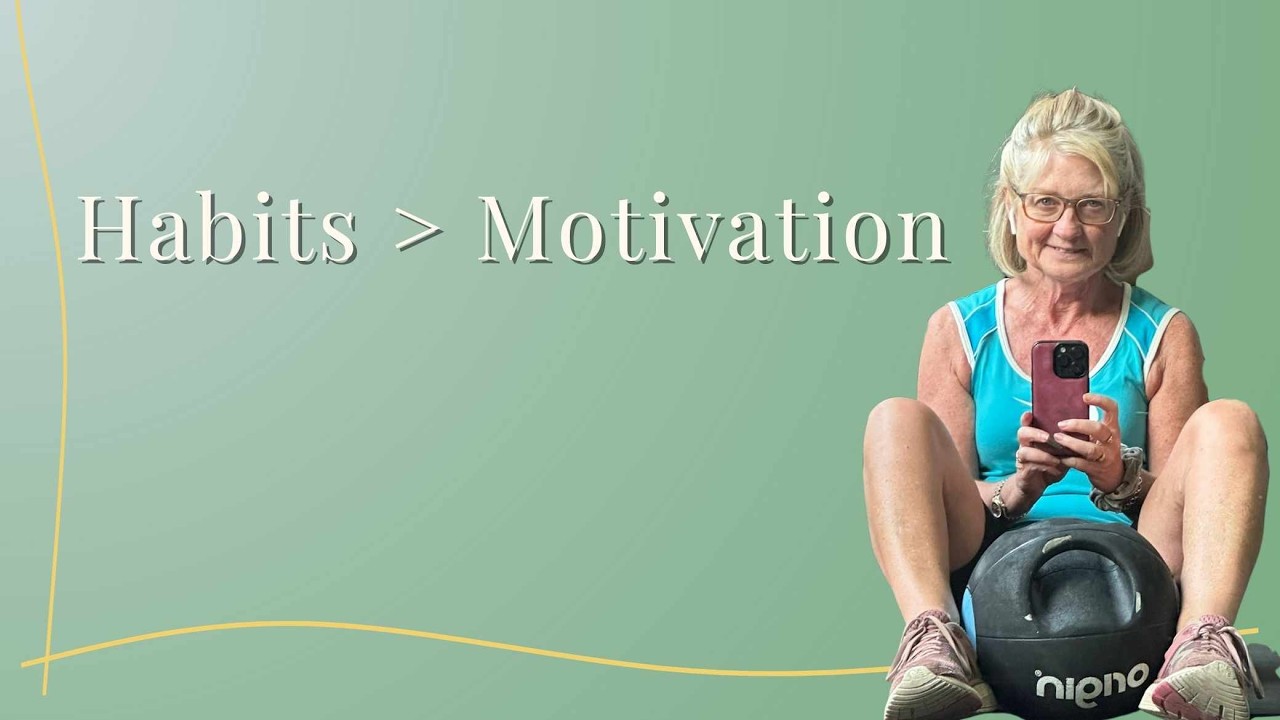
Behavioural-change specialist Sandra Roycroft-Davis explains why motivation fades as novelty wears off, leaving most people feeling they've failed. Real weight loss comes from replacing habits, not breaking them. Her SlimPod programme uses 9 minutes of daily audio to rewire your relationship with food at the subconscious level.
Chapters
Are you trying to lose weight but your motivation just disappears? Did you know that 2 out of 3 New Year resolutions are abandoned by the end of February? If that's already happened to you, you're not alone and you haven't failed. I'm Sandra Roycroft-Davis, a Harley Street behavioural change and weight loss specialist, award-winning creator of the clinically proven SlimPod programme, and Sunday Times bestselling author. This video is part of the Secret to Sustainable Weight Loss series because lasting change doesn't come from motivation. It comes from understanding how your brain works. So here's the real question: what do you do when motivation disappears? Because it always does. Life gets busy, stress creeps in, and the plan that felt easy suddenly feels hard. That isn't a personal flaw, it's biology. Motivation is the psychological force that drives action, and one of the main chemicals behind it is dopamine. When you start something new, dopamine rises. You feel energised, hopeful, and focused. But as the novelty wears off, dopamine drops. That early morning walk, the restrictive diet, the post-dinner workout. What once felt manageable now feels exhausting. And this is the first secret of sustainable weight loss. Motivation is never designed to last forever. When it fades, most people assume they've failed or that they weren't disciplined enough. Over time, that belief damages trust in yourself. But sustainable weight loss doesn't come from staying motivated. It comes from habits that don't require motivation at all. Here's how habits really work. Every habit follows a simple loop. A trigger could be the time of day, stress, emotion, environment, and then a routine, the behaviour that follows, and then a reward, comfort, relief, or pleasure. Your brain learns this loop and starts running it automatically. That's why you pour wine at 6 o'clock without thinking, why biscuits appear with the coffee. These behaviours aren't conscious choices, they're trained patterns. In my research behind my book, The Weight's Over, this showed up again and again. People weren't failing because they lacked willpower, but because they were trying to fight habits instead of retraining them. Here's the second secret of sustainable weight loss: habits aren't broken, they're replaced. You identify the trigger, you change the routine, and you keep the reward. For example, if watching TV in the evening triggers snacking, introduce something that keeps your hands busy. Over time, the TV stays the trigger, but the behavior changes. Start small because momentum matters far more than perfection. Your brain is plastic. With repetition, reinforcement, and positive emotion, it learns very quickly. This matters even if you're using weight loss injections because one day injections stop, and if habits haven't changed underneath, weight regain becomes likely. Sustainable weight loss always comes from building a foundation, not relying on motivation or temporary tools. This is where my SlimPod programme fits in. SlimPod works at the subconscious level where habits are formed through a simple 9-minute audio that you listen to each day. SlimPod helps to rewire your relationship with food, movement, and yourself so that healthier choices start to feel natural. Instead of relying on motivation, people feel driven by something deeper, a genuine desire to feel good. And that's the real secret of sustainable weight loss—when you feel great. So if you've already lost that New Year momentum, know this: you didn't fail. You just need a different approach. If you like support in changing habits for the long term, I'd love you to explore SlimPod. The link is below. And tell me in the comments, what's one healthy habit you're ready to build without relying on motivation?