EM Group Chat #139: Leading Marketplace & Growth Insights From Instacart & Opendoor With Sri Batchu
Sri Batchu, Head of Growth at Ramp, shares lessons from scaling Instacart's ads and Opendoor's marketplace. He breaks down how liquidity, partnerships, and ruthless prioritization drive growth, and why early-stage founders should focus on a narrow customer segment they love rather than chasing total addressable market.
Chapters
So welcome back to Everything Marketplaces, where we talk with founders and leaders from some of today's top marketplaces. So this is episode 139, which is a really incredible group chat that we just had with Sri Batchu, who's currently the head of growth at Ramp. So prior to Ramp, Sri was at Instacart where he led their ads business, and before that was early at Opendoor. So some really incredible marketplace and growth experience. To top it all off, he's also an angel investor in over 20 startups and a Sequoia Scout. So this is a really great chat with Sri where we got to learn more about his experience at Instacart and Opendoor. Some of his key learnings more on growth, discuss some of the biggest misconceptions when it comes to marketplaces and growth, and also had a really great group Q&A. So really enjoy this conversation. Now you're going to find it a great watch to the end. So Sri, welcome to the group chat. And you of course have some real incredible experience, you know, so it's a real treat to have you join us here today. I'd like to start off by saying, you know, huge thanks for taking the time to do so in advance. You know, so I'm looking forward to diving into all of your awesome marketplace and growth experience. But before we do, I think it might be great if you can start off by sharing a little bit more in the background, though, for those that might not know you.
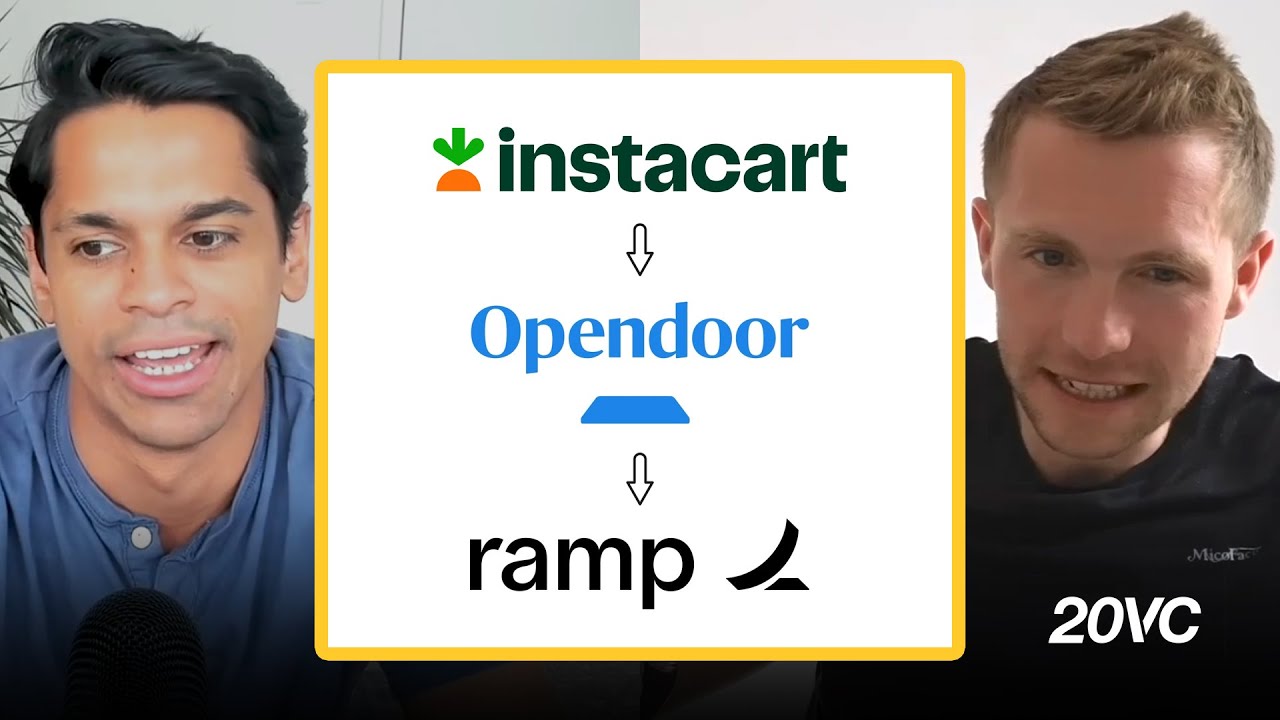
Yeah, happy to give a quick background to myself. If you've seen my LinkedIn, you've seen that I've started my career as a very kind of traditional business person, work in management consulting at McKinsey, did private equity at Bain Capital Business School, a couple of other investing roles in tech before deciding that I wanted to be an operator at a startup. And, you know, at the time I was living in New York and didn't really know that much about the startup scene. So I kind of boiled the ocean and tried to find somewhere where I could be uniquely valuable. I think for better or worse, marketplaces, you guys well know, tend to be more complex, often more capital intense in some cases as well. And so my kind of financial background lended itself well to marketplace-y type of businesses. So I actually had offers from 3 companies in 2015, all marketplace-y type of businesses. All 3 actually ended up going public in 2020. I don't know if I was lucky or good, but it would have been okay regardless of which one I picked. I ended up joining Opendoor. It was a Series B company, about 40 people, less than $10 million in run rate revenue. And was there for the next 4.5 to 5 years, during which time the company grew to $500 million plus in net revenue, $6 billion plus in GMV, over 1,500 people. And having been an early business generalist, I was just tasked with whatever the highest priority problem was for Eric and the other executives at Opendoor. So I initially led finance, then led sales, analytics, and pricing at the company before leaving. My initial plan was to go join somewhere early stage and do the same thing again after my Opendoor run, which was awesome. But I ended up, well, the pandemic ended up happening. So I was kind of like, oh, I should go join somewhere that I know will do well during the pandemic. And Instacart was one of the first names that came to my mind and they had a, you know, a need. So the opportunity worked out. I during my time at Instacart, I initially focused on helping build out their ads business, which was, you know, a $50 million business in 2019, which according to filings, you guys know now is an $800 million run rate business. So it's grown tremendously during a short period of time. And, and then I subsequently worked on the overall leading global growth strategy at Instacart as well. At the end of 2021, I just, you know, Instacart was obviously— it had stabilized in terms of growth. It's a large company. I wanted to do something earlier stage in a real growth inflection point. So I was looking for a great company doing that. So it's not a marketplace. I ended up joining Ramp at about a $75 million run rate revenue. And Ramp is now— it's now over $300 million in run rate revenue as a company.
Thanks for sharing with us. That's quite the incredible background and a lot we're going to get into here. But I guess, you know, going back to, to Opendoor, because of course that's a marketplace that, you know, we all know of, you know, could you maybe walk us through your experience there and maybe some of the challenges with that as a marketplace as you kind of scaled up?
In many ways, Opendoor's primary business is still the market maker.
Right.
And I think market making is an important function that a lot of marketplaces need to have or do have in the early days to bootstrap the marketplace by having the company act as a principal in the transaction and on one side or the other. In Opendoor's case, the origin story of the company was, you know, technically there is a marketplace for real estate. That's the traditional way of buying and selling real estate agents, right? That no one is taking the capital risk until the time of the transaction. But the process of that is relatively painful because of the timing as well as the uncertainty of both timing and price. And so Opendoor decided to solve this in a capital-intensive market maker way, which brought with it a lot of challenges, right? One is the need for additional capital, the need for risk management, and, and made for more challenging margin environment, which I think is in some ways working at a company like that is, is a great boot camp because it'll only get easier after that. You're not going to ever work for it, hopefully. And I guess I've kind of been doing that, right? Like Instacart is an asset-light marketplace and now I'm at a SaaS company. Basically it's a payments company, but it's effectively SaaS. And so those are obviously easier business models in many ways to, to get at. So for me, the biggest learnings from Opendoor were really around, you know, the value of a market-making function as well as the risks inherent in it and some of the challenges in transitioning from a market maker to a marketplace. Opendoor was eventually successful in building a B2B marketplace. So REITs and other large institutions do have marketplace-type transactions. On, on Opendoor. But the retail marketplace has been challenging for a variety of reasons, which I'm happy to dig into if people are interested in that journey. Obviously, there are some products that we're starting to invest in and there are some currently that are scaling on the marketplace.
Yeah, no, that's a really great point. As far as you mentioned on the, you know, the market maker and kind of having liquidity there. So I guess, you know, you mentioned that that was a great kind of start with the bootcamp, right? Starting hard. But, you know, transitioning from Opendoor to Instacart. So Instacart's, you know, very operationally complex, you know, with, with four sides as a marketplace, you know. So could you maybe show a little bit more about, you know, what you're working on at Instacart, maybe some of the specific challenges with it as a more complex marketplace?
Yeah, I think, you know, as you mentioned, it's four-sided, and the more sides there are, the more kind of needs and incentives that one needs to balance and pressures that come along with it. I think the other thing that's also interesting about Instacart is The dynamics of marketplace, as you know, will change depending on the liquidity and consolidation on each side. And Instacart has multiple sides that are highly consolidated. There aren't that many retailers, grocery retailers in the US that capture most of the market share. And similarly, the number of large CPG advertisers is relatively limited in the grand scheme of things. And And separate from that, there was inherent tension and continues to be always inherent tension in Instacart's business model, which is that, you know, the part of the reason why Instacart worked and some of the previous versions of this didn't work, like Webvan, Peapod, Fresh Direct, for those who lived in New York or live in New York, is that having inventory close to the point of delivery that's, you know, refrigerated and the range of SKUs that you need for grocery has always been challenging. This is why Amazon has also had a hard time in the grocery category. And so the innovation that Instacart came up with, which is a business model innovation, but is that, hey, actually there are warehouses near people's houses. They're called grocery stores and they're refrigerated, they're easy to use and they're free to use. So why don't we take advantage of that and create a, you know, logistics network based on that. As you can imagine, this is good for the retailers if it's incremental demand. And but it's potentially conflicting to the retailers if it's capturing, you know, in-store volume because it can potentially be lower margin depending on what the, you know, what they choose to mark up on the platform and what their net fees end up being via Instacart and different retailers. Have different strategy there. So anyway, that's more about the business. I'm happy to talk about the specific things that we worked on. So I'm happy to tell you a little bit about the ads work that I did, you know, that I helped lead at Instacart. Instacart in 2019 had a meaningful revenue, as I described earlier, $50 million ads product. But, you know, it was primarily being driven at the time by banner ads and other unsophisticated products. During 2020, we created or we really scaled sponsored listings product, which is very similar to Amazon's ads product. And, and we created like, you know, all of the basics you expect from the ad platform. So we didn't have like an advertiser portal previously. We didn't have, you know, second price auction. We didn't have quality filters, relevance filters, bidding strategies, daily pacing. So we built all of that during 2020 and we were able to basically 10x that business. Obviously a good chunk of it was the GMV growth rapidly, but we also increased yield as a percentage of GMV tremendously during that time by building a product that the consumers wanted. During my second— or our customers wanted, I'm sure advertisers— and during my second year, As you can imagine, once the pandemic was waning, Instacart was, you know, dropping year on year pretty materially in terms of revenue at the beginning of 2021. And we had to figure out how do we stabilize this forward? How do we optimize growth further? And, and so it was a lot of blockbly tackling, like thinking about incrementality of incentives because we would spend enormous amount on coupons and incentives as well as thinking about just ROI on paid ad spend was one big piece. Another big piece was around combating this perception that Instacart was a niche product for higher-end audiences. Because I mean, it's not cheap, right? Like, you know, the average basket size on Instacart's a little over $100. You know, everything added together, you can be up to another $15 to $20 on top of your, you know, grocery bill to have your groceries delivered. And, and so we, we did a few things to try to combat that. One is let's have more affordable retailers. Let's— so like Aldi and others on Instacart, let's have, let's have more payment options that speak to affordability. So the SNAP EBT push that we did, and then let's push our retailers to have lower prices or at least price parity with the stores, which has always been a challenge because obviously the retailers want to make up for their incremental costs by charging higher prices on the, on the platform. And we try to do that in a more subtle way by having icons that— and you can see these in the app today too, which say in-store prices for certain retailers. So it's a more subtle nudge for the retailers that they might lose demand if they don't charge. Instro price. So that was one big set of things that we did. And the third big set of things that we did is just trying to open up new use cases. Instacart historically was the weekly shop, the $100 to $200 basket size, and which is good. And there's obviously growth there, but we wanted to open up new avenues of growth. And so there's a couple of things. One is some things that are simple, like adding more delivery windows, express delivery pricing, priority delivery pricing, or whatever it was called. We also created a new convenience use case. Obviously we had the deals with 7-Eleven, etc., but we actually created imprints of all the major retailers. So we would have like a Kroger convenience imprint. We would have basically a synthetic store with fewer SKUs, limited delivery radius, etc., and overall lower basket size. And then in general to increase more shopping, we did a lot of product things, but also we doubled down on Instacart Plus, which used to be called Express at the time. So there's a handful of things that we did. And if you look at the growth numbers, 2021 was still a big year for us even though COVID had pulled back.
I appreciate walking us through and going into detail. So I feel like there's so much we could get into with it here. We'll probably get into some with the questions, but, you know, focusing a little bit more or I guess learning more about your role there and, you know, leading the kind of the ad I think one of the topics that kind of comes up here with founders in the community is when it comes to ads is, you know, as far as, you know, introducing that but kind of balancing the customer experience, right? And not degrading the marketplace experience. So, you know, how did you think about that? You know, maybe when you first kind of introduced ads to Instacart and kind of managed it?
Yeah, I think, you know, we were benefited by the fact that we weren't first to market, right? That obviously Facebook and Google existed, but also Amazon had a meaningful multibillion-dollar ads business as well. By the time we launched it. And so there was already a customer understanding on ad load and an understanding of sponsored listing as a product. So we felt comfortable with having ads in general, but there were two questions that we, we debated and quickly resolved. One is, should we let the organic listings be influenced? Buy ad spend in any way, or should we make it very explicit what is sponsored versus not? And we made the principle choice to not have organic listings be influenced, right? And then I think, you know, the other thing that's like relatively market, but each company has a different nuance on is like, okay, great. So now we have search results. What ads do we allow on these search results? So you need to build relevance filters and quality filters for the ads, right? And the expectations of the users. And there are some things to be debated. Okay, so somebody searches for Corona or some research for lines rather, should we have a Corona ad pop up and vice versa? Does that make sense? Does that fit with the user experience? Is that disruptive or additive? And so there were a lot of these things that we debated and some of them we solved by just using Crowdflower type, like We just asked people, like thousands of people, it was like, does this feel relevant to this? And based on that, we came up with relevance and quality scores that we use. Obviously you still need to set some hard guidelines, like, you know, Notion's around family friendliness, et cetera. Like you don't want condoms showing up when you're searching for vegetables or what have you. So things like that. But, but, but yeah, I think there is a way to, so we believe that Sounds a bit cliché, but we believe that there's a way for ads to be, you know, net positive, not just neutral, but net positive to the customer experience, which is we serve you something that you weren't thinking of that you actually wanted for your search and, and or like you're discovering a new product in the same category that you wouldn't have purchased otherwise and that you're delighted by now. I think that's a big problem in general that online platforms struggle with versus offline platforms. Which is discovery, because the online experience becomes very utilitarian. You go there to buy the things that you want and you know what you want to buy. You browse a little bit, but people, especially on an app for a grocery category, you're not really browsing the same way you are with end caps and you're looking at, you know, little displays and all of these things in the grocery store. And you end up often buying more things than you intended to because you're inspired or you discover things in the grocery store. And that's a a relatively difficult thing to replicate in the app digital experience that we try to do a bunch of things to do that. But ads are one way to do that as well, as well as more interactive media and the recipes product and videos and tutorials that we're adding in the app where we're seeing those things.
Certainly, I guess like looking back now, you know, what were— what do you think some of the biggest learnings were from your time there as maybe an operationally kind of complex marketplace?
I think people under think about partnerships and sales as a lever for marketplaces because people think, oh, it's a marketplace, there should be lots of liquidity on both sides. So we do scaled go-to-market motion on each side via product, organic and paid, or what have you. And certainly those work. But, you know, as I mentioned earlier, Instacart, as you guys know, is consolidated on 2 of the 4 sides of the marketplace. And we invested in great partnerships and sales team that was able to jumpstart our ecosystem and then build out the right sets of deals that we needed for the marketplace to succeed. So that's at least for me, one big lesson. Another big lesson from my time at Instacart, especially due to the complexity that we talked about, of the Foresighted Marketplace is just the value of prioritization. Having worked at, you know, a few different companies with a lot of different executives, I think everybody says that they're good at prioritization and that's the top skill for, you know, senior executives, but most people aren't. So if you give people the option of, hey, like we're thinking about doing A or B, these are the trade-offs, both are good ideas. Majority of executive teams will say, let's try to do both. Let's squeeze it in. And the good ones will say, well, you know, like A clearly seems better. Let's focus on A. Let's come back to B, you know, next quarter, next year. And I think the really good ones like Apoorva would say, why are we doing either of them? They don't fit in with our overall core, you know, strategy for this year or what have you. And I saw Apoorva actually doing that quite often at Instacart, which, you know, culture comes from the top. And because he did that, everyone else understood that focus was the most important thing. And, and it spread through the organization because of that, because with a company that large, with that many sides to the marketplace, it's very easy to, you know, get caught in your own tail and just be running on a bunch of things without producing results. And so I think trying to push that focus and being maniacal about what the most important thing is, only doing the most important thing, I think is critical.
And those are some really great learnings and kind of tips to share. So, you know, so while it's not, I guess, a marketplace per se, you know, many of us here have, of course, heard of Ramp and, you know, the recent funding announcements, you know, huge congrats on that, by the way. And it's a really incredible company that's grown here. So, you know, I guess, you know, what's the story of, you know, leaving Instacart and joining Ramp to now focus on leading growth?
Yeah, I mean, I think as I kind of mentioned earlier, for me it was more around I wanted to go somewhere that was a little bit earlier stage. I think Instacart is now at a steady state. Let's call it 20 to 30%, you know, you're on your growth, which at Instacart scale is of course very impressive. And I wanted to go somewhere that was still in hypergrowth mode where we could, you know, double or triple the business and where, you know, my impact on the growth team, you know, leading that could be very significant for the business. And so that was the kind of decision criteria of going somewhere earlier at an inflection point in terms of like why Ramp versus other companies that I could have gone to. I really think of those decisions as honestly investment decisions, which is, you know, as an operator, you're an undiversified investor. You're selling something that's very valuable, your time, a few years. And, you know, unlike a VC, you don't have a big portfolio to amortize your mistakes on. So not only do you have to feel good about the upside, but you also have to feel reasonably protected on the downside. And then the set of things that you decide on a good investment are kind of the same whether you're an operator or investor. It's really around, you know, is this the right team? Is this the right time? Is there You know, what's the competitive dynamic of the industry? What are the unit economics, etc., etc.? And, and Ramp had all of that. It's an excellent product with a lot of pull, with a fantastic team and a huge market with— so, so it made a lot of sense. I was excited to take on that adventure.
Yeah, that's great to learn more about, you know. So, so you did mention some of the specific challenges with, you know, Opendoor and then Instacart. And of course, you know, each business has its own unique challenges. So maybe what are some of those at Ramp right now and maybe more specifically on the growth side of things?
Yeah, I mean, I think Ramp has grown really, really quickly, as you guys know, right? And so, you know, sometimes it feels like the marketplace is crowded because it feels like there are a lot of expense management solutions out there. I think the reality is if you kind of zoom out, it's, you know, Amex is the only large player there, like something like 40% of the market share. And then there's Chase and a couple of other big issuers that are large. But if you take all of the, you know, emerging expense management solutions out there, all of them together is low single digits percentage of the market. So it's very easy to get distracted by the competitive landscape. I think Ramp is focused on kind of the bigger picture. I think early adopters of Ramp are obviously kind of startups and SMBs and mid-markets and more coastal companies. But over time, we've been able to grow into kind of Middle America, more traditional businesses. But I think there's more to be done there is one kind of general vector of growth that continues to continue to do. More of. And then I think the other is really around moving more upmarket. I think our core product served very well for the mid-market customer and continues to, but we're increasingly getting large customers, right? Shopify as a customer has been announced recently, and there are a handful of other very large customers that have yet been announced. And, and so we know the product is now working for much larger customers as well. And the growth in marketing motion to those is going to be very different. And so we need to figure that out as we go on.
Are there any maybe interesting kind of learnings, I would say, for, for Mint as specifically as like a SaaS business, you know, coming from Opendoor and then Instacart that you've recently learned?
Yeah, I mean, I, I think it's more for me on the lower ends of the question, which is, you know, obviously the consumer-scale business. You've got lots and lots of users and user events and you get feedback on experimentation pretty quickly. Like it wouldn't take longer than a week or two at Instacart. Sometimes you could get results in a day or two on whether or not something that you did was working when you have, you know, that many millions of active users. But, you know, in B2B, it's a very different market, right? The total TAM is probably less than a million businesses for most B2B companies. And so trying to experiment requires a different kind of thinking and engine. And so it was very interesting kind of adapting to that and building that at Ramp because I think, you know, a lot of people ask me, you know, what is the biggest secret? Was there like a secret channel that you found? Was there an alpha that like, you know, found? And it's like, Look, most of these markets are relatively efficient and every once in a while there is an alpha. I'm sure there was one when TikTok first came out, right? But these things don't— the secrets don't last very long. So the goal shouldn't be to— sure, of course, always try to find new ways of finding where your customers are and engaging them creatively there. But I think the bigger thing that's important is you scale. It's not about finding the small pools that are unfound. But more about building a repeatable system of experimentation.
Yeah, I can only imagine, you know, all the questions you get as the, you know, someone that's the head of growth at one of the fastest growing startups, right? Like, we'll learn all the little secrets there. So, so going to get into questions here in a little bit. Quite a few messages from founders. I mean, before we do that, so yes, of course, that's some pretty incredible experience, not only with marketplaces but with growth. So are there any, maybe any misconceptions that you're seeing with earlier stage kind of founders and teams?
We've kind of touched on the notes that I had written for this is we kind of already touched on. I think one is people worry that, you know, if one side of the marketplace is too consolidated, that the marketplace business model won't work. And sure, it does make it more challenging, but I think Instacart and others have proven that as long as, you know, there's value being provided via the marketplace element and then at least one side is fragmented, I think you can build a great business. So I wouldn't be too daunted by that. I think we talked about kind of thinking about investing in sales and partnerships as a, as a good lever. So I would say those are two points. I think the another one that I'm sure a lot of people know intuitively but often forget is people focus a lot on TAM and like a big TAM and trying to go for a product that, that suits a large TAM. But I find that almost always focusing when you're an early stage startup on finding a small group of customers that you serve really, really well, where you can find customer love for a narrow use case is always better. And then drawing kind of concentric circles out from that. In terms of expanding your use case and expanding your customer segments, I think works really well. And honestly, I think that's the place that I've seen a lot of startups, even in the marketplace area, even ones that have grown a bit, fail, is that they've taken on too much too fast and not focused on where their core advantage is and where the customer love is.
That's such a great last point as far as, you know, a lot of founders trying to boil the ocean in the very beginning. Right. So can admit I've done that some myself. So actually one of the other kind of topics I wanted to get to right before we get to the questions here, so you of course have some really incredible experience, I would say, on the operational side with a lot of these marketplaces. So when it comes to angel investing, how has that maybe impacted how you evaluate marketplaces from the investor kind of perspective at the earlier stages?
Angel investing, for me, it's not about necessarily how big the TAM is, how competitive the space is. Do you have a unique insight about the customer problem? And have you built something that even a handful of customers really, really love? And so those are kind of— and then are you the person to actually go solve this? So that's the diligence that I'm doing as an angel investor in marketplaces rather than trying to, you know, over-engineer TAM and competition on your LinkedIn.
You invested in two pretty cool marketplaces with AirGarage. So was it AirGarage and Flock Homes? That's really cool.
Yeah. And I have a handful of other marketplaces too. Kindred is another one that's a house swapping platform that I'm an investor in, and there's a few others. But yeah.
Hey, Dmitry, do you want to come on?
Yeah.
My question is about kind of the prerequisites that a marketplace needs to sort of have in order for sponsored search to be sort of a good monetization strategy? And my second part of that is like, are there any sort of blockers? Are there things that you see that just completely kind of knock that strategy out of the set of viable ones? I mean, I think the, the two things are what you would expect that are most important to make like a sponsored listings ad work, right? One is fragmentation of players on the platform. And two is critical mass of ad inventory that you can solve. And so I'll get into both in a minute. So Instacart doesn't have a ton of fragmentation, but there's still a lot of brands, right? That are— so these things are more competitive in certain areas than others. For example, in ketchup, there's only like 2 players, right? Well, 3 maybe. But so in those categories, you tend to find that the ad yield is lower versus like sparkling water. There's hundreds of players. And so the yield on ads there is much higher. So how competitive is a given category for search matters a lot. So if you've got a lot of competitive categories with fragmented user base where discovery will be important, the advertisers will spend a lot. And so the ad product will, will work well. And then the critical mass of inventory, it's interesting is, you know, Instacart in 2019 had a little over $5 billion in GMV on the platform. And you would think that's a lot of, you know, GMV like that should be building a good ad product. But honestly, it wasn't that much because if you look at Coca-Cola,, you know, the amount of sales on Instacart were still pretty small compared to other channels that they were selling in. And so it just didn't, it was close, but it didn't quite hit the, oh, we have to advertise on this platform and think about it. But the next year with the pandemic, when Instacart crossed $20 billion in GMV, all of a sudden it became a lot more interesting for all these advertisers. And, you know, Instacart has the contractual relations with retailers But the ads business we had to build from the ground up, like we were messaging, you know, brand managers on LinkedIn to be like, hey, like we've got a new ad platform. Do you want to come and talk to us about investing? Even though we were a big company in other respects, we had to do everything from the ground up. And so the critical mass of impressions matter. So the first thing that they'll ask is, okay, like how much can I deploy in this channel? And if the answer is like $10,000 max, which that, that might be okay, actually, that might actually be a win because they're like, okay, fine, whatever, small amount test budget, I'll throw it in. But if it's like max is $100,000, then it's kind of like neither here nor there. Do I really want to add this additional channel to manage across all of my channels? And it's like above my test budget. So, you know, it's going to be harder to convince somebody potentially.
Awesome. That's a great, great question. Thanks for coming on, Dmitry, and thanks for sharing more with us on that. Sure. That's really interesting to learn. So cool. So we have time for one more question that we're going to try to get in here. Hey, Sarah, do you want to come on?
Yes, love to. Thank you. So, hi, I'm Sarah. It's great to hear all about your background. I am building a bridal wear marketplace, so peer-to-peer buying and selling gently used or new bridal wear. It can be anything from outfits and accessories from bridal shower, rehearsal dinner, all the way to wedding. So it's— we're relatively new. We've been launched for about 5 months or so and have some, some strong traction, which is exciting. So I'd love to understand from your experience either at Opendoor or with your angel investments too, with a company so small, there's obviously a lot of testing and learning going on, whether it's with our marketing initiatives or opening up to different targets, you know, restructuring some of our products as we're learning how users are interacting with it. Curious from your perspective, being in the smaller stage and as we're looking to raise additional capital, what is it that an investor, you know, likes to see about, you know, trial and error? Do they only want to see the wins? How transparent should you be, I guess, in all of that kind of iteration? And just, you know, as we continue to grow, you know, what are the things that you think is, you know, exciting for a small company to be highlighting? And, and, and just as we're making those pivots.
Yeah, I mean, I think fundamentally the process of investing is iterative de-risking, right? And so what investors want to see is with your last round of capital, like, what were your hypotheses in terms of like what you were going to test and de-risk? And then how did they go? What did you learn? And then with your next round, what are you going to be able to learn and de-risk so that you become a a big company, right? And so I think being transparent about what didn't work and what you're going to try next, I think is generally valuable, right? Of course, like at the end of the day, I do think a lot of investors will anchor on the numbers, to be honest. Like they'll love the lessons and color. And then I think it'll show your rigor as a founder more than anything else. But they'll be looking at metrics like Okay, what does steady-state contribution margin here look like? What is the TAM? What is your run rate GMV been? And what does your take rate look like? And what's your month-on-month growth and all of that?
So that's a great last question. So, well, cool. So we're almost out of time here, but yeah, Sri, this is such a great chat. So we really appreciate, you know, taking the time to join us and sharing all of your awesome experience and insights with us here today. So I actually had one last question for you myself before we wrap things up, though. Nats, if you could go right back to before maybe you joined Opendoor, what would you tell yourself about marketplaces specifically?
I think marketplaces are incredibly difficult to build, but when they are scaled, they're incredibly difficult to disrupt. Right. And so I think the— I mean, Bill Gurley has written a lot of great stuff on what makes a good marketplace that is obviously in the public domain that you guys should look up. He has plenty more experience than I do and has summarized well. So I think there, there's a lot of lessons on, on what makes for good, good marketplace. Personally, for me, I probably wouldn't do anything differently. I really enjoy working in kind of more complex operational businesses. And as I mentioned earlier, I think they're great training grounds for whatever you're going to do after. So, so I think the key is just finding the right business that resonates with you, whether as a founder or operator.
Yeah, well, I was going to ask, you know, now being at Ramp and B2B SaaS, we're kind of crazy for, you know, being marketplace founders and teams here. So, well, cool. So yeah, we once again really appreciate it. And last but not least, you know, time for a quick plug. Where can we keep up with you at?
Yeah, somebody just dropped it in the chat as well. I'm I'm on Twitter all the time, probably too much. So you can definitely find me there.
More from Sri



Wealth Creation For Employees Explained By Sri Batchu (Ramp, Instacart, Opendoor) I The Neon Show

Growth Lessons From Scaling Opendoor, Instacart and Ramp with Sri Batchu, Ramp


The Ultimate Guide to being an Operator-Investor -- Sri Batchu & Harry Stebbings

Sri Batchu: Biggest Growth Lesson from Instacart & Opendoor; 70% of Experiments Should Fail | E1040