Wealth Creation For Employees Explained By Sri Batchu (Ramp, Instacart, Opendoor) I The Neon Show

Sri Batchu, who led growth at Opendoor, Instacart, and Ramp, explains how founders should pick lead investors, emphasizing trust and board influence over check size. He argues AI is still early for B2B but sees massive potential in consumer apps like Character AI and Perplexity, and stresses that solid business fundamentals matter more than hype.
Chapters
The right company is a company that you think is going to be successful, be a unicorn, decacorn. You want to join before key inflection of growth at the company. Both Google and Facebook have boomerang policies. Basically, if you come back within 4 to 6 months, they will just restart the clock on your equity package so you won't lose your vested equity. A lot of the reasons why people want to be an investor is because I have access to capital, I can select companies, and I think there's this notion that that means that I am smarter or more powerful or doing better in life.
When I was a founder almost 10 years back, I used to be 6 months almost on a raise out in the market. Now, as a fund manager, I'm almost 10 months out on a raise.
Before I start talking about angel investing, it's really important to know that it's a consistently underperforming asset class. Like, you will make less money doing angel investing than putting your money in an index fund.
It's always said that, you know, founder-operator make the best investors versus career VC professionals. Why is there disproportionate higher number of career VC professionals in the ecosystem everywhere? Hi, this is Siddhartha Luwalia. Welcome to The Neon Show. I'm your host and co-founder of Neon Fund, a B2B SaaS fund that invests in seed stage in the most enterprising SaaS companies coming out of India, building for the globe. Today I have with me Sri Batchu. Sri was the VP of Ops at Opendoor, Head of Growth at Instacart, Head of Growth at Ramp, and recently joined The RealReal, which is the leading US brand in luxury resale, as their Chief Marketing Officer. Welcome, Sri, to The Neon Show. So excited to have you here.
Yeah, excited to be here. Thank you. Thank you for having me.
And Sri, your profile is incredible, right? From an operator point of view, it's the dream profile if I look from an operator point of view. You helped build Opendoor into a $5 billion GMV platform and then navigated Instacart's hypergrowth during the pandemic period. And then spearheading Ram's journey to $300 million ARR is the fastest company, I think, uh, to that milestone. And you helped drive strategic growth at key inflection points in the most iconic companies of the decade, in the starting 2015 till 2024. Previously you had brief stints at Bain Capital, Bridgewater in investing, and then a scout at Sequoia. So tremendous amount of things to discuss with you, Sri, today. So excited, you know. Before that, right, would love to know about your background, Sri, right? Where did your parents come from? About your own background.
Yeah, happy to chat about that. So my I was born in, in South India, in Hyderabad area, and so that's where I grew up until I was about 11 years old when my family moved to the US as part of— if you recall, they were importing a lot of computer programmers because of the Y2K crisis in the late '90s. And so that's how my dad, who was a COBOL mainframe programmer working at the ECIL in India, ended up moving to Madison, Wisconsin, like, you know, it's pretty suburban Midwestern town. And that's where I grew up. I went to middle school and high school and ended up going to college on the East Coast to Dartmouth. What's interesting about kind of even the early careers, you know, how much influence your parents have, especially in an Indian family, in what choices you make. And I was actually at the time, you know, going to do, you know, my dad of course gave me two options, you know, be an engineer or a doctor. And I was gonna considering going into computer science, but he actually discouraged me given that he was a, you know, a programmer and computer scientist. Because his view at the time, which I think in retrospect, you know, was probably not the right one, you know, 20 years later was like, he was like, look, the technical people are not where the value accrues. It's the management layer that gets to do the most impactful work and drive decision-making. So he guided me towards that path. And I obviously ended up joining a management consulting firm, McKinsey, and then kind of went down that path eventually. And they also actually, interestingly enough, in classic Indian parent way, really like encouraged me, put pressure on me to get an MBA, which I was not interested in doing. And that's a longer conversation. I'm happy to talk to your audience about whether or not a Harvard MBA is worth it at a later time. But yeah, so those are kind of like culturally important things maybe that drove some of my early career decisions, which obviously had impact on what I ended up doing later.
And now coming to a very specific question, you know, for our audience who want to, you know, do career pivots and land onto the, the most enticing opportunities which can help them grow. So how did you think about your own career pivots, the thought process behind picking when you entered and when you exited?
Yeah, uh, you know, the handful of jobs that I had pre-tech were really more kind of quote unquote natural progressions of me learning a skill set, right? So going from management consulting to getting deeper business knowledge into an investing role. And so I think what would be really helpful maybe especially for your audience is how to navigate it through kind of the tech lens. And so once I, you know, kind of made the pivot over to tech in 2015 with Opendoor, you know, I've made a few changes as well and would love to talk through some of those. I think, you know, a lot of this stuff is simple in retrospect when you, you know, the lesson that I've learned is honestly to be at the right place at the right time. That's easier said than done. And, you know, what does that mean? Right. And I think for me, you know, the right company is a company that you think is going to be successful, right? Be a unicorn, decacorn, reach liquidity. And the right time is like a bit more nebulous, right? Which is like you want to join before a key inflection of growth at the company. I think if you do both really well, you'll learn a lot and you'll also build great relationships and reputation that'll serve you well along your career. And there's a reason why there's these quote unquote mafias, right? I know now I'm sure there's a Flipkart mafia and there'll be a Zomato mafia in India. And there are such in the US as well, Square, PayPal, and then actually, The Opendoor community, we recently counted, we have at least 50 founders that came out of Opendoor and counting, right? And growing. So I think great companies create, you know, great founders and investors and operators. So you wanna be in that kind of zone when that's happening at a great company. Now, how do you identify the right company? I think it's, there's a lot of content online about it, but basically you're, And I often say that an operator is actually a very undiversified investor, right? So your bar for selecting the company that you're going to spend a few years is very high. So you actually have to be a very good investor with a little bit more risk aversion than a typical investor, because investors have a broader portfolio. And so you kind of approach it the same way you would as if you're making an investment. You know, is this the right team? Is the TAM there? Is there a path to great unit economics? What does the competitive landscape look like? Is there product market fit? Are you excited about, you know, what they're building? And there's always trade-offs, right? You can get really high confidence on all of those as the company becomes more mature. So if you go to a very late-stage company, you know, you don't get as much learning and you don't get the credit for being there at the right place, right time. So you kind of have to balance that timing and take a little bit of risk. But if you take too much risk, you know, you might be wasting your time. So it's always a little bit of a— balance. And I think, you know, you can look for other external validations too. Are great investors in the company? Are they doubling down in each round? Those are usually some good flags. But I think finding the first job in tech is probably the hardest, right? Even for folks that, you know, are US and tech adjacent. For me, you know, I was working at a hedge fund in New York,, you know, and, you know, yes, startup bug was there, but not as much in New York at the time. And so I had to literally boil the ocean. I went and looked at what all the top lists were of, you know, top companies, went all the portfolio pages of the VCs that I knew, made a Google Sheet for myself, went into LinkedIn, tried to find second or third connections to try to get me, you know, connected to the company to just get a sense for,, you know, are these good companies? Do I wanna go there? And I think if you run a rigorous process, I mean, this is one example that I'm giving you, but you know, when I ran this process in 2015, I ended up with 3 offers at San Francisco-based tech companies. All 3 were Series B companies. And I don't know if I was lucky or good, but they all IPO'd actually in 2020 and 2021. So it would not have been the worst choice regardless of which I picked. And obviously I had a tremendous time at Opendoor and I really, I'm happy with my choice, but I just give that mostly as an example to suggest that like it might seem daunting, but you can actually analytically improve your odds of success of finding the right company. And I think after you get your first one, the subsequent decisions become easier because, you know, you've now built relationships with people both within the company that move on to other companies, as well as over time you'll build relationships with with investors that, you know, help, right? I think, you know, you have to be kind of thoughtful about that. Like how I did not have any investor friends when I was first starting out and trying to find my second job after Opendoor. And there were a couple connections here and there from school and work, but I basically kind of like shamelessly reached out to even tenuous connections and was like, Obviously, you write a thoughtful email that they can forward and say, hey, like, you know, I'd love to meet X investor because I'd love to be connected to Y company, or I admire them because of Z reason, or what have you. And like, you know, some of them were the most randomest connections. Like one of my friends, her boyfriend was a reporter, so through which he had like talked to some investors. So he connected me to some folks, you know, just any connection you can find in the beginning. And what's great about actually trying to connect with investors as an operator is that it's a, it's a nice win-win because operators are always— sorry, investors are always trying to differentiate themselves in somewhat commoditizing world, right? One way they can do that is by having access to great talent and introducing their founders to exceptional operators. It helps them, it helps the founders, it obviously helps the, uh, the operators. So, uh, that has been my kind of subsequent path in terms of how to find the next companies, right? Use your, um, investor connections. And what's really interesting is, you'll tend to find consensus, uh, as well, which can be good or bad, but it's, it's still a helpful data point, right? And, uh, and so, you know, when I was, uh, leaving Opendoor, Sequoia had introduced me to Instacart. When I was leaving Instacart, um, you know, a lot of investors, but the connection was JD Ross, who's co-founder of Opendoor, was an angel in Ramp. He connected me, uh, to Ramp. And both times, by the way, there was a lot of consensus that those were great companies to work at around that time. And then even my most recent role, I got connected via investors at Bain Capital Ventures. So I think over time, those relationships that you build will help you pick out the next path. I think you mentioned in your question too, like, okay, entry is great, but how do you decide when you exit? And I think The exit point is a far more personal one. I don't know if there's like a right or wrong way to do it. I think you have to be at a place for like, let's call it 2-ish years to have meaningful impact, to learn and all of that. Although in hypergrowth companies, you can learn a lot more in sometimes shorter periods of time. But after some point, you know, your learnings will diminish and separately, your opportunity cost of staying at the company versus going somewhere else increases, right? And you can get a sense of that by keeping a pulse on the market, you know, from time to time talking to, you know, friends and founders. I left Opendoor after almost 5 years there, because my learning curve was finally plateauing. I learned a ton, you know, I went from being an individual contributor to having a 150-person team. And I felt like, I was ready for kind of the next phase and Instacart was a more mature company but was going through this interesting hypergrowth phase. So a lot of learning there, but, you know, post-pandemic after a couple of years, Instacart's growth rate had normalized and it was a much more mature company and I had the bug to go somewhere and work in hypergrowth again. And also, you know, I felt like the company was fully valued by that point. So I kind of made that decision as well on an opportunity cost basis at that time. And moved on to Ramp. So I think it really depends on, you know, whether there's a push where you've kind of like, the learning has slowed or whether there's a pull, if there's a better opportunity and value that you can do the same calculus on.
And just to summarize, right, for our listeners, how you look for a company is, you know, maybe map down all the Series A, Series B companies, Speak to a lot of investors. If you're a good operator, they'll definitely give you time because they want to add value to their portfolio companies. And look out for those companies where there is consensus that this is probably going to be a decacorn, ideally, right, in next 5 to 10 years. And see where investors are doubling down on those companies in their next round, or even fighting for super pro-rata in the next round. And those are the companies that Series A, Series B that you want to enter. Right. Exit, I think, is more simpler because, you know, by the time, you know, the company is not growing so fast because you are now part of that engine.
Uh, yeah.
And once that growth starts to taper off, your learning will also start to taper off, and you are doing more rinse and repeat rather than doing new experiments. So, so it's better time to, to head on to the next ship and help that ship through that journey. Yeah, so that, that's such a complex thing that you have summarized, uh, it's so well, like you make it look so simple.
Sri Batchu, yeah, well, thank you for the kind words.
I want to jump on a very important topic, right? And this is a debate in the startup ecosystem across, uh, India, US, and other geographies where the startup ecosystem are quite prominent. So this is a debate like Uh, it's always said that, you know, founder-operator make the best investors versus career VC professionals. But if the founders are more suited to help other founders, which is theoretically and practically too, why is there disproportionate higher number of career VC professionals in the ecosystem everywhere?
Yeah, uh, this is a great question. It's a timely one actually because it's something that I've been thinking a little bit about as I've seen a bunch of friends over the last few years both move into and some who are operators and some out of VC as well. And there's always exceptions to every kind of distribution, right? Which is there are certainly a lot of famous founder and operator VCs in the Valley and SF that have done well, like Keith Roy and Alfred Lin and others. But if you look at, as you described, a lot of rising partners at firms, you don't see significant operating experience. Maybe there's like a 2-year stint here or there, but, but nothing, you know, of the same depth. And I think for you to understand part of the reason why this dynamic is happening, you kind of have to dig a little bit deeper into what does the venture investing process look like and what are the incentives of venture capital firms., right? Obviously, venture capital firms are raising money from limited partners, like endowments and universities and high net worth individuals. And they're, you know, the promise that they provide is that they'll generate returns above and beyond, you know, the cut that they take from themselves, the 20% or what have you, depending on the firm, on the profits, their carried interest. And as such, you know, being truly rational optimizers, right, if I were running a venture firm, I would want to add a partner to the firm if I thought adding that partner would generate more dollars per partner in terms of carry for, for the entire partnership, right? Uh, in an ideal world, um, you, you want them to be able to make the pie bigger, uh, for everybody. So now looking at, you know, what does the investing process itself look like? There's typically kind of 4 steps. You have to source and find deals. You have to diligence and select the good ones, and then you have to actually win the deal or the allocation, uh, and then you support the company after. So where would a seasoned operator, uh, you know, add value versus existing platforms? Uh, you know, for a large platform VC, sourcing and access to deals is not a problem, right? They get a lot of inbound, they've got associates, uh, to support that. Uh, and typically I think their judgment, as long as somebody has expertise, is reasonably sound on selecting good founders, right? I think one thing that is really interesting that I didn't think, you know, when I was first starting my journey into kind of angel investing or just talking to investors is I thought like the most important part of venture was figuring out who the best founders or companies were. And like, that's what you should be doing all of the work on. And there's some truth to that, of course, like that is important. But it turns out that that's not the most differentiating element for investors. Like, you know, because of the power law dynamics of the portfolio of VC investment, you, you just have to have a handful of really good companies, right? And there's, The founders, the 10, let's call it the top 10% of founders that have the likelihood to drive a, you know, 100x outcome on a deal. I think they're, most people have a decent, I'm sure some will be missed, but all firms will typically recognize who those founders are. And so that's not where the differentiating factor is. Differentiating factor for firms is, winning that deal, right? Who wins that deal? And, and so often big platforms can win the deals for a variety of reasons. Obviously, you can win it on price, but a great way to win the deal is having an operator that has unique expertise or ability to build relationship with a founder. And so I think that's where, you know, an operator investor can be really successful. But, you know, you also need to have partnerships with small, very tight relationships with other partners, build trust, and they need to have, you need to have an understanding of each other's judgment, right? And so the reason I mentioned all of this is I think there are ways that obviously operators turned VCs can be successful, but the job is very different. Than being an operator, right? And so some of them kind of fall off because, you know, they're not as good at it, and others honestly fall off because they just don't find it as enjoyable. I think the investing job is a lot more of a solo journey versus a team journey. And separately, there's a very long feedback loop to impact and success. As an operator, you're driving quarterly results or what have you, you're doing things that you're seeing results of, quickly in one direction or the other. As an investor, you're kind of patiently waiting for a decade to see, see what happens, obviously supporting the companies along the way. But so this explains why VC firms, I think, tend to prefer career investors or early career operators. They can teach them very early on the firm style and judgment, they can build relationships with the partners over longer periods of time, which I think really sets up those folks for success. I think the flip side of this means that of all these dynamics we just talked about means that it's a little bit harder for founders to find investors who've really earned that operating empathy, for better or worse.
I think the other mistake that operators really make is they think that, hey, once they become an investor, their operator skill will be valued so much. But that is not true. Uh, the, the way I, I believe it functions is if they're— the more, the larger the firms, the lesser chances, uh, of your operator skill, uh, being applicable. Example, you are a large $600 million to $1 billion fund, there are 8 partners. That single fund would invest maximum in 40 companies over 3 to 4 years, right? So each partner would have 1 or 2 deals only per year. That means, uh, you know, whereas you were an operator angel, you could do 40 checks in a year. Now you can do only 1 check in a year, and that check also has to be consistent. Since building, uh, the price has to be right, the ownership has to be right, uh, right. And based on early success or the follow-ons of the 1 deal that you do in a year, the partnership will give you, you know, build, give you more confidence or take away confidence or giving you independence to do the next deal. Yeah.
And, uh, and, and, and a lot of them get, you know, gun-shy too. I mean, depending on the market, obviously we're in a kind of a unique market environment where, uh, it's been challenging to, to deploy, uh, outside of AI. Um, and, uh, we can talk about that more later, but it, uh, I've had, you know, friends that became investors that have done maybe one deal in the last 3 years, you know, and so it's been a challenging time for operators. I wanted to pick on, you know, one point that you made, which is really around like, you know, how valuable is your operating skill set over time after you join a company? You know, one thing that I've been thinking about is, you know, what is kind of the half-life of an operator? And after you leave the world, I think like, Operating like any other skill set is, you know, something that can get rusty if you don't practice it. The farther you move away from building teams, products, and building revenue, the less you're really able to pull on that skill and provide guidance. Like my mental— who knows what the right answer is. Like my mental framework is that like, I think kind of every 2 to 4 years you lose half of your previous relevant knowledge and skills. And so by the time you're, you know, 8, 10 years out, your advice might as well be a quote from Confucius, right? It's so abstract and like high level about what needs to be done. And that's why I think, I mean, I know there's a lot of investors on Twitter that certainly provide helpful advice, but at least for me being an operator, when I kind of read the advice that they provide, it almost feels like, you know, lessons from Aesop's fables. Where they're just so abstract and like pithy in terms of the lesson that I'm like, did you actually even experience the underlying problem? Or have you just like superseded, uh, in terms of the level that you're, um, operating at? And so anyway, uh, we can talk more about why certain investors are, are good versus bad, but I think there's a lot of value to having investors that have more recent, um, operating experience. Uh, and you know, some firms are piloting an interesting model where the investors are also founding companies, you know, while they're investors. Founders Fund being kind of a prominent example of having done that. And I think I do tend to find that those investors do have more empathy for operators and founders.
And, you know, it's very interesting, we are talking about half-life of an operator, and you mentioned that it's 2 to 4 years. And if you are not, you know, learning the new skills, for example, if you think, example, you are in Google and you have been at Google for 15 years and whatever you did at Google will apply to one of the companies that you are in, like Opendoor or Ramp or Instacart, you would be, I think, hit by a brick in the face because The dynamics have changed.
And I have worked with some of these folks that, you know, made VP at Google, Facebook, you know, were there, you know, for a decade, 15 years. And it is a big, you know, culture shock for them. And honestly, these people are all of course, like brilliant and hardworking. That's why they got to the level that they did at these larger companies. But what I tend to find is everybody just molds and responds to the incentives in front of them, right? And the incentives that these folks had is, you know, typically they've worked at a company that prints money, right? Search, social, the incentives that they've had was to figure out how to get promoted in that ecosystem so that they can get a higher comp package, right? And, you know, getting promoted versus building value are two completely different skills, especially in the background of like the company will generate tons of cash flow anyway, versus like you come to a startup, the company might not survive in two years and you have to have results today. You don't have a massive team and your job isn't to write like, you know, strategy documents, you know, to get them syndicated and then get yourself promoted. It's a very different job and I've had, you know, some people do adapt to it and do well, but I've had a lot of people, you know, not adapt and kind of fail out or for lack of a better term, just, you know, roll out pretty early on. One thing that's interesting, I don't know if folks know this, but both Google and Facebook have boomerang policies. I don't know if you know about this, but basically if you come back within 4 to 6 months, to Facebook or Google, they will just restart the clock on your equity package. So you won't lose your vested equity. And so a lot of them just go back to, you know, Facebook or Google, or they'll go to another large company. And, you know, it serves those companies well too, because it allows employees to scratch their itch to see if they like doing a startup thing and do that in a safe way and have them, come back for the folks that are successful in their ecosystem.
And I think one thing you rightly pointed out, these companies have been very uniquely placed and been cash-guzzling machines for the last 20 years. But we don't know that whether they will be cash-guzzling machines for the next 10 years, or those machines will change. Like, for example, NVIDIA came like on the block suddenly. Nobody expected NVIDIA to be one of the hyperscalers, right? But today it's displaced many other companies on the top, right? It's the third most valuable company in the world today, I believe, after Apple and Microsoft. So you don't know, right? As a career operator, because you have been there for 15 years where your job was just not screw up, right? And work hard. Whereas I say like in a tough operator role where you are creating a new category, right, you are almost swimming with the sharks.
Yeah, for better or worse, you know, sometimes it might be nicer to be on the beach.
Yeah, yeah. And now what is happening, I don't know, right? It's in This is a phenomenon which has happened post-COVID, that a lot of these operators, you know, 10-15-year experience, now want to jump into VCs. Now even the fresh college grads also, right out of the college, they want to become a venture capitalist. And what has happened is they only know or have, have a perception of that the venture capitalist side is glory. They haven't seen the drudge.
It's a high-status job. That's why they seek it, right? Uh, and, uh, and I think it's, it's a lot of extrinsic motivation and reason as to why people want to be VCs, uh, not necessarily intrinsic motivation. I think they tell themselves, oh, like, I want to help founders, but I think a lot of the reasons why people want to be an investor is because I have access to capital, I can select companies. And I think there's this, like, notion that, like, that means that I am smarter or more powerful or doing better in life or whatever the case may be. And if I were to give like one piece of advice to folks, I would say follow your intrinsic motivation, not extrinsic, because at some point that fuel will run out. And you should do what drives you and what you're passionate about.
And if you have to remember, right, some of the best investors that you know in your network, What's been their intrinsic motivation, if you can draw patterns from it?
The investor that I've probably interacted with most is Keith Rabois, right? He was co-founder at Opendoor, was obviously on the board there, and was also on the board at Ramp, and we've worked together in other contexts as well. And I think, you know, each person, it's very different, but Keith, really enjoys finding the next kind of paradigm-changing company and product. Like he has an eye for finding those companies and founders in the consumer space. And he's really competitive. I think he really enjoys doing that. I think he enjoys working with really smart founders. And working on solving problems that will have the ability to change human behavior, right? And so he's a super interesting person. If you interact with him socially, he's not into small talk at all. Like, you know, you go into a meeting with Keith, he's like already read your deck and has a bunch of questions and is just ready to to jam, right? And then you can tell that immediately based on kind of the passion that somebody has and just the level of engagement that they have in their job that just comes naturally. It's funny, one thing that Keith used to joke about Opendoor folks is that, you know, you guys are too socially well-adjusted for this company to be successful. Like, he's a big fan of people that are like, kind of oddballs and are more focused on, you know, their mission than what other people think. And yeah.
So what would you say, right, for the listeners listening, what's the right stage in their career to become a venture investor, if they're thinking about VC?
Yeah, look, I think there's no right or wrong answer here. And And it really, you know, but having said that, I think there are easier versus harder on-ramps, right? In terms of points in your career, I think there's definitely, you know, the classic, like, right out of college or business school analyst associate path, which can maybe become a career investor, but often you end up becoming a founder or going to be an operator after a few years of of doing that. The other point is when it's actually often similar profile of person, they go do 2 years as a product person at a, at a unicorn, and they go back to either their firm or a different firm. And now they're truly on the partner track. But sometimes people without previous investing experience that have that kind of experience also, you know, can jump in, uh, into like a senior associate, principal type of role. Obviously, all of these firms, uh, often tend to call people partner externally, but there is leveling internally, um, that if you dig in, um, and I think if you kind of miss those two on-ramps, the next one, and by which point you may not even want to take the on-ramp, is, uh, is kind of a late stage, you know, um, kind of you come in at the partner level as a successful executive or a former founder at a company that's, you know, unicorn plus. You typically go to a firm where you already have relationships because they were on your board and, and you got to know them well through that. As we talked about earlier, VC partnerships are small, adding a person means a lot of relationship building and trust. And so that typically only happens if you already have, you know, a great relationship. Built. So a great example of that is Ravi Gupta, who is a partner at Sequoia on the growth side. And he was CEO at Instacart, obviously was there during a tremendously important time to the company and had a lot of impact and was close to the board. And Mike Moritz was on the board at the time, and that kind of paved the way for his next interest, which is, you know, him wanting to be an investor. So Those are, and you can find these archetypes on LinkedIn. There's really only kind of those 3 paths to get there. So make sure if this is something that you're really passionate about for the right reasons, that you kind of find yourself a path to that. And if that doesn't work, you can always start your own fund, although that is a difficult job on its own, which I'm sure you can speak to.
No, I always joke that starting your own fund is more tough journey than being a founder. The internal joke is that when I was a founder almost 10 years back, I used to be 6 months almost on a raise, right, out in the market. Now as a fund manager, I'm almost 10 months out on a raise. So people think that my job is the easy one, that I'm writing checks or spending time with portfolio or spending time with other VCs. Whereas, you know, my essentially role is 10 months in a year, try to raise funds from the best of LPs, right? And try to service my founder. It's almost like a muscle. Like, I always joke that if you want to become a VC, the muscle you need to have is try to service your founders in sleep, because you won't get, uh, you know, uh, that much bandwidth. So, so whenever, uh, your founder needs you It's almost like you don't have to allocate time for it. That time should naturally come out of your sleep.
Yeah, no, and I don't envy that life either. You've got a lot more stakeholders to manage in both directions.
Yeah, yeah, yeah. And, you know, it's interesting because now most operators want to, like anybody with 10, 15 years of experience, and they think that in India— if in US they have created OpenDoors or Ubers, uh, in India if they have been part of Flipkart— if they can't be a VC, at least they want to start angel investing, right? To, to make sure that, you know, they're not losing. Few motivations there. These folks want to make sure that they're not losing on to the next Flipkart.
Yeah.
Which rather than joining as an operator, they can put money in because they have made now monies from secondary or from their firm getting public. Or the other motivation is they think that, hey, my skill is so good that I helped create a $10 billion company, so why can't I create more company? So what's, what's your framework? Uh, how does one begin angel investing?
Yeah, uh, first of all, I, I feel like I have to always say this before I start talking about angel investing. It's really important to know that it's a consistently underperforming asset class. Like, you will make less money doing angel investing than putting your money in an index fund or almost any other kind of equity investment, by and large. Of course, there are corner cases of people who got lucky, or, you know, were maybe successful in finding truly a handful of amazing investments. But it's that's rare. You should just assume that you're probably going to lose most of your angel investment value and wouldn't put in, you know, more than 10 to 15% of your liquid net worth, right? And I think once you've kind of— with that disclaimer out of the way, I think it's something that you previewed is, you know, why are you trying to invest? I think that's a question that people need to be very clear on before they start their journey. I think a lot of folks are muddled on that. And I think part of it, again, similar to what we talked about earlier, while wanting to be a VC, part of it is a little bit of a status game. People are like, oh, like, I also want to be an angel investor, because that seems like, you know, a high status thing to do. And I think, you know, what are some goals? There's not necessarily bad goals, but, you know, typical goals are, are you trying to build a track record to be an investor? Are you trying to meet great companies that you want to work with later on, whether an advisor, board, operator capacity? Do you just want to help your friends that you believe in, that you think are talented? Do you want to keep a pulse on emerging companies and technologies and then the industry more broadly? I think being clear on which of those paths is most important to you, I think will help you make the framework to make the right investments, right? I mostly invest because of the last reason, which is I like working with great founders and learning about new things that are happening. And but I still know that like, I want to, you know, I don't want to lose all of my money. Like I do, I still want to make a return. So there is rigor to the investment process. My, you know, despite all of my caveats, what I would say is, My regret is actually that I didn't start investing earlier. I only started investing, you know, a few years into my Opendoor time. And the reason I regret that is I think you get a lot of learnings in your early days of angel investing. And I wish I had just kind of learned that quickly, right? My first angel investment was in 2017. And I definitely got lucky there. It ended up being a company that, you know, its most recent round was valued at, you know, $3 billion. I mean, I didn't know it was, it could be that big. But what happened after is a bunch of bets that I made did not do so well. And, you know, I wouldn't make them again. And that's easy to say now that I have the information, of course, of those companies. Performance. But I mean, even outside of that, I probably wouldn't make those decisions again because of the, the process that I, you know, conducted mentally to select those investments, right? I think a big challenge that folks that are early into angel investing have is that you get a lot of adverse selection. We talked about like deal flow selection, winning the allocation, and those parts earlier. All of those get easier as you get more experience and as you're more of a known person. But in the beginning, no one knows who you are. You're maybe young or relatively unknown person. So the deals that are coming to your inbox that are inbound are ones that people have passed on. So not great deals. As you build more of a network, you know, you'll notice like, you know, obviously higher quality of, you know, overall qualified deal flow. And so when you're early in your angel investing, and the best strategy is to focus on what you know and to focus on outbound. So invest in your friends and coworkers that, you know, that you would work for. So that would be my bar usually for whenever I think about founders is like, would I go work for this person? And that's usually like very clarifying on like, okay, could this person build a great company, right? And kind of focus on industries and products where you have differentiated knowledge or ability to diligence the company. And by the way, like I have, even to this day, I still do outbound from time to time, right? It's obviously I don't have as much time, but when things happen organically, like I remember, you know, at Ramp, we were using a data platform product that I, you know, we really liked. And I was like, you know, I basically cold outreached to founder on LinkedIn. And was like, hey, like, we like this product. Are you guys raising? I would love to be an angel in the round. And the founder, you know, took my call and ended up investing in that company. And then they seem to be doing reasonably well. So I would say like, you can do outbound at any time, but it's particularly critical when you're an early, you know, angel, early in your angel career, so to speak. And so that's like one way to just think about angel investing more broadly. I think another avenue that people don't talk about that often in public, and then I'm thinking about maybe I should write something just so people have a better understanding, is just this notion of scout programs. I think they're very common in the US. Almost every fund has, a large fund has a scout program. And I mean, some have pulled back a little bit after the, the ZIRP environment has ended, but, you know, the way these scout programs work for the audience that might not be familiar, is, you know, VCs have anywhere from 10 to 100, depending on the size of the VC, group of folks that are either, you know, technical adjacent roles at breakout companies or early stage founders, basically people that they think have access to future founders at the earliest possible time. And they also, of course, sometimes take seasoned operators. I've been a scout before, um, and, uh, and the way the scout programs work is you're investing the fund's money. Uh, obviously there's some quantum per year that can be renewed and expanded over time, uh, and, uh, and they give you basically all of the unit economics on the deals that you're investing. So the purpose of these programs is for the funds to be able to learn about these good companies, uh, well before they're ready for their classic Series A. So if you're like a younger person with not a lot of liquidity, this is definitely a great way to like learn to invest and deploy capital early and get those reps early on. And it's typically if you fit the profile of the person that we talked about, which is you're at a startup, you know, and you're, you know, in a product role and you're relatively early career, you know, a lot of engineers, and people that might start companies. You just need to find a friend or somebody that you have a relationship with at a fund that has a scout program, and then usually getting access, uh, if you fit the profile, isn't that challenging. Uh, so they're not— I mean, they're of course selective in terms of the profile, but they're not over-optimizing for being selective when it comes to scouts.
And now, now coming on to a very interesting part, right? So people start angel investing, as you mentioned, right? In majority cases, it's a status quo, right? They're trying to up their status in their friend circle, try to write on their LinkedIn, right? Angel investor in 50 companies, right? And they always have the assumption that, right, hey, I'm in my mid-30s or early 40s right now. I have burned the my night oil being an operator. And, and now I can be a— after doing 50+ angel investments, I can be a very successful VC because now I have shown that I can pick well, right? But it doesn't translate that way. But would love to dive straight deep into it.
Uh, yeah, and I think we've touched on some of the themes as to why, right? I think the job is fundamentally different. But I think the part where a lot of these operators underestimate is that winning the allocation and the fund dynamics of pricing are very different as an angel versus as a fund, right? As we talked about, you know, the best founders are the ones that are largely obvious to all of the investors that everyone is chasing., right? As an angel, especially one that's experienced, and that has some connection to the founder space, you can get into any round, because you're high value add small check in terms of dilution allocation. And you also have no impact on the price that's usually being set by somebody else, you're a price taker. And you can do a couple of deals a month, even if you want, if you have the time and liquidity, right? And, and it's totally fine. You can, you have the capacity to do that. As a professional investor, you know, for a founder to take your money, you either have to lead or get a substantial allocation that it meets your fund strategy in terms of ownership, right? Given kind of the reality of the profile of returns of funds. And this is just a numbers dynamic, right? Investors can only— sorry, founders can only pick one-ish lead investor versus they pick a large pool of angels. So it's, it's much, much more competitive to win a deal, uh, as an investor. And, uh, and lead investors often have ownership requirements, so it won't push out angels because they know angels are small and they're helpful and there's relationships involved, uh, usually. Um, so the, the skill set of being a successful VC in terms of like pricing and winning the allocation, and also honestly building really high conviction to drive to a smaller, you know, number of deals that you really want to win is a completely different skill set than being an angel investor. And I think the, as an aside, I also think angel investors often tend to like overestimate their performance, because when you see people that are like great angel investors, they're very selective in their disclosure of what deals they've done, right? On their LinkedIn or Twitter, they'll have like, oh, early investor in A, B, and C. What you don't know is like how much they deploy in those deals versus other deals over what period of time. And so if you were to really do the fund-style math of, you know, what is the IRR or, you know, dollars distributed, I suspect that the numbers won't actually look good, even for folks that seem to have gotten a bunch of great deals done in the past.
And most folks don't realize that, right? I think just repeating that point again, as an angel, if you have the liquidity, doing 50 companies every year, and if you're a known angel, you can pick some of the hot ones. In 10 years, you can do 500 companies just for the sheer excitement of it. Right, if you are a partner at a fund and it's quite a sizable fund, you in 10 years you might only do 10 deals, and those 10 deals better work out, else your career as a VC— if you're not have at least from the US standard a couple of unicorns, one decacorn which has returned distribution to paid-in capital with a cash back to the LPs your career is over in such a competitive VC world.
Yeah, yeah, yeah. It's a completely different job. And I think the, the other thing that I say about investing is it's a completely different job at roughly each half order to order of magnitude. What I mean by that is, you know, writing a $25,000 check is a different job than a $250K check versus a $2.5 versus a $25 million versus a $250 million, et cetera, right? It's not the same skillset at all, and you have to relearn. So this is why a lot of VC funds also find this challenging as they're like, you know, they wanna increase AUM, right? Because they wanna build partners, they wanna be able to generate fees, and obviously wanna generate more carry. And so, it is, and they have the hard lesson that they learn as they go to the next, you know, order of magnitude being like, oh crap, like the decision-making framework for the founder is very different now than it was for the previous check that I was writing. And what I need to do to be able to find the right founders and win the right deals is different. So I've seen that fall off as well. So it just doesn't just happen from like angel to professional, but even within professional investors, investors. Scaling across stages is not the easiest, and it'll show up in returns eventually, even if it doesn't show up right away.
And, you know, coming on to, right, people believe they can enter VC, but VC is such a persistent asset class, which means that the best funds keep on winning the best deals and hence driving the best returns. So, so for another fund to replace the top 5 is super tough, right? It's so competitive at the top.
Yeah.
Yeah.
And this is obviously, I'm not a professional venture investor. So you have to take everything I say with a mountain of salt. These are just observations from an outsider. But yeah, I think what you've observed, I've also observed, right, that there is persistence of returns among a handful of firms over long periods of time, right? Uh, although there are examples of top-tier firms going through tough patches like Kleiner that have now come back, and there's also rare examples of, you know, new firms that really find success, right? Uh, I think in the grand scheme of things, a16z and Thrive are relatively new firms in the US that seem to be doing well, right? Uh, and, uh, and so there's an interesting dynamic as to like why this is happening. One like obvious example is early stage venture is hard to scale, right? So as we talked about, there's only so many deals that you can get high conviction on and also win in a given year, right? And, and because the return profile, typical target for a fund is 35 to 40 deals or what have you, right? And the larger the fund, the harder, it becomes to return. So what some firms have done is taken this to heart and have kept their fund sizes relatively small, actually, which means that they have had the ability to select and get into the best deals, right? And rather than focus on deploying capital, and, and they've had extraordinary returns. So Benchmark and Union Square Ventures in the US be kind of prime examples of that.. And, but there are some that have actually been able to do both, which is scale their capital and maintain returns. And this is where the question becomes more interesting, like, you know, how have they been able to do that? Is it just that they are, you know, smarter? And I think, I'm sure there's, you know, differences in talent across firms, but What I would generally say is, by and large, you know, folks at a lot of these firms are very smart, they're very hardworking, right? And so why is it that some firms tend to have, you know, more consistent higher performance than others? I think there's something to be said for kind of the virtuous cycle of past success. There's a lot of reputational benefit for founders, especially first-time founders, to pick a top-tier VC, right? That'll help them with their self-branding, it'll help branding of the company, help with partnerships, hiring, helps with potentially with future financing rounds as well, to have that label of a top-tier fund, right? I think what What's interesting, by the way, is like, without naming names, reputationally, while having a top-tier name helps you with subsequent rounds, most top-tier firms are very ruthless when it comes to their own economics. They will not follow on or lead a subsequent round unless they really truly believe independently that is a good decision for the company. And so, So it means just because you got this great investor the first time doesn't mean they'll always subsequently invest. There's some downside that there'll be negative signaling over time if the top-tier fund isn't reinvesting, and that's a risk that founders should think about. But the best firms want— I'm sorry, founders want these best firms. On their cap table. So they're able to win allocations, you know, easier or more frequently, and sometimes even at lower prices, actually. And both of these have this compounding virtuous cycle impact where they improve their returns, so their reputation improves, which means even more founders want to come work with them at potentially lower prices. And, and so The other hypothesis that you could have, by the way, is, okay, maybe it's not that. Maybe there is something about these firms that are molding founders into better founders, and that's what's maybe generating better returns. There's maybe some component of that. I'm skeptical personally. I think if you'll permit me, like, an analogy, it's does Harvard mold students into great leaders or into great students and leaders come to Harvard and Harvard just has to pick them, right? And I think a lot of data on at least the educational example suggests that if you were capable of getting into a top-tier college but end up going to a different college, your life outcomes aren't actually that different. So it's really a little bit more around like selection. But if you were— if Harvard were a for-profit institution, you were an investor in Harvard, would you care? No, you don't care how the returns happen. As long as they're happening, you'll deploy more, more capital there, right? And maybe you can build a scalable mousetrap that way as an investor. That it's a super interesting thing to think about. I mean, there's some data on it, but I think it's more kind of amusing to think about what's happening.
Yeah. And also the thought process there is, the, the more tier 1 investor you have, the more muscle you have to command more ownership— 15%, 25%. Uh, yeah, you can really flex your way into a cap table with a, with a large ownership.
That, that's true too, and that's a great point. Uh, and it comes down to another way that they could compound their returns, right?
Yeah, yeah. And we all know that, right? It doesn't matter that you know, you have 10 good companies, it matters that if you have a decacorn, right, how much ownership you have at the time of the IPO.
And, and by the way, a lot of great firms have made the mistake of doubling down, especially during our zero interest rate environment, in later rounds, and honestly diluted, uh, their excellent Series A and, you know, Series B returns by investing large pools of capital into later stage rounds. Accounts, right? So, uh, goes to show you that, uh, the ownership thing is important, but you can also make mistakes by, uh, by not being thoughtful about that.
And from a founder's perspective, right now, now we had talked about, uh, from investor's perspective, the persistent returns. From a founder's perspective, when you have been, uh, you know, uh, operator very at 3 of the fastest growing companies. How did you see the value propositions for a founder, right, uh, who was working across the seat with you? The value proposition that founder had for the various investors, right? When I have multiple term sheets, uh, you know, and let's say, how do I measure which other investor that I take on for X value or Y value? And how did they also navigate, you know, the non-institutional VCs, which are other founders and operators on your cap table. So it's ideally like the question is, how do you construct the right set of rounds if you have the choice?
Yeah, yeah. And I think, you know, in terms of the, uh, uh, your, your lead investor, I think honestly a lot depends on the relationship that you have with the partner that you're working with. At the end of the day, often, you know, if they're leading a Series A or what have you, they're gonna be on your board. They're gonna have a lot of influence in the future operating, but more importantly, financing decisions of your company. You know, when it comes to raising the next round or raising debt or eventual liquidity or what have you. So I think the most important thing for a founder is to select wisely on like, you know, is this a person that I can trust and have, you know, on my side when things get tougher? Once you kind of clear that, then it's like, is there differentiation among with this firm that's uniquely helpful to me, uh, because of my skill sets or because of the, the space that, uh, I'm in, right? And every fund likes to claim that they are differentiated, but, you know, I, I think a lot more of it is marketing than, than reality, right? Some firms do have large platform teams that can really support you, uh, in, in a variety of ways, and. And so those are obviously, like, if you think that you would need something like that, that would be something good to have. Some firms have, you know, connections to a broader investment portfolio, right, in different ways. So like, you know, a multi-stage firm or Bain Capital, for example, has a private equity arm, etc. So if you have potentially, like reasons to believe that you want access to the private equity customers as a startup, maybe taking Bain-Cap Ventures money is a good idea, right? If you have reasons to believe that having a public equities expert on your cap table is important, maybe having a crossover fund with that is helpful. So those are more corner cases than, than not. And I would say, like, focus on finding the investors that you can build the, the highest level of conviction on Mutual Trust with, uh, from an institutional perspective. I think like in terms of non-institutional investors, like the reason that they're important is like I think, uh, I mean, uh, look, investors are very smart, uh, often, right? Especially successful ones. That's how they, they've gotten to where they have. And, and usually they're good at context switching and being able to give you get the advice on your whatever business problem, uh, that you're working on. But I think your investors are going to be your coaches that are going to be available for you, uh, you know, and really help you drive the company. It's for a few reasons. Obviously, they're busy, they're working with a lot of different companies. As we talked about, their operational insight and half-life, uh, might be well past, so they might not actually be able to give you a ton of relevant advice. And there's a third thing about VC incentives that we didn't touch on earlier, which is because of the power law dynamic, unless you're a winner, a clear winner, they're actually not incentivized to work with you, which is the irony is like, okay, the person that needs the most help, they're least incentivized to help. And so I think this is why it's really critical to round out your cap table with angel investors that, that can help you because obviously they have the operational skill. A lot of them do the angel investing because they enjoy helping founders. And the third thing is we talked about how angels might have a large portfolio, but I think what a lot of people, a lot of founders actually don't take advantage of their angels that often. I hear this from a lot of my friends that are angels. We get, you know, a monthly update here and there and like a passive ask in an email, but very rarely is there like a pointed ask, or, you know, and people will be happy to help. So I think founders, and I've like, I've, you know, I've done all sorts of ways, like I will like go through my LinkedIn and like give founders like 10 candidates for, you know, a VP Growth that they want, or like if they want me to interview folks, I've interviewed people on their behalf. There's lots of different ways that I've been helpful to founders for, in a very tactical way too, right? Like they're like, okay, like, you know, how do I, like, which software do I pick for this particular use case? And like, what have you found in the past? So a lot of angels can be extremely helpful in that way. And I think obviously even within angels, you've got a whole range of beasts, right, that you can select from. I think, you know, a lot of founders are of course like optimizing for big names, like they want the CEO of X or founder because that validates to them, you know, the quality of their company. And I think there's definitely value to that. But I think what you tend to find with those folks is they have the same problem as some, you know, experienced investors in the sense that they have limited time and incentive to engage with you. And so I've usually found, and this is consistent if you talk to a lot of founders that regularly use angels, is the operators that are kind of more mid-career actually are the ones that are most helpful to you on your cap table. So like the bang for the buck is like, I've had people say like, this $10,000 check has been more helpful to me than my lead investor. Investor, you know, and especially so if they're, you know, a person in your industry or in a function that's like critical for you to building a competitive advantage for your company. Those angels are going to be a lot more valuable versus, you know, whatever dilution you would take. So I would recommend always keeping an allocation for, you know, a handful of angels on your cap table.
And one of the most important topics, you know, that we have two camps on, right? One is that everything except AI is not useful. And the other camp is that, hey, AI is game-changing, but it's not that the stuff that we have been doing is irrelevant. So what's your take on, right? What's the current AI hype cycle about? What are the areas that you are seeing genuine value getting created in, and what are the areas you are most, you know, excited about personally?
Yeah, this is a great question to dive into near the end here. Um, I, I think, um, my high view on AI may be increasingly kind of consensus, but I think, you know, as you know, the technology is very in very early days. I think there's bound to be a lot of change, and I think there's still a lot of potential. As you know, the models are, are costly to develop and and, uh, and continue to iterate on. So I think the number of winners in terms of the model layer will be a handful by geo and, and, and, and by type, and they'll require a lot of investment. Um, and, uh, and I think there'll be of course an ecosystem of infrastructure and dev tools companies that are built specifically to support the model companies and support AI use cases. Um, I think those are obvious. Uh, well, It's obvious that those will happen. Which specific companies will be the winners? I think it's still not obvious at that layer. Um, outside of that, I think the way we're seeing AI being incorporated into a lot of businesses is that it's more of a sustaining innovation and not a disruptive innovation, if you were to use kind of Clay Christensen's framework. Uh, in, for example, in B2B, it hasn't become a big enough edge yet to build an AI-native app company that solves a customer problem. I think the incumbents have benefited very quickly because of how easy it has been to incorporate via API, AI technology, and they've been able to leverage their distribution skills to preempt a competitive threat on the B2B layer. So overall, I haven't seen any, you know, novel AI-native winners outside of model and infra in the B2B layer, on the app layer, right? And that's been a little bit disappointing. And we can talk a little bit more about, you know, where I do expect more, right? I think, you know, as the technology gets better, there'll be an incredible number of consumer companies that will be able to leverage AI. So one thing, you know, if you kind of think about the last wave of big consumer winners,, right? Uber, Airbnb, etc. They were enabled by gig economy and mobile technology, right? What did both of those allow? They allowed kind of on-demand and cheaper labor to open up a lot of use cases that didn't exist before. And what is more on-demand and cheaper than AI as labor, right? So you can get more cost and quality improvements in like orders of magnitude in a lot of experiences. I think one thing that people underestimate is the size of the consumer pie. If you actually look at the data from the last 20 years of IPO exits, there's been more value created from consumer companies than B2B companies. B2B is like very sexy, and I think investors tend to focus a lot on— well, maybe sexy is not the right term, it's very unsexy maybe, and that's why they focus on it because of, you know, the, the SaaS-like earnings, and you're less likely to lose your money, and it's easier to know which businesses are working early on, uh, versus consumer, where the playbook is very different. Each consumer company almost has a different playbook, right? Uh, and, uh, and we haven't really seen true use cases of consumer AI yet, right? Uh, I mean, there's Character AI and Perplexity are both good consumer companies that are a bit early, but it just, it feels like they're the most obvious and simple use case of what the technology can do, right? I think especially with the rising consumer in India and kind of how cross-pollinated global culture has become, I think the next set of consumer winners will be even bigger. So I'm really excited to see how this plays out. And there are some super out-there ideas that I've been talking to some founders about, and I'm a big fan of sci-fi. I read a lot of sci-fi. Sci-fi. And, you know, a lot of the things that, you know, the consumer-ish technology that you— that's been imagined by sci-fi authors over the last, you know, 50 to 100 years, it all feels within reach today. Finally, like, you know, we could build MVPs for a lot of this, you know, magical experiences, uh, and, uh, and products. So that, that's where I'm most excited about, uh, seeing where, where the where technology leads us. But I think so far, you know, I haven't seen anything that's blowing my mind, right? On the consumer side. Having said all of that, I think, you know, maybe, and I'd be curious to hear your thoughts about it as well, is I think, you know, hype cycles are called hype cycles for a reason, right? I think people forget that, you know, you still need to build great businesses. Uh, you need to build products that people want, and you need to be able to figure out how to distribute them in a profitable way, right? So I, I think what matters is, you know, whether the company is a good business or not, and less whether it's AI or not, because I think ultimately, uh, AI will get incorporated into everything. Just like, you know, who even talks about a mobile company or an internet company anymore? That's just part of every company's toolkit. And technology stack, right? And so I would say like, one silver lining of the hype might be actually that there's probably a lot of great non-AI companies that are good businesses that aren't getting a lot of attention that might be an opportunity for operators and investors alike.
So I'll share, right, how my thoughts have shaped over course of time on AI. So, so we have been from Neon Fund investing in AI-first companies without realizing that, hey, AI will become a hype cycle back in 2020. So I'll share a couple of examples, right? There's AI-first contract lifecycle management company from a portfolio called SpotDraft. There's another company called Infido, which is like an AI bot for enterprise employees which pings them daily, and the outcome is can, can it predict better mental health? And it has prevented till now 10,000 among the 10 million employees it's deployed in. And it's AI first. So our thesis back when we started Neon Fund in 2020 was how can we invest in B2B SaaS companies which can reach 10 mil ARR in 3 years without burning money? By the time they hit 10 mil ARR, they should be breakeven. And because these were the companies that gave early signals with or without AI, they happen to be them. So again, you know, the fundamental thing is, as you said, right, the hype cycle are called hype cycle for particular reasons, right? When this hype cycle gets over, what, what differentiates a business X from a business, why would be the first principles would be pure numbers, right? How much revenue you have, how much profits you have, how much are you growing every year? I think that equalizes a lot during non-hype cycles, right? And, uh, if we see, right, the Zoom— Zoom was the Nvidia of 3 years ago during the pandemic. Zoom stock was just blowing crazy, right? So I'm not saying that Nvidia will not grow, but I'm saying these cycles tend to, tend to get over gravity of, you know, uh, P&L statements, uh, will reach every company.
It might take longer for some. Yeah, but, uh, but yeah, and, and I think people forget, right?
Why Warren Buffett over the last 80 years has been consistently a great investor is because whether technology or non-technology, the fundamentals of great businesses don't change, right? They are highly profitable, generate tremendous amount of cash flow. And that's true, right? Why Google and why we respect Google and Meta so much because they are cash-curling machines, as we said earlier. Yeah, so I don't think AI can ever be a cash— it's a cash-consuming machine on the other end.
Yeah, it's, uh, definitely, um, that Warren Buffett thing certainly resonates with me in terms of finding the right, uh, businesses to invest in.
I love this conversation. Thank you so much. Uh, thank you. I enjoyed it. Enjoyable.
Glad we got to jam, uh, about a variety of I hope my listeners enjoy as much as I did.
Learned a lot, and it opened up so many, you know, perspectives on different things— on founder versus, you know, operator who are trying to go and get into VC, uh, the half-life of an operator, right? How to make career switches to make sure that, you know, you are able to consistently find the best ship to navigate your career on, right? The qualities that you look for an investor. I think there are a lot of takeaways, right, from this one, one-hour conversation. Thank you so much for it. Yeah, of course.
Thank you for having me.
More from Sri



Growth Lessons From Scaling Opendoor, Instacart and Ramp with Sri Batchu, Ramp

EM Group Chat #139: Leading Marketplace & Growth Insights From Instacart & Opendoor With Sri Batchu
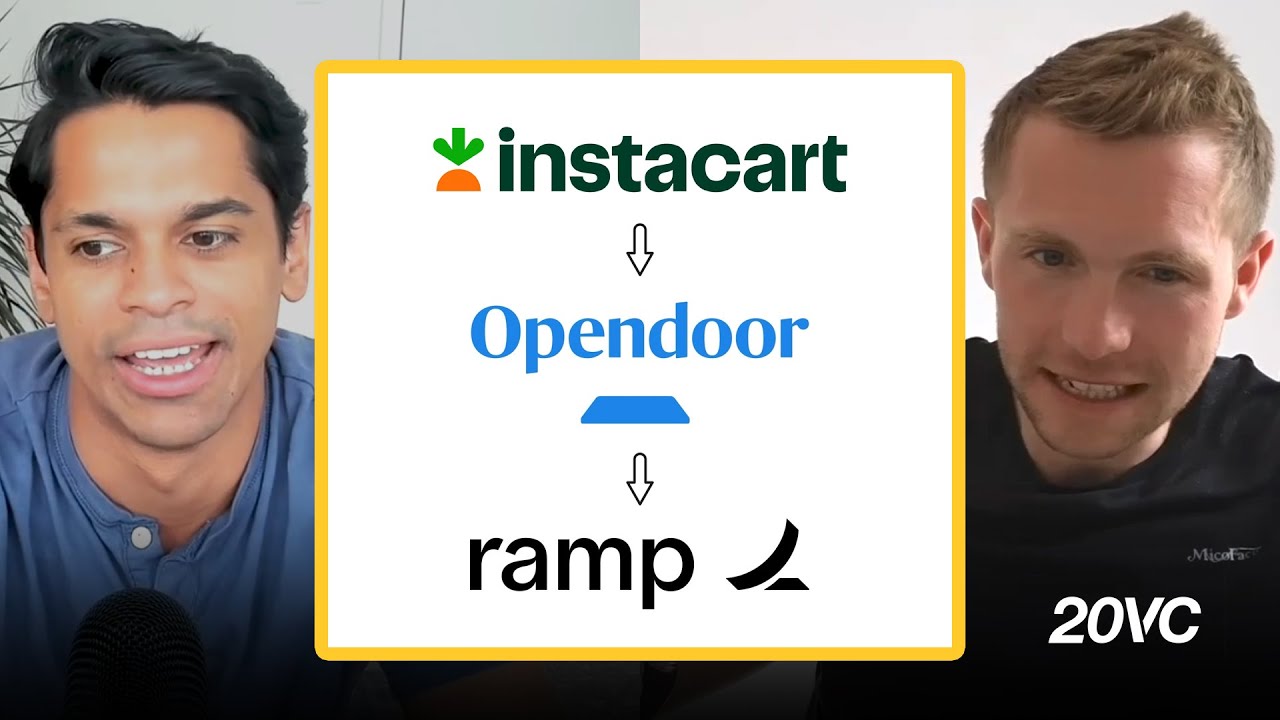

The Ultimate Guide to being an Operator-Investor -- Sri Batchu & Harry Stebbings

Sri Batchu: Biggest Growth Lesson from Instacart & Opendoor; 70% of Experiments Should Fail | E1040