Growth Lessons From Scaling Opendoor, Instacart and Ramp with Sri Batchu, Ramp

Sri Batchu, a growth leader at Opendoor, Instacart, and Ramp, shares frameworks for scaling startups. He emphasizes product-market fit as the foundation, explains how to pick growth channels systematically, and describes a failed MLS bidding strategy at Opendoor that succeeded when restructured as an agent partnership.
Chapters
I need some traction.
Hey, Traction fam, super stoked to chat all things growth today with Sri Batchu, the growth leader, the former growth leader at Ramp, where he joined in late '21 and saw them through 4x of ARR, reaching $300 million.
Wow.
From shaping Instacart's ads business to playing a pivotal role in Opendoor's journey from $100 million to $5 billion in revenue. Sri's dynamic career spans McKinsey's consulting to key roles in private equity at Bain. Man, what haven't you done at a young age?
Welcome to Traction. Well, thank you. I'm excited to be here, Lloyd. Thanks for having me.
How do I pronounce your name so I don't, you know?
You got it. Sri Batchu is great.
Sri Batchu is great. Okay, awesome. So before we dive in, you've had like a different route to startups, right? You started in McKinsey Consulting and then private equity at Bain, and a lot of founders said, don't hire people from consulting. But you have like literally hit 3 home runs or 4 home runs with like Opendoor and Instacart and now Ramp. So give us your backstory. How did you like get into all of this? I mean, did your education shape you to go into working at startups? I mean, we come from sort of Indian backgrounds, right? And when I graduated engineering, actually, the first— I wanted to be a founder and I asked people like, what's the best job I could get? And they're like, everything you do as a founder is communication. So go fix your communication. And my first job I took was cold calling for a startup. My parents lost it. Like, your friends are working at Microsoft and Google and you take a job cold calling. But you've had like a more like work in consulting, which is like the Indian parent's dream kind of thing. So walk me through that journey of how you go from that to working at startups.
Yeah, it's a great question. And it's funny you should say, you know, it's an Indian parent's dream, but I think my parents were disappointed that I went into, you know, go be a consultant because they wanted me to be a doctor. And, you know, like any good Indian kid, I was a pre-med, did everything, took the MCAT, AMCAS, and at the last minute decided that, That wasn't the thing for me. And obviously joined McKinsey and my experiences at McKinsey and at Bain Capital Private Equity were amazing learning experiences. You were talking about, you know, how you took a sales role to learn communication. I think, you know, McKinsey is just like a bootcamp for all business education from communication to strategic thinking to lots of things. And so I'm very grateful that I had that experience early and learned a lot and similarly learned a lot as an investor at Bain Capital. A couple of other places. But I had this itch of like, you know, I didn't want to be just somebody that moves numbers on an Excel sheet and then thinks about capital allocation and then really helps build things. And I wanted to learn what that experience of building was like. At the time, the founder journey wasn't for me. So I wanted to go find, you know, an exceptional startup that I could go learn from. And historically with my kind of startup journey, I've really focused on not optimizing for titles or scope, but really finding a super interesting problem and extraordinary people that are working on that problem. And so when I joined Opendoor, it was a 40-person company. It was trying to revolutionize real estate, the largest industry out there.
And I had Keith on the show not too long ago.
Yeah. And Keith, as you know, is fantastic. You know, he had an opportunity to work closely with him at Opendoor and, and he's on the board of Ramp as well. And I'm working on something with him right now as well, actually. So Keith has been an amazing mentor and somebody that I've learned a tremendous amount from.
One question here. When you're working at a large company like McKinsey Bain, right, the environment there, although like it preps you for all kinds of business, It's more like, I guess, Navy-style business operations, 'cause small startups at the early stages don't operate mostly like that, right? It's like move fast, break things, pivot on the fly kind of thing. You're just trying to find and validate maybe through product-market fit. But as an inspiration for a lot of professionals, we got like founders who listen in, we got people working at large enterprises wanting to do startups. How did you find this opportunity at Opendoor? Like a lot of people just have a hard time breaking out of their corporate roles. To find these interesting roles?
Yeah, honestly, at the time I was living in New York, wasn't part of the Bay Area ecosystem. And obviously startups are a bigger thing now, 10 years later versus when I was looking. And I remember actually I went to business school as well. And when I was graduating from HBS in 2013, that was the first year that startups were, I think it was like close to equal number of people moved to New York versus the Bay Area. So historically, you know, from Harvard Business School, most people would go to New York, work in finance and consulting. So you could see kind of the cultural zeitgeist changing. But in terms of how I found my first role, I honestly did it the way anybody else would, which is I boiled the ocean. I went and looked up all of the top lists, you know, the breakout list, the CNBC list and what have you, as well as went to each of the major VC portfolio pages. And looked at companies that I thought might be interesting and just like created a Google Sheet for myself of all the companies that I thought would be interesting. And then went through LinkedIn at those company pages and tried to find somebody to connect me to somebody at those startups that were on my shortlist. And then kind of told them my story. It was like, hey, like, I'm not a startup person. These are my experiences. I think I could be valuable, you know, in some way. And eventually actually had offers from 3 companies, I don't know if I was lucky or good, all 3 companies actually IPO'd in 2020. So it probably wouldn't have made that much of a difference which of those companies I joined in 2015, which is when I was doing the search. So, and obviously I chose Opendoor and I learned a tremendous amount from that experience. But just goes to show you, just because you have a bunch of brand names in your resume, it doesn't mean it's necessarily easier. It just wasn't for me in 2015 when I was looking at it. I think it's just, It was, it's funny, it's almost, I think recruiting is actually very similar to a growth motion in the sense that, you know, you're selling yourself and so you have to build a funnel of who are all the prospective people that could possibly hire you and then go through that process of actually finding your product market fit for yourself.
Definitely, definitely. Now, 40-person company, meaning you're working very closely with the founders or in some capacity, maybe one degree away, right? What was that? What was that like? And is the advice then, if you want to break into startups, find a role where you have close purview with the founders to optimize for learning?
Yeah, I mean, I would say yes and no. I don't think, you know, necessarily reporting to the founder is critical for you to learn a lot, especially at an early stage company. I think optimizing for high quality founders who tend to attract high quality early employees and executives, I think is the most important thing. And I had the good fortune of reporting to, working very closely with the founders of the 3 companies that you mentioned. But having said that, I learned a lot, a lot from peers as well as frankly people that I hired into these roles. So I think the key question is like maximizing for talent density at the company. And you'll discover that actually pretty quickly as somebody trying to go interview at places to where you're like, Oh wow, like everyone I talk to is like A+, A*, whereas at other companies where you'd be like, I found one or two folks that during the interview process that were amazing, but there were a lot that I'm not sure if I could learn a ton from. So I would say in those two cases, always optimize for the company where you can maximize the learnings from a much more talent dense team.
You know, Keith Rabois used the same word or phrase, talent density. He used that a lot. He said optimize for talent. He said, you know, try to find people who are Swiss Army knives, like generalists who can sort of pivot in different directions. And based on your career graph, it seems like you are the quintessential of that, of that role. Kind of start somewhere and can span multiple areas like a Swiss Army knife. Now, when I talk to, like, I guess Gen Zers, they ask me like, what is a Swiss Army knife? I did get asked that once recently. So when you started at Opendoor, there were 40 people. What were you doing and how did your role evolve and what were your key learnings from that experience?
Yeah, because of my kind of background, my initial role was to lead a finance team of one at Opendoor. I was reporting to Eric and the initial goal was just like, helped set up the basics in terms of, you know, the finance team, helping close the Series C, doing the 409A process, building the annual plan and all of that. Obviously, part of the reason I was leaving finance and joining the startup world is to roll my hands up further than building financial modeling and annual planning for a startup. And I'd made that clear during my interview and hiring process that that's what I wanted. And to Eric's credit, like, you know, we made that transition pretty quickly. Actually, we hired some senior finance leaders in my first couple months at Opendoor and I'd moved into a more operational role. I think for folks that have a little bit more of a financial background, I actually find that starting there is a great starting point because you get to really understand the end-to-end of the business, understand what the key drivers are and where the leverage is in terms of how value can be driven in the company. And so through my experience in finance at Opendoor, for example, We identified that a clear gap at the time of Opendoor was, you know, Opendoor for, you know, people that might not know, we buy and sell homes. So we make it easier for home sellers to, you know, sell their home. We buy it off of them and then we resell it eventually to other future buyers. So with that kind of a business model, as you can imagine, we're taking capital risk, right? We're putting out money to buy these homes, putting them on our balance sheet. And so how long the home stays on the balance sheet critical for the business for operational reasons as well as long-term strategic reasons, right? And at the time it was taking us 150 days end-to-end from acquisition close to resale close to dispose of the homes on our balance sheet. And so it was the top problem at the company. And Eric said, you know, go reduce that, figure out how to bring that down in whatever way you can, because it's the most important thing at the company that we can fix. And over the next year, initially it was just myself and we built a small team. And it was obviously a very cross-functional problem. Anything anybody was doing at Opendoor could impact how long the homes stayed on the balance sheet, right? Whether it's renovation, whether it's pricing, whether it's, you know, the sales team, what have you. And so I had to work closely with all these teams, learn how to influence without authority and drive results. And by the end of it, we had, you know, reduced it to 90 days and then that was just roughly where it's at today., did a bunch of things. We don't need to get into the details of specific projects, but through that process, uh, we also learned that our sales team was sub, uh, under-optimized. And, and there were some, uh, key things that we could do. And so that's how I got my next job with Opendoor, which is like, oh, hey, like, why don't you go redesign and lead our sales team? Uh, and so I did that for, as my next, uh, role at Opendoor. And, uh, and as that, you know, as we kind of stabilized that and hired a sales leader, we got a new COO who, you know, was like, hey, actually our analytics infrastructure and team is broken. Can you build that out for me? So that was my next role. And through that process, we learned that, you know, the pricing, which is again a key part of the business, was under-optimized. And so I was asked to go take on and lead a 150-person nationwide pricing operations team at Opendoor. That's been generally my journey at Opendoor or frankly even later at Instacart is kind of started off with solving an initial problem and through the success of that was able to, you know, move to an adjacent problem or expand scope of that surface area.
You know, this is one of the best skills to have as a founder, right? I say this, I had recently Jason Fried at Basecamp and we were talking about how the titles of a founder and CEO are like at loggerheads with each other. It's like having the title CTO and Chief Luddite because as you scale, the job of a CEO is to stabilize the company and the job of a founder is to inject new risk in the business and you grow by injecting new risk. And so as a founder, you gotta keep sort of reinventing your job in the job so you can keep doing that, like try new things and stabilize it, which is what I was doing at Bose, new markets, new products, et cetera. And so, It seems like you had the opportunity to do it at high-scale companies without risking a lot of personal stuff, which is pretty cool that you had the opportunity, but also you had, I guess, I guess the, what do you call it, the fortitude to take that on. Not a lot of people I know from actually, probably you are the only person I've met who comes from like a big co world who has said that they've flexed in so many ways. I've not, I've not. Met anyone. So what are the key things one needs to have from within to flex in so many directions? Because I truly believe whatever you said is like the best experience to go and start a company.
Yeah, I mean, I don't know if I'm going to have like a brilliant novel insight in terms of like what's required to be able to do that. I think it's fundamentally just comes down to a growth mindset and being able to be humble and learn from people and And that's kind of, you know, what's great about startups is, you know, I think this is like a Patton thing that I often repeat, which is, you know, you don't go to war with the army you want, you go with the one you got. That gives a lot of opportunities for the existing team at a startup to attack new problem surface areas. Did I have any business running a 40-person sales team at Opendoor my second year in there? Probably not, right? We could have probably hired somebody external. That could have done that. But the reason I got that opportunity is because I had gotten myself deep into that problem space. I was excited, I was ready and available and went and learned how to do that. I'd never bought or sold a home, but I was managing a large team of people that were selling homes for Opendoor. And so I went to Phoenix, I spent lots of time with realtors and learned how to do the job on the ground, like was doing open houses myself. And I think that's the kind of roll up your sleeves and nothing is beneath you type of mentality that I think is critical to be able to do so many different things and be able to scale in different ways.
Awesome. That is some great advice. I think the curiosity and I think there's two kinds of people. There's one kind of person that draws joy from doing the same thing over and over again and optimizing it for the nth degree. And there's another kind of person just people like you, me, like founder mindset. I call it growth mindset. I call it founder mindset, which is like, you want to take on new challenges, do it well, and then to optimize it for the last, I don't know, 5, 10%, just hand it off and then you move on to the next challenge. And that just keeps life very interesting. I don't know if I got that right about you, but that's—
No, absolutely. That completely resonates. That's, that's kind of how I've been working historically as well, which is, I think, that 80-20 mentality of like just really solving the bulk of the problem at the highest leverage point is personally the most fun for me versus like managing an existing system for the last 5-10% of optimization.
You know, one of the things we say is velocity is the currency of high growth startups. Now you've been at companies like Opendoor, 40 people. And then when you, when they IPO'd, I think they were like 1,500 people or so. Instacart and Ramp, you were there early on and seen through massive growth spurts. How do you keep that high velocity mindset as you scale and add more people? Because sometimes I find like, you know, 3 people can do more growth than 30 people, right? But the mindset and the org design matters a lot. And it seems like you've had very strong involvement or purview into managing that parts of the business.
Yeah, great question. And I'm generally a believer in diseconomies of scale as teams get larger. And, you know, there's that cliché in startup world of the two-pizza team, you know, as you kind of get beyond that, not only do you produce less per person, sometimes you actually have less output overall. And so, as you mentioned, like, it is the most important thing that a founder can do as companies are scaling is figuring out how to maintain that velocity and intensity. I think there's kind of two ways to do it. One is honestly just cultural and it comes from the top, right, on how important this is as a value, both in terms of stated value, but also actually executed value at the company. And the example that I often like to give is, is Ramp always having, you know, the day of the company at each major presentation, at all hands, at board meetings, etc. And you can even go to like days.ramp.com and you can see how many days it's been since Ramp's founding. The reason that's important is because the smallest unit of time you plan towards is the fastest you move. So if you go to a large company, they talk in quarterly, annual planning cycles, you know, things that happen next year, next whatever. And you tend to notice that as soon as you have that as the framing, companies slow down massively. And you get this notion of like, oh, I can do it next week, next month, whatever, versus like, you know, never put off something for tomorrow that you can do for today is really the culture that you want to reinforce. From the top down. I tend to find that a lot of high performance, high intensity people resonate with that, especially if they're surrounded by other folks like that. So I think that's piece number one. I think piece number two is a little bit more of like organizational art than science, which is around breaking down teams and goals into subsets that feel independent, that the teams can have really high ownership over, that they can drive. And that way, reduce some of this, like, part of the reason why a lot of teams slow down as they get bigger is because there's a lot of cross-functional dependencies and there's a lack of single owners for output. So as soon as you have multiple owners of something, you have no owner of something. And so I think you can really design organizations where even if, as the company is getting bigger, you have smaller teams that can execute independently and where there's a clear owner. And they have a metric that is clearly cascading into the overall company metrics that matter. And I think that's how you can kind of fight the organizational slowdown as companies get bigger and still drive velocity. Definitely.
Now when it comes to growth, right, I think you hear this all the time, but everyone's looking for a growth hack and a sort of silver bullet, right? Like how do I do this? Tell me the one growth hack. Like you go to the gym and they're like, tell me the one thing you do to get like a 6-pack. Everyone's looking for the silver bullet, which doesn't exist. And you've seen it now, 3x. Yeah, break down the fundamentals of growth for us.
Yeah, I love that you use the example of the gym because I think it really is a lot like that. Both, you know, the outputs of, you know, being a growth team as well as honestly something that's related, which is just your operating skillset as a growth person too. If you don't train for 6 months, you're not going to be as good at the job. So you got to be doing the job in some ways constantly. But at its core, right, growth is really just about building a product that people want and figuring out a distribution strategy that meets your customers where they are. Right. And I don't mean that like literally, although actually that is important where your customers literally are so you can reach them. But also in terms of like what they're looking for and understanding deeply what problems are and then delivering a solution that works for them. I think you and I have talked about, you know, the early examples of Airbnb using Craigslist to hack growth, right? That is a quote unquote growth hack, but it's also actually very much related to kind of what we just talked about, which is using Airbnb as an inspiration. Obviously, there was clearly a product need and a product that Airbnb— sorry, Craigslist is an example— Airbnb built. And then where were the customers that were potentially customers of Airbnb? They were currently using Craigslist. So it was brilliant of them to meet their customers where, where they are. Right. And so the other thing about a lot of these growth hacks that I think really missed the point is they're focused on like initial customer acquisition, which of course is a challenging problem, but it's actually not the most important problem in my opinion, in terms of building a business. It's really around how do you, you know, get those customers to retain and over time monetize them, right? So if you look at the world of consumer social, we've all seen the graveyard of lots of startups that get huge initial traction because they've gone viral or they've used a lot of paid marketing to get there. And then they're not, you know, able to actually retain those customers and, and then really build a business off of that. And typically the reason for that is because they forgot, you know, what is it that they're building for and what their customers want. And so I think growth always comes back to, you know, where are your customers, what do they want? And it just starts from a deep understanding of your customers.
Awesome. That's a fantastic answer, right? Like, I love this quote from Elon Musk, which says, don't reason with analogy, boil things down to the lowest common denominator, to the first principles, and then reason up from there. You said it so beautifully, right? Like build a product that people want. Like, do you have a singular customer or an ideal customer profile that has a need for your product, right? Or a job to be done that your product solves? And then any time they need that done, they keep coming back. So an ICP that needs your product, that doesn't churn. And if you keep growing that cycle, than you can sort of invest in growth. You put that beautifully. What do you need to have in place? Let's dive into that. Like what are the key things, ingredients that go to make that work before you start pouring fuel on fire? You know, a couple years, so before I did Boast, I was part of an investor-backed or investor-incubated company called Speakeasy. And we launched with like 10,000 users and we were spending so much money on growth and When I looked at the data and the analytics, it was funded by Bessemer and Salesforce. Like, dude, I can't draw a singular ICP here. There's butchers, bakers, and candlestick makers signing up for this app that's supposed to be a calling app for salespeople. And that's when I knew right away, if we don't fix this, we're gonna fail. And eventually it came down to loggerheads like, oh, build it as a horizontal app. I'm like, you can't build a horizontal app on day one when it's for salespeople. And By the time we came to the realization to kick everyone off and just keep salespeople, we ran out of money. So a very painful learning, burning through $6 million. So I wanted to put that out there. You've seen it now firsthand, successfully grown these companies. What were the things you had to have in place before investing in growth?
Yeah, I think, you know, my advice here, like a lot of other advice is, is not that it's novel. I like your, you know, Elon quote around like building things up from the first principles. So when you hear it, you're like, okay, that makes sense.
Of course.
But I think the key thing about a lot of this advice is being able to consistently apply it, especially when it comes to you. When you're too close to the problem, you find it really hard to zoom out and actually, you know, apply the advice that you probably would give to a third party if they were in the same situation. Right. And so in terms of You know, what do you need before investing in growth? I loved your example because at the end of the day, what you really need is product market fit. It sounds simple, but I like the way you framed it, which typically happens when you solve a very large and deep pain point for a small group. You start off with understanding who is that tiny— it can be one person or it can be 10 people. Who is that person or, you know, company or person where you're solving a huge problem, where, you know, where the NPS is 100, you know, where they could be natural evangelists for your product. Once you find that, you know, core customer and customer type, I think you can grow in kind of concentric circles of other folks that have similar problems that you can build for, right? And I think what a lot of companies might get wrong, like the example that you provided, is like, grow very quickly without understanding who that core customer is and what that implies for your next wave of growth. And because you need to build differently for different customers. And if you try to build for everybody at once, especially in the beginning when you have limited resources, you're not going to be successful. Right. And so I generally tend to think that like, you know, the initial days of a company and until, you know, well past product market fit, you don't really need a growth or significant team investing in growth. What you need is the founders and the early team finding, you know, those customers with the deep pain points and solving for them in frankly unscalable ways. And then you can figure out how to like, you know, approach those customers in more scalable ways later and how to find, you know, people that look like them via other channels. But I think the first step is finding those customers with a deep pain point and solving for them.
Yeah, it's like, you know, in the early days is the time where you can put a, you have the luxury to put a lot of time and love into understanding your customers and the problem set. And as you scale, it becomes, it takes you a little farther and farther away. And so it's important to do that, be an inch wide and a mile deep. Everything, every time I failed was from doing, Otherwise, now break down the different growth channels and your favorite ones and walk us how you think about identifying and validating the best ones for your business, particularly for capital efficiency.
Yeah, I mean, there's of course like any number of ways that you can acquire customers and ultimately like what's best for your business depends on who your audience is, where do they hang out, how do they like to be reached, and what your product is in terms of, you know, how deep the pain point is, how easy or hard it is to explain, how many touches it might take to do that. And I know, you know, capital efficiency is top of mind for everyone still, although the market seems to be coming back just a little bit, but interest rates are still high. So it's always good to, you know, be fit because it's easier to, you know, grow from there. And so In terms of, you know, one way I think about this question, and I wonder if it'll be more helpful to your audience, is to just go through a handful of, you know, the major channels and maybe provide some insight on how I found them to be more efficient or what might have worked in some of my past experiences.
So let's do it. Let's do it.
Yeah, let's just go through the list. Hopefully I'll remember all of them, each one. But yeah, so If you were to start with obviously the most obvious one that everybody thinks about, paid marketing, of course it's not ever going to be the most efficient because generally, you know, your targeting can't be as narrow and of course you're paying for your audience, right? So my kind of advice there would be to try to find channels that are, you know, the path less trodden. So, you know, obviously lots of people think about Google, Facebook, etc. as the initial ways to spend, but they're extremely competitive platforms. So thinking about what are other ways that are more suited to my audience that might be less competitive, right? So a couple of things that worked well at Opendoor were one is direct mail. You would not think it necessarily would work well, but, you know, folks that are target audiences for Opendoor were people that were older that obviously lived in the home that they owned. And so these folks check their mail pretty frequently. And, and, and so our conversion, obviously there's interesting ways that you can think about making the call to action and more engaging on direct mail. But it was a channel that worked really well for us. Another channel for, for Opendoor that worked was radio endorsements. Again, our core buyers were middle America, mid-50s folks living in cities where they would be driving a lot. So we knew that they were listening to the radio often, given that kind of audience segment. And a core problem that they had with Opendoor was that it seemed like too funky of a product. Like, do I trust these people? Will they give me a fair offer? It's a big, you know, consideration in terms of their, you know, lifetime net worth to make. So what we found is like having endorsements with their favorite radio personalities actually drove a lot of value for us from a growth perspective. A couple of channels that get spoken a lot these days, especially because of this whole notion of, you know, wanting to find higher ROI, or of course, PR, SEO, and community and others. I think the main thing about, you know, strategies like PR and community that I would say is for them to be really successful, and you know, you're a community builder, so I'm curious to hear your thoughts on this. They have to be audience first, as in like, what are the problems that the people that I'm trying to build community towards or to reach care about? If you start with like, what is the thing that I want to communicate as a company? Like, oh, here's my software or here's how I solve your problem. I think it almost never resonates. It has to be never company first and more audience first. So with respect to PR, like, you know, the way you can get press to talk to you and give you earned media and do that in a repeated way is for you to give them what they want, which is what does the audience want in terms of new insights that's at the center of the cultural zeitgeist that you can provide because of your unique value as a founder or team at this company. And speaking about that, I think Ramp and Eric Lyman at Ramp do this really well where, you know, he can really speak to whatever that moment is and provide value to the audience. Without, you know, it being a sales experience for Ramp, right? And so, and that's how you get more exposure and more value by really being about the audience first. And similarly with community, I very rarely found inorganic communities that are focused on sales work. I found either organic communities or communities that are not commercial-oriented work the best. And then over time, of course, you can build awareness and monetize those communities, but, but being focused on, you know, giving value. Like, one of Ramp's competitors, Airbase, has a Slack community for, for accounting managers. And, and it's, it's tremendous value. Lots of people, you know, in the accounting world are in that Slack community and they love it. And Airbase is truly neutral. What's very interesting about that is you see a lot of people recommending Ramp in this community when they're looking for accounting products. And to Airbase's credit, they don't get involved or shut down those conversations. They just really make it a truly neutral product that is valuable to their accounts. So even at probably some cost to them, they still manage that community. And I think it's a great way of, you know, continuing to at least build Airbase's brand as well, despite, you know, them not being as hands-on.
You know what I found very interesting as I was writing this book, which is From Grassroots to Greatness: 13 Rules to Build Iconic Brands with Community-Led Growth. I looked at, man, so many iconic brands from like, and I'm not talking about the tech brands since the 2000s, but I'm talking about like the Harley-Davidsons of the world. And I found something very interesting. Every small obscure idea that eventually became a global enduring phenomenon from Christ to CrossFit went through the exact same 4 stages. People listen to you. Or buy your product, you have an audience. You bring that audience to congregate on a cadence, it becomes a community. Now when that community comes together to create impact towards a purpose far greater than your profit, it becomes a movement. And when that movement has undying faith in its purpose through sustained rituals over time, it becomes a cult or religion. So this audience, community, movement, religion, and it doesn't have to be one or the other, right? It's like it's something that you have in parallel to your other growth frameworks because building a community is the marathon and it is not an ROI generator in year 1. It takes a long freaking time. So if you're contrived about it, you're not, you're literally not going to, you're going to kill the community. So our community is called Traction. We never monetized it. We donate the profits from it. Nobody even knows It's the community we built, but effectively it's like adding value, adding value. And there's 3 kinds of communities, right? There's a community of practice. Community of practice is like your ramps competitor, bringing people together to get better at a specific skill or a craft. And what happens is if you have no customers or you don't have product market fit, you can't build a community of product like Notion's community Salesforce's community, people are gonna be like, you're trying to sell to me and they're not gonna show up. Yeah.
Right.
And so there's this community of product, which Atlassian's done really well, which has taken a long time. And that's the second one. And the third one is a community of play, which is like Red Bull or your paddle club or your golf club. Right. And I think it depends, but you have to play it with the mindset that it's a long slog. HubSpot, honestly, everything I, I'm an engineer. Everything I learned about marketing was from HubSpot's inbound marketing community in 2004, 2005. They didn't have any product. Everything I learned about customer success was from Gainsight's Pulse community. They didn't even have a product. And they built this raving following around education and adding value and connecting people to get better. And then one day they said they have a product and initially they were saying, oh, you can jangle Google Analytics with this tool and that tool. And the one day they said, hey, we have an all-in-one tool. And then guess what? When I had some money, I bought HubSpot, right? So that's how I look at it. But you had it exactly right, right? Like I think when you're starting out, you need like some instant gratification channels to stay in business, but then you need some long-term sustainable channels that'll help you build a moat and like a brand and so on. So I think it's a balance of both. How did you see it being balanced?
Yeah, the way I kind of think about it is, you know, you draw this Horizons framework, but really you kind of have to have like some seeds, plants, and trees through the, you know, growth cycle and life cycle of your company. And initially, obviously, it's going to be a bunch of seeds where you're trying to figure out which channels work for you and which don't. And so at any given time, you're going to have a couple of channels. That, you know, especially as you grow, that are your kind of bread and butter that are working, that you're optimizing. Those are kind of the trees and the plants are the ones that, you know, you've done some testing and it feels like it's going to work and you're going to start scaling them. And then seeds are kind of new riskier bets that you're making. And there's only so much you can put together and maintain as a team. So you want to prioritize those, but you always want to be thinking about the next horizon. Just because, you know, a couple things are working now doesn't mean, you know, you should be ignoring the rest. And similar to how you said, there's some things that take a long time to pay off versus others. So community and SEO is actually another one as well that takes a long time to pay off. So you want to think about those timeframes as well as you start, you know, investing in those bets and prioritizing various things. And then some things, you know, just work a little bit easier at different parts of a lifecycle, like brand investing, like you probably, you know, don't want to do until you've got like tight density of, you know, clear product market fit and an audience that works, or you've kind of reached the limits of performance marketing, for example. So you would kind of typically kind of do that a little bit later in a company's growth cycle. But, but yeah, but that's my kind of general framework is you should actually build this kind of longer-term roadmap and refresh it every year as you think about what are the bets I'm making in terms of test scale and then optimize.
That makes a lot of sense, right? And I think PLG gets a lot of love and attention and I have seen It all depends on the frequency of use of your product and meeting where your market's at. If you're gonna try to jam PLG for a market that otherwise wants to consume in a different way, you will fail. And I've seen this now very recently with two startups that were successfully doing sales-led with customer success really well, went the PLG route and literally Tanked everything because building a PLG product requires you to have a DNA. If you don't, as a founding team, makes it very difficult. You need to be maniacal about user experience and maniacal about data and how you programmatically onboard people. I mean, even if you look at Superhuman and what Rahul did there, they were manually onboarding their first thousands of customers because they were afraid that people wouldn't self-serve onboard, right? Yeah. What is your take there on making PLG sort of work? I think PLG works really well with community and a bunch of other channels because it's just this self-perpetuating flywheel once you have product market fit and it's going. But what's your advice?
Yeah, no, I think you made a great point, which is it doesn't work for everybody, right? The product and the user experience has to be attuned to that. And it's funny that you should mention Superhuman, obviously great product. And I was one of the, you know, early people that was manually onboarded way back when. So totally understand. And by the way, I understand why they did it because I don't know if I would've gotten as much use of the product, frankly, if it weren't for that. And so I think, you know, there's a lot written actually about classic, you know, how do you use technology to grow your product for bottom-up SaaS products, right? Typically via prosumer or free trial, freemium experience, whatever you want to call it. I think the, I want to talk less about that because there's so much said about it. And also frankly, you know, if you look at the business that I was most recently working with, Ramp, it doesn't have that classic, you know, bottom-up PLG motion to get a Ramp account or a card today. You know, obviously you have to have your company CFO fill out an application. It has to be credit approved. So you can't just, have like an instant multiplayer mode that you can build virality off of for a product starts that way. Are there other financial products that Ramp is building that, that could work with? Sure. Eventually I think we will build that experience with the multi-product thing. But I think one thing on, you know, quote unquote PLG that people don't talk about is how can you use technology to drive customer acquisition and retention, even if you're not like a bottom-up SaaS product, right? And I think, you know, one of the things that we did well at Ramp is using product engineering teams to supercharge sales and SEO as well as kind of creating, you know, a stronger referral loop and experimentation around that and building shareable moments in the product and things like that. So, I think there's my, like, one piece of advice on PLG would be to, like, not assume that there is no way you can juice growth via technology unless you're, like, a company that has a self-serve and freemium experience. Makes sense.
Totally. Now, I want to shift the conversation towards B2B versus B2C. There's a lot of this, ah, we're B2B, we're B2C, and I'm starting to think, right, like, and see this. If you notice something on social right now, brand consumption of content is going down. Human to human content consumption is going up. When you're doom scrolling, whether it's TikTok or Insta or LinkedIn, you're consuming more from humans, but we still have this mindset of no, it's B2B and I have to be done this way and this is B2C. So what's your take on that and how do you approach, because you did two B2C companies, Opendoor and Instacart, but Ramp is B2B, but I feel like you have also approached growth there more like edge to edge, human to human. So walk us through that and shed some light.
Yeah, I love your human-to-human framework because, you know, I think, you know, other people, you know, name it as like a B2B company with a consumerized growth approach or something like that. Right. And I think what they really mean is what you're saying, which is like thinking about it on a human-to-human level. And so, you know, there's obviously differences in how B2B and B2C marketing work because of just the transaction sizes and a bunch of other things. But firstly, I agree with your framework, which is that it's ultimately a spectrum. And I would also say that B2C marketing is in some ways like B2B marketing on very hard mode. And the reason being that in B2C, obviously, you know, the transaction size is lower, the consumers are more fickle, and the platforms, if you're using paid acquisition, extract a tremendous amount of value. So you're paying a lot for, you know, far lower LTV. So you have to be extremely efficient and intelligent about how you acquire customers and how you diversify your channels. So if you're somebody that is successful in B2C marketing, I think you will actually do well in B2B. Obviously, there's a bunch of new things to learn about, you know, the enterprise customer in terms of who the buyer is and who the users are and how do you reach them in the buying process and all of that. But I think, and as well as the fact that you work with a lot lower ends in B2B in many cases than in B2C. So it's really fun to do B2C marketing because you can experiment quickly, you can learn quickly, especially, you know, if you're at a scaled,, you know, B2C business. But the flip side is you don't have a lot of LTV. So it's sometimes a grind to get to your customer. So I think they're honestly really just a spectrum, both of them. And ultimately how you approach one versus the other is really going to be dependent on, you know, what is your LTV and what's your time to learn in terms of, you know, number of customers, prospects, leads, et cetera. Certainly.
Now let's shift to metrics, example of good growth metrics and what to stay on top of, like maybe sort of like from pre-product market fit to scale.
Yeah, great question. I think pre-product market fit to early product market fit, the only thing that matters is engagement, whether you're a B2B or a B2C company. Are people opening up your app regularly? Are they taking a lot of actions? Like any proxy that you can have that people are getting a lot of value and frequently from your product is critical. This is why in social, you know, the DAO Mao ratio or the Wow ratio is super important. Because not only is it that like, you know, people often think about, oh, like, you know, the monthly active user, especially, you know, pre-product market fit is a silly and useless metric. What you want to know is like, how often are people coming back every day, every week? Like, is there really deep pain point that you're solving? And I think you'll see that by engagement and go deeper and instrument to see what are they doing in the product., and I think that's what's critical there. And for some products, you know, shareability might be an important thing, which is like, how often are they bringing in others to collaborate, etc.? So depending on what your product is and if that's an important part of your value prop, I would track things like that. I think, you know, after a certain point, then you start thinking about it in terms of, you know, leads and cost per lead and metrics like that. In terms of how you're driving volume. And over time, I think, you know, businesses mature into revenue. And my personal favorite is payback period rather than CAC LTV. I have talked about this before. I think focusing on CAC LTV gets businesses in trouble in a lot of different ways because LTV is hard to project. And it also limits you in terms of different customers, uh, have different values. So you want to be able to pay more for customers that are more valuable. And, uh, and like a rigid CAC LTV ratio often gets you, uh, to make the wrong decisions, um, versus, you know, just being really grounded in how long it's taking for your customers to pay you, uh, for you to get paid back on, on the acquisition cost. It is for me, uh, a more disciplined way of approaching it.
100%. Now the thing is, I was a, Ghost was a bootstrap company. And so, you know, as we looked at it, early stages validation was get people to pay us to try it out. Nothing else matters. Can we get like 10 people to pay us to try it out? I don't care. We didn't have a website. Honestly, the first product we built was like using Zoho Creator with Zapier. We were like Wizard of Oz-ing this thing, low-code, no-code. But post product market fit, for us, product market fit was Are they using the product? Are they completing the core action, which was give us data and review stuff so we can give them the money? I mean, like in many ways, yeah, an accelerator ramp, right? Getting the money from the government. And for us, honestly, like, you know, a lot has been said about product market fit, NPS score, but as a capital efficient or bootstrap company, it's retention. Like if they leave, I can't eat, I can't pay the bills. And the same thing, like product channel fit, like the metric for investing in growth was CAC payback period. I never understood CAC LTV. It was like, dude, if I invest in a customer that's going to pay back 2 years, I can't eat, I can't pay the bills. So it has to return less than 6 months. And I guess that is a little aggressive, but what is a good CAC payback period for you?
Yeah, I think it really depends on the predictability of the revenue as well as frankly your cash flow situation, right? As a bootstrap company, you can't have just the cash flow map doesn't work for having a long payback period. And it generally doesn't work well if you don't have high retention, right? So for consumer businesses, I would try to go on the shorter side of CAC payback period versus for B2B, especially for larger companies where you have higher retention and higher renewal rates and growing LTVs, would be comfortable with a longer CAC payback period, right? So like if you were going, if you were only selling to large enterprises, I might even say more than a year to, you know, up to 2 years might be reasonable versus most B2B companies, I would say like a year is like, you know, a great benchmark versus most consumer companies, I would say 6 to 8 months, you better be getting your money back in consumer,, right?
So definitely. Now we're at the top of the hour. I got like 2 or 3 questions. You have some time or you got a hard stop?
I don't have a hard stop. I can go for a few more minutes. Like, okay, cool.
That's it.
That's max. Yeah.
Yeah. Yeah. One of the other things I want to take was, you know, as we're looking at metrics, right? And growth metrics, there's this thing that's not talked about a lot, which drives me crazy. Is multi-touch attribution. And you know, there are not all things that you can attribute for, especially in companies that maybe leverage offline channels or events or community, which I think Ramp has done a lot of. How do you factor this in, right? Like say someone's building this massive community and then you get like, you know, usually the flow in B2B is something like somebody comes to an event or a webinar, it gets forwarded, and then somebody else sees it, they download a white paper, send it to somebody else, they request a demo, and then it goes to inbound SDR website. Like, how do you think about attribution and are we like overthinking it or it doesn't matter? Like, how have you solved this problem?
Yeah, I think attribution is really important. I think you need some framework of understanding how much value you're driving from your efforts. Having said that, I think it's never going to be a— there's never going to be a perfect solution. There are going to be always trade-offs in terms of some touches that you won't be able to capture, some touches where it's a judgment-based thing. You know, does an open of an email matter? How long since the open of the email should matter? How much credit should each event get? Are all events made equal or not? And so there's a lot of like thoughtful, strategic things that you can think about. Because ultimately, you know, whatever you'll set the attribution logic for, your company directly or indirectly maximizes for the reward of that attribution framework. And so that's an important thing to remember. And that's how you, when you're making trade-offs, that's how you want to make those trade-offs, which is like, If I give this thing extra credit, imagine the worst case scenario, which is your entire sales and marketing team is driving that one thing. Does that seem like the right outcome? Do I want that to happen? Sometimes maybe you do, and that's exactly what you want to do. And so that's how you think about, you know, that's the art part of attribution is that because it's never going to be perfect, you have to be really thoughtful about what decisions and trade-offs you make. And I think you also have to deal with, you know, sometimes cross-functional stakeholders are like, well, no, but the thing that I'm doing is a lot more valuable than what the attribution logic is saying, or what have you. And I think there's a little bit of like company management that says, hey, we're going to keep getting better at this. What matters is that we're improving off of the baseline. Let's stop arguing about what the baseline should be and let's like have a third-party trusted team, whether it's the analytics team, finance team, kind of opine on that and arrive at what we think is the best thing for a given period. I think there's lots of creative things that you can do with attribution, which is around, you know, just doing pulse testing, incrementality testing, as well as obviously asking customers, you know, how did you hear about us, either in the flow or getting it via a structured form with the SDR on the phone. I also think, you know, the problem that you mentioned can be solved by thinking about attribution at the entity level versus the lead level. And there's differences there and there's trade-offs there. So there's a lot of ways that you can be creative and solve attribution and make it better over time, but know that it's never going to be perfect and know that whatever you decide, the system will overemphasize anything where you set the reward to.
Certainly. And I think a lot of it's also having alignment around the fact that it's neither all data nor all emotion or art, as you call it. I think it's part, it's like part science and part art or emotion. And I think until the day humans are doing business with humans, it's always going to be that way. There's an emotional side of things because I always got flag for I can't figure out the value of this community. And then I have to like backchannel the logic saying some of our biggest customers to biggest brands, like, you know, like you have to like orchestrate this thing. Right. And, and, you know, when I ask like folks like Nick Mehta or Kip Bodnar at HubSpot, and like, you just have to believe in the company's DNA that that's the right thing to do. And flow with that gut and not mess with it kind of thing. So I like that, your take on it. As we close out, I want to ask two questions. One, in all your time, what was the biggest growth fuck-up you've seen happen and how did you fix it?
That is a A really good question. I would say I'll pick an example from my Opendoor days early on, which is, you know, Opendoor is obviously buying homes and what we would try to do for the vast, vast majority of our customers is we're trying to work with them before they've hired a listing agent., right? But obviously there's a world of listings out there that are listed. And so if we wanted to, you know, acquire a bunch of homes, we could just go put offers on homes that are on the MLS, on the market, right? And increase our inventory and resell. So a very obvious quote unquote growth hack is to use that channel of bidding on MLS homes for Opendoor. Seems reasonable. What could possibly be the problem, right? And what we saw is tremendous adverse selection. So if a house was listed on the market, typically it's listed for some time and we were to put an offer on it, if we, and then the seller of course has to still pay their listing agent's fee, right? So their net on this sale was going to be a lot lower than potentially if they could have sold it on the market. And so what we tend to find, found it very quickly is that the customers that took up those offers were ones that do something about their house that we didn't. So we got a tremendous amount of adverse selection where we, these houses were particularly unprofitable for us. And if you tried to fix this problem by lowering the offer value to like give us more cushion, it didn't necessarily improve the problem because then we got even more adverse selection. From the people that were willing to accept the lower offers, right? And so it was really a particularly challenging situation for the company where, you know, it was a somewhat significant channel in the early days, not that significant, but one that was tremendously unprofitable because of the dynamics that I mentioned. And so the short answer is we just stopped buying those homes. So that's not an interesting solution, right? Just shut down a channel. But we obviously still wanted access to this tremendous amount of volume that was happening via agents that were listing these homes. And so what we decided to do in that case is basically move upstream of where the decision was being made. And so what we did is we built out an agent partnership program. Where we said, hey, if you're going to go talk to a prospective customer, what we will do is, you know, we will give you an offer from Opendoor that you can present at that meeting. And if the customer is happy with that, we will give you the standard, you know, 1% commission referral fee, is what it's known in the real estate industry, on that transaction. And that was a big win-win because we got to see a more broader range of customers and audience. Through that. And the adverse selection problem was lower because the cost to the end customer was lower and the agent was getting a win because they don't have to do the full work of actually listing the property. They would just make, you know, that 1% by just exposing this to the customer. So what I would say is like when a channel is not working, it might not just be— the answer might not be just to abandon it, but to work through what the core problem might be and to approach it in a different way.
Certainly. And I think as, as we close out, my final question here is around building a growth team, right? Without the team, you have nothing. So post-product market fit in these companies that you joined, who are the people you brought on to lead you through scale, right? Like what are the key things you need? Because then you just build up on that over time, right? Yeah. What is the—
I think it's really— I've spoken about it before as well, like 3 kinds of archetypes of people that you really want as you're scaling your growth team. I think there's one type of person that is a deep domain expert of certain channels and is able to just consistently project manage and execute and drive results and get into the details. At a channel level. I think you need a few of those people. I think you need a set of people that are kind of data-oriented, first principles-oriented, understand experimentation, can push for velocity at the company, that are more cross-channel trained, that work well with product and engineering, whether you want to call them BizOps, PMs, what have you. I think there's like a small subset of those folks. That are important for a growth team. And then the third group that I would say is really the folks that you wouldn't normally hire at, you know, McKinsey or wherever. These are people that are truly kind of out-of-the-box thinkers that understand the cultural zeitgeist and are able to think extremely creatively and approach problems in ways that the other two sets probably wouldn't think of. I mean, I think people have names like growth hackers or whatever for folks like this, but I think I just fundamentally think of these as people that are extremely creative, that understand the cultural zeitgeist and can really build experiments and initiatives that others would Awesome.
As we close out, man, this has been a great, great conversation. You thought it was going to be 25 minutes. We're like 10 minutes past the hour and it's been a lot of fun. Any parting words of wisdom? Where can we follow your knowledge if we want to stay in touch?
Oh, thank you. Yeah, I mean, I'm on Twitter. I'm, you know, like a lot of tech people, so you can certainly follow me. And/or LinkedIn, I'm easy to find. It's just my name, Sri_Bachu on Twitter or Sri Batchu. And I think my parting piece of advice will be something I'll repeat that I said earlier on this interview, which is I really do think there's actually a lot of wisdom from brilliant people out there like your podcast and other podcasts. And so the problem that we have in terms of execution, a lot of companies is not a lack of wisdom. I think we can Google immense amounts of information on what the right thing to do is. I think it's really adapting that a little bit to your particular use case and frankly, just looking deep within and approaching your problem from first principles. If most of the problems that we think of are not brand new, it's just thinking about, you know, how you would approach them from existing wisdom.
Fantastic advice to close it out. Thank you so much for joining us. We'll release this probably before the end of the year. Wishing you happy holidays.
Thank you.
Are you traveling anywhere? Are you traveling anywhere?
I am going to Guatemala with my brother for the holidays. First time there. So excited to go explore.
So warm weather in Miami to warmer weather in Guatemala. Nice. Have fun, man. Happy holidays.
All right. That's good. Thank you. You too. I need some traction.
More from Sri



Wealth Creation For Employees Explained By Sri Batchu (Ramp, Instacart, Opendoor) I The Neon Show

EM Group Chat #139: Leading Marketplace & Growth Insights From Instacart & Opendoor With Sri Batchu
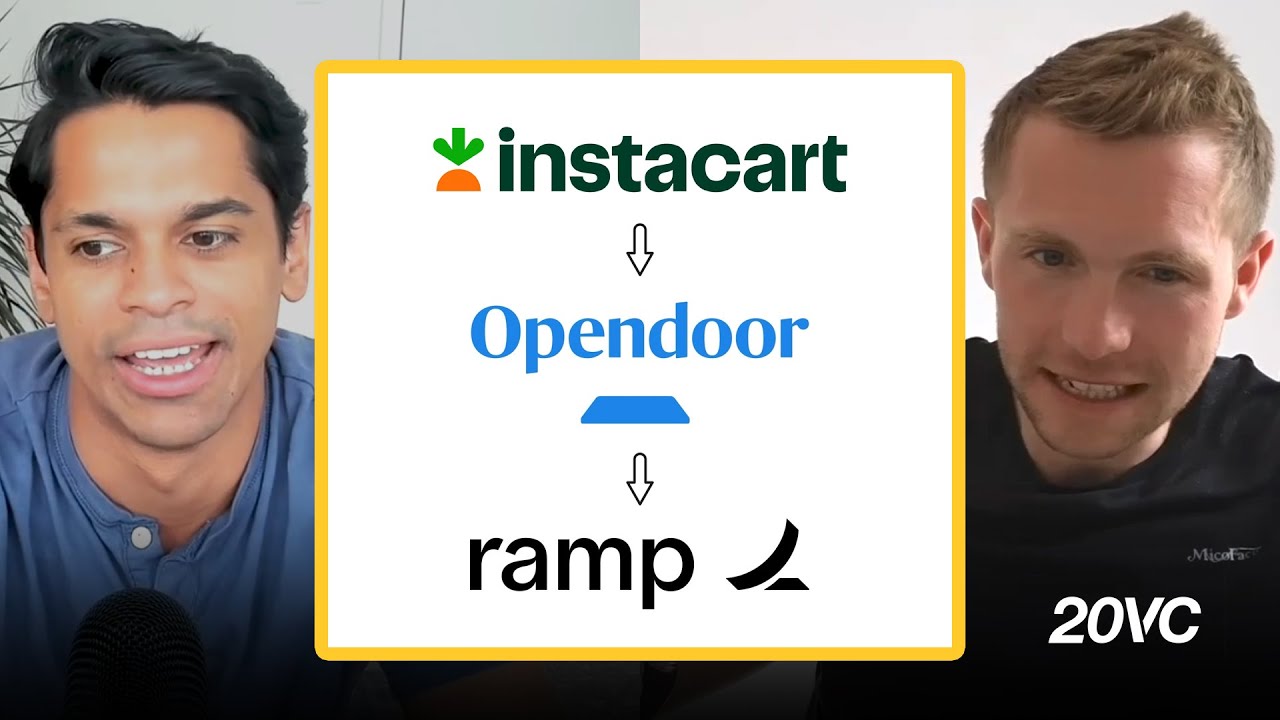

The Ultimate Guide to being an Operator-Investor -- Sri Batchu & Harry Stebbings

Sri Batchu: Biggest Growth Lesson from Instacart & Opendoor; 70% of Experiments Should Fail | E1040