The Ultimate Guide to being an Operator-Investor -- Sri Batchu & Harry Stebbings

Sri Batchu explains why operators get better deal flow than pure VCs and how to avoid conflicts of interest. He argues storytelling ability predicts fundraising success but not operational skill, so founding teams need both a storyteller and an executor. Operator-investors should standardize check sizes and build portfolios of around 25 companies to avoid overconfidence.
Chapters
if you're an investor today and a VC and you haven't managed people in 15 years, you don't know how it works.
Yeah, I agree with that. You know what I mean? Yeah, yeah, 100%. And yeah, on allocation, we've talked about it. It's much easier to get an allocation as an operator investor than it is as a larger investor.
Does it not distract you from your operational role? I get it that it helps you pick better, but on the flip side, does it make you distracted?
No, it's a great question. And some principles are universal, right? Which is everything in moderation and also you have to be doing well at your core job before you're doing stuff outside of work. You want to be respectful of obviously work hours. Having said that, the other great thing too is like I get a lot of high-quality deal flow. I know I'm a, I'm actually very anti-cold outreach. I know it's a lot of investors go out there and say cold outreach is great. You send me, you know, a message on LinkedIn or Twitter or whatever and they'll look at everything. My theory is if you can't even succeed in getting a warm intro, how are you going to hustle in building a company? I only take conversations that are very high reputation, warm intros where the person is like typically like already spoken to the person, likes them or has a relationship with them. And I have a deck, so I don't take— I take very few meetings, but I tend to find that they're very high quality because I do a lot of that filtering before.
I actually agree with you totally. But I get killed for being exclusionary. What if it's someone who doesn't know anyone in your ecosystem? Is that fair? And what do you, what should I respond?
I think it's a fair question, but fortunately I think there are a lot more systems available now to help with that, that are not as gatekeeping. On Deck is here. There's a few other networks like that. I don't think it's actually like for the, entrepreneurial person, it's that hard to find a path to meeting the right set of investors. And it just depends on how friendly people are, right? Like if somebody messages me with a tenuous connection, I'm typically willing to help them, right? Like if they're like, you know, hey, like I went to the same college as you, blah, blah, blah. Like, will you take a meeting? Maybe. But if they're like, Hey, I really want to get to know this person. Will you intro me? And obviously I do a dual opt-in. I'll message them being like, hey, like, I don't really know this person. Their profile seems interesting. I haven't really evaluated. Let me know if you'd be open to taking a convo. And even if they spray and pray with that tactic, they will get some meetings via warm intro. So you got to hustle somewhat. I think there's a way to get the warm intro. And if you can't even do that, I struggle to find how you're going to fundraise, find customers, etc.
If I'm on your team, Sri, I'm going to do the Scout, you know, program. I'm going to raise a microfund even better. I'm going to raise a microfund. What do you say?
As I mentioned before, I think as long as you're not, you know, distracted during work hours and getting your day job done, I think what you do outside of work is your prerogative. And I actually do have folks that are—
But do you? And I mean this in the— I don't mean it badly. The best people go home and sales reps, they get more leads, they want more converted sales, they work out of hours to make it work. They don't go off and do something else.
What we didn't talk about are like the potential benefits, right? Of, uh, like what's the value add of, uh, of investing, uh, outside, uh, of your job. I think there's no playbook for necessarily how you grow. That's why it's a very experimentation-driven culture, right? Uh, and a lot of experiments fail. Um, and so you have to find your own growth path and the more creative creative ideas, strategies, tactics that you can come up with, the better chance you have at, you know, hitting your growth goals. And so I tend to find that the context switching and learning about different spaces actually builds more intuition and creativity for ideas. So I think in moderation, I actually think it's a good idea to do that. And I also think like, yes, there's like parts of the job that are like keeping the trains running on time. And there's parts of the job that are like taking a beat, thinking about strategy, thinking about creative ideas. And I think that stuff is not measured in hours in and hours out. And in fact, like being on a treadmill of like doing that, I think has diseconomies of scale again. Like I think you need to like get out of your kind of rabbit hole and recontextualize and get perspective to generate the best ideas.
What about conflicts with your company? So say I'm in expense management. Well, I'm not in expense management, but then I pivot to it. Now I'm potentially competing with you.
Obviously anything that could be competitive, perceived as competitive, or looks like it's down the line competitive, I don't even take the meeting. And I strongly advise against anybody at the company taking meetings as well if they're considering them. And so I think that one's like a more obvious one, which is like, okay, like you know, use your judgment. If you have a question, ask me or ask our GC. But the conflict that's like a little bit trickier potentially is if Ramp is in the market to buy the software or something like that and you've invested in the company or you're investing in the company. What there, it's like you want to be extra, extra aboveboard, make it clear to the company that you're not going to influence the purchasing process as well as actually like not influencing the purchasing process.
What about talent? You're an investor in my company as an angel.
Yeah.
And then you nick one of my key people. I'll be like, Sri, what the fuck?
Yeah.
And it may not have been you. It may have been Ramp who's nicked one of my key people. Is that a conflict?
I'm pretty ruthless about that. I think that there's absolutely no conflict. I think it's extremely anti-competitive from a labor market perspective for you to think that I won't hire the best people from your company. And so you, it's your job to retain your best talent. And even if I'm an investor in you, it doesn't matter. If you're doing your job of retaining your talent, this wouldn't be a question.
You're a hero. I think the exact same as you on that one. But people are like, oh, you can never nick from your friends or your portfolio. I'm much more laissez-faire about it, which is why I have few friends. I'm kidding. Tell me, what have been some of the biggest lessons for you on what it takes to be a good angel? You invest, I'm sure, today very differently than you did. What are some of those big lessons?
I think one is just how important the founders that you work with and invest in become as a source of leads for you. And I didn't fully imagine that when I started being an angel investor. I was like, oh, where am I going to find, you know, great deals to work? And like one of the best sources, of course, is like a founder that you've worked with. It's like, hey, I've worked with this person before. They're fantastic. I'm going to invest. You've been a helpful investor. I'd love for you to chat with them. Like that is, you know, primo lead, right? I think one thing a lot of Do you worry?
Okay, so it was really interesting. So I'm just loving this. Primo Lead, brilliant attribution, by the way, brilliant tagging. Um, often they haven't been founders before. I find being an operator and being a founder is so different. I place a huge premium on serial entrepreneurship. Operators, massive difference.
I agree. And I think what's actually interesting is there's some operators that are very good at their operating job that I think will be worse founders than some bad operators. Right. And I've like found— so let me explain that a little bit further. There are people that I would never want to hire again, but that I would invest in because they are not suited to the operating job. But what makes them bad at the operating job could make them very good at being a founder.
I agree with you there.
How do you determine Yeah, to me, you know, the founders that I invest in have— I mean, it's the same diligence process anywhere else. Like, do they have a secret about what they're trying to build that is, you know, uniquely built based on, you know, work and research or whatever that they have done? And how relentless are they in terms of wanting to, you know, build their, their vision and how good are they at telling their story? At the end of the day, I think, you know, storytelling is such an important, important skill. And I think the best founders are excellent storytellers.
It's so interesting you say that because like you said before, that storytelling founders are rarely the best operators. Yeah. Talk to me about this and what you just said there.
Yeah, yeah, yeah. So I know that's like cognitively dissonant a bit. So let me explain further. Look, there's a few different jobs of being a founder, right? And leaders of a company. I think a super important job is being able to fundraise, being able to close customers, early customers, and being able to close, you know, executive hires. I think all three of those people that are great storytellers do a very good job at. And what I tend to find that, you know, are part of good storytelling, and I'm curious if you have a different view, is folks that are good at that are really good at reading the room and being likable and talking like with enough detail but with enough abstraction that they sound great. All of those are great skills to have. As I said, they're great for you know, fundraising, hiring and early customers, it's not super scalable, right? Like you can't have the CEO doing every hire. Eventually you have to build a business, you have to operationalize, you have to scale, you have to be comfortable with not being liked, you have to make difficult decisions. The people that can do that are typically like serial operators that work in a different way, right? I've definitely seen people that can do both., but it's rare that people can wear both hats. So I often tend to like founding teams where one person is the storyteller and the other person is like the, you know, operator and executor.
Do you ever feel like someone's too good at sales? You know, when you meet those founders and you're like, oh, you're just saying everything's so right, something's wrong.
Yeah, I definitely seen some founders that are too slick by a half. And that's where, you know, some of the personal diligence works too, right? Where you try to find out, you know, how real are they?
How do you do that? Do you ask the one-to-one questions ever?
Usually the networks here aren't so big, right? Especially with some of these referrals that I— so it's funny, actually, this is one of the most valuable things that I can do, that I do for my founders, and that's helpful for me as well, which is Founders are trying to hire and they are like, okay, like between the companies that I've worked at, I've worked with hundreds, possibly thousands of people at this point. Right. And so they're like, okay, I'm looking to hire this person. I have no idea if they're good or not. Their LinkedIn and their resume seems reasonable. We've done the interview process, which is, you know, always imperfect. Right. And so they're like, hey, can you actually like— have you worked with this person or can you get me to somebody? That's worked closely with them, that'll give me an honest read because of the relationships or what have you. That's incredibly valuable. And I think having that reputation of somebody that's direct, keeps things confidential, and is available is helpful in a variety of different ways. And I use that to try to find people where I have questions on getting some more comfort on the diligence side.
What are the biggest mistakes you see operator angels make? So like for me, I think like number one, they have varying check sizes. Lesson one, you don't have conviction at the early stage. Just do $25K, $10K, $50K. I don't care, but same check size. Number two, you need 25. This idea that you're a genius picker, you're not. No one is. 5 is not enough. You need 25. Those would be two of the biggest that I see often.
I think those are both good ones. I also think actually like this is why it gets hard later too, is they have a hard time saying no. They want to be liked. And it's like usually your initial conversations that you're having are with a friend or a friend of a friend. And, and so I think people go one or the other extreme early on in their angel investing, which is like they never get over the risk bar and they just think everything is a bad idea. And yes, of course, like most things are not great ideas because most startups fail for a variety of reasons. And it's not about idea, it's about execution, right? There's a mindset switch that you you have to make, which is like, how can this succeed? And not about how it can fail. Like, it's very easy to think about all of the ways something can fail. And so the question that you have to ask yourself is like, how can this succeed and how big is it if it succeeds? And I think that like switch to like optimism from like rational evaluation is a challenge for a lot of early investors. And then there's the flip side, which is them wanting to just like not be a bad guy and just say yes because it's a friend or a friend of a friend, even if they don't have like high conviction in the idea. So I've seen both of those mistakes.
More from Sri



Wealth Creation For Employees Explained By Sri Batchu (Ramp, Instacart, Opendoor) I The Neon Show

Growth Lessons From Scaling Opendoor, Instacart and Ramp with Sri Batchu, Ramp

EM Group Chat #139: Leading Marketplace & Growth Insights From Instacart & Opendoor With Sri Batchu
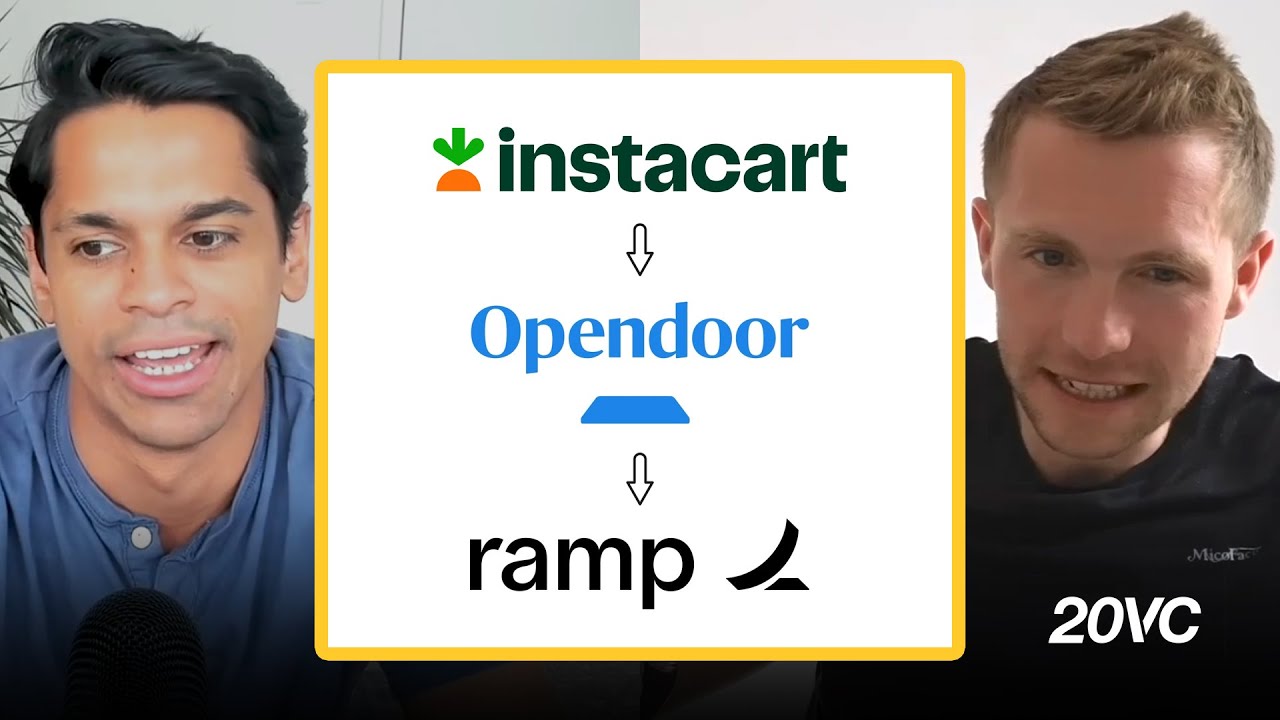

Sri Batchu: Biggest Growth Lesson from Instacart & Opendoor; 70% of Experiments Should Fail | E1040