Sri Batchu: Growth & Marketing Leader at RealReal, Ramp & Instacart

In this Mentor with Grace interview, growth and marketing leader Sri Batchu shares the principles that have guided his career across top‑tier companies such as McKinsey, Bain Capital, Bridgewater, Opendoor, Instacart, Ramp, and The RealReal. He explains how he selects opportunities based on talent density, how he continuously up‑skills technically (leveraging AI tools like ChatGPT), and the importance of building a personal board of advisors. Batchu walks through his framework for setting personal and team KPIs/OKRs, emphasizing cash‑flow creation, top‑line growth versus margin expansion, and financial modeling of pay‑back periods (CAC/LTV). He details a repeatable growth‑marketing process—audience discovery, creative testing, funnel efficiency, and channel allocation—illustrating it with examples from Instacart and Ramp. The conversation covers pricing strategy (value‑based positioning, magic‑moment tiered pricing, and early‑stage experimentation), competitive dynamics in multi‑sided marketplaces, and budget allocation (core 80 % vs. test 20 % risk buckets). Batchu also outlines measurement tactics such as media‑mix modeling, incrementality tests, custom URLs, and manual post‑hoc analysis. Finally, he describes his angel‑investing approach (deal flow from talent networks, product adoption, and founder referrals), due‑diligence criteria, and how he adds value as an operator‑investor. The interview ends with rapid‑fire personal questions about his favorite book, dinner‑party guests, and where to find him online.
Chapters
Hi Sri, welcome to Mentor with Grace.
Hey Grace, how are you? Nice to see you. Thank you for having me here.
No, uh, wait, so I feel like you're such a popular guest in all the amazing podcasts, and, um, I'm so excited for our chat. Um, to start the show, I would love for the audience to get to know you a little bit more. So you started your career as a business analyst at McKinsey, and later on you work at iconic companies like Bain Capital, Bridgewater, Opendoor, Instacart, Ramp, and The RealReal. What are some like core career lessons that you've learned early on in your career that kind of shaped you into who you are today?
Yeah, I mean, I think from just a career direction perspective, one of the things that's been really important for me that has served me well is anytime I've been at a crossroads, I've really picked an opportunity that I felt like was the one where it had the highest talent density. So as I look at kind of each opportunity that I've chosen, a big reason why I chose it was because I felt like everyone that I met there was some of the smartest, most interesting people that I could be working with. And so even if I didn't have high conviction on a given project or a given company at any time, like, I felt like being with that kind of high talent density group was always going to end up at least in terms of learning, if not in terms of outcome. And that's generally served me well.
I wonder, I mean, I totally agree with you on like the talent density. Maybe we could talk about like, I guess like when you first encounter people at these companies, like how do you quickly like know that if they have great talent density since, you know, you may talk to one person, they're like amazing, smart, but what about like how do you kind of like—
Yeah, my My thumb rule on this, and of course this is something that like all pattern recognition things, you get better with time and experience, but my thumb rule has always been, you know, of course, especially when you're interviewing or interacting with people at a company, you get to meet a lot of people, right, through the process. And my rule has been if I would report to anybody that I met in the interview process or in the social process, I like, that is a winner. And, you know,. There are some companies where you're like, wow, literally everybody that I've met, I would work with them, I would report to them. Versus other companies you're like, wow, there's some excellent people. I'm glad I'm meeting them and I'd love to work with them, but there's a mix of talent. So I think that's kind of the rule that I hold myself to on that front.
For sure. I wonder, since you have such an amazing career in the growth/marketing realm, what is one skill that you're constantly trying to get better at?
Yeah, I think, you know, almost everything honestly is a lifelong learning, right? I think there's everything that you're doing you can get better at. I think very tactically I would say something that I can pick a bit of a softer skill as well, but tactically I'd say something I'm trying to get better at is just getting more technical. I think, you know, obviously I I've run analytics teams before, but I come more from a business and finance background into growth and marketing, right? But I'm always of course working usually, you know, high-growth tech companies working with engineers and then other more technical folks. And I think with AI, there's a little bit of a blurring happening in terms of how technical you need to be to get results done and also how much you can learn as a non-technical user. You can play with Lovable or Vercel's v0 product and build your own tools. And so that's something very tactically I've been trying to do more and more of is more kind of like side quests and getting a little bit deeper into the AI products that less technical users can also use and learn. And then I think One thing that's really important as a leader, as you go farther along in your career from a soft skill perspective, is honestly one of the big reasons why people hire executives is their ability to hire well, right? There's multiple ways for you to hire well. Of course, you've got kind of a nose for talent, knows which companies have great talent and a good process and being able to identify and convince these folks to join you. But I think related to that is also just fundamentally what I call your followership. So as you look back at your previous experiences, how many great people have you worked with and how often and how easily do they follow you into the next role and how willing are they to do so? And so I think that depends on, of course, like you being a great leader, mentor, and manager. But I think that's something that I've just been trying to be a little bit more intentional about. And yeah, for sure.
So maybe we could talk about like the technical side a little bit more. So like, I guess like how tech— like how do you kind of like educate yourself in the tech aspect? It's all like maybe building side project or like using Laravel to build a tool for yourself, or how do you kind of like learn? And then what kind of aspect do you feel like you need to educate yourself with? Is that like, you know, for some people it may be like reading a research paper on NLP, or, you know, or like some people are more like hands-on. So like, I guess like, first of all, how do you learn? And then second of all, like, what kind of result are you trying to get, um, to, you know, make sure you're like efficient on your job?
Yeah, um, and I would say, uh, I'm definitely on the side of learn by doing than learn by reading. I am not a read deeply technical or long nonfiction products to learn type of person. I'll admit that my reading time I save for inspiration and other things. I tend to read a lot of sci-fi, not practical things. It's really learned by doing. I mean, it's an obvious thing. It's not anything new that I'm saying, but I think with the introduction of ChatGPT and other interactive LLMs that we have everywhere, I think the ability to find a hyper-specialized tutor and teacher to teach you something has just gone, basically there's no cost to it. You can log into ChatGPT and ask it whatever question you have versus the equivalent for me would've been, oh, let me pop by the desk of an engineer in the office and bother them to teach me the small thing or ask them some questions or interact with them during a social time later in the office or what have you. So the cost of that and the certainty of that is so much higher versus me just going and ask the computer a question and basically get 90% the right answer. It's not going to be 100%, but it's pretty good for most questions. And you can always have a back and forth and get deeper. So that's been really interesting for me is Just having, just starting with beginner questions and giving the context to ChatGPT being like, hey, this is who I am, this is what I'm trying to do, this is the product I'm trying to test. How would I test this product? Give me a sample project that I could work on with this or what have you. And then of course doing the project and working through it will help you understand a little bit more about what are the pros and cons of this product and et cetera. Of course I'm never gonna be able to experience it the same way as an expert user of some of these products that use them every day, but it gives me a little bit more of an insight into the user experience and the customer experience. And I think that's fundamentally what's probably the most important thing as a great growth and consumer leader is you have to deeply understand your customer, who they are and what their problems are and be able to put themselves in their shoes if you want to market to help them solve their problems.
For sure, for sure. I, when they're speaking of like, since like we talk about the skills and like the technical aspect of things, but I feel like you also accelerate your career very fast. Why don't we talk about like who's on your personal board of advisors and then how do you kind of like initially encounter these kind of relationships and then how do you kind of like keep the relationship being more I guess, like, long term.
Oops, sorry, I missed the question. Say that again.
Who is on your personal board of advisors?
Yeah, yeah. So I would say honestly, it's really great mentors and managers that I have gotten the opportunity to work with in the past. And I think there's Something really obviously fantastic about people that have gotten to know you but have also seen a lot of success and then have more experience than you that can pattern match and really give you personalized advice in a way that's more credible than you reading it online or talking to ChatGPT as we just discussed. And I think because they, if you've gotten to know them well and if you've built personal relationships with them, I think they, they really kind of understand what makes you tick as well. So I would say from that perspective, there's, you know, a couple of people that I've talked to regularly at various points in my career. Jason Child, who used to be CFO at Opendoor, has since gone on to become CFO at Splunk and Arm right now. He's been a great mentor. And Apoorva Matha, who's founder and CEO at Instacart, has also been extremely helpful at various points as I've been thinking about what I want to do next. But really it's these like, you know, founders and senior leaders that I've worked with very closely that tend to become your informal kind of board of advisors. And, you know, it's a two-way relationship where both parties Parties of course have to feel like they're invested in the growth of you, uh, and, uh, and vice versa. Um, so, but, but yeah, I've been fortunate in this since that I've been able to work at great companies and with great folks who, who continue to stay in touch, uh, and be helpful for sure.
Um, I wonder, so like, I guess like, uh, maybe we could talk about like your journey at like each of these companies. Uh, like maybe we can use The RealReal as example or any other, you know, since you have worked on like many iconic brands like Instacart, like Ramp, open door, maybe we could talk about how do you set up your KPI for yourself? So when you enter each role as a leader, how do you think about what is your core things that you need to accomplish at each role, both from a personal perspective, also from the company perspective? How do you set your own KPI or OKRs for you and your team?
Yeah, I mean, I think usually when you're coming into any given company. Like, the, the ultimate goal of all companies is to, you know, in many ways create value. And that happens by improving, you know, growing your cash flows over time, right? And for that, typically most projects fall into the category of, you know, top-line growth or margin expansion. Uh, and, uh, and when I walk into the company, there's usually kind of, you know, part of the reason you're hired is that there is a significant problem on one or the other side that we talked about, or like opportunity, let's say, not problem, where there's potential in terms of growth and margin. And you get kind of, you know, that's where you're hired in, so that's kind of your mandate, right? And my job in the initial days is to really get your head around that, which is like break it down into, okay, like what is the goal that we're going to set for ourselves and for us to get there? And this is where I think kind of my financial experience and investor experience really comes in handy. I kind of think of a lot of these things as almost like a modeling exercise, right? In terms of, okay, so for us to believe that we'll get to, you know, X amount of growth or what have you, like we need to Obviously, you have to take into account what the existing infrastructure is in terms of team, product, processes, and all that. And then kind of make what I call a bridge for yourself in terms of now to later. What are the various bars that need to happen in terms of investment or specific initiatives that you want to take bets on that you think will have impact and have a way of, you know, scoring and sizing those various opportunities for yourself. And then, you know, sometimes that kind of gives you a sense of, okay, is this achievable or not? And then like, what are the various, you know, because investment timeframes, you want to, you know, get these results in, like maybe you can get all of this done in the first year or maybe not. And, and so thinking about how you do that and then how you sequence and prioritize the bets as well, because maybe there's some things that you want to know the results of earlier so that you can scale them potentially, or maybe some things just take longer to have time to impact. So you have to kind of create that mental model, which probably is related to a financial model of the business for yourself. And kind of that's how I build that exercise out. Obviously it's like, it comes from deep observation of the existing state of what you're walking into. But, uh, But yeah, so that's how I kind of think about it professionally. I'm not— maybe this is to my detriment— I've never been a, like, a person that plans for, like, kind of personal advancement and learning necessarily, you know, once I'm at the job, because I kind of think about it— and then the way I'm— the reason I say that is because I think about it as a if you're doing your job well and driving impact, that will drive personal growth. And typically you're working on a difficult problem, and as you're trying to solve it, even if you're not necessarily being as successful at solving it, if you're working on the right problem, I think you're learning a lot. And the learning element of it is very important for the personal development. And so that's why I kind of worry less about my professional, my personal development during a role and focus on kind of what's the impact and then am I working on the right problem?
For sure. I wonder maybe we could use any example in your past career as an example. Like, let's say when you enter Ramp, I feel like maybe this is not any— because I feel like on Ramp, like, you know, you were leading a lot of the functions in the marketing department from field marketing to lifecycle or to like paid marketing. All kind of like marketing-related things to drive growth. Um, as an investor going into these like heavy operational roles, like how do you spend your time on like actually doing the things yourself? So for example, uh, coming from like, I guess like prior to that you also work at other companies, so, but so you can use other examples as well. So, um, as an investor entering any operational role, what does that kind of look like for you? And at each function, for example, marketing or like any other domain, how do you kind of quickly transition yourself into like an expert in that domain? And how do you use like the being able to read the balance sheet or like understand the business function to kind of like tie that into a specific function like marketing?
Yeah. So I think from a marketing perspective, right, maybe let's just start at a high level, right? You're entering a new business. One of the things that you wanna learn is like, where is the business today in terms of how their customer acquisition engine is working? Obviously you're gonna have multiple channels, sales, organic, a variety of paid marketing and other channels that are driving your customer acquisition. And then you kind of look at that and you say, okay, like Do I have good attribution and do I have a good sense of what is the value of each customer by channel and the cost to acquire them? So do I have a sense of the payback period on a CAC to LTV basis? You would look at what is the strength of the product market fit from a perspective of retention perspective, how retaining are these customers, right? So if you have a really long payback period, but you have super high retention, that might be okay because you've got really strong product-market fit versus you've got a low payback period, but also the retention is quite weak for the product. Then I mean, it might be okay, but that's quite risky, right? To spend into even that lower payback period if you've got high churn and low retention. So you kind of have to align with the founder and CFO or whoever else is kind of making the capital allocation decisions on your intuition of, hey, what is the right payback period for us to spend into? What is our confidence in the ability to calculate that? And based on that, how much risk we want to take in terms of setting that target, right? So you start there and then you think through, okay, where are we underinvested versus overinvested based on, based on, you know, your ability to get there to whatever the target payback period is. And you might want to say, okay, like maybe there are some immediate wins. And then this of course gets a little bit easier if you've done a few reps, which is you've seen this at a handful of companies, an operator, advisor, investor. So you kind of might know, What does good look like for X channel, for Y type of customer? And so there might be immediate opportunities to improve those. And then there's allocations where you can put more effort or dollars in certain channels that you think are underpenetrated versus not. And I think the thing with growth is in general, you might have hypotheses on what might be working, but there's a pretty high percentage of failure in growth experimentation. So what you need to be doing is kind of a higher velocity of experimentation. And outside of entering new channels and then building out kind of new ways of acquiring customers, it's really in existing channels. The work is somewhat the same, right? On the acquisition side, then we can talk about growth as well in a second, but expansion in a second. But on the acquisition side, then it's like, okay, are there audiences, different audiences that we can get to? Is there different creative and messaging that we can provide them? And then is there something that we can do whether it's on the landing pages in the product through the customer's journey to make sure that we can have relatively high conversion. So those are the 3 big groups. It's finding new audiences, finding new ways to connect with them via creative copy, et cetera. And then making the channel more efficient, sorry, closing element of the funnel more efficient by the channel, I think are all key groups of growth experiments that you wanna plan and do. And then, you know, separate from that, you always want to be thinking about, okay, like, how can we actually grow the overall pie? Are there certain segments of customers that are more valuable? So how do we get those folks? What do we do post-acquisition in terms of re-engagement and what have you to increase that? So I think the process is not each marketing channel and team is different, but the process is not that dissimilar. So even if we were to take it to, you know, an events marketing team, uh, they would be trying to do the same thing, right? Which is like, how can we get to more audiences via different events, more valuable audiences? Can we do a higher volume of events? What's the payback period, uh, on, on doing these, um, events? And then how do we actually speak to them there in terms of the content, everything else that we bring to an event? How do we manage the funnel post once we engage people at an event? So it's kind of a not dissimilar process that you would run for each channel. And you would have, obviously it's not just you that's doing that work. Presumably you have a team you're working with who are even more familiar with the channel and the customers and the stakeholders and can ideate a lot with you. And then you're really kind of enabling the team to help build that, build and execute that strategy.
For sure. I have so many questions there, but I want to give a quick shout out to Rochead. He is loving the conversation so far. So I wonder when you're thinking about, I guess one question I had while you were talking about the pay by period and everything is how do you pricing a product? So one school of thought is people are saying like you shouldn't prop— like basically you shouldn't promote yourself as a commodity. You should promote yourself as like something like, you know, more efficient or like just like, uh, basically I think like not competing on the cost with a lot of like similar competitors. On the other hand, if you're not competing on price, I feel like for a certain product, um, you know, we're not talking about like, you know, I feel like since you have worked on like very various different type of product from like fintech, like Ramp or like The RealReal, which is like an actual consumer company, or to, you know, Opendoor or Instacart. I feel like each of them is probably different, but how do you price a product and then making sure that you have like, I guess like when you're thinking about like LTV or any metrics that's like related to longevity, if you're pricing too high, like how do you think about like the retention or repeatability of people purchasing it. So how do you think about pricing in general?
And then we can— Yeah, I mean, I think I'm not gonna probably offer any ideas that are completely novel to the world when it comes to consumer software pricing in these next few minutes, but there's kind of two things in the question that you mentioned that I wanted to reiterate. One is I think fundamentally, The vast majority of companies and products that I have worked at that have been successful have won from a marketing and communication perspective, not because of pricing, but because of a higher quality— sorry, let me rephrase that. I think they've won because they've been able to build a perception in the customer that they're the better solution for them to solve. So the value prop that you're going after is you want it to be a little bit more resonant and not about necessarily the price. Of course, there's classic examples of put pricing front and center and one like Walmart being the most famous example of always low prices. But there's usually only one player that can win that game. It's the player with the highest scale and the most robust capital and margin structure. Right? And so when you're walking into a competitive market, what you want to win is find your unique value proposition and messaging that will really resonate. And it's seldom going to be pricing. So Instacart was likely the cheapest way to do digital grocery during most of our time, but we very rarely touted that as the primary reason to shop at Instacart, right? Our value propositions and our kind of messaging at the time that I was there was really focused on giving moms more time, right? So kind of putting the busy working mom who has to shop for her home front and center and reminding her that we're, you know, we're an easy way for her to have more time with her family. And kind of staying top of mind that way, rather than being like, you know, we're the cheapest way to buy. We're actually not, right? Because you could drive to the store yourself and that would be potentially cheaper depending on how you value your own time. And so we didn't want to play the game that way and focus on pricing, right? So that's kind of one big area that you, I think, touched on with respect to how you communicate your pricing and whether you should or not. And then secondly, I think it's really around how do you price initially and how do you think about kind of what impact that has on retention, et cetera. I think I'm a big believer that value accrues to value provided and value provided is correlated with engagement of the product. Right. And so if people keep using the product, They're probably getting value out of it. But there's probably a little bit of a critical mass. They need to use it enough for them to be able to see enough value out of it, right? So there's this notion of— so basically there's like an initial strategy where you're like, okay, like what is the magic moment? And that where people can see that the product is valuable and you don't want to create any barriers. To that magic moment. So this is where a high-priced free trial or trying to get people to lock in right away can sometimes be challenging. It works great if the person can get a lot of value within that time. But if not, it doesn't. This is why a lot of software companies, especially user experience companies, have gone into tiered pricing models, right? Where you kind of start using the product, maybe free, then you kind of roll into a relatively cheap, you know, paid version. And as you're getting a lot of value from the product, you can keep upgrading to higher and higher tiers. And customers usually are not loath to that because they're obviously deeply engaged in the product and they're getting a lot of value from it. That's why they're using it. And so there's a fairness principle that they have, which is like, okay, I'm getting more value. So I'm comfortable paying more. Right? And so you want to reduce as much friction as possible until that kind of magic moment. And sometimes it has to do with pricing. Sometimes it's just the user experience. Right? And there's famous rules that companies of past generations have used. So at Facebook, it used to be get people to 10 friends in the first 7 days in the old days.
Right?
So you got to kind of get that threshold. And at Instacart for us, It was 3 orders in the first month. So if you could get the user to do 3 orders, we knew that they had likely built a habit and would stay on. And so we would do things to encourage that, which is related to pricing. We would do more promos in the first month of a user's journey on Instacart to help create that habit. Obviously that's not super cheap, but once the habit is formed, the LTV of the customer is so high that it was largely worth it for sure.
I wonder, how do you think about competition since, like, I mean, I'm just using— gonna use against the car as an example. I feel like there is the equivalent of, like, you know, even so Amazon has, like, the Fresh button, or, uh, like, you know, Uber has, like, the delivery function right now. So, like, how do you think about the competition, um, in that landscape since, like, I feel like you have worked on like all the products that you have worked on, they are very successfully beating the competition, become like a market leader. How do you think about positioning yourself differently to define versus the competitors?
Yeah, I mean, I think there's— look, Instacart is in an extremely competitive space in a large market with a lot of well-funded and well-operated competitors, right? Whether it's Amazon, Walmart, now DoorDash and Uber Eats, all entering the space. So kind of the basis of competition for a business like that becomes more complex. It's a four-sided marketplace. There's the shoppers who are doing the work of buying the goods and delivering them. There's the end consumers. There's the retailers who are partners with Instacart. And there's the advertisers, which are primarily CPG companies that are advertising. Platform. So Instacart is kind of managing this four-sided marketplace to deliver enough value to every party while creating enough value for it to be a valuable business, right? And there's kind of— I think in many ways, I don't know if there's been a Harvard Business School case written about Instacart. If not, there should be because it is one of these businesses that really had to navigate the various forces of the market. To come up and continue to iterate on winning strategy. So, you know, if you were to— since maybe we have time, I'm gonna give you my journey or the journey of Instacart in some ways from my perspective as a now outsider. But I joined— well, the reason, you know, if you— a little bit of a history here is that there were grocery delivery services, in the late '90s and early 2000s that try— because it's not, you know, grocery is a trillion-dollar market, e-com is growing. So if you were to look at just like zoom out and look at the time, you're like, yeah, obviously like there should be a winner in, you know, e-com grocery delivery and it should be very valuable. And the first generation of these companies in the dot-com bubble, Peapod, Webvan, et cetera, they tried to build a fully integrated, you know, grocery chain with cold storage, with, you know, just-in-time delivery, with the digital product. And frankly, just like the capital intensity and the operational intensity was such, and the population in the US was, you know, not dense enough to really support successful version of those businesses. And then people kind of forgot the category for a while in some ways. And kind of two major things helped unlock, uh, Instacart's innovation. Well, 3 things I would say. One, from a technological perspective, is like broadband plus smartphones, right? Uh, having mobile convenience, I think this is certainly helpful. Uh, but from a business model perspective, one was around obviously $10.99 labor becoming more frequent and available, uh, which made the labor model, uh, flexible labor model easier. And then the last one was the insight that a program the early Instacart team had, which is that, you know, why build our own warehouses when people have warehouses, you know, very close to their homes of cold storage? It's called a grocery store. So why don't we enable, you know, the grocery store network nationally as a logistics network rather than building our own with a flexible labor model and a great consumer experience via an iPhone app And that's how the business got built. Great. Okay. So over time Instacart is getting bigger. Then the question is, okay, well, could the grocery stores just do this? Like, why haven't they done that? And it turns out it's because Instacart is multi-grocery, their ability to get network density for fulfillment and customer acquisition efficiency at the top of funnel digitally was much higher. And this was obviously quickly realized when all of the retailers eventually basically used Instacart rather than try to do it on their own. Because if you have, you know, 10% of the market, even as a large retailer, versus competing with somebody that can serve 80 to 90% of the market, they're going to have a much bigger advantage, right? In terms of fulfillment efficiency and all that. And so that's why No single retailer has ever really been able to win in this space. I think, you know, even Walmart, I think, has struggled to win here. I mean, if anybody can figure it out, I think it's them, but it's been challenging. And then, you know, Amazon has gone back and forth into this business model over the last 20 years. They've tried different versions of Amazon grocery delivery and then shut them down each time. Obviously they acquired Whole Foods, which used to be an Instacart partner. And that actually was a galvanizing thing for all of the other grocery stores because they wanted their own digital alternative and actually helped fuel Instacart's growth at that time, which is an interesting side effect. But yeah, so in terms of like modern day, why Instacart is being successful still, I think it has to do with the moat that they built up. Over this period of time. And you know what matters to Instacart customers is having the widest selections. If you're going there, you want to find the thing you want to find. You want to find the grocery store you want, you want to find the item you want. And then also it being like the, the cheapest that you can get, right, from a total fees perspective. And so how do you do that? You want to have the widest selection and you want to have the most efficient business that can give back the fees to the customer. And so because Instacart is a leader, it helps them give the customers and end users lower fees. And being the leader in terms of volume, they built out the ads business, which they can use to partially subsidize some of the costs of the customer. And they've also built out an enterprise SaaS business for the retailers, which they, you know, bundle and create stickiness for the retailers to stay on with them and potentially even get into exclusive longer-term contracts. And so it's a very complicated but so far working strategy that Instacart has been able to pull off, depend off competitors, both, you know, from generations past and current kind of digital winners.
For sure. I feel like just by hearing that, I'm already kind of like, I feel like I'll be so confused if I work there and they'll like, Instagram, if you want to hire me, you can still— but anyway, so I'm— I wonder when you're thinking about doing the— like, because since you describe, like, I think one of the things they did really well is like they tested out, um, if they should do implement some certain things. For example, you mentioned let all the retailers, um, just having like a combination with like, like maybe an app or something to kind of like connect them with these kind of different things that you guys have experiment. How do you spend the budget or how do you budget out stuff that are like investing into things that are currently working but not very efficient, but also like develop like a new funnel that is potentially efficient. But as you know, like most of the stuff that you're trying may not really pan out to be something working. So how do you spend the budget on that?
Yeah, and I don't think there's a, like, a crystal ball or a perfect answer here. I think it really depends on your risk tolerance as a business and your ability to be confident in the ability to scale your core channels, right? And so by that, what I mean is So let's just use a kind of a random example. Let's just say we have some channels that we know are working that we can continue to scale, maybe improve and deploy a little bit more money, and then we want to seed into some channels for the next year and then beyond. And so the way I kind of approach that with the finance team or whoever I'm partnering with on the capital allocations decision is let's just say, hey, like 20% of our budget, I'm just making something up for now, is going to be test budget and 80% is going to be the core channels that we know we've identified are working or what have you. And then what I say is, okay, what do we think is— so for us to be able to— and then we have grow as target as a business or something. We can pick whatever optimization metric of like 3.5x that we want to get to or whatever, like I'm making a number up, blended. And based on that plan, we will hit our growth goals and we will hit our P&L goals and whatever. And then, so then you go back and you say, okay, like on, If we get on 80% of our budget, uh, you know, 4x ROAS, and on 20% of our budget we can get 1x ROAS, you can maybe blend into roughly, you know, 3.5x. So you'll hit your goals. So then you kind of look at your question, uh, sorry, look at your existing channels and say, hey, could we do that much of an improvement on the core? So basically what you wanna do is like, you don't wanna put too high of a bar or you wanna create a financial plan. That you can hit mostly with your core channels that are working. That way it allows you to take more risk and do more experimentation on your 20% or whatever that you decide to choose. And I think then it depends on both the risk tolerance of the business and then a bunch of things on like, okay, how confident do we think that we can get better than 1x ROAS, in which case maybe we deploy away more budget, or maybe we're actually less confident that our core channels are scalable further at better ROAS. And so actually we take less risk. And so those are kinda the judgment calls you make to decide what percentage of your budget you wanna put into this high-risk bucket. But that's how I've approached it in the past.
For sure. So I guess when you are doing the high-risk or the 20% budget using for the high-risk initiatives, I guess, what would be your— would you calculate the potential financial outcome for each of them? Or would you potentially just try something and then see if there is any way that can be working and then do a full modeling exercise? Because I feel like it probably will consume a lot of energy to to a full-on prediction if in the beginning it was just like, let's test a connection.
And there's like, it depends on what stage of company you are and kind of, you can devise some of these rules and think about the process. I think there's definitely a balance to how much process you want to initiate before just trying something, right? And so in the past, I've often said, hey, like you're hiring great people, you've taught them how to score initiatives, but also just give them a little bit of room to experiment. So if it's— if an experiment is less than X thousand dollars of threshold, and like you don't need to do a full-on modeling exercise or what have you, right? But I also think like the modeling exercise can be pretty simple and I think it's really important to know, and the part of the exercise is clarifying what is your hypothesis and what is your metric of success, right? And is your ability, and you have ability to measure what success looks like. And so, and sometimes you can also measure post-fact, right? You can have a philosophy and it can be slow. It doesn't have to be like, don't build a bunch of infrastructure just to be able to measure a $20,000 experiment, right? Maybe there's a manual thing that you can do post-fact that can help you measure that. But I think if you don't have that, then you're not going to know if you succeeded or not, right? And you're not going to be able to iterate on the experiment. So usually what you're trying to say is like, okay, like, for example, like at Ramp, We, someone had this kooky idea that was like, okay, like let's get billboards on digital billboards for, you know, companies and prospects, put them up in Times Square and then like take pictures of them and share them with, you know, with our customers and prospects. And it's like, okay, it's a nice thing to do. Cool idea. Like probably not that expensive. Is it worth doing or not? How would we measure it? How would we kind of make success? And there's ways if you've done it enough or if you can be thoughtful of coming up with something really easy, which is like, okay, it's not that expensive. It's generally a customer-aligned, nice thing to do. So our goal, what is our goal here is to increase brand awareness and reach, but we're hoping that these folks will share it on social and it will get reshared and it will improve, increase awareness both for themselves and for Ramp as a brand, is the hypothesis, right? And then so we said, let's just do it. Let's not have a big measurement framework and hypothesis, but we know what our hypothesis here is. It's to drive more awareness efficiently. So, you know, we did it and then the way we measured it after is like we went and looked at the posts of all of the founders that we did this for that posted and just captured how many impressions we got. Slightly manual exercise. Let's say it was like 30 or 40 posts that somebody had to go and like pick out how many impressions we got. And then we just divided that by how much, you know, it cost us to do it and say, hey, this was the CPM, cost per thousand impressions of this initiative. And we could compare it to, okay, like if you'd spent that money on Facebook, how many impressions would we have gotten?, and so we had kind of an alt benchmark and we could measure success that way. Right. So I think there's a way to not hold up the teams in terms of process and infrastructure, but you still need to be clear on what your hypothesis is and how will you know if you're successful.
For sure. Is there any tool that you recommend to track the social engagement of other people's page?
There are a bunch of social listening tools. I do think this space is evolving pretty quickly right now. We have— like, I don't want to make a recommendation live on the call because, to be honest, I haven't been super happy with the last generation of social listening tools. And I think the new ones are still relatively new. So I'm I'm happy to look up something. And so I know we've used BirdEye in the past and a couple other tools like that, but I think there's probably a new set of players that I need to investigate for sure.
I wonder, so in terms of since you previously led that, I guess you're an expert in marketing. So I guess there's paid marketing, there is field marketing, there's lifecycle CRM. What are some something, how do you kind of like split the budget in the marketing arena and how do you kind of like test the result? I think as a, I feel like as a person running a media company, like a lot of the marketing results are very hard to track. Like, you know, I think in real life, like events that you can feel like the sentiment, there is like maybe some sort of like NPS score that you can use after the things. But like when it comes to let's say podcasts or whatever, like there's very, it's very hard to track the attribution instead of like, you know, a lot of people love newsletter because you can directly track who click on your link. But if like it's like podcast, people are listening when they are on the road or like doing laundry or something. I feel like in the entire marketing arena, there's a lot of that. For example, like a TikTok scrolling, maybe you can see the CPM, but like, or like to see how many people view it, But I guess like what are some really effective way to judge if a particular marketing funnel actually lead to certain type of traffic?
Yeah, I mean kind of the best in class way to do this, which is easier to do if you're a larger company and have more scale for these top of funnel channels or other channels where you can't register individual clicks is to do a media mix modeling, right? And so you're pulsing your spend, you're spending it across these channels and it's basically a regression-based output that tells you how much each spend dollar by channel could have in terms of impact. And then you could also do some incrementality testing and see what happens when you turn off spend on a given channel. I think there's also multi-touch attribution frameworks where you can try to tweak or adjust the credit for the various channels in your multi-touch attribution based on things that you might have intuition over based on incrementality testing or, or how did you hear about us results or what have you. Right. And so those are ways of doing it. I mean, I think the reality is it's not going to be perfect. And so you do have to do incrementality testing even at a smaller scale to see, okay, what happened when I had this on versus not? And then channel by channel, you can also get, try to drive more attributable touches. So for example, on podcasts, you can have a custom offer or custom URL, which again, people don't often go to the custom URLs and use your custom offer. So there's always gonna be leakage in terms of measurement, but that's one way you can kind of try to reduce the leakage in your measurement. The other way is to do kind of like, again, works easier with more scale, but like matched market testing. If you can do this in some markets but not in comparable markets, you can see kind of what the lift is. You can also see what the lift is before and after and things like that. To get to your measurement. One interesting way that companies do radio, for example, terrestrial radio, is to do the same campaign in digital versus terrestrial. And with digital, you can have the clicks and traffic tracking better, right? And then you can say— and then you can also have your custom offer, right? And you can see the ratio of custom offer to traffic in digital., and you can assume maybe terrestrial works the same way or use a similar multiplier. So I'm just giving you a bunch of creative ideas to try to get at measurement for a given channel. And I think creative is actually the right term almost there, right? So people often talk about the art and science of marketing, and even there's an art and science of marketing measurement, right? So you can try to be precise about this stuff, but actually it's the way I kind of reframed the art and science, you know, cliché for lack of a better term is I call it like data and judgment. So you can get a lot of data, but you still have to exercise the right judgment in terms of what is that data telling you. And I think there's a triangulation exercise that you have to do for any channel, but especially a new channel that doesn't have, you know, full funnel kind of tracking.
For sure. I wanna maybe like, Since we're at the end of the interview, I want to maybe dive into a little bit deeper onto the investing side of things. So you, beyond being an amazing operator, you have invested in some of the most iconic companies like Clay. And maybe we could talk about how do you evaluate startups and then maybe we could use any example in your portfolio. If you could walk us through the process of how do you meet the founder, And how do you kind of like do the diligence and thinking about the potential exit and think about, I guess, winning the deal as well, since many of them would be very competitive deal as well.
Yeah, I mean, of course it's a little bit easier to get an allocation deal as an angel investor versus an institutional investor. So my job is in some ways less challenging. But to your question about kind of how do I think about the investment process? As an operator, angel. I think on finding great, you know, companies at the early stages, I think for me what's been great is, you know, I've worked at some amazing startups with great talent, and what you tend to find is like great companies are also early adopters of tools and other software and products. So some of my best investments have been one of two ways. One, you is, yeah, like two primaries and there's a third way that I found great deals as well is one is like, you know, younger engineers or other team members that are leaving, you know, a great company that I'm working at and starting a company. I usually talk to them, you know, as part of the process and that's one great source of, you know, potential early stage companies to invest. Another has been, as I mentioned, you know, I work at are early adopters of great products. So if, you know, different team has leveraged a product that I like a lot, I can sometimes reach out to the founder or like, that's how I build awareness of great products, right? So like Clay was a product that Ramp was using for automated outbound enrichment that we were getting a lot of value out of. So that's how kind of, you know, I got connected with the founders of Clay. Same with Chalk AI, similarly. And then the third category of how I found great companies is honestly they kind of reach out to me because they want growth and marketing advice, and sometimes those turn into investments as well. So all of these kind of come from operating and then operating in great companies, right? So it's been kind of the deal flow process, for lack of a better term. And then I think, you know, The diligence or evaluation process for me is I just think of it as any investor, right? Is this a great team? And does the team have a great insight about the market? Why now? What this product is and what problem for the customer that it solves. And then, yeah, from a winning deal perspective, I think it's really, as we've talked about, having the relationship often with the founders because of the operating experience or being able to bring something of value, right? Like having me having started to specialize in growth and marketing at a variety of different business models, I think is something valuable for the founders. And so there's that as well as the network of folks that I have. That's usually the biggest ways I can add value to founders is if they're trying to problem solve anything around growth or if they're trying to hire for a given role, I can tell them who is great or, you know, what great looks like. I've certainly interviewed actually, you know, executives and leaders on behalf of, you know, my angel investments, founders where they want to get calibrated on, you know, what great looks like and things like that. So that's been, you know, and I kind of covered the post process as well, which is that's how I help companies after the fact. So it's been, it's been an awesome experience, you know, being able to partner with so many great founders. And I think it's a— I think it gets easier because I'm an operator across each stage of the funnel, both identifying, you know, winning and supporting the company. So I'd have to think about what this would mean if I were a full-time investor, because I do believe in the kind of half-life of operating experience. I think the farther you move away from not operating, the less relevant your skills become because the world changes so much in many ways, especially in growth and margin.
For sure. I want to maybe end with a quick 1-minute fire round. So what's your favorite book?
My favorite book. I mentioned earlier, I like sci-fi a lot, and so I really enjoyed the Hyperion series I read a few years ago. Big fan of that for sure.
I think you said like Chris Voss' book at like a different podcast. Yeah, Chris was like a past guest on our show.
I was like, yeah, I mean, I was like, I picked that one for when people ask me for a favorite like business or non-business That's right, yeah, for sure.
Who would you invite to your dinner party?
Oh wow, is this living or dead or what are we thinking?
It's your party.
It's my party. I tend to really enjoy witty, clever people and people that approach the world differently, right? And so I think You know, it's my dinner party, I can invite anybody, right? So I think it would be really fun to have people like Julia Louis-Dreyfus and like Larry David there. But I think it would also be really interesting to have people like, you know, Sam Altman and Greg Brockman that are thinking about, you know, how to change the world in different ways.
For sure.
Where—
who made the biggest impact in your career?
Really, really great question. And it's a person that I've already mentioned, so it's easy enough. I would say Jason Child, who is the CFO at Opendoor while I was there, was a great mentor to me and helped me really think through like what I'm good at and how to get the most out of my career. So I'm very grateful for him.
Love that. Where can we find you outside of work?
I am on Twitter. You can find me on— I refuse to call it X still, but find me on Twitter. I'm there all the time.
Amazing. Love that. Well, Sri, thank you so much for coming on the show today. It was such a fun conversation.
Yeah, great to be here. Thank you.
Let me quickly
More from Sri


Wealth Creation For Employees Explained By Sri Batchu (Ramp, Instacart, Opendoor) I The Neon Show

Growth Lessons From Scaling Opendoor, Instacart and Ramp with Sri Batchu, Ramp

EM Group Chat #139: Leading Marketplace & Growth Insights From Instacart & Opendoor With Sri Batchu
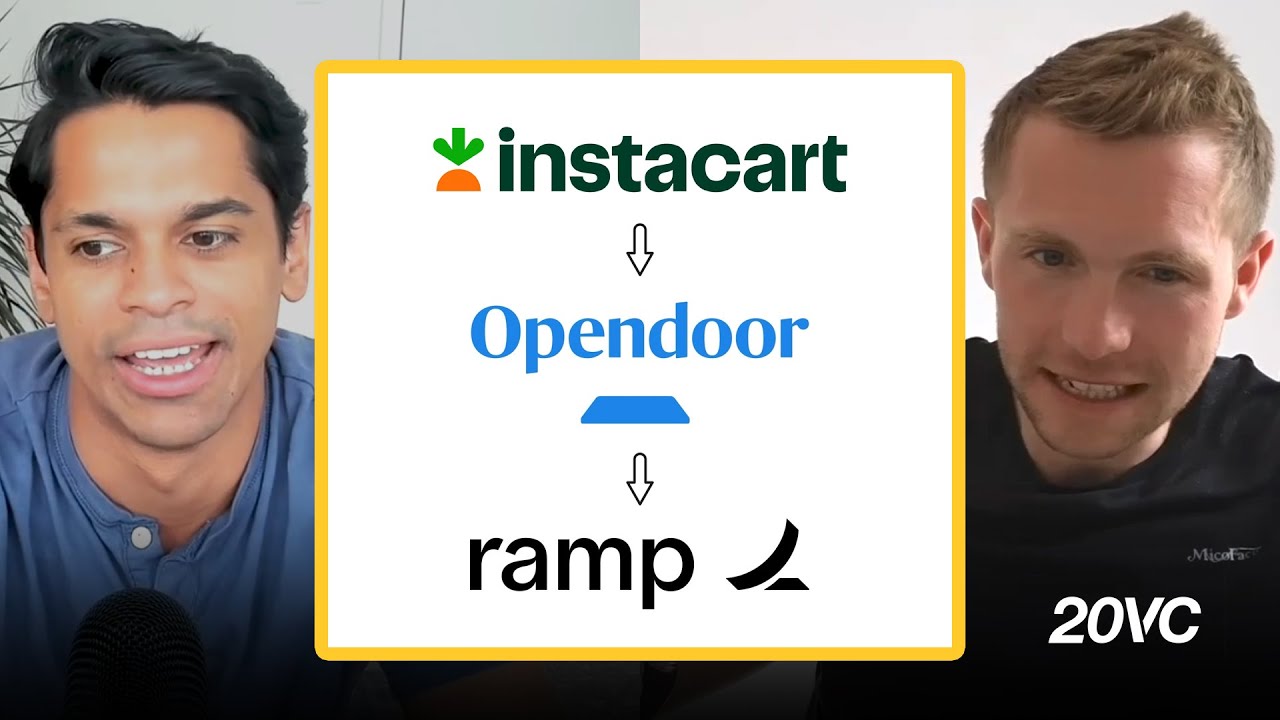

The Ultimate Guide to being an Operator-Investor -- Sri Batchu & Harry Stebbings

Sri Batchu: Biggest Growth Lesson from Instacart & Opendoor; 70% of Experiments Should Fail | E1040