Startup Science Founders Academy Pathway Podcast | Ep 3/16 | The Founder Mindset
In this episode of the Founders Academy Pathway podcast, host Chris Breen is joined by Arthur Barba and Colin to explore the founder’s mindset—the mental operating system that drives entrepreneurial decisions. They define mindset as the set of assumptions, stories, and beliefs that shape how founders perceive success, failure, and their own identity. The conversation identifies three common mindset traps: imposter syndrome, urgency bias (the “everything is on fire” mentality), and vision/destination drift, explaining how each hampers decision‑making and team dynamics. The panel discusses how mindset influences external ecosystems, noting that confidence, vulnerability, and openness affect how founders attract advisors, investors, and collaborators. Practical interventions are offered: (1) separate personal identity from the startup, (2) pre‑commit to clear success criteria before testing, and (3) audit informational inputs (people, media, podcasts) to avoid echo chambers. They stress humility, curiosity, and resilience, and critique generic ecosystem support that often fails to address the 90 % startup failure rate. Cultural nuances in mindset across regions are highlighted, and multiple anecdotes illustrate how mindset shifts (or lack thereof) led to either breakthrough or collapse. The episode concludes with actionable advice for founders to build supportive networks, define personal success, and continuously refine their mental operating system.
Chapters
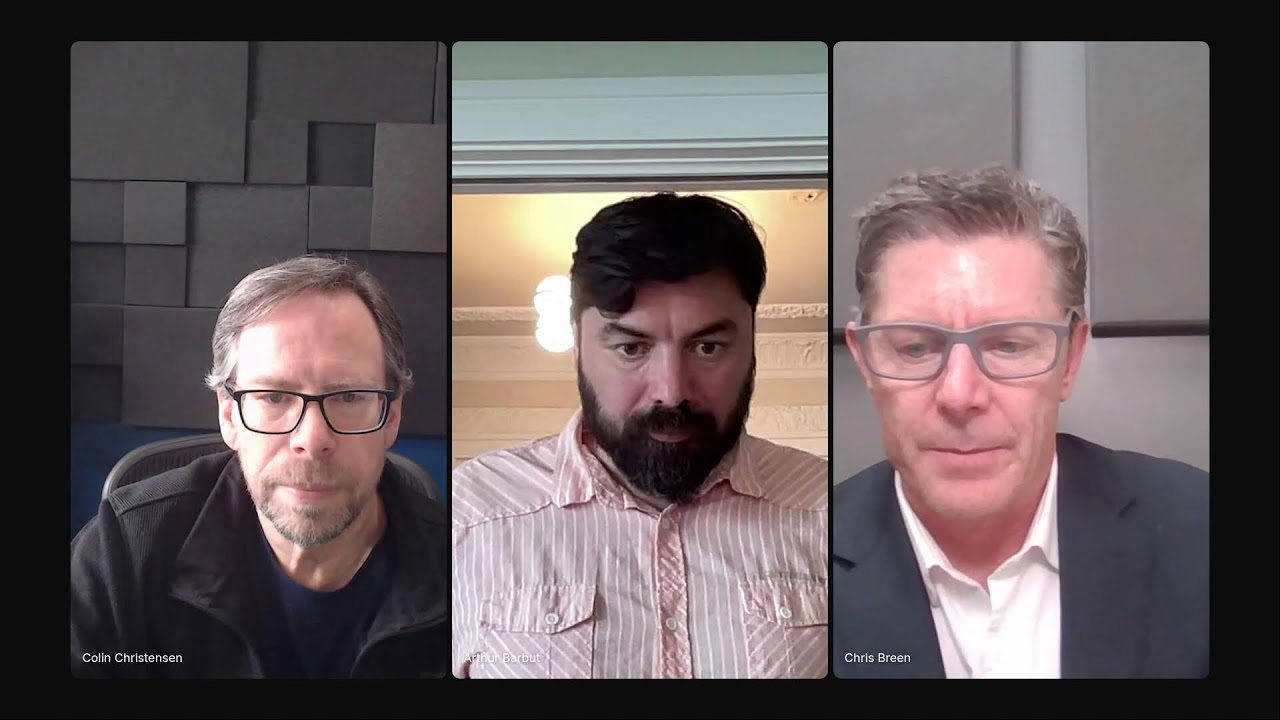
3 already. It's going fast. I love it. And, uh, welcome to everybody, uh, joining us online to our Founders Academy, uh, Pathway podcast from— brought to you by Startup Science. Today we are going to be talking, uh, about mindset. I'm excited about it because it's one of those things that We were talking earlier, we could talk on this, you know, the 3 of us for sure, but, you know, a lot of people on mindset for hours. There's no doubt. Before we really get started, I did post a question on LinkedIn about entrepreneur founder mindset. And hopefully there's been some engagement on that. One of the things, and I'd thrown out there, is around mindset and what shifted and And that's what we're going to talk about today. What is mindset in a sense? But from an entrepreneurial perspective, that's going to really be our discussion today. How do founders and how do we manage it? How do we move through it? What are the challenges around that? Being a founder, I think we go through this every day. And so, last week we talked about vision. We talked a little bit about you know, the overall startup, uh, the lifecycle startup. And on Thursday, we talk more on then the vision side of, you know, where do you want to take your business. Uh, we're also going to give a book away today for anybody that can join in and, and has some comments on what we're doing and, uh, your experience within the founders, uh, industry, within the entrepreneurial ecosystem, if you will, and especially around mindset. But let's get to some quick introductions. Again, my name is Chris Breen with Local Works Business Builders and Startup Science. And I spend a lot of time in that space of coaching, of strategy, of education. And one of the key things for me is really being a learning facilitator. And that's a lot of the work we're doing here at Founders Academy and some of the work we're going to be doing into the summer cohort, which we'll tell you a little bit about. But to my fellow hosts and guests here, Arthur, quick intro, buddy. What's going on with you today?
Hey everyone, happy to be back. This is a great topic to discuss. Arthur Barba with Art of Startup. And yeah, this is one of my favorite topics to discuss with founders and with my peers.
Thanks, Arthur. And good afternoon, Colin. A little bit about you and how are you doing today, man?
I'm doing pretty good, thanks. My name's Colin, obviously, and I've done a lot of startups myself and I've done a lot of helping other startups. And frankly, I've made every mistake in the book and fallen flat. I say, you know, broken my nose, falling on my face, scuffed my knees, emptied my pockets, done all the stuff that entrepreneurs probably shouldn't do. I've tried all of them and finally found some ways that worked. Some of that is what we've been working on in here and delivering. So, happy to be here. Happy to just talk about what goes on between our ears and see where we can add benefit to those folks trying to figure it all out.
Yeah, and I'll tell you, these can be vulnerable topics as well. And I know all of you, I know I have too. And we've talked about this roller coaster ride that we have in our own minds and in our mindsets, right? Like daily, hourly, monthly, yearly. Like this all this stuff happens real time. There's no doubt, right? On Thursday, I left you all with a question of what's the mind shift, mindset shift that would most change how you show up in your business right now, right? Not a tactic, not the tool, the internal shift, right? And The range of answers that we've talked about and that we see online is really exactly why our session exists today. The same business, the same market, the same product, it shows up completely differently depending on what's happening in our head, as you said, right? Those, those 6 inches between our ears. But let's just dive back a little bit and let's be honest about the word mindset for a second, right? It's one of the most overused words I know out there. I hear it all the time. I was thinking about that earlier of there's different types of mindset. There's a founder's mindset. There's a startup mindset. There's mindsets for everything, every relationship, right? Every business book out there has a chapter or 2 on it. You know, and depending on what you look at it, it can mean everything or it can mean nothing, right? So, what we're actually talking to today is it really is our mental operating system that runs underneath our decisions. The assumptions that we make without realizing we're making them, the stories we tell ourselves about what's possible, what we deserve, what failure means. These are all parts of it. When we talk about the vision and in the context of startup science and the startup lifecycle, our North Star isn't just a business objective, right? It's a reflection of what you actually believe about yourself as a founder. And Colin, I know you've worked with lots of founders for sure, right? Hundreds, in fact. I know that. So when a founder's mindset is the actual problem, that you've seen, not the market, not the product. What does it look like from the outside, right? From your perspective.
Uh, how do you mean? Like, sorry for asking.
I know you're commenting in the chat there, but, uh, you know, you've coached a lot of these businesses, these founders, these startups, and, and I'm assuming of all the hundreds that you've seen and talked about, mindset mindset or mindset shifts. From your perspective, what does it look like looking outside in, in that sense?
Well, I mean, I think there is— the best way I might put it is there tends to be a lot of acting going on. And I say that because we kind of feel like we need to present a certain look or way of being as an entrepreneur. And that's not entirely true. I mean, you want to be competent to your people if you have a team. You want to be confident to your spouse if they're expecting you to bring in money, right? You want to present that you know what you're talking about when it comes to customers or investors, right? So, there are these different pieces and different personas, if you want to call it, that we have to kind of present to, which also then causes this idea where we become— we don't have a space where we can actually be us. And those things that we are wrestling with internally, where do we share those or who do we share those with? Right? And that's where I think the mindset. So, when you ask about— the reason I asked for some clarity is because I'm like, I'm trying to think about this. And if does it show from the outside? Sometimes you don't see a thing. It all looks normal. It's the duck with the legs underneath, right? You know, you got a nice clean duck floating along and it's like underneath, right? And so, I think there's— that's what it looks like. But I think we have to kind of, as mentors, right, and other peer entrepreneurs, I think we need to kind of figure out how to crack it into it and have a better discussion, right? A more meaningful discussion amongst ourselves.
Yeah, I think it— and you're right, I think it does. It can be invisible, and that's the thing, you know, exactly right. Founders, they can be articulate, they have the right frameworks, but nothing's moving. And I think that's part of the challenge, right? It looks like busy work or excuses that come up. I'm researching, I'm planning, but it's that shift to action, right? I know, Arthur, you've studied a lot about how ecosystems form around businesses. There's no doubt, right? Does the founder's, uh, internal state then actually affect the external ecosystems they build? And, and love to also hear kind of your thoughts around the mindset topic then.
Yeah, certainly. I think, you know, we project what we feel. So at the end of the day, even if you're trying to project confidence and whatever, there's a certain, you know, you can kind of tell who's truly confident and who's trying to be confident or faking at being confident. And I think the entrepreneurs that are the most confident and have, you know, the right— not the right mindset, but I said the more advanced mindset, because it's like anything else, you keep working on it and you keep building it and you keep evolving, you know, because you are the business and the mindset that you have will be a— will have a direct reflection and impact your business. But, you know, with Gammic, for example, yesterday we had our finals, and when you look at the winners and, and the people who did the best, the founders that did the best, they were confident enough to, to, to let the guard down, to take advice, to ask for feedback, to do all those things because I think that's part of a winning mindset is being able to understand when you can be a little more vulnerable and ask for feedback and advice.
Yeah.
And, you know, being in an entrepreneurial ecosystem, I think that's one of the keys. You have to build that trust and that culture of openness and genuine collaboration where I feel like, hey, I can trust you, Colin and Chris. I can tell you guys, hey, today I'm having a rough day, I'm struggling, I need your help. I need you to motivate me a little bit or, you know, give me a little pep talk or, Maybe let's just work through a problem that I'm facing right now that I just can't do it on my own today. But ultimately, in terms of like the, you know, what you need most is that belief in yourself and knowing that whatever the journey looks like, you're gonna get to your destination and you have to truly believe that. And I think, again, you wake up, like you said, Chris, every day, every hour, every week, every month, every year is a battle. But I think it gets easier as you work through it and you find success and you find proof points.
Yeah.
Um, again, the more, the more you do it and the more, um, you build it, I think the, the easier it gets. And, and your mindset just becomes that much more resilient, and, and, um, the bounce-backs happen much faster. You know, you get over failure much quicker, use it as a learning point versus, you know, oh my God, how could this happen to me? And that's the other piece of the mindset. I think, you know, you cannot be a victim, right? You have to understand this is You chose this path, this journey, so it will be bumpy. Otherwise, you know, you can always try to get a safe government job.
Well, yeah, and I know you, you know, we were talking the other day about the finals in Gammock and, and the work they've been doing there, and you kind of alluded to that, that, that there is, you know, as you go up and your confidence around that and things like that. And I think maybe you can help me relate it back to The difference in mindsets and how that, if you will, the law of attraction works based on the mindset, right? So with, you know, in your experience of what you've seen yesterday and other, and another pitches and pitch competitions, things like that, do you see that like those with a mindset and who they attract can change with what 100%.
And, you know, with Gamech alone, like, we go through like 70, 80 quarterfinal pitches that we judge ourselves as the Gamech team, and then we go through semifinals and finals and we mentor the teams and you see the improvement. But generally, the teams that do the best and the founders that gain the most out of it have the mindset that, hey, I'm here to get support and help and ask questions and not be defensive. Like, the ones I know are not going to make it are like, no, I already know. Or you tell them something and they back up and they're like, no, we're already doing this. I'm like, you didn't even let me finish yet. So clearly, immediately, you, you can identify the ones that, you know, are really just trying to prove really, really deeply that they're— they belong there. And you, you prove that you belong there by, by actually actively listening and taking the advice. Otherwise, why would you be going to an accelerator program or taking our courses if you don't want to learn truly from us, right? It's going to be a unfulfilling, unrewarding experience, right? So yeah, I think the ones then that have that mindset, and you see it, you know, one, one of our founders, one of our winners yesterday, he is a 5-time exited entrepreneur. This is his 6th venture, right? And he's the one who's the most likely to ask for support or an introduction or whatever. It's like, and he's grateful for it. And, you know, it's awesome because we reciprocate, like you said, you know, he's basically, you know, manifesting this, right? Because he's got that attitude and, you know, You know, he's willing to have the conversation and not have his backup and just wants to basically talk to people and get as much help and information as possible, even though he's done it 5 times and he can say, hey, I don't need your advice, buddy, you know? So yeah, so I mean, I see it all the time and it's actually kind of interesting 'cause the more you see it, the more you realize what stage the entrepreneur is at, as we had spoken before.
Yeah, and I think it also drives some clarity, right? And when, when our founders are clear, right, with— and with a positive mindset and that entrepreneur's mindset, it can drive clarity in what you're doing. And all the things that we do to support founders to drive to that clarity, that change their mindset, attracts actually more aligned people, right? And when it is not there, then that uncertainty attracts, what would you call opportunists maybe, right? Like, you know, and it's, it is interesting. And I know, Colin, you've done a lot of different, you know, work internationally even with founders and, and, you know, some of these different pitches and coaching people through that. Has that been your experience as well, Colin? Have you seen, you know, that mindset clarity and the attraction of you know, results of what they are doing with in front of investors and things like that?
Yeah, I mean, I see very different things in different cultures, right? And I've worked through Central America, South America. I mean, even within countries in each of those locations, they're different. But then folks in Africa versus India versus Nepal versus Middle East, you Even Egypt to Riyadh, as an example, or Jeddah to Riyadh in the same country even. And then, of course, even here regionally between Toronto and Edmonton and everywhere else, right? There's lots of different personalities. But universally, right? And I get it. I mean, I think, as I started saying, everybody needs to kind of present a certain way. We feel like we need to present a certain way. I say we feel because it's not necessary. There's a lot more you can get done with humility than you can with everything else, right? Hey, Argus. Good to see you. So, there's a lot more we can do with that. And I think that noticing that in the different countries is very different, like how people welcome you in and how people kind of accept input and insight, right? We have in the Middle East, it takes a little while for them to get to know you. But once they do, they're, you know, and they'll always present as hospitable. But it's a different kind of mindset. But when it comes to entrepreneurship, I think the more you learn, the less ego you have to a degree. Most people, not everybody. You still get big egos on big people sometimes too, right? So, That's part of it. And I think that— I don't know if that kind of answers the question a little bit. But, you know, I think the more you learn, the less you know, right, is a famous saying. And I think that that is also shown by how you handle things like what Arthur was saying.
Yeah, no, and I think we're— and what we're leading to, alluding to as well is that there is, if you will, there's kind of 3 different mindset traps that we've seen out there, right? Um, patterns that we see in early-stage founders, a lot of them, right? And not because these founders— and, you know, and I think we've all experienced it— that we're weak or that we're wrong. Um, but the founder's environment actually creates it, right? Like, it's a tough space to be in, you know. One of the ones I see a lot of, and I'm sure you guys do, and we see this all the time, and I, you know, it's really kind of the first trap is the imposter syndrome piece, right? So you're feeling that you don't belong here. I know when I first launched my business, it was always battling that every day, right? That someone is going to find out that you don't actually know what you're doing per se, right?
Yep.
I know in the startup lifecycle, Gregory talks about this as particularly common in, in kind of phase 2 in the product stage, right? When, when real users start giving feedback, right? All of a sudden it's like, oh wow, I hadn't thought of that, and what am I doing here? And all that happens, right? It's the exposure. That exposure is real, right? The doubt, totally natural. I get it, right? I've lived it. Um, is it something, if we think about that imposter syndrome and founders and, and the coaching you guys have done, Is it something you coach through, or is there a version of it where it's actually useful? Like, and you know what I'm asking? Like, there— because I think there is a piece there is like recognition, but it also can be a driver, right?
So yeah, honestly, I mean, if I may, like, I agree, we all feel it. It's a matter of what we do with it. And I think what I've noticed personally is leaning into it is actually beneficial. And I don't mean leaning into it as in, oh my goodness, I really don't belong here, imposter syndrome. But more that, okay, that should drive curiosity. Like, let's be humble. Let's be curious. Those are the 2 biggest attributes I think of an entrepreneur. And what we think we know, and we're Frankly, let's— we're trying to create a solution to a problem, right? But the thing is, we often jump to our version of the problem and limit it there. What we want to do is we want to become experts on the problem, which means that you got to go and get punched in the face. You got to go find out what other people are saying. We got to find out that you— what you think at stage 1 of your solution is not really a great idea because it's only scratching the surface of the major problem, right? And so digging in and going deeper and being curious and being humble and, you know, not thinking that you know what you ought to know, that's the problem, right? We need to just go, I'm okay to know nothing, and then go out and start filling in the data. We're gathering data so that we can eventually be the experts in the problem. And when we become experts in the problem, both the customers want to know us and the investors want to know us, right? Because we can explain the problem better than anybody. And when we say it to a customer, they're like, you really get me, right? And when we say it to an investor, they're like, wow, I've never heard anybody understand that problem so well. And then they go, here, have some money, solve that, right? Not quite that simple, but Yeah.
And I think, Arthur, I'll come to you in a second because I think one of the interesting things is that there is some— when we have these things and the mindset shift then becomes, okay, I might have imposter syndrome. The useful piece of that is that it keeps you learning, keeps you listening, as you stated, Colin, right?
Yeah.
The damaging version of that is that it can prevent decision or prevents asking for help. Right. And to your point, Arthur, the guy that's up there the 5th time, you know, knows enough and his mindset is shifted to, you know, he can ask for help. Right.
Right.
Has that been your experience then when you see those kind of 2 versions of that?
Yeah, I think there's, there's a level of maturity, you know, in folks who have done it and, you know, are okay with understanding that, yeah, you have to— it doesn't matter because One thing I'll say, doesn't matter who you are, you're gonna be in a room where you may not be the top dog, right? Like we're in a room with Greg, okay, he's top dog, right? But he's gonna go in a room with Bill Gates and Elon Musk and maybe he's not top dog, right? And there may be a room beyond the room where even Elon Musk is not top dog, right? So you have to be okay with that and understand that. And I think to Khan's point and your point, Chris, if you can use it as a driver to make you better and understand that, yeah. I'm not top dog, but I do wanna learn and I wanna be part of this room and I wanna take everything in and improve myself versus, oh, I'm gonna be in this room and pretend to be like these guys and fake it. That's the damaging one where, you know, it's certainly not gonna pay off.
Yeah.
And again, after dealing with all these, you know, hundreds and hundreds of founders, and again, locally, same thing, different level of caliber in terms of like the businesses and, you know, the tech stack and all that. The founder mindset is, you know, that doesn't matter who you are. That mindset will follow you whether you're, you know, starting up, you're at your 5th business, or, you know, whatever industry you're in. So, um, curiosity certainly, and again, I think also resiliency, understanding that yes, you, you just have to go through it and, uh, you're not allowing your ego to dictate your outcomes, because if you do that, then you're probably not going to be successful.
Right, right.
So can I launch off that for a second?
Yeah, go ahead, Colin.
So what's really interesting, and not to contrast it at all, in fact I agree, but it's funny, the thing that popped up for me when you were talking about this, Arthur, is I automatically go to the question of top dog of what, or in what, right? Like, no, no, sorry, that wasn't—
that was rhetorical.
First-time founder.
Right.
But who cares? Like, where I can be better than Elon might be in my curiosity or might be in my way of looking at a certain problem in the world, right? Like, this is the thing. I think what we miss out on is the humanity of humanity. We're all humans. And Arthur, you've done things in your life and experienced things that I could never understand or even get to. And One of those being the discipline of PhD.
Right.
Not me at all. Right. But, and Chris likewise, in other areas and things that he's done versus me, but also my perspectives, my views, my things. So what we should be looking at, although hard, is we are all valuable. And we all have our talents and skills and things that we bring into a room that make us the top dog in certain areas. Now, I'm not going to walk in and go, I'm more curious than you are, you know, and be all that, right? Like, that ego doesn't help anything. But my point is, like, what are we aspiring to be? Am I aspiring to be an Elon? Frankly, I'll say hell no.
Yeah.
But that's me personally. But you're right. Like, there's always guys that are at different stages, but that's where this becomes the coolest, most exciting, and most amazing place to be because we're all founders and we all have these different skills. Excuse me, talents and abilities and viewpoints. And if we get those into a room and have the egolessness, egoless view of the world, then we can do amazing things, even better things together.
Oh, 100%.
Yeah, I agree as well. And I think so, we touched on kind of the first trap, if you will, being that imposter syndrome. The other one we see is around having some urgency bias, right? That everything is on fire all the time. That if you stop moving for a single day, the whole thing collapses, right? And so, everything is urgent and important. And when we talk in terms of priority, that means nothing is, right? When there is this urgency bias going on, then as a mindset, Uh, challenge. Arthur, what does it cost? Like, what, what do you see when people are always— founders are always having feeling like they have to be on— everything is on fire all the time and they have to be responding all the time? What, what is the cost?
Um, it's, it's actually huge, right? Because, you know, I'm a huge proponent of the Pareto principle. Like, 80% of your outcomes will come from 20% of your actions. And time is your most valuable resource for everybody, but especially as a founder, because you don't necessarily have the team and the money to hire people. It's crucially important. So like you said, if everything's important and urgent, then clearly you don't have any clarity on what's going to drive your business forward. So you're doing things that are probably not moving the needle, right? As opposed to taking the time to actually sit down and strategize and understand that, hey, this is what I need to do today. If I accomplish this one thing, this will move the needle. Everything else is not— I'm not going to respond to emails, I'm not going to answer them unless, you know, some emergency. But I think we've fed this, and it's this hustle culture as well, right? You watch, you know, people on TikTok and YouTube and whatever, and it's all about you. If you're not grinding, nothing's moving forward. And it's like, yes and no, right? You have to work, certainly. You have to work hard. Everybody who's successful has to work hard. But the smartest, most successful people also strategically understand where they should put their efforts. And I think that's the huge loss, right? Because you end up expending all this energy, not getting the outcomes, and then you feel frustrated and you don't think what you're doing is worthwhile, or you potentially give up.
Yeah, I mean, you can't sprint, you can't zoom out when you're sprinting, right? That's— and which to you, the word I would use is What creates strategic blindness, right? It also can affect teams then, right? Because if you're transferring that, if you've got a team and you transfer that to the team, then everybody, you know, is trying to herd cats or whatever. But it's then creating that culture that is a firefighting culture versus being maybe more strategic, right? One of the other, I guess, traps that we've seen is a little bit of that vision or destination drift, right? You start building one thing, uh, the, the market gives you feedback, you, you adjusted, but maybe you haven't updated your internal destination yet, right? And so you're kind of still emotionally pointed in one way, but you haven't actually strategically shifted or whatever. Have you seen that, Colin, in terms of You know, reframing destination without maybe a founder feeling like now they're going in the wrong direction?
Yeah, I'm gonna come back to that because I don't think we spent nearly enough time on the second one.
Please. Yeah.
So yeah, I mean, and I appreciate what Arthur said and I agree. I think there's a big difference and I hate the friggin' social media influence of telling us that we're not working hard enough or doing enough or any of that crap. I mean, that's where imposter syndrome comes from, for crying out loud. Like, sit down and shut up. You don't have no clue what success looks like. And again, I think we need to talk about even what is success. Because success is not, you know, I work 20 hours a day and, you know, make $1 million a day and whatever. Like, that's not success. I am a married guy. I have kids and I'm almost 60. So if I want my life to actually keep going and be successful, right? Like I look at some of the people that consider themselves successful founders and they're divorced. Their kids don't want to spend time with them. Is that success? No, I don't freaking care. Like that's, you know, I can get by with a little bit of money and enough money. Let's call it that.
Yeah.
But if we're sitting there and like, we need to remember that the race is not trying to get something out to market so you can make money. No, the race is trying to build something meaningful in the world that you're trying to do. And if it's to make money, well, you need to do that properly too, right? So, but I want to back that up a bit. It's like working out. Like, there's physics involved. There's certain physics within entrepreneurship that you just can't deny. If you sit there and run full out Constantly as a sprint, as you said, Chris, you are going to burn out fast and be done. And guess what? You didn't make any headway because you were running 180 degrees in the wrong direction. Why? Because you didn't even bother checking. You know, I talk about it. There's a— I grew up in the bush in Ontario. And so, you know, people get lost in the woods all the time because they're wandering around in a circle, right? They just tend to lean. Partly, they don't have navigation skills. But also on Part of that is because that's the way our bodies work. If you go into a blind circle, you're just going to walk in this big circle, right? A giant circle. So stop hacking through the forest every day. Climb a tree every now and again and look around and see that you're going in the right direction.
Right.
And, and that's what you want to do. There's my destination. I'm going to keep going that way. But you're going to go like this, and then you're going to look up a tree again and go, oh, it's over here now. You're in an aircraft. Every airplane does it milliseconds, right? It's adjusting its flight to get to its destination based on wind speed and all that kind of fun stuff. My point is, even if I'm working out, if I just keep doing the reps over and over and over and over and over, eventually, I'm not going to be able to lift that weight anymore either. Right. So, how do we balance that? Because it's not about busyness, even though it's called business, right? It's not about busyness. It's about effectiveness. And the right effectiveness on top of that. And so, I think that's part of it is I think it's really important to just make sure that we define. We talked about this last time, the end in mind. Like, we define what success is in our minds. Where are we wanting to end up personally and with the business? And then, make sure that you're going through that. But the other thing I see, I talk to founders all the time. And man, oh man, they're like, yeah, I just, I didn't sleep last night. Or, you know, I'm working. I can't seem to get to bed before midnight. And I'm up at 4 because freaking TikTok told me so. And all this kind of stuff. I'm like, you're not getting enough rest. You're not— your superpower, one of the superpowers of any good entrepreneur is the creativity that they bring to the table. And biologically, you're not going to be able to do it if you are burnt out, right? So stop it. Less stuff, more important stuff, right? And sorry, I'm ranting.
No, no.
But this is such a big thing when it comes to mindset.
Well, yeah, and I think, I think part of it is that as founders, we may sometimes realize that our destination isn't actually yours or ours, right? It's sometimes it's what you think you're supposed to want, and that's a, you know, a big shift in that, right? Well, I'm a founder, I'm an entrepreneur, this is what I should be doing, right? This is what the books are saying, whatever. But Back to— you talk about success, is that success is defined by ourselves, not by— we have to understand what that looks like, right? And your version of success and definition of it is going to be different than Arthur's or mine.
Absolutely.
But I think what's important is that clarity on the destination is still important, that it's actually yours, not what you think you're supposed to want, Right? Simple but powerful in that sense, for sure.
Very true.
So, you know, we've talked about kind of— Arthur, did you have another comment you wanted to make, bud?
Yeah, just quickly to build on what you both were saying, it's very much like, Konstantin, everybody's unique and they have their unique gift. That's exactly like with your business. You know, it will be literally a projection of who you are. And the more you're okay with understanding that it's you and it's your journey and it's your success, based on your measurement, the more confidence you'll get and the more— the stronger your mindset, because you'll be working within your parameters, not those set by TikTok or Instagram or whoever else you, you know, is the hottest new influencer this week. So, but I think it's really important, like, really, I like that, you know, really understanding. And that's why we teach everybody, do the groundwork first, right? Do the personal stuff. Do you understand where you want to go as a person? Because the, the business is the vehicle, but ultimately, you're, you know, you're the driver, you're the captain, and, and you have to be happy with your destination.
Yeah.
Yeah. And then we, when we talk through the Founders Academy and, and as we go through the cohorts that we've done, uh, earlier this year and our summer cohort coming up on June 8th, that important work up front, we cover off those. The 12 weeks we spend together are in the first 3 areas of that life cycle, right, around vision and product and go-to-market. And all that engagement in there has still got levels of mindset that we're going to talk about, right? So, we touched on like 3 traps there. Naming them is great. Okay, that's nice. But I think let's talk about what do we do, right? Doing something is going to be more useful for us, right? What are the things that actually can move the needle? And none of them, I'll say this, are affirmations. Right, so the first step really is let's separate our identity from the idea. Your startup is not you, right? When it gets rejected, you know, you you you don't. You know, when it fails, you this isn't about you, right? It sounds obvious, but it's not obvious in the moment, you know, right? Because we tend to then identify and. And it's representative of us, but it's— that's really critical, right? Um, the second is that we, you know, pre-commit to our criteria, right? We decide what success looks like before you run the test, you know, not after. And again, back to the vision and back to the definition— what does my success in my business and this idea look like? Founders with that clear criteria make faster decisions with less regret.
Right.
And then the third kind of thing that will move the needle is we need to audit the input, right? Who you're talking to, what are you reading, what podcasts are you listening to? Should be listening to this one. The mindset is largely a function of all your inputs. Most founders' inputs are either echo chambers because it can be lonely out there, right, or horror stories. And there's a ton of horror stories out there. And that's part of what, you know, we are— the 3 of us are trying to do, and Startup Science is trying to do— is, is become a lot more genuine, useful, uh, input signal sources, right? Arthur, on the, on the ecosystem side then, who are the right people for early-stage founders to be in conversation with? And then I'll call in and ask you the same question. Because we believe, and I think again we've talked much on this, is most founders are talking to the wrong room, right? And again, that's one of the things we're trying to do in the, in the academy and in the institute is building a room that makes sense for founders to talk in. But again, Arthur, that question, who are the right people then besides us?
Nope.
I think you're frozen there, both of you. Or am I frozen as well?
Yeah, go ahead, Colin.
Yeah, uh, I mean, you want a lot of input, but you got to ask yourself maybe why are they giving the input that they're giving, right? Like, investors are going to give you input because they want to maximize their value. If they're, if they're if they've invested in you, right? It may or may not be the perfectly right stuff, right? But earlier stages, I mean, I think you got to— in the book that Greg talks about in the Startup Lifecycle book, he talks about having a user group, right? A group of a user advisory board, right? The group of advisors. So, you should be talking to your customers. Yes. You should be talking to advisors, right? People that have been there, done that. Ideally, something very similar to what you've done. A problem with— one of the big problems with ecosystems in general is there's a lot of support out there for entrepreneurs. But when you realize that 90% failure rate hasn't changed in 100 years, then something's not working in that ecosystem. So, why?
Right?
And when we hear things like 42% of the time they built the wrong thing, or they built something nobody wanted, or 23% of the time they ran out of money, or whatever these things are, right? Like, these are numbers that are real numbers. Those are the questions. They're not the answers. They're these, you know, they're not the solutions. They're leading us to say, well, why did 42% of the time they build something that nobody wanted, right? And so, you have to find the people that are willing to dig in and ask those questions. And I think that's what we're partly trying to do here is go underneath those questions. Because you can go to any community partner in your local region. In fact, most entrepreneurs go 30 kilometers within their house to go to an ecosystem solution, an ESO we call them, an Entrepreneur Support Organization. And that's awesome, like, be there, but it might not be the right one. And also recognize that sometimes they're, they're volunteer— or maybe not volunteers, but, um, they're paid by the community or they're just good-hearted people trying to do great and teach somebody else's tools to help you get along. So I think making sure that you're asking why are they asking the questions they are or why are they teaching what they're teaching, right? And just getting underneath it a little bit because you need to make sure that you are learning from people that have been there, done that. And again, I'm new in consumer packaged goods, but I have a business in that. Right? So, I need to learn from people that are much better than me in that. I've done lots of other businesses but not that kind. So, you just gotta ask the questions and where they're coming from.
Yeah, and I think even more important, or as well as, is people that have been there, done that. But also, people that are in it right now that are a phase ahead of you or 2 phases ahead of you. Not, you know, they did it 10 years ago because things change that fast. And that's one of the things when we bring people together that most folks are in similar phases or a step ahead or whatever. And that's very powerful because it's there now, it's in the memory now. People are like still emotionally, you know, feeling it. And can— when we can talk to others about our challenges, our failures, not just our successes, because we learn— that's how we learn, right? And it's some of those stories Uh, for sure. Um, other side on the ecosystem, or Arthur, on the other side, other people that early-stage founders or founders in general should be in conversations with?
Yeah, and I think I timed out there for a second, but first, one thing I'll say too in terms of who you shouldn't listen to, and I know this from my actual doctoral research and talking to founders, and one founder I spoke to, uh, who actually got a grant for $100,000 to go and build— he's from Hamilton, but he got a grant to go to California, Silicon Valley, build his company. and basically said, you know, the way the Canadian ecosystem— and again, we don't want to generalize, this was his experience— but he said you have people who don't know anything about entrepreneurship telling young gullible minds what to do. And again, Colin's point, why are they telling you this? And maybe they're well-intentioned, but you have to do the homework to make sure that you should be taking that person's advice. So the people that you surround yourself with, you have to, you know, ideally respect them and, and, you know, they're gonna move you forward. And ecosystems themselves have to have the culture where they're, you know, they are confident enough to bring the real experts in and not just throw the people that are being, you know, paid by the government or whatever to come in. Just basically, I've been— I've sat through so many workshops which is just redundant, not really useful stuff, and they force the founders to go through it because it's part of the program, but there's no real value at the end of it, right? So I think you have to do the work and go outside of that. You, you know, that may be part of your program that you're in, but, you know, come, come to Startup Science, go to find other sources. And for me, you know, I find inspiration not just from business and, you know, entrepreneurs, but, you know, the Stoics philosophy, David Bayer, all these different people that inspire me and want, want me to also become a better person, not just, you know, a better founder and entrepreneur, because ultimately that's what we're building, right? It's us as a— and the business again is an evolution, and you're an evolution. And hopefully we learn continuously and grow and become better and more confident and masters at our craft. But the beauty is we'll never get to the top, right? It's in pursuit of perfection, never perfection. So there's something actually magical about that because you can always improve.
Yeah, and I, you know, I'd love to hear from you guys too in this sense when we You know, as we look at mindset in general and the work that you guys have done with a lot of different business owners, is there an example, a story you can tell me? I love the stories, right? Where mindset, not their strategy, was the actual problem. Like, what was the situation? What did the shift look like? Also, what changed when you've seen or were part of seeing that shift of a mindset. Any thoughts? You got a story in there, Colin, somewhere?
Yeah, I'm trying to rattle around. I mean, 2 things I want to touch on. One thing you touched, you mentioned it earlier, and I think it's really important. I think we might have used this before, but the illustration of the idea of a driver and a vehicle, right? Those are 2 different things. You mentioned keeping them separate, and I think it's really important. We as a driver, and when I've taught this to entrepreneurs, I found it to really be light bulb moment for them, right? We often, you know, I'm an entrepreneur. I'm building a business. I'm solving a problem. And then, if it fails, then I'm the failure too. Like, I failed, right? It's like, it's not true. It's like, keep in mind your 2 things. You're a driver in a vehicle. The vehicle, I've blown up vehicles, right? Both real vehicles and business vehicles. Okay, so more stories later over scotch or something. But The— right, sometimes we do. We drive a car into the ditch and it catches on fire and it burns up, or it's just not the right vehicle, so you get rid of it, right? And then there's the driver. So, when we play with this mindset, to answer your question, Chris, when we play with this mindset idea, these 2 things start to overlap a little bit. And I'll share 2 stories. One is just kind of more of a— I've had a friend who, and again, I might have used this on here, but who bought a bought a franchise, a McDonald's franchise for $6 million and hated his life because the mindset was separate from the strategy, right? The mindset was, I should be a business owner. I'm going to go buy a McDonald's. I'm going to be— and it was different from the strategy of what he wanted. And I will share one personally as well, which is I remember coming out of a massive business failure where I lost everything and was eating rice for a while. And we lost our house and It was horrible. Like, it was horrible. And through all that process, the mindset is, I'm an idiot. I, like, I want to go and start to do something to generate revenue because my family needs it. And I need to be able to get back on the horse and start building businesses. But I don't think anybody's going to believe me. Like, I don't feel like I should believe me. So, so the mindset versus the strategy, the strategy is just Shut up and go and talk to people and listen to the problem and see if you can solve it for them. Right? But my strategy is so different than what's going on with my internal narrative of, you're an idiot. You're a failure. You've lost everybody's money. Nobody should listen to you. Right? And those are tough. Like, it's really, really tough to separate those 2 things. But it's really important to do so. So, I don't know if that helps answer the strategy versus mindset thing. But You know, you've got to kind of be able to look at it and what you're trying to do versus how you feel. You don't like talking to people? I don't freaking care. Go and talk to people. Sorry.
Yeah, no, good. Arthur, thoughts?
Well, I'll give you an example of an entrepreneur who didn't have a mindset shift and lost $1.5 million in the business. And one of the reasons was because He always knew everything, right? Anytime you try to give him advice, etc. And I think through the first year of him working in our space, he had gone through 13 employees, which is bonkers because as a founder, as a startup, you're attracting people who are coming to your vision, and generally they're working for less because they're excited about how you make them feel and, and, uh, you know, the, the North Star that you're showing them. And it was quite the opposite. Um, the interesting part was though, a number of those people who left actually ended up starting other businesses, um, and his negative mindset actually helped them become more entrepreneurial and see like, hey, I want to build a business and a startup, but not like that. I want to have fun with the people around me, and I want to grow something together, and I want advice, and I want to collaborate. And, um, every time I talk to— and this one guy, he went back to Toronto, used to— he came here to work specifically for that company. It was the first time he had left home, and then he quit literally within 6 months, but then spent another year and a half, 2 years dabbling in entrepreneurship here. Every time we catch up, it's like, that was the greatest time of my life. You know, he, he does crypto trading and all this stuff now. He makes lots of money, other stuff. But that was like, it taught him all those skills to also apply to other parts of his life. And, uh, it made him resilient because he remembers like one day him and his business partner going to the corner store and they didn't have enough money to buy 2 things of ramen noodle. They were like 3 cents short and the girl at the counter just gave it to them. They called me crying. It's like, what are we doing? And then the next day they were featured in the Windsor Star with their new pro— with their product. So they're like, yeah. So really, really interesting. Um, and again, you can change it, you can work on it, but you have to be aware, number one. And again, we're all going to deal with those things when shit goes awry and it's like, hey, what the hell is wrong with me? How can I, you know, how can this be happening? But it's like, no, it's Part of the journey. It's how you get stronger and better and hopefully use it as a, as a learning experience, not something to make yourself feel bad about, right? Because I presume everybody's had their fair share of failure. I don't think I've read about any entrepreneur that has just had smooth sailing their entire life. So it'd be crazy. Yeah, they're not trying hard.
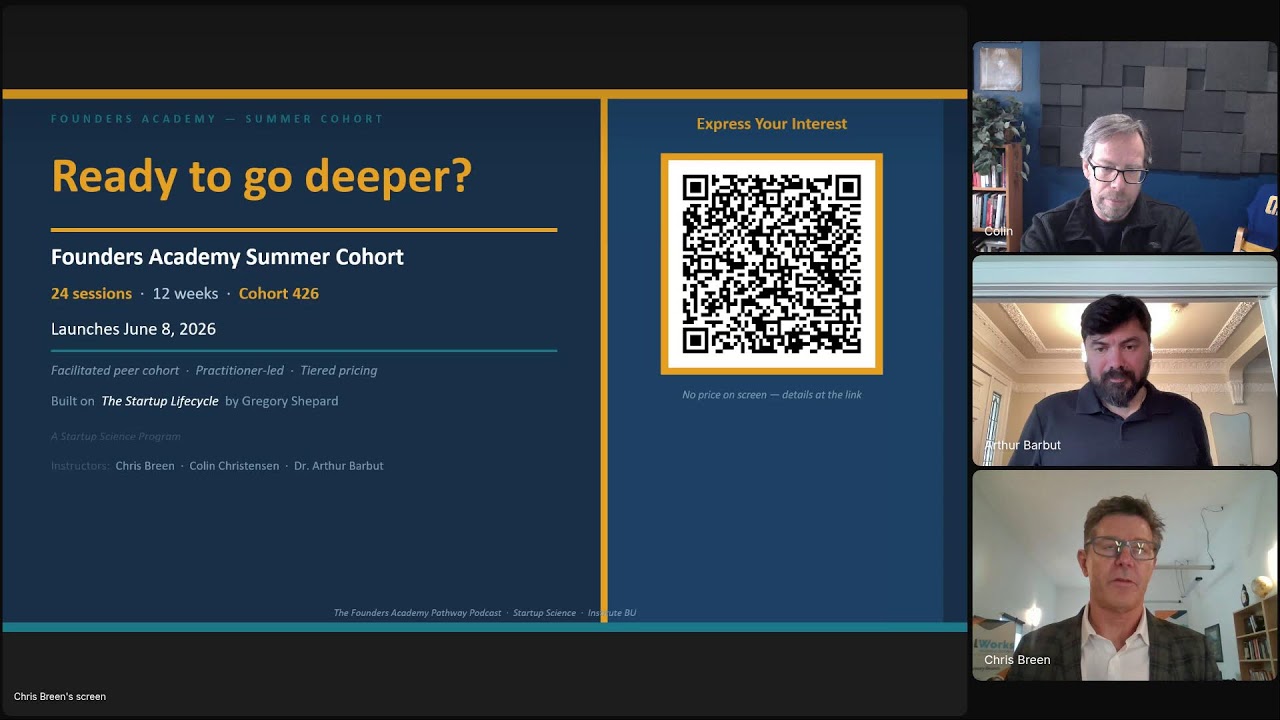
I know. Thanks, Arthur. And I think the whole idea is that, look, it happens every day. It can— you can wake up, you can have good days, good weeks, your mindset shift can can change because you're just not feeling it. You're feeling like maybe you missed something. You feel like a failure, things like that. And it's a resiliency to get through it, but it's also the community around you and, and all that, right? And again, I know we can talk about this for a long time, so I want to, I guess, trial close this because I know there's a lot of stuff in here. Um, let's just move over to talk a little bit about The, the Founders Academy a bit more in the summer cohort. And I'm going to just throw this slide up, guys, for anybody out there you want to grab a shot of the QR code. And this is really to go get some more information. Here comes on the cohort that's starting on June 8th, right? And each of the sessions, there's 2 sessions a week, similar to what we're doing here this spring. But we dive into a lot more specific subject matter around the lifecycle. There is— we bring in some guests, but again, a big part of it is having founders in the room. And the way that we talk through these things is we might give you, you know, an idea or, you know, some piece of the education, but what we're really trying to get people is talking in the room. What's their experience? How are they going to apply that? And that's where that founders community can really evolve and why we call it a cohort, you know. And in this, this 12-week sprint that we're doing, there's so much fun in there. And some of the feedback we've certainly gotten has been like, wow, it's nice to know that I'm not alone. And it can be a very lonely journey for sure, right? So thanks for everybody for attending today, guys. Great stuff. Tomorrow, we're going to talk a little bit more about the ideal customer, your ideal customer. And your ideal customer may not be who you think it is. And so, have a look on LinkedIn, register for tomorrow and come on. I would love to talk more about that. This idea of the ICP, the ideal customer persona, the ideal customer profile. We're going to dive into it tomorrow. I look forward to that conversation. As well. So thanks again, guys. Always a pleasure. And, uh, take care and, and look us up on LinkedIn. Uh, comment. We'll throw some, some post-show stuff on there, some information we talked about. But, uh, uh, let's look for that engagement and hope to see everyone tomorrow. Uh, thanks, guys. Hey, take care.
More from Gregory


Startup Science Founders Academy Pathway Podcast | Ep 4/16 | You're Building for the Wrong Person

Run Your Business Like an Investor to Operate Better | Tyrus Shivers x Startup Science

Why Our 2024 Financials Don't Tell the Full Story | StartupScience.io Founder Q&A