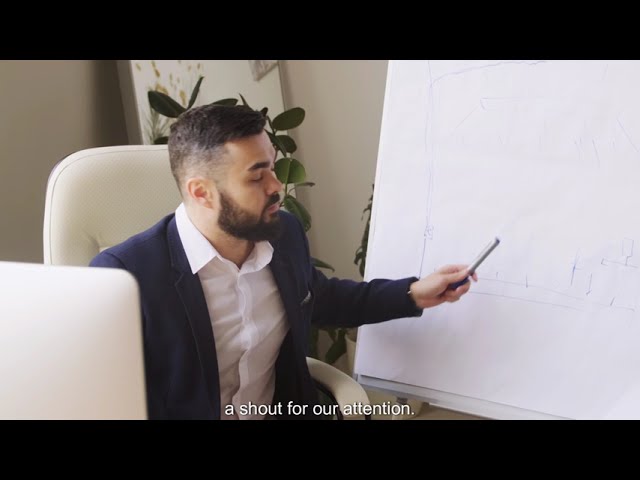
Steve Riddle introduces the CoachStation Leadership Development Program, a values-driven approach built on three pillars: clarity, consistency, and flexibility. The program uses the Roles and Levers framework to help leaders map their multiple roles and understand how each influences habits and choices. Coaching is framed as partnership where leaders ask better questions rather than receive answers.
Chapters
Welcome to Module 1 of the CoachStation Leadership Development Program. This is where we start to move beyond ideas and into your world, your role, and your many roles, and your impact as a leader. We begin by exploring 3 interdependent themes: coaching, the coachee, and leading with purpose. This module lays the groundwork for what's to come. It's designed to spark reflection, challenge assumptions, and begin building a more intentional, values-driven leadership mindset. So let's start with coaching. You may already be familiar with coaching through past programs or mentoring relationships you've had in your career so far, but within CSLDP, we take a distinct approach. Coaching is not about giving you answers, it's about helping you ask better questions. Of yourself, your team, and your context. It's about building self-awareness and translating that awareness into action. This isn't passive development, it's a partnership. In fact, one of the most powerful shifts in your leadership journey comes when you stop seeing coaching as something being done to you and instead see it as something you co-create. You are not just the coachee, you are the architect of your own development. And this program is designed to help you with that development in a meaningful way. Our goal is for this to be an outstanding program, not just pretty good. So that starts with you being open— open to examining your patterns, blind spots, strengths, and preferences, and more importantly, open to growth. Leadership is not a status, it's a practice. It takes skill and effort, and coaching accelerates that practice when you engage in it fully. As you work through the resources in this module— the Leadership and Remote Working Workbook, the Mentoring eBook, and other resources that we provide— And then the subsequent related upcoming coaching session, keep this in mind. No one can do this for you, but you also don't have to do it alone. Let's shift to the idea of purpose. Leadership without purpose is just management by momentum. You show up, tick boxes, attend meetings, and wonder why things feel a little bit misaligned. But purpose changes that. It acts as an anchor, a reference point, a way to lead with clarity, not just control. Purpose-driven leadership isn't about having a catchy vision statement. It's about aligning your decisions, your time, and your energy to what actually matters to you, to your team, and to the broader organisation. Your purpose as a leader may not be fully formed yet, and that's okay, but part of this program is about helping you to articulate that, to own it, and lead through it. You'll find this reflected in the Roles and Levers resource. It's one of the most powerful tools we've created at CoachStation. It's one that I have clients many years later referencing back to and talking about the difference that it's made. The concept is simple but powerful. We have many different roles in our lives, and we call these levers, affect your habits, choices, and mindsets. Recognizing the impact that each of your roles or levers has on the other roles in your life is key and affects your habits, choices, and mindsets, and that either helps or hinders you in your roles. Your role as a leader is just one part of who you are, but it deserves your attention. Ask yourself, what levers are you pulling without realizing? Are they aligned with your values and goals? Are they helping you show up with purpose or just keeping you busy? This is where we start to see the link between self-awareness and effective leadership. We also introduce 3 core pillars in this module: clarity, consistency, and flexibility. Let's briefly break them down. Clarity is not just about making things clear to others. It starts with being clear with yourself. What do you stand for? What do you expect of your team? And what can they expect of you? Clarity is what cuts through noise. It allows people to trust you, follow you, and understand where they stand. But it also helps you stay anchored when things become complex, which they inevitably will. You can't lead others if you haven't done the work of leading yourself first, and clarity is how that work begins. Consistency is the second pillar. You might say all the right things in a team meeting, but if your actions don't align, if your decisions shift too easily, if your accountability is selective, then consistency is lost and with it trust. Being consistent doesn't mean being robotic or inflexible. It means that your leadership has integrity, that your team knows what you value and how those values shape your behaviour. Think of consistency as a bridge between what you say and what you do. Finally, we come to flexibility. This is the difference between leadership that survives and leadership that adapts and thrives. Too much rigidity and you become disconnected. Too much flexibility and you lose your grounding. The balance matters. Flexibility is about reading the room, understanding context, pressure points, personalities, politics, budgetary constraints, and all the other limiters, and adjusting your leadership without compromising your core values. We've all worked for managers who stick to process no matter what. But leading with purpose means knowing when to adapt, when to pause, when to shift, and when to hold firm. Taken together, clarity, consistency, and flexibility form a powerful foundation. These 3 concepts are not separate; they overlap and amplify each other. For example, being clear makes it easier to be consistent. Being flexible is less risky when your clarity and values are solid. And when you're consistent, your flexibility is trusted rather than seen as reactive. So where does this leave you? Well, start by making a few notes. What stands out so far? Where have you seen these concepts at play in your own leadership or in others? Where are the gaps? If you lead teams or work remotely, which many of us do nowadays, use the Leadership Development and Remote Working Workbook to capture your thoughts, reactions, and questions. Application through identifying what resonates the most as you read, watch, or complete the tools and assessments throughout CSLDP is the difference between a good or outstanding program. This isn't about ticking boxes. In fact, I hate ticking boxes. I'm very passionate about making sure that there's a difference being made for you and with you in all that we do. It's about connecting these ideas to your role, your team, and the way you lead each day. And that's key. This module isn't something to simply consume. It's something to apply. The value doesn't come from listening. It comes from using what you've heard and applying it every moment of every day. So here's what I'd encourage. Take time this week to reflect on the 3 pillars— clarity, consistency, and flexibility— and think about where each one shows up in your leadership and where it doesn't. Think about your coaching and think about you receiving coaching and how you provide it to your team members. Bring those insights into your coaching sessions. Challenge yourself to be specific. Not, I need to communicate better. That's too big and bold a statement, and it's not actionable. A better option might be something like, I need to be clearer about expectations and clarity within my team. Not, I'm too busy, but rather, I've let urgent tasks overtake my role as a coach and leader. You don't need to have all the answers, but you do need to show up willing to explore them. This is your development. You set the pace, but also the standard, and what you put in, you'll get back tenfold. And that's Absolutely true. So begin with intention, stay curious, and above all, keep connecting the content to your own leadership reality. That's where growth happens.