Conversations With Leaders: Wes Davis
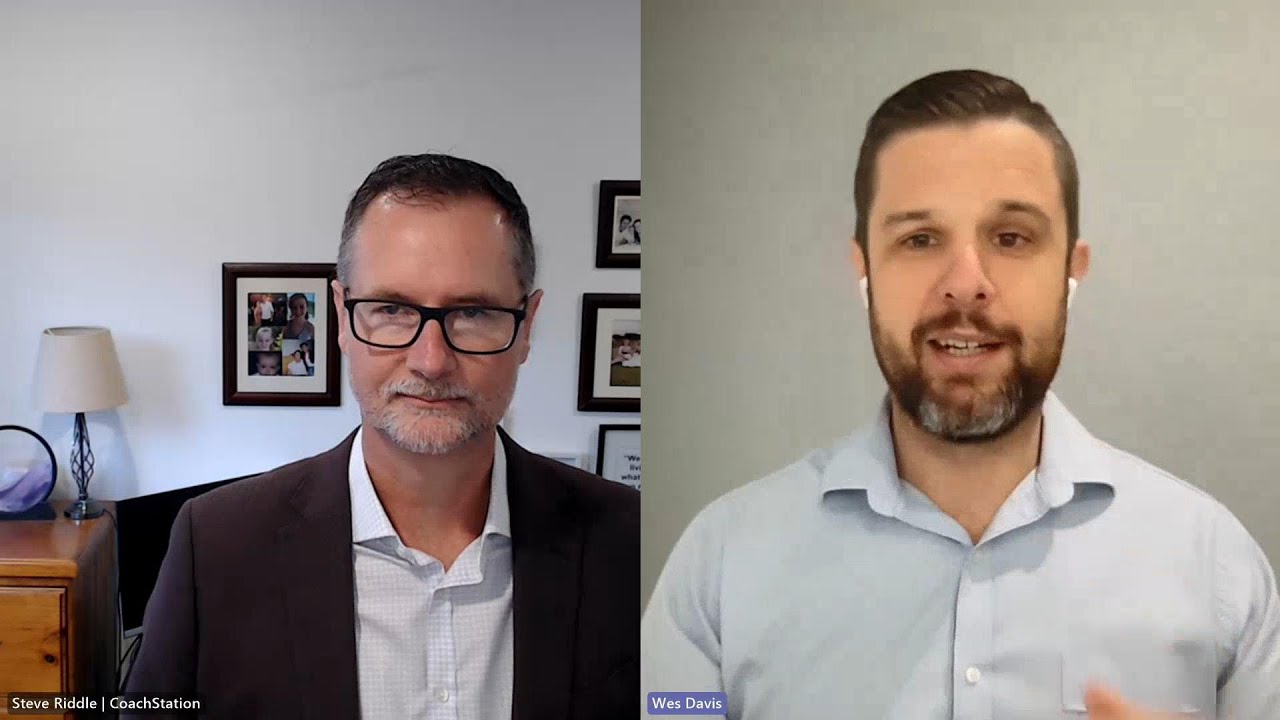
Wes Davis, a Queensland infrastructure leader, spent 15 years moving from engineering work to managing four asset streams. He argues engineers are wrongly seen as roadblocks and need soft skills training. His thesis on engineering leadership shaped his shift from task management to people-focused leadership built on values, relationships, and integrity.
Chapters
Wes Davis, thank you very much for joining us today and our first of hopefully many different discussions that I'll be having with industry leaders. And it's no coincidence that Wes is the first of the discussions that we'll be having. I've known Wes for a decade now and met him through when I was doing some coaching at one of the local councils here in Queensland. And Wes and I have struck up a great friendship since, and well beyond our initial coaching, which has been fantastic. And we share a love of hacking around the golf course and the occasional bourbon and nice meal and some of those things as well. But today, even though there are some very generic leadership traits and styles that are needed and they are applied across and transferable across many industries, there are also some specific things that are required depending on the industry that people work within. So Wes is an engineer and has many, many different experiences. I'll let him explain, but that's the background for these sessions going forward. So Wes, thank you and welcome. Appreciate your time.
Good to see you, mate. Absolute pleasure.
Brilliant. So probably a good place to start, Wes, a little bit of your background. So the 2-minute version of the Wes history and story work-wise, if you don't mind.
Wes history, absolutely. So probably you can categorise my career as a local government engineer. I've been in the industry for, well over 15 years now. I started off as a drafty on the tools, and then from that point on, we moved into different types of roles, from technical officer through to engineering designer, then onto the tools out in construction, running teams, and into back-end design, technical services, asset management, and to where I am now really, which is fundamentally looking after engineering services. And that's from you know, planning through to maintenance, the whole lifecycle of asset management. But been a fantastic journey and one I've enjoyed immensely.
Beautiful. And just a couple of questions on that. Why engineering in the first place? Where did the love of engineering, and out of the many, you're a bright guy and, you know, a lot of opportunities. I'm interested to know why engineering became your thing. Oh, great question.
I sort of fell into it. All my mates were drafting and making good coin. And I thought, oh, this might be, this might be a go. And then, So when I go back, I actually wanted to be a copper, but medically my eyes let me down and I wouldn't be. And so I was looking for a different opportunity. And yeah, like I said, my mates were drafting. And so as a typical Gen Y, I jumped on YouTube and learned how to use AutoCAD and I thought, I can do this.
Nice.
And then from that point on, it was just formalizing my skillset through study and university and all that sort of stuff. And just doors kept opening. And I thought, well, I'm gonna keep pursuing this path and keep walking through open doors. So it was on some levels I sort of fell into it, but I've always enjoyed the whole mathematics thing at school and just sort of by sheer circumstance, that's where I ended up to a career and loved it.
So I'm interested and I know you very well, as you said. So do you classify yourself as an engineer now? Like, do you often describe yourself that, or is it more as your roles of— and you're in senior leadership now and we'll talk about that in a moment, but your roles have morphed into something more than engineering, do you still talk about you as an engineer or is it now an asset manager or a senior leader or where do you classify yourself in that realm?
I find that when I introduce myself, I say, look, you know, I'm Wes Davis, I'm fundamentally an engineer, but don't hold that against me, you know, like it doesn't define me, you know, it's the thing that has opened doors for me to get into different roles and build a great skill set there, which has been awesome. But what I, you know, when I think about myself, like I consider myself to be an engineering leader, you know, I work in this sphere of engineering, but predominantly I like people, working with people. I enjoy getting great outcomes and working with teams. And that's the thing that actually excites me and I think has probably helped me along my career more than actually being the guy that sits out with a red pen and, you know, looking at design drawings and, you know, and doing that sort of stuff. I've learned my skill set, which has been great, but the engineering portion has just been the platform for me to work with great people. You know, and build a sort of really good infrastructure. So that's, that's the, I'll call it the platform, you know, for my career.
I love it. And you mentioned there about your education, which I wanna speak a little bit about today. But I'm interested too, before we get to that, just to describe your role at the moment. You have become a senior leader and I've been very proud of your journey in the decade I've known you and the many roles and there's been many that you've been promoted. I won't say quickly because that implies that you haven't earned it and you've absolutely earned it, but you've become a senior leader. But I'm interested just to hear a little bit about describing what you do and how that relates to engineering, if at all.
Yeah, so the formal title is Manager for Infrastructure and Engineering Services, and what I do is I look after 4 streams of, let's call it, asset management functions. So from planning, infrastructure, and sort of where our local government's going to spend their money, and doing that wisely and efficiently and to get the best— it's got best bang for buck in that engineering planning space. Then you've got the 2 forms of delivery, which is engineering design and survey. So that's turning those ideas into something we can actually build. And then we've got the guys that build it in our construction teams, and speaks for itself really. And then the operations and maintenance and how we manage and maintain the infrastructure assets collectively. So I think about that in the context of I'm more strategic than I've ever been. You know, when you sort of get off the field, off the tools, you know, the idea is that I want to make sure that my maintenance arm is speaking to my planning arm, you know, and facilitating those types of discussions to go, okay, well, if we make good planning decisions here, I know that's going to change the way we can maintain those assets. We can standardize it. We can get more efficiencies in our costs. We can standardize fleet, we can standardize, you know, better buying power when it comes to, you know, buying pipes, you know, okay, well, let's— what can we put on the shelves right now that I know that we'll definitely use over the next 2 or 3 years in a market where it's hard to get pipes? You know, we're making those whole-of-life, you know, decisions. And I suppose my job is to get every one of those people in a room and understand how those, I suppose, paths cross. and make those opportunities work for our industry.
So you've mentioned a few times already about improved and better outcomes. So what do you think creates better outcomes? What are the things that you've learned in your journey and the skills that you have and the skills that you enact and enable in others to create opportunities for better outcomes?
Well, for me, number one's culture. You know, I think if people want to come to work, the work gets done. And so for me, it's very similar to your skill set in that your vision for values, you know, if I can understand people's values and what drives them, what motivates them, and then, and really sort of reward and support that, then the work gets done and then everyone's succeeding. So for me, culture and setting that tone, and I believe it starts at the top. Like, there's nothing that I don't ask my people to do that I won't do myself. You know, so for me, if we can get that culture piece right, that sets every sphere up for success, if I'm honest. And if I'm going to be really practical, if I turn the culture thing, you know, into some practicalness, you know, planning. You know, I believe that good planning will benefit the industry, will benefit, you know, us down to everyday work, to my offices constructing through to my designers doing the designs, you know, and if we can get that planning piece right, that element is what will set our, you know, success up for the whole department.
Part of the reason that I've asked you to be the inaugural chat is a little bit about your studies. And we've talked a lot over the years about your studies, and you've got a lot of qualifications, and admire you for that. I think that's fantastic. But you did a little bit of an unusual thing within the engineering circle, which This is a very general statement. I would say that like a lot of industries, most people aren't joining the engineering firms. And so I'm thinking about how am I going to lead within that? So leadership within engineering, so to speak. But you've focused on that as part of your journey and your professional and personal style and direction. But you also made that part of your studies as well. So maybe just walk us through some of those decisions and what you've learned along the way and why you did that in the first place.
Yeah, the local government industry is really quite a structured industry, let's call it that. So when you know that you want to progress in your career, there are certain qualifications that you need, certain skill sets which are documented quite well for each of those levels as an officer and as you keep working up the ranks. So for me, you know, as someone who was pursuing that, I knew what every step needed from a formal qualification point of view. So I started with an associate degree, then I went through to a B.Tech. And then I went on to my engineering honours degree and finally my master's. But in the engineering honours portion of it, right, your 12-month thesis, and I chose to do a thesis on leadership, engineering leadership, and the application of leadership theory for local government engineers. One of the reasons, one, because I'm passionate about leadership, it's genuinely a value, right? But one of the things I did see is that we spend all this time solving problems, learning maths, and, you know, and doing all that sort of stuff. And what happens is the, the higher you go up in your engineering, engineering profession, in your career, the less it becomes about your maths, you know, and your technical skills. Fundamentally, it becomes more about people. All right. And, and one of the things that, um, because I, I didn't do straight out of school, and, you know, I actually, I worked full-time, and I did all my studies while I was working full-time. And so I was fundamentally in the industry building my skill set and, you know, and learning, you know, behind the scenes as well. And what you tend to see is that your best engineers and your most technical people get promoted into those leadership positions, which is fantastic. You do want that underlying technical skill set. But managing people isn't the formula. There's no, there's no thing. And I'm doing, like, I was associated with a B.Tech engineering honors degree, and not once did anybody give me a so much as a subject on, on the soft skill portion of being an engineering leadership leader or leader in an engineering industry. And so when I wrote, I actually wrote my thesis on it. And fundamentally what I was learning at the time as I was working as a coach and, and I was running teams at the same time. So that plus what I was seeing, you know, I was seeing these really bright you know, really technically great engineers who were put into management roles and, you know, asked to solve people problems that there was no formula for. And so I was thinking about what ways can we better train our engineers to not just be really great, competent technical people, but also be really great in the skills of leadership, right? And obviously, there's another thing why I spoke about coaching, why I loved it so much, was that because I did a whole bunch of surveys and looked at all our technical people across our, I suppose, this profession. And what I learned that predominantly, you know, they were introverted. They were, you know, introverted things, solo thinking, you know, head down, bottom up, and looking at that sort of thing. So then you put them into this realm where you have to look up and look across, and then you've got people with different values and skill sets. And And then what our industry tends to do is then, okay, we'll teach you that and we'll put you in a room with 30 other people, make you do all these games and be extroverted. And it just actually cripples them. They don't learn. They actually shut down.
Yeah.
And it actually has the absolute opposite effect, which is why I was so big about coaching and recommending that for that one-on-one style when we're working with highly technical people. And I'm being generalizing here, but predominantly, you know, introverted style of learners, you know, and managers. So yeah, so that was my, I suppose, the basis of my thesis. And then I went and after that went and did a Master's of Professional Engineering Leadership. And I did that through Griffith. Same thing again, it was just, it was that next step of, okay, well, how do I, you know, I suppose, look at that executive level type role where I'm learning not just, you know, the engineering technical portion, but the business portion of it, understanding finance a bit better, understanding different types of problem-solving techniques and that sort of thing, but formalizing the fact that I want to be a really great engineer, but also I actually think I want to be a better leader than I ever will, you know, the world's best engineer. That's not what drives me. I'm relational, for one. That's got me. I'm loyal. honesty, integrity, and faith. So, they're sort of the top 5 that I subscribe to. And every one of those have, like, I think about my top 10, they're predominantly made the same.
Yes.
But through different seasons, they've changed importance, I would say. You know, so, I think fundamentally my core values have been very similar. But the importance through different seasons is what I've seen change the most. You know, I think When you first met Wes, I wasn't a dad, I wasn't anything like that prior to that. But now I've got 3 kids under me belt, a lot of gray hair and a beard. Things have changed.
Haven't we all?
Yeah, we all have, I reckon. So things are very different.
I think that's part of what connected us initially is our— even before we necessarily had gone through your values, I think there's a real values alignment, which is often the case with relationships. And you've talked a few times here today about the importance of relationships and connections. And values are not the only thing, but that can be a really integral part of that. Not that we're just sharing values, but we understand each other a bit better by what you value. And that can be demonstrated through behaviors and words and actions and our leadership and so on. So I love that you— that has been such a core part of who you are. So thinking about that a little bit more or extending beyond values, I'm interested if there's any unique challenges that you believe leaders face within engineering industry And if there are any, how are they navigated?
Yeah, great question. It's interesting, I was thinking about the context of this because engineering, we're basically trained to solve problems, right? And the flip side of that is that we actually see problems before other people do, right? And so from engineers, we're often perceived as negative. You know, like when you get into a room and somebody's pitching you this really great infrastructure idea and you go, yeah, but that's, you're going to need permits, you're going to like, have you even checked the ground? You know, like you think about You've got all these sort of, you can solve half these problems in your mind, you're looking at. And the core, I suppose, the fundamental of that, we're actually trying to protect people. We're actually trying to make safe decisions and that sort of stuff. But we're often the people who are seen as the roadblocks for getting great outcomes. And so I think that's a challenge for engineers as holistic across our industry is being able to use that skillset, which is a great skillset, But communicate that in a way where it is, you know, where that perception is— let's call it reduced. I don't think we'll ever get away from it, but it's reduced in a way to say that, hey, look, we are here to help you deliver these infrastructure outcomes, but there is some steps that we need to address up front. That's not negative. I'm for you. I'd love to see this thing, you know, but the context of this is that, you know, we need to turn that idea into something that's real. Manageable, tangible that we can actually, you know, get a great outcome from.
When I'm talking about management leadership, it's often the sense that if I'm solving problems for people, I'm doing a good job. And that's the antithesis of good leadership. I know why it feels good and it feels validating and it feels like you're bringing your strengths and your knowledge and SME, subject matter expertise, to the table. But that's really the opposite of what we're looking for. But I'm interested to know for you how you've made that transition from Management to leadership?
Yeah, good question. Um, how I'd wrap it up is that I think at some point you go in a career as a technical person or a technical operator, you, you go from this task focus, this project focus, to people. All right. And so, um, for me, you know, I was on the tools, I was sitting in the desk and designing roads, losing 12D, and doing all that sort of stuff where success was driven by outputs. It was achieving delivering that project and, you know, that sort of thing. And, you know, seeing that job get, you know, built on the ground, it was literally physical outputs. And so the next step of that was, is, you know, program level and people level. So whilst I'm not, you know, I'm not sitting in the same desk and, you know, and zooming in and out and all that and doing all those sorts of great things, you know, I was collectively looking at a body of work that was delivered by a whole bunch of people. And so for me, management, you know, in the context of that, what's important— task focus, project focus— um, what it does is takes vision. You know, you need to turn that, that those projects into actually wanting people to buy in as a collective and get that, that overarching output success for everyone. Um, so if I think about the difference for me, it's from task to people. And by doing that, the only real way I knew how was, was through building relationships. Like, I am a little bit bit different to the mold when it comes to engineering. I like people and I'm quite personable. I'm a bit of an extrovert in that sort of space, you know. And so, but it wasn't a smooth journey. I made a bunch of mistakes, some decisions that I'd never make again, you know, as a young leader. Like, I was in my 20s and I was running teams, you know, and predominantly, I think I was like the 2nd youngest person in my whole office, you know.
Wow.
So I actually had this, I had this really brilliant skillset of really people with more technical expertise than me in the context of time and collecting and that sort of stuff. So being able to be supportive and sort of make myself available to the different styles of people in my team. I didn't actually have to be the most, the eldest person or the grayest beard or anything like that. All I had to do was be able to work with very different dynamics within our office to achieve what I call the vision. overarching context of delivery. And some days were great and some days were difficult, if I'm honest, and challenging. But I learnt just as much off my wrong decisions as I did, you know, the ones that did work.
So do you miss being on the tools?
No, no. If I'm honest, no, look, I don't.
You can think about your answer for a moment.
Yeah, I didn't like, you know, there was, I will say, like, from an engineering point of view, I think the design skill set, which is where I started, you know, is a really fantastic platform, um, to learn a technical skill set in engineering. Because you— if you can design it, you can picture it, you can understand the standards that drive those decisions, from that point on it's just the output, it's the application of doing it. Um, so I value that skill set. I love seeing civil designers, um, you know, excel and move into engineering roles and all sorts of stuff. I think, um, well, look, I very much value it, but You know, I like the people management style and the strategic oversight more now. And I enjoy my role. I'll be honest, I'm at a point in my career that I've probably been the happiest I've been in a long time from that point of view.
And what's making you the happiest? So that's a great statement to make, and it's not something I hear as much as I would like because that's part of my role to help people to get to a state of satisfaction and contentment and ultimately happiness. So why is that what's happening in your world that's making you so happy at the moment?
I mean, fundamentally, in a great organization, we've got a good executive who were supporting each other and supporting the decisions that we're making. I've got a great leadership team. I'm working with a really great, solid bunch of people who were all working to the same goal. You know, we have our Wednesday meetings where we all get in the room and You know, we talk about lessons learned. We wipe all the things that aren't working so we can, as a team, get, you know, and map it out and understand where we can intervene. And I'm seeing everyone buy in, you know, in the context of that. And it's just enjoyable, you know, when you're not pushing against every barrier to get an outcome, where you've got that collective group of people doing all the right things. it helps to get up early, you know, and jump in the car and go to work, you know, because you feel like, you know, you're knocking over fences and those barriers and achieving really great outcomes. And so, and we're reaping some of that success. So it's been really great.
I love your language. It's so much of what I try and help people understand to make that, I call it the leap to leadership. And it's the sense that you work with and through other people. So you often, all through this, and I've known this about you for years, but all through this, your answers are very much in response to what we can do together. And it's an easy cliché just to dismiss, like soft skills. It's all that soft skill stuff, you know. No, it's we, it's not I, and all those things. But they actually are the key points. And your language is very much about working with others. And to be specific, you talk about problem solving a lot in engineering. That's a key aspect of the industry. But too often, because we're— it's a fairly insular, potentially, insular type of roles. We think that they're our problems to solve individually. And I would argue, like any industry, they're our problems to solve more broadly. And when you are working in a team, these things can be resolved more deeply or more effectively often because we're working on it together rather than thinking that we need to come up with solutions ourselves, which is a great reminder of how important leadership is to be able to engage others and to collaborate and all those things that we sometimes write on posters and put up on a wall and then we don't do. But that's the point. point. And I hear that in your language, which is fantastic. So, um, are all of your direct reports engineers or not necessarily so?
Yeah, look, all of my, I got, uh, basically 4 sections and they're all principal engineers. Um, so yeah, so definitely we work in that technical sphere. Yep. I don't look at my 4 departments and, and think that they've got 4 engineers. I look at my, um, you know, my area and I, I, I just consider them my leadership team. You know, in the context of that, um, you know, they're at— they have brilliant individual engineering skill sets, and I'm not going to rely on like any single one of them. And I think about today, I've got today off, um, you know, I don't need to go pick up my phone and pick up my laptop because I know these guys are doing exactly what we talk about and they run their business. And, you know, and, and we do the accountability, you know, we do those types of conversations. So, um, So, it wouldn't matter to me if they were GIS experts or civil designers and that sort of stuff. They are fundamentally— I'd speak about them as my leadership team. Does it tailor my communication style? Probably a little bit. You know, we can talk about ESAs and use all the acronyms that you can think of, and we understand it. But ultimately, the context of who they are is far broader than that.
Are they engaged and really interested in their own development and those of their teams? And if so, how is that demonstrated day to day and where's that come from? Is that something you've motivated through them or is it inherently part of how they operate?
Oh, I think a bit of both. I think about— I'll use Mark up. Mark's a great example of this. He's currently doing his MBA. He started that this year and we had lots of conversations around it off the back of our conversations around formalizing your personal development. And we spoke about the pros, the cons, you know, and is this really required versus, you know, what are you hoping to get out of it and those sort of things. So I've watched him in that space. I've got other engineers who are looking to formalize their RPA queue. And so we're having a very different type of conversation in there. Well, how do I give you the oversight that you need to be able to formalize that? And each of them had these different drivers, both technically and professionally. Matt Lyon, you know, he's killing it with his team meetings and the culture. And I've watched him over the last 12 months and how that's just infiltrated his business. I've watched these other engineers, these younger engineers, sort of step up and buy into it and take more accountability for their project outputs. So I don't think you can be in the engineering profession and not have some sort of CPD by sheer nature of what we do. There's improvement.
Can I jump in? Sorry to jump in. Is it as easy for them to understand and buy into the personal development as much as the professional? So that the technical aspects, absolutely. Is that a bit of an easier sell and then they buy into that more than, hey, now we're focusing on you? And if we're talking about values, for example, or your effectiveness as a leader within your team and what that actually entails and the detail behind that, like where's that sit in the translation and the application in reality?
I think in reality, it's not— from my eyes, I'm actually really quite, um, it's called lucky. You know, these guys take this stuff very seriously, you know. Um, and so from the CPD point, you're right, it's not just the professional, uh, technical portion of it. We talk about having the hard conversations, you know. We talk about, um, right, you know, what can we do differently that you can get a better outcome here? And it's the same thing, like, how do I support you to do that? You know, we're having those— soft skill type questions. And we talk about it all the time as a team. Okay, great. We can do 50% of our job, you know, which is the technical portion of it, right? But how we do it is every bit as key to getting the success that we need. And from a soft skill perspective, I'll be honest with you, I talk about it all the time. I talk about coaching, I talk about stuff, you know, that sort of stuff. And so they're probably sick of me talking about it in that context, because I think the importance is that if I'm doing it, they're doing it.
Out of 10, 5 being the midpoint, where would you put where you're all at at the moment as a group?
As a group, we're in the 7 to 8 category, somewhere in there, I think.
Okay, so let's call it 7.5 then, to split the difference. What needs to happen in the next 6 to 12 months to make it an 8?
We have some technical stuff we've got to do. So we've got some business improvements that we're talking about. So we have a collective vision of what we want to see, and now we've got to use our systems to support that. We've got some coaching coming up, which I'm going to be putting my team through, because I think we can always learn and be better leaders. We've got some tough conversations to be had. We're in that process of a little bit of change that we've got to do, and that's just going to keep taking us to that next step.
Hundreds of things that make good leaders good leaders, right? Your top 3?
Top 3. Values-driven is one. Relational. And I'm going to wrap this one together— honesty, integrity. You're only as good as your word. So if you put those 3 in a bow, you're going to go places.
I love it. And just, you've mentioned relationships and relational connection a few times today. So in a 20-second version, what are you talking about when you're talking about effective and useful relationships and connections?
I think us as leaders and managers, I think we should be for our people holistically. So when I talk relationships, I want people to be good dads, Good mums, you know, and have that sort of balance. I'm not— success in that leadership realm is for the person as a whole, not just for what you can get out of them at work on a 9 to 5 on a Monday to Friday. That's, uh, so when I talk relationally, I think, you know, how are we building our leaders in, in the holistic term of the word, um, and not just, you know, great technical people.
One thing you're focused on in the next 6 to 12 months in your own development?
I've got more coaching to do for me, so we've got that coming up. For me, I'm really encouraged about what we're doing at work at the moment. So I'm still big on building more culture. I'm still building trust in my new role, you know, and that sort of thing. So I want, you know, people to really get to understand my leadership style and continue that uplift. And then if I can get really practical, I've got probably 3 times the program that we're used to out here with all the flood damage and all that sort of stuff. So we've got 3 times the work to do, and I know that, you know, I'm going to help drive that and get the best outcome we can without making everyone too tired.
And favorite podcast or book that you'd recommend for any leader? Craig Groeschel.
So I listen to him, it's only once a month even, so it's It's 1 hour once a month. Um, I listen to him, um, um, all the time actually. Um, so if you want to listen to some really great stuff, he's the man.
And key thing you've taken away from Craig's podcast at this point?
Um, I don't think any— oh, it was actually last month's podcast. He was talking about failure not actually being failure. It was an opportunity to learn and build a platform on for his next decision-making.
I'll add to that too. It's interesting how people will often talk about we learn more from our mistakes. I'm not sure I agree, or I don't agree with that. I actually think we learn from good leaders working with good and great leaders and learn from our successes as much. I think, in actual fact, a lot more, because the reality is that we have a lot more successes than mistakes. Yeah, we make a lot fewer mistakes than we actually give ourselves credit for.
Correct.
So the reality is we should be referencing the things that are going well and learning from our mistakes. But Yeah, it's interesting. That sort of language, I think, is a bit of a misnomer from a practical point of view because 98% of the time we're doing good work the right way. So of course we're learning from that if we're the type of people that reflect on that and think about what's going well and also those areas of improvement, of course. So I like that. And if you were sitting in my shoes, so to speak, at this side looking back at you, is there a question you'd like to ask yourself and respond to, of course, that we haven't covered today?
Look, I will say that I've learned immensely from my opportunity to work with you, Steve, and where our paths crossed and where we're at now. So my encouragement for anyone that's listening to this in the end is get yourself a really great coach. And my suggestion is it should be Steve every day of the week.
Right on.
It's been nothing but beneficial, not just to me as an engineer, you know, and a leader, but as a bloke, you know, as a dad that could do life with you. So, yeah, brilliant.
Yeah. Thanks, man. I really appreciate it. It's very kind. That wasn't me fishing for compliments, but I appreciate it.
And that's the point.
And, you know, I'd say this to you as well. You should be very proud of where you're at. And I'm excited to see your next, well, hopefully many, many years and decades. It is a story that's worth telling. And hopefully today, those that have been listening and watching have taken away a couple of things, maybe from leadership generally, maybe from something that they aspire to and they understand a little bit better now in hearing your story. Maybe there's some engineers out there that recognize the fact that it is possible to become an effective leader, introverted or extroverted, or engineer or not. These are traits and skills that can be learned for the most part with the right behaviors and attitude and practice and so on. So I appreciate the messages that you've shared with us today. And as I mentioned at the beginning, you are the inaugural, the very first of our conversations with industry leaders. So thank you again for taking the time, and I look forward to hearing what happens from this point forward. But enjoy the rest of the day, and thanks very much. Perfect, Steve.
I really appreciate it, mate.