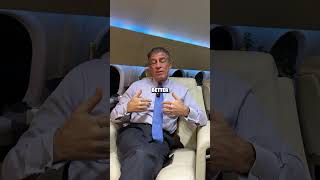
Steve Varsano on how aviation bounced back from COVID: demand crashed, then surged 30-40% by late 2022, with first-time charter users sticking around. Modern jets fly higher, farther, and burn less fuel. Supply-chain delays are the real problem now.
Questions this video answers
The market initially collapsed in early 2020, with many deals cancelled. Within a few months demand rebounded, leading to a 30‑40% surge in activity and a 50% increase in charter users through Dec 2022. Many new users stayed on, creating lasting demand pockets.
By innovating, leveraging social media for global brand exposure, and exploring new avenues to capture emerging opportunities.
Aircraft now have better fuel efficiency, higher cruise altitudes, lower cabin altitude, ability to use shorter runways, and communications (Wi‑Fi) that are about 1,000 times better.
Challenges include high interest rates, geopolitical tensions, oil price volatility, and especially supply‑chain delays that slow deal closures.
When a deal falls apart, quickly brush it off, maintain stamina, and move on—treat setbacks like a game of whack‑a‑mole and keep progressing.
Chapters
Josh, any more questions? Could you expand more about how COVID impacted the industry and the lasting effects we still see today? When COVID first hit us, everybody thought the end of the world was here, right? Everybody locked themselves in their houses. The world was ending. Nobody was going to fly anymore, and that was the end of it. So the whole industry went down, not just airplanes and cars and everything. That lasted for maybe a couple of months, and shortly thereafter, people started thinking, wow, you know, maybe the world's not ending, and things started smoothing out. We lost a lot of deals that were in the pipeline and people signed, and they canceled the deals because they thought the world was ending. But really right after that, in a couple months, people started coming back in and saying, mm, we see real value in what's out there. The world doesn't look like it's gonna end. Maybe there is some light at the end of the tunnel. And we started seeing the market coming back. That was in March, April, May of 2020. From there for the next really 18, 20 months until December of 2022, the market went up, up, up, up, up, and prices went up. There was no airplanes available for sale. And in the charter, the rental market, market increased by 50% the number of users. And a lot of those people who came in the market actually never flew on a corporate jet before. People and companies that really never thought could afford to spend money on it, or they didn't justify it in their head. Once they used it because the commercial airline service wasn't servicing the places they wanted to go, they started utilizing corporate jets. They really saw how much of a time advantage it gave them. And from there, they basically stayed in the industry. The demand after the market started coming down, which was since January of 2023, has probably risen up from the baseline where it was, and I think there's probably 20 or 30% of the people who came into the market that were never there stayed in the market. The demand is still pretty good, but it's in different pockets of the world.
But I think overall COVID brought more people into our marketplace than there was before COVID Even though the speed of the deals are going down, there's a much higher demand for those aircraft today. With the market expanding, how do you plan to grow in that industry to meet that demand?
The market grew really exponentially during COVID It really went about 30-40% higher. Much more interest came in. Many more people were flying and the demand really soaked up and the supply went down. So it was really hard to get a deal done. Now things have calmed down and we see the market sort of becoming much more normal as it was pre-COVID. Going forward, we have to just sort of innovate to see how we can stay much more active. Use of social media has given us a bigger platform to get our name out there around the world. And I think there's other avenues where we think we're going to expand. To be able to take advantage of things as they occur going forward.
And technology in corporate aircraft, do you think how it is today shapes and differs from how people flew 20 years ago compared to today?
Yeah, for sure. First of all, it's made the efficiency of flying much better. You're getting better fuel efficiency, you're flying at higher altitudes, the cabin altitude is lower so that you're getting a better experience. You'll be able to take off and land on shorter runways. The communications, especially Wi-Fi and being in touch with the ground, is 1,000 times better than it was 20 years ago. And that has been able to make people move much more frequently and easily because they can always be in touch with their office.
And even though it's much easier, what is your biggest challenge today in this industry?
I think the biggest challenge today could be interest rates, could be the wars going on, it could be geopolitical issues, it could be the price of oil going up or down, it could be industry issues. One thing that's a real problem is supply chain. Because things are taking much longer to get delivered and parts are not readily available, and that is slowing down getting deals done.
I have another question for you.
Okay.
On a personal level, did you ever have a step back or a lesson that you've learned throughout these years in this industry that have helped you come back stronger?
One thing I keep on thinking I have learned is after a deal falls apart, to sort of just brush it off and say, okay, too bad, and I'll get on to the next deal. But no matter how many times that happens, you think you get over it, and they hurt. They really are, because sometimes these transactions are big transactions. You work on them for a long time and these people in these companies just change their minds. Something you've been working on for months, sometimes a year, and the deal just falls apart. You really have to have strong stamina. You have to really forget about yesterday and just think about today. That's the problem with a lot of people. They sort of mourn the past and they feel sorry for themselves. You get pushed and kicked and punched and you fall on the floor. Just brush yourself off, man. Just put your hair back, get up, and just go again. Almost like that game Whack-A-Mole. Every time you fix a problem, another problem falls. She hit a thing. And that's this business. So you really almost have to have a sheet of armor in your body, and every time something comes at you, just step over the next problem and keep going. Because any problem is usually never permanent. Of course, if you have a medical issue or something like that, but in business, things just change and they'll get better. You just have to have that mindset. Put the bad stuff aside, don't feel sorry for yourself, and just move forward. It's the best thing anybody could do for themselves. Okay, boys, great to have you here over the last couple weeks. I hope you learned something and hope it helps you want to get into the aviation world. Yeah. Thanks so much, guys.