In a Business Jet Traveler interview, industry expert Steve Varsano and several panelists discuss the decision‑making process for moving from chartering to owning a business jet. They outline a usage breakpoint of roughly 150‑200 flight hours per year as the point where ownership becomes economical. The conversation then shifts to evaluating new versus pre‑owned aircraft, noting that pre‑owned prices have fallen sharply (depreciation now 7‑10% per year) and that the current market is a buyer’s market with significant discounts (e.g., a two‑year‑old jet priced $34‑35 M versus a new $42.5 M version). New models can present early‑life technical issues and higher pilot training costs due to limited pilot familiarity. The panel stresses the importance of engaging knowledgeable brokers who can assess aircraft history, maintenance pedigree, warranty status, and configuration suitability. They advise buyers to consider warranty length (typically five years), engine insurance programs, and operating budget impacts once warranties expire. Interior refurbishment is portrayed as relatively inexpensive for soft goods and finishes, but major re‑configurations (moving walls or seats) are costly and should be avoided. Overall, the interview provides a practical roadmap for prospective owners, emphasizing data‑driven evaluation, professional guidance, and realistic budgeting.
Chapters
With the cost of pre-owned jets coming down, this is an opportune time for business jet travelers to consider moving up to full ownership of an aircraft. We spoke to some industry insiders about this value proposition.
Owning an aircraft is not for everybody. It, it really depends on how much use you have for an airplane. Normally we think 150 to 175 hours of usage is really the breakpoint where you should go from chartering an aircraft to actually buying an airplane. If you actually have 200 hours of use, you really want the flexibility to be able to have an airplane at your beck and call.
We see people who have had some experience with aircraft either through charter, but primarily maybe say through a fractional share or a jet club of some sort.
The worst thing that can happen when you're buying an aircraft for the first time and it happens quite frequently, is that they say, my friend told me that they have such and such an airplane and it's a great airplane and I should buy one. And that's a big mistake because what your friend has has nothing to do with what you need. So you really need to be educated on which airplanes fit your profile. You want to know how much you want to spend, how far you want to go, how many people you have to carry, and really how old of an airplane you are willing to own.
Once you decide to purchase an aircraft, you have to choose between new and pre-owned. For many, pre-owned can make more sense.
The prices for pre-owned aircraft have continued to slide downward. And in fact, recently at the National Aviation Finance Association conference, they were talking about evaluating differently depreciation schedules where we have looked at 3 to 4% per annum off the declining balance. Now it's more like 7 to 10%.
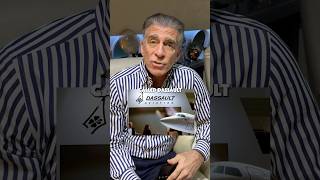
Today it's actually a very good market to buy. It's a buyer's market. There are a lot of airplanes available, so you do have a pretty steep discount for a pre-owned airplane compared to a new airplane. Like the plane behind me, for instance, a new version of that airplane will probably cost $42.5 million, and this one can be bought for $34 or $35 million. So it's a great advantage, and it's a brand new plane. It's only 2 2 years old, it's got still warranty left. So you do get instant reward and you get a great deal.
Sometimes new models of aircraft will have growing pains and pilot training can be costly.
So when you have a new aircraft, a new technologically advanced aircraft, sometimes they have issues that have to be ironed out for the first few months or first 100 hours of the airplane. And also just for the pilot's familiarization. If you have a new model introduced into the market, there aren't as many pilots that have been flying that model airplane for a long time.
As in any specialized market, it helps to have an expert on your side to make sure the purchase goes smoothly.
So when you're in the market and you are looking for an airplane, first of all, it's very important to have the right people around you and the right advice, especially on the pre-owned market, because an airplane can be a good airplane or a bad airplane depending on its history, the way it was maintained, the way it was flown. So a small mistake can cost you a lot of money. So you do have to be diligent. and you do have to hire professionals to help you around finding the right airplane. So when you choose a broker, obviously you got to go through your selection process, and the main issue when you look for a good broker is what reach do they have, do they have the right airplanes in their inventory that you're looking for, and do they have the right expertise both from a financial and market value perspective but also from a technical perspective.
Get a better choice of different models, of different airplanes that are around the world. Obviously, if you're just calling a manufacturer, they want to sell you just their brand, even if it's in the pre-owned market. But if you really want to know how one airplane compares to another, a broker has a wider net that's covering different models and different airplanes of the same model, and usually they can measure one against the other to see how you can find the best value in the best airplane. You want to know exactly, first of all, if the airplane's less than 5 years old, it's on a warranty program. So that gives you more of a defining budget going forward. After a 5-year period, the warranty will go away, so you have to add more to your operating budget to cover maintenance items. You want to make sure the engines are on certain insurance programs. You want to look at the pilots as far as if you need 2 or if you need 3 or 4, depending on how many hours you're flying.
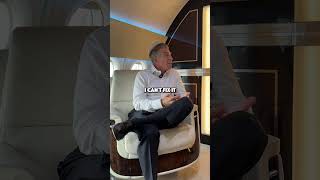
Refurbishing the interior to suit your taste is relatively inexpensive compared with the cost of the aircraft. However, it's important to find an aircraft that already has the best basic configuration for your needs. Changing carpets and wall coverings is easy. Moving walls and seats is not.
When you look for an airplane, the first important thing is the configuration, because reconfiguring an airplane will actually cost a lot of money and wouldn't make much sense for somebody to buy a plane and do a complete reconfiguration.
You can change the interior, the carpets, the seat covers, the wood colors for much less than people think.
Redoing soft goods, wood veneers, plating, there are plenty of companies around the world with that expertise that I would have no fear taking a client. In fact, it's an enjoyable process with the pre-owned airplane.
You can change the interior. You cannot change the pedigree or maintenance history of an aircraft.
Purchasing your own aircraft can be a satisfying experience. Just make sure you have expert help to assure you do it right.