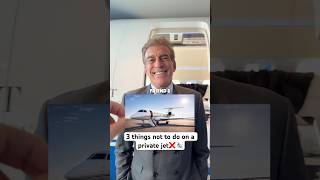
In this YouTube reaction, Steve Varsano and Ben Mallah discuss Ben's recent purchase of a fractional share in a twin‑engine propeller aircraft, a Cessna 414. Ben highlights the low purchase price of his share ($75,000) and emphasizes that the biggest expense is the pilot, who charges $600 per day, plus about $400 in fuel for a round‑trip to Fort Lauderdale, making a six‑passenger trip roughly $1,000. Steve explains the distinction between fixed costs (pilot salary, hangar, insurance) and direct operating costs (fuel, landing fees, catering), noting that Ben is splitting the fixed costs with other owners. Steve disagrees with paying pilots by the day, advocating a salaried, year‑round arrangement, but acknowledges the plane’s speed (200‑220 mph), suitability for 600‑700 mile trips, and cost‑effectiveness compared to commercial airlines for property‑viewing trips. The conversation ends with Ben noting he uses the plane for his kids and property tours, reinforcing the practical benefits of owning a shared prop aircraft.
Chapters
The biggest cost is the pilot.
This I don't agree with.
Ben? Yeah? Why are you buying this old-ass plane?
They're making fun of him having an old airplane. This airplane, the twin-engine reciprocating airplane, this is what most of the airplanes were for the last 30, 40 years. You don't always have a jet engine. A lot of the smaller airplanes have twin-engine airplanes with propellers. They're called reciprocating, and they go about 200, 220 miles an hour, which is pretty fast. And if you're going within 3, 4, 5, 6, 700 miles, they're really not bad airplanes.
I wish you were at an auction so I could drop you back off. And this happens to be a great plane, and it's very economical, and the AC works. You know, it's my first time. I don't want to get in too deep. It cost me like $75,000 to buy my percentage of ownership in that plane.
So it's interesting here, he just said that it's $75,000 to buy his percentage of the airplane. Just so you understand, airplane has fixed costs and it has direct operating costs. So fixed costs are really your pilot expenses, your hangar, your insurance, things like that. So he splits those costs with a few different friends, and then he just pays the direct operating costs, which is fuel, landing fees, catering, things like that.
That was a no-brainer. The plane does 200 miles an hour. It could take me to Fort Lauderdale in an hour. It has 2 engines. Round trip is literally, the biggest cost is the pilot. I mean, the pilot, if he makes $600 a day, you gotta pay him for a day, whether he flies in that thing for an hour, 2 hours, 3 hours, 4 hours, doesn't matter.
This I don't agree with. I think that everybody should have a pilot full-time on their staff. You don't pay 'em by the day, by the hour. You pay by the year. How much they fly, it doesn't matter. So from that standpoint, he's correct, but you don't pay him by the day.
So the pilot's $600, and then the gas in that damn plane, I swear to God, is only about $400 round trip. So literally, I could take 6 people on a goddamn plane round trip to Fort Lauderdale and back for roughly $1,000.
This is absolutely a cost-effective way for him to go around and see whatever properties he's going to see. For $1,000 to have 4 or 5 people go, it's obviously cheaper than flying on the airlines. You go on your own schedule. You can talk and work on the airplane. So it is a great justification. Justification for having this airplane.
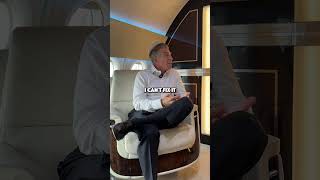
So today I make my kids use it. I use the jet and they use the, uh, 414. It's a great plane.
He just told you it was a 414. That's a Cessna twin-engine airplane. He mentioned it goes 200 miles an hour. He also has a jet. We haven't seen what that is yet.