Why Tony Robbins Bought a Private Jet | The Jet Business Podcast
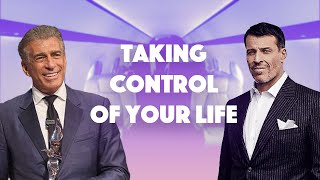
Tony Robbins explains why he bought a private jet and discusses the Thanksgiving grocery delivery that sparked his philanthropy. He's fed over 42 million people, mastered neurolinguistic programming to rewire nervous systems, and during COVID ran free summits that achieved 93% symptom remission for depression in a Stanford study.
Chapters
I had the pleasure of sitting down with my good friend Tony Robbins on his beautiful plane. We discussed how his challenging childhood shaped his career, his work with Jim Rohn, and the power of focusing on what you can control, not what you can't control. If you want to start off your year with better focus, building a strategy, and really thinking about what objectives you want to reach, I would tune into his 3-day Time to Rise Summit starting January 30th, going until February 1st, totally free. If you want to learn more, go to his website, www.timetorisesummit.com. Tony, this is such a pleasure to see you and have this this opportunity to do this podcast with you.
Oh, I love you, Steve. So it's great to see you too, man.
Really amazing. Amazing. I've been looking so forward to this and thinking about it. I was wondering, how do I start this thing off? Because you are involved in so many industries, sectors, businesses. I mean, last count, I thought it was over 100 companies that you're either invested in or involved in or own. And, and I'm trying to think, you know, what to really talk about. But I really, when you look at people who watch our stuff, You know, some of the most impactful stuff is on social media. Of course, there's the entertainment side of it, which is just pure entertainment. But I think more and more people are tuning in, trying to improve themselves and, and educate themselves. And then people don't really pay attention to that stuff, but they really connect with information that is really inspiring, comes from somebody who's really sincere. That's educational kind of information. And of course, you epitomize All those traits. And, and so I just wondering how, how in the world did you get this wealth of knowledge? Where did it all start? How did you go from what I understand you were like a janitor or something in your early days at a difficult family household? What triggered, how did you recreate yourself and start on this journey of this new career as a, I don't know, life and business strategist? I mean, how, how did it all start?
Well, that's a big question, but I think it started because I just, I love people. I hate to see people in pain and I have, and I suffered a lot in my youth as a lot of people do. I had 4 different fathers, we were very poor financially, but even worse was just the fighting between my parents and my mother was a beautiful soul. I wouldn't be who I am without her, but when she mixed alcohol with prescription drugs, she was a different person. She was quite violent. So I was 5'1" in high school and I'm 6'7" now. I tell people the difference is personal growth, of course, but she would grab my hair and smash me against the wall till I bled, or she thought I was lying and I wasn't. She'd pour liquid soap till I threw up. It was pretty extreme. But if she'd been the mother that I'd wanted, I have a younger brother, younger sister, 5 and 7 years younger. So I had to take care of them too. And if she'd been the mom I wanted her to be, I wouldn't be the man I'm proud to be because I had to become a practical psychologist. I learned how to move her, manage her moods and her emotions. And, and honestly, And really that was the beginning of it all for me. But what really shifted my life was when I was 11 years old, we had my fourth father. We had no money and no food. We weren't going to starve. We had crackers and peanut butter, but it was Thanksgiving. So, you know, everybody's having a big feast. So the contrast is pretty severe. And my mom and dad were saying things to each other, screaming through a door that you can never take back. And I'm trying to make sure my brother and sister don't hear. And what changed my life is a knock on the door.
How old were you then?
11 years old. And I go to the door and there's this giant guy standing there with a bag of groceries in each hand. And he had a pan on the ground with a frozen uncooked turkey that he'd set there. And he said, is your father here? And I was like, just one moment. I was like lit up like a Christmas tree. So I go to get my dad and he's screaming at my mom, she's screaming at him through this door. And I said, dad, you gotta answer the door. There's a guy here for you. He goes, you answered? I said, I did. He goes, what do you want? I said, I don't know. He just needs to see you. And then inside it was like Christmas morning. Like, I'm like, this is going to change our whole lives. We're going to have the best Thanksgiving. My dad opened the door and saw the man, and instead of being grateful, he got angry. How? He just looked at the man and said, we don't accept charity. And he went to slam the door. And then the guy had leaned in slightly with the groceries, so it hit his shoulder and bounced out, which made my dad even more mad. He said, sir, sir, he said, I'm just the delivery guy. Somebody knows you're having a tough Thanksgiving. Everybody has tough times. They want your family to have a great Thanksgiving. And my dad said, we don't take charity. He went to push again, but because the guy had leaned in, now his foot had popped in and hit his foot too and popped open again. And my dad is really getting mad. And then the guy sees me and he said something. I thought my dad was going to punch him in the face. He said, sir, and he wasn't mean about it. He said, sir, please don't let your family suffer. And he pointed at me. He said, because of your ego. And my dad turned bright red. I can see it like yesterday, veins in the side popping out. I thought for sure he was going to punch him. And then there was this moment where all of a sudden he just shoulders dropped. He took the groceries, he threw them on the table, he slammed the door and never even said thank you.
So he took it and you—
I mean, that's the frozen turkey outside. I had to go get that later.
Okay. That's, I mean, ego is a terrible trait. I mean, it's one of the worst traits human—
all ego is really, we all talk about ego, but we all have it, but ego is just fear. When somebody seems really egotistical, they're fearful or they're not enough. And so why I tell you that story is I was shocked. I was disheartened. I couldn't understand what happened. And my dad shortly after that decided to leave our family, which, you know, he's the one who adopted me. I carry his name and I loved him dearly. So I thought it was the worst day of my life. But because it was so painful, I obsessed on what makes people do what they do. Like, why did my dad do this? Why do we do what we do? And about I don't know, maybe 3 years later when I was in, you know, maybe 14, 15, I think 15, I started making these distinctions about how our whole life is controlled by decisions. You can look at your life and there are people who have the worst upbringing and there are people who have the best. People have been given love and joy and great education, money, and they spend their life going in and out of rehab. And you see somebody else that life is just crushed, but somehow it developed a hunger in them that made them like want more. And so I finally figured out, and I submit it to your listeners, your viewers, there's 3 decisions that we're making every moment in our life. Everyone listening right now or watching, you and I are making these decisions. I'm not saying we're making them consciously, but if you make them consciously, you can change your life.
It depends on your mindset, right?
Exactly right. And you got habits of how you think. So those 3 decisions are, number 1, right now everyone's deciding what to focus on. There's a million things you can focus on right now. We can focus on what we had for breakfast, what your next question is going to be, what I'm saying, what does it relate the feeling of the material against your skin, which you're not thinking about till I mention it. So our brains are constantly basically deleting and distorting and generalizing things. So we only take in a small part of life at that moment.
They're thinking about that moment, not what's going to happen in 5 minutes from now.
But some people think about 5 minutes from now. So a way of thinking of it this way is that we don't experience life. We experience the life we focus on. So in any moment, what's wrong is always available. There's not something wrong.
DNA. I mean, is that part of— it's part of our survival mechanism.
We have a 2 million year old brain, right? All of us. And so that brain was designed to protect us and survive. So it looks for what could go wrong and so we can fight it or flight, run or freeze and hope it doesn't notice us.
It's like a form of an immune system, I guess.
It's an emotional immune system, a survival system. But we can go beyond our survival system. But if we don't, our focus always goes to something that could concern us. But you know, as you mature and you develop more consciousness, you can shift that. So What you focus on though is what you feel. So if someone tells you your best friend has screwed you over, you might go, oh, that's total bullshit. But if 3 people tell you that, you might go, that son of a bitch, I can't believe it. You feel angry because you feel hurt, but then you confront the person, you find out it's not true. It was somebody's misinterpretation. You feel like a jerk, right? So focus equals reality to the individual, even though it's not reality in actuality. In other words, focus equals feeling. So the minute you focus on something though, Your brain makes a second decision because it has to. It's part of how your nervous system works. What does this mean? Is this a threat? Is this an opportunity? Is this person disrespecting me right now? Is this person challenging me? Is this person coaching me? Or are they loving on me? If you think they're disrespecting you, you're instantly— when you get a meaning, you get an emotion. You're going to get a different emotion from being disrespected than feeling loved. And you get to make up the meaning. Or Is this the end or the beginning? If you think it's the end of a relationship, you're going to behave very differently than if you think it's the beginning of a relationship, right? At the beginning, you won't do anything, right? And so I tell people, if it's near the end of a relationship, treat it like it's the beginning. There won't be an end, right? But so you focus, then you come up with a meaning that produces emotion, which is your life. Like, if you've got $1 billion and $10 billion, or you've got 3 beautiful children or a beautiful wife, but all day long you worry or you're angry or you're pissed off, The life is worry, angry, and pissed off. The external doesn't affect the quality of our life truly.
But do you think the environment, though? I mean, your peers, the environment.
I mean, all that plays a role.
It has. It is those external forces. I mean, sometimes you can't control that environment. Of course, when you're older, you can. You can move someplace. You could change your friends. That's right. When you're younger, you know, you're, you're built in and you're, you're given living the life that you were given. You know, you dished out living in this house, in this community. With these neighbors, with these friends, and you really have no decision in that. And sometimes that really could create a long-lasting, like what happened to you when you were 11. That was such a negative emotional issue that stayed with you the rest of your life.
Well, it did and it didn't, but it's, but what was the meaning, right? So this, this is what's really interesting. You're absolutely right about that. We can't control the external world, especially when children, but we can always control the internal world. And that's why two people can have the same event, horrific event, and one is destroyed and the other one develops drive. Right? It's like they have different lives because of it. But what's interesting is the minute you give it a meaning, you got emotion, and then the third decision comes from your emotion. You decide what to do.
Action.
So how does that relate to what I shared with you? Well, my father focused on the fact he'd not fed his family. How do I know? Because he said it under his breath a million times, right? During that day, he was angry at himself, angry at the world. And then I focused on there was food. What a concept, right? It's so sweet. You're hungry. But where the biggest difference was between us, it's not that I was better or worse, it's just the meaning he gave it. The meaning he gave it is he was worthless because he'd not taken care of his family. I know that too.
He was proud. He was, he was too proud.
He was proud. And he kept saying it over and over again. And so he decided in that emotional state to leave the family. I, my entire life, the reason I'm here with you is because of one meaning difference. My dad had always said, no one cares about anybody else. And we lived in a community where I thought people were rich. They were lower middle class, but we were literally on the other side of the railroad tracks. We were looked down on. And it looked like he was right. But now that day changed everything because my brain went, strangers care. They don't— it's not true that people don't care. Somebody didn't even want credit and they fed my family. And that made me want to take care of strangers. And it started me on this journey. So I promised myself, 11 years old, I'm going to do this for at least 2 other families. I'm going to— I didn't have the word pay it forward in those days, but I'm going to make sure I share this. And then how did you do that?
I mean, you were 11 years old. You had no money, had no job.
I know that. But what's so interesting, so like 5 years later, I'm 17 years old. I went to a seminar by a man named Jim Rohn, a personal development speaker. And I went because I was working for this guy that was a janitor. And then on the weekends I'd do anything to help pay for my—
How old were you then?
I was 17, just turning 17. And this guy, I worked for him and I worked hard and he took me out for lunch afterwards, said, you're the hardest working kid I've ever had working for me. He was buying and selling homes in Orange County, California in the '70s and flipping them and doing well. And he used cheap labor, right? Which is what I was. And I said, well, my dad, I wasn't trying to be funny. You know, when you're a kid, you don't realize. I said, well, my dad said you used to be such a loser and now you're so successful. Like, how'd you do that? He said, your dad said what? And so I said, he goes, well, it's pretty true. He goes, I said, what changed you? He said, I went to a seminar. I said, what's a seminar? Never heard the word. He said, well, it's where a man takes 20, 30 years of his life and condenses it, someone who's successful and shows you exactly the pathway of how they did it. So you can save yourself 10 years or so. I said, wow. I said, how much is that thing to go to one of those? He said, $35, which would be like $250 in today's dollars, right? Inflation. And I'm making at the time $45 a week, $40 a week, $42.50 a week, literally. So it's like a week's choice. So I said, hey, could you get me in? And he says, sure. But he didn't follow up. I said, well, will you? And he said, no. I said, Why not?
Yeah.
He goes, because if you don't pay for it, you won't value it. I said, I'll value it. Trust me, man. I mean, I'm on my own. I'm 17.
There's a little bit of truth to that for sure.
So I struggled for what I thought was the biggest decision of my life financially, a week's pay to go learn from some guy I've never met before. But I made the decision and then I went, eventually went to work for Jim Rohn as a speaker. I was 17 years old and I went out and did talks and I was an evangelist because I saw how much it could change people's lives. But he gave me a gift. And one of the greatest gifts he gave me, taught me a lot of philosophy, simple stuff like, for things to change, you gotta change. For things to get better, you gotta get better. Like total 100% responsibility. But also, I remember asking him about my fathers. I said, you know, all four of my fathers were good men.
All four.
All four of them. But we were always broke. We're always wondering where the next meal's gonna come from. You know, there's short times when we didn't, where they were fully employed, but didn't last. And I said, why? And I said, why is this schoolteacher makes those days was $35,000 a year and this hedge fund guy makes a billion dollars in a year? That's so unfair. And he said something I'll never forget. It changed my whole life and it stacked on what I'd learned earlier. He said, Tony, we're all equal as souls in this world. We're not equal in the marketplace. Wow. I said, what does that mean?
That is so true.
He said, well, You know, the teacher's equal. These people are equal. He goes, let's look at McDonald's. He said, think about this. Can you make twice as much money in the same amount of time? Are there people that do that? I said, well, sure. More than my family does. 10 times? 100 times? I said, yeah. He goes, how do they do that? I said, I don't know. He said, I can tell you right now, they find a way to add more value to other people's lives than anybody else. They do more for others than anybody in their industry, and they dominate their industry. He said, He goes, take McDonald's. Somebody goes to work at McDonald's. I forget what it was then, X dollars an hour, you know, minimum wage. He goes, people complain about it, but it's not supposed to be your long-term job because anyone can learn to do that job in about an hour. These days, not even that. They got pictures. You don't even have to speak English to do it. And they're going to be replaced by machines now. But he said, look, that's a beginning job. He said, the teacher, he said, you're talking about, if you're not willing to take risks, you don't get rewarded at the same level. They want to be rewarded for the time they're there, not for the results. I said, but I had some great teachers. He said, so do I, but how many of them? I said, I had 2 or 3 that were really great. He goes, out of all your education and they worked with a small number of people. He said, that guy made $1 billion you're talking about, he had a 40% return last year. He said, he's creating futures for all these nonprofits. He's creating money that's helping to compound so kids can go to college. He made $30 billion for people, so he got $1 billion. He's well worth $1 billion. Sure.
No, no, I agree with you, but there is, You think, but more in human nature, I just feel maybe I'm wrong. I don't know. Maybe it's not the right way to look at it, but a lot more people don't really wish people to be successful. They actually want to make themselves feel better by pulling other people down. It's a sad, sad human trait. But to find these kind of people who really help people and not only benefit themselves but help other people, that's a unique quality.
He was a unique human being and he inspired me. But I know that's why you don't even show my plane. I'm only doing this because you sold this plane. You're doing me a favor to let me share about some of the things I'm doing. I want to make sure you're in your good place because I don't even show my plane or anything else because I don't want people like, oh, plane thing. I don't sell cars. I don't do any of that crap. But I appreciate that lifestyle. It's beautiful to have that for my family. But what was interesting is I learned that from him and I put it to work. I went to work for Jim Rome, then I started my own company. Then I started studying patterns. Like, I started to realize everything's a pattern. History has patterns. Financial investments are patterns. How to grow a business is a pattern. And so I started working with, you know, I got a chance to turn people around. I learned something called neurolinguistic programming, how language affects the nervous system. And instead of language, the way you say something, or how it can change someone's nervous system.
So how you stand, how you say loud, lower, deeper.
If somebody's depressed, you know, you know, their shoulders are more down. Where's their head? Down. They're going to talk loud or quiet. Quiet, fast or slow, slow. You change someone's shoulders, you change the tempo of their breath, the tempo of their speaking, a gesture, and their entire biochemistry changes. So I'm known for taking all these people who are depressed and show them how to turn around and how to then sustain it. But I started doing that and I started challenging psychiatrists and psychiatrists saying, give me your worst patient, I'll have them in 1 hour. Guy that I've been working with, a woman for 7 years with a snake phobia. I did it on stage and that launched me. So that became my tool. Now today I train therapists. They get credits for studying my work to stay, you know, their continuing education grants. But back then I was, you know, a young kid proving myself and I was—
And is it lasting? I mean, is it—
Absolutely lasting. There's a—
So people know that and they feel and they start standing taller, more strength in their voice. I think more than taller, it's that your brain works differently.
Your emotions are different. You know, it's a new pattern of how you think and feel and behave. So everything is interpreted from a different level. So when I learned that, then I started to turn around sports teams and I got famous for doing these 1-hour or less turnarounds. Like I took the snake phobia and wiped it out in 20 minutes and wrapped the snake around this woman. I learned to give a woman an orgasm without touching her. That became very famous. Guys would come to me and say, can you teach me how to do that when I'm tired?
I don't think anybody wants to learn that.
But gradually then I started to work with some athletes in the Olympics and turn them around and then Nelson Mandela and Mother Teresa, then Bill Clinton. And then, and then gradually I learned how to build businesses. And I have 114 companies. We do $9 billion in business across all these industries. And I have no traditional education. It's all from learning from the best and applying it. And then I teach other people how to do it. So it's been an amazing journey. But the most important thing came out of that was I learned how to earn. So I learned how to— well, when I was 17, I fed 2 families. I started at 11, so 2 families. It was one of the most rewarding things.
You went and knocked on a door and said—
actually, what I did was I didn't have a lot of money yet. I was just a young kid just getting going. I thought, it's time to do this. So I went to this grocery store and I went to the manager. I told him what happened in my life and I said, I want to feed 2 families. I want to get enough food for several days. Give me a discount. And he gave me 10% off. And I thought, cheap bastard. But I took the 10%. And then I called a church and I said, look, I told them what happened in my life. And I said, I want to take care of a family that won't come get the help because our family is too proud. And I said, do you know some families you could recommend that were really in need? They gave me two names. I put on a t-shirt and jeans and because I didn't want to go as the giver, I was just, I wanted to see the impact but not be thanked for it. And, and so I, then I realized what happened to my dad. So I wrote a note. I said, this is a gift from a friend. Please have a beautiful Thanksgiving. Everyone has tough times, but someday if you can someday do well enough to take care of one other family, and I put love a friend. And then I realized they may not speak English. So I had a friend write in Spanish on the back. So I borrowed my buddy's old van, stick shift. I didn't know how to drive. And I drove this first location and it's this little shanty house in the barrio. And, uh, I knock on the door and a woman about this tall, you know, comes up to my chest, looks up at me, sees the groceries and screams. She grabbed my head. She's kissing my face. I'm like, no, no, no. I said, no, I'm delivery boy, delivery boy. And she didn't understand English. So I went, oh, and I reached and pulled out, you know, the note, flipped it over in Spanish. She read it, started to cry, and then started hugging, kiss me again. I'm like, no, no, delivery boy. And she says to me, no, gift from God, gift from God. And I'm trying not to bawl. And then I was like, where do I put this? In this little tiny place, there's a table. So she points, so I put the stuff down and then I heard these screams and then boom, one boy hits one leg. She had 4 kids. Another boy hits here. I said, come out, you know, help me. So they helped me bring all the food. And when they saw the pumpkin pie, it was over, you know, they were so excited. So now I'm going to leave. And this one little boy just wouldn't let go of my leg. He was so beautiful. And I found out later that her husband had left her 3 days before Thanksgiving with no money and no food. So it wasn't the same situation as mine. But you didn't even know that when you were there? No, I had no clue. And they were so excited. It's time to go. So I turned to the woman. I'm trying to explain I got to go and I don't speak Spanish. So I said to her, I said, Feliz Navidad. I knew how to say Merry Christmas. So she was crying. And then she starts laughing when I said that. Give me a hug. So I get in the van and I'm putting in reverse and I look in the rearview mirror and I see all 4 boys with giant smiles sitting on this little porch and mom is smiling and crying simultaneously. And I lost it. I was crying so hard I couldn't see.
That's amazing.
And then while I was trying to put this thing in gear and wipe my eyes, I'm like, why am I crying? I mean, it's like, it's a beautiful experience. And I realized that day, and it was one of those profound moments, I was like, Today, my worst day became my best day because I thought my worst day was my father leaving. But would I be there if he had stayed?
If it didn't happen. Exactly.
And so the next year I fed, you know, 4 families and then 8, then I had a little company and I got them involved. And eventually I got to 2 million people a year and then 4. And then 10 years ago, I was writing Money Master the Game. I was interviewing Warren Buffett and Ray Dalio and Carl Icahn, 50 of the biggest financial investors in the world. While I'm interviewing, I saw our Congress here cut food stamps. They call it the SNAP program now.
I remember that.
And by $6 billion. So every family that needs food would have to give up a week's worth of food unless people like you in the private sector, you and I, step up. So I called my foundation and said, how many people have I fed? And they said, 42 million in your lifetime. And I was like, I had no idea it was that many. I was really grateful and proud. And I thought, what if I did as much as I did in my whole life in one year and I fed 50 million meals.
50 million.
And then I went, what if I did 100 million? Then I was like, what if I did 100 million for 10 straight years and fed a billion meals? Coming from a guy who had no food, I said, I'm going to do that. It sounded absurd, but I went to Feeding America. They were the ones delivering the food, and they're really efficient. And we did it in 8 years. And now a billion, a billion meals. And I finished that 2 years ago. But then I, I was in the UAE and I got to know MPS and he called me one day and asked me to come down to lunch. He goes, I want you to meet the only other person I know feeding people as much as you are. And it was Governor Beasley, who was the head of the World Food Program for the UN. He won the Nobel Prize. And so we got together and he started explaining to me since COVID and since the Ukraine war, usually 80 million people on the verge of starvation. A child dies of starvation every 30 seconds. Right. And, It's horrific. But this year, because Ukraine is the breadbasket for Africa and because we need fertilizer, you know, WF doesn't want people to use fertilizer, but 50% of the world's food supply comes from fertilizer, most from Russia. And because of the war, the price of fertilizer went through the roof. You couldn't get it. So he said this year it's 400 million people are on the verge of starvation. There's 11 nations in Africa nobody talks about in the news that are on the verge of starvation. And I said, well, how many meals would we need to fill the gap? Because it'll take 10 years to make some of the transitions. We have sustainable food under their program, under the programs that they're doing and that we're doing with them. And he said, Tony, I don't know, 50, 60 billion meals. I said, let's do a 100 billion meal challenge over the next 10 years. I said, it's got to be doable. I fed 100 million people a year for more than that. You know, I did a billion in 8 years. So let's say 100 billion, 100 million a year for 10 years. I said, I wasn't a billionaire when I started out. Now think about this. All I gotta do is find 99 more people like me out of 8 billion or organizations. Yeah.
But I think, you know, listen, once you start doing it and people start realizing that's a goal and people want to contribute and they want to be part of that, and some people don't know their calling until they actually see somebody else doing it.
Right.
So, and then they got, they can realize, I mean, I know I'm in social media. I see it. I didn't know I had this calling of inspiring younger people.
You know, I love seeing this. I mean, you were doing this before and I just like, I was blown away and now you, now you own the airways there. I love it. But, but I'll tell you, Everybody thought I was crazy. I went to one of my dear friends, he's a very generous man, and he helped me on the Billion Meals Challenge, multi, multi-billionaire. He said, so what are you doing now? 100 billion meals? I said, I'm looking for 99 people to do what I did. I said, I'm not sure.
It's not money, right? It's not just money. It's money and distribution and finding the right people and getting to the actual end, getting to the person who's delivering it.
But he said, well, how much is that? I said, well, it cost $100 million to me over 10 years. It's about 10 cents a meal. He says to me, he's worth $20 billion plus. And he goes, that's above my pay grade. So I was like, I need a different strategy. But I found it.
Well, you ask for $100 million from the guy. I mean, just go right through.
$100 million a year. I said, let's do it higher. Do $10 billion.
You don't ask, you don't get.
He didn't do it. Right. But I found a new way to do it. And I'm proud to tell you, we just announced 2 weeks ago, we hit the first 30 billion meals in 2 years. And we already have commitments. I have not announced yet publicly, but we're going to be at $60 billion by the end of this year. So we're going to hit the $100 billion, no question about it. So it's like everything expands when you, like, when you break through, new possibilities become there, just like the businesses. I mean, if you would have said to me, I'm going to have 114 companies, we're going to do $9 billion in business across all these industries, I'd say, you know, I got big goals, but there's no possibility. But every time you break through, another thing becomes more real.
And actually, to think back and rewind, they don't have to re-engineer anything. That all started because when you were 11 years old, your father closed the door on this guy's face.
And that— and think about that.
That changed your whole life.
Changed my entire life.
It's like the butterfly effect. It, it eventually really, really comes back with— no, nobody knows when it's gonna hit, how it's gonna hit.
Yeah.
But it has such an impact on you.
You see all the things stack. Like, it was great, that experience and the meaning of people care. I, I care about people. Huge. But then Jim Rohn teaching me what it takes to really grow and to make a difference in the world by adding value. The combination of those and then the skills I learned, all those things dropped in place. But I often say, you know, I'm a good person, you're a good person, I've always been a good person, but would I be working this hard to feed 100 billion meals if I was well fed as a child? So I try to tell people, your biography is not your destiny. And the goal is figure out how to use what happened to you versus being used by it. And that's my—
I mean, I understand some people who become super successful, they recreate their beginnings, you know, and they say, yeah, I come from this wealthy family, I came from here. I mean, I am proud that I came from nothing, that, you know, that I started from zero, that my, you know, I worked since I'm 7 years old. My mother worked 2 jobs. I mean, people, why would you not be proud that you've made from zero to a successful entrepreneur?
Most of the successful people we both know, I mean, think about it, when I, when I hang out with my buddies, we all talk about the early times, we're struggling, and that's what makes you— the contrast makes you like I never drive up to a private, my private plane and think, oh, it's a private plane. I always like Peter Gruber's a good friend of mine, as you know, 52 Academy Award nominations. You know, we own a bunch of sports teams together. See the Dodgers, the Golden State Warriors, the LAFC, and so forth. He's just genius and one of my dearest friends. And one of the things I loved about him from the very beginning, he was 18 when he was my senior. So first private jets I went on were with Peter. And it's like every time we go on, it's like, can you believe this is our life? You know, if I think if you lose that, You've, you've missed it all, you know, cuz you've missed gratitude.
Let me ask you about that. I mean, how did you sort of move from commercial airlines? I mean, what, what struck you? I mean, obviously the convenience and the productivity, but what happened to you where you moved from commercial airline travel to, to corporate jets?
First of all, you know, I was flying coach cuz I couldn't afford anything else. And you can imagine my body all crumpled into that little monkey seat, you know, for my size body. Um, uh, but You know what really happened was Peter Guber, my friend, he had a 1,000-acre home in Aspen, to give you an idea, to give you a sense, like nothing like it anywhere. And he invited me one time and he said, you know, Tony, you got to come out here. We have all these great people in the movie business. And he goes, I know you don't like to network. I'm not a, I'm not a smoother. I like to go deep, you know. He goes, but these are people you should know. I want you to come out here and come to my house. I said, okay, Peter, you invite me, I'm in. So I lived in San Diego, so I booked a flight to LA. Of course the flight was late, the luggage was late, then the LA flight to Denver. And of course they lost the luggage there and they were delayed. And then Denver to Aspen. Well, by the time I got to Aspen, it was like 8 hours later. And I showed up, I missed the whole event. I got there as people were leaving. And Peter was like pissed at me. He's like, what is wrong with you? I said, Peter, I got up at 6:30 this morning. I said, all the planes, you have someone. And he looked at me and went, you flew commercial? And I said, hey, I'm not a billionaire. I'm not a billionaire like you. He goes, you don't have to be a billionaire. I don't even know him. I don't own my own plane. I said, what? He goes, no, I just charter. He goes, it's like things are more flexible for me. He said, I've owned boats and yachts and all that stuff. I just, you know, rent them and lease them. I was like, he goes, you should figure out how many hours you spend a year traveling. And you should put a budget in for that. He goes, 99% of your travel, I know you, it's not vacation, it's work. So whatever the price is, say it's $350,000 for you to travel, you know, 100 hours, whatever you're going to do. Half of that legitimately is a write-off. So you can go anywhere you want. You can fly in the middle of the night. And I said, well, what kind of plane? He goes, you get one of those little Learjets, like Lear 25. So he made me promise I would look into it. So I did. But you know, you get caught up in your life. And so then I'm doing a seminar in LA and it's a 4-day seminar, 12 hours a day. Those days, like 5,000 people is a big seminar. And, and somebody screwed up before that event. They booked an event in Edmonton, Alberta the next morning, not looking to see whether any flights. And I'm finishing at midnight. By the time I'm done signing autographs and pictures, it's 2 in the morning. How am I going to get to Edmonton? Right. But I've already committed to it. So I turned to my staff and I said, get me a jet. We got to get a jet. The moment.
That was the moment.
And I remember I said, get me a small jet, charter it. And I said, but I got to sleep. And they go, they don't have beds on those Learjets. It's too small. I can't even sit up in the Learjet. Right. So I said, what if I was dying? I said, you put me on a gurney, get a gurney in there. I gotta sleep because I can't get up on no sleep and do another seminar for thousands of people. I said, if we leave at 2, it'll take 3 hours to get there. I'll sleep during those 3 hours. I get some sleep under my belt, be over there. So they told me it couldn't be done. I wouldn't accept that. And we finally found a guy and we got a stretcher, you know, that they transport a body in. He put in that little Learjet, they locked it all down. I finished the seminar, I came in, I'll never forget. I was so excited to get on this thing. You know how tiny that little 25 is, right? I can't believe you fit in there. I get in there, I can't even sit up in the thing. So I crawl out on that thing. They locked me in the stretcher and then, you know, you can practically touch the captain right there. It's so small, right? You know, the whole thing gears up. You know, Learjets are really loud, those 25s, right? But I was feeling the power of it. And when we lifted off and I'm lying in a bed and we turned down and saw Santa Monica Bay and then turned up and saw the moon, I was like, This is the way to live. So, so I made the budget and then for until I was almost 50, from 30 to 50, I'm so grateful I chartered. And then I sold one of my companies for hundreds of millions of dollars. I thought I got all the toys, I should get a jet. So that's how I end up with you. I talked to Steve Varsano and I said, Steve, who do you get your jets from? And you know, how much is a G4? You know, an old G4. And it's like, yeah, maybe $4 million, something like that. $5 million, what it was then. And I was like, I think I could do that, you know. So I called you and said, no, the ultimate guy over here, start moving me up. It's like, you want something big, you want to travel. And that, you know, I tried the G5 to go to Poland one time and tested it out. And I remember it felt like I was in a tube that much time.
I got that phone call from you when you landed.
That's right. We landed in— where was we had to land in, uh, up in Canada, up in, uh, this little town. And the ailerons froze. So it took more time than if I'd gone commercial to get there. And I was like, I'm never doing that again. I want the range. And so I came to your amazing office and anybody who's not seen it, I'm sure they've seen it if they follow you. And you got your walls and you'd been to my seminar the day before, so you had it all decked out with me on stage. You're so good, Steve. And then you started showing me my options. And we got to the Global. I'd been on a Global once before, my friend Paul Tudor Jones. Yeah, it's like a living room compared to, you know, even the Gulfstream. In width and so forth. And I was like, all right, we got to find a way to do this. And you helped me get an unbelievable deal, the best deal I could possibly find, thanks to you. And I made that Global, and I love that Global, and we flew it for 5 years. And then I remember when we were closing that deal, you took me in your little closing room. It's, you know, is a BBJ. And I was sitting there looking around going, someday I got to do this, you know. And then when I knew, um, I was— we were considering, you know, I have 4 kids. I had 4 kids at the time and 5 grandkids. And my wife and I were, tried everything, we're gonna do IVF. And when COVID hit and I could now not be on the road 275 days, 'cause that's what I usually did, I was like, I built this studio, I can help. You know, I had 1.2 million people attend my seminar last year for 3 days. It's unbelievable. Instead of 20,000 people in a stadium, I still do those too. But during COVID I was like, okay, I could be home with my child, finish the day and come home for a lot of these. So we tried and we're blessed to have our daughter. And but I said, if we got a kid coming with all the people I have and staff, I need a bigger plane. We're going to go find ourselves a BBJ. We spend another kid.
You need another kid.
Maybe. But it's been beautiful because, you know, we have 2 bedrooms. You know, I got an office and a bedroom. I make them 2 bedrooms with my daughter and with all the staff. And, and when you're going to go to the Middle East or someplace, it's just incredible.
I mean, listen, this is something that's a blessing. I mean, you're a big guy. You carry a lot of people's equipment and everything. You know, most people don't understand. Most corporate jets are tiny. They're inside like a minivan.
Well, you know, I was looking at a 650.
I know, I know.
I'm not going to do that, shrink down, you know. And, you know, like, uh, you know, Dr. Dre just wrote me. I charter my plane every now and then, so he wanted to do it. So we chartered the plane to him, or Bezos's brother, or, uh, we had, uh, uh, Beyoncé and them because they have 650s. But when I want to go with their family in a bigger place, so I'm able to charter some cool people and build relationships. And I'll tell you the other thing Private aviation does besides giving you unbelievable freedom. And I get to sleep in the nighttime. You know, we're traveling, great food, all those things, be with your family, have meetings and so forth. But I remember early on I got a phone call from Bush Senior when he was president. This is right after the wall fell. And he called up and he said, Tony, he said, you know, I'd gotten to know him a little bit. And he said, look, now the wall's fallen. We're doing this conference with 100 leaders around the world to talk about What do we do now that, you know, communism has fallen? How— what are the values of the future? And he said, we've selected 100 people. And he said, you're one of the 100.
Wow.
And I was blown away. And he said, can you come? I was like, let me look on the calendar. I said, I'm in, whatever it takes, I'm in. And then he said— he called me back later and said, I know you're in. I just saw your schedule. You're going to be in New York right before. This was being in Colorado Springs is where I had this meeting. And he said, you know, Mr. Gorbachev is no longer the head of his country. And I'm not taking care of him. He's going to be in New York. Flying commercial is terrible. Do you think you could put him on your plane at a Lear 25? Right. So I said, well, how big is this team? They told me it's like, okay, I got to charter a Gulfstream, you know. So it's first time I called it the Gulfstream. I said, okay, I'll do it. I said, but can I— could I ask a favor? Could we ask— I've got these kids I've been sponsoring since the 6th grade. I'm paying their college educations. Could I do a 10-minute interview with him? To be great for them. Gorbachev is one of the world leaders talking. Call back. Absolutely. So I'm waiting for Gorbachev. I chartered this Gulfstream. I was pretty excited to see flying a Gulfstream. A lot of money for me back then. All the limousines pull up. Gorbachev gets out. There's scar there. You know, the whole thing, you know, people walk up and the guy goes up and he goes, uh, no, he shakes my hand.
Then he said, Gorbachev said it or security guy comes up.
Security says no interview. I said, no, no, no. We have the camera crew. It's just 5 minutes right here. He goes, no, no, no, no. He has a migraine. I'm like, oh man, oh my God. So we get on the plane, and so the one thing I wanted besides that was—
did he hear the guy saying though?
Yes, and he understands English. Yeah, of course, you know, obviously set up in advance. So he sits down on the Gulfstream, right? And he closes his eyes, and I'm thinking, I'm thinking I'm gonna have 2 hours I can at least interact with one of the guys that ended the Cold War, right? And I'm a history minor accomplishment. Yeah, a little minor. I'm a history buff. So I— so finally he closes his eyes, and I'm thinking I can't believe I spit all this. I'm not even going to get to talk to the guy. So I start talking to his wife, Raisa, and she's a sweetheart. And I knew something. I was like, if I ask her enough questions, there's going to be something he'll disagree with. He'll open his eyes and correct her.
Exactly.
And sure enough, he's like, not yet. And yet he opened his eyes and I said, oh, Mr. Gorbachev, just, I know you need a rest, but I just have one question I wanted to ask you.
You pulled him.
What is that? And I said, I want to know the greatest event in our history, in our lifetime. Kids today don't know this because they weren't around then, but it was the end of the Cold War. I mean, somebody pushed a button and the whole thing's gone. And I said, and you and Reagan did that. I said, I'm a history buff. I'd like to know what was, what ended the Cold War? What was it? What triggered? So he went into this sing-song response in Russian. They translated it. You can tell when someone has said something a million times, you know, so it's nothing wrong with it. But he said it was the end of demonization. He said, it's like, Mr. Reagan said we're the evil empire. And I said, no, you're the evil empire. And we'd fight back and forth.
And he goes, so strong, both sides.
So strong on both sides and just no trust, no trust, right? And he said, but we ended demonization. That's what ended it. And I said, well, I really appreciate that answer, but I want to know something slightly different. I want to know the moment that you thought it in and what created that moment. Because as a person of influence, What a leader is, is someone who creates those moments, right?
That decision. What was that decision?
That moment made them decide. So he thought for a while. He goes, no one's asked me that question. And so now I got him to think, right?
Now you got him engaged.
Yeah. And so then all of a sudden he starts laughing, like hitting it, like he's like an old laughing guy, like he was drunk, hitting his knee like this and laughing. He goes, I will tell you. I will tell you. He said that in English. And then he started speaking in Spanish or speaking in Russian. And he goes, He said, "Mr. Reagan and I were having this meeting and he was lecturing me on the evils of communism. And I said to him, 'I am not your student and you are not my teacher.'" He says, and he started telling him how evil capitalism is, right? And he said, "It was going back and forth and I felt myself getting angry and angry." He said, "I could feel my head just burning with anger." And he said, "All of a sudden Reagan stood up, turned and walked 3 steps away, flipped back around and said, 'Let's start fresh, shall we?'" And he goes, "My name is Ron, are you Miguel?" And he's laughing as he's telling me this, right? And the Russian guy's translating. He goes, you had to love the guy. And then he said, what a great move. During that, it's the beauty of breaking somebody's state. You want to influence them, right? He said, then Reagan knew I love children. He did something no one had done. He gave me 30 children, American children, let me show them around the country. And then, so you see that in a moment it all changes, right? But all that happened because I had a plane. All that happened because I could provide that. I could give you a million stories like, by the way, later on I met Reagan and I asked him what was the moment.
Yeah. And And not the same answer.
He gave me a different moment, but very similar moment. They were in Reykjavik doing the negotiations on long-range nuclear weapons. And same thing. He said things were not going well. And he said Gorbachev was getting mad. He said his whole head was turning red. And he said, I knew I needed to do something. So I said, let's go on a walk. And I guess Gorbachev's interpreter's like, a walk? Gorbachev looked like it's freezing outside. We're going to do it. He goes, oh, let's just go on a walk. Think about the brilliance of this. You're sitting across someone arguing. What a great attack. Now you got to stand up, put on your jacket, change your state, walk outside in the freezing cold, which changed your state, side by side with him. And on that walk, they made the first agreements to destroy long-range nuclear weapons in the history of the world. So influence is what I'm obsessed by. Influencing yourself, that's who you have to influence first. Influencing your children, influencing in business, because that's what makes you a leader.
I mean, listen, there's a lot of times I know when you— me in business and negotiations, and somebody gives you some information that you think you're a real asshole. I mean, they're rude, they're mean, they're just doing stuff just to screw And you really, really get mad and you type out an email and you're going to, oh, good.
And then pause.
And then I have learned so many times, man, 24-hour rule, I don't know, 6-hour rule. Just save that thing, come back, read it. And you're like, holy shit, I was actually going to write this. I can send this. And unfortunately, people don't know that they say this kind of stuff in an instantaneous moment and they can ruin relationships and opportunities and business so easy. And that's people's ego. They just let them And you can go back hours later and like calm yourself down. You reset yourself.
You don't know what's going on in their life. You know, they could have, you know, a kid that's really ill. They could have— they're going through a divorce. They get so many things going on for people. When you think they're being an asshole, really, they're just so stressed about things. And you— everybody has those things. We all experience— I was in LA during the fires Tuesday and Wednesday, and a bunch of my friends lost their homes in Malibu and in Pacific Palisades. And it was brutal. I mean, 60 miles, it's the size of Paris that's just gone. But what's interesting is, you know, when you're in those environments, when you're able to do things within yourself. I had my own home burned down. So I said to him, look, you know, my home burned down. It was years before. I said, I was angry. I was sad. I had all these feelings, but I had 3 kids there. And I realized I need to set the example for them what's possible. And I have to discipline my disappointment. And so I realized I lost things. A lot of those things I cherish because they were memories, but they're still things. Things are replaceable. Family's not. People are not. So I got grateful. And then what people don't realize is, you know, the oldest human story is the hero's journey, right? Every culture has it. What is the hero's journey? Your life is ordinary, meaning what you're used to. And then something comes along and disrupts it massively. Your place burns down. Yeah. Someone in your family has cancer. I was told I had a tumor in my brain at one point. Um, somebody dies, uh, you get robbed. I mean, I don't care how smart you are, how beautiful you are, how spiritual you are, how rich you are, you're going to have extreme stress at some point. But what I've learned is if you can manage through that, what it is is really a call to a new life, to something you would never do. Like, I would never have left the Del Mar Castle. It was a home I built from castles in Europe, and it was my absolute place for my family. But because it was disrupted, I went on the journey of uncertainty. We built a new home because we had to. We met new people. I met some new mentors. I made some new decisions. I fought some new battles. And eventually, if you grow, you slay the dragon. You come home the hero of your life and you have something to give other people. It's not book knowledge. It's real. And then as soon as you get comfortable, it comes again. I don't care how well you do, it never stops. But hopefully you get better quality challenges to deal with. So I look at that and I go, If you're having extreme stress, as corny as it sounds, the first key is you're going through hell, keep going. But if you make it through extreme stress and you get to the other side, you learn 3 things. You learn, number 1, just how strong you really are. You don't realize how strong you are until you're tested. And then secondly, you find out who your real friends are, not your Facebook friends, right? Because they're the ones that show up.
I've been through that a few times.
We all have, right? And then thirdly, you get like an immunity to future challenges. Because like, I had a friend that was locked up in North Vietnam for 7 years on a slab where they chained him to the ground and you had to go to the bathroom and it ran down his back and burned his back. I remember years later, the IRS was doing something really ridiculous. It took him 3 years to unwind it. They were wrong. He won, but it was really painful. And he was barely even stressed. I was like, "How come?" He goes, "If the North Vietnamese can't get me," he said, "after that, nothing can." So I think there's a higher purpose, I believe, It's not always easy to see, but I believe life is always happening for a reason, a higher purpose. But it's our job to find that purpose. In other words, life's happening for me, not to me. It looks like it's happening to me, but it's my job to figure out what's happening for me. So I look back on my childhood, that was for me. Didn't look like it, didn't feel like it. I look at my father, that was for me.
So what you're saying, I mean, obviously changing people's perception and trying to get their mindset different in all your events that you give, like, you know, Date with Destiny or Unleash Power Within or stuff. I mean, you are changing people, right? They're, they're coming in there.
They're changing themselves, but I'm creating the environment.
Yeah. But you're giving the environment, you're giving the instruction guidance.
Yeah.
And, and for that, for that day that they're there, the hour, the weekend, the week, whatever it is, they're excited. They're around an environment that's really helping generate that transformation out of, out of their comfort zone. Right?
Yeah.
How do you really create this atmosphere to really get them to, to make it a long-lasting transformation? How, how, how does that happen?
Well, it's interesting because people think it's going to be a pump up and so forth. And certainly I've never been a motivator. I've always been a strategist, but I do know you need energy to follow through. You know, you can have the best tools in the world, but if you're low energy, you're not going to use them, right? So people see me in an audience with 20,000 people and they're going crazy and like, oh, it's a motivational seminar. I don't need motivation. You don't even need motivation, but you do need to tap into what drives you. And everybody is motivated. You might be motivated to eat, right? You know, so that's why you're overweight. So it's finding that inner drive. Well, what I do is a conditioning process. So like, you understand how the nervous system works. And so that's why I've gotten results for some of the greatest athletes, business people, et cetera, that last. What was interesting is I always knew what it was, but during COVID if you can imagine, I'm used to doing stadiums, 15,000, 20,000 people. And as you know, they shut down London, they shut down LA, they shut down everything. So I went and built a studio and then I was like, okay, I'll reach people in their homes. I would never do that normally because I'm used to a rock and roll concert. But I gotta find a way to help people when they're needed, when they really need it there. So I go to do this and I start to create these results and it's like, wow, this really works. So then Stanford comes and they call me up one day. This is right before COVID and then during COVID And they said, look, you know, we had two of our professors who were clinically depressed who came to your Date with Destiny Summer, the six days. They're both off all medication. They're both fine. This is pretty miraculous. Do you have any studies? And I said, well, I've got millions of graduates and testimonials and so forth. And they said, no, no, you know, I've been, you know, I have my documentary, if your audience wants to see it on Netflix, called Tony Robbins: I'm Not Your Guru.
Yes, I have seen it.
And then what we do there is you see me doing this seminar for about an hour and a half of what normally is 6 days. But you see the people that are suicidal and then we follow up and you see them 5 years later, or you see somebody that couldn't have a kid or something. You see all the changes lasting because it's in their nervous system. But here's what's interesting. Stanford says, well, what if we did a study? I said, great, what do you want to study? They said depression, because now COVID's starting to hit. And they said, depression's out of control. People are overdosing on drugs right now like crazy. Suicides are through the roof. And we're looking for an interesting non-pharmaceutical approach to doing this. We'd love to study it. I said, great, tell me what, what's the meta studies show, you know, multiple studies, what's the average result? They said 60% of the people who come for therapy and/or drugs in psychiatry, they get Prozac, Zoloft, whatever. 60% make zero improvement and there's side effects. Zero. Zero.
And they're taking drugs in their system and they're being—
There's all the side effects, including some of the side effects are suicidal thoughts, right? It's just crazy. He said 40% improve and the average improvement is 50%. So they're half as depressed. Some people get well, but most of them are on drugs forever. And I said, well, I know it sounds like hubris, but I think, I think we can blow past that result just based on our history. And More importantly, I think you can do that with almost a placebo. And he kind of had a nervous laugh and said, maybe. And I said, what's the best result you've ever seen? Because I'd like to beat that. And he said, well, the best was done 5 years ago at Johns Hopkins. They gave people 30 days of psilocybin, magic mushrooms, and cognitive therapy for a month. I said, dude, you'd have to get a massive change in somebody's brain for that. He said, it is the biggest change in the history of psychiatry. 6 weeks after the treatment, It's a lasting, a lasting transformation. Well, 6 weeks later, 54% had no symptoms whatsoever. There's nothing like it.
And it lasted. It was, it changed.
They didn't measure them a year later or anything else. It's just 6 weeks. So I was like, I know it sounds like hubris. I know it sounds like overconfidence, but I'm just based on history. I bet we'll beat that sizably, but let's see. So they set up the test group, you know, the comparison group, just like they did the Johns Hopkins study. And then he did it. No drugs. 6 days, no one-on-one therapy. At the end of 6 weeks, 93% of them had absolutely no symptoms, nothing like it in the history of psychiatry. The 7% that didn't completely solve improved massively. 17% came in with suicidal ideation, constantly thinking about suicide. No suicidal ideation afterwards. And 1-year follow-up showed, at the end of a year, never seeing me again because the way they were conditioned, these people had 72% reduction in negative emotions, 51% increase in positive emotions. So, so the big question is, is Why is this not being done?
Why is the general public— why are they still taking more drugs and they're still not getting cured? Why aren't they— okay, I'm not saying go out, do psilocybin every day, but I mean, there has to be some microdosing. I don't know what it is, but something. If it's that successful, why aren't more people doing it? Why isn't the government being behind that? Why aren't they promoting this?
Well, the current government, as we know, Bobby Kennedy is in there, and now you got Dr. Oz, who's going to head up Obamacare, and you've got— Current as of the new transformation.
The new transformation.
Assuming they get approved. These are all people that during COVID were telling people different than what we were being told, the lies were being told. So they're in charge. But right now we have a sick care system where, you know, the insurance companies, if you study what happens, they don't really want the surgeon most of the time. They want the drugs that they can sell you forever. I'm not being harsh, it's just that's reality. But it was interesting, it was the results were published in the Journal of Psychiatry. We didn't get one phone call. So now Stanford's doing a 1-year study they've done on engagement in business, 'cause you know, engagement equals EBITDA. And similar results, you know, during COVID they measure 3 things. Engagement, only about 22% of people are engaged at work today. It's insane. Disengagement.
A lot has to do with work from home, right?
I mean, a lot of that. Yeah. Disengagement they measure, which people today call quiet quitting, doing the minimum. And then active disengagement is people in your company trying to harm your company because they're angry. It's terrible. Since COVID the number of people engaged dropped to the lowest number ever measured. And the number of disengaged, actively disengaged, has gone through the roof. So it's the number one challenge. We had 100% transformation in 6 days of what they lost in 4 years of engagement. And every month since then, for 12 months, it's gone up with no interaction with me. And they say like, how does that work? Here's how. They sent a group with me for 3 years. This was happening before COVID Same group that did like the Tampa Bay Lightning, who won multiple championships in NHL. They did like Tom Brady, people that have performed consistently levels that are insane, and they study everything about them, their biochemistry. And they discovered something called the championship biochemistry. And when I got on stage, they had me wear this device for 3 years on stage, and it's like a $70,000 device. It measures everything, heart rate variability. During the breaks, they take my saliva for the hormonal changes. They take my blood for 4 days. When I get on stage, I do the exact same thing. If Tom Brady's down, as we've seen, let's say by 10 points in the fourth quarter of the Super Bowl and he comes back to win 2 minutes left. Here's what he does. His nervous system generates a massive amount of testosterone and they measure. I do the exact same thing.
So the Tampa team that won multiple times naturally, it's naturally comes to him, right?
You just trigger it in your body. It's triggered by the thought process. And what the testosterone gives you is unbelievable drive and focus, incredible focus. In fact, you'll also remember everything. If I asked you where you were You remember 9/11, you know, everybody remembers, even if they're not American, where they were, who was around them. Were you on 8/11? No one knows. There's not an emotion. But usually with testosterone, you get a lot of cortisol, which is the stress hormone. For Tom Brady, for them, and for me, when I get on stage, this explosion of testosterone, and then cortisol magically drops off the cliff. So no stress, just total focus. That's why he can perform. It doesn't guarantee he's going to win, but increases it. This is what's so cool.
You can't teach that in people though, right?
I mean, but here's what's so cool, to answer your question. They said, now let's measure his audience. And you may have heard of mirror neurons. Like if you're watching a group of people rowing, sometimes if you're empathetic, you kind of feel that in your body, right? Well, the audience, they started doing it live. And then when I was doing it in people's homes, which I didn't know we could pull off, and we really do all over the world. We had 193 countries participate the other day. It's just unbelievable. Multiple days. I start here, it's 10 in the morning. It's already midnight in Sydney, Australia. And they go midnight till I go 13 hours a day for 4 days. To 1 in the afternoon, we lose 6% of the people. It's just mind-blowing because they're so engaged.
You probably shocked yourself with that.
I did. I didn't know we could do that. Honestly, it was a new skill. But they went and did the blood of people in 12 countries. And when they put it on a graph, it looks like music. We all start here and we all go up. Cortisol drops off. Everyone mirrors it. That's why a year later, the change is still in there, because it isn't a thought or a pump-up. It's a rewiring of your nervous system.
So, if you take that idea, is there a way that people when they're in a really depressed, you know, family situation or a business situation, is there a way to really change your mindset to sort of try to take that stuff and remove it out of your system? And to, I don't know if it talks about going into your flow or is it build your testosterone. I don't know what it would be, but is there a way you can actually change your mindset when you're in those bad situations?
Yeah. That's what I teach all the athletes, all the billionaire business people. And I tell the general And we do it and again, till it gets in your body. So it's automatic, right? If you see Steph Curry, you know, I'm fortunate enough to own pieces of small pieces of several sports teams and I've got a chance. I got these championship rings from all these sports I've had to work with. But one of my favorites is I have a small piece of the Golden State Warriors. So I got to work with Steph and those guys. Here's this guy who can make a 3-point shot from anywhere, half court, right? And when he lets go of the ball, I'm sure you've seen him chomping along on his mouthpiece. He just turns and doesn't even watch and it sinks and the crowd goes crazy and he smiles and cheers, right? How does he do that? He's gifted, yes, but I always tell people you're rewarded in public for what you practice in private constantly. If you want to know how Steph does it, I'll tell you. He's 15 years in the NBA. He shoots 500 shots a day he's got to make no matter what. He's done that for 15 years. He did it before when he was in the NBA, but just take those 15 years. 3,500 shots a week, 168,000 shots, and practiced 2.52 million shots in 15 years so he could make 3,362 3-point shots.
Nobody hears him at that point, right?
Not even 1/10 of 1%. So the answer is yes, there's things that you train your nervous system to do, and then it looks easy. It's automatic. But remember I said those 3 decisions? Let's give your audience something to play with. I'll ask you for you, and then I'll ask you what you think most people do. So let's go to the first one, focus. There's patterns of focus. You're not controlled by what you do once in a while. You're controlled by what you do consistently. So one of the patterns of focus we all have is whether we focus on what we have or what's missing. And we all do both, but we tend to focus on one of those more. What do you think most people focus on, what they have or what's missing? And what do you tend to focus on?
I definitely focus on what I have and how to even make that even better. But I know people who just focus on what other people have and they don't have. And that is really disastrous. It's destructive and it really puts people in a very negative mood all the time because they're always, why do you have it? And I don't. And it's a terrible feeling.
During COVID it was magnified. Most people definitely focus on what's missing during COVID It made it even worse. And when you do that, you can't stay happy. But it's not just people that are failing or not where they want to be. You and I have so many billionaire friends, associates, business partners. How many of them you know that still live in scarcity? Right? And, you know, it's never enough because they're always— listen, it's important to see what's missing so you can address it and make it better. But when you're doing it constantly, when you're constantly noticing what's missing, you cannot sustain happiness. It's not that something's wrong with you. It's software you're running. So if you just change that one pattern, and I know you do this, that's why I asked, focusing on what you have, it gives you so much joy and strength that you're not in scarcity. And now you want to give more, do more, create more because you're pulled to do, not because you're pushing. Like, there's two types of motivation. There's push, trying to make yourself do it. You got a lot of willpower. I do too. I'm sure your audience does. But there's a limit to willpower. There's no limit to pull when there's something so magnificent you want to serve more than yourself, whether it's your kids or your family or your customers or something that you want to do for the world. I don't mean virtue signaling. I mean, I get what you're getting at.
It has to be deep down and mean it.
And when you have that, it drives you. A second pattern is, do you focus more on what you can or can't control? What do you think most people do? What do you do?
I definitely focus on what I can control. And I try when I'm talking to people and negotiating or discussing with them, I always, well, I want them to think that they're controlling, but I'm trying to get them to what I know and I feel is right for them. And you want them to feel like they control the decision. And it's just something that I know when you focus on something you can't control, why are you wasting your goddamn time doing that? It's a waste of time.
Where do you think most people put their focus? For sure.
They waste it on things that they can't control.
And it's so easy because there's so much in there. Two worlds we got to master. Outside world, you can't control it. You can influence it. Inside world, you can control. You can control what you focus on, what it means, what you do. But most people have never been trained to do that, so they keep doing the same thing, feeling the same experiences. So when I go to my audiences, I got a stadium of 20,000 people, I ask the same questions. And the first one, almost everybody says they focus on— most, 75% focus on what's missing, including the achievers, because they keep getting on that treadmill of trying to do more and it's never enough. They don't get fulfilled. Nothing wrong with that, but it doesn't create a happy life. Successful life, but not a happy life. Right? And I always tell people, success without fulfillment is failure.
Terrible.
Right? It's terrible. But when I get to focusing on control or can't control, my whole audience is focused on what they can control. That's why they come. They want to learn how to take charge of their business or their finances or their body or their emotions. Right. But the third question is, do you tend to focus more on the past, the present, or the future? We all do all three, but where do you think most people spend their time? Where do you?
I'm always looking at the future and I'm, and well, the present to me is planning for the future. And, and to me, they, they sort of are two. In one. And I'm always trying to sort of disrupt my own business because if I don't do it, somebody else will. Right. And if I look at the past, why? It's a waste of time. You can't change it. It's not going to change. It's where you are today. What can I do to improve myself today? My business, my relationship, whatever.
And that's all authentic for you. It's why you're so successful and fulfilled. You have a great relationship with your lady. Unbelievable one. It's like one thing to be successful in business, but can you be successful in all the aspects of your life? And you— I'm not blowing smoke. I love you dearly because you live that. You're congruent. But most people spend a lot of time in the past they can't control, you can't change. Or if you're an achiever, almost all achievers go to the future. You do a beautiful blend, which is ideal. I try to do as well, which is the future, because you can anticipate. That gives you power, right? You're not reacting. But also it's kind of like if you got a business, you got to run the business you're in and the business you're becoming, two businesses. Otherwise you'll get displaced. But you also have to focus on the future to have the joy because the pleasure is here. So it's the blend between those two that make people really successful. So if you just took three patterns and said, I'm going to train myself to focus on what I have and being grateful and filling up with that joy in a real way, not some phony way, and I'm going to focus on what I can control, and I'm going to train myself to focus on anticipating the future, but maximizing the joy of the present. Those are the people that have extraordinary quality of life because they don't just have the mastery of the science of achievement, getting and making things happen, which is a skill. but also they're masters of fulfillment. They know what's gonna make them feel joy as well.
So people, I mean, they want to change, they want to help themselves. They think they do. I mean, every year at the beginning of every year, everybody has these New Year's resolutions.
Yeah.
How, what am I gonna do this year to improve myself? How am I gonna get better? And of course, after a week or a month or something, they stop going to the gym. They stop doing, forgetting everything they thought about. I know some of your events, you know, have evolved with, with over time. And now at the beginning of the year, you know, you have this new one, you know, Time to Rise Summit.
Yes.
And it's really focusing on a lot of that sort of like a shotgun of what you need to do to sort of reset your life this year. Can you give me a little bit more expansion on what that summit's gonna do?
Well, first of all, as you said, New Year's resolutions, 91% never come to be. By the third week of January, most of them are gone. By the first week of February, virtually all of them are gone. 'Cause all they're saying is, I'd like this to happen. They don't have a plan. They haven't anticipated why I didn't do it in the past. They don't have a strategy. They haven't built the habits. Nothing comes of it. But when I told you about what happened with COVID I mean, the governor calls me and we're gonna put 14,000 people in a stadium stadium. And he calls me and says— his team did— and then he— I talked to him later, and he says, I'm so sorry, but, uh, you can put 100 people in the stadium. This is March of 2020 because COVID's come out. I'm like, what? We can't put 100 people in a stadium? So I was like, screw this, I don't give up, just like you. I was like, we're going to Vegas, they'll never shut down Vegas. We moved 14,000 people, Steve, and 9 days out they shut down Vegas. Oh, so I was like, okay, we're going to Texas. Texas is its own country, basically. The governor says I'm not bending. I have a friend that has a big church, 14,000 people in Houston. I can do—
they did that in Florida.
That's right. And so I was like, okay, I'm going to go do that. They shut down Texas. So I said, okay, we're going to do it in theaters. We'll put, you know, you can put 10 people in each theater, at least they'll have a big screen, good music, and a few people to interact with. We'll do 1,400 movie theaters, right? They shut down the movie theaters. So I built this studio, 50-foot-high ceilings, 25-foot LEDs, 0.67, highest resolution in the world, so I can see more than I can see in the ones I have in my office. Well, maybe a little, but anyway, And I built 50 feet all around me. I went and, and talked to the guys, you know, that do Zoom and said, can't have 1,000 people, I need 25,000. Wow. Got, you know, the founder of Zoom's a big fan of mine, so he changed the tech for us, which is amazing. I built software so you could take your phone since you're not there in person clapping, shake your phone, sends an electrical signal. One person does it, you don't hear squat, but when 25,000 people do, it's like thunder, right? So then I said, people are stuck at home, they're depressed. People usually fly somewhere to see me in a stadium, right? I go to Europe, they go to London, they go to Germany or whatever, right? So I was like, let's eliminate every barrier. People need us right now. Let's have it so they can do it from their home or their office. They can do it with their family or friends. Let's charge nothing for it. Not partially free, totally free. So there's no objection. And let's give them some immersion, not 12 hours because they're probably not ready for that. But let's do 3 hours, like going to a movie, but their life changes. And let's build a community. And the first time I did it in 2020, we had 380,000 people. I'm used to 20,000-person seminars. The next year, 7. So last year, 1.2 million from every country.
And how many are you going to have this time?
We'll have about 1.5 million people from every country in the world.
And free, completely free.
Completely free. And all you got to do if you want to go, we call it the Time to Rise Summit because it's time to rise. It's time to put whatever's been stopping you aside and transform your body or your energy. It's not energy you're not going to follow through. It's time to make your relationship better. It's time to take control of your business or your career. And so in 3 days of total immersion, we do it and I don't charge, but I say, this is what I want from you. I want you to take action. That's how you pay. And I give them an assignment and they put it on Facebook. And then I'm up all night watching these things because there's so many changes. I'll give you one example. Just because I saw this guy the other day. So this guy named Matt, he never go to a seminar because he's been in bed for 6 years, 7 years, I think now, 6 years. Oxygen mask weighs over 700 pounds.
Oh my God.
Doctor said he'll never get out of bed. He can't get out of bed to go to the bathroom. But I'm on screen and it's free and he's in bed, so he watches. Well, he does a little video that I see one night. So the next day I bring him up on screen, interact with him, right? I start talking to him about his beliefs and where it is. And he got inspired by the first day and he goes, but, you know, doctor says I'll never this, I'll never do that. I said, well, doctors aren't always right. I'm so, you know, I said, I think, you know, why don't we start small? I said, we got to get you so you can breathe. He goes, oh, they won't let me do that. I said, well, keep wearing the mask. And there was a little, like, a pipe, like what you'd hold your microphone with, he had nearby. I said, take that, let's do— so we started doing some chest presses of that. I said, if in 90 days you can get yourself out of bed to go to the bathroom, then that means you can get down the stairs to get in the car on your own. That's right, on your own. And then you get on a plane, and I'll have you come— I'll fly you here to Palm Beach, and you walk on fire with me, right? Wow. He lost 323 pounds in how Over the course of a year, but he lost enough to get there. He got out of bed for the first time. He got off the oxygen and now he's an inspiration to everybody, right? But then he fell in love with this woman. So I sent him my resort in Fiji as a little gift so they could go celebrate. But people, a woman who lost her child, I mean, the thing I can't even imagine going through, turned around and found a mission to serve that child's memory. So she feels so different. You know, a couple trying to find a new business that, you know, COVID shut them down. So we're brainstorming ways and they were studying, she was talking about one of her dearest friends had just passed and she was so sad about it. She said, I'd love to have some memento of them. And we started talking about lab-grown diamonds. You know, these lab-grown diamonds are beautiful. They're about 30% less price. They're still expensive, but not as expensive, gorgeous. And I said, you know, what could you do with that as a memento? And then she came up with this idea. She's like, well, what if we took the ashes and we use the ashes to grow the diamond. Then the diamond is my friend that I'm carrying. So she did that. That was 2 and a half years ago. Last year, did $35 million in business.
Incredible.
And they make it so beautiful. They honor the person, go through it. So all this comes from a free seminar they did for 3 days. So I'm really proud of it and love seeing the impact. And if people want to go to other programs, they're welcome to, obviously. But this one's coming up on— I only do this once a year. It's January 30th, 31st, and February 1st. So 30th through the 1st, 3 hours a day, 2 PM Eastern. But people do it from all over the earth in different places. And please come. Yes, attend. And you'll have a blast. I promise you'll be an incredible experience. And, you know, it's our way of like, start your year right. Like, actually create a plan and make your life really work.
Listen, I know we're ending this little digital podcast, but hopefully we can do a part 2. But on behalf of everybody, the millions of people who are hopefully going to watch this, I want to thank you from all of their hearts. You really do so much to improve people. And it's just, it's, it's, you can't even describe by words. So I just deep down in my heart, I want to thank you. And I'm sure everybody—
Steve, I thank you. I've got this incredible lifestyle, good portion because of the goodness that you've done to help me create things that have been beautiful for my family. This is a beautiful experience. That's why I wouldn't normally show the plane, but happy to do it with you. And by the way, if people want to come, I just want to make sure they can go to timederisesummit.com. timederisesummit.com, no charge. And we'll hopefully see a bunch of people there.
I'm going to come. So I'm going to, I'm going to watch it from London. And I can't wait to see it and see how much it improves. Everybody has room for improvement.
Of course.
Thank you so much.
Thank you, brother.
More from Steve
Steve Varsano has a webinar where he discusses the average age of private jet buyers now🛩️👀
Steve Varsano explains the differences between a private jet and a commercial airline🛩️👀