Day 15 - Money Trauma - The Missing Key to Manifestation
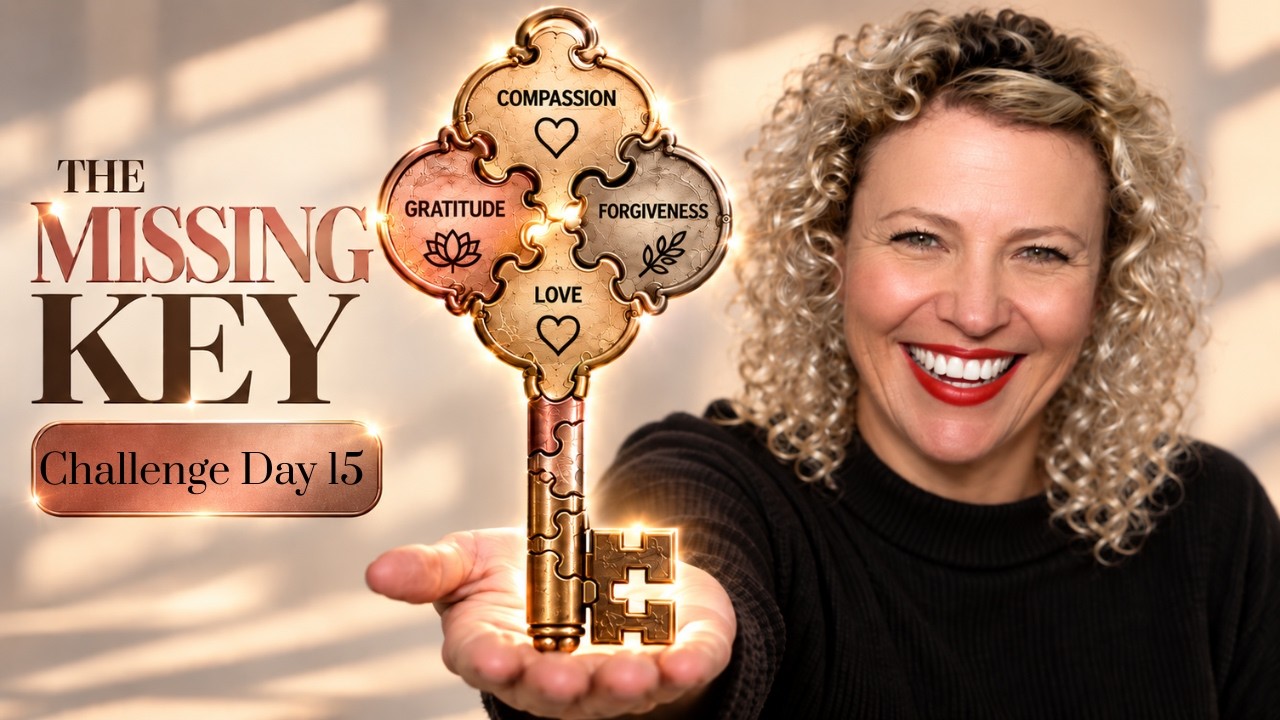
In this solo YouTube episode, Susie Taaffe explores the concept that money, like love or gratitude, is a form of energy that has been "traumatized" by centuries of cultural narratives linking it to greed, scarcity, and evil. Drawing on Edward Mannix’s Compassion Key work, she explains how we have projected our fears of lack onto money, turning it into a scapegoat for anxiety about bills, unexpected expenses, and future security. Susie shares personal anecdotes (e.g., paying for groceries, car repairs, doctor bills) to illustrate how fear and scarcity stories become entangled with money. She guides listeners through a series of visualizations and clearings: inviting a "money consciousness" into a mental circle, reshaping its image from dualistic angel/devil to a golden light, apologizing to money for the trauma we’ve inflicted, and hugging the money consciousness. The episode emphasizes a four‑step process—compassion, forgiveness, gratitude, love—where compassion and forgiveness are the receiving (feminine) side that must be cultivated before giving. Practical tools include a gratitude‑to‑money journal, a ritual of thanking money for specific gifts, and a suggestion to hold physical cash to break digital‑number attachment. Susie promises a future episode with co‑host Cass for grounding, and encourages viewers to try Edward Mannix’s Compassion Key program. The overarching message is that healing money’s trauma and shifting from a scarcity mindset to a receiving mindset unlocks the missing key to manifestation.
Chapters
Hello, welcome back to The Missing Key to Manifestation. Today we are talking about money, money, money, and look, I'm wearing green for money. Um, okay, just take a breath. Money. Now I have to credit this like aha moment to Edward Mannix, who has the Compassion Key. And I recently did a workshop of his and he completely changed the way I think about money. And like, I hope this blows your mind as much as it blows my mind, but we know that money is a resource. Like, and you've probably all heard it before, money is just energy. Like, money is just energy, but He phrased it that money has been persecuted and money has been traumatized because over lifetimes and lifetimes and like, like back for as long as money has existed, poor money has often been tied in with like greed and like money is the root of all evil and like power and bad things. Like, I'm sure you can all attest to the news at the moment and people with a lot of money doing not nice things. And poor money is traumatized. Like, and the biggest realization came for me when, like, we are lumping money in with our fears of lack and scarcity and all of those emotions And poor money actually has nothing to do with it. Like, just let that sink in. So for example, you have an unexpected expense come in and you're like, oh my God, instant, like, like instant, like trauma. It's like, oh my God, I don't have enough money to pay that. Don't have enough money to pay that. And so money gets linked in with this instant Like trigger of fear and lack and scarcity. When, if money is an energy, money cannot be lack and scarcity and fear. It's just the bill or whatever that you've just received that is triggering all of those other emotions. and pulling them into bed with money and tangling them up with money. But money is an energy, money is a resource, money is supply. And if you've watched enough of my videos, you know that we actually have infinite abundance available to us at all times. We have infinite resources, we have infinite supply, we have infinite energy. But it's our fears and our lack and our scarcity that is blocking it off. And poor money has been like tumbled up in the midst of it all. Like, poor money. Like, we just need to take a moment for money because poor money— like, money enables us to buy things. So we, we put a lot of emphasis on the money. But say, for example, like the unexpected Well, say it's an electricity bill and it's massive and you're like, oh, lack, lack, I don't have enough for that. But we— the best, the best way I can describe it is money actually allows you to buy the electricity so that I can talk to you on this phone and have internet and have lights and have warmth when it's cold. Like, Money is actually giving to us, yet we are traumatized by it. And poor money's traumatized itself. Money's like— it's the same as like Scared Susie and Terrified Susie that we've shoved in the closet. Poor money's in the closet with all of them, and it's actually a resource trying to supply us with the things that we need to thrive. Okay, I don't know if this is landing right like I get it in my head, so I'm just going to see if I can find a way to explain it in another way. Like I told you my story about when I went to pay for groceries, like the chicken stir-fry. I was at Trader Joe's and I went to— and I had enough money in my bank account to pay for it. But my fear around the future and what money I was going to have then was traumatizing me and terrifying me to press tap for my groceries. Like, they weren't extravagant. And that fear and being terrified about what money I would have in the future doesn't actually have anything to do with money itself. It's got to do with my fear of there not being enough, my fear of me not being worthy of having the infinite abundance and of receiving enough money in the future to be able to pay for things. So that's— I hope you can see what I'm trying to get at with money being tangled up with fear and being terrified there's not enough and lack and scarcity and evil. Like, the things people do with money that are evil, that's not money that is evil. And so money is traumatized and, and like from being like entwined with all of these stories and belief systems we've been told about money. And I think And Edward does talk a lot about this. It was like the persecution of the wealthy, and because they had more and other people had less. And this has happened for like centuries and centuries and centuries, the haves and the haves-nots. So have-nots, sorry. So this is like ingrained in our DNA, and maybe not in this lifetime, but in other lifetimes. You have potentially been persecuted for being wealthy. So we have this fear that money is going to cause us to be persecuted. And, and, and we have these fears that when you have a lot of money, like, people might not like you for who you are. They might just want you for your money. So I, I'd like— I don't know if I'm saying this right, and I probably need Cass in here to ground, ground me. Ground my out there ideas into. She's got such a grounding way of bringing it back to like what like what does that mean in reality? But thank you, money, that I have electricity. Like I had like a car payment due. Like it's like I don't have enough money. It's like you do. You actually do. And don't lump your fear of scarcity. Into money. Like, can you see how it's so entangled? Money is an energy. Money is a resource, the same as love, the same as gratitude. Like, money itself is not evil or bad. Yes, some people have done really evil and bad things with it, but that is not what the energy of money is. Money is a gift. It's giving and receiving. And I do remember, actually, I can't even remember where I heard it, but someone said when you go to pay for something, if you get that like, oh my God, like that money's going out, it said to visualize the same amount coming back into your bank account. So visualize the loop. Visualize, okay, it went out and now I'm visualizing, make it a check out to you with the same amount of money. I like to 10x it because why not? And and visualize that cha-ching! You've received this in your bank account. Cha-ching! You've received a Zelle for this much money. Cha-ching! You've had a PayPal payment. Like whatever it is, visualize the flow so it's not all your energy just isn't on the out and you can bring it back in. And that's the receiving component. And I also had the biggest aha moment ever. In Edward's, um, uh, workshop that he did. And he has us close our eyes and let's just do it now. Like close our eyes and he says, imagine you have a big circle and invite money consciousness to come into your circle. Just invite it in and then visual, like see what does money consciousness look like to you? And for me, it started off as a duality. It was like an angel on one side and a devil on the other. And I was like, okay. So in my mind, money had polarity. It had good and it had bad. And I highly recommend you go and check out his Compassion Key. He's got a fantastic program going at the moment. I highly recommend it. And it's to dissolve all of this ancestral wounding around money and around, um, well, he was the inspiration to put compassion Into the, I still don't know it. Hopa no no nope prayer. Compassion, forgiveness, gratitude, and love is a four-step process. And so I was visualizing money, and it was the duality. And then he did another clearing to clear that away. And then I was visualizing money more as just like a like golden light being. And then it was really interesting. I redid his clearings because I felt felt such a profound shift. And then I closed my eyes and invited the money consciousness in, and I could— I was visualizing, I think I got the 2 fairy tales mixed up, but I was visualizing the Bibbidi-Bobbidi-Boo, which I think is Cinderella with the fairy godmother who took— I think she Bibbidi-Bobbidi-Boos, but there's also another one, maybe Sleeping Beauty, where there's— where she's living out in the forest with the 3 good witches or good fairies and The three of them have wands and do everything with their wands, and I got a really clear visualization of you have to receive in order to give. Like they had the magic, they had the energy, and then with their wands they were like, and a gift for you, and a gift for you, and a gift for you. Eleven eleven just then. So. That brought me to be like, I had the biggest aha moment, so much I had to text Anna and Cass in big capital letters, oh my God, I think I've just had like a huge breakthrough. And that is gratitude and love, I feel, are like giving energies. We give gratitude, we give thanks. We give love, whereas compassion and forgiveness for ourselves is receiving. So for me, that was like, oh my God, that makes so sense. Because I'll bet all of you are good at giving. Every one of us is brilliant at giving. But I looked back on what I've been doing and all the work I've been doing and all the help I give, and I realized I've been giving in order to receive, where the fairy showed me, no, you have to receive in order— the flow is round the wrong way. You don't go out and then trying to get it back. You've got to receive and then you give. Like, receive it, then bibbidi-bobbidi-boo, then you have received the energy, received the love, received the money resource, See, like we have, I know that we're all in our masculine and receiving is the feminine. And as you've seen it probably everywhere, or everyone's speaking about the rising of the feminine, and this doesn't matter what sex you are, you can be male or female. The feminine is the receiving. Like, that's the part that we need to open. So compassion and forgiveness. We need to receive the compassion and forgiveness for ourselves. Like, receive the compassion and forgiveness, and then we have the energy for the gratitude and the love. Just breathe. Like, I am, and, and may, and like, I am great at giving out compassion, but as I've shown you my stories, like, I can tell Anna, go and rest when you're sick. Like, I can tell her that, but do you think I give myself that same compassion? Like, it's a Thursday. You can't lie on the couch. Like, you gotta work. It's Thursday. There's— where's the receiving in that? That's like give, give, give, give, give. Self-care is receiving. Self-care is compassion for yourself. It's like blocking out the time so you can receive rest, so you can receive like just time for yourself to recharge. So, so I suppose the point is, A, we've traumatized money, the energy, for eons and eons, and we all need to say sorry, money. And in actual fact, I did have an unexpected expense the other day, and I was like, oh my God, how much is this going to cost me? Okay, money, like, how much are you— how much are you gonna cost me here? And I was like— and I'd done the The Edward money clearing, and I was like, "Oh, I'm doing it right now!" And I was like, "I am so sorry, money. I am so sorry, money, that I instantly made you the bad guy in this situation. Thank you, money, that I can actually use you to fix the problem that I'm having. Like whatever it is, like new tires." A battery in your car is dead, like unexpected things. But without a car, I'm in trouble. So thank you, money, that I can buy a battery with you that makes my car run, and now I'm able to do things again. Thank you, money, that I can have new tires. Thank you, money, that I'm not gonna like have an accident on the road because one's about to blow out. Thank you, money, for that. I am so sorry, money, that I let my fear of scarcity and fear of lack make you into the bad guy. You're trying to give me a gift. Thank you, money, for buying me the chicken stir-fry at Trader Joe's. Thank you, money, for all the things you do for me. Thank you, thank you, thank you. I love you, money. Like, look at what I've been able to create with you. My beautiful cottage, which I love so much. What made that possible? Money. So our fears of the future, our fear of lack and scarcity in the future are not actually money's fault. They're our own fears and insecurities that we're not worth. Receiving enough resources in the future. Money is actually out of the picture itself as an energy, as a consciousness. Like, I am so sorry, money, that you have been shoved in the closet with fear and scarcity and lack, Susie, and that they've entwined themselves around you to be a symbol that they're not enough. Oh, I think if you weren't understanding it before, I think you'll get it now. I feel like I explained that right then. Please drop me a comment and tell me if you get it or don't get it, because— or go and do Edward's course. It's amazing. Like, amazing. That man should be like famous. I don't know, he might be famous. I just stumbled across him, but— well, didn't stumble, synchronicities, of course. I was led to him. But his work is revolutionary because he's— it's about you receiving the compassion. And then I've added on, we need to forgive ourselves as well, like receiving forgiveness for those parts of you you thought weren't worthy. Receiving, receiving, that is the key to manifestation, what we're all here for. And I know it's taken me to day 14. I didn't even say the day on the front because I was just like so So excited to press record and talk about this because I think it's just so like light bulb moment. And I feel like, I feel like there's a lot of people coming online that are talking about this at the moment. Like the lights are going on that the gratitude and the love is not enough by itself for us to feel whole. We need to balance the other half out. The receiving part, like receive the compassion, receive the forgiveness, and then be grateful, and then send your love everywhere. Inwards, outwards, everywhere. But it's the receivership. Receive the gratitude, I suppose, the parts of you that were discombobulated. They get to receive the gratitude that they hadn't felt forever because, oh, they've been told they're bad. And like, this is not your fault. None of this is your fault. Everyone, like, literally— maybe not everyone, maybe there might be some Buddhists on a mountain, or so— sorry, some monks or something on a mountain that are all in Zen and like at peace and at one. But you live a regular life, an everyday life. Like, there's annoying vacuum cleaners, and gosh, I need a new vacuum cleaner. It is so bad. Um, but life stuff pops up and is irritating, and it's like hard to take some space to actually allow yourself to receive. Receive the compassion and receive the forgiveness and be grateful that you have all these parts of you that are looking out for you and love all of them. Love them all because they have your best interests at heart. Selfish Susie, Angry Susie, Lack Susie is just trying to protect you. And integrating all of those parts. With a big breath, that is when we can like truly feel worthy. Okay, got really dizzy then actually. Okay, so now take another deep breath and just imagine that enormous circle now. And I don't know if I've done enough of the pro— I haven't done enough clearing probably, but just invite mighty consciousness in again now that you Understand the traumatic life it's had, like tied up with all the evil and greed stories and the lack stories and the scarcity stories. Just invite it in and just— it might come to you as a feeling, it might come to you as a visual, but just say, I'm so sorry, money. You have always been just trying to give me what I need. I'm so sorry I only allowed enough of you in to just survive. I'm so sorry when you've only ever wanted me to thrive. I'm so sorry, money. Like, I am so sorry that you have been so traumatized by this process. I'm so sorry that you've been traumatized for lifetimes and made to feel like You were bad and evil and greedy. Now I'm just going to get you to give the money consciousness a hug, just a big hug. Give it a hug. Okay, you all might think I'm crazy now, but give the money consciousness a hug. Thank you so much, money, for everything you've done for me. Okay, here there's a journal job. Let's get it out and say thank you, money, for 4, and write down all the things that money has enabled you to do or to have. Thank you, money, that I have a car that drives. Thank you, money, that I have healthy children, that I could pay for doctor's visits so that they are now healthy. Thank you, money, that I got to buy that delicious chicken stir-fry. Thank you, money, for all the food you put in my fridge. Thank you, money, for this comfy green turtleneck, which I love. Like, write it all down. Like, thank— start thanking money. And not— and we're just trying to, um, what's the word, desensitize this, this negative emotion that we have around money. I'm so sorry, money, that you felt that way. Like, I am so sorry. You have only ever been trying to provide goodness. Money is not in control of what evil people do with it. Money is itself not evil. Money is a resource like love. It's an energy. It's a supply. Anyway, I really hope that you got this. I'm gonna bring Cass on next time so that we can talk it through because she's more grounding and I'm more up here. Um, but I love you lots. Write down your gratitude list for money and maybe apologize to money a little bit. I'm so sorry. I am so, and maybe you can write that down. If you apologize to it though, I'm so sorry that I made you feel. I'm so sorry that I brought this trauma to you about my fear and lack. Money is not causing fear and lack, but it's been. Oh my God! I just had to sorry. We're gonna have to keep recording. I just had the. I'm not sure if I spoke about it in this one or in the 31-day challenge, but remember I said how we like to blame our body for all of our insecurities and our feelings of not being worthy because it's a physical representation. Like, you can see it every time you walk past the mirror. You can't see, there's a mirror over there, but every time you see, look, walk past the mirror, you see your body. So you can throw at it all the things that you are disappointed with. Which is basically using it as a vessel to confirm that you're not enough. My skin's too wrinkly, my tummy's too saggy, my eyes are too small, whatever it is. And money, I've just linked money is another physical representation of where we are not enough. So we use our bodies as a— we use our bodies as a physical, like, what do you call it, like dartboard, um, bashing grounds, about like something to be bashed about because we're trying to confirm that we're not worthy and we're not good enough. And we use money— is also another physical tool. Now we've gone more digital, but it's like the numbers in a bank balance. are telling you your worth. They're just numbers. In actual fact, the digital current— like, digital world makes me absolutely laugh because so much of this money is not even real. Like, you have something in a digital bank account, they're just numbers on a screen. You've got debts in a digital bank account, like, they're not sitting in a big vault somewhere. It's not physical money. And then you send someone money, but it's still— it's just numbers on a screen. Like, It's not even a thing. It's just, it's just like, it's just a digital output. But yet we're letting that output be a confirmation of our worth. And when we can separate the two, that is That's the gold. Money has nothing to do with the stories you've linked to it. You see a number. Oh, I'm successful. Oh, I'm not successful. The number is actually irrelevant to if you're successful or not. But we've linked it to our success. We've linked whatever number we see To our worth. How much money we have is linked to our worth, and we need to decouple that right now. Money is energy. It is not lack or fear or scarcity. Yet I'm sure you open your email, you get a massive bill, you're like, money gets blamed. It's not. The money is just showing you where you have an old belief system and wounding About a story where you're not enough. Oh, okay, look at that. And they actually say we should all carry around more physical money. Have— I've got some notes in there. Touch them, feel them. Get some physical cash, put them in your vicinity. Let yourself see it and touch it because it's all up here. We've got digital numbers on screens. Sending us into spirals that we're not worthy enough, where there's scarcity, we're not enough, we're never gonna have enough, and then we're gonna die basically. Because if we don't have enough, we can't eat, or we get kicked out, or whatever happens, and then we die. So your body is like, you're like, I don't know which system it is, whatever the central nervous system, the— I can't ever say it, so I'm not going to. The response to a trigger— That I don't have enough, I'm gonna die. I don't know how I'm gonna pay this bill is translated as I'm going to die. I'm not going to have enough, so I can't buy food. For me, trying to pay for groceries was literally the program of if I pay for these groceries, I might not have groceries in a few weeks' time, and then I'm gonna die. Chances of that are pretty slim, like pretty low. Yet money has been told it's gonna be the cause of you dying. Like, that is what's going on here if you look at it from an energetic perspective. And money's like, I just bought you all these groceries. What do you mean you're telling me you're gonna die because I bought you these groceries? I wanna nourish you. I wanna feed you in a way that brings your body joy. And at the same time, you're telling that money, "Oh, we're not gonna have enough. We're gonna die." Poor money. Poor money. I'm so sorry, money, because yes, that's exactly what I was doing, and I had to like breathe through it and say, "Terrified Susie, it's okay. Right now we have enough money to pay for these groceries." And money's going, "Yes, there's enough of me. I just want to give you these beautiful groceries." Please let me do that without linking me to the fact you're gonna die in a few weeks. I know I'm dramatizing this. As you can tell, I like to dramatize things, but wow. Okay. Wow. Okay. See, we got there. Wow. This was a clanger. I like this session. Sorry, it was a bit slow going at the beginning. Luckily, the book will be much more condensed because As you know, if you've watched my videos, I process verbally, especially when I'm recording to you. And I think that we really got some good juice in this session. Poor money. It's trying to give you things like an unexpected doctor's bill, and you are like, oh my God, I'm not gonna have enough money for groceries next week cuz I had to pay a doctor's bill. And money's going, I just allow— I just gave you the gift by using me to be able to get your child well. And we're— so we're not even thanking it. Thank you, money, for this unexpected doctor's bill that I can now make my child well from. Thank you. We're like, money, no, not you again. I'm gonna run out of you and then I'm gonna die. Where's the gratitude for money? Where's the thank you for money? I think we've all got a lot of I'm sorry monies stories to say. So sorry. I'm so sorry, money. Please forgive me for not seeing the gift you were giving me. Money is just like an emotion that we have, like on the bus or the table or whatever. I can't remember where we're at with all of that, but money is Giving you gifts, and we're slamming it over the head with the future projections and stories that we're carrying along with it. Like, where do you say when you go to the doctor and you have to pay like a huge bill for your child to I don't know get a broken arm fixed or something? Who is saying thank you money for being able to pay to have my arm my child's arm set? Like, thank you. Thank you so much for giving me that gift that they now have a cast, their arm will be okay. Okay, whoa, I am gonna go now, but whoa, realization. Money is a gift, and I think when we start thanking it and appreciating it and saying sorry to all the times we neglected it and lumped it in with trauma and fear, Traumatized it. We've traumatized it. Okay, I am going now, but I love you lots. Let me know if this resonated for you. I'll bring Cass on and we'll, we'll have a chat about this. Bye.
More from Susie


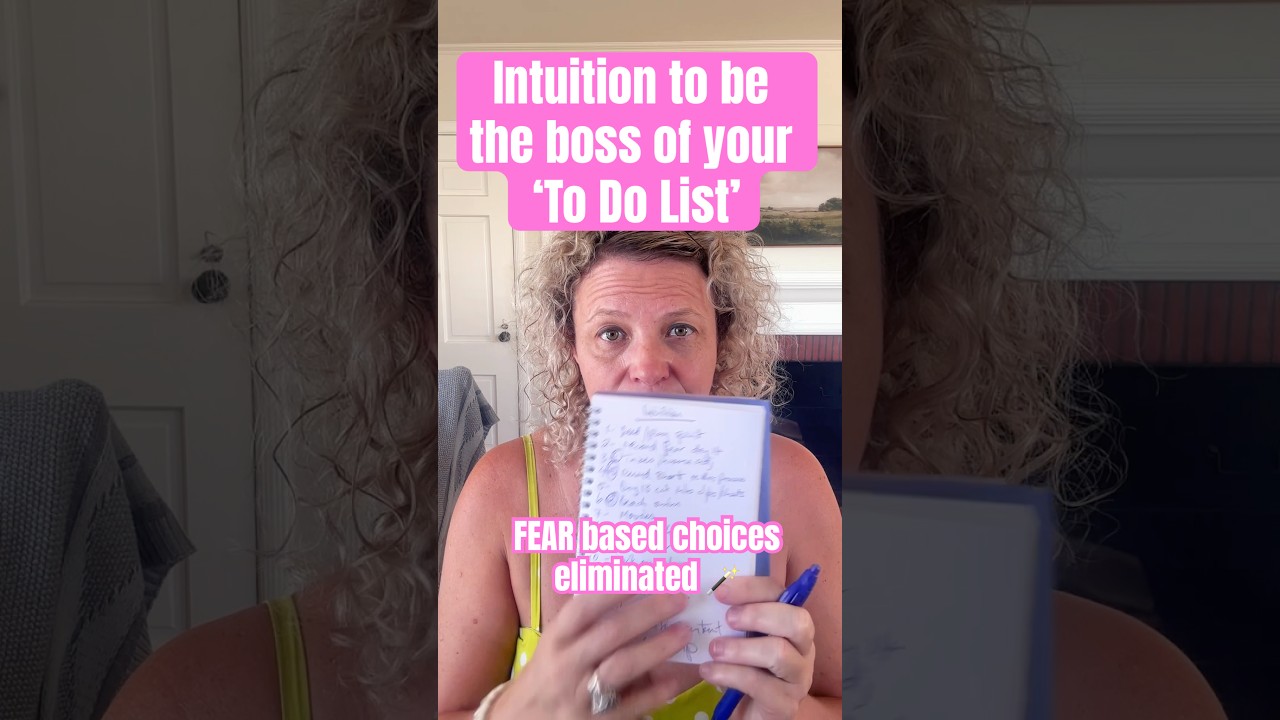
How to run your day from intuition instead of autopilot programming (including FEAR)

Code HEATWAVE for 30% off - my gift for your thighs! #heatwave #chafe #california skanties.co

Heatwave proof 🔥save your thighs - use code HEATWAVE for 30% off! #heatwave #california #thighs


