3 Day Allergy Challenge
Tami Grgas walks through day 2 of her allergen-reduction challenge, covering the biology of dust mites and a 12-point cleaning plan. She champions Norwex microfiber cloths, which absorb 99% of bacteria and can be reused for weeks, as superior to chemical cleaners for trapping allergens without residue.
Chapters
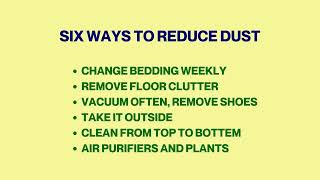
Apparently I'm live. We'll see. Um, let me refresh on Facebook and make sure I'm there, and if I am, I will go ahead. And I don't know what happened to yesterday's live, but it— I don't know, glitches out on me when I try to watch it again. So sorry about that. Let's see here. Am I live? Yes, I am. Okay. How are y'all doing? So, um, I'm gonna— this is day 2 of the challenge, and in this day, let me get my slides up for you. Oh, there it is. Apparently I disappeared on this one. I don't know. Can I go back and forth? Oh, I can. Oh, sorry, I'm learning new stuff about this thing. So the free Kick the Allergens Out of Your Home Challenge. This is day 2, and if you register in the pinned post to be entered, you can win a prize in the challenge on day 3. That's tomorrow. So welcome to day 2. A quick review of day 1. We talked about how allergies work. So basically allergies are your immunity, immunity attacking the allergens that are coming into your body and then creating histamine. So that's why we take antihistamines. Symptoms of allergies: hay fever, sneezing, coughing, runny nose, headaches. The list goes on and on. I've had quite a few of them. I have— I've had eczema, but I've never had hives, so that's how far my allergens have gone. I'm going to close Facebook so I don't see myself there. And hopefully I can go back and watch it later. So then we have the common allergens, um, dog, dog, like animal, uh, dander, uh, dust mites. Uh, there's so many different common allergens, especially here in Nebraska. They all seem to live here. Uh, I'm not talking about food allergies with this. Mm-hmm. This particular webinar— not webinar, 3-day challenge. I'm talking more about environmental allergies. Okay. We talked about some natural home remedies, a few different easy tips and tricks, essential oils, which ones to use and why and how to use them. And That was our day yesterday. Now we're gonna talk about the fact that we all own so many cleaning tools. I mean, I have spent so much money on cleaning tools in the past, it's crazy. And a lot of them last for a season and then I don't like 'em. Or some of them still live in my closet 'cause I do like them, but I found something better and I'm not willing to throw that other one out. Mm-hmm. I guess that's a bit of the hoarder in me, maybe. So there, you know, we all have lots of cleaning tools. Lots, lots. At least I do. I guess I shouldn't assume, but I assume that a lot of people have been trying to get a hold of their house for a while and, uh, It's hard. So the importance of house cleaning. There is no need to obsess about home cleaning since there is really no way to completely eliminate allergens in your home 100%. That said, allergy sufferers can benefit from regular home cleaning to reduce indoor allergens, including molds, pollen, pet dander, dust mites, and cockroach droppings. Um, and I'm— the only thing that I don't really have an allergy to right now, according to my allergist, is molds. And with molds, if you're cleaning and you find mold in your house, you might need to get someone to come in and get rid of that mold for you, because mold can go very deeply into the walls and stuff. It's kind of a scary thing. Okay. So our enemy, for the most part, is dust. Dust is fine particles of solid matter. It's composed of 20 to 50% dead skin cells, dust mite droppings, and fragments. Dander and dust mite matter, pollen, and pollen travel through the air and can be invisible. Dust mites are microscopic. They're insect-like pests that generate dust. Blech! Dust mites are nearly everywhere. Roughly 4 out of 5 homes in America have detectable levels of dust mite allergens in at least one bed. Dust mites feed off of dead human skin cells that are found in dust. Average people shed 1.5 grams of skin flakes every day. That is enough to feed 1 million dust mites. Wow. Dust mite body parts and droppings are considered one of the major indoor triggers for people with allergies and asthma. Every room in your home should be dusted at least once a week. 12 ways to get rid of dust mites in your home. One, clean bedding weekly. Now, this is a habit I struggle with, and one of the things that my allergist told me to do with my bedding— if you're allergic to dust mites, they love getting in warm places. They love warmth, and they love dampness. So my allergist told me to stop making my bed. So I basically, in the morning, I pull the sheets down to the end of the bed and kind of fold them over and leave them down to let the air cool off the, the sheet on my bed and let the water evaporate out of there. And I also have a protective cover on my mattress that helps keep the dust mites off. So choose bedding that is easy to clean. So they're basically saying, like, don't have bed ruffles, don't have all these frilly-billy things. I used to have eiderdowns, but I had them before dust mites invaded my life. And eiderdowns, you need to take them to a bigger machine to wash them, and it's kind of a pain in the butt. So I just, I have a light quilt for the summer months and I have a heavier blanket, not, not an eiderdown, but something that's kind of heavy and cozy for the winter months. So now that it's summer, I'm going to take that winter blanket to the laundromat and make sure it's nice and clean. So another thing is use protective covering on mattresses. You can buy those. They're fabulous. I, I have one for everybody's bed, even though not everybody's allergic to stuff, but better safe than sorry. Now they're saying remove wall-to-wall carpeting. We did that in most of our main level, and we don't have carpeting down in the basement, but we still have carpeting in our family room, going up the stairs and into the bedrooms upstairs. And my husband and I dream of someday just having hard— the hardwood look throughout the house. So we'll get there, it'll just take us time. Um, you're supposed to vacuum and sweep daily. This is another one I struggle with, um, because I've got so many other things to do around the house right now. These kind of go on the back burner. Um, you're supposed to lower your room temperatures. Uh, dust mites like the warmth. So this is going to help keep them at bay, at least keep them less active, and also reduce humidity in the home. Again, dust mites love the dampness. You're supposed to remove heavy window coverings, so your window covering should also be easy to clean. So right now, I just, I just finished painting in our family room. Had to do all the edging up top. And now that that's done, I'm going to be hanging up our curtains again. I got rid of the blinds because dust gathers on blinds like there's no tomorrow. And every time I'd clean the blinds, I would be out for the count because of my allergies. So I'm like, okay, enough of this. I'm just getting rid of them and putting up drapes. But I got not, not super light drapes and not super heavy drapes. So I did get some colored drapes for the outside of the windows, but on the inside of the windows are going to be sheers. And those are— they're all things that I can throw in the washing machine. So that's, that's what they're saying. They don't want you to get heavy like those, um, velvet drapes and stuff like that that need to be professionally laundered or stuff like that. Okay. Reduce clutter. As we all know, clutter gathers dust. Um, if you're going— if you do have a collection, like I have a girlfriend who collects those Precious Moments figurines, and she has since she was a young girl, I believe. So she has— excuse me— a sealed glass cabinet that they go in. And she's got a lot of allergies too. And she goes in there about one— I think she does it like twice a year. She goes in and dusts them off or cleans them off. But not a lot of dust gets in there because it's sealed off. So if you have collections like that, I recommend something like that that's going to seal nicely. So that dust can't sneak in there. Uh, let me see here. Reduce clutter, improve HVAC air filters. Okay, this one. So I talked to my HVAC guy and I was getting those allergy filters for a while, and he basically told me that when you use those filters, because they're thicker and they don't let the air flow as easily, that, um, it overworks the furnace and then you end up having to replace your furnace sooner. So, um, I read an article recently and I need to look into this more, but apparently there are some filters that you can put, um, on your, on your vents going into each room that will help keep the allergens from coming into the home and keep them in the HVAC system, you know. So I'm going to try that. Use natural oils, which I love using my natural oils to help me when I'm having bad days. And use a damp moth— damp moth— damp mop and damp cloths to clean up the dust. Because that way it gathers the dust and then you can rinse it off and put it down the drain or put it in the garbage or stuff like that. So don't just take the, the duster thing that you think is wonderful and just dust it away. Not a good idea because that puts all the dust into the air and exasperates your allergies. That's a big word. What kind of products and tools do you use in your home? So what kind of appliances do you use? Detergents, window cleaner, bathroom cleaner, kitchen cleaner, floor cleaner, furniture polish, heavy-duty cleaners, cloths and rags, towels, duster, dusting tools, vacuum mop, broom, dry mop, scrubbing tools. I've tried a lot, a lot of different things, and in my journey through this, trying to Trying to keep a clean house. I've tried a lot of items, but now I've narrowed it down to a few with my allergens, because these few items that I'm using now really do help get the allergens out of my house as well as the chemicals out of my house, which I don't like exposing my kids or myself to too many chemicals. So what kind of tools do you use? Write it in the, in the group. I think I can post in here. So let me see if this works. What kind of tools do you What do you use to clean your home? Question mark. Let's see if— I don't know, I'll check later and see if that actually posts in the Facebook group. I hope it does because I turned off my Facebook because I don't want to take up too much bandwidth with my computer right now. Oh, excuse me, my allergies are So have you tried any strange tools? I've tried a few. I've tried a few. I tried this thing, this one on the bottom right-hand corner, to clean the bathroom. The kids kind of think it's fun. So I do still have it, and I let them play with it when they're cleaning the bathroom. But I'm sorry, it sucks. It really doesn't do as good as it leads you to think it does. There is a mop, the, the one up in the middle picture of, of mops, the one that's got a red triangle, and then the white things. I can't remember. Oh, excuse me. I cannot remember what it was called, but I've got one of these mops, and I love using it for cleaning up my shower and cleaning up the bathtub, because I don't like bending over to do that stuff very much. Oh. So do you have a favorite detergent? What, what is it? What is your favorite? I used to make my own detergent, but that's kind of time-consuming, and there were actually quite a few chemicals in the detergent I used to make. Ah. And like I said, I'm trying to get away from using the chemicals and keeping the allergens out of my home. So that's kind of the path that I'm on right now. Sorry, I have to work on my pump here. It's telling me to do stuff and I want it just to leave me alone right now. Turn this off. So the next question is, what has been the strangest cleaning tool you have tried? Mine would be that, that bathroom one I was talking about. It was really quite— well, like I say, I still have it for the kids, but it's a bizarro tool. And like I say, they seem to enjoy it, so if it gets them to clean the bathroom, I'm all for that. I also have a steam mop. So how many of you out there have a steam mop? Um, I don't really use it that much anymore unless there has been— like, sometimes with all the kids in the home, I get stuff. Let's say one of them spills a soda in the basement. The basement is the kids' domain. I don't get there a lot, and let's say that soda sits on the floor for a week, it's gonna get all gummy and sticky and that kind of stuff. That is what I use my steam mop for now. I send that downstairs, tell my son, get that up, and generally he does. Well, not generally, sometimes he does. Anyways. So what are your favorite cleaning tools? Mine would be my microfiber cloths that I use, and all the tools that I use have microfiber cloths with them, and I— it's my favorite. So what has been your experience with cleaning in your home? Do you love it? Do you hate it? Um, I know it's a necessary evil, but do you procrastinate it? Are you really good at delegating it? I do not love house cleaning, and a lot of that stems back to, uh, growing up with a lot of chores doing house cleaning. And then whenever I did stuff I was told it wasn't good enough. So it just— a lot of bad stuff, you know. But now with these allergen— allergies and stuff, I have to be better. I have had to figure this out and figure out what will work for me, not just for my, my family that doesn't live in my home, for me and my family that does live in my home. Okay, so we're gonna move on. Okay, so I have used so many different types of my microfiber cloths. I don't know about you. I have, um, ordered them from all different companies. I have found them in stores and bought them thinking, oh, a microfiber cloth, these are all great. They're not all great. They're just not. Um, some of them, it takes like a long time for them to actually absorb water. Some of them don't absorb water. Um, I just haven't found a microfiber cloth that works the way it should work other than the ones I'm going to tell you about, because all of these pictured here, I have tried them all and I don't like them. They're harsh. They're, they're, they're just not very good cloths. So the microfiber cloths that I use, they have Backlock, and this wins the fight against bacteria in the cloth. Okay, so Backlock is an exclusive antibacterial agent for self-cleansing purposes only. So the agent is solely designed to inhibit, inhibit bacterial odor, mold, and mildew growth within the product. When wet, Backlock embedded in the cloth goes to work with self- purification properties. Okay, so this Backlok is going to, um, get all the bacteria and get all— like, this Backlok gets like 99% of the bacteria when you clean your counters just with water. It's remarkable. And then when you're done cleaning your counters off with your damp microfiber cloth. Then you take it and you rinse it, and then you hang it to dry. And as it dries, it cleans itself. So I don't have to launder my cloths every time I use them. I launder them, uh, depending on how much they're used. I have a basket that's, you know, when it gets to the point that it's like, oh well, we had to wipe up coffee with that one and it won't rinse out nicely, so let's put it in the laundry basket over here. Um, but I have used the same cloth for a week or two weeks sometimes because it doesn't get gross. It's awesome. So Norwex is the microfiber I'm talking about. It's super absorbent and cleans without chemicals. You can use it dry to pick up and hold dust, so you don't need to have it damp to pick up dust. It holds it. Dampen your cloth with water to loosen dirt and debris, leaving surfaces free from everything. These cloths are— I Like I say, I've used so many different cloths, and nothing beats them, and I will be giving away one at the end of tomorrow. So these are how you have to treat the microfiber cloths if you want them to keep their integrity and work the way they're supposed to work. Okay. Machine washing and drying are recommended prior to the initial use. So you wash slightly dirty microfiber cloths with Norwex dish soap under warm running water. Rinse thoroughly, hang to dry, or drop into the dryer. So that, that's just your everyday thing. Okay. You can launder the microfiber cloths separately or with other lint-free laundry. Launder dark colors separately. Dry completely. I like to hang mine to dry. I don't always dry them in the, the dryer, but sometimes I do. Use a Norwex laundry detergent for best results. For tough stains, pre-treat with laundry stain remover or use Microfiber Cleaner Laundry Booster. Between launderings, use our rubber brush to remove dirt from dry mop pads and entry mat. So everything Not everything. Most of the things that, that Norwex has in their line involves microfiber cloths. Do not use bleach, fabric softener, or dryer sheets when laundering microfiber, as these additives coat the fibers and reduce their ability to clean effectively. When used— using on easily scratched surfaces such as brushed stainless steel, First test micro— Norwex microfiber on an inconspicuous spot. Now for the stainless steel, I don't have brushed stainless steel. I have shiny stainless steel, but I use— they have two different— they have your microfiber cloth, and then they have a window cloth, and the window cloth is a lot smoother. So I like to use the window cloth on my, on my stainless steel surfaces. Okay. Do not use microfiber except Norwex Optic Scarf and Tech Cleaning Cloth on any anti-glare surfaces. Okay. When air drying, always hang to dry. As leaving— oh, okay. When drying, always hang to dry. As if you leave a darker color of damp microfiber on countertops, they may stain the surface. All Norwex microfiber products carry a 2-year warranty. Now, how many ways can you use these microfiber cloths? You can use it for dusting, cleaning with water, sweeping floors, washing floors, windows, mirrors, toilets, bathtubs— I don't know why I put an E on bath. Showers, cars, vans, trucks, lawn furniture, silverware, pots and pans, tops of cupboards, disinfecting sinks, countertops, appliances, baseboards, fans like ceiling fans and regular fans if you take them apart and clean with. And yeah, yeah, fireplaces, walls, ceilings, door jambs, doors, window track, computers, televisions. There are countless ways to use microfiber cloths in your life, and this could be the only cleaning tool you need. Okay, how is microfiber better? Well, how is Norwex microfiber better? Okay, traditional cotton pushes particles around, spreading dirt, grime, and moisture into the surface crevices. Leaving it moist and unclean. Norwex microfiber lifts and collects even the smallest particles of dirt, grease, and moisture, leaving the surfaces free from everything. Norwex microfiber self-purifies. Used wet, the microsilver in the cloth goes to work with self-purification properties. So have you used microfiber cloths? So what, what was your experience with them? Like, did you love them? Did you hate them? Have you tried Norwex? They are not made the same, that is for sure. And I assume that they were all the same. I assumed that they were all the same and have bought a few duds. Norwex microfiber is the best. I have yet to find any others that are as great, and that is my truth. I love this thing, guys. This, this duster. And right now I can't find it in my house. I'm losing my mind. I might need to order a new one. So how many allergies got better at home when I switched back to Norwex? I can't even— So GRGAS] I discovered Norwex back in 2005, I think it was, when we lived in England. We were stationed there with the Air Force. My husband was in the Air Force at that time. And so I got my first microfiber cloths there, and I liked them. I thought they were cool. I used them. But then, you know, we moved back to America, and I saw other microfiber here, there, and everywhere, and started trying other stuff. And then I go back and order some Norwex, and then I'd go back and try buying other stuff and go back and order Norwex. I did this a few times. Okay. And recently, with my allergies getting so bad, I have decided to go full out, like no more, no more of the other crap. I have to stop because when I just use Norwex in my home, when I— like, they just— it just cleans my home properly. It gets rid of all the dust as long as I'm using it. It has made a huge difference for me. You may think that I sound yucky with my allergies today. You should hear me when I go outside. I can't even talk when I go outside because I— if I talk, I start coughing like a mad crazy person. Um, you did hear me coughing earlier, and that's because I was up by the ceiling painting my trim in my family room. And there was a few dusty bits up there that I had to get rid of. So it— Norwex has made a huge difference for my allergens. I right now I'm on day 2 of not leaving my home, and up until— Well, yesterday I took one, because I've— okay, so I take my allergy medication, I get shots, I do nose spray, I do my essential oils, and I have also been taking, um, a, a cold medication to help out more because I've been so congested and so like it's been really rough. Um, but yesterday I took one in the morning and I have not taken any since then. So last night I was able to go to sleep without nighttime meds. I've been able to get through most of the day so far without daytime meds, like the, the cold and flu meds that help clear me up. So It has made a huge difference in my home environment and how much better I feel. So there are 3 ways to clean— excuse me— there's thermal, using heat, so that would be like your steam mop, stuff like that. There's chemical, where you've got bonding, dissolving, and killing. It requires the time and concentration to work. So being a cosmetologist, we have to use certain chemicals to clean our salon and clean our, our combs and that kind of stuff. And you have to let that— those items sit in that chemical for a certain amount of time. If you spray that chemical on the counters, you need to let it sit for a certain amount of time before you wipe it down so that it does its work. It requires that large particles be removed, removed from a surface first. It then requires chemicals to be applied to a surface, chemical left on surface for a predetermined time, and then you wipe it down. And then there's physical. Physical removal equals Norwex. There is no time, no pre-removal of large particles, no chemical application, and no residue. I love using my Norwex for this. I do— there are a few cleaning products I still use, but not as often. And, uh, I've gotten cleaning products that do not have chemicals in them that I'm trying to use more often. I'm still weeding out all the other stuff. So 6 ways to reduce dust: change your bedding weekly, remove floor clutter, vacuum often, remove shoes, take it outside, clean from top to bottom, and air purifiers and plants. Plants can help as long as you don't have allergies to the plants. I have a, a couple of spider plants, some ivy, and I have a Aloe vera plant in my home. So tomorrow's going to be fun. Tomorrow I will let you know about the most fabulous package deal I have put together to help you get those allergens out of your home. So I love coming home to my safe oasis where my allergies ease up and I just feel so much better. There will also be some prizes to give away, some Come have fun with me learning about these tools and potentially win a prize. I hope to see you tomorrow, same time, same place. I hope you guys all have a great day, and I hope that this broadcast stays in the group. There I am. Oh, sorry, I wasn't there that entire time. So everybody have a great day. Keep fighting those allergens in your home. I hope I've given you some tips and tricks. Tomorrow I'm going to tell you about this package deal that I put together especially for you, my friends, and, uh, you can let me know what you think of it. Thank you. Love y'all. Bye. Bye.
More from Tami

When you can't find your phone and your cats know why 😹 #catmemes #funny #fail


Rebel on Two Wheels 🤘#ADHD #ADHDWomen #adhdselfimprovement #relationship #ADHD #ADHDMom #RebelLife