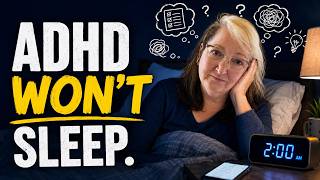
In this introductory episode, the speaker shares her family’s journey with ADHD and homeschooling. She recounts early signs of her son James’s racing thoughts as a toddler, how she intuitively used his interests (Legos, Lightning McQueen, Harry Potter) to structure a flexible, interest‑driven homeschool that unintentionally accommodated his ADHD. The narrative moves to the teenage diagnosis of James and the speaker’s own late‑life diagnosis in her 40s, triggered by her son’s insistence. She also reveals additional health challenges— a third‑grade motorcycle accident causing traumatic brain injury, dyslexia, and a type‑1 diabetes diagnosis at 19— and how she learned to manage them. The episode closes with a preview of the next installment (using natural conversation as a learning tool) and an invitation to join her free SKOOL community, “The Homeschooler’s Toolbox,” aimed at supporting homeschoolers dealing with ADHD.
Chapters
Have you ever wondered if your homeschooling child might have ADHD, but you're afraid of labels? I was there too. In fact, I was successfully homeschooling my son for years without realizing we both had ADHD. Today I'm sharing the beginning of our journey and how we actually accidentally got so many things right, even before we knew what we were dealing with. So when James was 2 and a half, so we first lived in England when he, like, shortly after he was born, we moved there. And when he was very young, like before he turned 3, he started telling me, "Mom, I have so many things going on in my head and it won't stop. And in all honesty, I thought that was normal. So I told him, I said, just sit down and relax for a while. It will go away eventually and it'll be fine. So that's kind of— I had no idea that was ADHD. Okay. His thoughts wouldn't turn off for him. He was very frustrated by it, but he was a toddler, you know. So I was like— And I thought this was all normal because it was normal for me. That's how I grew up. That's all I ever knew in my crazy brain. So I kind of naturally adapted to this. I helped him, helped him by following his interests, and whenever he had an interest in something— like it was Legos for a while, or it was Lightning McQueen for a long time, Harry Potter— anything that he had interest in, we went down that lane and I involved all subjects in it. You can do that. I did it and he did great. You also have— like, I had to be very flexible and I understood when he was having a bad day, we're gonna go to the zoo or we're gonna go, I don't know, wherever on a field trip. It was going to be more of a chill-out, relaxed day and I created a safe learning environment for my son, and that was huge. That was like— I, like I say, I didn't know that what I was doing was helping with ADHD. I just knew it was helping him. And he was pretty much done with homeschooling when he got diagnosed with ADHD. He was either 16 or 17, I can't remember which one. And so I was in my late 40s when I was diagnosed. I was 40 years old when I had him. Well, I was 30, no, I turned 40 while I was pregnant. So I was 40 when I had him. And so he was diagnosed as a teenager and he convinced me because he knew I had it. I was, you know, "No, I don't. No, you don't know what you're talking about." Mom, take this test online. He probably talked to me about it for a good 2-3 weeks before I did anything about it. And I was like, "Okay, okay, I'll take the test." And it came in very high. I was just like, "Oh my gosh, that's crazy. I have ADHD too?" And now that I look back on my life, um, I see it and I'm like, "Oh my gosh." So me personally, I was hit by a motorcycle when I was in 3rd grade and suffered a brain trauma from that, and I had dyslexia. But, you know, this is the— well, 1970s. Nobody knew of this dyslexia thing or the ADHD thing. They just called, you know, my brother was always— my mom was always told my brother was hyper, a hyper child, and, you know, stuff like that. And it just So I have a traumatic brain injury, dyslexia, and ADHD, because I never didn't have it. It was always there, but nobody knew it, including me. And then later on, when I was 19, I became a type 1 diabetic, which, you know, none of these are really correlated together, but those are my issues, and I've learned to adapt to them. With my diabetes, I took control over it, but when I first tried doing that, it didn't work so well. When I got on an insulin pump and a continuous glucose monitor, that's when I did good, and that's when I was able to get pregnant and have my baby boy. So, um, I want to tell you, in— this is episode 1, and in the next episode, we're going to dive into how natural conversations become my secret weapon for learning. But for now, I want you to know that if you're wondering about ADHD and your homeschool journey, you're not alone. And you might be doing more right than you realize. If you want to talk about this more, I'm going to invite you into my SKOOL group, which is spelled S-K-O-O-L. And it is called The Homeschooler's Toolbox. I will have a link in my About Me and probably in the description if you want to come join me there. It's free. Um, I'm gonna have like lots of guest speakers and stuff like that, and I really want to help everybody to break down this ADHD stuff, and especially with homeschoolers, because I homeschooled and I feel like this is not a mistake, but I should have had my son tested way sooner so that I could have it documented. And as you go through my little series here, you'll understand why I say that. So I hope to see you again. Bye for now. Bye.