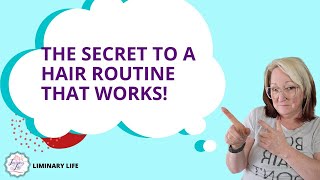
In this 10‑minute YouTube monologue, veteran hairstylist Tami Grgas (30+ years experience) teaches viewers how to stop the trial‑and‑error cycle with hair products by first understanding their own hair. She explains four core hair‑type dimensions—strand circumference, scalp density, cuticle porosity, and overall texture (straight, wavy, curly, coily)—and provides simple, at‑home tests for each (finger‑roll, scalp‑visibility, water‑float, wet‑hair curl check). Using her own hair as an example (fine, medium‑high density, low porosity, wavy), she shows how these metrics guide product selection (shampoo/conditioner type, leave‑ins, gels, mousses) and styling techniques (heat vs. product‑heavy curls). Grgas then outlines common hair‑care mistakes (over‑washing, mis‑placing conditioner, skipping moisture for straight hair) and offers practical routine‑building tips (wash frequency, dry‑shampoo use, conditioner application zones). Throughout, she promotes a free three‑day “Hair Confidence Kickstart” challenge and optional one‑on‑one online consultations, inviting viewers to register via a link in the description. The video ends with a call to subscribe, follow, and join the challenge for personalized guidance and possible giveaways.
Chapters
Are you frustrated with your hair never looking the way you want, no matter what hair products you're using? Stop wasting money on the wrong products. Your perfect hair routine starts with you actually understanding your hair. Hi, I'm Tami Grgas. I'm a hairstylist for over 30 years. I help women fall in love with their hair again by understanding it. I know how frustrating it can be to struggle with products that don't work and advice that doesn't fit your unique hair. That's why I'm here, to give you the knowledge and confidence to understand your hair. So here's some hair type basics for you, okay? And it is so important for you to know this because it will help you determine the best products for your hair. It will help you determine the best styling techniques for your hair. And the best haircuts for you. It's not just straight, wavy, or curly. It's also about thickness, density, and porosity. Knowing your type will stop the trial and error cycle and finally build a hair routine that works for you. We're all individual. We all have different needs with our hair. And we have to figure out what works for our particular hair. I want to talk to you about how to determine your hair circumference right now. Now circumference is, if you take a strand of hair, circumference is around it. And it's— Your hair is so freaking tiny. How are we supposed to measure that? I have one test that we can do by feeling, okay? So if you just pull a hair outta your head or grab a hair out of a used brush, don't even have to pull it outta your head. You just have to do this. Put it between your fingers like this and roll it. Okay. If it's fine, it's hard to feel it. Like it's really— I have fine hair and when I do this, it's hard to feel it. It just is. Medium hair. It feels like a piece of cotton thread. All right. And coarse hair, which means it's going to be even thicker, feels strong and thick. Like it just feels stronger. Okay. So that, that's a basic way to test for your circumference. And then on top of that, you need to understand your hair density. All right. Density is— How many hairs per square inch? There are 3 classifications: low, medium, and high density. If you look at your scalp in the mirror and you can see a lot of scalp, you have low density, which means not a lot of hairs per square inch compared to some other people. If you can see your scalp on the line that's created, but you can't see your scalp through the other hair, Then you're medium density. And high density would be like, it's even hard to see your scalp when you make a part. You'll part it and you have to hold it. You saw how— so when I part it, I have to hold it down like this to see my scalp. When you have to do that, you're either— like, I'm not quite high density, but I'm borderline high density. Okay. If you actually have to lay it flat to see the scalp, then that's what that's about. Now, so for me, I have each individual strand is fine. All right. And I have medium to high density, more on the medium side than the high side. Okay. So that means I have A lot of hairs per square inch. A lot of times people with fine hair have a higher density. Not all the time though, but a lot of times. So now we're going to talk about hair porosity. Now porosity means when you take a sponge and put it in water and it absorbs the water and becomes wet, that sponge is very porous. It sucks up all the water. Mm-hmm. Your hair porosity is if your cuticle layer, which is the outside layer of the hair, if it's laying nice and tight and flat, it's not porous. If it lifted a little bit, it's a little bit porous. If it lifted a lot, then you're going to be very porous. So a way to test this, there's a quick water test. Okay. You can take that piece of hair if you still have it. Or you can get another hair and you're gonna fill a glass of water, a clear glass of water. Okay. You're going to fill it not all the way to the top, but pretty close to the top. Okay. And then you are going to drop that hair into that water and you're going to watch it. Floats, then it's a low porosity. Yeah. Which means it's not absorbing a lot of water. If it sinks a little bit, like halfway, then you're medium porosity. And if it sinks fast, you've got high porosity. Your cuticles really open up and your hair just— it's thirsty. The understanding the porosity will help you to determine somewhat the type of products to use too. So I want to help you create a routine based on your hair type. Once you know your type, so for me, I have fine hair with medium to high density and low porosity. So those are my 3 determining factors. We are also going to talk about Texture. All right. Texture relates to the amount of curl or movement in your hair. All right. Straight hair is straight. And a good way to determine your texture is to wash your hair and use your shampoo and conditioner, but don't put any styling products in. Look at your hair when it's wet. See if there's any movement in it. Okay, mine has a little bit of a curve. I've got the— an S wave, we call it. And then you're gonna let it dry naturally, which, I'm sorry, some people don't like that. I tend to like to either blow dry my hair when I'm doing it straight or put a lot of products in it when it's curly. So when it's dry, you also want to see how much curl is left in it. Some people's hair gets curlier as it dries. Some people's hair gets less curly when it dries. Some people's hair gets frizzy when it's dry. So you need to understand, do you have straight hair? Do you have wavy hair? Do you have curly hair, or do you have coily hair? Alright, I have wavy hair. And I can do a lot with my hair. Sometimes I'll have curly hair. That's not me taking a curling iron out. That's me putting a lot of product in it and letting it dry and letting it be curly because I can manipulate it. And that's a lot of understanding what kind of products to use and understanding what kind of techniques to use. Once you know these things, so I have fine hair. I have medium to high density. I have low porosity, and I have wavy hair. Those are the basic things you need to understand about your hair. Okay, in order to go forward with this. So now I'm going to talk to you about creating a routine for your hair type. Alright. Shampoos and conditioners. There are so many products out there. It boggles my mind sometimes. But I go back and forth with my products because of my texture. When I want to wear my hair straighter, I don't use a lot of moisture in my shampoo and conditioner. When I want to wear it curlier, I use more moisturizers because curls love moisture and that helps them to get in a tighter wave and all that kind of fun stuff. If you have super fine hair, look at volumizing shampoos. But to be honest with you, you have to be aware of your texture as well. If you have super fine hair that's curly, volumizing products might not be the best bet. Because a lot of times they don't have very much moisture in them. So there's a couple of ways around this. You can use volumizing shampoo. You need a light moisturizing conditioner. And then your after products, like after your hair is washed and conditioned, there are leave-in moisturizing conditioners that you can use. You just have to be very careful because— Some things will really weigh your hair down and it's just, it's, yeah, it's hard. Fine hair that has curl can be difficult sometimes, but I can help you reach out to me if you'd like help right now, because I'm starting out on my journey with my new business called Luminary Life. I'm doing a free challenge. Mm-hmm. In a week, the 12th, I think. And if, if that's something that interests you to come do my challenge with me, it's free. I'm just giving information, trying to help women. And one of the things that I'm going to be offering to the people that come to my free challenge is I'm going to be giving away some one-on-one online consultations so that I can help you to understand your hair if you don't get it. Yeah. And to help you to determine what kind of products would work best for you. I, I have a questionnaire that I'd send you first so that you can fill that out and let me know what you're doing with your hair now, what you understand about your hair now, like all that kind of stuff. This will be like a full consultation helping you to understand your hair and what type of products will work. From there, you'll have the type of products, but there's so many different brands and whatnot. But I can help you. Just reach out to me and I'll give you the link to register for the free training. Styling products, choosing the right leave-ins, serums, and gels, and mousses, and oh my gosh, there's just so many. Okay. Since my hair is— I'm going to give you information about my hair because I fully understand my hair. Okay. I have tried so many different products because new products come out and they give me a good deal on them, or they give me some for free to try. And so I try them. If I want my hair to be super curly— It's funny because in the past, using these kind of products was a no-go for me. I use a heavy gel. And what I do though is when I'm done in the shower, I don't even get out of the shower. I dump my head upside down, run my fingers through to get any knots more by my scalp, and then I take a big glob of that— big glob— and I scrunch it in. I need a lot of product to make my hair do the curl that I like to see. And then I wrap my head in a microfiber towel, and I leave it like that for a long time. Sometimes overnight. And when I do it overnight, the next morning when I get up, my hair's still damp and I take it out of the towel and I might, sometimes I'll take this part and pull it a little straighter because I don't like my bangs to be too curly. It just, the curls are incredible. You'll see one of these days, I promise. It's just— you have to get to know your hair, and you have to be willing to try products. When your hairstylist or somebody in the mall says, hey, you want a sample of this hair item? Say yes and try it. Rotten your cupboard and end up in the trash? Try it. They give away samples for a reason, because they want people to try it. And I find like when I'm doing the curl, I need a lot more product than when I'm doing it straighter. With it straighter, I need much lighter products so that it doesn't weigh my hair down. And so I go with a, sometimes a mousse if I want it to lift off my scalp a little more. I like the lotions for my hair. And there's a couple of like kind of creamy-based ones, but they're not heavy creamy-based ones that I like. There are so many products out there, guys. It's incredible and weird and overwhelming, really. But I want to help you to lose the overwhelm so you can, when you go to look at products, you can know, nope. I don't want those. I've got straight hair. I don't want moisture. I don't want those intense moisturizing products on my straight hair. Things like that. I want to tell you about some common hair mistakes to avoid. Overwashing. How often are you washing your hair? Back in, I was a teenager in the 1980s and we washed our hair every stinking day. Even though I was in cosmetology. Still washed my hair every single day. It didn't need it. But back in the '80s, it was a thing. I slowly switched. And when I was much younger, I had oily hair as well, like overactive sebaceous glands. Okay. But I maybe went too long between washes way back when I was really little. When you have overactive sebaceous glands, You are going to— let's say you do wash every day. Okay. You're going to wash every second day for a while. Okay, until your hair gets used to it. You're going to use a dry shampoo on day 2. There are a few different types of dry shampoo. You want one that's actually going to dry out the oils. So you have to be careful of what kind of dry shampoo you get. So you're gonna do that for a while and then you're gonna go to every 3 days. You can use dry shampoo and hairspray. Just because it works better in my hair because my hair tends to get staticky. I'd say to shoot for 2 days of no washing, 1 day of washing at a minimum. Okay. If you can only get to every second day, that's better than every single day. Because when you're doing it every single day, your sebaceous glands, which secrete the oil, get overactive because of that, because you're stimulating them too much with shampoo and conditioner. Conditioner? Don't put it on your scalp. You can't. Okay, so the, the other common mistake that I've noticed is a lot of people will, because they have straight hair, they'll skip moisture altogether. Don't skip it. Okay, just don't do the heavy moisturizing products. And if your hair is super straight, then just use moisturizing leave-in conditioner. That's going to be much better. Okay. And like I say, don't put it on your scalp. You can go from an inch or two to the ends with conditioner. And then after you're done with that, run your fingers through and then rinse it off and— So again, I'm going to invite you to my Hair Confidence Kickstart Challenge. All right, it's 3 days. It's going to help you to understand your hair type better. And I will help you create a hair routine. And I will include a link so that you can register. Down below. Please subscribe. I'd love to keep you up to date on different hair tips and tricks. This is the base though. Understanding your hair is the best you can do for you and your hair. I really want you to understand it. So please Follow me and you'll get more information. And come to my challenge. It's gonna be fun. And I'm gonna give away some consultations. I might even have a flat iron to give away. I'm not sure. Gonna depend on how many people are there.