I lost my Keys?!?
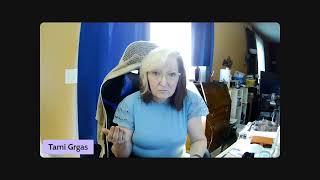
Tami Grgas was diagnosed with ADHD at 57 and now coaches others through it. She lost her house key and spiraled, then used a Google Form quiz to map her executive function gaps. She's a newly certified ADHD life coach planning to help military families navigate frequent moves and the stress that comes with them.
Chapters
Well, sorry, I don't have an intro video. I'm like a newbie to all this YouTube stuff, but I don't know if you caught my last video that I did. I was very unregulated. And that's a part of having my ADHD. So if you think you have or do have ADHD, you've been diagnosed or not— let me just move my camera a little bit. Oh, my camera. There we go. Dysregulation is a word that I've never used in my life until— so I was diagnosed with ADHD at 57. I'm now 61. And I didn't take ownership or control of this ADHD until the last year and a half, maybe not even, maybe the last year. I always thought that Adderall was going to fix it, and that's not the case. A big key in this is learning about how ADHD affects us and how it affects you personally. Now, for me, I do have dysregulation moments where I get very emotional, very sensitive, very— like, I just— I have to be left alone is what it comes down to. And my husband and my son, that's my family, they have learned that when I tell them, I'm not doing very good right now. I need to be alone. And I will go up to my room. And so the other day, I spent time in my room, cleaning up, moving stuff around. I do that for a little while. And then I sit down for a little while. And I went back and forth with that until I felt better able to cope with, as I call it, peopling. So today my ADHD issue is my memory. I, for the life of me, I don't know where I put my house keys. I thought they would be either here which they're not, or these are safe keys. Oh, my other key I have right here. This is my key, and it stays on me because it's one of those magical keys that my vehicle knows I have it, and I don't have to actually put a key in. It's really kind of weird but really kind of cool at the same time. So I've got that. But I have no idea where my house key is, and it is big. Like, I got a big pink Hello Kitty one. I don't know where I put it. I don't know what I did. Um, what I'd really like to do is be able to go out and check the mail, because my mail key's with my house key. I, I'm at a loss. And how I get through moments like this is I follow Jesus Christ, my Lord and my Savior, my best friend. I talk to him a lot. And this is when I sit down and say, okay, I'm backing off now, God. I need your help. I need your help to figure out where I put those keys. I can picture them in my mind, but I don't know where they are. And usually, eventually, like, God did give me like a— well, I don't know if it was God because sometimes it's your own thoughts and that happens too. But I thought, oh, Maybe I put it in the console of the vehicle. And so I went and looked in there. Nope. Um, haven't had any other real thought patterns going on. I've moved some stuff around and looked for it a little bit, but I just— We get to the point, at least I do, that I know if I keep going I am going to dysregulate. I'm learning where my boundary lines are. And yes, finding my key is important, but it's not the end of the world. It's not, um, like something that's gonna kill me if I don't find it. It's just sometimes we make things way more important in our mind and it tends to feel way more important. I'm going to say in an Adderall mind or not, no, not Adderall, ADHD mind. I did take Adderall today. But to be honest with you, looking back on my life, I honestly don't know any different. This is just how my brain works. And I get a lot of people who are, you know, in ADHD world we call them neurotypical, so they don't have the neurodivergence like I do, although that's kind of a weird word. But anyways, basically, for those of you that don't understand ADHD, if you're listening to this because you have someone in your life who has ADHD, what's going on is everybody has what's called executive functions in their brain. So That's working memory, it's task initiation, which means starting something, it's finishing things. There's these executive functions that you need to figure out where your weaknesses are and where your strengths are within those as an ADHDer. Yeah. AD, ADHD, or I don't know, I'm making up words now, sorry. And so if you, there's like, I made my own quiz that is in a Google, no, Google Form. Mm-hmm. And it helped my son and I to analyze what our strengths and what our weaknesses were. So we're very similar. One of the main ones that we struggle with is the task initiation. And I helped him to be able to use one of his His weakness is task initiation, as mine is. Mine are— I can't even speak right now. I'm sorry. So basically, you take— let's say you've got a strength, like— see, this is my working memory not working right now because I can't remember what they are right now. But let's say my strength is that I don't know. This is so weird. Um, maybe I'm being like camera shy here. Hmm. And I don't have any of my ADHD books out in front of me right now. And believe it or not, I just got certified as an ADHD coach. But it's that working memory that really messes with me a lot of the time. And it's kind of like, um, there was an author, he wrote about habit stacking, and that's kind of what this is about, is you take something that you struggle with and you stack that on top of something that is is a strength. So something that you do naturally and you're okay with it. So for me, one of the things I love to do is I love being artistic and creating things, whether that be, um, crafts like diamond art. I really like doing— but mostly I like doing diamond art on my um, on my iPad. So it's digital diamond art. That way I don't have a bunch of diamond art hanging around my house all the time because it gets a little much. Um, and, and you kind of stack your weakness on, on the tail end of that so that you know, okay, when I'm gonna do my diamond art Right after that, or right before. It depends on how, how you work, right? So for me, sometimes it has to be before, sometimes it has to be after, depending on where my brain is in that moment. So, for example, I reward myself with one piece of diamond art at the end of the day if I get certain things done. Okay, so one of them is getting a post out on social media. One of them— and for that, I love creating stuff for that, but the actual posting of it is where I struggle. And I find that a lot of times that comes into the task initiation. Same with replying to emails. It's not that hard to do. But my brain just says it is. Like, it's, it's crazy. It really is. And I keep labeling myself as crazy, which probably isn't a good thing, but I don't know, I'd rather own it than walk away from it. And I also want to tell you about a book I've been reading. And it is called Imagination. This book, I'm halfway through it, and just from reading the first half of this book, I'm understanding a lot of the decisions I made in my life because I did change my life quite drastically back in 2000. I, I changed the trajectory of where my life was going and created a better path, and I've had to put a lot of things behind me, and unfortunately that means some family members because it was very, um lots of chaos, lots of toxic behavior, and I just had to say enough and build a better life, which I've done. Um, and from what Rudy talks about in this book, I now understand what I did. I just didn't know that's what I was doing. And because of reading through his book, the reason I stopped at page 50— I'm in going into chapter 8. Um, the reason I stopped is because I had been putting off finishing my ADHD coaching, and so I put the book down. I said, okay, you can wait because I need to finish this because this is going to change the trajectory of my life now. And finished my coaching. My certificate is on its way in the mail. I did get a, you know, printable PDF of my certificate as well. And I also got— a pro coaching certificate. So I am becoming an ADHD life coach. That is who I'm becoming. And that is who I want to be. Because I have coached my son through college. Well, through one year of college, half a year, whatever, in college. Helped him to change his trajectory. And now I'm going to be working with my first client, and I will get his feedback and improve where I need to and keep moving forward. So this is the path I'm on right now, is becoming an ADHD life coach. And my— right now, I will help whoever needs the help right now. Whoever says, "Me," I will help them. My ultimate person I want to talk to is who I was. And I moved to America from Canada and married into the Air Force. My husband was— he— well, yeah, he, he was an airman in the Air Force, and I became the woman that I needed to be in that journey, and I was a homeschooling mom who had ADHD but didn't know it. And we would PCS, permanent change of station, every 2 to 4 years. So it was about getting somewhere settling in, living there, creating a community for yourself, and then packing house and moving away and starting all over. And at that time, I also did hair for a living, so I was like closing up and restarting shop every move. That was hard. I learned a lot of lessons through that. And right now I've created some, some books, and I've created some like worksheets and stuff like that for my audience from resources and tools I had made for myself during all of that. And I've kind of refined it and made it better and better and better. And my husband retired from the Air Force. And now he's looking at, um, potentially retiring from— he works a government contract job and he will retire from that in like, I think, 3 to 5 years. And when he does that, my big dream and his as well and our son potentially, depending on, you know, his life— his life can change a lot more drastically than ours can because he is a lot younger. But I would love for him to be able to come with us. I want to travel all over the place and go from base to base and talk to these moms and help them, help them come up with a plan and a system that's going to work for them and help them get through, especially the transitions. And when— for me, the hardest part was when a friend left me. It wasn't their fault. It's, you know, it's the Air Force. The Air Force— Here's the deal. When you're married to a military member, the government owns that person. The— they signed their life away to the government. The government owns them. The government tells them where to go, when to go there, and how to get there. That's the way it is. And I, I didn't realize that coming down from Canada. I had no idea. But yeah, it's just— so yeah, those are like— that's my big dream, to get there, to get in front of them and talk to them and help them and have my husband there, have my son there with the camera and just— I've got a vivid picture in my mind about how I want to help them. I don't just want to show up and talk in front of them though, I want to sit down with them and find out where they're struggling and help them to get to that next step. because that's the hard part. And I, when we were living in England, I was a key spouse, and I did a lot of that with other moms but didn't really know I was doing that, but it helped me too. So a lot of these Spouses will isolate themselves because of the frustration and the loneliness and all those things. And I learned the hard way, that's not the answer. Do not isolate yourself. You need to get into community. And have other people going through the same kind of things and talk to them. I, I made new friends everywhere I went, but it was really hard as time went on to get closer to new friends, uh, because you kind of knew that you'd have to cut the ties eventually. Um, So that, that's another thing. Like, I want to help them to know how to build a new community for themselves. And then the other side of it is when you move, how to stay connected, because I found that fall away a lot too. And then there's also the whole marriage thing. Like, I saw so many marriages fall apart in military families. It was very sad. And I'd like to help them to understand certain ways to communicate and things that are kind of things you don't talk about when they are deployed. And things that are okay, like— Yeah. And honestly, I ended up writing a list when my husband was away deployed. I was alone in England. I had a community, so that was good. But I couldn't, you know, let's say Susie said something to me, and it was really nasty. And oh man, she was mean, and it hurt me. I'm not going to mention that to him when I talk to him. Because he is deployed. He is in a war zone or whatever, and my job as his spouse is to keep him calm and safe where he is. He feels that his job is to keep me safe. I think it's the other way around, honestly, uh, because I am safer than he is, you know. And so I kept a notepad, and when I'd come home and be frustrated about something or angry about something, or just like, oh, and I can't share this, and then you just go down this anger hole about that, I'd write it down. And by the time he came home, like, he was— he would go away for 3 and a half months, be home for 2 and a half. By the time he came home it didn't matter anymore. But in that moment, it feels like it matters, so you need to unload it. Um, there's several different ways you can do that. You can do that with therapy. You can— but at the time, I didn't know I had ADHD. I just thought that was life. I thought that was normal. And I guess maybe that was normal for me, but yeah. So God hasn't given me any ideas where my keys are yet. Still waiting on the download from my Heavenly Father. Come on, beep beep beep, give me something, God. I don't know. I'll keep looking around for my keys, and I might touch base with y'all again. I don't know. And maybe let you know, hold up my keys and go, oh, here they are. Or I'll say, "I had some new keys cut." Could go either way. So I hope you guys are having a wonderful day. Thanks for listening in on my little blah blah blah chat about losing my keys and being an ADHDer and my dream life that I'm trying to create. And yeah, I'm gonna close it here, so— Have a great day. I love y'all. Honestly, I do. Um, I try to put love out into the world as much as I can, and I want to throw it at you right now. So, bye! Bye!
More from Tami
When you can't find your phone and your cats know why 😹 #catmemes #funny #fail


Rebel on Two Wheels 🤘#ADHD #ADHDWomen #adhdselfimprovement #relationship #ADHD #ADHDMom #RebelLife