The Truth About ADHD Meds (Not a Magic Fix)
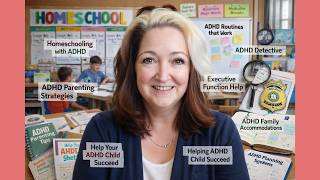
Tami Grgas discovered that Adderall didn't silence the "voices" in her head permanently. After the medication stopped working, her psychiatrist suggested drug holidays. She now takes it Monday through Friday, off on weekends, and is training as an ADHD coach to help others manage symptoms beyond pills.
Chapters
This episode is about me becoming an ADHD detective. When my son was diagnosed with ADHD, and then shortly after I was as well, I thought medication would be the magical answer. Spoiler alert: it wasn't. Today I'm sharing how this crazy mom became an ADHD detective, and what I discovered about helping helping my child succeed. Now, number one, I have told you that I'm a type 1 diabetic in these, and when I first went on the Adderall, I did— like, first off, all the voices in my head went away. Like, all the— the— I, you know, I say that, but it's not really voices, it's my thoughts and, and all the things I need to do and all that stuff. It went away, and I I've never experienced that in my life. I thought that was the fix, okay? And then reality kind of hit me, but it was— I don't know how long I stayed on Adderall, and I didn't take any breaks, and it stopped working, and I started feeling my old stuff coming back. And so went to my psychiatrist and told her that it wasn't working anymore, and she asked me a few questions and through that found out that I didn't take breaks from it, which she had told me to do, but you know, I think you'll do your own thing, you know. And so I took that Thanksgiving off from taking my Adderall, and my brain went absolutely crazy wacky doodle. It really did. I was just a strung-out crazy lady for a few days and didn't know what to do with myself. It was, it was horrible, absolutely horrible. But I did it for 5 days, I went off of it, and then I decided I'm going to take it Monday to Friday and take my weekends off. So that's what I've been doing since then, and it's working much better. Like, I'm— I It's still a little bit weird on the weekends when I'm not on it, but it doesn't get as chaotic in my brain as it did that first time going off. So you can't just stay on it forever, and it is not a magical fix. So, and I correlate this to my type 1 diabetes. When I first found out I was diabetic, I was 19 years old. 19. And number one, I had been passing out in school, not doing good, um, for about 2 years at this point. Every time I'd pass out, I'd go to the doctor, they'd do blood work, they'd say, "Oh, you're fine, go home." I literally thought I was losing my mind. Like, I ended up running away from home. I ended up just going through all sorts of chaos in my life, more than usual, because we lived kind of a chaotic life, and it was just hard. But when my doctor told me that I had Type 1 diabetes, it was scary, but at the same time it was a relief. It was like, oh, I'm not losing my mind. There really is something wrong. And it was basically my body was breaking down for those 2 years and nobody caught it because they didn't know that's how it worked yet. Um, part of me going— I went through an islet cell transplant in 2000, and part of that was them getting scientific data from my blood work that my white blood cells were attacking my islet cells. And that's a big part of them going down that, that kind of funnel to figure out Type 1 diabetes is an autoimmune disease. So kind of thankful for that. Like, I, you know, I didn't stay off insulin forever, but I contributed to science. So it's kind of cool, right? Maybe? I don't know. So anyways, um, when I was up in Canada, I wanted to take control of my diabetes. But it wouldn't let me. And it wasn't until— so I went through crazy life, lots of weird stuff happened, met a dude in the internet, went and met with him, he invited me to Europe, and he was in the Air Force. And that's when, um, I went through the islet cell transplant. Okay. Saw all that, he proposed to me, we got married in 2002, and I went on his TRICARE because I couldn't stay in America without healthcare. I often joke that I married him for his healthcare. But anyways, so we got married, I got an insulin pump. That's the first thing the doctors took care of. Get on an insulin pump, and that is when I started seeing that there were times of the day that I needed more insulin and less insulin. My internal algorithm, if you will, runs differently. And there used to be— so back in the day, you take a short-acting insulin and a long-acting insulin, okay? The short-acting insulin would come up and come down, and that would usually be like a 4-hour time frame. So you took that when you were going to eat, pretty soon. The other one was a longer-acting insulin, which they call your basal insulin, and it would come up and it would go flat line straight across, and then it would come down. And that would— I had to take 2 of that insulin per day, and then the short-acting insulin I had to take before meals. Okay. And the reason that doesn't work for me is because my body doesn't work on a flat line. It goes down, it goes up, it goes down, like— so that's why I could never get control over it. That was what was happening. So for me, that was very eye-opening for sure. And then— So I went on the pump, started getting better control. I'm not going to go further down the diabetes road, but that's what I figured out I need to do with ADHD. I can't just let medication do it. I need to take control. And I had never really researched it. I researched it for— we had foster kids, and I researched it for when we had them in the house, but not as deeply as I'm doing it right now. I'm actually doing training to become an ADHD coach. That's, um, I'm having to coach my son right now with his ADHD, and it has been a real learning curve. Mm-hmm. There's a lot of strange things, but some familiar things to me. I've always had planners. Um, never knew why they didn't work, and now I do, because they weren't broken down how I need them. So I've created my own planner. I have always wanted to be organized and tried to be organized. I have like bins everywhere, I have all sorts of stuff put away, blah blah blah. Mm-hmm. I need clear bins. I need to be able to see what's in it. So that's the process I'm going through right now is, you know, figuring that out for myself. And my son, so he's in college at Wayne State University or Wayne State College, Nebraska. And he— we were so excited for him when he came home at the end of the semester. He had, um, he had done really good on all his exams, like fantastic, and we were so excited. And I didn't know at that time that he had a 2-week, at least a 2-week bout with depression. Couldn't get out of bed. He did go to classes though, like he got his ass out of bed, went to class, went back home— back to his dorm, and went back to bed. But during that time frame, he didn't get a lot of assignments turned in, and assignments are a higher portion of your grade than your final exams. So he's failing, and we— I had no idea how having ADHD and going to college works because we homeschooled. And now I'm seeing— because I never had him diagnosed when he was younger, and I'm seeing that I probably should have, and I probably should have been looking at this stuff. Just getting your child diagnosed does not mean you have to put them on medication. Mm-hmm. And I, I would not have when he was younger. By the time he was diagnosed, he was old enough to make that decision himself. So, so yeah, so right now I am becoming an ADHD coach so I can help my son to come up with a plan. And we found out that the school has, um, like you can submit for accommodations. So we've sent that in with his accommodations. I've got a— let me see if I brought that with me. No, no, no, no, no. I've got papers here. Where are the accommodations? No, no, no, no, no, no, no, no. Oh, here we go. And if you would like, if you're in the same situation I am, I've got this paper here. Just send me a message and, and ask me for it. But this is best accommodations to request. They're common and practical. And we went through these and he's getting a lot of them. I also created a test for him to do. So, the— in the frontal lobe of your brain is your executive functioning. Don't care for the name of it, but that's neither here nor there. And in that executive functioning, it does a lot of things for you. And it has to do with organization, it has to do with mood regulation, it has to do with Um, let's see. Oh, sorry. Um, starting tasks, uh, completing tasks. Like all these things that I've been struggling with all my life. I'm like, holy crow. But I created a quiz for my son to do, and I'm going to use that with my, my coaching clients to help them figure out which ones are their top and which ones are their bottom. So from what I'm learning so far, you take your top skill, like one of the ones that you excel at, and you take one of your bottom skills that you have trouble with, and you try to tie the two together. It's kind of like taking that habit stacking— I don't know if you've heard of that— but taking habit stacking to a new level. Mm-hmm. So for instance, me with my trouble with organizing, okay? I know I need clear bins. I know I need to declutter my house. I know that I need to do these things, right? That is difficult for me, and I attached to that to I am really good with adapting. Um, I'm really good at going with the flow. I can't remember exactly what that one's called, but, um, that's one of the skills too that I'm really good at. So that's what I'm trying to tie to this, and part of that is I bought these bins today and I'm going to adapt and flow with this new thing. So it's, it's kind of, it's hard to, to explain unless you have ADHD, but it's a big thing to attach one of your easier functions with the harder function. It really is. Um, What was I here? Threw my papers down. Okay, so in the next episode, I'm going to share practical systems I developed to create a working plan for my child. And it's so that he can have some college success, so that he can feel successful. But remember, becoming an ADHD detective for your child might help you, and it might also help you to understand yourself better too. Mm-hmm. ADHD is something that runs in families, and I'm pretty sure my son got it from me. And it— I don't know if it comes from my mother, or I, I've never met my birth father, so it could come from him. I'm not sure, but they say that it runs in families. So yeah, if your child is struggling and you think they have ADHD Look at yourself too. Because it might be. So if you want to join me in my school community, the link will be in the description and also in my profile. So I hope to see you there.
More from Tami


When you can't find your phone and your cats know why 😹 #catmemes #funny #fail


Rebel on Two Wheels 🤘#ADHD #ADHDWomen #adhdselfimprovement #relationship #ADHD #ADHDMom #RebelLife