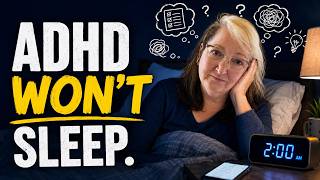
What is dysregulation? And what does it look like?

Tami Grgas got her ADHD diagnosis at 57 and describes a breakdown triggered by a customer interaction while managing two coaching certificates, a full-time job, and caring for her mother, son, husband, and three cats. She uses Adderall, therapy, and coaching to manage dysregulation, and has built apps for military families navigating moves.
Chapters
Hi. So my name's Tami, and I got diagnosed with ADHD when I was 57. I'm now 61. Gone through a lot of changes in my life, but I didn't know that I had ADHD for all that time. And yesterday was a very dysregulated day for me. And to be honest with you, that word wasn't even part of my vocabulary before all this ADHD stuff. I just went through a very intense week of doing trainings with for a coaching certificate from ProCoach over in Australia, which their training, everything about them is so beautiful, but they're a day ahead. I'm in Nebraska and they're a day ahead, so there's this big time shift and you had to be in the training live and it didn't end until 3 AM my time and I still had to go to work the the next day, and I was kind of a hot mess. And I thought I was doing fine with it. I actually made it through, got my certificate. Then after that, I finally finished my ADHD coaching certificate. So now all of a sudden I have 2 coaching certificates, which is cool, you know. I'm excited. I want to find people and help them with this ADHD stuff. Through getting my coaching, I was able to help my son navigate college. I was able to help myself to understand more about ADHD and what was going on in my brain. And I, I don't hide it from anybody. I— I'm also a type 1 diabetic, and Since day one of being diagnosed— this is like 1984, I was diagnosed with type 1 diabetes and put straight on insulin. We didn't have insulin pumps back then. We didn't have all the technology that we have today, which has been invaluable. My big dream in life was to have a baby. I didn't think it was ever going to happen because of the stupid diabetes, and it was very difficult. And then I got on an insulin pump and I had a baby, so that was cool. But I never hid it. I knew that I needed to let people know what was going on with me, especially— there were a couple times, um, I lived up in Canada and I passed out walking down the mall. I worked in the mall at a hair salon and I passed out. The other hair salon that was not really our competition, but they thought they were, it was kind of weird, but they're the ones that called the ambulance for me. Like, it was just— and that was my lesson. I'm not hiding who I am or what I've got going on. So I'm working this job, and I basically started doing it to help the owner out because she was going through a big life change and kind of having some difficulty with that, and I thought I'd help her out in her office. And on the other end of things, I'd make a little bit of money so that I could pay my bills, my business bills. And it was just— so I've been doing that, and I totally dysregulated yesterday. I, um, one of the customers verbally attacked me. Oh. And then hung up on me. Wouldn't even help me to understand their side of it. And I could not stop crying. And of course, the person who had hired me, their first response was, you know, at first she was like, "Are you okay?" Like, she had just come back and I was— came out of the bathroom with red eyes and all, like, been crying. So I was explaining to her what happened, and her first thing she says is, "Did you take your medication?" And I'm like, "Okay, I'm gonna let that go." And then the next thing she says to me is, "Well, you gotta toughen up. You gotta get over it." And I'm just like, "You don't understand." Mm-hmm. This dysregulation is not a momentary thing. And I still had like an hour and a half to work for her. So I finished my hour and a half, came home and went back on— no, no, that was Tuesday. Today's Wednesday. Once I came home and I really started analyzing what was going on, We had a plumbing issue, so I had to get a plumber to come fix the sink today. I, um, I was doing another hair customer's hair, and she kind of gave me some ideas. I also care for my elderly mom. She's in a nursing home now, but I still have to care for her and pay her bills and, and go see her and stuff like that. I've got a 20-year-old son who's at home now. And a husband and 3 cats, and I feel like I have to look after them all. And we were fostering for over 10 years, and through that fostering, I kind of became a bit of a hoarder. So I have all this extra stuff in my house, and I'm trying to get rid of it. I'm trying to clean it up. I'm trying to— clear some split— some space, be able to see the floors, that kind of stuff. Like, I just did this over here, so I just created a nice, more peaceful area in my bedroom. It's a slow road though, and especially with ADHD. The reason I'm up in my bedroom is I told my husband and my son, I can't— I just— I need to go upstairs. I just need to be alone. You can hear my cat. She's a little bit angry right now. I told them I just needed to come upstairs and, and re-regulate or whatever. But I went into work today and I handed in my notice. And I'm just like, I cannot. I've got too much going on. I'm piling myself with too many things, too many responsibilities, and my brain can't take it anymore. I need to put the binders on, like put stop sign, whatever. I need to do something. So that's what I'm doing right now. I'm up in my room. I'm cleaning. I'm going to be starting my coaching business and talking about it more. Because I want to help people with ADHD to figure out what's going on. I do take Adderall, um, not every day because you have to take breaks from it, and Adderall is not a fix. It helps, um, with this— it was kind of a combination of dysregulating and the there's an acronym that goes with it and I can't remember it right now, but it's about, um, I'm extra sensitive sometimes, and that's what that was. My feelings were very sensitive and therefore I cried for quite a while. Couldn't stop. It was not fun. And so yeah, I'm— going to be taking life into my own hands again, like I've done before, and I'm okay with that. Um, a big part of having ADHD is taking accountability for your mistakes, apologizing for them, which sometimes I do a little too much because I feel really guilty about some things, But I'm learning to share my story now. And that's what I'm doing now. Um, if you're someone who has ADHD, or you think you do, you haven't been diagnosed, go talk to somebody. Um, I went to a therapist because my son was 17 years old. 17. When he went— started going to a therapist and he was diagnosed and he kept telling me to come and I was, you know, being the resistant mom, saying, "No, I don't. No, I don't. I'm fine. I'm fine. I don't have ADHD. Are you kidding me? You have it. I don't." Then he had me take one of those ADHD tests and my scores were off the chart and I was just like, Wait a minute, what the heck? So then I went and saw a therapist and she was pretty sure I had ADHD as well. And in order to be properly diagnosed, you have to go see a psychiatrist and then they can prescribe you medication. So this is when I was 57 and I went on medication for it and Honestly, I, you know, I've been dealing with the diabetes forever and I just didn't want another medical diagnosis to deal with, so I thought, "Well, the ADHD will fix it." I stayed on my ADHD meds for probably 2 and a half years without taking a break. Not a good idea. If you don't take breaks, you kind of— your body gets resistant to it and then it doesn't help as much. I remember when I first went on it, my first thought was like— because I always had all these thoughts in my head, okay? At the time, I thought they were voices in my head, but they are my thoughts. So it's like I tell people I have voices in my head because that's how it felt, and I got a lot of strange looks, but nobody ever went deeper on it with me. They just kind of— like doctors and the whole thing, like, I have voices in my head, and they'd be like, Oh, you're fine. So, um, but they are my thoughts. And for the first time in my life, when I first went on the Adderall, they were gone. And I was able to concentrate. It was just this huge, like, holy doodle, what the heck. And looking back on my life, I was hit by a motorcycle when I was in 3rd grade, suffered a traumatic brain injury from that. I became dyslexic, and I struggled in school all through my life. I, I was your average C student, and I'm pretty sure they pushed me up to the C. because I just, I couldn't. And I was always, in my family, I was, they didn't call me dumb. My brother did call me stupid a few times, but you know, he's a boy, what can you expect of them? But I was labeled the delicate child, the the not resilient child because, you know, I was hit by a motorcycle. And I also, I don't know how this all correlates, but I'm missing a muscle running from my left thumb all the way to my elbow. So I can't bend my left thumb like normal people. It's straight all the time. And it's because it's missing that muscle. And they didn't figure that out until after the motorcycle accident. So I don't, I don't know. The— I was— they did all this electric shock therapy and stuff to find out if my muscles were still deteriorating. Big words. And it was determined that they weren't, but they couldn't figure out why that had happened. And my hand and my story are in medical records up in Canada. As, like, what the heck, we don't know. And that was— gosh, that was in the 1970s. So yeah, like, I've had it all my life, but I didn't know it, and I did not take full ownership of it until after I was on the Adderall for quite a while and then it stopped working. And it was then that I realized the Adderall does not fix it. And it was then that I realized my son needed help. I homeschooled him all through high school. He's a brilliant young man. Oh my gosh, absolutely brilliant. and I love him so much, but he decided to go to college because he wanted to study film production, and Wayne State out in Nebraska here had a great— like, their program, phenomenal. So we got him into college. So I got my son, graduated high school, going to college with my not understanding ADHD brain damaged crazy life. And so he goes to college, and that first semester he was doing good until he had a depression hit him. And he apparently— I didn't know until later, but he couldn't get out of bed for like 3 weeks. Mm-hmm. He would get out of bed, go to class, go back to his room, go back to sleep. And that's what he did for that time frame, so he never got any of his assignments turned in. So he did— we had— I had turned him around for finals. He did really good on all of his finals, but because assignments weren't turned in He ended up failing, and he was devastated. So was I. And then I kept coaching him with the ADHD. We, we talked about executive functioning, what works, what doesn't, and there's ways that you can work with your strengths and your weaknesses to help yourself. And there's some things that you just admit you can't do. Mm-hmm. I mean, sometimes my memory is not so great. Um, I dysregulate and I need to have personal time to calm myself down. If I don't, then it just keeps going and then I end up having to do these crazy push-the-wall exercises to reset my brain, which is a real thing. But I got him— he went back for the second semester and he was doing way better. He was getting his assignments in, doing everything he needed to do. But it was in that time that he decided college wasn't for him. He basically said to me, "Mom, I've learned everything I need to know about film editing right now. I just want to come home. I want to find a job." Mm-hmm. And he is going to be editing my videos and helping me with my content, and I'll be paying him for that. And that's kind of the road he wants to go down. He wants to be an editor. He doesn't want to be the videographer. He doesn't want to be the sound production. He wants to be the editor. So that's what he's working on right now, and he's working on finding himself a job. Mm-hmm. Because, yeah, you know that whole health insurance thing? Yeah. So yeah, like right now, just talking about this, this really is a huge key. And, um, I lived a very, uh, crazy life before meeting my American Airman. Moving to Nebraska— oh no, actually, I moved to Tucson first. From Edmonton, Alberta to Tucson, Arizona. Got married, went on an insulin pump because of the military, and then got pregnant through infertility and moved to California. Then we moved to England Then we moved to Nebraska. Then he retired. Then we moved to D.C. Then we moved to upstate New York. And then we moved back to Nebraska. I learned a lot in all those moves. And I had made a huge, life-changing decision to move away from my toxic family up in Canada. And here I am. Hi. I am enjoying a wonderful life down here, and I want to help other moms who are homeschooling and have ADHD. I want to help them to be able to care for themselves through this whole process. And a big part of that, um, because I want to help who I was So I want to talk to the military moms. I want them to know that PCSing is freaking hard. And just for all those that don't know, PCS means Permanent Change of Station. It means you're moving. And for us, it was moving every 2 to 3 years. Um, on average, I think it's every 2 to 4 years, but there are some people that never move too. So I'm I don't know. I don't know how they make those decisions. It's— I think it's a roll of the dice, and apparently you get a dream sheet, but I don't know how much I believe in that. We definitely didn't get our dream of going to Germany after we were in England, but you know, what can you do? It's— It's out of your hands. And one of the things that I learned When we were in California, he was going to the Defense Language Institute in Monterey. And that's where I had my son. So my life was all about having a healthy baby boy, which I managed. Yay me. And so one thing that civilians don't get 'Cause even though I'd been married to Paul for a little while, like for close to a year at that point, I still didn't get it. And even when we moved to England, it still took me that time in Europe to finally understand. The government owns them. Mm-hmm. They don't have a say. Like when they told my husband that— so we moved to England. First of all, they told him, "You need to do a new language. The language that you're doing is no longer supported. It's not part of the mission. You need another language." So they sent him to Monterey to learn a Taliban language. Then we knew we were moving to England and we were excited about that. And he deployed. He was gone for— let me see, he left just before James turned 1, which that part I was okay with because we had just gotten there. It was just before James's first birthday, but we did our own little thing. He was only 1, you know, he's not gonna remember any of this crap, so I was fine with that. But The hard part was he would deploy for 3.5 months and then be home for 2.5 months and then deploy for 3.5 months and then be home for 2.5 months. And that went on the entire 3 years we were there. And that made it hard. But the thing that made it really cool is the tight-knit community that they have. And I became part of that system. I became a Key Spouse and I learned a lot about being the spouse of a military member. And there was a lot I didn't know. I mean, I'm a Canadian girl, like holy crap! But I just want to share my knowledge with these homeschooling military moms and help them navigate this craziness, because it is craziness. And there are tools and systems that I've come up with, and I've been able to make them even better, um, with this whole AI stuff. So I have actually developed 3 different apps that I want to have some moms test with me. Um, one is pre-move, you got your orders, time to get ready, time to figure out your timeline. 2 is when the packers arrive, because that's a hot mess. Like, I don't know about you guys, but the first time someone came packed up my crap, I was like, "No, you're touching my stuff!" I'd always packed my own stuff. All of a sudden these people are in there throwing my stuff around, and we actually lost, um, a quilt that my mother-in-law had made for us. It was our wedding quilt and it went missing and a bunch of other stuff went missing and somebody on their team packed jars of pickles and they ended up exploding in the freaking boxes and soaking boxes and we had to throw a bunch of stuff out. Like, it was just— that first move, I was a hot, hot mess because I didn't know what was going on. and I had just found out I was pregnant, so it was just crazy. So yeah, then I was a little bit better when we moved to England because I had a better plan. We also had to sell a vehicle and take my husband's vehicle to a place where they were going to ship it overseas for him, and you know, there were a lot of moving parts And he was doing his final tests at the Defense Language Institute. And it was just, you know, we were going to go to Chicago first to see his family so they could meet baby James. And then we were flying over to England and living there. And, you know, there's all sorts of little hot messes that happened. But I've just learned systems and tools. And one of the biggest things that we're never helped with, really, especially when you're stateside all the time, is finding your new community. Finding the new people that you can belong with. One of the most hurtful things that happened to me— and it wasn't anybody's fault, it was just the reality of this lifestyle, okay? My best, best girlfriend when we were in England— I might start crying here— she lived next door, and her son was 6 months younger than mine. We spent so much time together. We bonded so well. It was just— Julie was wonderful, and her husband Mike, um, he and Paul would be deployed sometimes off schedule, sometimes the same, like it depended. Things changed all the time. And, um, Mike retired from the Air Force while in England and they moved away. I was left behind. I was devastated. I had never experienced that before. I was always the one leaving. Nobody had left me. It hurt. It was hard. And getting over that, I, you know, you have all these other friends that are like, "Come on over, you and James, come over and let's have a playdate and let's do this and let's do that." Mm-hmm. Say yes. Do those things. When you get invited by somebody to bring your child over and have a playdate, do it. You need to socialize because I shut down. And now I know part of that is ADHD as well, but at the time I didn't know that. I just knew that it hurts so much. And I missed her so much, and we have reconnected on Facebook since coming back stateside, so that's great. But I haven't seen her in— gosh, since— it's got to be 18 years since I've seen her. And I still miss her. It's hard when you go through that kind of stuff. And maybe some of you moms are like, "Pfft, that's just normal." Um, it wasn't for me. You know. And after that, I've never really connected with others because of that. So that's a skill set I'm working on right now too. So yeah, I would love to connect with any of you. homeschooling military moms who have ADHD and get to know you, have a conversation. I have a Facebook group and a school group that people can come join, and we can just talk about life and whatnot. And hopefully I share enough value on my YouTube channel that you'll gain some skills and some ideas through this. So that's why I'm here, and I want you to know that I love you. I'm an older version of you, and I'm still kicking, and I want to help. So if you're wanting help, let me know. Thank you. Even if it's just a conversation, I'm okay with that. I'd love to give you some tools to help get through things. And that's what— so the third app that I created is about creating your community and finding your friends, which I have to say I did do more for my son because I never really found— I found a couple of friends uh, one in D.C. and one in upstate New York, but we've been the longest in Nebraska here, and I haven't found that one friend. I don't know, maybe she's hiding on me. I'd hide from me sometimes, so I get that. So, sorry for getting all teary and stuff. This is me in dysregulation, so— Yeah, and I'm gonna be showing up raw and as me. So this is my reality, and I want you to know it's okay. It's okay to have these raw moments. And yeah, just reach out to me if you want to talk or just say hi or just find out what I'm doing. I hope you have a great day. Thank you. Thanks for listening if you hung out all this time. And if you do send me a message and say, "Hey, I'll test your app," let me know which one you want to test. Pre-move, during the move, or after the move. Those are the 3 that I got, and I'd love to gift them to you to basically give me some feedback on what you think and if it helped you or not. So yeah, just let me know in the YouTube comments, wherever that is. This way, that way, I don't know. I'm gonna go make a thumbnail now because I have to figure that out too. Bye! Bye!
More from Tami

When you can't find your phone and your cats know why 😹 #catmemes #funny #fail


Rebel on Two Wheels 🤘#ADHD #ADHDWomen #adhdselfimprovement #relationship #ADHD #ADHDMom #RebelLife