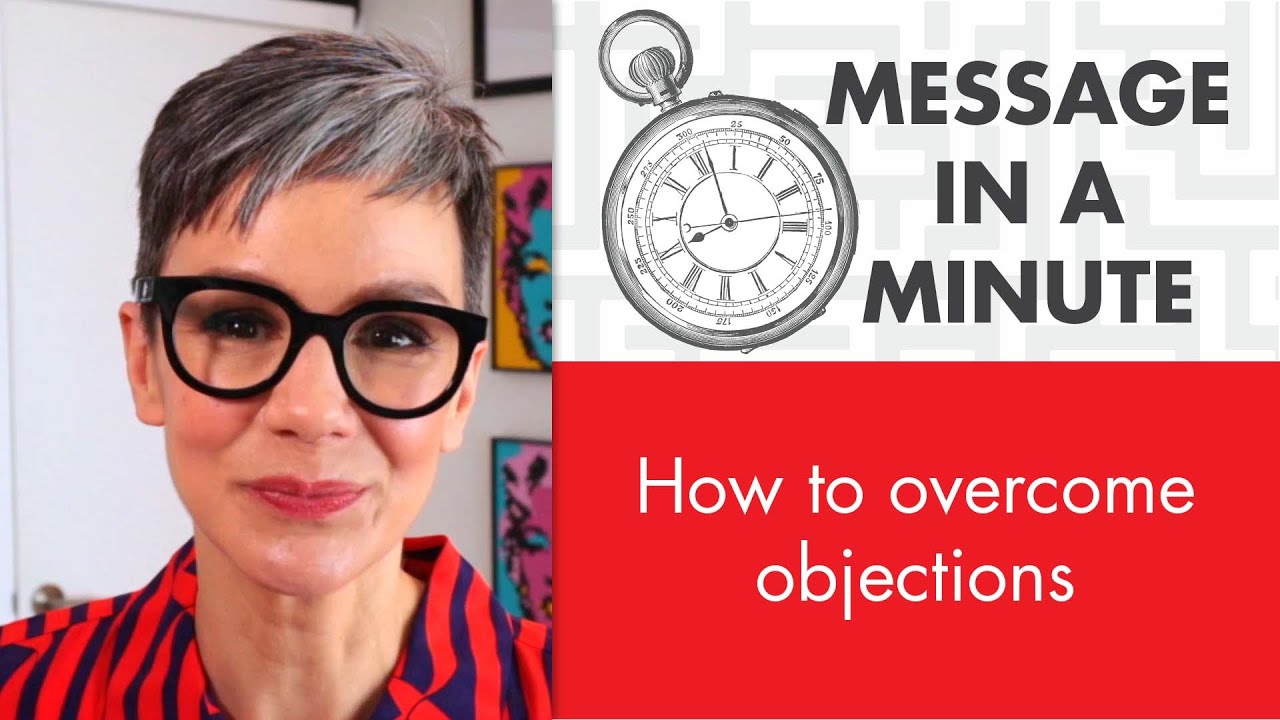
This content was created by Tamsen Webster. This content was uploaded by Tamsen Webster. This is a YouTube video titled "How to Overcome Objections | Message in a Minute" (published April 27, 2022) featuring Tamsen Webster presenting a short instructional talk about messaging. In the clip Webster explains that objections are actually deflections from harder questions (e.g., “How does this work?” or “Does this align with my beliefs?”) and advises communicators to build the skeptic's story by explaining the why behind the what and the why behind the how so audiences can see alignment and make a decision without objections. The excerpt functions as a brief marketing/communication lesson and promotes Webster's website and book.
Chapters
We spend a lot of time trying to use our messages to overcome audience objections so that they'll then decide in our favor. Except that isn't how it works. I'm Tamsen Webster of tamsenwebster.com, and on this episode of Message in a Minute, we're talking about how objections are deflections. Deflections from a harder question that someone is struggling to answer, like, how does this actually work and why is is that the right way for something to work? Or from an uncomfortable answer that they have to the question of your idea. Something along the lines of, does this really align with what I want and believe about the world or about you? Now, as long as the story makes sense, what somebody's telling themselves, then the decision will make sense. But you're probably saying to me, but that's what I'm doing. I'm telling them all the reasons why this thing makes sense and why their objections don't make sense. Except you're coming at it from the perspective of someone who has already been convinced that that idea is the right one. So if you really want to overcome objections and actually keep the objections from arising in the first place, build the skeptic's story. Build the story that someone who isn't convinced about your idea would tell themselves and would come to the conclusion that your idea is the right one. To do that, they need to not only understand the why behind your what— why are you producing this thing? Why does the idea exist in the first place? But the why behind your how, how you arrived at that idea. Because it's that, the why behind your how, that tells people not only exactly how your idea works, but whether or not it aligns with how they see the world and what they believe. And it's that kind of alignment that creates the decision that takes the objections out of the picture entirely. Thanks so much for watching. If you wanna learn more about this or about any topic related to messaging in general, visit my website at TamsenWebster.com. Tamsenwebster.com, or pick up my book, Find Your Red Thread: How to Make Big Ideas Irresistible, at tamsenwebster.com/book.