Tamsen Webster explains her Red Thread framework for crafting messages that inspire action. The framework has five core pieces: goal, problem, idea, change, and actions. She introduces a sixth element, the goal revisited, which reframes the original goal with added benefits to drive thought, feeling, and action.
Chapters
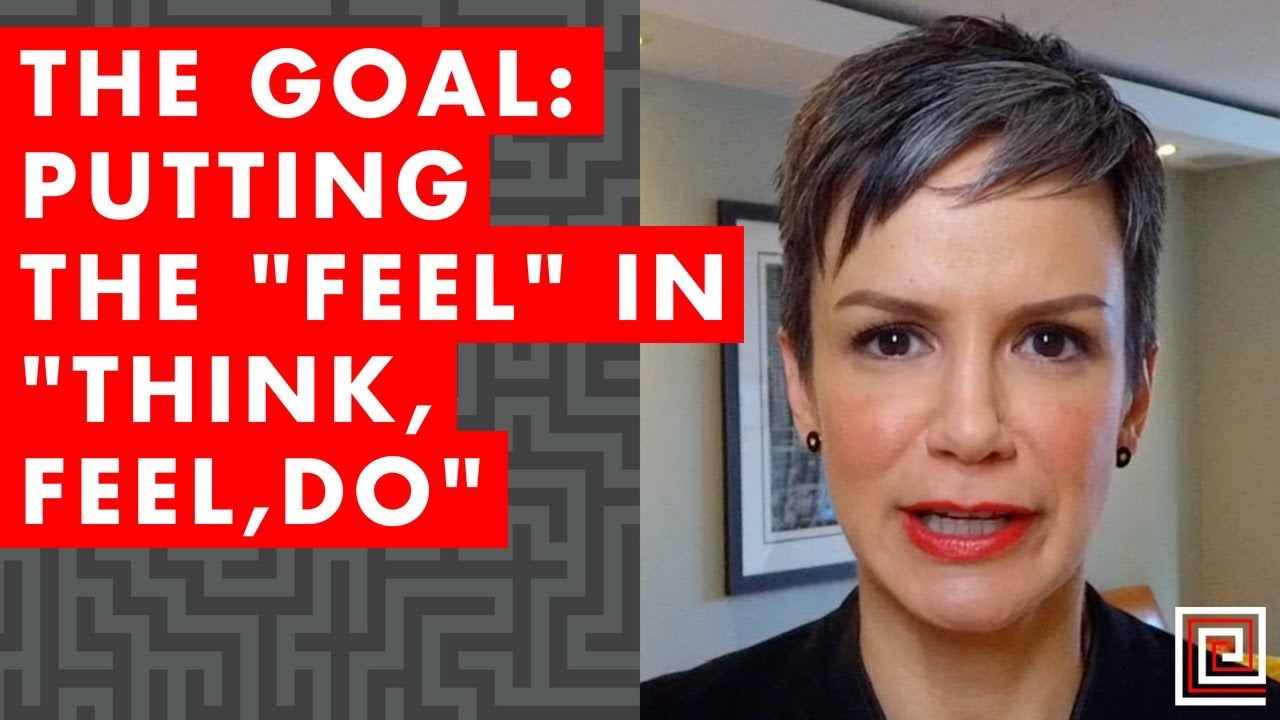
There's a lot of advice out there about making sure that you're asking yourself, how do you want people to feel as a result of your message? And it's not a question I typically ask because we pretty much always know the answer. It's, I want them to feel inspired or motivated or empowered. In other words, those three at least are table stakes for any great message, any irresistible idea. If people aren't motivated and inspired and empowered afterwards, what are you there for? But there is still that question, how do I make sure that they feel that, particularly right at the end of the message? And it's for that reason that I added this 6th bonus episode on the details of the Red Thread. I'm Tamsen Webster of TamsenWebster.com, and that's this week's topic on Find the Red Thread. So of course we want to end on a strong note. We want people to think about things differently. We want them to do something differently. And yes, of course we want them to feel motivated, inspired, and empowered to do it. And I'm hoping by now you realize you have all the pieces to that. It's the pieces of the Red Thread. We have the goal, which is that irresistible outcome sitting over on the other side of a gap that the audience wants. The problem represents that gap itself, the one side of thinking that they're on and the other side of thinking that they need to adopt in order to close that gap in between. And we've also introduced the idea, this incontrovertible truth, this fundamental belief, value, piece of information, discovery that makes leaving that gap, that problem open, impossible. And of course we say, well then what is the change? What's the thing that's gonna close that gap permanently? And the actions, how specifically do we do that? So that's all well and good. We know people have the information to get where they're going. So how do we get them to feel about it? Well, to do that, we need to go back to why people ask that question about feeling in the first place. Usually it's in the context of asking, what do you want people to think? What do you want them to feel? What do you want them to do? And the reason why we ask those questions together is because those three things— thoughts, feelings, and actions— are incredibly intertwined. Any one of those will affect the other two. If you do something different, it will affect how you think and it'll affect how you feel. If you think something different, it'll affect how you feel and affect how you do. So it's a thing that we talked about a lot back in my Weight Watchers leader days. We would talk about if you felt that you were depressed or sad about something and you thought, there's nothing I can do about it, then you are going to do something that's consistent with that thinking and that feeling. But if you could change, for instance, how you thought, you can say, "Well, I'm sad about this, but it's normal given the circumstances," then that might change your feeling, which is, "Oh, okay, well, then I'm in a normal state," which may change what you do as a result. So back to the message, though. How does this help us make sure that people feel strong and empowered and motivated and inspired? Well, because remember, in order to close that gap of the problem, in order for the audience to go from where they are to where we want them to be, we have to make sure that they've got everything they need to go. They need to think that it's going to work for them. They need to feel that it's going to work for them. They need to have the confidence. So by giving them all the pieces of the red thread, you've done that. You've shown them exactly where they are, where they need to go, and why and how. And so they know that, but at the end of a message, you wanna make sure that you remind them of that. That's really important, which is why you wanna go back to the goal and say, look at what this all adds up to. We want to show them that they have all of the tools and that those tools add up to something even bigger than they imagined in the first place. That's where the inspiration comes in. Here's what I mean. Remember back when we were talking about the goal, one of the most common mistakes, of course, is that we want to put our goal in the place of the audience's goal because we know all this extra stuff that makes our idea irresistible. We know that in addition to a good process for doing X, Y, or Z, it can in fact lead to greater health and happiness with something. But if the audience isn't walking in looking for that, we can't really use it for a goal. But we can use it here for this thing that I call the goal revisited. Here's what that means. You basically, at the end of a red thread, you want to think to yourself, what is the goal plus the benefit that going through all those steps will have for the audience? What is that bigger version of the goal? So think of this as the 6th piece of the Red Thread, even though it's really going back to the first one. But when you put your message together, by including that goal revisited, that larger version of the goal, you do those 2 critical things. You show people that they have gotten what they wanted in the first place, and you've shown them that something else is possible with the tools that you've already given them. And that, my friends, is a recipe for inspiration, motivation, and empowerment. So that's the way to finish out your Red Thread: goal, problem, idea, change, action, goal revisited. And every time you will turn that idea into action. I'm Tamsen Webster of TamsenWebster.com. I hope you've enjoyed this mini-series here within the podcast and broadcast of this blog. Let me know, uh, in comments, on my contact form on my website, TamsenWebster.com/contact. I'd love to hear from you.