S2 E2: Dr. Min Kwon—Concert Pianist, “America the Beautiful,” & the Center for Musical Excellence
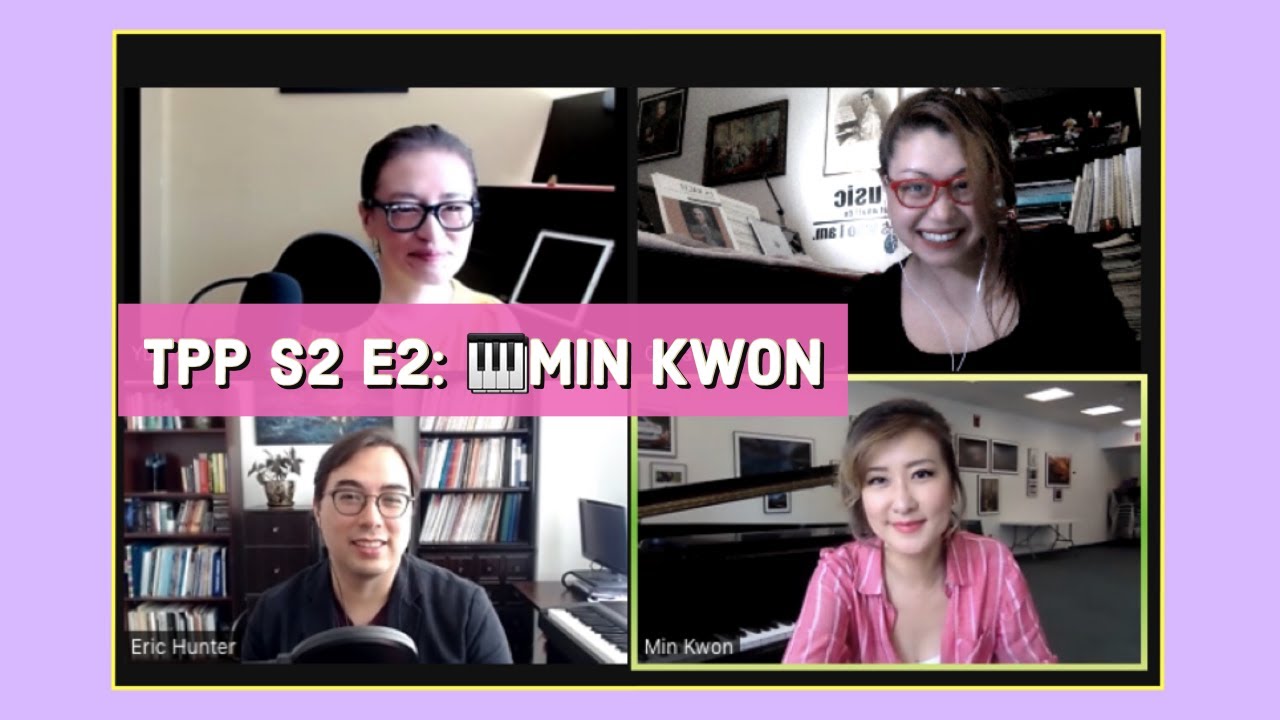
This content was created by The Piano Pod with Yukimi Song. This content was uploaded by The Piano Pod with Yukimi Song. This is a YouTube podcast episode titled "S2 E2: Dr. Min Kwon—Concert Pianist, ‘America the Beautiful,’ & the Center for Musical Excellence" (published 2021-09-22). The excerpt is an English interview/conversation on The Piano Pod with Yukimi Song featuring hosts Clara Zhang, Eric Hunter, and Yukimi Song, with guest Dr. Min Kwon. They discuss Kwon’s background (Korea → Curtis/Juilliard), career highlights, touring and teaching, her "America the Beautiful" project commissioning new works, the Center for Musical Excellence nonprofit, immigrant/identity experiences, and working with contemporary composers and students.
Chapters
Welcome back to The Piano Pod with Yukimi Song. I am Clara Zhang.
I am Eric Hunter.
I'm Yukimi Song.
Today our guest is Min Kwon. Korean-born American pianist Min Kwon excels in versatile career that encompasses concerti, solo recitals, and chamber music appearances, while in high demand around the world as a pedagogue. Art educator and administrator. She has held professional engagements in over 60 countries on 7 continents and all 50 U.S. states, and currently is a professor of piano at Mason Gross School of Arts, Rutgers University, since 2002. Dr. Kwong is also the founder and the director of the Center for Musical Excellence, CME, a nonprofit dedicated to mentoring and supporting gifted young musicians. She served as co-director of Vienna ConcertoFest in Austria and is the first music alumni to have been invited to serve on the Juilliard School Council in New York. Ann Ming Kwan is also a Stanley artist. Thank you so much for joining our show, Professor Kwan. It's such an honor to have you.
Hello.
Welcome. Hello. Thanks for having me. It's always a pleasure to be with fellow pianists and piano teachers.
Absolutely. Thank you so much. So how was your summer? I saw you were in Vienna for a while.
Yeah, I had a very, very eventful summer. A lot of it was dedicated to my project, America Beautiful.
Right.
And once it premiered, I think around July 4th, that week, I immediately, I left for Austria. Where I go every summer for a festival there. And then I got to have a little free time after the vacation that I really, really needed with two of my girls, and I just got back not too long ago.
So, oh, that is so, so wonderful. Welcome back. Thank you.
You too.
I know, you were like a dream, right? So anyway, I want to, uh, tell our audience a little bit of how we met. Really, actually, today is our very first time meeting face to face, even on the internet, but I I feel like I've known you for a very long time. You probably didn't notice me, you know, when I was much younger, but when I first moved to New York, like 13, 14 years ago, I remember meeting a clarinetist. And I, on that same day, I somehow came across, I think, Performance Secure online. And I was telling this, you know, new friend, I was like, oh, I really like this pianist. And then he was like, oh, her students all accompany me. I'm doing my DMA at Rutgers. And I was like, wow, that's so cool. He said so much great things about you. And so that's in the beginning, and then eventually we got connected through social media. And, you know, internet really brings everybody together. And later on, I actually became a big fan of your sister's YouTube channel as well.
Oh, I see.
Right. So I feel like I've known your family and your just passion for music so much. So anyway, thank you, thank you for that.
Thank you for your enthusiasm. I love that.
Obviously. Yeah, thank you. So now today, the biggest thing we really want to talk about— that we want to talk about so many things, but, uh, well, let's start from your beginnings.
I—
we would love to know what was your background like. I know you were born in Korea and you came, um, how, how was it like?
Yeah, uh, well, I grew up in a very musical environment because my mother was a piano teacher and she was someone who specialized in very young children actually age 3 and up, and she was so gifted in, in teaching them and make just music be part of their everyday life, you know. And she had no intention to teach me, and but I just grew up with all of her students coming to our house all the time. And I think it was actually when she was out, she had an assistant teacher, and the assistant teacher found me at the piano and, you know, trying to play it by ear. And also I heard that whenever her students, my mom's students, would make a mistake, I would always go like this, you know.
You had a very strong perfect pitch.
And then they discovered, yeah, I had perfect pitch. So that's my sister, actually. And then I think I kind of started playing piano and then violin and cello. And, you know, I sang in a choir. I mean, it was so So very, very natural for me. And it only, like, maybe when I turned 11, 12, and, you know, there's a very famous art school called Yewon in Seoul, and I think I wanted to go there, and my mom said, you know, you have to pick one instrument. This is just getting too much.
Right. Too many choices.
So that's when I picked piano.
I see.
And became serious with it. And then just a couple years later, I got into the school. Year 1, it's art school with music, dance, and pre-college program, except it was a middle school every day thing. And then after a couple of years, maybe not even, I came to America and I went to Curtis. And that's where it all began.
Wow. That is such a fun, actually, experience from the beginning. Sometimes I know a lot of musicians, we are— I grew up in the long, long generation in China. So we were kind of given one instrument. If you do it, you do it Well, otherwise you don't even do it, right? So you had many instruments to choose from, it seems like. So that's very exciting. And I do want to know a bit more of your days in Curtis and at Juilliard. And I know you were the first, or the only, counsel for Juilliard later on, right, when you became alumni. How was that experience coming from Korea in the very beginning?
You know, so when I was in my teens, early teens, I had already made debut with the orchestras and, you know, getting into really what it is to be a musician, and I really wanted that. And I remember reading music magazines, and it was first in Korea also, called Auditorium, and there were such glorious stories and pictures of conservatories in America. And of course, I dreamt of going there. And there's a little funny story. And of course, to send a 12, 13-year-old abroad alone, I mean, that's not a reality for many, many families. And— but I was very lucky that my father, company that he worked for had these branches, so he had an opportunity to go work abroad. And I remember him knowing my, my desire and wish to go abroad and study at the time. First, he was assigned to go to Norway, Oslo, Norway, because he worked for a shipping company, shipbuilding company of Hyundai. So Norway. And I remember saying, "You know, Norway, I'm not going there. No way, Norway, no, no. I'm gonna go to America. I'm gonna go to Curtis." So he turned that down. And then the following year, or, you know, and then he said it was London, you know? And you know, now looking back, of course, any of those countries would've been, Fine, but I was very stubborn about going to Curtis, so we said no to London. And then finally he comes, yay, New York, you know, New Jersey, New York. So that's, that's how we came, and it was just like a month or two before the audition time at Curtis. So I remember really like, you know, cramming to, to prepare the audition pieces and all that. And then once I got in, I remember my teacher at the time was Eleanor Sokolov, God bless her. She was 106 and she just passed away last year.
Oh, I'm so sorry to hear.
And when I first went to her, she was in her 70s and I thought she was old then, but you know, old by age. But you know, she— you know, my lessons with her was at 7:30 AM.
Can you believe it?
Because I had to go to middle school, high school after my lesson, which started at 8:45. So she squeezed me for lessons 7:30 AM. And you know how brutal that is? When it's wintertime, especially waking up pitch dark.
And Philadelphia.
Anyway, yeah, but she was always like prepared. I mean, with her— she has the signature hat.
Yep.
And yeah, and all always beautifully dressed and makeup and just perfect. And then sometimes, you know, when I first started this 7:30 lessons, I would get up at 4:30 Wow. Practice, you know, and then go. And then little by little, I got lazy, and my alarm— I would miss my alarm. Then sometimes, like, at 7:25, I would wake up, oh my God, and I would run to my lesson. So those are my fun memories of my early days.
Now I want to, uh, basically going into the project you've been doing, I, I assume it's because of all this early childhood experience as a musician and with all the fun, greedy, that perhaps that the idea came up. But you can tell us more about this beautiful project you have started, American Beautiful, on July 4th, and which I believe is one of your daughter's birthday as well, right?
Yes. Wow, Clara, you've done your research. Yes, thank you.
I'm curious, a person. But I would love to hear more.
You know, I think I've always had this curiosity and desire to program, make concerts, or create something, an idea. That's always what excites me. So even when I have this much younger sister, as you know, you said you follow her YouTube.
That's right.
So she was kind of like my guinea pig, and I was teaching her to play violin, but also we would always transcribe or putting on a concert with different theme. So this kind of passion continued. So when I became a professor at Rutgers, every year I decided to put on concerts with the students, piano studio.
Right.
So having this kind of coming up with themes or storytelling is just kind of part of what I do. And I think as my job as being a musician or artistic director. And of course, later with CME, I know we're gonna talk about that. Also, I had to put on a lot of concerts, produce concerts. So America Beautiful is actually just kind of natural outcome of what I do. I think about 5, 4 years ago, I did a concert at Carnegie of Diabelli's Unknown Variations, we called it. So, you know, you all know about— everybody knows Beethoven's 33 Diabelli. But at the time, Diabelli actually commissioned 50 other composers. That were active in Central Vienna to write a variation on his little theme in C major, right? And they are just actually very, very charming. There's a whole variety of— there's Franz Liszt, Schubert, Hummel, you know, to people now who are forgotten. But it's such a fun spectrum of hearing these 50 pieces in concert. So we did that. And also at the time, we commissioned— we had a little competition at Rutgers with composition department and asked them them to write new variations. So we mix the old with the new. I find these things always very, very fun. And also getting as many people involved as possible. So I think this communal aspect of music making, and I think that's one thing I really disliked about being a pianist is that you always spend so much time alone, in solitude, practicing alone. And I wasn't always, but I'm a very much people person. I always wanted to be in the orchestra. That was one problem with being a pianist.
Right.
So I don't want to sidetrack too much, but I actually auditioned to be in Chicago Civic Orchestra, which I was principal keyboardist for 2 years, and then Florida Philharmonic, and even Los Angeles Philharmonic to be the pianist in the orchestra. That's how much I wanted to be a part of a group. I wanted to belong somewhere with my fellow musicians. So putting on these concerts is, is a pretty natural thing for me. So after diabelli, I've always been wanting to create 21st century American diabelli of sorts. And I— because I really believe America is the creative melting pot and so many interesting things are happening on a daily basis, right? And then that idea kind of was, you know, growing inside of me. And of course, the pandemic happened. I had, I think, already started contacting some composers. And then with pandemic, that, that stopped kind of everything for everyone. Of course, I also had a few months of slump, depression, everything, you know, being canceled, teaching students via Zoom. This was no fun, you know. I think we all went through that. And then I thought, wait a minute, there has to be something that we can do. And I wanted to do something with a lot of people together because, you know, you make a stronger statement as a mass instead of individual. And also there are a lot of, you know, frustrating, depressing things happening every time you turn on the news. And we were all watching in our own bedroom, in our corner, just being, you know, sad or angry or confused about the status. But then can we do something positive? Can we turn it around for something new and creative? And mostly because, you know, my kids were home virtual schooling. They are too young to understand what is going on. When they grow up and read about the time 2020 or pandemic, is this all they're going to read about? You know, why don't we create something that in 2020 this also happened? So that's what America Beautiful Project is. So I started reaching out. First, I started with listening to a lot of these composers that I hadn't really paid attention to. Or, you know how we are, we get very busy, and we are so lucky playing music from 200, 300 years old. So we don't really have to, as pianists, look into explore the new music that's being written every day. And— but I think pandemic really gave me the time now to do that, and I really enjoyed that experience. For me, it was my outlet for connecting with outside world, other musicians, and then calling them, Zooming with them, talking about the music and what we can do together. So that's the result. I've asked America, you know, 75 now. You know, I wasn't going to do that many. I was— maybe 50 would have been the dream number because that was the Abely's number, 50. Sure. But then it just grew and more people came on board. They kept saying, you know, many said no also, but many said yes.. And I simply asked this, you know, it's like a musical diary, or, you know, what do you feel about America today?
Right.
You know, and I think it's a really beautiful snapshot of the time, very intense time that we experienced together, because, you know, they were very honest also. And that's what music allows us to do, you know. Some music is very angry, some is very poignant, and sad or distraught, and some is still very beautiful and hopeful. And so it's been such a privilege to get to know these composers and to learn their language. And so I'm still in the process. So we premiered quite a lot virtually only. It's my dream to be able to bring that to, you know, everyone around the country. And we are starting to do that in the fall. And another batch of maybe 10, 12 more composers, including Tanya León, who is the this year's Pulitzer Prize winner, and many other wonderful composers are in that premiere.
So just sorry to interrupt, but I'm just curious to know, so all these composers are arranging this piece for their own interpretation? Is that what it is?
Very good question. So no, it's— they have rewritten. So it's kind of, you know, I left it very open for them. But it's not simply rearrangement of the tune. It's more the America the Beautiful, the song is there to give kind of like a common ground and as a starting point. But it's everything, the lyrics or the melody or rhythm. They can use whatever the element that catches them. But these are completely new pieces. And some actually you cannot even recognize. And some, of course, composers use some materials from the song, and some used to depict certain lyric words that really touch them, you know. So there's a whole lot of variety.
I see. So out of all these Americana patriotic songs, including national anthem, so what's the reason you chose this specific piece, specific song? I love the lyrics, you know, but what was the reason behind it?
Well, I mean, I was looking for something that was very American, something that everyone can, you know, recognize or relate to and identify with. And also I wanted to reach public audience just beyond the small circle of classical music or new music lovers. 'Cause that's what as musicians we should be doing every day anyway. We shouldn't just be playing for each other and reach that same how many people. I consider my day very successful when I'm able to convert non-classical music lover to be curious about what I do and to listen to one of my recordings or come to my concerts and become a fan. So in that regard, "America the Beautiful," everybody knows. You know, you've heard it in, you know, football games and inaugural— inaugurations or any in-school, you know, important occasions. And they all kind of have a memory or something that they can identify with. So that— and then coincidentally, it was— the length was perfect to be a theme for a variation. It's short enough. It's simple enough. And yet there are intervals and— like there's enough for composers to take from. You know, as a theme, you can't have such a complex piece of music anyway, you know. And the lyrics, as you mentioned, is very meaningful, very hopeful. It's an idealistic version of America. But why not start there, you know, because there was enough darkness around us.
At the time, I mean, that's how this country started anyway, with hope and a dream, right?
Yeah, yeah. And of course, it's a work in progress. The country is still, you know, and the fact that we are so many people that come from so many different backgrounds, that's the biggest challenge. I think that's our, our biggest strength also, at the same time a challenge, the fact that there are just The country is so big and there are just so many different kind of people with different belief system or the culture or traditions that they bring to this country. But there has to be a way to come together and make it our strength. And it's really something to celebrate our diversity, right?
Right. I have to say that when I first watched the CBS premieres on YouTube of your shows, I mean, of these concerts, I was— especially the one in Brooklyn, I believe it was in the cemetery, right? It was so beautiful because I think Yukimi and I both became American citizens within the last couple of years during the pandemic. You know, I did right before and she did just recently this year. So it's, you know, in a way it's very interesting, right? Because some countries like Europeans, I think they can have dual citizenship.. But for me as a Chinese, I kind of have to let go of the Chinese and to become American, which is, you know, it's a choice. But sometimes— and I have always sort of knew I was going to come to America since I was 3 years old, but still, right? It was an interesting, you know, beginning for me as well. But when you actually finally do it, you do have to ask, you know, what does that— this mean, right? Like, I might— so, uh, I want to know, how was your experience as an immigrant and a female, especially, you know, in the very beginnings? And I know you accomplished so much, and you play with your sister, and she is a beautiful violinist. I think in the beginning I probably knew her work even a bit more than yours, and then I came across both of your work. So how was it like in the very beginning when you first came?
Um, well, that's, I think, a loaded question, but, you know, I am someone who don't think of me as Korean or Asian or woman, and I've kind of always charged on as I'm a person, you know, I'm a human being, I'm a musician, I'm a pianist. Um, but I can share it with you a couple of stories, and of course that discrimination, or, you know, people have preconceived ideas, or, you know, that's always there. And I think it's always how you turn it around or how you show them that that's not the case, maybe. I mean, luckily in music, I feel like we live in a very international community, right?
Exactly.
So even when I came to Curtis back then, I mean, not like now, but still there were like maybe 8 of us Koreans. I mean, now there are more Koreans and Chinese, the whole school, you know. But still, that, you know, I didn't feel alone in that regard. And also, Juilliard also, school is a very international place, so I always felt very close to, I don't know, Norwegians or German or Austrians. They are all my buddies, you know. But a couple of stories is that I remember playing Gershwin preludes in a lesson, and the teacher was kind of stunned, and she said, "Why do you play this so well?" You know, it's like, like, you're not American, like, how do you understand this? You know, so that kind of thing. And then another time at Juilliard, this older lady was running the placement office, which gives out gigs to students.
Sure.
And at the time, there is this 6-star cruise line being formed, and our chairman of the board, whose name was Mary Rodgers, and she was the daughter of Richard Rodgers, who wrote Sound of Music.
Wow.
And this cruise line wanted to put on a production Broadway-type show of Richard Rodgers' Sound of Music and other things. So the cruise line approached the foundation, Richard Rodgers Foundation, for that, right? And I think Mary was very clever in making a deal negotiation in that, you know, I will give that to you if you invite some of our top Juilliard students to come out and perform. So it was kind of— she was a pioneer in that. And nowadays cruise industry, well, not before pandemic, is very, very popular. But this was— our Juilliard students started to go and perform little classical concerts on board. And it's a great experience because you reach this kind of patron and you have a captive audience on the ship, and you get to travel around the world and see and socialize. It's a great opportunity. But anyway, and then I, I started to hear from my male classmates, studio mates, that they were being invited to go out. You know, and it's funny story, but at the time I'm thinking, wait a minute, why just them? Like, I, I was winning all the competitions. I was, you know, I won Gina Bachau, I won the concerto competition, everything at the time. But how come they never asked me? So I asked the lady actually who books these musicians, and you know what she told me? She said, this is not a job for you. It's not a job for a girl, you know. So I remember that, and I'm thinking, why not? Why is it not? You know, so, um, I'll tell you something that I only share with very few people. Well, now it's gonna go out in public. So I, you know, I didn't stop there. So, you know, I wrote to the cruise line. I wrote her a letter. And at the time, my sister and I, we had our— we were the first Koreans to record for BMG, which which was Red Label, RCA Red Seal. I put the CD in and I said, you know, I'm hearing a lot of my friends are starting to go and perform. And I said, we would love to do that as well, you know, and I'm so-and-so. So that was pretty brave, I think. This is many years ago, I was young. And then, but I, you know what, I did that just so that I could say I've done it. And then I really forgot about it. I forgot about it. And about 3, 4 months later, a phone— like, the phone rings. This is before email or internet or YouTube, you know. And then they said, hello, I'm the vice president of entertainment at, you know, and we would love to invite you to come out. So that was like incredible.
Oh my gosh. Yeah.
So for many years, that actually became— and we became one of the more— most popular, um, I don't, I don't want the, the, I don't want to say entertainers, what do they call it, a guest artist on board. Because they also, all the guests actually do a little like SAT type of survey at the end, and they vote for their favorite musicians or favorite guests, and it was always us classical musicians, which was very unusual, you know. Yeah, so my sister and I, we did that together, and I did that alone, and that's been our summer gig.
That's amazing.
For many years. And you have no idea how many friends I made.
Wow.
Along this ride, because one thing about concerts is that you play a concert, you fly in, and you play a concert, and maybe you say hello to people, you know, at the reception, you sign the CD, and bye-bye, and you never see them again. But on a cruise, I was socializing with them. I was going to dinner with them. We had like 10 days to be together, and they got to know me. And this is how I met some of my patrons who gave money to Rutgers and, you know, to CME, you know, things like that, because they got to really know me beyond that one night on stage. You know, they got to know me, my passion, what I would like to do, and started supporting me that way.
Exactly. Well, thank you for sharing those beautiful stories, you know, because the reason I asked is because I think, you know, even when I first came to the U.S., I was again in Kansas, and I came with my best friend, and we played a lot of gigs. You know, we were very young, we didn't even speak English, but somehow— and I, I think your story, it will inspire the generations of musicians to come, right? Because being a musician, really, it's one thing we have to learn to be entrepreneur, right? We have to be humble, but we also have to learn to— well, if I don't say beautifully, it'll be like we have to learn to sell ourselves. Or at least we can't just sit in the practice and practice 10 hours and not have anyone know who we are. And so, and especially like you said, you know, all the first for you and your sister to, to just be out there and as classical musicians, right? Sometimes it's very different to be what they call entertainer, and it's another thing like we are playing classical music. So thank you so much for that.
I wanted to circle back to the project, Dr. Kwan, and ask you about working with these composers. What was it like? What kind of conversations did you have? How did you even just— well, I guess you talked about how you got everybody together, But yeah, what was it like working with these composers on music that was just being written in the last year?
Yeah, great question. So, I wanted to say this has been, for me personally, a perfect pandemic project. Because also without it, you know, silver lining in everything is that I would not have imagined working with these people. They are not always in New York. You know, they are really all over the country, and people, become busy, but we were able to connect via Zoom. I would interview them, talk to them about their vision, and I would play for them. You know, it would have been impossible to make 75 trips to all their homes and studios around the country to play, but in a way, this virtual life of ours now made it possible. And, you know, we are different, but we're all same. I think the what I learned is that a lot of these composers, maybe more than half, are immigrants, or their parents were immigrants, right? And so they all have stories to tell. And usually they write abstract music or this, but this was a very specific assignment, right, to force them to think about America. What does it mean to you? What does it mean to you now? And of course, the reaction I got was like, how can I even think about America the Beautiful when America is not a beautiful place, right? Or, you know, like, I don't write patriotic-themed things. But— and then it took some convincing for me to do, which is, yes, America is not beautiful, and this is why. We have to do this now, right? And this is kind of artist's responsibility to put the kind of lens on what is going on. And also having all these different types of music styles of which they write. I mean, there's some experimental music where I'm like literally clusters, tone clusters banging. And then there's like little play of 12-tone. There's rock and roll. Film style music. There's Indian, there's Syrian influence. You know, it's just, it's mind-boggling actually. And for me to put myself in their shoes, you know, I can't say I'm— I come from very traditional, you know, I went to Curtis and Juilliard and played all the standard concertos and repertoire, right? So my heart, and it will always be with Schubert or Schumann. You know, that's the music I used to identify with, right? So, and I'm not one of those new music specialists that I was always playing this new music. I had plenty of premieres, and when the music speaks to me, I play them. But this was a real, really different experience, as you can imagine. But experience that I loved, I enjoyed, I thrived on so much, because if something like a language is little unusual, like, "Hmm, what does this mean? Why does this sound like this?" You know, I had an opportunity to talk to the composer about it, right? And as we all know, it's something you cannot do. You can't pick up the phone and call Beethoven, "Why did you do this?" But I could do that with these people. And the minute I talked to them, I mean, it like solved the problem, like the passages I was struggling with, like because I knew where they were coming from. And I just felt like this is such a great lesson in not just music, but how we interact with each other, or how we communicate. We meet someone for the first time or second time, we don't really understand why is he like that, or why is he saying that. But if you take the time to go back to the intention of, oh, this is— why, you know? That just like takes care of so many things. And I just love that process.
Yeah, totally. I mean, you're exploring the whole relationship between the performer and the composer and the audience, right? And how we communicate their intentions. I want to circle back a little bit because I love how you were talking about how you had to convince some of the composers, and especially during a dark time, what does America the Beautiful mean? Right. And, and I just want to know, what does being American mean to you? And what does this country represent to you? How do you see it?
Hmm. I love the fact that America is a country that, well, welcomes all of us. It did, right? And our parents. And it's a country that you can claim to be mine. You know, and we all made that choice, and it's— that doesn't happen in other places in the world necessarily, right? And I truly feel American, whatever that means, and I think that's the beauty of it, beauty of our country, is that it— American dream, as corny as it sounds, really was possible for me. And when I look back, could I have had all these amazing experiences had I just been growing up in Seoul and living there, as cosmopolitan as the city is now and the country is, you know. And also, I like the fact that for one of the interviews with the Financial Times for America Beautiful project, I had to actually count up how many students that I have encountered or I have taught, and it was like 33 countries, and it was mind-boggling. You know, many of them I taught in America, not only at Rutgers. And at Rutgers, I had like very international studio, about like 22 countries, students from 22 countries. Yeah. But going to festivals or going to festivals abroad, you know, and I think being American allowed me to do this. And also the second thing is that being in America or being American is all about possibilities.. And also having that influence of so many different things, that's what's beautiful. I think one of my composers actually said that when asked, "Who was your influence? You know, is it Mahler? Is it Beethoven?" And he said, "No, I'm American. So rock and roll, you know, is my influence." And it's actually Melinda Wagner, also a Juilliard faculty member, composer, Pulitzer Prize-winning composer, wrote me a piece. And it had influence of like, um, all these names that escape me, but it's not only Charles Ives, but it's Carole King, and you know, it's like very varied cultural life that America is, you know what I mean? Yeah, this is I find that very exciting.
Yeah, this is actually a question I've been exploring a lot on my own lately. How do composers develop their own sound? And more and more, the answer I'm finding is, well, you just copy other people. And then since everybody's tastes are very individual, you know, you're pulling from all different areas after a while, and that becomes your sound.
I think it's a process, just like us as a musician or performer finding us, our sound, you know, through the language of Schumann or Chopin, right? But it's ultimately you who is speaking. And that's, I think, the ultimate and kind of never-ending pursuit of being an artist. And I think that's why at my age right now, I mean, I am learning more. Now than I feel like I did when I was in my 20s. And every day at the piano is, is so much more fun now, you know. And I want to continue to grow until I'm 100, like that.
Wonderful. So who do you consider your biggest artistic influences then?
Uh, it's interesting. When I got married earlier on, I would always sneak out and watch these YouTube. YouTube was very new at the time. And I would spend until like 2:00, 3:00, 4:00 AM just surfing. And because it was such a resource of performers or ensembles or orchestras, you know, Vienna Philharmonic, how many times can we listen to them live? But there's like whole resource online. And my husband got so mad because, you know, I'm always like up. You know, doing this, and it looks like it's, it's something bad, but no, actually I was just listening to me, to music. And even to this day, that was like 17 years ago, but even to this day I do the same thing, and he gets mad sometimes. But I'm telling you this because he said, do you like this that much? And I say, yes, I do. Um, so I think my influence is, is All of these things. I'm truly fascinated with all aspects, all performers. Now I'm really into opera, and I— because I have to put on a gala, opera gala, in September for my CME. And so, you know, I can't say this is language or it's a concert that I've gone, you know, or I'm familiar with. Of course I know all the standard one. But I'm now really listening and watching so many different things, singers, and it's just fascinating to me, you know, that whole repertoire. And it's very different than instrumental, right? So it's another outlet of what we do as a musician. I love— I wanted to be a conductor so badly. And when I stood in front of Curtis Orchestra as my final exam, that dream was shattered because like I, I like my stick was shaking like this, you know, and everybody's looking at me. I'm like, oh my God, what am I going to do? At least at the piano you can hide if you're, you know, you can try to control your shaking hand, whatever. But yeah, playing the piano and conducting was one of my dreams. Or I love orchestral repertoire. I love Sound. And so I think the key is not to be limited by our instrument and the space that we have here. And that's, I think, what limits us. And of course, being in conservatory, going to competitions, I was in that place also where I just got stuck here. How to play this?. And I have to say, as a musician, that was one of my least happy, joyful times. Actually, at times I was miserable because like I really felt this— I don't think this is why I want to be a musician, you know. I don't think this is how— like playing Chopin etude, Debussy etude for competition, you know, working on this repertoire, you know. I don't, you know— and I'm so glad I found my way out, and it was either through chamber music, which I love, you know, listening to this orchestra. I told you I always— I was so sad as a pianist I couldn't be in an orchestra. And always programming, producing, planning events, concerts with other musicians. So I kind of had to find my way through it to make it a fulfilling life that I knew was there for me. Even these days, I feel very sad that a lot of young musicians, when they get stuck, and I think in a way that's why I started the Center for Musical Excellence, because I wanted to really provide a community support system for them to also show them you don't have to be Lang Lang, you don't have to win this competition. And even when you do, that's not the end of it. It doesn't mean you're immediately going to be happy and successful. Of course not, right? We all know that. But we all love music just as much as the person who won the competition. So how do we make most out of it, our passion, our talent? So that's what the center really is.
Yeah, I was going to ask you about that, but you answered some questions, so that's wonderful. So from your own struggle as a musician, but it seems like you had also the right support system and mentorship, and so that's why you are who you are right now. So is that the desire that you, um, caused to create this nonprofit organization for young musicians?
Yes, yes, yes.
What was actually missing in this modern, uh, the students and artists of the 21st century to cause you to do this nonprofit?
Well, I remember during one of my sabbaticals from the university that I, I finally had the time to do something to help students not just coming to study with me at Rutgers or auditioning but just young artists in general, because I would see them auditioning 10, 15 different schools. Like when I was going auditioning, I only went to— I would only audition for Curtis and only audition for Juilliard because I knew this is where I wanted to go, this is who I wanted to study. Of course, it was a very, very stupid thing, but nowadays, you know, touring 15 different schools and not really knowing it just shows them they are lost and they are kind of, you know, throwing dice and see what happens. And I feel like as someone who's gone through this path, I could be the mentor and I could show them the right path so sometimes they don't waste time, energy, and money resource sometimes. And also wanted to create a place where all of us, the mentors, come together and it's not Difficulty with choosing a teacher is that sometimes the teachers can get very possessive. You only study with me, you don't go to this festival, you come to my festival this summer, or, you know, this kind of thing. Also, you can't really audition for 2 or 3 teachers at the same school because they will find out about it, you know. So a lot of these things are very awkward situations that young people need guidance on how to manage, you know. So that's kind of how it started. And then it, of course, grew to something. So first few years, we had a festival in New York with some of my colleagues. I called them up, like Jerry Loenthal and Bob McDonald, and, "Look, this is my desire, and will you join me?" You know, and these people saying yes, and students came, and it was very small-scale, but kind of like a place that was too good to be true because they had lessons with all these amazing teachers from all these different schools.. And they didn't have to pick one, you know? And that was kind of like my dream vision. Even now, I always send my students to other teachers, other festivals. You should go experience this, and then, you know, so that's one. And then also giving musicians opportunity beyond just giving the best lesson on Beethoven Sonata, you know? They actually need connection, or, you know, for you to call up somebody, you know, conductor or presenter or whatever, or even creating a concert for them, or even matching them with a patron. So we started doing this and just kind of one thing led to another, and I was very lucky that because I think I'm a spokesperson that is also a musician, that was also a struggling young musician at one point. And I think to patrons, this is more compelling than just an executive of nonprofit coming in to talk to them, you know.
What do you think about being a 21st century musician, classical musician? So that's something we really have to talk about. We are all here as piano teachers, and we feel Things are moving quite rapidly due to all the technologies that are available, to so many other variables that we, we have to think. So we think of going to this, you know, famous music schools— oh, you're supposed to be practicing hours, hours of the day, which is true, but But in the end, is that really realistic after you are done with this conservatory? And so there's the real life right in front of you, and how are you going to face that? So is that something part of the mentorship that you give to your students?
Yeah, sure, I think so. And I think pandemic last couple years actually brought all these questions to kind of more forefront. Urgency because a lot of musicians, young artists are now struggling after having so many limitations imposed upon them, right? For me personally, I think I was lucky in that I was always that very curious kind of restless human being in that it just one was not enough for me, or, you know, going to competition was not enough, playing Chopin concerto well was not enough. But I think this is something definitely that can be shown or guided by a mentor. I think important thing is for young musicians to not be sidetracked by short-term goals, meaning let me do this jury well, let me get an A, or let's get this degree, you know, because that really is not what being a musician is all about. And I think that kind of goal is what makes them trip and fall. So having a more broad sense of why do I want to be a musician, how can I contribute in return, because it's only when I give, really, that comes back to you. And it's kind of very life's natural process, I think. Just like you when you give a concert and then the audience gives you back that feeling, and we need each other, that kind of thing. And I think it's same for teacher and students and musicians, is that it's recreating using our instrument to do something else. And nowadays I see also a lot of efforts being made to be creative that way. People are going into unusual venues like veterans' homes or hospitals or reaching out, right, or nursing homes, you know. When I was growing up, that was not done. And I remember actually I walked into an assisted living when I was a student because I also needed to make money, and I thought they might need, they might need some music. And I remember walking into the reception and I said, hey, I'm a pianist and my sister plays violin, can we come and play, you know, some You know, I literally did that. Can you believe that? And then I got my first $100. But wow, those things have done a lot. And but it's not something music students should feel ashamed of, or, you know, it's not something you pick and choose. Music is music. Human beings are human beings. Your audience is everywhere. They're not just at Carnegie Hall, you know. They may be your next-door neighbor, or they may be, you know, somebody in trouble, you know. So I think if you start thinking this way, and I, I do believe that's what being 21st century musician is all about. It's not a specific goal of how many concertos I play with which orchestra.
Right. So can I ask, what do you see for yourself in the future? Do you have any interesting projects coming up or things that are still in the idea phase? We'd love to hear about them.
Yeah, I always have ideas and projects in my mind. That's why I don't sleep at night because I think it's so exciting to be a musician. And many projects, of course, don't really happen, but still it's a process because one thing leads to another. I really believe in that. So it's never wasted, you know, idea, creativity is never wasted, you know. So I am still finishing and continuing this America Beautiful project, and hopefully, you know, more people will even want to come on board. And, you know, when I filmed it, it's first time learning, first time performing, first time filming. And so think about it, you know, when— so it's not really fair to compare to, let's say, a very famous pianist playing same concerto 200 times. Yeah. So I'm not there yet, but I want to be there by playing these new pieces as much as I can and to do justice to the vision of each piece, the composer, right? So that's one. And as artistic director and also executive director of CME, it's a nonstop work of fundraising, reaching new patrons, new friends, and connecting our young musicians. Also scouting for new talents, which I'm doing with opera singers now, and putting on events. September 25th, we have our gala. Annual gala. And with pandemic, we used to do it indoor in a concert hall, continued by like a ballroom dinner at a hotel or something like that. But as of last year, we moved it to outdoor. So it's like a fall festival. It will take place near where I live in the countryside in Bedminster, New Jersey. And our friend who has this 100-acre outdoor It's meadow overlooking the hill and the mountains. It's just really beautiful, dreamy. And we're going to have a stage set up with orchestra. Half is opera gala, half I'm going to play Beethoven Choral Fantasy with our orchestra and choir. And, you know, it's like a family event. And also there is going to be food truck, silent auction, arts and crafts vendors. You know what I mean? It's just, again, using music to bring people together and just everyone having a good time. You know, and we also have a bluegrass band opening the act for the classical. So it's just not just one type of music either. It's just all kinds. And we're gonna have sushi roll to hot dog and donuts to pizza. So again, all kinds of food there.
You want to come, they want to be a part of that.
Yeah, to alcohol, bourbon tasting, to, you know, apple cider, you know. So yeah, that's kind of my kind of event, you know. I am in that not minimalist I'm like maximalistic, more the better, more the merrier. And this is going to be that kind of festival. So again, and we have what's called Crystal Society members. So that's more by membership, more exclusive group of friends. And we gather monthly. It could be house concerts or wine tasting, you know, and it's just— and we always feature our young musicians. So for them to get to know them intimately,. And so it's like building community, building friendship, and what better ways to do it than through, you know, music.
Wow. This is really exactly how I have imagined, you know, you again, even though I have known you basically from watching you, you know, on, on the social media, but I, I think you're just such a passionate and authentic person, you know, that you share your love, your passion, and you want to help people. And I also know that I believe you're Your husband is a doctor, right? I remember watching this interview on GQ, is that? And that was your husband.
Wow, yeah, Clara, I'm so impressed. You know more about me than I do.
And I believe your sister married a famous tenor, right? I also was a big fan of his singing as well. And so my impression is that I think you're someone who is so good at connecting dots. Right? And then you kind of— all these things happened, but I'm sure it happened for a reason. You worked hard all your life, and, and now you— I believe your festival also happens in Vienna in the summer, is that correct? You bring these musicians. So I— we have to wrap up unfortunately soon, but I just want to leave our audience with one last question before we go into a very fun segment, but I will explain. But, uh, what is your One advice for all the musicians coming up, you know, the next generation. I know there are still so many of us, them in school. Actually, part of me still have this little secret dream that I might come to Rockford to study with you. I never got my doctorate, and I thought, well, you know, I didn't want to do it early, but I thought maybe when I, you know, I'm all established, I will come back. And so what is your advice for younger generation of musicians? Younger generation of musicians or pianists or just artists, let's say, in general, especially after this pandemic, right? And you, I know you have answered quite a bit of it already, but, you know, for musicians that are currently still in school, for example, that, you know, as you say, there's probably a lot of limitations still, you know. Some of them I know that are maybe stuck in other countries, and even young artists that some of us We interviewed some of them. They had artist visa, and then they went back, and they couldn't come back. So what's your— Yeah.
Well, you know, the thing is, I mean, the lesson in music is same as lesson in life, is that I'm also, you know, learning every day. But because I have a little more experience and age ahead of these young musicians that you're talking about, is that I think we've had some dark times, very, you know, discouraging times. But something always comes out of this. And using this time to actually maybe take a step back and, and really think, how much do I love music? How much do I love this profession? Or how much, you know, do I want to be in it? And it's a, it's a, it's a very good question to ask because many of us maybe have come this path because it was kind of the easiest thing to do or natural thing to do, or parents supported it, or for one reason or another. But, and it's not a bad thing to just, just rethink, right? And, and what do I want to do with it? I have plenty of young colleagues who's now learning coding or has kind of found a different outlet, you know, performing arts, music administration, or photography, or you don't have to be a performer. There's many ways to be a musician. I think that's what I want to emphasize on. And it's not necessarily on how well you play this one piece of music that really isn't gonna get you there. So that's my advice. And to really think about And being creative. And people think it's two different things, that we only play the things that's put in front of me, but even that takes creativity, you know. And every time we're moving something, voice or physical movement, something is happening. There's an energy there. And, you know, I always say it's a chamber music between left and right, you know, even when you're playing by yourself, or it's, it's anatomy and science of what's happening with your body. You know, it's a constant kind of exploration, isn't it? An experiment of today, you know, my shoulder hurts, or today I'm going to experiment, my left arm is slow, or, you know, I'm talking for a violinist or pianist or instrumentalist, but take every day as a new kind of new day to explore. That's what I do. And it can— then you can never get stuck, I think. And also do that for others around you. You know, I play these games with my girls, and that— there you go. They, they are very talented. They play piano, violin, cello, but they don't want to be musicians. And I understand that it's not for everyone, right? Um, and music Who said this? Music is not really a profession, it's a, it's really a mission. You know, I heard that recently, and that I think that's a very good way of putting it. It's not a job, right? Yeah. And so you're not looking for a job, you know, it's not just a profession, it really has to become a way of life, right? And if that fulfills you, and if that's what you need, and you're going to be very unhappy if you don't do that, then this is a life for you.
Wow, that is so beautiful. Thank you. I'm sure our audience will really appreciate all these insightful thoughts and ideas. I actually, I remembered one of the colleagues, younger colleague I used to work with, William Oh. I believe he also did his PhD or DMA at Rutgers. Yeah, and he also is now a quite well-known photographer. And so, you know, that's right, that's right, yeah, right. I know both of all of his siblings. We all went to Kansas. I mean, they were much younger, but, uh, yeah, so anyway, so that's a beautiful wrap-up. And, uh, well, we are going to go into our last segment of the show, which I forgot to inform you in the beginning, so this will be a big surprise for you. It's called the rapid-fire questions. So each of us will have some silly little questions, very short answers, Don't get scared, we will be kind.
Oh, it's like one of those talk show, the quick question I have to answer very quickly. Oh, how fun!
Okay, you got it, that's right. So I will be the first one to go, and are you ready?
Okay, as ready as I will ever be.
Okay, awesome. Short answers, good. What is your comfort food? I know you're also a foodie.
Oh my God. Why does that stop me right now?
Porridge.
Oh my God, in Korean, we are the true Asians here, right?
Cats or dogs? Dogs. Dogs, great. What is your word or words to live by?
Oh, life is short.
Got it.
What is the most important quality you look for in people?
Um, modesty.
Beautiful.
What is the worst quality in people that you want to stay away from?
Arrogance.
Ding ding ding! Great.
All right, my turn. Name 3 people who inspire you, living or dead.
Schubert, My mother and my husband.
Wonderful.
Which historical figure or composer would you want to take lessons from if he or she were alive?
Mozart.
And which historical figure composer would you want to hang out with at the bar?
Rachmaninoff. Oh, interesting. He's Aries. And I'm a Leo, and we're supposed to, like, have a big chemistry.
Perfect pair.
Yeah. So it's my turn. So name one piece in your current playlist.
Oh, it's BTS.
Of course. That is funny.
Great choice.
Yes.
Okay, name a book title you're currently reading?
Ooh, book. I haven't read a book in a while, but actually I'm reviewing my German, so it's a German textbook.
Oh wow, wonderful. Okay, you get only one song or piece to listen for the rest of your life. What is it?
It's actually Hey Jude.
Oh, okay. So the last one, It's the fill in the blank. Music is blank.
Music is— wow, you can say so many things. Music is life. Thank you.
You win!
Well done.
Thank you.
You guys are fun. It's been a pleasure.
Oh, thank you so much.
It's all ours.
Exactly. Oh my God, we had such a good time, and there are so many more questions we want to ask, but unfortunately there's not enough time in the show, and then you just have to come back next time and continue our conversation. Love to.
Hope to see you guys all live in person.
Thank you.
Thanks.
Concert or something.
Thank you, Dr. Mend, for joining us today and sharing your insights and expertise. And thank you for our audience for tuning in. For anyone who is still interested in learning more about Dr. Kwong's beautiful projects, you can find her project American Beautiful online at www.american-beautiful.com, and information about herself and the CME at www.mingkwan.net or www.cmemusic.org.
If you enjoyed today's episode, please rate and review us on whatever podcasting platform you use, and if you're watching us on YouTube, remember to hit the thumbs up button and tell all your friends. And subscribe to. You can also find us on Facebook, Twitter, Instagram, and LinkedIn. The links are in the description.
If you have feedback for us, please leave it in the comments or DM us via social media, or you can also email us at thepianopodnyc@gmail.com.
We will see you at the next episode of The Piano Pod with Yukimi Song. Thank you, everyone. Thank you, Dr. Song.
Bye, everybody.
Very nice.
Thank you so much. Thank you.
Thank you.
Bye.
Thank you.
More from The


Spirit, Body, and Soul: Pianist & Composer David Berry on Virtuosity, Creativity, and...



Season 6 Episode 20 | "Spirit, Body, and Soul" feat. David Berry, Concert Pianist & Composer


Beyond Borders: From Argentina to Poland to Texas—Oscar Macchioni reflects on a life in music

Sound Liberation: Joe Williams on Black Artistry, Legacy & Belonging in Concert Music


