S2 E6: Ricardo A. Hernandez--Entertainment/Corporate Attorney
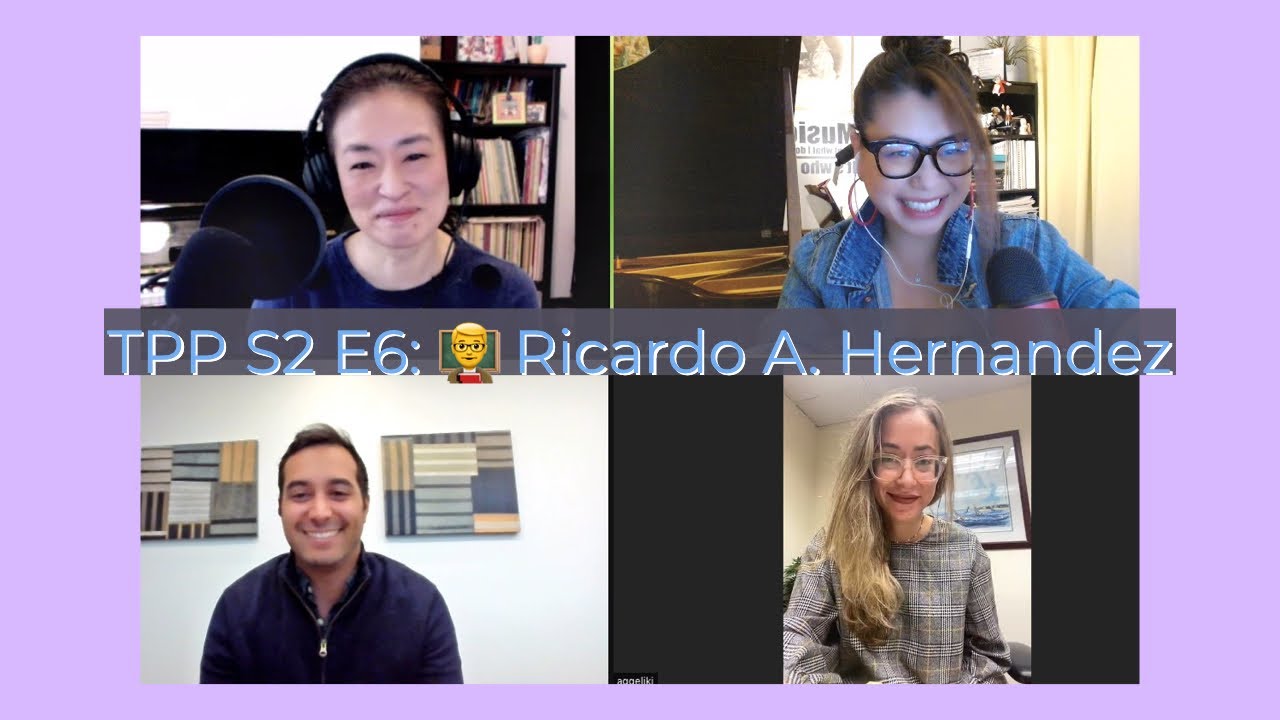
This content was created by The Piano Pod with Yukimi Song. This content was uploaded by The Piano Pod with Yukimi Song. This is a YouTube episode titled "S2 E6: Ricardo A. Hernandez--Entertainment/Corporate Attorney" (published 2021-11-24) from The Piano Pod. Hosts Clara Zhang and Yukimi Song welcome guest co-host Angeliki (Angeliki Thomas) and interview Ricardo A. Hernandez, an entertainment/corporate attorney based in Nashville. The conversation covers music-industry legal topics and practical advice for musicians: building a team (managers, lawyers), master vs. composition rights, Taylor Swift's re-recording dispute and re-record restrictions, immigration/artist visas, the changing Nashville scene, pandemic impacts on touring and songwriting, and how classical and freelance musicians can protect and monetize their work. Content type: YOUTUBE.
Chapters
Welcome back to The Piano Pod with Clara Zhang and Yukimi Song. And welcome to the newly revamped TPP. This is exciting because we are starting a new format today.
That's right. In each episode, we're inviting a guest co-host besides our regular guest speaker who will be assisting us during the show. So, Clara, Please introduce us to our guest co-host of the day.
That's right, sure. I'm very pleased to present my dearest friend and Liki, Soni, right? You said Soni. She is a lawyer by day and a beautiful Greek goddess, right? Greek and jazz singer by night. And she is also very, very dear friend of mine. And thanks for being on the show, Liki.
Thank you, Clara, for the introduction, and thank you, Yukimi. Thank you both for having me on The Piano Pod with Yukimi Song with Clara. It's very exciting to be here.
That's right. So I met Angeliki through our common friend, my best friend Yasmin. Shout out to Yasmin!
Shout out to Yasmin!
She's a beautiful clarinetist. And yeah, and then recently Liki and Yukimi and I actually did a gig together in Connecticut, and then on the way there we were just thinking we were looking for an entertainment lawyer and she— we're like, oh my gosh, we have this beautiful lawyer sitting right here. We always— and then she's actually also a lawyer on top of that. So it all came together.
One thing about lawyers is that we can always connect to other people. I don't practice entertainment law, although I'm learning a lot about it now, but I thought of Ricky Hernandez. He's great at what he does and it was great to make the connection and have him on.
It was just so beautiful. It was so perfect, you know, everything just lined up. And then, you know, we haven't connected for years and so somehow it just brought us together. So we're curious, maybe in a few like words, Nikki, you can tell us a little bit of what you do or how do you manage to fulfill—
Well, some days I manage better than others, but like you said, I am a practicing real estate attorney by day. I do mostly real estate, but I also handle business transactions. Wills and estates and things of that nature. And my side hustle, which is kind of taking over my life right now, is art and creating my own music. I sing jazz, like you mentioned, but I also do traditional Greek music and I try to blend the two genres together. So I guess you could call it world music. Currently I'm working on my album, which should be coming out in the spring. Spring of 2022. I'm very excited. It's going to contain original tracks and some covers as well. And I'm very excited that I'm collaborating with some amazing composers and good friends of mine. So stay tuned for that.
That's so exciting.
That's great.
Yeah.
And of course— Go ahead.
I hope to perform with you ladies very soon because that Broadway-themed Halloween party we did was a lot of fun. I know. You pianos.
I know. The great hairs. Yeah. Hey, so we are available for your holiday parties. So holler, okay guys?
Yes, right.
Yeah.
So, you know, dressed up. Yes, yes, yes. So, you know, I mean, being a musician, you know, you inspired me, Agieliki, because you are being a lawyer, you know, make a living being a lawyer, but also you're a serious musician. So, you know, being a musician is like owning a business, right? And there's an old school way of thinking that music is an art and should be protected, and to make a business out of art is almost like a crime. But I kind of disagree, you know, because most of us musicians and artists are freelancers. And as much as you belong to a law firm, Aguiliki, but you also know what it's like to be a freelancer. Right, because you're freelancing. And so being a freelancer means you have to promote yourself, manage income by yourself, manage so many other aspects of life like collaboration, tax, copyrights for streaming, such and such. So now more than ever, I feel like because so many things are so accessible by social media, now you can actually manage our own brands, which means, you know, we are actually really responsible for our own brands and we need expertise.
Right.
Yeah.
And you know what I'm learning in my short-lived career as an artist so far is that no one's going to care more about your business than you, and no one's going to care more about your art. So it's important to have a good team, like we're going to discuss, right? And to delegate, because like you said, we have to wear so many different hats and you have to worry about the art, but you also have to promote, you also have to book gigs for yourself and tours and things like that. So you have to delegate. It's important to have people on your side that you can trust, but it is a business, yeah, and it's all, it really comes down to you and how you manage your time.
Exactly, and that's why we have wanted to invite a legal expert to our show to ask questions, and we are so happy to have you, Nikki, as our co-host, and you can help us really ask the right questions when we're a little clueless and maybe interrupt, you know, some of the legal terms of us. Yeah, thank you so much. Thank you.
Yeah, it's a pleasure to be here.
So we're very excited to have our guest, Mr. Ricardo Hernandez, an attorney in the Nashville office of Shackleford, Bowen, McKinley, and Norton LLP, whose experience primarily lies in the fields of entertainment, intellectual property, and corporate law, with a broad knowledge base in the areas of music, technology, commercial lending, mergers and acquisitions. And day-to-day corporate matters. Let's welcome Mr. Hernandez to the show.
Welcome.
Thank you for having me.
Thank you so much for joining us. Oh my God, it's so early in the morning. Yes, you get such dedicated lawyers out there. So how are you today?
I'm good.
I'm good.
Really good. I think this time of the year for entertainment attorneys is typically pretty busy. The music industry shuts down pretty hard in December. With people coming off tour and not really doing too much. There's no new releases. And so, you know, this— from this time, like early, I don't know, late October until Thanksgiving is usually a big push. But it's fun. It's good work.
So, so are you going to a show or not after work? Are you going to party?
I did not. I'm not going to a show today. I did get to see— I don't know if anyone knows, uh, Dennis Quaid is now performing music. Um, you know, the father, the actor. Yep. And so he was playing in town on Monday and he was fantastic. Uh, just an absolute personality, as you could probably imagine, but, um, a good musician as well. And so, so that was a really fun one. And he's a, he's a client of the firm in certain capacities. So, uh, but yeah, so that, you know, the show stuff is a lot of fun, uh, but so is the entertainment law stuff.
Oh my goodness.
Yeah, Nashville sounds like a very poppin' place. That I definitely want to visit in terms of music happening.
Oh, please, anytime you guys want to come, I'd love to take you around. It is, it's a lot of fun. I moved here in 2014, and even in the last, what, 7 years, it has changed entirely. I mean, just the entire city is, I mean, I'm looking out the window right now and there's like 7 different cranes building new buildings. Oh, wow. It's just, oh, the city is absolutely booming, but it does still have that kind of like southern charm. Feel to it, which is part of the reason I moved down and wanted to be part of this industry in this legal field. It's just a good town. Until you experience it, it's really hard to fully pinpoint why.
I was there for my 30th birthday. I won't say how old I am now. Maybe 35. But I was on a helicopter ride, or maybe it's not even a helicopter. It was a little bigger. It's like 4 people and then on the plane. And so we just went all around the Nashville, Tennessee area. You know, we were staying in the house in the mountains. Like, I was like, this is a perfect place for practicing piano. Nobody can hear me. You know, I can practice it 3 o'clock in the morning. But I remember even at the time it was like happening, you know, everything was very different from New York entertainment, you know, especially for us classical musicians. I didn't see a whole lot of classical. Music.
Yeah. Yeah. I mean, even the entertainment scene is changing pretty rapidly. So, you know, whereas 10 years ago, 15 years ago, it would, you know, it was primarily seen as a country spot. You know, if you want to do country music, you would come here and try to get a deal with a country label and a singer-songwriter. So publishing has, Nashville has deep, deep roots in the singer-songwriter community of many different genres. Probably the exception being hip-hop since we're hip-hop and rap since we're so close to Atlanta. If that's your space, they kind of would be attracted there. That being said, in the last, I mean, really 5 years, because of how many people are moving to town and trying to find opportunities, the scene has entirely changed. And not to say that the country and the Americana and the bluegrass stuff has gone away. It's still there. But there's a lot more pop, there's even, you know, a lot more punk, a lot more, even a little bit of R&B and hip-hop. The scene is rapidly changing because the city is growing and there's just a lot more opportunities. And as that happens, you know, you're just seeing a bit of a culture shift, which I think everyone's a little nervous about, but at the same time, I think it's good for the city.
So I'm curious, like, Who are you representing as an entertainment lawyer? I'm very curious.
Yeah, so I'm gonna be an attorney. So my client, well, Angelyki, first and foremost. Most importantly, right? But being a younger attorney, my roster is a little bit smaller. I've got a few clients that I really love. I've got a singer-songwriter in town named Shane Weissman, who's just, I think he's going to absolutely set the industry on fire. So plug for him. But the nice thing about being at a law firm like Shackelford is I work for attorneys who have decades upon decades of experience and I get to work for them. So although not my clients, still clients that I work on. I mean, we do, we have a lot of kind of independent record labels, publishing houses, entities that will, like promoters and entities that run festivals. And then we have a lot of artists as well. So we do work for one of the members of Dan and Shay, so Shay Mooney, and Wilson of Heart. We'll do a lot of work for Cage the Elephant is one of my partner's clients. Ian Muntzik, who's in the country space and is doing really, really well. LB Shane is one of our clients. We represent his publisher, so we're really close with him. And just a lot of just different different acts. Tay Money. So is anyone on TikTok?
Yes.
You know, I need to get on that.
My mother is.
You know the sound, "She understood the assignment," or "I understood the assignment"? That's Tay Money, and that's one of our artists, and she's absolutely blowing up. She has been before that TikTok, but that TikTok has absolutely helped, and she's one of the best. Her music is great. But as a personality and as a person, she's just, you know, one of my favorite people. I got the opportunity to meet her when we were visiting one of our main offices in Dallas. So I was visiting our main office in Dallas and she's from that area. So we got to, a partner of mine and myself got to have dinner with her and sit down and just talk with her. And she's excellent.
But who is your absolute favorite artist?
My absolute favorite artist? Oh my God, that's such a tough one. I think it depends on the week, right? I think music to me is such an emotional thing that it really does depend on how I'm feeling that week. You know, I mean, if I'm part Cuban, so if I'm really feeling like, oh, I need to go back to my Cuban roots, you know, I'll listen to like the, what is it? What's the, God, I just got one of their records. The Social Club.
Oh, yeah.
I love that record on repeat. And in fact, oftentimes if I need to just focus, I'll put it in the background and just run that through. So that's really, really great. If I'm feeling more like going back to my middle school days, I'll listen to Fall Out Boy on repeat or Taylor Swift, for being perfectly honest. Like, early Taylor Swift really gets the people going. I mean, it really just depends on the week. It's like picking a favorite child, I guess, right? I think some people could do it. I definitely cannot.
But are you a musician yourself?
I played clarinet growing up, and I loved that, and I think that's kind of what started my love for music. But no, I'm not a practicing musician. I wish I was. If I won the lottery tomorrow, I think that's the first thing I would start to work on, is to get back into doing music. But I wholeheartedly enjoy assisting musicians in my legal capacity instead.
That's amazing. Oh my gosh, there's so much we are curious about. It's like music and law. I mean, for us, it almost feels like in the beginning it's not really together. As musicians, we just think about our craft or practicing and stay in the practice room. How many hours did you put in? We had to deal with lawyers with immigration stuff. So we are curious, do you work with immigration lawyers at all? Artists helping them with immigration matters, or—
Yeah, absolutely. And I'll preface that answer by saying the cool thing, and my favorite part about being entertainment attorneys, is there really isn't one area of the law that we are fluent in, right? I mean, we have to— you know, one of my mentors said really, really well, entertainment attorneys are just attorneys with really cool clients. I mean, it really is. I mean, at the end of the day, we are just practicing the law. I've got knowledge in Obviously pure entertainment and IP, right? So copyrights, record deals, publishing deals. But I also do a little bit of real estate when a client needs to buy or sell a business. I do some corporate law. I don't do any immigration, but we do often have to work because of touring issues and because of people coming over or going to other countries. We often have to work with immigration attorneys to make sure that our clients, you know, don't set up a tour and then suddenly can't get in the country. Um, so that's just something that we have to think about. But absolutely, that's— I mean, I think the, the one of the most important parts for us is making sure that we build our network so that in the event our, our clients have an issue that we can't tackle, we know who to call. You know, that ends up being a really, really— I mean, we— as much as I wish I knew all of the law, uh, it's just, you, you, it's just impossible to be an expert in everything. And so I think that getting that network and building that team of other attorneys or just other experts who can assist you in the event the client needs the need. That's kind of where we add value.
Yeah, of course. And we need that because sometimes in the beginning we are so lost. I remember I got my artist visa and the green card that way, like as an external artist. The first time I went to a lawyer, he was like, did you win the Nobel Award yet. I'm like, do musicians do that? I mean, I didn't even know that was a possibility. But somehow I got my visa and everything. He was like, all right, you keep on fighting that. You just keep on doing it. And then at one point, I felt like one of my lawyers was like my best friend because that was the person I was talking to every single day to get me through that little part. Yeah. So, wow.
It can be very overwhelming in the beginning, and artists have to wear so many different hats. So it's good. It's very important to have a good lawyer on your side.
That's right.
That's right.
But also knowledge, right? That's why we're doing this podcast. So yeah. Anyway, so I wanted to ask about this, the hottest news of music industry right now, Taylor Swift. And because she was on SNL and I watched a little bit of it, and then also she was on like some kind of a late-night talk show, and she was saying something about how she doesn't own her own songs. And I was actually really shocked. It's like, come on, she is Tay Tay, you know, she's the biggest name, and she doesn't even— she wrote her own songs, but she doesn't own. So, and then this big-name artist manager, he purchased her label company, or the label, record label company that owns Taylor Swift's songs, were bought by this guy. And then so she doesn't— Taylor Swift doesn't like it, and so there's a dispute, and she wants to use her own songs for certain things, but she is not allowed to. So she decided to have her version of like she decided to re-record everything. So what's going on? What is this all about?
Yeah. And it's such an— I mean, it's such an interesting case and kind of, you know, a good test case on re-record restrictions, right? And how important relationships can be, you know, when you're representing a label and when you're representing an artist. So my understanding with the Taylor case is that, you know, although Taylor Swift is now Taylor Swift, the, you know, music icon, I think people have to remember that at some point Taylor Swift was a brand new artist looking for her first deal. You know, and when you're a brand new artist, as y'all know, you have a lot less leverage. And so when you have less leverage, you kind of have to go in and accept more industry standard or even non-industry standard terms. Just to get that deal going to kind of launch your career. And so my understanding was what happened was, you know, Taylor on her first deal or first series of deals signed deals whereby the record label owns her masters, right? And so when we're talking about this case, when you use the word songs, you know, in music copyrights, there's two sides of the copyright. There's the composition, what you wrote, and then there's the master, which is the song that you're actually hearing. So on the record label side, she sold the copyrights to her masters. You know, and that's not uncommon. It's not uncommon for an artist, especially a younger artist to say, you know, I'm gonna get an advance. You're gonna get the ownership to the masters. You're going to exploit those masters. And even after this deal is done, I don't get those back. Those are yours. That is not uncommon and is actually pretty standard. Now there are many different ways you can structure that. And I think, I don't think the industry is ever gonna go away from that, but I think certain labels are more open to other structures. But let's stick with Taylor's case. So that happened. Taylor's career obviously took off, became who she was. The dispute she had was with a certain individual who then ended up owning her masters. And I think she doesn't believe with the way that individual does business. I think she has had some bad experiences with that individual. And just didn't feel good about that individual making money off of her songs. That being said, under the contract, my understanding was there wasn't a lot she could do about it. You know, that he owned them fair and square. He purchased them. Now, when you have master recordings, typically speaking in a deal or not, I mean, sometimes the deal won't have any re-record restriction. It'll say, you just can't record these again forever. In her deal, I believe they had a re-record restriction of 10 years. So they said, you will not re-record the composition in these masters for at least 10 years. Now, usually for a record label, that's good enough because you're going to exploit a lot, a great majority of those receipts from the masters will happen in the first 10 years. So you'll be able to recoup your monies, you'll make some money off of it. And also in my experience, it's somewhat uncommon for artists to then come back and re-record these compositions, right? You know, they've got a good relationship with the label. Maybe they're still on the label. And they'll say, "Okay, yeah, could I re-record these? Yes. Do I want to spend the money to re-record, remarket, do the whole thing? No." Taylor Swift saw, you know, this dispute was happening right around the time her re-record restriction was coming up. And I think she saw that as an opportunity to, for a lack of a better way to say it, stick it to the man, right? She said, fine, you can make money off of those, I'm gonna make my own, and then I'm gonna make money off of these, which is gonna directly cut into your profits. And that's what she did. You know, I think, I don't know that everyone would be as successful doing it, but it's Taylor Swift. You know, when you have the backing and the loyal following that she has, you can do something like that. And so it's an interesting test case. And it's a case that I think some labels are concerned about, right? Because if you have a 10-year re-record restriction and some, you know, successful artist sees that and is like, wait, I can make more money off of re-recording my songs, why wouldn't I do that? And I think that's going to be a concern. And I think you're going to start to see some of those restrictions either get longer or go away because of what Taylor has done. Not the first time Taylor has sort of revolutionized the industry. A big part of the reason musicians are getting paid a little more under the Apple Music model was because she left Spotify for, I don't know what, 5 years. When you have that type of voice, you can kind of make some monumental shifts. So it's really interesting to see.
Yeah, it is. And then it's amazing how she is not only a big singer, but also she is a big influencer, so she has this power of influencing, you know, her fans through social media. And what she did was like, so here is the remastered or my version of my song, and then don't listen to the original version but listen to this. Then that's how her, uh, her version of songs are now on the chart, Billboard chart, right? Not the original ones. And that's actually really clever. So Even the biggest name like her, they have to fight their spot. They have to fight their rights as an artist. That was actually really quite inspiring. Not that I'm— honestly, to be honest, I don't listen to her song very often. I'm a classical musician. So, yeah, very boring. So, but yeah, but I thought it was, you know, the fighting spirit. I liked that. That.
So, can I just say, yeah, of course, I've heard Clara and Yukimi play live and it's anything but boring. Just saying.
Thank you.
That was a special concert, but you're very sweet.
Thank you. But do you have anything like that?
I mean, I think, is that her name, Taytay? Even my 11-year-old, they all know it. I mean, I think I actually didn't know she goes by Tay Tay.
I live under a rock sometimes.
Oh really?
I didn't even know. But yeah, I mean, just imagine these younger generation. I mean, now they're going to look up to her. You know what she did. But Angelique, yeah, tell us. I mean, you are also in this world, really. I mean, we are not going to compare, but you have your album, you have your MTV, and you work as a lawyer. We don't know how many, you know, bodies you have to do all this.
Sometimes I wish there were more than 24 hours in a day, I'll say. But in terms of what we were just discussing with Taylor Swift, I think it goes back to what Ricky said in terms of being a beginning artist. It's all about leverage and it's all about bargaining power and your clout. So it's good for her that she has that following because it's not easy to do that when you're just starting out and there's people in the industry that want to take advantage of you, right? There's a lot of ways to get screwed over in this industry and very few ways to be successful.
Well, we all have to learn to protect ourselves, right? But I mean, in the beginning, yeah, exactly. Actually, I heard, I was telling Yukimi, I was like, you know, I think I heard Taylor Swift live in person, like by accident. In like 2012, I went to a Beethoven concert in Chicago, you know, this like very famous music festival. And the concert hall was, you know, beautiful. And this person was playing all Beethoven. The concert hall was empty. And I'm like, what is happening?
And again, that's the story of classical music.
Clapping for Taylor Swift because she had the show right after. So people even bought the ticket for the classical concert left early to listen to her. And, you know, I didn't know who she was yet. Who is this big person? Why is she like— but then I realized it was Taylor Swift, you know. But yeah, but in the beginning, you know, and I see this a lot with classical musicians too, you know, we're again, I mean, we're big deal too, right? Because we have to work our whole entire life for this livelihood of whatever. And then I have friends that are like, I would say, very respected composers. Yet I see the struggle. They are self-funding. They compose their own music. They even record with the orchestra. Sometimes they even play the solo part with the orchestra, yet not only paying the orchestra or whatever, when you are publishing the book, publishing the score, publishing the CD after whatever years, and they are supposedly pretty big deal, yet it's all self-funding. And these are people who even actually get to do it. I'm just curious, how do you think— what could— do you ever work with classical musicians? First of all, Ricky, Have you dealt with anything like this? You know, how can they—
I have not. I have not worked with classical musicians. I think, um, again, the space that I'm in, the town that I'm in, I think it's just relatively rare. I am not— I am wholeheartedly for working with classical musicians. Plug for me. Um, but, but that being said, I mean, I think that the, the plight, um, of a classical musician, uh, while probably more severe because of the industry is not an uncommon one. Whereas I think that a lot of songwriters and artists and musicians, it's difficult. It's difficult to break through and to understand the ins and outs and really the pitfalls of this industry because there are a lot of pitfalls. There's a lot to learn. There's a lot to understand. And at the same time, kind of like you mentioned earlier, or maybe before the podcast, Like, your focus really needs to be on honing your craft. I mean, how can you be the best you can be if you have to learn about copyright law, touring, merchandise? I mean, how could you do that? It's nearly impossible. And that's why I think, you know, some of the pieces of advice that I'll give to newer musicians or artists is you have to build a team, you know. And early on, that is difficult. I mean, it's very difficult, but it has to be one of your biggest priorities because then you can let somebody else work on that stuff that, that you don't necessarily want to or need to be working on. Um, you know, I think typically, uh, in at least in the space outside of CrossCom— exactly familiar with CrossCom— but typically you want to start with like a manager or a lawyer. Those are one of the two first people you do because it almost starts out necessity, right? I think everyone tries to go, go through it alone off the get-go because you're your receipts are so small, you know, that you, you need to, you need to do it yourself so that you can keep that and feed yourself. And I think everyone, um, or most people understand that. But at some point you will get to a level, either because you're touring or because your opportunities become great enough and the risk is high enough, that you need to start bringing in third parties, um, and, and, and need to, uh, not be afraid to let someone else share that burden. You know, that's what we're here for, you know, and I think a lot of that too is don't be too quick to build that team either. While it's important to build that, it's like, it's like dating, right? I mean, you need to go out there and you can't, you don't just want to like get on a dating app, find the first person you think you look like and looks good and be like, all right, we're married. Like that's typically how divorce might work. Sometimes you get lucky, but sometimes you won't. And finding your team, whether it's your manager, your artist, your agent, any of that is the same way. You have to go out, you have to interview, get coffees, get dinners, talk to people. If you put in the work early on to find someone who's gonna really believe in you and your career, that'll pay dividends down the road, but it needs to get done. And I think that's kind of the biggest piece of advice for the younger attorneys is, or younger attorneys, excuse me, and not even attorneys, newer artists. And I say newer versus younger because I think people like to use the term young artists or baby artists, As y'all might know, I mean, artists range in all ages. There is, you know, you can have a young artist, you can have old artists, they can still be new. And so I say relatively new artists and saying, as soon as you can build that team and as soon as you can do that, you know, as soon as you're feeling the pressure of like the administrative stuff is becoming too much for me to deal with, build that team. You will see, you'll see your career take off and allow yourself to focus on your craft and not to worry about all the millions of other things that go on behind the scenes.
That's actually very well said. Yeah, that's actually a good reminder because as musicians, we're so used to doing everything on our own, right?
We're small businesses.
Amen to that.
And also, it's very difficult to really make the payment. You know, get paid in the beginning. So you just feel like— and we are told to always work hard, so, you know, sometimes you're forgetting that you actually could, uh, have people help you out. And, you know, maybe eventually there's better benefit later.
Yeah, think of it as an investment, right? Because it's, it's an expense at first, but, but like Ricky said, if these people believe in you and it's a good team that you have on your back, it's worth it in the future, in the long term.
Yeah, actually, I'm curious, are you— do you, um, you have done some albums recently, right? What was that?
Just that first single release.
Okay, how did that come together? Like, did you have to find a team of people? I mean, you know, that's—
yeah, that's interesting that you ask. Um, I didn't have a team at the time because it was my very first release. Um, the single was based, uh, from a friendship out of a friendship that I had with the arranger/producer of the piece. It was an old composition actually that had already been recorded. So for me, it was an opportunity to just jump on it. It had never been released and to finish the production myself, to record my vocals and release it that way. And that's how I started learning about all these different aspects to being an artist, you know, because it's, yeah, it's self-funded, like you said, it's also self-promotion, right? It's because you can release a song and you can record it, but it doesn't mean anything if you don't have a good marketing team, you know. So everything, and what makes things more complicated too is that the industry is also radically changing, right? And I'm sure Ricky can speak to that as well. I'm reading a book right now, All You Need to Know About the Music Business by Donald Passman, and I find it funny that every other paragraph he says, oh, don't rely on this, take it with a grain of salt, because by the time you read it, it might be out of date. It's like, okay, can I rely on anything?
If I could touch on that, I've read two versions of that book. Donald Passman is a genius because he writes a very important book in an industry that changes every two years, and so he can write a new version of the book and you have no choice but to buy the new version, right? Uh, because there's actually— it's funny, I remember when I had the original version, I ended up giving the original version to one of the bands that I managed earlier on in my career, um, because it was just kind of like a parting gift. Uh, and I— when I joined this firm, I was like, I've got to get that book again, thinking it would be the same book, and it was night and day different. I mean, he truly does put a lot of work to make sure things are up to date, but he does qualify the entire time being like This is probably going to change by the time you read this. So I think he started giving website links at least to try to keep things up to date. But yeah, that man is a genius because if I could write a book in an industry that changes every couple of years, then I'll be set for life.
Yeah, you don't have to take on any more clients.
Yeah, exactly.
That is— yeah, I mean, that's— again, these things we don't even really think about as much as we Yeah, because you're focusing on working on becoming a better musician, right?
It's one thing to do the art and it's another thing to do all the business stuff.
Exactly. Yeah. And then especially, I don't want to say especially, but being a classical musician and training is so specific, you know what I mean? Like so focused and takes such a long time. So there's no, actually no time for anything else to do. Yeah, yeah. Anyway, so you spoke about, so, you know, rapidly changing this music industry. So I'm just curious, what sort of effect did the pandemic have to musicians? Obviously a lot of us lost jobs, and music is all about, you know, people gathering and enjoy the live music. So right now we're coming out of pandemic. What's the change do you see as an attorney?
Yeah, I mean, there's so many ways to answer that question. So obviously the pandemic itself was difficult on so many people, but especially the entertainment industry, and there was no area of the entertainment industry that wasn't affected, right? I mean, the live performing space was decimated. Artists who— a lot of artists structure their deals such that they make a good chunk of their money off of touring, right? And couldn't do any sorts of tours, you know, and so, and you also, it's funny, the number of artists who, because of touring being so important, were so used to just touring every year around the same time, sometimes most months of the year, and now they're stuck home and they're like, what do I do with myself? And so I think there's a couple of ways to answer that. One, just from a practical standpoint, What we saw as attorneys early on the pandemic and throughout the pandemic was because people were stuck at home, there was a lot more songwriting and production going on. So in pre-pandemic, and probably we'll see this again post-pandemic, is when you are on tour and you're just busy, you know, doing tour dates, doing performances, doing just, you know, any sort of like talk shows or whatever. I mean, you try your best to write songs and, you know, when you're on the bus, when you're on the plane, but it's difficult.
It's tough.
It's a grind. That life is very hard. Um, and, and same deal, like, you try to produce those tracks in the 1 to 2 weeks you're home, but, you know, query whether that's enough time to really get a product that you are proud of and really kind of can feel that this is, this is what you wanted. When you have 9 months to sit at home and nothing else to do but write and produce and master the tracks, you start to get products that I think, and you have to build a repertoire of products that you can now say, okay, this is where I want to be. Now, make no mistake, that was not easy either. A lot of songwriters are collaborators. They wanna work with other people. And so songwriting over Zoom was a hard thing for a lot of people because they're used to being in a room together and building that bond and that relationship, building a song off of that. You can't do that during the pandemic, or you couldn't do that during the pandemic. Now, what I think, you know, I'm gonna be optimistic, Ricky, for a second. I believe that because of that, I think we're going to see sort of a golden age of music for a little while. I think people have now built their repertoire of songs and masters in a way that they could not do for a long time because of touring, because of other obligations. That I think we're gonna see that music come to light in the next 5 years. And I think it's gonna be amazing.
I think it's going to be excellent.
That's the silver lining. I remember during the pandemic, I was hanging out with a friend of mine who's a tour manager for a big country artist. And we were just talking about how tough it was and what was going on and what things were gonna look like. And I remember, I think he was the one that said, he was like, "I don't know, I just feel like," if we can come out of this, it's going to be amazing. Like, I think we're going to see a rejuvenation of the industry in a way that would not have happened had the pandemic not happened, because everyone was just go, go, go on the same schedule that we couldn't have time for, for this creation, this pure creation. So I think that's going to be a really cool thing that's going to happen. In terms of the industry generally, I think a couple things have also changed. Streaming which has always kind of grown, right, in the last decade. You know, 10 years ago was, man, you can't make money off of streaming, it's so difficult, we'll never get there. I think that that was steadily becoming more and more and more and more great. I think the pandemic sped that up a little bit because people were at home, couldn't go to live shows, but you still need that music, you still need that emotional component to get you through the day, right? And so people would stream, they would stream music more and more and more and more, and people were finding creative ways to add music to their video streams, which is another source of income for songwriters. And so I think that we have now ripped the Band-Aid off a little more on making that a more productive source of revenue for musicians and songwriters. And again, I think that was always gonna happen. I've been a big believer in streaming for a long time, but I do think it helped people who wouldn't have assimilated to that world get more on board. So that's really good. In terms of the deal side, I also think there was a bit of a kumbaya moment in the industry. Query how long this will stay, but I do think there was a moment of like, we are in this together. If we're gonna get through this, we have to do it together. And so I think a lot of the deals, there was a shift in the pendulum of more artist-friendly deals, of labels and publishers being like, okay, We all need to try to focus on making sure we are all healthy and gonna get this through. And as attorneys, we were seeing some more favorable deal terms that I think sometimes we wouldn't have got pre-pandemic. Now, again, a lot of these companies, uh, towing companies, record labels, publishing companies lost a lot of money during the pandemic. So query whether that pendulum will shift back the other way as they start to recoup or trying to get some of those profits. But at least for the time being, I think there is a moment of like, how can we make everyone successful as we come out of this pandemic? And as someone who has clients on both sides of that aisle, I love to see it, right? Like, I want everyone to be successful. I want the money to be spread around so that people can, you know, both, you know, make money off their trade, but also help make Artistech money and get compensated for that. And so we'll see, we'll see where that goes. But it's a very, very interesting time to be in this industry. I mean, it's always an interesting time to be in this industry because like, like you mentioned, it's always changing. It's never static. Even if we wanted it to be static, it never could. But I think it's very interesting because of everything going on and also because of new technologies, right? I mean, TikTok became huge over the pandemic and artists are finding ways to to make that another big source of income and are becoming influencers in a way that they might not have considered prior to the pandemic and finding ways to become brand marketers in ways they wouldn't have considered before the pandemic. We have a client that is in that space that helps connect artists with influencers to help create their, you know, their brand and build their brand. That client's called Saw Influencer. So look out for them, but they—
Songfluencer.
Songfluencer. And they have a couple different companies, but they're doing, you know, in my opinion, they're doing God's work in terms of helping communities that normally probably wouldn't connect, right? Like before the pandemic, if an influencer wanted a song, they're just gonna look on TikTok at what songs TikTok has license for and just promote that because it's a good song. Now you've got companies that are bringing musicians and influencers together to say, hey, how can we both make some money off of this and grow our brand together? Which again, you love to see it.
Yeah, this is amazing, really. I mean, it's almost like I'm touched by this conversation to see actually both sides, especially seeing how passionate you are to not only helping the industry but the artists. Really, I do feel even with this Taylor Swift movement, right? It's people starting to appreciate or honor or respect, you know, the artist. I think probably more than Euro, you know, more than past, at least. I, yeah, I was always thinking, historically speaking, right? We, I mean, I, my main hero is Bach, right? And he worked every single day of his life and his wife still died in poverty, right? That, that's just like sort of a normal thing. Mozart, and which everybody thought he was poor when he was, you know, but he just was not very good at collecting payment, like, or, you know, right away. And those things happen. But I think Beethoven had already started learning. But, you know, I mean, up to this day, like Clara Schumann, you know, where she had to publish under her husband's name, you know. But I feel like modern days, we are still in a way a little clueless, you know. Classical music, again, we are classical musicians, so that's the world we are in our whole life. And we are learning, you know, we are learning to not only come out of this classical world, but we, you know, our children, our children, our students, right, they grew up studying classical music. Music, but at some point they are curious of other things, and we want them to be curious of other things. And so we want to know, Ricky, what's your advice for younger, like really, really young musicians, um, let's say the teenagers, or, you know, what's the future of this entertainment that you see, um, being in?
Yeah, I, I think that the, the younger, younger generation has a benefit that past generations have not had in the sense that they are used to things changing very quickly, right, with the advent of technology, social media, cell phones, everything like that, right? They're used to having a brand new technology every year, every other year. And so I would say for them is like, lean into that new technology and learn as much as you can while you have the time. And now that's not to say, because I think I can at least partially remember being in middle school and high school, and you don't have a lot of time, right? You're getting shepherded around, you have to go to lessons and classes and sports, and I get that.
Play clarinet, right? You had the practice.
Right, exactly. But to the extent you can, I think that the younger generation has a better grasp and a better adoption rate of those new technologies. And so to the extent you can pay attention to those new technologies and how can they potentially affect your career, do that and learn as much as possible. A good example of that is kind of the blockchain NFT space, right? I mean, that space is going to— I believe it'll take a long time, but it's going to revolutionize the way the industry especially does royalty payments.
I saw the article. Yeah.
Yeah. Well, when you have a distributed ledger that's public and decentralized, that when you have enough people kind of bought into that concept instead of, you know, it's funny you had mentioned that Mozart was just bad at collecting. Well, I think a lot of musicians have that problem, right? Have that problem of like, yeah, I signed this deal, but unless I have a business manager that's like pounding on doors, who's collecting my sync licenses? Who's collecting my performance stuff? You need a good tour manager to make sure that they're collecting those payments. Well, if we can put all of that in a technology that does it automatically, then you don't need to worry about getting paid. You know, you play a show, the venue records that in an app, and automatically the payment hits your bank account. You have a copyright, you record that on the blockchain. You know, some— that copyright gets input into a Spotify song, that song gets played, you get paid automatically. I mean, there are ways that that can happen. And I think that that, I think unfortunately that's probably a long way away because of how many people in the industry have to buy into that concept and different parties, right? You need publishers, you need recording labels, you need tech companies, you need Congress. I mean, everyone needs to, I mean, we saw how long the Music Modernization Act took, right? I mean, that was a 10-plus-year process. Of trying to get even minimal change in the copyright law. So make no mistake, what I'm describing isn't a tomorrow concept, but it's a concept that's going to affect younger artists. And to the extent they can be bought into that concept early on, the better and quicker they can adopt it. And I think the more successful they will be, both from an artist standpoint, but also from a making money off your art standpoint. So that would be my advice is just lean into technologies and the way you can And the more you can keep up to date with what's happening in those technologies, the better off I think you'll be.
So for those young students listening, other than practicing your scales, you can start to think about this early. Yeah. I mean, New York children, you know, they are— I mean, I'm on the Upper East Side. Sometimes you talk to them, I feel like they're older than me. You know, they are so mature in their mindset. And it's partially because of YouTube. YouTube because of TikTok. They hear these things, but they're a little lost, I sometimes feel, and which we felt that way ourselves, I'm sure, when we're younger. Like, why do I practice for all these hours? Right. But I think they have a little better guidance in a way because of the technology. And as you're saying, maybe you should invent that app. That would be amazing if artists can get paid as soon as the work is done.
I think it'll happen. And like you said, it's tough and it's difficult. But just to the extent that you can, um, you know, you have some free time, instead of just scrolling TikTok, you know, scroll some blogs on NFTs or the music industry, you know, get on Billboard, um, and just kind of make sure you're keeping up to date. Because the more you can do that, the more prepared you will be as things shift, you know. You, you don't want to get left behind. You want to be an early adopter in those products. Um, and, and to be fair, oftentimes they are, right? I mean, you know, self-distribution through concepts like CD Baby, right? Like, that's a relatively new topic. But overwhelmingly, the people that I see that are using that are younger artists, are artists who are used to—
Record his CD from CD Baby. He is only 80, you know, so—
Well, and exactly, that's not to say that it's just younger artists, but just in my experience, it's typically younger artists because they're used to using the internet to get what they want, right? I think older artists are a little more wary of the new technology and would rather do it the more traditional way, for better or for worse. Not to say that there aren't more experienced artists that see the benefit and are doing it, because they definitely are. But I think that that is a good example of, like, I think regardless, younger artists are going to use those technologies, so just don't get left in the dust kind of thing.
That's true.
Oh my gosh, what an amazing conversation we had this morning.
Thank you so much. I know. Yeah, very inspiring. Thank you.
Hello.
Thank you for having me on.
Yeah, thank you. So are we ready? Are we ready for the rapid fire? We're going to wake up. Had your coffee yet? Oh my goodness.
So we'll see.
Okay, make sure the answer Each answer has to be the shortest answer possible.
And I'm so glad you guys both are on, so fight for an answer. Just shout it. So I'm going to say a question and Yukimi will say another question. So we're just going to pop, pop, pop.
Are we ready?
Let's go on, Ricky.
All right, so let's go. Ricky, what's your comfort food?
Chinese food. Well, American Chinese food.
Of course.
I said you're born in Singapore and I know there's a huge difference. Um, actually, you know what, I'm gonna clarify that one more. Dim sum.
Dim sum sounds great. What about you, Aguiliki?
French fries.
All right, so my question: cats or dogs?
Dogs.
Dogs.
Wow, that's a— you guys are in sync with each other. What is your word or words to live by?
It's a great day to be alive.
Ooh, nice one.
No matter how hard the day is, it's better than the alternative.
Dream big.
I love that.
Wow, nice one. Okay, what is the most important quality you look for in people?
Trustworthiness. Yeah, honesty, trustworthiness.
Have you rehearsed?
I know.
No, we have not.
What is the worst quality in people you want to stay away from? Stay away from?
Greediness.
Yeah, I think greediness or just like, uh, dishonesty. I mean, the, the exact opposite, I think, is just if you can't— if you think someone is giving you one thing to your face and something to someone else's face, it's just so hard to build trust in a relationship.
We're so lucky to have you guys as lawyers in this world.
Okay, next one. Name 3 people who inspire you, living or dead.
Ella Fitzgerald.
And then—
go ahead, Ella. And then Oprah. Oprah. One more.
Let's see. Nana Mouskouri. She's a Greek artist.
Okay, beautiful. Ricky.
Yeah, I will keep mine a little more personal except for one. So one, I read Jay-Z's biography and it was actually quite fascinating. I think that he doesn't get enough credit for how much he's done for music as a whole and how far he's come. So I think he's pretty inspiring. But for me, it's my grandparents, both on my mom's side and dad's side. They immigrated from Puerto Rico and Cuba respectively. And just hearing those stories and kind of what they had to fight to give me the life I have. Is just amazing. And then probably my wife. I mean, I think that we've been together since 2009. I have seen and grown a lot, and I wouldn't be anywhere where I am right now if it wasn't for her guidance and honestly, like, just pushing me.
So that's beautiful. All right, so which historic figure do you wish to learn or take lessons from if he or she were alive?
Who's gonna go first?
Historical figure. I will just— I'm sure there's a billion that I could say. I will say I recently read George Washington's biography and quickly realized that I think he's a much more complex figure than people entirely realize. I think it would just be fascinating to sit in a room with him and just pick his brain on a couple things. Um, I think that'd be interesting.
Nice, nice one.
Awesome.
What about you, Agata?
I don't know, I'm blanking. Do I just have to pick one?
You can pick as many as you want, but for now, give us one.
Oh no, I don't know.
Let's keep going. I'm blanking.
We'll come back to you.
Yes. Okay, so next, which historical figure do you wish to hang out with at the bar if she or he were alive?
And Freaky, do you have answer? Who do you want to party with?
I don't know. Figure at the bar.
At the bar. Such serious. Now I see the lawyer faces coming.
Yeah, right now we get the gears turning. I guess I don't think about historical figures as much as I thought I would. Yeah.
More like a classical musician kind of question.
That's right.
I was just gonna say. I only think about people.
I would love to chill with Rachmaninoff. I mean, is he a historical figure?
All right, yes.
Yeah, yeah, yeah.
You know, probably sit on his hand. Speaking of, as a seat.
Oh my gosh.
Yeah, I guess it depends on how far back you go. I mean, I would love to hang out with Elvis Presley, hang out with him at the bar. I'm sure he's got some stories. I feel like he would just be a character.
He would totally be. Yeah. All right. Is it my question?
Yep.
Name one piece in your current playlist. I'm sure that's easy.
Oh my God. Switch by Corey Henry.
Okay. Oh.
I see. We have to— we're going to keep all of this in our Spotify favorite list.
Yes.
Go ahead, Ricky.
Uh, for me, it's— I mean, it's the entire Machine Gun Kelly album recently. I don't know why it struck a chord. I think it's because it came out during the pandemic and it reminded me of like simpler times. Uh, I, I enjoyed punk rock and it was a very much punk rock heavy album. Uh, and it was, it was the first album in a long time that like 'Cause I usually have to listen to albums a couple times before I'm like, "Ah, yes, I really do love this album." I always give an album at least 2, if not 3 listens. But that album, it was like, from the first chord, I was just like— and I was having a bad day. It was like deep in the pandemic and like things were looking pretty bleak. And I was like picking up The Kitchen and like, I just happened to press play and was just like, "Oh." and it just hit something for me. So that was one that I really, really enjoyed. It's on my playlist that I like to always tell people about.
Okay, great. So name one book title, uh, name a book title you're currently reading.
All You Need to Know About the Music Business.
Oh yeah, yeah, that's a good one. I just picked up the— occasionally I like to read some science fiction. I just picked up the Dune series after watching the movie.
How was the movie?
It was very, very well done. So much so that I immediately purchased the Kindle book because I was like, if the movie was that good, the book has to be phenomenal. And so far it's been great.
Oh, wonderful.
All right, we have to check it out and our audience will check that out later. You get only one song or piece to listen to for the rest of your what is it?
Summer piece?
One song or one piece for the rest of your life, just one.
Uh, "Sugar, We're Going Down Swinging" by Fall Out Boy. Oh no, wait, oh, or—
I know it's the toughest question.
Um, oh my gosh, what's the other one? What's the— what's the big killer song? Uh, Mr. Brightside. I think Mr. Brightside by The Killers is the— is it's one of those two. I think I, I— anytime that comes on, people who know me know that I will typically drop whatever I'm doing and go into a frenzy, uh, for better or for worse.
Right, check it out.
Yeah, I know.
I would say Sir Duke by Stevie Wonder. I could listen to him all day. Oh yeah, yeah, yeah. I saw you playing all day and all night. Excellent.
Okay, so last question. This is fill in the blank. Law is blank.
Complicated.
Good one. I love that. What about you, Ricky?
Is it— you said just one-word answers?
It can be a few words.
Yeah, I mean, I'd say like law is kind of deciphering the complicated to help people get to their goals.
Good one.
I see myself as somewhat of like a Sherpa kind of guiding people. And the crazy thing about the law is— Yeah, right? The crazy thing about the law, it's complicated, but it's not anything anyone couldn't understand. It just requires the right teacher.
Yeah, interpreter.
Yeah, exactly. An interpreter, right? And I think that as our goal, at least my goal, is to help interpret it to a way that the client feels comfortable. I never— my goal is not to be an attorney that's just like, here's the contract, just take this and sign it, trust me. Yeah, I think if I—
oh, go ahead. Oh no, yeah, I was gonna say it's also important to avoid whenever you're talking to a client, you know, talking legal jargon because we have our own language and it's always good to try to simplify it and explain it like Donald Passman does in his book, right? About the music industry. Same thing. Talk in layman terms so that everyone can understand.
Similar to classical music, you know, it's the interpretation, right? Is everything. Well, anyway, thank you so much, guys, for joining us this morning really, really early. And that concludes this episode of The Piano Pod with Attorney Hernandez and Attorney Thomas.
Thank you so much, you guys. Thank you for doing this podcast.
Thank you for your insights and expertise. And thank you, our audience, for tuning in. You can find more information on Mr. Hernandez at the Shuckleford Law profile, Ricardo Hernandez. We will link to his website.
If you enjoyed today's episode, please rate and review on whatever podcasting platform you use. If you are watching us on YouTube, remember to hit the thumbs up button and be sure to subscribe to our channel. You can also find us on Facebook, Twitter, Instagram, LinkedIn. The links are in the description below.
If you have feedback for us, please leave it in the comments or DM us via social media, or you can also email us at thepianopodnyc@gmail.com.
We will see you for the next episode of The Piano Pod with Yukimi Song with Yukimi Song. Bye everyone, and thank you Ricky, and thank you Aggeliki.
Thank you, thank you.
More from The


Spirit, Body, and Soul: Pianist & Composer David Berry on Virtuosity, Creativity, and...



Season 6 Episode 20 | "Spirit, Body, and Soul" feat. David Berry, Concert Pianist & Composer


Beyond Borders: From Argentina to Poland to Texas—Oscar Macchioni reflects on a life in music

Sound Liberation: Joe Williams on Black Artistry, Legacy & Belonging in Concert Music


