Season 3 Episode 7: Liana Pailodze Harron & Thomas A. Giles -- sensational piano/saxophone duo
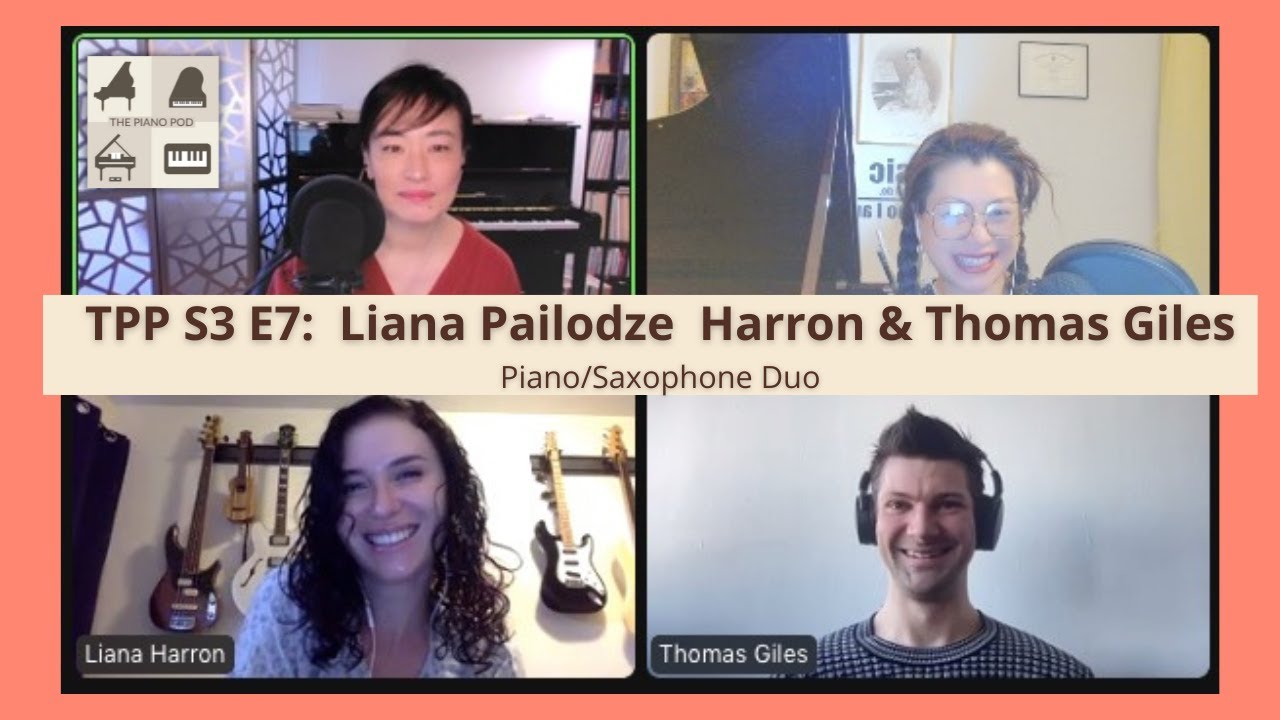
This content was created by The Piano Pod with Yukimi Song. This content was uploaded by The Piano Pod with Yukimi Song. This is a YouTube podcast episode (Season 3, Episode 7) of The Piano Pod with Yukimi Song, hosted by Yukimi Song with co-host Clara Zhang, featuring guests Dr. Liana Pailodze Harron (pianist) and Dr. Thomas A. Giles (saxophonist). Recorded Nov 30, 2022, the episode is an interview-style conversation about the duo's origins, musical backgrounds and training, career highlights (performances at major venues, recordings, teaching and residencies), their collaborative album and rehearsal/recording process, interdisciplinary projects (dance theater, silent-film improvisation), and practical career-advice moments; the episode also includes a sponsor message for Forte. Metadata: YouTube title 'Season 3 Episode 7: Liana Pailodze Harron & Thomas A. Giles -- sensational piano/saxophone duo.'
Chapters
Welcome to another episode of The Piano Pod with Yukimi Song and Clara Zhang. For anyone listening or watching our show for the first time, welcome! Clara and I are both classical pianists and piano teachers from New York City. This podcast is for anyone who plays the piano for fun, loves listening to piano music, or for someone who is currently pursuing a career in piano or works in the industry professionally.
In each episode, we interview a guest speaker who has been breaking exciting new ground in the music in the music industry. Before getting started, we want to thank our amazing fans and listeners for tuning in. Please rate our show and review it on Apple Podcasts because every rating and review will help people find our show.
Today, a unique piano saxophone duo is coming to our show: Liana Herron and Thomas Giles. And Clara, I know they are from your contacts, so what an amazing, interesting combination. So how do you know them?
Right, yeah. Well, Yukimi, you remember how careful we both were, you know, during the pandemic. And then I, you know, and I used to go to a lot of events before the pandemic, you know, on top of teaching everywhere too. But then during the pandemic, I kind of stopped. And then I, last year, I remember took some— a friend took some good convincing to come for me to come to this harp concert in Midtown. And then afterward, I stayed a little bit, and then I met these two wonderful souls, and I just instantly had this very good feeling energy, you know. And we kept in touch, and this year they released this video, and I was showing to you.
We're like, right, right, right. Oh, incredible musicians, groundbreaking, right? Yeah. And then, yeah, so I can't really wait for them, uh, to interview them and hear their story. And so it looks like they're here, so let's get the show started.
Let's go!
You are listening to The Piano Pod with Yukimi Song, where we talk to the brightest minds in the industry about how they are bringing the piano into the 21st century.
We're honored to welcome our guests of Season 3, Episode 7: Leana Horin, Thomas Giles piano saxophone duo. Let me start by introducing Leana first. Uh, Georgian-American pianist Dr. Leana Horin is a bold performer recognized for her passionate striking interpretations of contemporary classical music. She has appeared at leading venues including Carnegie Hall, Lincoln Center, the New World Center, and the United Nations. A champion of contemporary music, Liyana cultivates diverse collaborations, including her work as a Western duo with percussionist Dr. Kazenya Kolenovich, which earned rave reviews at the 2022 Chamber Music America Conference. Their recording of Stravinsky's Rite of Spring for marimba and piano, arranged by Kalifzich, was hailed as "smashingly effective" by Pazer Prize-winning music critic Tim Page from The Wall Street Journal. Of course, later we will hear about Liana's exciting collaboration with Thomas on their latest album, Mysterious of the Mccapley. Liana is also a dedicated educator. She is currently a faculty member of the School of Music at 92nd Y, where she shares her passion with a wide array of students through applied music lessons, group lessons. She's also an in-demand clinician holding master classes and workshops at universities around the United States.
So now it's my turn. Let me introduce another guest of this episode. Dr. Thomas Giles. He works at the intersection of contemporary performance, improvisation, and interdisciplinary collaborations as a saxophonist and multi-instrumentalist. He has premiered more than 200 new works, many of which were dedicated to him, and collaborated with some of today's leading composers. Thomas has performed with renowned orchestras including the London Royal Opera Company, New York City Opera Orchestra, and New World Symphony And he has appeared in the world-class concert venues and festivals such as Carnegie Hall, Jazz at Lincoln Center, Bachfest Leipzig, and Heidelberg Kulturzentrum and more. As the recipient of a one-year collaborative residency with dance theater Surreality, Thomas was invited to co-create a large-scale interdisciplinary work during the 2018-2019 season. The premiere of his work with the director co-creator Lauren Lubny, Thoughts and Prayers won overwhelming praise in a 2-week run off-Broadway. In addition to composing the music for the show, he performed a demanding solo role in the production, which included acting, choreography, and virtuosic playing. Thomas is also a passionate educator. He is on the faculty roster at the Aaron Copland School of Music, Queens College, and gives master classes at higher ed institutions across the United States and Europe.
Well, so Liana and Thomas, welcome to our show finally.
Oh my God, thank you so much.
Thank you, thank you.
I've really been looking forward to it.
Yeah, it's a pleasure.
Thank you, thank you. It's so amazing, you know, though, when I met you guys at that party, I think that was the very first time I've been to a live event ever since the pandemic started.
Oh really?
Oh, how special.
Yeah, and I was like, you know, and sometimes this fate, right? Life is like that. And we've been following you guys, and it sounds like you guys been following our journey as well. Absolutely.
Absolutely, yes.
So amazing, thank you. And where are you? I heard you are back from tour, Liana, already, and you're back in Brooklyn?
Yes, I'm here for a few days and I'm heading back out next week to perform one more concert in a master class at Arkansas.
Oh, amazing. And you guys are all in Brooklyn. I feel so left out.
Yeah, Brooklyn club.
Hey, we're Brooklynites.
Williamsburg, that's right. I have to come and party with you guys.
Please do, please do. We know some good spots. Amazing.
All right, well, before we get started, I just, you know, I'm so curious of how your beginnings— and I'm sure I asked a lot of questions when I first met you guys. I was so intrigued by your duo. It's amazing. Actually, saxophone is the only other instrument I've tried to play other than the piano.
Oh really? Awesome.
I played in a zoo band in the conducting class. So hard, but you know, it was fun. So, uh, Liana, I, I, I know you are originally from Georgia, right?
Yes, Republic of Georgia, right?
Republic of Georgia. And I saw beautiful photos. Right, exactly. Not the state, actually the country. And, uh, yeah, how was your, um, and for both of you, and I believe Thomas, you said you're from Colorado, if I don't remember correctly?
Colorado, yes.
Very good. Represent Colorado.
Yeah.
And, uh, and how, how did you guys, uh, well, the story, how did you guys meet?
Uh, do you want to go ahead? Yeah, yeah, of course.
Um, so I've been performing with my friend Ksenia Komlenovich, uh, for Marimba and Piano Duo, and she told me, listen, I have this incredible friend, he's the most talented person I've ever met, and he's crazy, he's always playing 5,500 concerts a day, you have to meet him. And he happens to looking for a pianist, so I'm going to connect you. So I was already intrigued, who is this person? So we started talking, Thomas and I. It turns out we only live one stop away from each other. I mean, this is crazy. The entire New York, right? We just happen to be almost neighbors. So I remember the first time meeting Thomas, and if you met Thomas enough, he's a very tall man.
That's right, I remember that.
Oh my gosh. You already have— yes, and you already have this picture of this basically, uh, not a real person because he's done so much and he's so accomplished, he's so talented. And then you meet him, you just get so intimidated. So I was so intimidated by him right away. Um, we clicked instantly, uh, on the level that we just wanted to play crazy music. We didn't want to just play for the sake of playing. We wanted to make bold statements. And on that, we instantly clicked and the sparks were everywhere. Friend sparks. We're both happily in relationships. So, um, uh, so we instantly connected on that, and then we started emailing after that, you know, just kind of shopping around for pieces. And I sent him, uh, Mysteries of the Macabre trumpet and piano version. I've been looking for someone to play with me, and everyone has been running away from me every time I would approach with— and I thought, maybe he will not. Maybe, maybe he's gonna be the one that doesn't right away run away if I say this. So I email him this title and I get immediate response in all caps, "Oh my gosh, where did you find this?" And that was it.
I think my exact words were, "This exists?" Because of course I knew the very famous Simon Rattle London Symphony, Barbara Hannigan video that had come out some years ago. But I hadn't imagined that there would, A, be a reduction, B, that it was already written for B-flat trumpet, which works perfectly for soprano saxophone.
Honestly, the rest is history. And I will say that I have never met anyone this gifted in a combination with being a hard worker as Thomas is. Really, I mean, he gives it all. I don't. I just kind of, at some point, I just, I just went, okay, now I want to be a mom. I have a kid. I want to be a mom. I want to do this. I want to do that.
I had no idea. Wow.
I have a 4-year-old.
Um, shout out to all the women, we can do it all, by the way.
That's amazing. Yeah, congratulations. That's amazing.
But yeah, Uncle Thomas.
Uncle Thomas.
But yeah, it's been, it's been a pleasure collaborating with Thomas. And Thomas would come over and we would rehearse at home, and it became such a, um, family project because my husband produced it and we released on our record label. And oh my God, and Thomas is good. He's a very accomplished, very accomplished, uh, recording engineer, right? He has a couple of Grammys, by the way. And, um, and Thomas's girlfriend created the image for the album. She did the photo shoot and design and everything. So it became such a family thing that it was an in-house project, and we just then built around that piece. We built on the rest of the album, and honestly, it just happened all like this. We met, yeah, and all of a sudden we— boom, we planned the album. A month later, we went into the recording studio and did the whole thing memorized.
That's the one that we saw recently. Right?
Yes, we learned it in a month.
That is so beautiful. Wow, thank you so much for sharing that beautiful story.
My side of that, right?
So Thomas, Thomas, what's, what's your story then?
Yeah, so, um, it's, it's funny, our, our triangle with, uh, Ksenia Komnenova, she's, uh, a very old friend of mine, one of my oldest friends. We met, oh God, in 2011, I believe. So, um, going on 12 years of friendship. We were doing our master's together in Illinois and, you know, she is—
Shout out to the Midwest.
Yeah, another just—
Kansas, you know, so I'm old.
Transcendental, magical, wholly convicted performer. Just, I mean, every chance I get to see her play is just a wonderful experience, always very memorable. And she originally approached me after band rehearsal saying, "Hey, we should play together!" All those years ago. And then we became very, very good friends, but we didn't end up playing together until very recently, actually. So all while we were in school, we were best buds, but we actually never ended up playing together. There's, as you can imagine, you know, classical saxophone repertoire is quite small as is, but saxophone and marimba is even smaller. So, uh, it wasn't until more recently we started working together. But, um, I, uh, eventually moved to Florida and did my, my doctorate at FSU, and, uh, Ksenia moved to Miami to do her doctorate at University of Miami, um, which is also where, where Liana went. And, uh, I actually drove down to Miami to help Ksenia move into her apartment. So, you know, very, very good friends. Yeah, yeah. So You know, I moved to New York about 6 and a half years ago, and, you know, I'd heard whispers that there was a dear friend of Xenia's that lived in New York, and they put this project together, Rite of Spring, Pesnyat Duo, over the pandemic, and they were going to do the New York premiere. And so I got to go to that. I think it was in late September 2021. So we met like the last week of September. And, you know, got coffee a couple days later and we're chatting and we set up a reading date and went through some traditional repertoire. And then she sent me "Belligerity." And she was mentioning, you know, this is a piece that has scared off many a collaborator. And I too had one of those. The Messiaen "Themen" variations is a piece that I had tried to play with 7 or 8 different pianists and they'd all just eventually given up and run off.
Right.
And I think we just really wanted to play music that required a lot of investment. And it was the first time since leaving school that I'd really been able to have like weekly rehearsals. We were rehearsing twice a week for 3 hours a day, the 6 hours of rehearsal every week together and really forming an ensemble and forming, you know, a way of working and a way of communicating and speaking. And, you know, this sounds like a really, really treasure. It's such a rare thing as a professional. So, I mean, it came together quite quickly, as you can imagine, when you have professionals that are used to working and, you know, you have one rehearsal. So it was a month later that we had our first 2 or 3 concerts around Halloween. And then we went into the studio and recorded the first week of November. We recorded the entire 1-hour album in 2 recording sessions on 2 different days. So it was very quick and very easy. I mean, Liana is a machine. My gosh, look who's talking.
Wow, that's so beautiful. Thank you so much, both of you, for sharing these wonderful stories. I mean, I think they're, you know, even when I first met you, I felt like this energy, you know. I don't know, I guess lately I've been realizing I'm kind of a very energetic energy field person, you know, so I can feel it. Sometimes classical musicians, for us, you know, we work so hard for such a long time. Sometimes when we first come out of school, we're already drained, you know. But when I met you, you both were just like this, hi, hi, hi, you know, like this, like, I'm just like, we're playing, let's, you know, let's do this, let's do that. And I'm sorry I never showed up for that Christmas party that we were talking about.
But I think nobody, neither of us did. I think last minute kind of stepped back from it. Yeah, I remember that.
Well, because I had this idea in my mind that maybe you met, you know, in school. I mean, I'm sure I'm projecting a little bit of my own experience, right? My, the girl who came to the US with me, she married my best friend in college in Kansas. He's a saxophonist. So Thomas, you're already the only other saxophonist. Kevin Ficken. They're in Arizona, but he— I don't— I think he still teaches, but not as, you know, playing as much lately. But anyway, so when I met you guys, I was like, oh my gosh, this is so amazing, like saxophonists. So I thought maybe you met in school, and then, you know, but how did you guys, um, grow up? Like, uh, yeah, you grew up from a musical family, or, um, It was just one second, you were clicked, and you're like, I'm gonna be a musician. So Thomas, why did you start first?
Sure, yeah. So I grew up in a very musical family. My parents actually met playing in a rock band in college. So my mom— oh my goodness, that is playing flute and piano. So I grew up, you know, uh, some of my earliest memories are like laying under my mom's grand piano while she was like playing Chopin and Bach and Grieg and Beethoven. So I, a very vivid memories of, uh, kind of growing up with classical music all around. Um, and then my dad was a rock drummer, so I remember, you know, wow, going to his, his gigs, and, you know, he would get off the bandstand and give me a really like sweaty hug afterwards. And, you know, don't forget that as like a 3-year-old or whatever, like, oh, dad's sweaty. And then, you know, I, I would schlep around the drum equipment with him, and, uh, I guess I just never had a chance. I was gonna become a musician. So I have, uh, I have 3 siblings and they're all musical to some extent. They all sing. My brother, uh, you know, writes songs, that sort of thing. But then, uh, I decided I wanted to do it professionally and do it professionally and do it full time. So, um, I grew up improvising and, and, uh, kind of playing all different kinds of music. I, I started on saxophone and then I moved to bass guitar and I played in some, some bands in high school. But then I sort of came back to saxophone and fell in love with classical saxophone specifically. You know, there's just such a— it's kind of an underdog story, actually. You know, the saxophone was invented in the 1840s, the very early 1840s. So, you know, Chopin was alive and well, Schumann was around, you know, you have that like mid-Romantic period, but it it really didn't leave Paris much. So, you know, there's some Bizet, there's some, you know, some mid-level Romantic composers from around that time. But it really kind of got the short end of the stick. It just missed the boat on being incorporated into the orchestra. And then, of course, because it was invented, it didn't evolve over time, there really weren't many people that could play it at a super high level. So then the composers weren't weren't, you know, inspired to write for it.
Yeah.
So it had this long 80-year history before jazz ever came around, and it was originally conceived as this super instrument that could meld, you know, the blend of the strings and the fluidity of the woodwinds and the power of the brass. And it was really created to do that, but it in some ways still hasn't gotten its full chance. So— I think I was enchanted with that story and just the music itself really spoke to me. I've always been comfortable improvising, but I don't know why, I just, you know, jazz wasn't the direction I wanted to go in. So I was very lucky to have just an excellent teacher in high school, really changed my life. He was a retired Air Force band saxophonist and a classical player.
Wow.
And, uh, you know, turn me on to jazz, and I did that as well. I did jazz all the way through my master's degree, um, but I, I don't know why, I just, I, I really liked playing classical music and notated music.
Um, that's amazing.
And good choice. Yeah, I think so. I ended up going to Interlochen and studying with Tim McAllister, who's a nice interlochen world-class, uh, classical saxophonist. Um, And then I did my undergrad at the University of Southern Mississippi. And I chose to go there because there was a student of Sigurd Rascher. Sigurd Rascher is our, you know, Jascha Heifetz of the 20th century for classical saxophone, sort of the grand founding father. All of our big concertos are written for him. And so I went to go study with a student of his. And I ended up studying with 3 students of his throughout my education. In my doctorate, I studied with Patrick Meehan, was another big proponent of that tradition. And then I actually went to Germany and studied with his daughter, Carina Rascher, who was a child prodigy, founding soprano chair of the Rascher Quartet, which is the first full-time saxophone quartet in history. She played with them for 30-something years. And she, you know, a concert saxophonist that only played, didn't really have much of a university academic track in terms of teaching. So I met her playing at a festival in Scotland, and we, we hit it off, and I emailed with her for about a year, and eventually she invited me to come over and study privately with her. So I spent a summer in the south part of Germany. I would have a 3-hour lesson with her every other day for 3 months.
Wow. Oh my goodness.
So it's the equivalent of a degree. I would go over and we would have lunch. And then, you know, around noon, and then she would take a nap.
And I would—
she's like, go and rifle through my things. She has like all the original handwritten manuscripts from her father and all of the— every program from the '60s until now of the Rascher Quartet, these original scores by Glazunov and Hindemith, like all of these big pieces. She has like the originals in her house. You know, first-time recordings. So I just got a real education.
Yeah.
And then at 3 o'clock we would start our lesson, we'd go till 6, and then I would have dinner and then, uh, go home and practice all the next day and do it again.
Oh my God, what an experience! Wow, that is so beautiful.
Very European.
It's also so you to do something like this.
So, uh, after that I went to FSU, Florida State, and I did my, my doctorate there. Um, and I was the last doctoral student with, uh, Professor Meehan before he retired. So I was very lucky, and then I moved to New York. I've kind of been here ever since.
Well, we are lucky to have you here.
There is no one like you, Thomas, 100%. Really, there's no one like you.
We need more.
I mean, just— anyway, more Thomases.
Yes, we need you and the positive souls in our professions too, you know. And keep on going, just keep on going, you know. So the other Yeah. What is—
how did you—
well, yeah, tell us, when did you move to the States? And I assume you started in Georgia.
Yes, I went— well, I grew up also in a music household. My dad is also a drummer, so I can see why we clicked.
Wow, interesting.
Yeah, he still tours to this day. It's actually interesting. He's almost 70 and is still traveling. Just went to perform in China with a big band and all that. Yeah, send me a picture from the Great Wall. I'm like, okay, you're doing well.
Oh my gosh, he's like touring my hometown.
Yes, exactly. I will go. Well, my dad was a musician, but also Georgia is a very— I mean, every culture is musical, but in our culture is very common. No matter what you do, you would be performing, you will be playing some form of instrument just for fun. As a host, when you're hosting guests, you would play guitar or piano or something, and everyone sings in multiple voices, these folk songs. So it's kind of all around you. But from the start, I loved the way piano or pianists looked playing it. It was a very physical instrument, and it looked— I, I like to say the word delicious a lot when it has to do with playing piano. It just felt good, kind of the whole physical aesthetic of playing piano. I was really drawn to it. But I really wasn't in love with jazz or classical, to be honest with you. I really loved film music. That's what really drew me. But I understood that in order for me to be really good at my skill, I had to go to classical music school. And very much like in most European countries, you have a centralized music school where you go from grade 1 through all, all of the grades of school equivalent to high school. And by the time you finish that, you are considered a professional musician because everything is super intense there. You have, like Thomas described, very much similar to my piano lessons with my teacher. She could call any time and be like, tomorrow I have a 3-hour gap, show up, and you better be ready. So a couple of times a week you would have, um, 2-3 hour lessons. But, uh, Clara, like you said, uh, like most classical musicians, by the time I was done with that school, I was burnt out. And I just, I just needed a break from classical music. But I got into Juilliard, I got into San Francisco Conservatory, and University of Miami. And I did the radical thing, but it was very much consistent with my personality. I wanted things my way. I knew that if I went to New York and studied at a very respected classical school, I would already be burnt out. And I honestly don't even know if it's my thing. I, I think there are phenomenal musicians in the world that do a great job at that. My thing is something different. It's more contemporary, more of a blend of scramble of my own things. And so I chose University of Miami because it's known for contemporary, jazz, um, folk, ethnic, anything you want. So I went there and I studied with so many incredible teachers that were in jazz arranging or percussion. I took percussion lessons. Um, I've played so many, um, untraditional things. Like, for example, one of my pieces on my doctoral recital was table music for 3 people, where you sit at the table and table is mic'd and you play, and the entire score is actually a completely different language. It's like a new alphabet you have to learn of notation. So things like that, and I love that. That was my thing. So As soon as my DMA was done, I packed whatever fit into my tiny Toyota Corolla and I drove up to New York and I thought, okay, I don't really have any leads, but I'm going to make it again. I'm going to make it my own way. Got to New York and at first I didn't really have any music jobs, but I'm, you know, I'm easily motivated person in general. I don't kind of get scared when things don't pan out. I love starting over anyway. And, um, long story short, just a year later I was already a music director of Manhattan Girls Chorus. We performed with Zubin Mehta at Carnegie and Leon Botstein American Symphony Orchestra and did concerts.
Actually, one of my students was part of it, two of my students that were here.
Yeah, yeah, I probably know them because I worked there for 5 years.
Okay, okay. Oh wow.
Yeah, yeah, yeah. And it was incredible. We did concerts with Sting and Steven Tyler, so Typical New York story, you know, you get here and so long as you don't give up on your dream, things happen out of nowhere. So yeah, here I am. I, I love, I love my path and it's not easy, but it's my own way.
Yeah, yeah. And then this city allows us to do that, you know, it's just—
yeah, for sure.
Yeah, right, right.
This episode is presented in collaboration with our good friends at Forte, a free alternative to Zoom purpose built for music teachers.
We are happy to announce that Forte will always be free for music teachers, no strings attached.
That's right, Forte offers features optimized for classical music lessons, including audio quality far superior to existing platforms and allowing you to hear every nuance of your student's instrument. Their colleagues at the Royal College of Music, Aspen Music Festival, Curtis Institute, and Berklee College of Music have even used Forte in their own programs.
Forte's mission is to radically expand access to high-quality music education worldwide. Forte always puts teachers and their students first. This means you can use Forte with your own students for free.
Forever.
And Forte will soon introduce paid features allowing you to connect with new students around the world.
Sign up for free today at fortelessons.com. That is F-O-R-T-E-L-E-S-S-O-N-S.com, or click in the link in description.
Let's continue with the episode. I want to know more about each of you, your solo cup career, before we start talking about your collaboration. So Thomas, let's start with you. So I didn't realize about the of saxophone. I really appreciate you explaining. And you know, saxophone is a very interesting, like a versatile instrument, and there's still a new-ish instrument, you know, in the classical music world. And you mentioned that you really wanted to focus on contemporary, but do you have any, just a little bit of experience with like jazz or pop playing?
Occasionally, you know, get called to sub in a big band, or, uh, you know, I, I, I I think those things have come up along the way, but it's just really not been a pursuit. My— when I— around the time when I met Ksenia back in Illinois in 2012, that was the summer between the two years of my master's degree. I, as I mentioned, I went to this festival in Scotland and met Corinna Rascher and met Patrick Meehan, my teacher at my DMA, many people that would become very, very instrumental, instrumental in my life. But also that summer I was asked to join a very fine saxophone quartet called the Mana Quartet that has for many years been based in San Francisco. And so that was a very, very important part of my career. I was with them for 10 years and they were already up and running by the time I was asked to join. So they started in 2007, and they were the first saxophone quartet to win Coleman, Fischoff, MTA, all these big chamber music competitions, and, you know, held residencies at major music festivals in Colorado, all over the country. So they were all about 10 years older than me. So I was the baby of the group. I got asked to join when I had just turned 21, I think.
So young.
And, you know, quite a stroke of luck to have someone show you the ropes, you know, and be in a professional chamber group, you know, touring all the time. During my doctorate, there was a year that we were on the road for 6 months out of the year, you know, going to Europe. And so, I mean, that was an incredibly big part of my career. So yeah, in terms of solo stuff, you know, I— that group plays on— speaking of the early part of the saxophone's history, they play on vintage instruments that are created— that were American-made, that were the last saxophones to be made according to the original specifications of Adolph Sax's patent letter. And they actually have a very different sound than modern saxophones, where they're very velvety and warm and they blend nicely together and they're perfect for chamber music. So, you know, so I— that was sort of part of the Sigurd Rascher tradition is playing on those instruments. That was what he advocated for. And so, you know, I did a lot of solo stuff specifically exploring how that that older instrument, uh, would work in contemporary music, uh, for a really long time.
As a saxophonist, do you play from soprano saxophones to like everything in that family?
I do.
Wow.
Yeah, absolutely. Instrument in my, in my apartment is 13. I'm in college. I also got into the doubling, so I play flute and clarinet also professionally. I've done a good bit of pit work, studio work, playing on films, that kind of thing, improvising. Um, so I have, uh, piccolo flute, alto flute, clarinet, bass clarinet, and then soprano, alto, tenor, baritone saxophone, and I play them, I play them all. Just did, uh, a Philip Glass opera, a mini week run in San Francisco, and I was playing flute. I was playing, uh, flute and piccolo for the book. Um, before the pandemic, I was playing I was studying on Fiddler on the Roof, which is also a flutbook. You know, most of my students right now are clarinet students, you know.
Oh my gosh.
So I really enjoy wearing all kinds of different hats.
Thomas is really 120 years old.
Okay, okay, it makes sense.
Yeah, a lot of stories.
So speaking of that, you know, like you already have so much to offer, but also you collaborated with this dance company a couple years ago before pandemic, I guess, and then you also not only composed, but also you collaborated with them with acting and choreography. And tell us a little bit more about that.
Yeah, I mean, I think this is something Leanna and I have deeply in common where we both like a challenge. We both like to do something that we haven't done before and like to do something that hasn't been done before.
Our first question to each other is, has this been recorded?
Yeah. Wow, beautiful.
Oh, that's so cool.
So I met Lauren Lubny, this director, and she started her own theater company when she was in her early 20s and does things all over the world. And we made this piece sort of over the course of a year, her very much on the sidelines pulling the strings, designing the show and having an idea of what it should be, and me very much much in the middle, you know, trying to take on as many different kinds of roles in different kinds of ways as possible. So it's the first time I'd done any kind of choreography. I was working with a dancer. And yeah, also writing an hour's worth of music for 7 musicians. And then fundraising and organizing and booking a theater and doing an Off-Broadway run. You know, it was a lot of work, but it was, yeah, definitely the most hats I've worn in any one show.
Well, that's amazing. But, you know, I want my young students to hear this because it's not about just about mastering the instrument, but, you know, as a musician, especially in these days, like, you have to really have to have the different skills, right? Yeah, that's very inspiring. Thank you, Thomas.
So can you tell them about your silent movies as well? That's incredible.
Oh yeah, wow! Oh my goodness.
Sorry, um, yeah, so, uh, I have this very good friend, uh, named Rasaan Burke, and he's an incredible organist. Um, and I met him very early on when I first moved to Brooklyn because 3 blocks away from my apartment there was this giant Catholic church in Bed-Stuy called Our Lady of Victory, and it was the I think it's the oldest African American diocese in the country. And, you know, in Bed-Stuy, it's a very historic, beautiful, beautiful neighborhood, gorgeous church. So I just thought I'd send him an email and be like, hey, can we work out some sort of deal where I can have a practice space and maybe play for some of the services? And he was incredibly welcoming. I don't think I've ever had a cold call email answered with such warmth. He was like, "Absolutely, you live here, this is your home." Just, you know, he'd never met me before and just like welcomed me in. And so we started improvising together. I mean, he's one of the few people I've ever met that could improvise a fugue in real time. Just like, ten-point counterpoint. It's just insane, insane level. You know, with his feet too, you know, organ. He's a drag queen. Amazing.
Yeah, yeah.
So we had this idea of doing a silent film concert that Halloween, uh, um, and I guess all my projects revolve around Halloween. We met around Halloween.
I know.
So we did Phantom of the Opera. We did the old, uh, 1925 Lon Chaney original first ever film that's, uh, um about 2-hour-long movie. And we got together and thought about some themes and, you know, referenced the Andrew Lloyd Webber score. But, you know, pretty much just made it up. And I take all my instruments, playing like 5 or 6 instruments and scoring in real time and changing things around. So this has become a tradition that we've done over the last 5 or 6 years. And he's since moved to Philadelphia and has a very nice music director parish ship down there. Um, and so I, I actually just, uh, 2 weeks ago went down and we did the original Nosferatu, the, the Dracula movie, which was from 1922. It's 100 years old.
Um, did you know that they use a Georgian folk song in it in the original film?
Wow, I did not know that.
Wow, there is this scene when there is a ship is going across the Black Sea. That's a Georgian folk song. Oh wow, yeah.
Wow, music like everywhere and all connected, right?
Yeah.
Oh, that's funny. So Liana, it's your turn. It's your turn. So, you know, as you mentioned, like, you packed yourself in the Toyota Corolla, you drove from Florida to New York, right? I did the similar thing. I was, I was driving Honda Accord with the U-Haul trailer from Florida. I used to live in Florida too, so—
oh my God, I drove in a Camry from Florida.
Okay.
Oh my goodness, we all got out of Florida. That's fine.
Yes, yes, just in time, just in time.
Flora, that's enough.
One day.
Yes, exactly, exactly. So Liana, tell us about you. So you're—
I—
so you mentioned just a little bit, you're growing up with the musical family, and then just because the training is based on classical music in the world, not just in Georgia, your country, but also I think everywhere. So you— well, it's a great, good but, you know, training, obviously. Yeah, incredible foundation, of course. Exactly. But your heart was not totally into classical. You are more into different instruments, and then your father is a drummer. So yeah, it's very interesting. So maybe that's one of the reasons you're drawn to this duo, Vesna Duo, with— she is a— Ksenia is a— not drummer, but—
She's a percussionist.
Percussionist, yeah. So I heard several recordings, and then including the— not Shostakovich. Stravinsky. Yes, Stravinsky's. Yes, yes. It was incredible. So tell us about the duo.
I have collaborated with percussionists for over 20 years now. And with Ksenia, our project has been really going on for 2 years. And there was also one of those that when we— as soon as we got together, we realized, okay, we really think the same way. We were very similar, we really should collaborate and all that. But prior to that, um, I was— I always was drawn to percussion world in general. I just loved the rep and also the way percussionists perceive music. I could understand that because we are, you know, pianists and percussionists both have the same challenge where we have to create horizontal line only exclusively by playing vertically up and down, right? So you have to kind of— so we have same challenges, so we can understand how to phrase things and how complex it is. For example, playing with Thomas is a different challenge for me. I constantly have to keep up with him because, you know, he's got Mr. Tornado lungs and I have to kind of get there. But I, you know, to be honest, I actually have loved working on all sorts of projects. I, I started touring when I was 8 years old as a soloist with an orchestra in Georgia, and there was something very common our schools gave us incredible opportunities where you could perform as a solo concerto twice a year. There was a normal thing to do, and eventually conductors get to know you and they build trust, so they, you know, sometimes they can offer you. So I've toured with all of Mozart's, Bach's, and Beethoven's concerti, um, across Georgia with television orchestra and the symphonic orchestra.
Oh my goodness.
I already had that foundation, and I loved how structures kind of come together, but it's still your soloist. So there was kind of that. But once I got to UM, University of Miami, and understood you can do real collaborations where you really come together, you're not, you know, the solo and you— everybody, everybody follow me— I really fell in love with that. So percussion just happened to be one of the main, uh, collaborative aspects, but I've kind of liked it all. And like Thomas, like, we really come together on things of— yeah, as you see, like, we don't— Thomas and I don't play on a regular basis, and we kind of love it that way because we really pick and choose. Let's choose that one insane thing and then give it an enormous amount of time and then release it. So we have kind of some desires to do something in the future, but it's not born yet, so we're still kind of shopping around for what's that next.
What, what— how do you decide to collaborate with someone else? Like, you know, you're picking an instrument totally like an untraditional combination as a pianist, you know what I mean? It just sounds a little weird, but you know, usually, but you know, collaboration, we usually think of violinist or cellist or the trio of string instrument with piano, or sometimes woodwind instruments and stuff like that. But that's a more traditional way. But yours is— how do you choose an instrument to collaborate with? Is it the sound that you're certain where you're looking for, or timbre, or maybe is It's the rhythm aspect of it.
It's a great question. I have a luxury at the point in my life where I don't have to take everything. So I only take a few things, partly because I am a parent and I balance everything. And honestly, I will not complain saying that, oh, I don't have time, I'm tired all the time. No, I can really balance everything right. But I only pick and choose exactly what I want to do because once I commit to it, I make sure it's successful. I don't do things halfway. So I have luxury of choosing my projects the way I choose projects. Number one thing, I avoid anything that has accompanist title on it, partly because I have done my duty of doing all of that and I just don't enjoy it. I really need projects that are equal. So no, it's not about the style or instrument really. It's about first personality. Like Thomas, I looked at him, I was like, we got this.
That's important.
Yeah, personality in the taste of music. Like, it has to be something, it has to have a story. If it has a story, let's do it. It doesn't have to be difficult, it just has to be interesting.
Wow, that's, that's interesting. Okay, but you know, that really shows because I enjoyed listening to both of you, but also listening to the Vesna Duo, you know, the, the Rite of Spring, which arranged for marimba and then piano, and it was It's very, very, very like the collaboration is so good. So I would like more of my audience to listen. It's all available on all music streaming services. Right, right.
And YouTube as well. We have YouTube. We have an official video where you see we are playing top to bottom memorized. It's a very exciting video because the cameraman actually knows the score as well as we do. So he knows where all the interesting parts are. He's just kind of jumping around and it's—
and then it's done by memory.
Oh my gosh, everything's in my memory. Wow, it's more fun, right, Thomas, when you don't have to stare in the score? We just— yeah, I mean, what do you need to make the memory this solid? You know, listen, when you put in so much time into making this work, it's already in your head anyway. Like, Thomas and I really enjoyed putting back the theatrical aspects of MacGyver into it.
We loved it.
We get to hiss and growl at each other, and then I get to throw music at him. I mean, come on.
So cool, pretty fun.
Hey guys, we're now officially on Patreon.
Yeah, I'm so excited about our next step on this podcast journey.
Same here. So dear TPP fans, we love what we do and it's been an incredible journey for both of us for the last 2 and a half years. And we're both now 6th episode— oh no, we're now— this is 7th. Oh my gosh, episode into Season 3, and more than ever, we need your support to continue our work by bringing you highly valuable content biweekly by interviewing the A-listers in the industry.
So please go to patreon.com/thepianopod and become part of the TPP community by subscribing to us. With your subscription, you will receive monthly subscriber-only exclusive content from our show.
That's right. And once again, it's patreon.com/thepianopod with Yukimi Song with Yukimi Song.
We can't wait to connect with you on Patreon very soon. During the pandemic, I mean, I met you basically— well, we're technically still in pandemic, right? So, um, but what did you feel that— did you feel like it kind of, uh, impacted you in any way, or did you feel like it was more You know, you had more time or certain benefits that—
It was devastating. I remember, you know, those, those first days in March when I— the phone would not stop ringing with cancellations, you know, just like losing thousands of dollars in bookings and things that are like years out that you've been working on and just completely falling apart. I was living in Manhattan. I was in the Upper West Side and I had worked out 4 different practice spaces that I was using throughout the week. So I had the church, I had a school, I had this, the Domena Center, I had practice rooms there and everything fell apart. I couldn't practice, you know, you know, and I had a lot of time to think. I had a lot of time to reassess. I had just hit my 4-year mark of being in the city. And when I moved here, I really, you know, I just finished a DMA, you know, I had a lot of pride about being a musician, being a professional. I had ideas about what that meant. And I was sort of holding a gun to my head in saying, I must do this. I must have this career. I must make a way. You know, I didn't want to take any sort side hustle. I just wanted to, just wanted to do music, and I was able to do that. But, you know, you are in a position where you have to say yes to everything. You know, you have to go to, you know, the Bronx, back down to like Far Rockaway to teach a lesson. You're on the train 3 or 4 hours a day, you know, um, taking all kinds of gigs that I don't enjoy but, you know, are paying the bills. So so that I could be a musician, you know?
Right.
Um, and I decided that coming out of the pandemic, you know, one of those moments of like, please God, if I ever get out of this box, you know, I, I want to do it differently. And, um, you know, I, I, I think my, my mindset has just become a lot more balanced, a lot more healthy. And as a result, uh, like last year was my, my most successful I've ever had. Um, and coming out of the pandemic, I, I went, you know, I think 18 months without playing a concert. And then June 2021, finally got to play my first solo concert again. And then gigs started coming back, uh, and then gigs that I want to play started coming back. Um, and then, I mean, last year was just a complete whirlwind. Uh, last spring I was, uh, teaching at SUNY Fredonia on a sabbatical placement, so I was I would fly to Buffalo every week, and then I was also flying to other states doing concerts. We were touring our albums, we were on the road, and, you know, so I think more than anything, the pandemic completely changed my mindset and forced me to think about what is most important, and that I want to do the things that I love, and that that's not really quantifiable in, you know, I think worrying about being a real musician and doing things full-time, and it looks different for all of us, you know, especially as a saxophonist, it looks very different for me. So I think the kind of work that I did really changed.
Yeah, that's amazing. Yeah, that's why I want to, you know, go there first, because I feel like some— it was obviously very difficult for everybody, you know, a lot of us. And then some of us are lucky enough to not have to go around. And, but I know most of the gigging musicians really suffered so much because they just, you know, you cannot go out and gig. But I, I, I met you guys around that time, you know, so I, I felt like, wow, yeah, so maybe you had extra time to practice, you know. Liana, how was your experience? And I know, like, because I'm so— I, I have a good memory but not with music, so I'm always so inspired or intrigued how How can you memorize these crazy, crazy-looking, sounding, you know, duo music or chamber music? And so did you feel like you had more time to practice? And you have a 4-year-old baby. So the baby was just 1 year old?
He was 2 years old.
He was 2.
Okay. When we started, what was your experience then?
I mean, it was terrifying and uncertain, especially as a parent. You feel like you've got to do everything to first protect your child. And then we're in a situation where you don't even know where the danger is coming from. It's— we don't understand. Is it in the air? Is it what do we touch? And you know how we've all been through washing our apples with soap. So it was all a little bit uncertain. But like Thomas said, first shock was, oh, so many things are getting canceled. First time Ksenia and I were supposed to perform was at Carnegie in April of 2020, and in March—
oh my God—
when it all hit, that was a big one. Because it was my coming back from maternity leave. It was like, yeah, big comeback, and nope, go back home. But on the parenting side, it was of course the best thing because we were all home. My husband and I were full-time home with our son at age 2. That's really the best thing for him.
In a way, it was a good thing, right?
It was amazing. There are many— I mean, it's— I don't even know how to put it the right way, but there are many, at least many benefits that came out of this where I had a lot of time to dig deep and really think about what I wanted to do. And, um, one of the first unique things that I was able to do was record at home where Brooklyn is so loud, there is no way you can record anything. But during the lockdown, it was so quiet that I was actually able to record for Alina other parts by plucking my upright piano.
Wow.
So that was one of the first projects I did, and I purchased all the images of, you know, people going through the pandemic, and I put together a quick video of that. And that kind of— that spiraled into projects. I released my first solo album during that time. I recorded all cinematic short pieces that— they have nothing to do with showing off as a pianist. It's all reflective.
As you said, that was your passion. You started with the film.
That was exactly— exactly, yeah. So there are short pieces, just very, um, it's called Lightyear. The album is called Lightyear. It's all short pieces, basically, are very quiet and reflecting on us going through the uncertain times and how we all felt lonely and scared and confused. Um, so many projects came out of that. Even the Rite of Spring was born out of that because, wow, had time.
Exactly.
To take on something like that, because you're not running around teaching and baking. You're sitting at home and thinking very deeply.
Exactly. That's beautiful. Wow. Yeah. And now I am curious with the mystery of macaplé. And I, I showed Yukimi the other day when I was over in Brooklyn, and I was like, look at the stool. And she was like, oh my God, that's really cool, you know. And how long did it take for you guys to complete this project? I know you've been thinking about it from the beginning, right? So, and memorizing it and recording it. Oh my God, it's just like a big, big show. You should have won an Oscar for that.
Thank you. We are very comfortable with acting. I mean, Thomas is, I really feel like he's my little brother. Even dynamic is that way where we sometimes kind of bicker. But I'm Eastern European, and he's basically Eastern European. We're very honest. But it all happens with— we respect and trust each other. But we are also— hard work is hard work, and we can be doo doo doo doo sometimes. And the dynamic is definitely like siblings sometimes, like, rah. It really fit into Mysteries of the Macabre for the type of character. We put it together very fast. It was insanely— it was too fast.
So fast.
In a month, we assembled it and memorized it. In one month, and we were already in the studio and recorded. And by the time we got to the studio, we already were so comfortable. I remember even our recording engineer, Wei, at Skillman Studios, was just rocking out. He's like, this is so cool, guys.
It was fast, but we did have concerts. We organized concerts and performed it, I think, 3 times before we even went into the studio, which I think for me personally is always, always the way to go. Like, I, you know, I've recorded things without having performed them, and then I've performed things after having performed— or I've recorded things after having performed them several times. I mean, it's just far away, the comfort level, especially when it's from memory, of just like having gone through the fires of playing it in a real concert setting. It just, it changes the product overall.
The first concert though, let me tell you. Now the first concert, that first concert we played, everything was so fresh, we were so on the edge that actually the energy was just the right, just right. You don't want to be too comfortable with it.
We're like, that's right, not being complacent at all, it's just very laser focused.
Yeah, yeah, that is so cool. And I, I know you guys select a project and you are not meeting every day, you know, like I was surprised you were like, "Hey, how are you doing? It's been a while." So what is your future project? What is the next project, or do you guys know yet?
Nothing super certain. I mean, we've been floating things back and forth. There's a few different adaptations of works that we've been looking at. I mean, as a saxophonist, you know, the medium of saxophone and piano is so vital. You know, going through school, you do your recitals with piano. It's such a part of the vocabulary of a classical saxophonist. I'm always thinking about, you know, the next thing for saxophone.
We both of us have a lot of other projects, you know, so things in the queue. So I'm sure things will come up.
We do have separate projects apart from each other. We're doing our own things. And right now, one of the things I love collaborating with Thomas, that it's always there. We don't have have to keep it up just for the sake of keeping up. We're just waiting for the next thing. We are talking about a few projects, but I assure you that whatever that next thing is, that has never been done before.
So, um, we are really close to the end of our interview sessions, sadly. But before we go, we have just a couple of more questions. So one is, you, as both of you are educators too, so we want to really know you, that perspective, right? It's a little different from being a performer. Yeah, as Thomas mentioned, we all have to wear so many hats, and then being an educator is part of it. So let's, yeah, start out with Thomas. What's your vision of music education? Uh, what do you want your students to take away from overall from your lesson? I know there are so many things that you can teach them, but overall, like, what's the core I mean, many things, of course.
I think if I really had to distill it down to one thing, what I find most satisfying in imparting to another student, to a student, is helping them find their own power, helping them find their own voice, helping them make their own decisions, helping them realize that they can do anything. I ask my students students sing. I ask them to improvise. I ask them to play things backwards. You know, I want them to just have full control and to have no fear when they play, to have every time they pick up the instrument be a fun experience of exploration. And I think that goes, you know, it has different applications at different levels. You know, I recently started working with this, this senior who's in his 70s and he's just coming back to playing after, you know, this very long career in finance and business. Oh my goodness.
Isn't that the best?
Yeah.
He played a lot when he was in business.
I have an 83-year-old couple. They're such hard workers.
They're the best.
Yeah. Yep.
Yep.
You know, I'm so used to thinking about how can I get this student from here to here, and it's just not the point with someone like that. They're just doing it for fun. Um, and so, you know, adjusting my expectations to the need of the student is also something really important, you know. Um, you know, sometimes students need, especially in the beginning, a lot of structure. Um, you know, the format of the lesson is we do this to warm up, we do this to work on it, we do this to close. These are your assignments, right? Um, you know, when you get to college, I think it can be a lot more exploratory, and I think it's more about like breaking down routines and asking bigger questions. So, uh, yeah, I mean, I could talk about it all day. I love teaching. Um, you know, sometimes it makes me want to tear my hair out. Sometimes it is just like sublimely like human. Like, I feel like I do the most good as a human on this planet, you know, in those situations. I've had lessons that make me cry, you know, when It's just like, oh man, there's just nothing like that feeling of seeing someone become more themselves, you know.
What about you, Liana? So I know I saw your website, it says clin— clinician, clinical work. Yeah, I'm curious about that.
Yeah, I'm gladly talking about it. I would like to add to Thomas because he's a very humble person. I watched him, uh, teach master classes during our tours in the spring and Thomas, you're just such a phenomenal educator. I really, I wish for you to just videotape all those masterclasses and put them up because people will benefit, would benefit so much just watching them on YouTube and learning. You're an incredible educator. You're like, you are encyclopedia, but also you deliver it in such an interesting way that really needs to be out there. So think about it.
That's right.
Yes, I would love how you guys encouraging each other.
Oh my God. No, but he's just really incredible and it's phenomenal to watch him teach. Um, clinician. Yeah. So I travel, uh, as I perform in concerts, I usually also offer masterclasses and depending on the audience, one of the most popular clinics have been talking about musician's life after school. And it's something that, uh, we are not taught at school where we're just taught how to be really good musicians, but no one really talks about about what's going to happen that first year. Yes, when you pack your little Toyota Corolla.
Yeah, yeah, exactly. Yes.
So that kind of took on its own life, and I'm just kind of, uh, just following the project whenever, wherever it goes. I've been giving lectures online and also when visiting in person, but it's also basically It's about defining, understanding, and defining your goal, no matter what it is, whether you are a musician or not. It's just how do you go from having a very structured life that has been done for you at school, where the coursework and recitals and rehearsals and ensembles, they're all baked in, to all of a sudden unplugged. Here's your diploma, and then there is nothing. And on top of it, you have to pay your bills, right? And how to get back into music. And I I love talking about it because this is what I went through personally myself. So it was just what did— what worked for me and all of that. So that's basically the clinic. Um, but as far as teaching goes, one of my favorite things is actually teaching more than playing. And because it's all about problem solving, it doesn't matter the age, doesn't matter who they want to become in life, but there's a professional musician or a chef or an engineer is understanding what's not working, why, and how to fix it. And I love that process. And when the light bulb goes off, when you're kind of nudging them and directing them with correct questions for them to find the solution, and that the self-esteem that it gives them— I can do this— I love that.
I love that part.
Teaching sometimes is so exhausting and it's hard, but the reward is is just 10 times— it's, it's so, it's so rewarding. I, I really enjoy. So thank you.
Like a typical Eastern European, you'll say, what's not exhausting?
That's funny.
Sorry.
No, no, no, no, it's true, it's true, it's true. Thank you. So related to this topic, so I would like for you to give young piano students or young musicians, upcoming, uprising musicians, um, uh, some advice from you So Thomas, can you start from you?
When I think about this kind of question, I think about myself at 17, myself when I was first getting into music, even before that, or along the way. And it's never— I think a lot about the future. I look forward. And it never, ever turns out exactly like you think it's going to. And I think the greatest things that have come to me have not been things I planned. The greatest people have not been people that I could have ever anticipated were going to be there. So I think any amount of feeling you have around where you are in the moment, you have to recognize that it's just not the full picture. And if you're frustrated, probably tomorrow is going to go better. I think approaching hardship with that kind of mindset has been really— it's picked me up in giving me a higher view, a longer view of any one thing that I'm going through. Um, so that's, I mean, that's something I would love to share and have people adopt, that like whatever you're struggling with, whether it's, you know, you're trying to have balance having, you know, a performance career and paying your bills and what does it mean to do both those things at the same time, or whether you're 6th grade and you're still struggling with how to count a dotted quarter note, you know, Whatever the challenge is, like, it's not going to be there in a year, in 5 years. And just embracing the fact that whatever is in front of you, you just do your best and you try to grow with it and let it roll off your back and get on with it.
A couple of things. So I would say no matter what age you are at, just start writing down your goals and dreams that I want to be this and I want to be that. And don't judge it, just write it down and date it. And then once in a while, and revisit and see which ones you're like, for sure, I don't want to do this, rather than saying for sure I want to do this because you don't know it. Just start filling up your pool of ideas now so that you can weed them out later and kind of start narrowing down your goal. And really, I would say try everything in music before you think you don't want to do something, whether it's playing in an orchestra ensemble, teaching, whatever it is. So try it so that you understand your goal. Consistency is everything. Quantity is not everything, meaning you can't just sit down one day and practice 9 hours and expect results. It might be actually the opposite. You might just be, you know, having an unhealthy habit of practicing. Consistency, every day a little bit is better than nothing. So consistency and network, network, network is so crucial. Every time you meet somebody genuinely connect because these are the people that will help you later. And also be mindful how you are because you want these people to be recommending you for whatever comes in the future. To start building a network, it's never too, too soon.
I feel like very important. My friend had to do a lot of convincing for me to come to that concert, and we met there, so, and we have this show, you know. So sometimes it's, uh, everything happens.
Thank you, friends, for me.
No, it's great. I mean, we are really benefiting from this beautiful conversation. Thank you so much for you, both of you, you know, for your beautiful energy, your hard work. And, and we want to promote, and before, you know, we go into our fun segment, the rapid fire, um, your latest album, Mysteries of, um, available on all major music streaming services. Thomas has a new album in spring available on music streaming services, YouTube, and his website at thomasgilessocks.com. Uh, Liana's third album is considered for a Grammy nomination. Oh my gosh! Uh, best, uh, duo presents the Rite of Spring. So amazing!
Thank you, thank you, thank you so much. Welcome.
Thank you so for coming to the show. Are you guys ready for our rapid fire? All right, game is on.
So one at a time, or you can fight for the answers.
We love that. Really? Yes, yes, this is the time.
Thomas, just take over.
I'll go get popcorn.
All right, I will start. What is your comfort food?
Noodles.
Cinnamon rolls.
Cool. Cats or dogs?
Dogs.
Cats. Oh, cats. Okay, cool.
What is your word or words to live by?
Word or words to live by?
Word or words?
Don't stop.
Unstoppable.
Always do your best.
Very wise.
Great. So what is the most important quality you look for in other people?
Good people. They have to be good people first, no matter who they are. I don't care how successful you are. If you're not a good person, don't want to deal with you. Life is too short.
Yeah, I meant that.
Yeah, I mean, I think again, it's impossible to narrow it down to one thing. You know, if I'm looking for a collaborator a creator, you know, something that I really look for is tenacity. It's like someone that has this— for which is perfectly embodied in Leanna. There's this force of being and moving forward and wanting to make things happen at any cost.
So beautiful.
And name 3 people who, uh, inspire you, living or dead.
I'll say Charlie Chaplin, Chuck Berry and Martha Argerich.
Who wouldn't say?
I mean, come on, Martha.
I would say, uh, Martin Frost is a clarinetist. That's—
yes.
Oh yes. Oh yes. Oh, Mr. Superstar.
That's right.
Violinist.
Dutch violinist. My favorite.
Um, okay, can you repeat that, uh, second one?
Janine Jansen.
Janine Jansen, okay.
Um, and you're thinking.
I am thinking.
Ah, uh, uh, well, thank you, Dr. Giles.
Well, I'll just say Philip Glass, whose music I play.
Wonderful. Name one piece in your current playlist.
I don't have a playlist.
Beyoncé's Superstar.
All right, all right, I love that. Yeah, Thomas, anything, like you even like browsing on YouTube or whatever.
Um, Glenn Gould playing the Goldberg Variations.
Of course, perfect. Of course, of course.
You get only one song or one piece to listen to. To for the rest of your life. What is it?
Ólafur Arnalds' Particles. Icelandic song. This is beautiful with strings and voice. Okay.
Anything by Debussy.
Ah, wonderful. All right, so last question. Fill in the blank, please. Music is blank.
Life.
Wonderful.
Um, everything.
Everything.
Everything.
Good. Great answers, both of you. Thank you.
Wow, thank you so much, you guys.
This is fun. Let's keep going.
We will have to have another segment coming up soon, next season, right?
So yeah, thank you so much. Come back. You have to come back and talk to us again.
It'll be a pleasure. Thank you. Thank you.
So that concludes this episode of The Piano Pod with Yukimi Song with Lianna and Thomas. Thank you, Lianna and Thomas, for joining us today, and thank you so much for sharing your stories, your insights, your expertise. You can find more information about Lianna at www.liannapioloharen.com. You have to coach me on how to say your middle name correctly. And Thomas at www.thomaspaulos.com. Jilesax.com. We want to encourage our audience to check out their album Mysteries of McCauley, available on all streaming platforms, and all the links are listed in the description below.
Thank you, thank you so much for having us.
Thank you, thank you so much, you guys. Really, really, it's been a great conversation. Thank you to our wonderful audience and fans for tuning in. If you enjoyed today's episode, please rate and review it on whatever podcasting platform you use. If you're watching us on YouTube, Remember to hit the thumbs up button and subscribe to our channel, and you can also find us on Facebook, Twitter, Instagram, and LinkedIn. The links are in the description below.
If you're interested in being the guest or recommending someone to be on our show as a guest, or if you'd like to sponsor, collaborate with us, shoot us an email at thepianopodmic@gmail.com or send us a DM via social media.
We will see you for the next episode of The Piano Pod with Yukimi Song with Yukimi Song with Thomas and Liana.
Thank you so much.
Thank you so much.
Such a pleasure to have you guys on.
More from The


Spirit, Body, and Soul: Pianist & Composer David Berry on Virtuosity, Creativity, and...



Season 6 Episode 20 | "Spirit, Body, and Soul" feat. David Berry, Concert Pianist & Composer


Beyond Borders: From Argentina to Poland to Texas—Oscar Macchioni reflects on a life in music

Sound Liberation: Joe Williams on Black Artistry, Legacy & Belonging in Concert Music


