Season 6 Episode 6 - The Embodied Pianist: Elena Riu on Presence, Breath, and Artistic Freedom
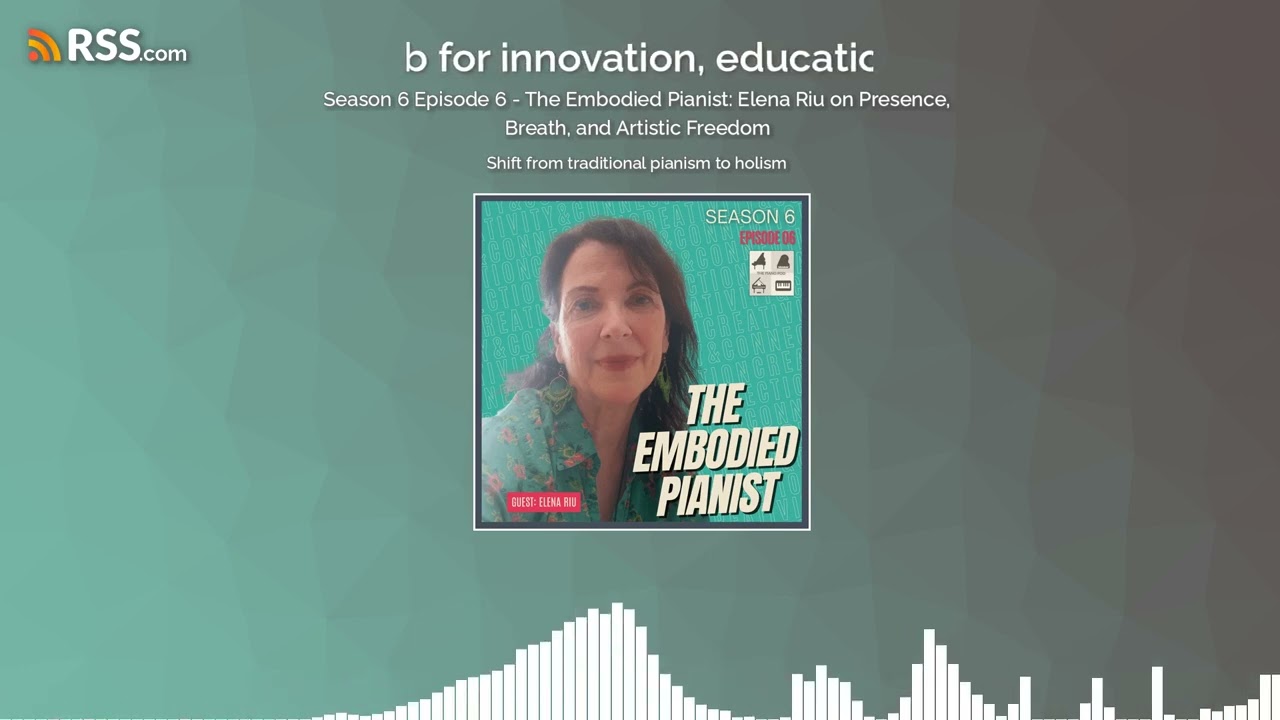
This content was created by The Piano Pod with Yukimi Song. This content was uploaded by The Piano Pod with Yukimi Song. This is a YouTube podcast episode titled "Season 6 Episode 6 - The Embodied Pianist: Elena Riu on Presence, Breath, and Artistic Freedom" (The Piano Pod) published 2025-11-30. The excerpt is an English interview-style conversation featuring host Yukimi Song (with an opening announcer) and guest Elena Riu — a Venezuelan-born pianist, educator, recording artist, and yoga teacher. The discussion focuses on embodiment in music-making (yoga, breath, posture, injury prevention), the embodied musician/performer pedagogy, coherent breathing and nervous-system regulation, cyclical creativity and menstrual-cycle awareness for female performers (including Elena’s book and workshops), and aspects of Elena’s artistic journey and recordings. Metadata: content_type=YOUTUBE, title and timestamps as above.
Chapters
What I'm trying to do more and more is really, how can I help this person be the best version of themselves that they can be and find their— the path that best suits them in, in this profession? I think what connects it all is, I'd say, trying to find a more organic way to see music making as not separate from other areas like yoga and health, you know, like well-being, also emotional health, spiritual health. I guess just in simple terms, it's becoming more aware of the role that your body and what you're doing with the body Pass on your piano playing.
Welcome to another inspiring episode of Season 6 of The Piano Pod, everyone. This season is all about creativity and connection, exploring how artists across the piano world are reshaping what it means to create and connect in today's ever-changing landscape. Today's guest perfectly embodies that mission: Elena Riu, a Venezuelan-born pianist, recording artist, educator, and yoga teacher whose career bridges performance, education, mindfulness, and innovation. Elena is known for her powerful performances in her visionary albums like Piano Icons for the 21st Century, Salsa Nueva, Out of the Blues, and Soleil: 12 Keyboard Sonatas. She is also recognized for her pioneering work on the embodied pianist, where she merges yoga, mindfulness, and music training to help musicians connect more deeply with their bodies and artistry. Elena has commissioned and premiered over 40 new piano works, collaborated with composers such as Gabriela Ortiz, Tania León, and Diana Arizmendi, and inspired generations of students at Trinity Laban Conservatoire in London. She is also courageously bringing new conversations to the field, like her work with female performers exploring creativity in the menstrual cycle, a truly taboo-breaking topic in music and the arts.
I can't wait for you to hear this conversation.
We talk about everything from embodiment and artistic freedom to cultural identity, cyclical creativity, and redefining what it means to be a 21st century pianist. So wherever you are, take a deep breath, settle in, and enjoy this episode. Before we begin, a huge thank you to you and our listeners and community. Every time you subscribe, rate, or share this show, you help us continue building this space for creativity and dialogue. It truly means the world. Here is Season 6, Episode 6 of The Piano Pod with pianist, educator, and yoga teacher Elena Ryu, the embodied pianist, on creativity, awareness, and artistic freedom. Please enjoy the show.
You are listening to The Piano Pod, where we talk to the brightest minds in industry about how they are bringing the piano into the future and thriving in a complex, ever-evolving world. Elena, welcome to The Piano Pod with Yukimi Song with Yukimi Song. Thank you so much for being here today.
Thank you for having me.
Of course. Your work spans performance, education, mindfulness, and collaboration. And what would you say is the core mission or passion that connects it all?
Well, this is a really good question because I often wonder myself, and especially, you know, the algorithm is very puzzled by all this. The algorithm wants to put us in a little box of like, you know, do one thing very, you know, focused. And, um, I think what connects it all is, I'd say, trying to find a more organic way to to see music making as not separate from other areas like yoga and health, you know, like well-being, also emotional health, spiritual health. And so I think what brings it— like what synergizes more and more, I can think that at the moment, I feel that it's the movement in a way. Because I, you know, I have a training as dancer initially and then as a yoga teacher. And musicians, we move as well. You know, it's not like we only play from this bit up, you know, from the brain, although that's the way I think a lot of us have been taught. And so I'm finding more and more that my work with yoga and embodiment and coherent breathing brings those two areas of my training together. And that's actually shaping up strongly at the moment.
So you mentioned embodiment, and then throughout your publications to your website to social media, I see the word embody. Embodied. And then, so how do you define the term embodied musician?
I think it's just in simple terms, it's becoming more aware of the role that your body and what you're doing with the body has on your piano playing. And it's more like connecting, you know, your physical body, your emotions, your spiritual body as well. In the process of creation and understanding how it might be hindering your progress or getting in the way of your practice, like misuse of the body or lack of awareness of the breath, for instance. You know, I've been teaching a yoga session at Trinity Laban Conservatoire of Music and Dance where I work for quite a few years now. Eventually they listened to me. And so now we have a session in the keyboard department And, you know, I give them a little questionnaire that I've made that I'm tweaking. And, you know, one of the questions is, you know, they have to put between 1 and 10 awareness of body, awareness of breath. And a lot of people, you know, when you ask them about awareness of body, awareness of breath, they put, they put 1. So very, very little awareness of what's happening to their breathing and what's happening to their body. And then, you know, we're constantly talking to people about injury, like how to, how to cure the injury or how to deal with the injury. But what I'm really interested in is not getting the injury, it's preventative. I think that's what's really important. So that, that should be happening from childhood, you know. People teaching children should already be incorporating embodiment in the teaching.
So mix of physical awareness to spiritual mindfulness together is the embodiment.
Yeah, it's like really like having an awareness of why did that happen, what is my shoulder doing or not doing or needing to do, did I, you know, what's my heart space like, how, you know, posture is not just about bones and the muscles. It also impacts, you know, in Chinese medicine a lot. It has a big impact on the heart center, how we sit, how we, you know, it has a big impact on the diaphragm, it has a big impact on the postural muscles. It's all connected. So it's not just like, oh, if you sit straight, like, you know, it was quite old-fashioned, this sort of Pilates sitting like a rod like that, which actually that's not how the spine works. Because the spine is a sort of like, you know, organic creature. And so, you know, how is this sitting like that affecting your heart center and your heart meridian? And, you know, all that, all the emotions that are lodged in the back of the heart as well. And so, yeah, so embodiment is taking all that into account. How am I feeling today? Your menstrual cycle. Is it really the right day to push and practice 7 hours? Is it ever? But, you know, is today, is today the right day to do that? Or is today the right day for me to show my new piece to people? Or am I particularly vulnerable today because my inner critic is really whipping me and I don't need any more people? So this is not the time to take a new piece to to my friends or even to my teacher if I'm feeling like already, you know, I'm already burdened by my own inner critic.
Wow, interesting. So much to really discuss, but I'm just curious, like, you are already an accomplished pianist. I know that. And also you have— we're going to talk more about your recordings later on. So you are a recording artist and But how did you come to this place? Like what's been your artistic journey from traditional pianism? I'm sure it was a traditional training and then now incorporating yoga, mindfulness, and somatic awareness.
Well, I think I was quite lucky that, you know, when I was a child, I was given quite a few opportunities to do, you know, to do dance. So I was always very sort of active. And then I started to teach myself yoga when I was 11 from, you know, the very famous Theos Bernard book. And, and, and I was doing ballet and I was doing piano and I was doing, you know, quite creative, you know, yeah, as a young person. So I think that already informed, like, you know, my relationship with movement through the dancing and the, you know, the wonderful synergy that dancing to music has, which is a fantastic, you know, medium. And then I got a scholarship to come to the UK, where I had a kind of quite traditional romantic pianism sort of not pushed on me, but sold to me by my teacher, who was Joseph van Gaarten. He had been a maestro. You know, mega sort of Hungarian Jewish refugee actually in London and had a big career as a, you know, Liszt and Schumann and all that. But because of my background, I had already done quite a lot of Latin American and Spanish repertoire because I'm half Catalan. And so when I came to London, I was already playing repertoire that wasn't really being taught. In the conservatory, as it is, as you know, to this day, very, very few people are playing Spanish music outside of Spain. And so I started to incorporate this repertoire into my recitals, which at the time was, I think, really, really stroke of luck for me because no one was doing it. So that attracted some attention. My teacher, you know, he was okay with it. He did like Granados, but he wasn't really, You know, he wasn't really somebody who played Iberia or Collescas or anything like that. And also in Venezuela, because I had a friend who was a composer, I was actually very interested in contemporary music. So I started to look at some, you know, quite lighthearted, like Bosa, and people who were a little bit out, you know, of the beaten track, and just to explore. And we were playing music by Venezuelan composers. At the time. So, you know, and some of them were still around. So, we were playing that kind of contemporary repertoire already. And then when I came to London, I, yeah, as I said, I started to program a mixture of contemporary and classical music, sort of like I call infiltration, you know. So, I was playing to very mainstream audiences, you know, in London, St. Martin in the Fields, you know, at the beginning, you know, doing all those church rounds as we do here when we're young. And, but I always was infiltrating some 20th century music so that people didn't think, oh my God, what's that? But they came to hear, you know, Kinderszenen or some Mozart variations. And then once they were sort of captured, then they would just hear whatever else I played. So I would play some Skaldborg, or I would play some other repertoire. And I found that that was a very successful way of introducing new music into a mainstream kind of concert hall audience as well. And then I had these ideas of how to kind of renew the piano repertoire. We're talking about 2000, you know, 2000, I think, or later, no, Salsa Nueva, let me check, 2005. I had these ideas, and I was wondering how can I play more new music. I was playing new music by Venezuelan composers, by people, by colleagues at the conservatory. And then I decided to see if somebody would be interested in this idea that I had, which was to create a piano repertoire based on popular styles. And that's how Salsa Nueva and rhythm and blues came to be. So I pitched the idea to Bussy and Hawkes, and, you know, it was just a question of being in the right place at the right time. I think I wasn't like, you know, an A1 list name in the concert circuit. I mean, I was doing quite a lot, but I think they thought, well, this hasn't done, you know, been done before, which I think It probably hadn't. And so I commissioned all these composers to write piano music inspired by salsa. And then the next volume was inspired by R&B and, you know, the blues. And that was, I think, quite a kind of breakthrough in my career as a musician, because then I also, you know, was editing, producing, you know, doing The whole thing, commissioning, checking on the scores, making a recording, taking on touring, is a lot of work and a lot of heavy deadlines.
I'm sure.
And the second one, the second volume, was happening when I was pregnant. So that added a whole new light into the whole process of like being really pushed you know, having a deadline looming over you when you're going through pregnancy and then childbirth and then, you know, breastfeeding and all that.
So that's when you were like, oh, I need to incorporate some of those like wellness into your—
Well, I had already, funnily enough, before I had my daughter, I had, you know, taken a whole 2-year teaching qualification as a yoga teacher. So that actually happened just before I had Ananda in 2008. So I had been doing a lot of training with a really incredible— one of my mentors, you might have heard of her, she's like a visionary pioneer of women's yoga, and she's written 6 books, I think. And she's called Dr. Uma Deen Smrthuli. She's written a massive book called Yoni Shakti, which is like a Compendium of like yoga and women's health. So I done a lot of trainings with her, you know, while I was, you know, doing my music and my teaching and everything. And then I took this yoga diploma and then, you know, I was, um, well, I was incorporating to my own daily life and I could see the benefits that it was having on my creativity, my energy levels. Physically. I've always very luckily naturally been quite sort of relaxed in my body, so I'm not somebody very stiff. Um, and then, yeah, and then, you know, that kind of came into my teaching, you know, one-to-one more specifically. And then it has become a bit more like incorporating into a group practice also, because, you know, as you know, people are suffering from performance-related anxiety quite a lot. And after COVID and with everything in the world, it's, you know, it's rocketing. You know, just anxiety generally in young people, you know, the anxiety is quite high. The stresses of the career, having a career, whatever that means, you know, being told what it means by somebody, and, you know, the expectations that, you know, can be quite I'm not saying, I'm not saying that we have to sort of, um, this is the wrong word, mollycoddle, you know. It has to be, you know, that the thing is that the yoga brings resilience. We need to train people who are resilient because they need— definitely, this job, you need to be very resilient and very flexible, don't you? So that comes with the yoga as well.
Yeah, that's interesting because And our industry is not really known for being flexible because the training is a rigor and rigid. But at the same time, when we think of career, yeah, we have to be flexible, especially these days. Yeah. Now that's where your expertise in yoga comes in. And that's amazing. But when you teach, I know you are teaching this yoga mindfulness It's Yoga and Mindfulness for Pianists.
Yeah, it's called the Embodied— well, I'm calling it now the Embodied Musician and also the Embodied Performer, because if you're a dancer or you're an actor, you can also use a lot of— you know, we have very similar issues that we are facing, you know, tiredness, tension, fatigue, muscular tension, you know, injury. Anxiety, stress, um, and, and all these things that lead to insomnia perhaps for some people, you know, etc. So it's all the ramifications of, of, of these issues and where they lead people as well. So yeah, so I have a class, I'm doing workshops online also on creativity and your cycle for women, for female performers. I've been doing quite a few of these. And, um, and then I have, yeah, a yoga class on a Monday morning, which is not very good for the, for the States, but you know, I could do it if there was demand. I would do it later. And, uh, and that's every Monday, you know, for people who want to kind of start the week feeling, um, purposeful and aligned with the energy of the Monday morning, which, you know, sometimes quite tricky. And, um, yeah, so I'm, I'm doing both one-to-one in my one-to-one teaching where obviously it can be more hands-on because, you know, obviously with consent, um, because you can see something and, and, and adjust it in a way that they feel it very, very quickly. And, uh, and then in these group classes and then yeah, in these workshops as well.
Where do you think these anxiety or tension come from, especially among young musicians? Maybe you already have answered, but that, you know, I have several students and I want to help too. And there are many, as you mentioned, there are many books, many classes out there, but maybe it's not quite addressed from the get-go. You know, there are solutions to the problems, but maybe they're not addressing the core of the issue, you know, before it's happening. As you said, we can stop from being happening. You know what I mean?
Yeah, the prevention. Well, there are many reasons, I think, you know, quite a lot of it can come from your family background, you know, the kind of environment that you grew up in, the kind of expectations that have been placed onto you, you know, you know, a lot of people take on a career as a performer as a form of like, um, fawning, you know, pleasing your parents or fulfilling expectations from other people. It happens in other careers, you know, like lawyers, doctors, And then, you know, there are so many expectations, aren't there, when you've gone to music college and then you're faced with this sort of these incredible high standards of perfection, also fueled by the CD industry, you know, and meeting so many deadlines. I think especially the first-year students, I think there's like a sort of First-year students and postgrads, I think they're both the worst affected because then, you know, in the middle people have had some time to adapt or make some choices, hopefully. But at the beginning, you know, they come into music college and they don't really fully— they're not fully aware of what they are going to be dealing with or the expectations are going to be. I see that a lot, and they're not prepared for what's coming to them. And then, you know, when they get to postgrad, they sort of feeling like, oh my God, if I haven't made it, made it now, I'm a failure. And, you know, there's a lot to do with being compared to people, you know, comparing yourself to your peers, the competition, you know, also not getting anywhere, a lot of rejection and not having to deal with rejection. Having a good kind of lifestyle also, that helps one kind of deal better with obstacles, you know, and that's what I mean resilience, you know, you have to, okay, accept that maybe that wasn't what you expected and now you have to get up again and, you know, try to learn from it. How do we start again after a rejection or a perceived failure? How do we deal with negative thoughts? And I think the problem is that we tell students it's all talking. So, you know, you read a book or you go and see someone when you're anxious and they'll talk, which is great, obviously talking is better than not saying anything, so talking is one form of of dealing with these problems, but we now know from neuroscience and from yoga and from alternative medicine that, and from the people I train with, that the best approach is bottom-up. The best approach with somebody who's already very stressed and very anxious is not to sit and talk or meditate, is to move, is to use the body as the tool to bring people back into your center or into yourself, you know, to feel your big muscles, to get the mind to feel the body, and then the mind basically drops down into the lower body. That's what we want. We want people to be up because especially also, you know, we're sitting all day, so there's a lot of stuff like circulation and energy channels. You know, if you believe in yoga and Chinese, you know, traditional Chinese medicine and Ayurveda that have been blocked, there's a lot of blocking from the posture, the breathing, the pelvis, you know, there's no circulation. So the approach is that you move people, you do certain things to purge the negativity, you know, to release the tension with the body, through the body and the breathing. And then you lie them down to do an incredible yoga nidra, which is, I mean, you know, I have people, Yukimi, coming to my yoga class at 9 o'clock. So they just got up and at 10 o'clock they're sleeping again because, you know, the level of tiredness, there's like an epidemic of tiredness in all of us. And we, we don't notice it because we just carry on. You know, we're told to just push, push, push this toxic productivity. So I have people who are so— they just are gobsmacked that they fell asleep at 10:00 in the morning. They just can't get over it. And then at college now, I used to have a class at 5:00. Well, everyone, I say 90%, was asleep. In the yoga nidra. And even now, 11:45. So if I do a yoga nidra about, yeah, sort of 12:35, most of them will be asleep.
Wow. You know, Elena, I used to be a hardcore yogi, not like you, but, you know, like I did like a vinyasa, like a little athletic. Handstands? So it was my work. Yeah, it was my workout. But, you know, since 2020, I stopped, and then my life has not been the same. It's, it's, it's— and then, you know, I encouraged myself to do, oh, maybe I should do like an online yoga thing, but it's not— it wasn't the same. So I was so discouraged, and I'm so such a perfectionist that everything has to be perfect in order for me to continue. So I really do miss, but there's something so beautiful about yoga where this, um, you know, each class just focuses on one part of the body, for example.
Yeah.
And then especially when it comes to the hip joint, when that part of your body opens up.
Yeah.
I don't know what happened to my brain. Why? What, what is this thing about yoga that really Is it breathing or is it this openness in your body? What is it?
Yeah, it is. It is because, you know, the thing also is that people go to the gym, you know, they watch something online, you know, or Instagram and they, they like do this. And I tell them, if you're not breathing, it's not going to— the medicine is in the combination of the breathing, the pace, you know, the— in the case of coherent breathing, this is very specific. Breath ratio. That is like the magic formula to regulate your nervous system. And, and you nailed it in the head, is the flow of prana. You know, it's making, you know, Chinese medicine, they believe that the energy goes up and down. And, you know, when it just stays stuck up or down, then we have issues to do with our health. So when you're in a yoga class, you know, when, when the breathing is incorporated into the movement, you know. So that's one of the best practices for stress, is, you know, moving breath. And, uh, my teacher, you know, I, I trained with, with a few people, but the— had very big influence was the Shadow Yoga School, Shandor Remete. Really incredible, incredible teaching. And, uh, there's a lot of sequences where a bit like Tai or qigong, where you're moving with the breath. So the mind is very, very busy because it's busy trying to synchronize the breath with the body. So it doesn't have time to go into, you know, somebody said something about me and I'm useless. And then, you know, that's— you get a break from all that, don't you? And then there's healing from just having that, that hour when you didn't think about all this stuff that you're not getting done, or that you're not— and you're just being in your body with your breath. And yeah, you know, the law of correspondence is the hips and the shoulders. So when you free your shoulders, you're freeing your hips. When you free your groin, your feet, you're freeing your armpit, which is really important in piano playing because, you know, most of us are like this. And, um, and Yeah, and this panacea, this balm, which is the Yoga Nidra, that's giving people the permission to have this profound opportunity to drop into their body and, you know, peel these layers of thoughts and tension and deadlines. And just that peeling, and on you go deeper, you go into Delta Now they know that you go through all these different brainwaves, which are incredible for your creativity that, you know, in normal, um, awake, waking time, we don't have access to. So the yoga nidra is not just to fall asleep. I mean, whether you fall asleep or not depends on your body and where you are, but it's more like profoundly creative because you, you really are exploring like the kernel of your being, but not from the mind's point of view.
Wow, it's so deep. And I, I, by speaking with you, I feel like, oh, this is a sign I need to get back into it.
Yeah, but you know, maybe, maybe at this point what you need is to do a different kind of yoga, you know, because, you know, doing vinyasa now, it might not be what suits you, you know, right? We change and we're at a different place. So, you know, that kind of yoga might have suited you, you know, in your 30s or 40s, and now you just feel that's not really what I need, you know, my body doesn't want it. And then we can adapt to changing needs as well.
Yeah, I, I think so too. I mean, the different stage of life where that sort of activity doesn't suit me anymore. So I need to find a different path. But yeah, I need to breathe. I need to, like you said, feeling like an onion skin, like a little by little, like, you know, I need that experience again.
Yeah. And the coherent breathing is wonderful for that because the way they, the way these wonderful people, the doctors there in New York, Dr. Brown and Dr. Gerberg, of breath, body, mind, the way they teach it. Because obviously they are doctors, they're psychiatrists, so they know all the ins and outs of, you know, from the physical perspective, what is happening or not happening in the body and the mind. And, and they're bringing these practices to the West. And also they're, you know, they're using these practices in a really kind of extreme situations of where people are experiencing severe trauma like war and catastrophe scenarios like the earthquakes, and they really, I think they understand that this idea that you have to get rid of something first, you know, before you put the other stuff in. You can't put a new thing if you're blocking it with all the old stuff that is just running around. And then the way that, you know, the coherent breathing, which is pranayama, but, you know, explained in a different way, this breath, this ratio of breathing, um, that very related to the role of the vagus nerve as well, you know, that creates this balance. So, you know, it's not like you're going to do this yoga and come out to play and you'll be like a zombie. Cause you know what I mean? It's not. It's, it's, you are like really balancing the stress levels, which are usually like that for most people. And these are the, you know, the relaxation response. You're trying to bring them into relationship. So when you come to perform, you'll be not over-sympathetic or parasympathetic, you know, you'll be balanced so you can make better decisions. You have better responses in the muscles. You're not in flight. Or in fight, hopefully. And that's something I work a lot with in my class, the nervous system.
And how, what sort of like positive effects do you see from like after teaching several classes or maybe a semester or something? And then do you see any transformation in your students?
Well, I ask them. After the sessions to, you know, to fill the questionnaire. So it's like a before and after. You can see quite a lot of really positive responses that you can even see after a session. As you know, when you go to yoga, you feel immediately better after. And that, you know, your face looks— your eyes are clear. And so I tend to get a lot of feedback on people feeling more I think more courageous and more, I think, more energized, more inspired, and more relaxed as well. And I've had some very beautiful feedback of people doing the final relaxation of the Nidra and feeling really interesting things happening in the arms. People with injuries, you know, doing this, this coherent breathing, they really describe described very beautifully. I can send it to you later if you want to. The feeling of, you know, what's happening in the arm and light, and it's very beautiful. Yeah. So it hasn't— oh yes, you know, some people are very sensitive, some people take longer, you know. Some people are more cynical, some people are more rational, you know. So you, you know, you also depends on where you are in your perception of what the yoga is as well. You're going to bring that into it.
Yeah, absolutely. Wow. Thank you for sharing all this. It's very inspiring. Now, then, but before we talk about your career as a musician, let's talk about this taboo topic in our industry, especially this menstrual cycle. So when we talk about, you know, female in this context, obviously we are referring to those who are biologically born female. Yeah. It's something, you know, menstrual cycle is something that we experience nearly half of our lives. You know, if we were to live it, you know, our 80s or 90s, right? And then it's rarely discussed. And then when you think of like athletes, I'm sure there are expertise of all sorts of kinds to help them to prepare for this, the game. Of the century, right? But then in our industry, there's no talk, like hush-hush.
Absolutely.
And yeah, and I wonder, you know, like even if I was much younger starting the cycle and then if I had more information, more support, it would have been a different experience. For all of us.
And that's why I wrote my book. I wrote this book, My Dear Period.
Oh, that was great.
For young girls. I did all the illustrations, but that's another conversation. You don't know how did I do that. Yeah.
You did?
I did all these drawings.
Oh, you are so multi-talented. I, oh, really?
Yeah, you can see why the algorithm hates me. Not because I'm, not because of the talent, but because of the diversity stuff. I wrote this book because I, through my yoga, I also have been working a lot with young girls for many years and their moms, and a lot was coming out in this session because of my daughter. You see, I did that also to give her a girl circle, so I was meeting girls to do yoga and coming-of-age stuff every week for quite a few years. So I learned a lot about what was happening in the school, how people talk or didn't talk about the period, how they felt about their body. And it was alarming because this is happening now. You know, the taboo when we were young, in a way you took it for granted because, you know, just imagine my mom. I mean, her background in terms of body literacy was zero, you know, and you didn't expect that. But even for me growing up, it wasn't a subject that was explored or welcome in, in my environment or even with my friends. So we already have experience of what, what it's like not to have this kind of body literacy tools. So obviously when you go to conservatoire, it's going to be the same because all those girls have been brought up mostly in families where this subject is ignored or dismissed or very lightly, like, you know, here's a pad, don't talk about it, you know, hush-hush, throw it in the bin. And so it is to be expected. I mean, I taught a class for dancers the other day, which, you know, you think, as you say, athletes, they're going to be really clued up. They had no idea about whether or not they were ovulating, what cervical fluid was, how to track the period. I mean, they were all, you know, on the pill, not knowing what the pill, you know, really is doing to your body, etc. So it's actually widespread taboo. And that's why, you know, movements like Celebration Day for Girls exist, which is a fantastic workshop created by Jane Bennett in Australia to give these sort of girls a chance to have a proper rite of passage around Menarche, which is first period. And so, of course, it is taboo because, you know, the music business traditionally has been very, very misogynistic. I mean, the music business still now, you know, I read lots of stuff from the New York Philharmonic. There was a whistleblower, I'm sure you know her, I mean, you know, dishing all the dirt on how absolutely appalling it is. You know, even the Berlin Philharmonic, I think they only had one female player, a country with Carajan. So it's not a surprise that women are thinking that to succeed they have to behave just like a man. And that's the standard, you know, I have to be, you know, exactly the same. I have to have the same hand span. I have to make the sound of a male pianist, you know. Women go to play, you know, and they are told project, project. And I'm like, project what?
What?
What is project? I mean, you know, just to— you have to kind of— I call it meat and two veg, you know. You have Sunday lunch in England, you have meat and two vegetables, and it's like really heavy and, you know, makes you feel really full, not healthy. And necessarily. And so I just— they just have this kind of expectation. And so how could you even be brave enough to mention that you have a cramp and maybe you don't want to come to your lesson or you can't practice, you know? So, so I'm now calling it bringing the M in— the M of menstruation into music. That's what I'm calling Bringing the M of menstruation into the word music. So as you say, athletes now have so much more knowledge. They're taught to track their periods, famously in the British, in the football teams, the female football teams, and they are adjusting the training. So they're making the most of each phase of the cycle. It isn't that having your period is worse than being, you know, in the follicular phase, which is pre-ovulation. So basically there are 4 phases and they're like the seasons. There's inner winter, that's when you bleed. Then there's inner spring, which is the follicular phase, which is before ovulation when the energy starts to surge. Then there's the ovulation, ovulatory phase, which is when you ovulate and your hormones are like top peak. And then there's the premenstrual phase that we know very well as women, when everything gets a little bit, you know, hormones start to change, estrogen drops, you know, progesterone rises. And then there's the bleed when the hormones are a bit more like flat. And they are just different. They're not worse or better, that they have different strengths. And so my students, if they have a really bad period, they can call me and they can say, "I really feel really not well," and we will make up the lesson. And if they come to the lesson with a really heavy period, we will do other things. We won't play through You know, the Schumann Sonata in G minor when you have a very heavy period, you know, at full speed or Bach Toccata Sonata, you know, first movement. No, no, we don't want to do that. We work in a different way. And also I'm telling— I've actually got a workshop coming up in December of how to show up for a performance during your winter. So how do you— again, you— because we don't have the luxury of telling a concert promoter, sorry, I got my period, can I change? You know, so this is what people don't understand. We are different. That's why I'm approaching performers and menstrual cycle awareness. We're in a different category because you can sync your diary. You know, most women kind of manage to with their with a period, with the menstrual cycle. But when you will have a gig that has been planned for 2 years, you can't change it. So you have to manage, you know, with your period, with the cramping, with whatever comes with it. But how do you do it? And so that's what's interesting. How do you pace your cycle if you know that you have this exam this first performance, this important meeting on the day of your bleed or around it? What can you do to prepare yourself so that you can do your best? And how can you use the incredible gifts that come with the bleed in your performance? Because, you know, we have other, other gifts Yes, each part of the cycle comes with a different set of tools and powers. And so if you know they're there, you can use them at different times. Like we were saying, you know, if you're very premenstrual, you're already like very critical, you're hypercritical, you know, to yourself. So it's a really good time to edit something or to clean up a document or to make decisions, you know, tidying up and but it's not a good time to kind of get out there and play to people because you're not, you know, you're already receiving a lot of criticism.
Wow, that's incredible. I wish I knew this when I was much younger. And then now, you know, obviously I'm an over a certain age and it's in a different phase of my life.
So maybe you can still use the Moon So women who are postmenopausal, yeah, we will be using the moon as a sort of anchor, you know, not like a fixed thing, but, you know, you can use the moon and go, okay, oh, I'm feeling this, this big full moon happening here, and I'm feeling the opposite, you know, I'm feeling really low, I'm having a really sort of tough time, or, you know, the energy of the moon is waning. So, you know, because we still have hormones, it's not that we don't have hormones, it's just right, right, right, a different level of operations happening.
My— right now it's like I'm, uh, in the perimenopause. Okay, toward the end, but it's like ups and downs. It's just, uh, the experience is incredible.
But that can help you. The moon really can help you because women who are in perimenopause, when your cycle starts to, you know, be very, um, erratic, the moon can actually give you a little bit of a feeling of grounding because you can at least look at nature and the moon as well, to get that feeling of, well, I know where I am, you know. There's like a, you know, waxing moon or crest, you know, is still syncing. And some women come back to a more regular cycle in perimenopause through track, through using the moon. They do. It's really interesting. It's like your body kind of syncs with—
Wow.
Yeah. And it's, yeah, it's tough. It's tough because it's like you're in, you're in the premenstruum all the time. Very menopausal.
All the time.
All the time.
Yeah.
Truly. Yeah.
Yeah. Yeah. But, you know, at the same time, I, I'm that kind of person to embrace the nature because I think living this long is already a privilege, you know?
Yeah. It is.
And so, yeah, it is a privilege. So. I embrace the aging process and I'm not afraid. And sometimes, oh, it so sucks, you know, it's not really cool to experience the aging, but, but I take it positive. So that's why I'm asking, like, you know, I want to somehow incorporate the knowledge, or I want to study a little bit more so that I can really give that gift to my students, you know, young students who are about to experience and enter into this phase of their lives. And it's gonna, they're gonna have this relationship, this menstrual cycle, this relationship for a long time. Then they might as well.
We have like 430 cycles. 430 periods. Thereabout. Yeah, well, that's why I wrote the book. The book is there, you know, on Amazon, everyone. So that, okay, in the US, so people can feel empowered and empower their daughter, you know, to have all the right language, to have the knowledge. Um, there's lots of spaces to write things down in the book, to reflect. It's like a sort of journal. And, and, you know, to change the narrative that they do know where they are in their cycle and what's happening. And obviously the book is for young girls. Um, but yeah, I think I am working on, um, you know, I'm gonna have some done some trainings in the UK about, um, the embodied pianist and musician for music teachers. And I think the next one is going to be for, you know, for teachers of female students as well, just to how to, how to understand that, you know, if you have a student, um, in, you know, you remember, you know, in different phases of the cycle, they are, you know, have different abilities that we can call upon. Or, you know, we can give different homework or different tasks.
Or, um, yeah, but if you know how to manage better, I think as female artists, it's, it's such an eye-opening experience because oftentimes, like, you know, it's been a disadvantage because we we weren't taught how to really deal with, right?
So yeah, exactly. It's not because it is a disadvantage. Well, the patriarchy wants us to think that it is a disadvantage.
That's right, that's right.
And it actually isn't. It's, it's, it's an incredible, you know, if you look at nature, how nature creates, nature creates in a cyclical way. Nature doesn't create in a linear way, you know. If you look at all the processes of the, you know, the life cycle, it's also a cycle, you know, and then, you know, it keeps changing, it keeps repeating, it keeps evolving, you know, and that's the same. So it's, we feel there is a disadvantage because we have such little information about also the creative cycle is the same. The creative cycle is not linear. You know, when you're writing a book or practicing, No, every day is the same as the other one. That's imposed by this patriarchal lens that you have to be. And even men, they do have hormones, you know, they do have cycles. They're just smaller. So this expectation that young people have, you know, that they have to practice every day, the same amount of hours at the same, you know, it's like driving a car full speed the whole time. You don't do that. You, you know, you change the speed. Even in a car, it's not the same, you know, you have to adjust, you have to change gear. Exactly, so in, in a creative life, when to change gear is very useful to know it, when to push, and if you have to push in a moment that you feel that you have less energy, how to, how to deal with that, you know, how to, how to help yourself, as we're saying, if you're having a very, you know, heavy period or you're, you know, having a long cycle because you're in perimenopause and you're an artist and you're on tour and your period lasts 15 days, like in perimenopause, how to deal with it to make this experience, you know, less disempowering. And you do that by how you prepare before the event and on the day, you know, like delegating, asking for help, even simple things like that can make a big difference, you know, in how we are managing, performing with a cycle.
Wow, this is incredible. Thank you. Yeah. And then can you show me your book again so that people can see?
It's in Amazon in the US. And you can get it in the US. They deliver it to your doorstep and it's just for girls and their moms or the caregiver or auntie. It's a present that you can give to your goddaughter and it has a lot of— let me show you— it has a lot of spaces for, you know, lots of questions and good places to to draw. For instance, that's a blank place to draw. And then they have, um, draw your Menarche party outfit. And then just, you know, making decisions about what would you like to do, planning your first period. This is, you know, some yoga, tension releasing. And then These leaves are for you to write down what you're wanting to release today. So there's a lot of journaling also and games that are incorporated. So it's very child-friendly. So it's about, you know, between 8 and even 14, depends on the child.
Oh, wonderful. It just looks beautiful. And I didn't realize you have this gift of drawing too. That's amazing.
Well, I just Because I did a training and I did actually the menstrual, the menstruality leadership training with Alexandra Pope and they had people doing a lot of visualizations and after the visualization they wanted us to draw and I was very being very rational and quite closed in for some reason during that weekend and I just I thought, oh my God, you know, I can't believe I'm having to do this. And, uh, and I had a lot of resistance, which is interesting, you know. I could draw, I drew with my daughter, but not— and then I just thought, you know what, I'm here, I, you know, I, I blocked all these days, I'm just gonna go for it. And then this drawing started to kind of come out of these visualizations, and that led to me thinking, how can I explain to somebody else what I like the drawings that I want for this book. And I thought it was going to be so difficult that I just thought, well, I'll just do them myself. And I did. So wonderful. But it happened out of— it happened out of a 5-day retreat where we did use visualization as a tool. Because, you know, athletes use it, and I'm teaching, you know, we should musicians, it's really good for us to use visualization to manifest the highest outcome as well.
Visualization.
Yeah, you know, maybe athletes, the gymnasts, they visualize for many more hours than they actually practice at the bar or the— yeah, so it's really important that we do that as well.
Yeah, you're right. Yeah, I've talked to psychologists, um, on this podcast, and he mentioned as well. Yeah, yeah, yeah. Now I want to go on more about all these wonderful physical topics, but I also want to, you know, talk about your recordings. And so you briefly mentioned at the beginning of this episode, so you are a champion of commissioning and introducing new piano music for decades. You know, I listened to your albums, like for example Piano Icons for the 21st Century. That's when the album came around, 2000.
Yeah.
And then Salsa Nueva, you mentioned in 2014. I totally enjoyed it. And then Out of the Blues.
So, and you know, the Solaire one as well. So that's right.
Solaire, actually, I interviewed Hayk Arsenian. He's a New York-based pianist, and he did extensive research on this composer, Antonio Soler.
Ah, that's fascinating.
Yeah, yeah, I'm gonna connect him to you because he, yeah, he wrote this, um, he, he, I think his doctorate degree, uh, he wrote a dissertation about this composer.
Yeah, fascinating.
Yeah, yeah, yeah, I think that, yeah, his book is now published in Spanish as well.
Okay, I'd love to connect. Yes, thank you.
Yeah, yeah, yeah, of course. So tell me, how do you— so even like contemporary pieces that you commission and perform, they're not too avant-garde. So, you know, most of them are supertonal and it really invites much wider audience, I think. So how do you pick and choose?
Yeah, and also The Piano Icons was slightly different. That was very sort of highbrow, you know, that was more to do with like portraying composers' different interpretations of spirituality and nature, you know, so this is Jana Ček. And then I commissioned this piece by John Taverner, who, you know, was a very big composer at the time. And that is a whole story of how that happened to be and the issues that came up through the whole of that commissioning. Period for that. And yeah, and he wrote me a piece that was quite difficult because it was, you know, quite long, I think 20 minutes. And then when I saw the score, like, you know, had 5 pages of continuous trills. I wasn't so pleased with it, but anyway. And then, you know, I had to ask permission from Arvo Pärt to write his piece, so that they, you know, and, and, um, so I put this, this was like a, a big breakthrough for me because it was commissioned by the City of London Festival and there was a lot of stuff going on. And yeah, and so I wanted to present different styles. So it was Montpaul, and then there was Sculpture, then there was the Janacek, which is quite big, and the Tapner. And then from that, I think I went into the Soler, inco Soler Catalan. And, you know, people play a lot of Scarlatti, but again, hardly anybody knows Soler. And his music is exhilarating, isn't it? It's just so fantastic and so crazy with all these modulations, you know. And then came the sort of— and then I have recorded music by Diana Arizmendi, who's the— she's the— Artistic Director of the Festival Latinoamericano de Música in Caracas, and she's been writing for me for many years. And so I've been doing, you know, some recordings for her as well, which are, you know, part of a sort of like recordings of all her music. And then I did this Salsa Nueva and the Out of the Blues because I wanted— I was seeing, because I used to teach kids, you know, before I taught at college. How it was very difficult for really young people to relate to some of the classical, you know, repertoire. Like, how does that really connect with somebody who's 10? You know, how do they connect with a Mozart, you know, Divertimento or something? I mean, what is that saying to their actual life, everyday life, and their the school life. And so I wanted to come up with something where young people would be kind of feeling that it was cool. It was cool to play this music because, you know, it was a bit of, a bit of like boogie and blues and stuff like that. In fact, when I taught, um, I showed this, I did a workshop with EPTA China at Trinity College last year, and they loved the um, they read them on blues. You know, when, when they heard the pieces and when they, when they heard about it, they just— oh my goodness, they all wanted to buy it because as soon as they heard that it had R&B bass pieces, they just— yeah, this is—
is that from Out of the Blues?
Yeah, this is called, uh, Elena, this is the R&B connection. This is Busey and Hawkes, but I think you You buy through shops, actually. It's quite complicated. And this is, you know, new commissions by people like Sally Beamish, Nicky Yeo, David Rosenboom. He was the head of the DINACalArts. He did a lot of really also contemporary jazz. Ana Lara from Mexico, you know, Elena Katz-Johnson, Chernin, lots of different people writing me pieces that were sort of blues and R&B and sort of jazz inspired. And I thought, you see, you know, young, young musicians would really like this because they would feel that's what they're listening to. They're listening to R&B. Now rap more and rock and pop music.
So these are compilation of all these composers.
Yeah.
For you and then geared toward more like intermediate students?
It's 17 pieces in this one. Yeah, they were. So that was also what happened, that the first, the Salsa Nueva, was supposed to be also like for up to grade, up to grade 5, I think we said at the beginning, but it wasn't because we have people like Javier Alvarez, Romy and really difficult piece, wonderful piece, but really difficult. And then Gabrielle Ortiz also, a really difficult, wonderful, but not at all great. I mean, grade 8 maybe, but not really. So the second time we learned our lesson, so we had to be really tough with the composers, you know, about the length and the difficulty. So it would be more like grade 5. And so we were more successful in the rhythm and blues that it can be played by, you know, younger people or people that are not at college. A lot of the salsa nueva will be like almost, yeah, you have to be really good at also reading and, you know, technique. And yeah, you have to be grade 8 up or semi-professional. Some of them are maybe grade 6, 7, but the minority. And also because, you know, with all these rhythms, It's quite difficult if you're not familiar with Latin, you know, clave, montuno, all these. And also, my, my, one of my really strong remits for this was that I wanted to include as many women composers as I could.
I noticed that. So you have the Diana Rissmann.
I pushed really hard and I got, I think we managed to do half and half. So I think I have the same number of women. As men over the two volumes. So, I feel that I wanted to give a voice to loads of composers also that were not from the usual countries, you know, so that they were from, you know, the Global South or nationalities that perhaps weren't so well known in Europe or in the US. And so that also we managed to have quite a lot of Latin American female composers involved in this, and I was really pleased with that. Because now, you know, now it's more popular, you know, for people to record music by women and play music by Latin American. This is 2005. It was— I know it wasn't really happening then. In fact, the review from the Grammy— I think this was Salsa Nueva was kind of, if I may say so, a bit ahead of time. Yeah, because it was also contemporary music and short pieces. It wasn't a sort of people pleaser, although, you know, some people loved it. Anyway, so I was really pleased that we managed to get all these wonderful women composers.
But where does— because, you know, finally in 2020, I think this diversity of recordings and female composers and so on just happened all of a sudden. Just, it really broke out. Yeah, you know, but before then, well, yeah, I guess only a handful, like including yourself. So I wonder where that— did that inspiration come from, or it was just your—
I think my roots, because, you know, I grew up in Venezuela, I was surrounded by Latin music, salsa, you know, whether you liked it or not, you were exposed to it 24/7 in all the buses and blaring out of every single loudspeaker in the street. And I actually really love salsa and I love dancing. So, and then, you know, I grew up with knowing about all these Latin American composers. And then I heard, as I came to Europe, I started to listen to more You know, Tania Léon, who I'm so honored that she wrote Tumba, which is played a lot, apparently. It's become really popular as a piano piece.
I know, but did she— did you commission her?
Yes, I commissioned her.
That's a very famous piece.
Yes, I commissioned it.
Oh my God.
And I think she dedicated it to— did she dedicate it to Celia Cruz? Let me just The Tumbao is dedicated to Celia Cruz.
Oh my goodness.
Which is a really famous Cuban salsa singer.
Is that the music score that Tania wrote?
Yes, the score that Tania León wrote.
But these are the compilations from your album?
So it's part of the salsa album.
So do you also— so did you publish the scores as well?
Yeah, this is So that was why it was such a great project, because we not only commissioned, but we published all the scores with Bussi and Holt. They got paid to write, but they also were getting a commission because I wanted the composers— I was very much advocating for the composers. You know, normally you commission a piece, it gets played once, maybe twice if you're lucky. And maybe the composer gets a little bit of money depending, or nothing, just the performance. So I really wanted to make sure that they got more than just the first performance and that the music was going to live on and be, you know, available to all around the world, which it is. And yeah, so that they're all printed. So you can get the scores from Busi Hawkes, for shops. I think in the, in the States, yeah, if you go to Boozies, they'll tell you where to get it. I think it used to be Hall Leonard who distributed them in the States.
You have to send me those links and then I can put it in the show notes so that people can take a look and purchase.
And it's really great for piano teachers when, you know, when you're sort of desperate with trying to find repertoire. And you mean now, for instance, at Trinity? We have some requirements in the exams, which is brilliant, depending on the year that they have to play a piece by a female composer, which is really great, or a living composer. So this meets both of those requirements as well. And, you know, if you give a 10, 11-year-old boy a piece that is a boogie, they're going to be quite happy to play it.
Oh, definitely. Oh yeah. Oh yeah. That's exactly what they're asking. Always.
Yeah. Or something that sounds like, you know, R&B or rap. Yeah.
Yeah, exactly.
But it's still good music and it's still written by a really good composer for the piano. So it's not an arrangement that you just downloaded off the internet.
Wow. That's cool. So I know you mentioned you're of Venezuelan origin and trained in Europe as well, and in which, in an Currently you live in the UK and which must have given you a rich perspective on music and identity and so on. And how do you think that experience or, yeah, the experience shaped your approach to tradition and artistic freedom?
I think, you know, I brought with me what I had from my home. I mean, you know, we were a family of immigrants. So, because, you know, my parents for different reasons both ended up in Venezuela. My dad was fleeing Spain. After the war. And, uh, and, you know, all the Europeans were— a lot of them were escaping. So Venezuela became like a safe haven, a paradise, you know. We welcome everyone. So I was bringing that experience of coming from an immigrant family and becoming an immigrant as well, you know, myself, in a different country. And it was, you know, it's an incredible experience, but it was Tough, tough. So now, you know, when I have foreign students, I know exactly what they're going through, you know, at 18, as you know, it's not, it's not picnic, not all of it. And, um, yeah, my identity, I don't know, you know, it's been very difficult in Venezuela with this dictatorship, so I haven't been able to go back for many years. I sort of refused to play since 2016, and then my mom passed away, so I didn't feel I could go back. I, I, I'm hoping that soon when this is over and we get rid of the baddies, I would love to go. I mean, I'm all ready now to go and do some, some work there. There's so much good work, there's so much talent. Oh my God, talent in Venezuela. It's just out of this world. So as I was talking about identity, that's really difficult because, you know, I was already born in a country but didn't have, you know, any, any family from that country, or my family was in Europe. And now I'm in a country where I kind of made a, you know, have a child and I made a family. But, but yeah, so, but it's not my roots are not here, although, you know, I feel Yes, because I don't really feel I belong to a particular country. I'm not sort of, um, I don't have an identity as such. Like, uh, you know, if somebody said something bad about England or Venezuela, I'd be mortified. You know, I could take it because, you know, you know, when you're an immigrant, you can become quite critical of everywhere because you're not moving around. Yeah, yeah, it's sort of really— I mean, England has been, you know, was Mecca, wasn't it, for many years for musicians? And everybody came to London. All the great people used to come to London. And so there was a vast amount of stuff that was available in terms of concerts. You know, I had all the greatest people when I was at college. I had, you know, Segovia, Pollini, you know, Michelangelo, Richter. I mean, I had all of them, you know, when I was at college. And, you know, it's a very thriving city for art still now, really fabulous. So, but it is, yeah, it's quite tough in its way, I think. If you're a foreigner to kind of break through some of it as well.
Yeah, it's tough to be a foreigner. I myself, I'm always a foreigner. Yeah, foreigner in this, although I'm American now, but you know what I mean? And then I was born and raised in Japan, but I'm of Korean descent, race-wise. So I've been always a foreigner, but gives a different perspective on life.
Yeah, it does. It gives you a certain distance as well, doesn't it? Like you can see it a little bit from the outside.
Yes.
Yeah.
Mm-hmm. Yeah. Yeah. So that makes people like us unique and, uh, maybe that's one of the reasons of being creative. I don't know, but I'm sure.
I mean, the only thing I don't have a lot of distance is when people in England or, you know, in Europe. Think they understand the situation in Venezuela, which they don't. You know, it's like sort of armchair socialism, you know, like I call it muse, muse socialism. People are very, very wealthy, you know, projecting the ideal into, you know, what's happening in Venezuela. And I have very little patience for that because, you know, that's unfortunately not what, what we have going on there. And but in general, yeah, you can go to a country and you can and just see, okay, this is great, but I'm not sure this is so good. And you don't have that feeling of, oh, I have to be, you know, allegiance to everything that happens in this place. Yeah.
Yeah, absolutely.
Yeah.
Yeah. Now, oh my goodness. We have like a few minutes left, but I want to ask this very important question. You've spoken about 19th century biases that still define what pianists and their repertoire should look like, go for it, please.
Go for it. Like, are you sure you're going to unleash me? I really don't believe in it. I, you know, I have never, well, as I'm saying, my, my, one of my piano teachers was very, very, um, yeah, that was his repertoire. You know, he was, you know, playing all the big romantic Bachs and, um, and I am kind of more of a belief that you have to really love what you're playing because you're going to spend hours and days and months and years with this piece, and if you're not really convinced it suits you and it's for you and you love it, you shouldn't be made to play. So I give my students quite a lot of flexibility choosing the repertoire. I mean, in fact, sorry, this is probably going to stop me from ever going to the the States and Juilliard, but I had some students auditioning for Juilliard and I was appalled at the repertoire they were asking. It was just the same repertoire that would have been asked probably in, you know, I don't know, 1920 for people auditioning. It was, you know, the study, the whole sonata romantic, and then at the end you can put something else in it. There was little, very little artistic freedom. And, you know, people are expected, like, if you don't play Tchaikovsky, you're no one. If you don't play something Carnival, you know, if you don't— it's like technique and traditional repertoire, like, seem to go hand in hand. And of course, I love Bach, you know, I love some of the traditional rep, but not all of it. And not every piece by every composer. So for instance, with Schumann, that I was born and, you know, brought up by my teacher Weingarten on Schumann, I don't like Carnival. I just don't like it. I just don't feel like I can relate to it as a person, you know. I just feel it's not— oh, Papillon, I can see how it's charming, but I wouldn't— I just don't feel it's necessary for me to know Carnival to feel that I'm a really accomplished pianist, or, you know. So I think there is so much music. Even Janáček, nobody plays it. Fantastic music. And there are so many neglected composers, you know, still in the repertoire in college. And then, you know, you end up going to a concert, you always hear the same music. You know, you hear the same Beethoven sonata played a thousand times, the same Chopin ballad, you know, same Rachmaninoff. Where is all the other music? I mean, like, even the Chopin mazurkas. Why is that worse than the first ballad? I think they are some of his best.
Oh, mazurkas are the best.
And the nocturnes. And it's like, oh, 'Oh no, you have to play the Scherzo.' And, you know, you have to—
why?
Yeah, there are only 4 Scherzos, and then by how many thousands of pianists, right? Yeah, it's so—
it's a little bit, I think, tiresome. I feel that we have this kind of, you know, you go to a competition and then, you know, people play the same repertoire and you have to prove something, like, you know, that if you don't play Chopin study, you're not a good pianist. Well, I disagree. I disagree.
But to break that mentality, it took me a while.
Yeah.
Because constantly that sort of mindset was fed by institutions.
Yeah.
It took a long time.
But isn't it also fed by competitions? Because the competitions are pushing a certain repertoire as well. So I think the conservatoire feels that they have to manufacture pianists who are going to be able to meet those requirements of what being a concert pianist— of course, there are people who are different, like Pierre-Laurent Aimard, you know, the French pianist who plays lots of Ligeti, He said that, you know, he chose different repertoire. So people do choose, and, you know, people like Richter, he played what he liked. I mean, you know, he played big game, but I don't think he would have played something because somebody said you have to. So I think Michelangeli, you know, played— and people like Brendel, you know, he didn't play certain things. He didn't have time because he played so much. So I just think that it is a dangerous thing. Trying to create this, this mold that doesn't fit everybody. And that doesn't mean that they don't have talent, because there are a lot of pianists who are incredibly talented, but it just doesn't really suit them to play certain repertoire. And then you're making such a big effort to get such little gain, because that's not, that's not what they would play their best. So I think as a teacher, I think that The real art is to find the repertoire that suits the pianist at the stage they're at. I think that's a real trick, and I hear it when I'm a jury in competitions. You know, you hear it. You have all these young musicians coming, like in the BBC Young Musician, and you can see what the teacher chose, and often it's a mistake because they're choosing something like a study, really difficult study, or a Prelude and Fugue, which, you know, it's not everybody's cup of tea to play in a competition first round. And you think, but why did you— or just one piece like a Scherzo when they could have chosen, you know, 3 other things like Debussy Prelude, you know, um, Chopin, you know, uh, you know, more varying repertoire that makes you get a better view of what this musicality of this person is like.
Yeah, yeah, I know, I know. Yeah, everybody feels that, but somehow still we follow tradition.
Yeah, I know.
I think, I mean, you know, it's the technique. It's like ballet, you know. My daughter, she's starting to be a contemporary dancer. They have ballet every day because the ballet gives you a certain technique, you know. It's a different types So I agree totally that I'm not saying don't play traditional repertoire, but question your choices of why you think you have to play something that you don't love and doesn't suit you. What? Because someone is thinking for you, saying you should, or you're not something. I don't think for me that— I mean, I was luckily too rebellious I put up with it for up to a point, and then I was like, no, I'm not playing that. I don't like it. You know, I don't like it.
You're an incredible artist on so many levels. So how would you like your artistic legacy to be remembered? You're still very young, but—
This is so difficult for me to answer. I suppose what I feel, I mean, in terms of my teaching, of my piano teaching, or my musicians, what I'm trying to do more and more is really how can I help this person be the best version of themselves that they can be and find their, the path that best suits them in in this profession, you know, that suits them individually, like the repertoire that really they can shine in. That's what I feel is probably becoming more my train of thought as I go in and think, how can I really help this person fulfill their dreams or or be more confident in themselves, you know, believe in themselves, you know, be more empowered physically as well, you know, in how they are presenting themselves to the world as an artist, you know. How can they become a better artist, really, not even a better pianist, but a better artist and sort of shake it up a little bit, you know, the thinking in the institution as well. Right, yeah, yeah. But in the end, you know, it's very difficult because they do have to earn a living, and earning a living as a concert pianist, as we know, And as we know, it's sort of dictated by the expectations of what you have to be or play to get there. Yeah, I'm not sure that answers your question. And you have a big question, Yukimi Song. I suppose I do. My ego is not so big to feel, to kind of think that I'm going to be remembered, like, you know, a legacy. Yeah, I suppose there'll be the books, and I do have a project, whether they let me do it or not, something else.
But, you know, remembered by someone around you, for example, not in a big way.
Yeah, well, I suppose they can have a laugh at my expense. Yeah, I suppose. I suppose I'd like them to think that I did have— I was on their side and I was a champion and had the best interest at heart. I think that, yeah, I'm supposed— I'm championing my students, not so much imposing myself from a different, you know, from a hierarchy of do this, do that, because, you know, it's more like coming, coming to the level and thinking about where they are. And, and, um, yeah, and offering support. So I suppose, yeah, that I'm supporting them. They're supportive.
Yeah, wonderful. Thank you so much.
Thank you so much. And we're gonna meet you soon, aren't we?
Oh yes, yes. I can't wait. I can't wait. I have so much to ask beyond this conversation. I mean, this conversation flew by so fast. I felt like it was only 5 seconds.
Me too, actually. Me too.
Yeah. Oh, wonderful.
And I love knowing that you were a yogini. I love that. I need to know more about you and your yoga and all that, your path.
Yeah, I mean, I mean, compared to you, I was just— but I, I, but I continued for 10 years in the gym. It was a gym, but the teachers were great. You know, New York, you'll find the best teachers.
Yeah, I'm sure. Yeah, sure.
You know, so it was intense and I enjoyed it. I want to get back into it, but in a different setting, not that intensity, you know, Ashtanga, Vinyasa, all that sweaty stuff.
It's hard. Yeah.
Yeah. It's just too intense. It's, it's sometimes it just works against your mind too because it's so intense. So I want to do something that is—
I'll send you some links, Yukimi. I'll send you some links. And, and, you know, I mean, there's no reason why, you know, my class couldn't be in the afternoon. So it would be in the morning in the States. I just have to know that, um, there's a couple of people coming, right?
Or you, if you can record it, then I would love to join.
I can record it. Yeah, that's Right, I could. Yeah, and we, you know, we go with the moon as well, so we use that.
That would be nice.
Yeah, we're using the cycle of the moon as well in the class to do certain things.
Yeah, I love that. Anyway, but before you go, do you have anything to promote?
Yes, I think I have promoted my books quite well.
But any, something that is, I know there's like eco-poetry collaboration with Dom Berry.
Well, we did that in Dartington. It was quite interesting because he's an eco-poet, Dominique Berry. And what we did is we used his poems to create an evening of poetry where actually also we had a mindful bell. So I used tishna tan. Pebble meditation throughout the performance to bring people back into their breathing. And it was a really good experience because the poems are amazing. It was like a response to the climate, the climate topic. But yeah, I mean, in terms of what I'm promoting, yeah, I'm doing, you know, I'm writing, I think, about this and, you know, the embodied musician. And then And I, and I'm, you know, I have sessions that workshops are coming up online, um, for, you know, teachers who want to know more about how to use, um, movement and coherent breathing with the students. And that would be online. So that would be available to people everywhere. Yeah.
And what's the best way to stay in touch with you?
The best way is to just email me. At my email, which you could, you know, use if you like.
Find it on a website?
On the website as well, which is elenariu.co.uk. And I'm, you know, playing and I'm doing these workshops around, you know, menstruality and creativity. That, that's also, you know, this really interesting topic for female performers. So maybe I'll come and do them in New York. You never know.
Yeah, that would be amazing. When you come in January, please Do. Yeah. Now we have one more thing, rapid fire questions. This is a fun questions I'm going to ask, and I want you to answer each question as short as possible. Okay. All right, so, uh, level 1, uh, what's your comfort food?
My comfort food, chocolate.
Great. How do you like your coffee in the morning?
I don't drink coffee.
Oh, good. Good answer. Cats or dogs? Cats.
Okay.
Sunrise or sunset?
Sunset.
Summer or winter?
Both.
Oh, great. Good answer. Now, level 2 gets harder. What skill have you always wanted to learn but haven't had a chance to?
Skiing.
Hmm. What is your word or words to live by?
I am worthy of this space.
Ah, beautiful. Favorite venue you have ever performed in or dream venue?
Um, actually, I really enjoyed a performance at the Royal Festival Hall. I really enjoy that performance there.
What is the most important quality you look for in other people?
Joy.
Name a composer you wish more people knew about.
Wow.
That's difficult. Well, all the ones in my books. Yeah. Great.
Good answer. Yes. Level 3, 2 more questions to go. Name one piece in your current playlist. Doesn't have to be classical.
Okay, well, I don't really have a playlist, but let me, let me see if I can quickly think of one. Actually, you won't believe this, but because my daughter has been listening to this, and she listens to, you know, very different stuff because she's a contemporary dancer, and I don't ask me who is it by, but she's been playing this track that I've been continuously dancing to, which is this, um, and I won't remember He's got a terrible name, Teenage Dirtbag. What? Okay, really good piece to dance to. I'm sorry, but that's what it's called.
Okay, I'll look it up.
And you know, mostly, yeah, I mean, yeah, I don't really listen to a playlist as such. I'll just kind kind of hear something and then, and then, and, and, you know, as I said, she has a playlist, so I listen to lots of things from her playlist.
Yeah.
Oh, with French names like that one. Yeah.
I'm looking forward to listening to it. All right. Yes. Last question. Fill in the blank. Music is blank.
Soul food.
Soul food. Yay! Ding ding! Elena, you won. That was beautiful. Thank you so much for joining us and for sharing. Oh, you're fantastic, and you're sharing your wisdom, artistry, and incredible energy. It has been such a meaningful conversation. So to our listeners, if you'd like to learn more about Elena's work, visit elenaru.co.uk. And follow her on Instagram @elenariu.sanctuary.
Yeah.
And listen to her albums like Piano Icons for the 21st Century, Salsa Nueva, Out of the Blues, and then Solaire: 12 Keyboard Sonatas. You can find all the links in the show notes. And to our community, thank you for tuning in. Please subscribe, rate, and share this episode. Your support helps us continue connecting through music. Music, story, and creativity. Until next time, this is Yukimi Song and you're listening to The Piano Pod with— thank you, Elena.
Thank you so much. I'll see you soon, I hope.
Yes, see you very soon. Thank you.
Bye.
More from The


Spirit, Body, and Soul: Pianist & Composer David Berry on Virtuosity, Creativity, and...



Season 6 Episode 20 | "Spirit, Body, and Soul" feat. David Berry, Concert Pianist & Composer


Beyond Borders: From Argentina to Poland to Texas—Oscar Macchioni reflects on a life in music

Sound Liberation: Joe Williams on Black Artistry, Legacy & Belonging in Concert Music


