Catapult Your Business - Ep 14: How do you know when to hire?
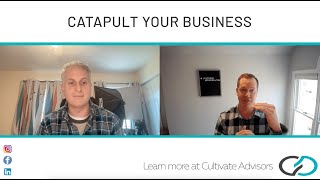
In this episode of "Catapult Your Business," host Speaker A interviews Thomas Zoebelein, founder of the auto‑body marketing product "Capture the Keys" and upcoming auto‑body CRM. Tom explains how his agency evolved from a content‑marketing service to a productized offering that uses geo‑fencing, Facebook/Instagram ads, and website management to drive customers to body shops. The conversation pivots to the core question: how does a rapidly scaling, multimillion‑dollar business decide when to add head‑count without sacrificing profitability? Tom shares his pain points – understaffing, misaligned roles, and the need to transition from generalist to specialist employees. Speaker A introduces a framework that prioritises cash‑flow over profit, uses a cash‑threshold (typically 2‑3× monthly operating expenses), runs capacity and revenue‑per‑employee analyses, and treats growth as an expensive, iterative process that may require debt or equity. They discuss revenue‑per‑employee benchmarks, the importance of periodic (≈6‑month) organisational reviews, onboarding time, and the risk‑tolerance trade‑off between maintaining cash reserves and accelerating hiring. The episode ends with practical advice on tracking KPIs for new hires, planning hiring batches, allowing “rest” periods for the business, and directing listeners to Tom’s website (capturethekeys.com) for more information.
Chapters
Welcome back to Catapult yout Business, where we help catapult businesses. One question at a time. I'm joined by a client of ours here at Cultivate for the last two years, Tom Zobelin. Tom, welcome to the Call.
Hey, nice to be here.
Glad to have you. I know I speak on behalf of Greg, your advisor. It's been a phenomenal journey and we just really appreciate that you've let us be a, you know, part of your story and your growth and you're doing some big things like you've got, you know, you've got all these auto bodies you've niched into. You're building a new software. I won't spill those beans quite yet. And you're also, you figured out how to go create this amazing marketing product that can really help essentially fill bays for these auto body shops. So we'll talk a little bit more about that in a moment. But you brought a really great question today. So for everybody listening in that wants to help grow and scale their organization, we're going to be talking about how do you know when to hire when you're on an extremely fast growing engine. So Tom's business is growing like a weed right now. How do you know when to hire? When is the right way to not get out over your skis or maybe too slow? Often we get trapped in this idea of we have to hit a certain number of employees by revenue. Not always the case. We're going to dig into some of those myths, talk about how to maybe approach it. Even when you have a new product or service you want to roll out, how to allocate the amount of staff you might need. So it's going to be jam packed. Stick around. But before I dive in, Tom, I want to talk a little bit more about what you're up to. I know the original company that you started there was Stratosphere Studios, but that's kind of spun off, right? It's kind of been productized now and you've got some other cool products coming in. You want to just talk a little bit about capture the keys and what that is at a high level for autobodies. Yeah.
So we started out as a content marketing company for automotive industry. So we did everything from body shops, mechanics, even people who made stuff for the body shop industry like paint booths and things like that. But our bread and butter was always auto body shops. And it's just what I do best, what the agency does best. Mechanics too. But so, but when you call a body shop and you say, hey, you know, interested in hiring a marketing agency to help grow your shop. It's, it's not something that they want to buy, you know, because they just don't think in terms of hiring marketing agencies, especially because the collision industry is a little bit unique in that it's very insurance driven. And back when we started the agency, it was a heavy, what they call a DRP situation. So it's a direct repair. So you're in contract with, you know, 10 insurance companies who are sending you work without even having to market, you know, beyond a sign outside. But when Covid hit we, I'd always said like we need to, we need to sell it as a product. Like if they don't want to hire an agency, but they'll buy a product, they'll buy anything, a piece of equipment, anything that will help grow their business. So we just need to position ourselves as a product, not a service. So when Covid hit, we started experimenting with geo fencing and it worked really well for buy shops.
Really hot right now. I mean.
Yeah, yeah, because especially with that insurance referral, the, you know, the customer goes to the shop that the insurance company recommends and then if you're not a DRP shop and you want to get that customer, how do you, how do you do that? So geofencing allows us to market to the buyer where they're buying, when they're buying. And, and so I always tell shops that we're not a marketing agency, we're a mind changing business. We're, our job is to find that customer and get them to change their mind off of that insurance company shop to come to their shop. You started doing that and I just bundled on Facebook ads, Instagram ads, some content creation, website management just put all together and we call it capture the keys, you know, so. Because it's essential.
Well, and you've been super successful. I know you're now working, you know, on an auto body CRM. And you know, you told me you're trying to, you know, bring time back, you know, to all the auto body shops. And I mean, look, I think, I think that that industry needs help on the marketing side. You found a really unique way and I love hearing how people build businesses and the fact that you've now built a multimillion dollar business fast growing. You're talking about future acquisitions. You're, you're talking about, you know, new products and services you can roll into this. I mean, you're going to be on a really fun ride for the next few years. And I'm really excited for you, Tom. So congratulations. And at the end of the episode I'll talk about how some people can come learn more about that program. Especially if there's any auto body owners listening today, they should definitely be reaching out to Tom to have a conversation. So. But Tom, let's, let's dig into this question. So obviously you're on this really fast growth engine. I think a lot of business owners get to this situation where if they start to see fast growth, there is this looming question of like, do I have enough staff to keep up with the business but also do I get too top heavy? Right. Do I have too much staff? And then therefore that causes even that much more chaos or that much more of a ruckus in the business. So what is that sweet spot? What are some general principles, golden rules, you know, things we can put in place to help us navigate that. Tell me just a little bit about like what's the pain point for you when you think about if you're going to bring on additional staff or not? What, what kind of triggers for you when I ask you that question?
Yeah, I guess it's profitability. I'm really a stickler for our profitability. You know, the profit is revenue is vanity, profit is sanity and.
Yep.
So, but then you can also like when we first started Capture the Keys, it was growing so fast and we were adding clients so fast that I just was hiring, you know, and, and yeah, I had to keep up. And so we were sort of in a, in a little bit of a way we were know, building the plane while we were flying in it. And so yeah, we've hired, we hired people that we then got rid of because we don't need this or that. And we changed the offering just a little bit. We used to do a lot of free web design and stuff like that, but we've gotten to a point now where it's really matured. The customer base has matured, the products matured and then we have some growth goals that we want to go to. It's pretty aggressive for this year. And you know, when I, when I look at that profitability number it do I start to front load it? Because we also have this software that's coming out and that complicates things a little bit because you're going to be in a pre revenue situation where you're going to need onboarding people and things like that. So. But it's very, it's very obvious right now that we are understaffed. It's extremely obvious. I mean it's and we've kind of. Because of. We were, we're building, we had a plan, but it's, it wasn't like we, we know what we're doing a lot better now, so we know what the plan needs to be. So now we need to move things off of people that we're just sort of all doing stuff. And it's like, oh, you handle this client. You do it. So, like, I even have problems sometimes when client comes to me with a question. I don't even remember who's managing that, even though we have roles. And so it's, it's kind of come unglued. So we've been spending this month realigning what the positions are, what the tasks are, and then what it's going to look like by the end of the year. And so now we're kind of in this position where like, who's doing what now? When does it shift? You know, if we, if we hit these growth goals, like when. So it's kind of a weird thing where you, like, you think you know where you're going to be at the end of the year and you know what that's going to look like and what that org chart looks like, but you're not there yet. So how do you, how do you do it and stay profitable?
Well, first off, so a couple things that I already heard. One is, in my opinion, you know, the exercise you just talked about, you've got to do that probably like every six months. You don't just get to do it once. It's like it's, you're gonna keep doing it because the moment you get there, then you're gonna, you know, if you've built a business with a sustainable growth engine and it's always growing, I find that the, I'll call it the widgetization, right? The how the widgets of the amount of staff you need. It doesn't fully set in until you've, you've gone through a few years of that and then you start to see the pattern. So keep doing that exercise. But the piece I'm going to come back to, and it's a really important thing I need you to hear today, Tom, is growth is expensive. And I think, I think as owners, we forget that. And it's, we, we get stuck in the owner operator world first. Then we get stuck with a few employees. We haven't figured out the engine yet. We're so used to not making money. And then you get this growth spurt. This is very common. I see. I See, we see hundreds and hundreds of owners every year go through this exact track. And then all of a sudden we create growth and they get moving and they feel and they taste this profit. It's like, I can't give up the profit. Right. But what they don't understand is to maintain that growth, you might have to sacrifice profit in the short term to get to that next place of profit. And so we always talk a lot about with our clients and I've, you know, I've leaned into this with a lot of people. You have to be careful how big you want to grow. People just think, you know, grow, by all means, right. I love, you know, I love the profit of sand. I mean, I buy into that fully. But what I will also tell you is that you also have to know what your limitations of profit are until you rebuild the business in a different way. And you're, you're, from what I know about your situation, which we won't go that far into. For everybody listening today, you've got a lot of growth and opportunity coming with you. Your business is actually literally changing on its head. And to keep up with the growth, right. What, what you do to be a $1 million business versus what you do to be a $5 million business operates, feels is completely different.
Yeah.
So you just have to be careful that that profit need that you've captured and you've started to get used to, you have to, you have to make a really important decision to go well, then I can only grow up to this point if I don't want to have to go back into that, what I'm going to call that risk layer to go back down. Not, not always at a loss, just maybe nowhere near the same level of profitability. I believe in having smart cash, you know, only utilizing debt when it's appropriate for growth. But it doesn't mean you have to go negative, but it does mean you have to maybe get out of watching that percentage of EBITDA that you might be tracking, you know, in pursuit of getting the next chapter. And it's, that's your reward for taking that risk and that's why so many business owners don't get to that level. So I just, I had to share that first, a bit of a macro overview before we dive into some of these nuances. I don't know if that resonates for you, if you have any, you know, follow ups or perspective on that, but I think that was really important that you hear that today.
Yeah, yeah, definitely.
It's tough and it's tough, right? Cause you just like, you don't want to give that up. And that's, that's real. So we can go into like how to run the future cash flow performance and the stress tests for all of that. And those are important factors that I know you can sit down and do with. Greg, I want to dig in a little bit more though, around this. Have you, you know, the employee count, have you identified in your industry generally, you know, what you see on a. On an employee, you know, revenue per employee basis. Have you, have you done any research on that?
No, I haven't. So I was in the trade show business way back, you know, before starting this. And it was always 250 per employee, 250 in revenue in the trade show world. And that was a hard, a hard rule, like you're gonna do X million. You can hire this many people. And we literally would grow. And so our sales managers were very like, you know, forecasting was. Was hu. They were on us all the time. Because you could, with trade shows, you can kind of figure out, okay, these clients are going to these shows, it's gonna be about this much. They want to do these sizes. You can kind of project out and then, you know, who you think you might land. And so, and then they use that for hiring because especially with the trade show world, it was cyclical. Like you have seasonal. You know, I don't have that in my business because once you land a client there, I mean they can always leave, but you know, it's not like they up and down, you know, so. So as far as like, I mean, I've kind of used that as a rule of thumb, but I know that's probably not the right rule of thumb. But we also like last year instead of hiring, I, I wanted to invest in this software because I knew that this was going to get us to the next level. And I think it's really about to pay off for us. And it. Cause it's a. It's a better version of a, of a competing software that works very well with our geofencing. So I just needed to own that. So I, I didn't hire last year so that I had had the money. But now we're almost done with it, so now we're back into this other. And we were still profitable on top of that. So I probably should have hired last year. You know, maybe.
Are you getting the advice you need for your business from this episode? Do you want to get more than just one question answered and have it customized to you and Your business. Well, cultivate Advisors works one on one with thousands of business owners every day. Let them help you scale your business today. Don't just listen to this episode. Take action and go to cultivateadvisors.com to see which advisor you get matched with and receive a free two hour business assessment on how you could scale your business to the next level. Act now@cultivateadvisors.com well, and I think, I.
Think what I'm getting at is a lot of people get trapped by this, you know, you know, number of employees, by revenue and it is important, I mean, for everybody listening in. And Tom, you probably know this if, if you have a business that has, you know, not enough revenue by employee, I mean it's simple math, right? Your average payroll, your average revenue per person, that gap in most the time in a service or you know, human capital intensive space, which I would consider this to be outside of your new software you're working on generally, right. You've got to have a built in margin there otherwise you're not going to be profitable. Right. So that's why it's so important. And they always talk about if you can get, if you can get, you know, into 2, 300,000 some industries, even 4 to 500,000, some even, you know, to a million per employee and very unique, very, you know, strategic types of organizations. The higher you get it, of course, the better it is. And when you want to, when you're thinking about selling the business, yes, that's going to be looked at to place value in the organization because it's a really simple, you know, predictive indicator that helps me look at a business in seconds and go, got it. I have an idea of how this is run. But if you pull that back to the moment you're in right now, when you're in operational mode and you're trying to overcome a barrier and you're trying to create growth. I have actually a very different lens that I look through. I kind of forget about the revenue per employee for a moment. I put that to the side. What I do is I go, I know what I want to aim for and I draw that line in the sand and I do that. And Greg, you know, your advisor is phenomenal at this. Let's go run other companies that have sold. Let's identify where the revenue by employee was at and let's take that as our guidepost of what we're going to know. We build the business to do. When I build up the compensation, when I build up the KPI metrics When I, when I build out, you know, all the different turnkey systems to make sure the productivity levels in each role as a puzzle will build. And when I get to my objective, I need to show this amount of revenue per employee. So I really view revenue when you're in the moment, I really put that more as a future thing that you're aiming at. I don't let it constraint or put my business in a box because I find people who become trapped to that actually don't grow because they it's almost impossible. You're going to dip down on the amount of revenue per employee every year. It's going to be like you kind of bring your people in, you make the investment and then it rises back up as you get more productive and take advantage. And then it, you know, it's just going to keep roller coasting. And the key is that you keep watching and keep running forward. Perform us to know that assuming that my assumptions are accurate, we will land on the right amount of revenue per employee. So if we come back to today, the number one thing that matters is cash. I don't believe that profit matters right now. You want to be profitable, I understand, but the hitting a percentage again, people can gridlock themselves and get in trouble. When trying to grow as well as revenue per employee. I would let those be your guideposts for how you're going to exit. I would let those two factors be something you're watching constantly. One of the things that I see a lot of people do that are having a hard time maybe giving up that profit or holding onto that, have your bookkeeper or whoever's helping with finance run an adjusted ebitda. So take if everybody was up to the productivity levels, what would the percentage of profit be for that month? What would have our employee per, you know, revenue per employee been assuming that these things were true and that that way you're kind of run that future adjusted world. So you're always keeping track and you don't get out over your skis, but instead let cash dictate the employees that come in because you hit it dead on the head. When I asked you what's the biggest pain point, you kind of slipped it in. But I heard you say it, you're like, but then you got to factor in onboarding. And I went, that's this, that's the key. Like where I think people miss is they, they undervalue how long it takes to train the team members into the organization so you can actually get the residuals of having that additional staff on your team. So I don't know what, did anything just connect for what I just shared? Are you thinking a little differently already?
Two questions. So you mentioned cash. What do you mean by that? Like revenue in. Is that what you mean by cash? What do you mean by that?
I mean cash. Right. So, so cash is defined as like, how much cash do you have in the bank? And then you can, a way you can get more cash is profit. Yes, right. Revenue minus expenses, profit. But you can, you can take on debt for growth, you can take on equity, raise for growth. There is a lot of ways to bring cash in the business. You have taxes coming out. You have, you know, if you have any debt, any principle of debt. So that balance sheet, you know, statement of cash flows is what, is what you'd find like in QuickBooks or whatever accounting software you're using. Taking that cash and actually running trends on how is cash going to go up and down as I hire is actually more important than even profitability because you just never want to cross what I'm going to call your cash threshold. That's how you sleep like a baby at night is when you know that cash threshold and, and when you're moving fast enough with growth. I have a lot of people that really push back and like, oh, like I don't ever want to have debt when I run the business and I go, whoa, whoa. You don't want to have bad debt. If you're taking off debt to survive, you're in trouble. Yes, you should not have that debt. If you're taking out debt proactively with a business plan in place of bringing in staff early to go create something, it's no different than marketing. You're putting money in to get an ROI back. That now becomes healthy debt. And how you structure that debt is important. And that can be a whole other podcast episode of all the ways to look at debt and how to leverage it as an owner. But it's really just we get, we get tied into this. I need this profit percentage. I really want this. It's like, just watch your cash, though. Will your cash be okay based on taking these risks? Because you can probably afford to hit different profit numbers along the way. Otherwise you're going to get strapped to where you're going to be in a puzzle that you can't break through because there is a cycle of bringing on employees.
So how do you determine that magic cash number that you need then different per person? And then also a follow up on that one too is like, are you saying that you should also be. Because one of the things is hiring additional salespeople, too, so we can increase revenues. So the cash. Is that implying also that the hiring is including additional revenue producers?
Not.
Not work producers?
Yeah. I mean, general rule of thumb, you're always going to continue your sales hiring. Your. I'm going to call your engine hiring, which can, depending on the type of business, Right. Can be a sales or marketing, you know, element. But you generally are always going to prioritize your engine because if you. You need the engine to be able to sustain what. I'm going to call your operators. Right. The other folks that help the widget, you know, move from. From A to B. And so, of course, like when you run the cash, you know, Performa, it's. It's a complicated Runway like to. To go figure out. And this is something Greg can dig in a lot with you on. But as this cash flow runs, what you're going to see is, okay, if I. If I'm going to hire these two operators. Got it. For cash to stay positive, six to eight months out, we have to increase revenue by this much more. I need to go also hire three more sales reps at the same time for me to ultimately have that cash come out. Because again, it is different. You might go like, well, it just seems like profit is the same as cash. It's not like you'll see when taxes come out, right. If you make a million dollars in a, you know, as a profitability, I'm just going to use a really random, you know, large number. If you make a million dollars in profit, well, 350 to 400,000 is gone in taxes. So it's like, I made a million in profit. I can make this investment.
Whoa, whoa.
You made 600,000, actually, that's actually retained earnings. And of this 600,000 that you have access to use, you had a little bit of debt. So 100 that went to principal over those last six months. And then there was another 50 to 100,000 that got lost in your balance sheet that went to Capex or whatever it might be. And so all of a sudden, right, you start to realize, holy cow, I've only got $300,000 of cash to play with, and how will I maintain it? So you have to run the cash side. Not if you really want to protect yourself. And so your first question was, well, what's that threshold, Kasey? I can't. I'll give you a rule of thumb that I teach people, but I will tell you it is completely different for Everyone. I operate with way more cash than I need to in the business. It gives me the confidence to sleep at night and it also gives me the confidence to take really big risks when they present themselves without having to borrow more money. But I took a lot of debt right when I built, when I built Cultivate, I did a pretty decent sized debt raise where I just put all the money I left in the bank. I didn't actually spend a single dollar of it for the first four years, but I had amazing. And I just looked at the 150,000 of interest I paid over those four years. I just purely looked at it as a cost of insurance to not lose this amazing thing I had built. No different than me paying insurance. I just have to pay a bank or a personal friend wherever you get the debt from. It's no different. And so when that cash factor gets put into place there, all of a sudden your cash threshold, it changes based on your risk tolerance. General rule of thumb, two to three times your monthly expenditures is generally a good rule of thumb where people will start to feel comfortability. Others, I've seen people skirt much less. I've seen people demand way more. At some point there's a cost of having that much cash in the bank. So you've got to navigate that depending on how aggressive your growth goals are going to be. But again, this is something we can slow down and work one on one, you know, outside of the podcast today, right, to break down and we do that with all of our clients, you know, if that's the right need for the business right now. But the cash threshold yourself generally don't let that drop below 2 or 3. And again, most owners then go, well, then I need to get X amount of profit. Not true. Sometimes taking a fixed debt recap for a couple hundred thousand dollars with interest only loan for two years, those opportunities are out there. When you're a fast growing company with the right type of procurement, that can be the right approach to where you use debt versus stressing yourself out on the profits. So you can then by the end of the year or maybe the end of next year, get to the profit percentage you're aiming for or get to that new chapter or new type of business. Okay, that's how I would think about this. That's how, you know, that's, you know, Cultivate's brought in. You know, we've got well over 100 employees. And the way that we've done that and scaled so quickly over the last seven years is by taking a look at Cash and making decisions on cash, not profitability, but always knowing the way we've built the model and what the outputs have to be that we will land at a revenue by employee that's appropriate at the time of exit as well as land on the proper EBITDA numbers when appropriate to get that new maturity level. Because the question you should always be able to ask yourself is if somebody came to you and said you have six months before we close, could you terminate the right people quickly enough in order to get to those numbers while you're in growth mode? And if you can say yes to that, that means you've made the right investments into capacity and you've protected yourself to maintain a healthy business and not getting over your skis.
Can you say that one more time? That, that scenario, the six month thing. Say that one more time.
It's just a test I internally do constantly with myself to. It's again, it's around the fact of what you shared earlier on in the call here, right where you said, gosh, like sometimes I get really, I don't want to lose that profit. And I go, well, as long as you know, you can get to that profit again if you needed to. And that's more what I meant. I always, it's just a test. I wrote a scenario, I pushed myself through and go, if somebody came to me in today and offered me the amount of money I want to buy the business, but they said I need this much employee by revenue and I need this profit percentage, would I be able to go remove the extra staff I have that I'm using to try to create growth, to get down to those levers within six months? And the reason why I chose six months is that's really the fastest I ever see businesses sell and close in. So that's why I picked six months.
Okay.
And so again, it's just a different way. It's a different paradigm of like investing in growth. Right when you're first getting used to growth, it's very easy to go, I must maintain versus you start to, you start to hedge those bets and those risks. If you really want to push for growth, to say, well, as long as I just keep running the analysis and I feel in control to where I see where I would cut and I have confidence I could make those cuts, would I be able to hit the objectives needed to make the sale? And sometimes that will trigger people to have more confidence to let those profits come down a little bit. Because again, growth is expensive. It's expensive. Majority of reasons why companies don't grow is because they are not willing to take the risk to get the growth. That's the number one reason you gotta have a good product or service. But the next one normally is that the risk tolerance isn't there for the individuals.
Thanks for tuning in to Catapult yout Business Where Cultivate Advisors is helping you catapult your business. One question at a time. Are you running your business or is your business running you? At Cultivate Advisors they'll match you with an expert advisor and do a free two hour deep dive for your business. This will give you the clarity you need on how to get your business to the next level. Cultivate has worked with thousands of businesses. What do you have to lose? So head over to cultivateadvisors.com and sign up for your free two hour session.
Yeah, because I look at my P L and if the way I gauge if I'm doing well or not is if it's a cash flow positive, you know, a profitable month, you know, if it goes negative and it's not because I had to repay something or just a simple, you know, this isn't the wrong bucket or I got built twice or something like it's not something, you know, if there's a negative month I feel like I'm not doing it right. So versus thinking about long term.
And that's, I think that's the right way when you're getting started. But now you've, you've got something worth losing. Right. You've kind of made the pivot from I'm trying to build something, I have nothing to lose, I'm gonna go for it. And now you've gotten to the point where you have something to lose and that's, that's, that's a crux that I think every owner goes through when they hit scale. And so now that you're there. Right. I was, I'm just telling you, don't look at that P and L line. Don't become, you should still look at profit and set objectives and goals. But just come down one more layer in that reporting to just go, do I ever break my cash threshold? Because that's actually what's going to make you sleep at night. Because you might be able to, you might realize for me to go hire these six people, which I know if we do would do this for the business. It might just be a simple cash exercise where you go, oh, I have to go get a $200,000 debt raise in place. Now I need to figure out the best way to do that, bring the cash in, and within six months you're back to the, you're, you know, twice, three times the size, amount of profit because you made that injection.
Yeah, yeah.
So watch cash if you're in growth mode, if you're not in growth mode. And again, you're hiring because you're, you're dying. Like, you, you can't keep up. You probably have some turnkey system issues, you probably have some internal processing issues. Right. You're probably still fighting through this generalist versus specialist world. I heard you say, kind of like people coming in, taking hats away from some, giving hats to others. That's real, right? Like you're, you're going through that, you know, and it's, it's a, can be a painful exercise of how to get people from a generalist role to a specialist role. I'm sure you're seeing that. I'm sure you're feeling that.
We are, that's, that's what we've been working on this month is realigning what a job looks like, you know, so we, like, I, we had this like, post it method where we go into a conference room and we put the jobs. Here's what it looks like today and then post it. So here's the job title and here's, here's what this person's doing. Then we looked at that and it's like, well, does that really belong there? And then, yeah, you know, where. And then I also did post it notes of where we're where I think we're going to be in terms of headcount for that by the end of the year. And we started the kind of moving them so, you know, cleaning up. And so that, like you said, that person now becomes a specialist because they, it's like, now, that's this person's job now, whereas right now we're kind of, you know, doing a little of everything. Everybody's doing all the things and it's.
And that's just, that's just the hybrid period. In two years, that won't be the reality. You'll be in, you'll be in the specialist role and that's, it's a lot easier. It's very hard to predict the future when you're, when you're migrating from generalist to specialist. So if you're feeling that, I just want you to know that's normal. And anybody listening in today, that's normal. If you're at that growth stage, I think the biggest thing I can leave you with, Tom, is that track that cash to make the decision and realize there are other solutions besides just profit. When you're in the, when you're in the beginning stages of bringing on more staff to secure the next, I'll call it bucket of growth that you can get to. And then the other piece is capacity. So you know, it's, it's higher. Knowing if I hire, I'm of the mind of going, if I'm going to hire 15 people over the next year, I'm better off hiring all 15 right now. Even though it's really expensive.
Yeah.
And the reason why is because my time is more expensive than, than the profit. My time is more expensive. The leverage of training, the leverage of onboarding. So I go, if I'm going to bring these 15 people on, I must increase capacity by X to get to the number of revenue by employee. How fast do I think I can get there and what does that cash flow look like? And those are the steps I would follow when I run my analysis. And I'm running that analysis in a high growth business every 60 days like it is just you have to keep your eye on it because it's always going to move. New variables are going to enter into the business that you didn't project because you're navigating new waters. You're not living in the same, you know, sea or bay that the business has been operating in. You're traveling into a, you know, a larger voyage. So, so again, just to revalidate, I know my cash threshold. I can't ever go below this dollar amount because I just get uncomfortable. Make your rule, it's got to be based on your risk tolerance. Then for me, I look at how many people do I think I need to hire to get to the next level of business. I run a capacity analysis to say if I bring these people in at the level I'm expecting and what I need them to do, how much revenue should I be able to run because of that amount of people? And then I run a projection to say how, how long will it take for me to get there? And then I watch cash and go, how do I never go below that cash threshold I set in pursuit of that? And do I need to take debt, Do I need to get a little bit of equity raise out the door? Or are we good and I just have to wait two months before I hire them? Right. You'll see all these different solutions when you just start to make sure cash maintains through the growth period. Because that's really all they can. That's one of the biggest things that'll take you out, right, is you just, you just miscalculate cash and you don't have enough cash to secure the growth and then you're in emergency mode. And our goal is just to stay away from that at all times. So at cultivate, we've obviously grown very, very quickly. And Tom, you know, I probably at any time could grow my capacity by 25 to 35% at any time with the amount of staff I have that has allowed me to grow. But my, my profit and EBITDA percentages have not been as strong as I know they will be when I stop the endeavor for that fast of growth that I'm experiencing. And that's very common in any high growth company.
Okay.
Like you got your head wrapped around it?
I think so, Yeah, I think so. I, I definitely want to work with my advisor kind of. Let's figure out that cash number.
Yeah, you'll have to. There's a lot of details to go into and again it's generally two to three times operating expenses. Sometimes on the, you know, sometimes all the sales reps and things. I won't include those folks because they're kind of eat what you kill. Right. They're paying for themselves naturally because they're so close to the revenue side.
I'm glad you circled back to that because I, that was one of my questions I forgot to ask. Does, does sales salespeople get included in that? So yeah, they do.
You just, you might, you might give a little bit of allowance in terms of where again it truly is a risk toler preference. I've, I've, I before I would have, you know, 10 years ago I would have given this advice and I would have said it's this, you know, now that I've been through this so many times with so many other people I've met so many different walks of life where I just realized the risk tolerance is totally different. So you just got to look at it on paper and get comfortable. But I'm confident Greg can help you identify that. I know he will. This is a skill set of his. You guys just haven't got to it yet in the roadmap and it sounds like it's time to get to it. Yeah, let's start, let's start making hiring decisions off cash and no longer just trying to keep up with these exit metrics that are going to be pretty challenging when you're in the growth period.
Yeah, yeah. That's really what I've been like selling up to a point. Okay. Now we've hit that profit point. Now I can hire. And that's. You're, you're right. It's just not, it's just not working where we're at.
Again, I think pulling forward will be more helpful so you can leverage it so it's not as chaotic. And then in terms of like hiring in batches. And you, you do have to let, you know, I do believe in this. You do have to let the business rest. You cannot push the business like this at all times, especially more of a service type business. And, and the. I know it's a product, but it really is still being delivered as a service. And so when you, when you're driving the business, if you don't actually have some resting periods, what you don't do is you don't give your team a chance to actually live in what's now the norm for them and establish good patterns. If you always have them changing, what happens is that you can trap yourself to where then they don't actually even. They're going to get whiplash because they're always changing. Right. And so you have to be careful to go, I'm going to go through this big growth and then we might pause for four to five months, let the EBITDA flow in at the levels I expected because we reached that capacity. And then we're going to go back down into that growth layer again.
Okay.
And you should be very mindful of that. And you'll. And what's cool is by doing this, you'll actually start to learn how to control your growth because you'll start to have a bunch of really cool average KPIs around. Like each new operator for this generates me this much more, produces this much more revenue, or every sales rep I hire for this is generating on average in the first 12 months this much revenue. And you'll start to get this really cool predictive business. And that's when business gets really fun.
Yeah.
So that's how I would approach this, Tom. I would, I would actually. My answer to you is know what the revenue by employee is, right? Track it. Know where it needs to go. Know what profit percentage you need to get this business to at the right timelines. But acknowledge that growth is expensive and that you're going to go on these growth layers. And the metric that actually matters is that you maintain cash at a high enough threshold that makes you sleep at night and removes the risk of you ever losing this amazing asset you've built. And if you can get all that on paper to Talk. You'll have a really simple system to see when to hire. Okay, so sounds like we gotta get you, we gotta get to work, Don.
Yeah.
That'S what it sounds like.
So luckily, luckily I got a meeting with Greg next week, so I think I know where we'll add it to.
The roadmap and if I can help, obviously I know Greg will pull me in. So. Yeah. Tom, again, just kudos to the success you've had. I love, I, you know, you and I were talking before this. I love when people get that ideal client Persona right, right out of the gates. I love that you've got the 13 plus years, you know, of, of just being connected, you know, to this auto space and you have your own passion to, you know, restore cars. And I just, I think so many people go too wide and they don't understand why they can't scale. And you've, you've figured out how to go deep and it sounds like you're going, you're, you're making, you're playing some cards right now to go even deeper in some other verticals within, you know, that, that auto body space. So absolutely fantastic. Where's the best people to find you? If we've got any autobody, you know, owners listening in or just people that maybe know some friends or family, right. That own an auto body shop. Where can they, where, where should I send them to learn more about you and this amazing marketing product? You have to help with the geofencing.
Yeah. So they can go to our website, www.capturethekeys.com and right on the homepage is a book, a demo if you want to connect with me. That goes right to my calendar right on there. So awesome. And at least for now, we're going to be hiring sales, so they're making a round robin soon. But yeah, for right now, that's the best way to get in touch with me and check out the site. So.
Well, Tom, congrats again on so much success. I know there's a lot more success and scale coming your way in the future years as I've seen and heard about the plans. And for everybody listening in, continue to follow your entrepreneurial journey and keep making an impact in the world. And we'll see you back next time to help catapult your business. One question at a time. Thanks everybody. Sam.
More from Thomas



Sal and Vinny Grill me about Insurance company estimate denials at body shops


Customer Service as a Competitive Advantage - Dan Bernier - Moay Collision Episode 10

How to Build a Daily Competitor Report With Claude Episode 13 Hero Group AI Labs
These 3 Free AI Tools Can Help Collision Shops Hire, Sell, and Grow Hero Labs Episode 12
