Episode 5: Trust As The Operating System: X Games to High-Production - Ted Culbertson - Top Gun
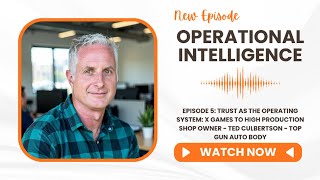
Ted Culbertson runs a 100-120 RO/month collision shop in Helena, Montana, built on trust and transparency. He gives every employee a shop key on day one, holds daily huddles, and uses team-wide incentive plans. His approach grew from X Games motocross experience into a culture where staff help with hiring and vulnerability is encouraged.
Chapters
X Games athlete turned high production collision shop owner. Kind of sounds like a movie, but Ted Culbertson actually made that jump, and he brought something with him that most shops are missing. A clear philosophy around trust. You know, one thing I learned when running my agency is that transparency is common. When people always know where things stand, trust goes up and the drama goes down. Ted runs Top Gun Auto Body in Helena, Montana with that same attitude. In this episode, we get into how that transparency turns into real outcomes. Strong, stronger accountability, a healthier culture, and the ability to grow and attract a younger workforce instead of waiting around for experienced techs to appear. So if you want to build a shop that people trust, employees want to work for and customers will choose time and again, you're going to want to hear this one. Welcome to Operational Intelligence, and I'm Tom zoblin. I spent 15 years running a marketing agency in the collision industry. I sold it and now I build AI tools at the Hero Group to help shops run better. My favorite part of my agency was never discussing marketing, but spending time with shop owners on the phone and on the shop floor, learning what they were dialed in on, what they tried, what failed, and what finally worked. The world doesn't need another collision podcast full of generic industry talk. I'm doing this one my way. It's owners teaching owners one episode, one topic, and one operational lesson you can take back to your shop and use. And seriously, what is it with all these marketing people turned podcast hosts? Anyway? All right, so Ted, I, you know, my, my first, so my first question here is, you know, just kind of tell me a little bit about how did you get into the collision repair industry?
You know, funny story, you know, I high school kid, I really liked working on in the shop. I grew up on a farm and dad wasn't really too mechanically inclined, so I, I spent a lot of time in the garage figuring that out, working on the equipment, you know, so on, so forth, you know, and then getting into high school, you know, all the shop classes and so on, so forth. And I, I mean, I was going to college, I had a full ride, you know, and then I started for a restoration shop when I was 17 years old and I just really enjoyed working with my hands. I like being creative, so restoration and I just really enjoyed what I was doing. So, you know, I, and I found value in it. I liked working on my own things, had a little, some of my own projects and you know, oddly, and I mean, scariest moment in my life is going to tell my whole fam. That I'm passing on college to work a minimum wage job. But, you know, I was taught as a young age, if you're going to do it, do it well. So I just really enjoyed what I was doing and that's kind of what got me into the trade. And then I did restoration for a couple years and then left that and then went to a couple shops in town for auto collision and then just started learning from there.
Do you still do auto restoration at your shop or you just do pure collision?
Yeah, I still do, absolutely. I still got one gentleman I know I had two guys that were doing restorations. I really enjoy it. I like building those cars. I like, you know, and then being able to work with those customers, building a hot rod or whatever have you. And you know, they're going to be in their garage for a long time. The hard part is just finding I got a lot of good technicians, but not really many car people, you know. So that's getting harder and harder to find people that actually truly understand the Mustang can talk about it, you know, or something like that, you know. Yeah, you need that connection with those customers. So it's getting a little more challenging. You know, my long term, I would love to, you know, step back at some point and then just get back to the creative piece, building on cars or, you know, that piece for sure.
Yeah, I can tell you because. So I do build hot rods in my spare time and it's getting harder and harder to find people to even work on some of the stuff, you know.
Yeah.
Like in a line. Old cars that, you know, machine shops around me, they're all drying up. There's hardly anybody that does machine work anymore. So you must have to buy crate motors and stuff like that. So it's, it is, it's getting harder and harder to find people that are still messing with it or you'll find somebody that used to do it and then you ask them, hey, you know, I just need to get this one thing done. And like, yeah, I don't mess with that anymore.
They're just, yeah.
Kind of over it.
Yeah, it's hard, you know, like, you know, here at the shop. I mean, my guys, you know, we're at 95 an hour, but you know, my team's 150 efficient, so they're really knocking down 150 an hour or restoration, you know, billing out an hour for an hour. So you're never really stacking that money. So it, it does create challenges and, and finding a customer that's going to want to put you know, 80, $90,000 in a car. I mean that's a lot of money. I mean, I mean I tell them you can, you could literally buy one cheaper and I can restore it.
Yeah.
You know, so that's kind of the hard part. So it's really finding that like minded customer, you know.
Yeah, yeah, yeah. So, so tell me a little bit about the, the I should have mentioned too, like where you're located. Tell me a little about your shop, like the, the town you're in, the size of shop, things like that.
Yeah. So we're in Helena, Montana and it's the capital, you know. So you know, I started out here, had a little, A little shop and I kind of did the addition to. Addition to an addition and none of it really flowed or made sense. So in 2019 we added on a, a building that was designed specifically for auto collision and. Or production. Right. That was the main focus. You know, big parts room, everything flowing, working together and it's 33,000 square foot. I've got three up front estimators in the auto collision, the admin side of things. So yeah, we're set up pretty well then. We, we could turn a lot of cars in a month. So it's really focused on production. Right?
Yeah. So how many. What, what is a lot for you guys over there at that shop?
We're typically turning 100 to 120 ROS. A month. Wow, that is.
Yeah, that's, that's pretty significant. Yeah, yeah.
Okay. Yeah. So I mean, and then a nice thing too, Helena, Montana, we have a lot of federal workers here, state workers, so we don't get the peaks and valleys. It stays pretty consistent for business. So that's nice. Right? You know, not like some other markets where they, you know, I mean ripping and when it's good's good, when it's bad, it's bad either. So that's one nice thing with Helen and the, you know, having the government here.
And so how many technicians is that in the back?
Yeah, so in the back we have three basically R I technicians, blueprinting text, a back house estimator, five body techs, and then four in the paint department and then two in the. Two in the parts room. And then one eight is, one eight is guy.
Okay.
So yeah, whatever number that added up to. Yeah.
And so for the, the age group of the guys that in your shop, I mean, you know you talked about the, how it's harder to find the guys that are, you know, into old cars and stuff like that or you know, People that can work on them. Is it. Does your. I think Brian told me that you kind of tend towards. You trend towards younger guys at your shop. You're able to attract a younger.
Yeah, so I, I've been pretty successful with the youth. You know, I mean, I think the youth get a hard rap. It's really just understanding them. Right. I think that the reality. They come in with a lot of enthusiasm and a lot of. They want to, they want to trade, they want to learn some things. Right. The reality, these kids don't grow up in a garage. You know, dad doesn't change his oil anymore. So when they come in, they. It's day one, they don't know how to plug it. Air hose together with a, you know, blow gun. They have no clue. So it's really teaching them the trade and getting them in. And I've been pretty successful with the blueprinting braid. Right. Like you're getting, you're coming in, you're learning to ri parts, you're learning to be organized, you're learning to read the two page book I call the estimate. You're learning damage transfer. So it's been a really good spot to bring technicians in and start growing them. You know, hey, no, from there would you want to go to the paint department? Do you want to go into the. The body side of things? So it's been a really, really nice place to bring technicians and then ultimately understand if we got a good working relationship. Right. You know, a lot of it too. I've learned you're probably gonna go through six or seven to find one that you want to put some time into.
Right.
I found early on, I'm like, don't waste. In two, three weeks you're gonna understand if they're gonna have what it takes. And you know, before I used to try and get more out of them or trying to encourage them more. And that just causes frustration. So there's just. No, I don't find any need in that. Right.
So how are you attracting guys to even come by the shop to interview for some of these positions? So, you know, I know that that's a struggle too, to find people that are even interested in the collision repair trade at all, period.
Well, I think. You know what's kind of crazy, a lot of the youth knows the youth, right. So you have in some younger guys, they still have friends that they're reaching out to. So historically they've just kind of found me, to be honest with you, and. Or I'll be honest. I put an ad out for an A technician, I'll have 10 kids that have never even turned a wrench show up to, to interview.
Yeah, right.
So that's kind of what I've got. And so, you know, trying to, you know, secure yourself in the future. And it's a good ratio. I mean, I, I don't ever want to be like it's, you got to have a, an old guy, young guy ratio that's just perfect, you know, because I mean, the old guys, I mean, they're consistent. They ain't missing any days. A lot of the youth, you know, they get tummy aches on Mondays and Fridays. So, you know, it's finding that consistency and, and then just having them work with senior technicians and growing them through the trade. Yeah.
So, so you're, you know, when I, when I would do hiring ads for body shops, you would get all kind of stuff like that, like people who had no, no industry experience at all. And a lot of those guys just want to just weed them out. Weed them out. So you actually try to bring them in then and interview guys that you think might have a chance, knowing that you need an A tech or is that, is that an intentional tactic or are you, are you just interviewing everybody? Because maybe you can find a space for, for the right person and then grow them.
I do. I interview everyone and spend my time with them. And I, I really think that if you show up with a good attitude and that you have the desire to learn and the will, and I think that, that you. It's, it's untouchable. What they want, you can guide them into, you know, and I, I worked with the state at one point to like create like a apprenticeship program, but it seemed like everything was based on four years. Four years. Four years. And what I found, if I can get a technician to be an A tech in three years, why would I hold him back on the flip? If it's going to take them four to five years and they're a good employee, why would I want to put so much stress on them where it might burn them out or. Cause, you know, that might be pushing them too hard where they're getting frustrated at work. So I base it all on the individual and visiting with them and then monitoring them and then pushing them accordingly to themselves. Right. So that's kind of been my philosophy and it seems to have worked. And because every, every individual is different, you know, pushing them at their own rate, I think is what's important and challenging them at their own rate.
Yeah. So, you know, Brian suggested That I, that I interview you for the podcast. You know, he, he kind of picked two topics that, that he thought you'd excelled at. One was branding, because. And I want to get to this too, like your background and, and yeah, but the other one, you know, being your culture. So you guys, I guess, kind of really probably align very, very well and that maybe that's why you guys are such good friends, because you have similar, you know, similar philosophies on that. But I'm curious, you know, I'm curious that. Walk me through a little bit about your culture at your shop. Now I'm at a bit of a disadvantage because I haven't been to your it firsthand. Brian's. I did. So I, I'm able to kind of like, I know the things that I've seen there. I'm curious. And you've been to his shop many times. I've. I've actually seen. That's when I first met you was over at Brian's shop. But I'm curious to walk me through a little bit about, you know, the culture at your shop, how, how you think it's different, and then, then the typical body shop or even the other ones, even in your town.
I think that what I really, I lead with a lot of humor. I like to have fun, right? So if we can be playing together, having fun together and actually tracking the numbers and producing, I think that, you know, people will just work. They produce so much more in a happier environment. Right? So really, you know, starting the morning meetings out, like I call it my huddle every morning. And my guys work 4 10s, by the way.
Okay?
So we have a production meeting at 8:30. It's our huddle. And so we'll get together, talk about the day. You know, it's not my meeting, it's our meeting. You know, what we can get done. So. And really kind of having some humor, having some fun with it, getting everyone engaged, and then we, we hit the ground running, right? Every Thursday, we kind of have a shop meeting, right? Like this is our meeting to talk about just certain things, setting goals, uh, you know, things that are happening in the industry, some humor. Like I said, I always like to have a humor and just different things like that, right. So, and, and just getting the guys engagement, you know. You know, always I end it with a joke of some sort. You know, someone has to tell a joke. So I found just more value in that. And like I said, I mean, I love my guys. I mean this is family. And when I show up to work Every day I make sure I'm available for my guys. You know, I'm a working owner. If they're needing something, hey, I want to be available for my men, so that's important to me. You know, you get guys. I have two shops. The challenge I found is I don't, I don't really like it. Like, I don't know how guys can have six or seven shops, you know, me personally, I just like to be engaged with my guys, getting to know them and being there for them. So I would struggle with that. You know, two is like my limit. And I'm like, I. It just isn't in my DNA. So I think that, you know, that's the big thing is just really making sure that my guys are taking care of the culture. You know, playing games. You know, this last weekend we had our shop Christmas party. We're do it in January now. And just every year trying to think of something different and fun, that everyone's getting engaged. And honestly, this year we had a paper plane. Who could build a paper plane and throw it the farthest, you know, the winner got 500 bucks, second place got 300, third place got 200 bucks. So the beauty is all the, all my guys's kids or all the family and friends around, I mean, it kept everyone engaged for two, two and a half hours. So just those simple little things that just getting people engaged and being a little competitive and having fun I think is really, really important, you know, my organization for sure.
So when you started out your shop, did you specifically have certain things that you wanted? Like, they were super important to you that, like, was culture one of them that you, you identify? When I get, when I get this thing off the ground, this is the area that I want to put my focus on. Or did it just kind of happen organically?
Yeah, I think that I've always been, I've always really wanted to focus with long term employees. Right. I'm like, I. That was definitely something. I'm like, I didn't want it to be a meat grinder. I wanted to make sure that I could get guys in, take care of them and have long term employees. So, you know, Brian Pry mentioned I met him at Discover Leadership. Right? Yeah. You know, I came from probably a family of yeller and screamers. I worked at every shop was a yeller and screamer. And historically that taught me to be a yeller and screamer. Right. So really getting to like discover and learning there's an easier way. Because honestly, man, I don't even like Yelling and screaming. So it's really figuring out how to manage your team, manage the outcome, and then just produce the numbers and then holding people accountable. Right. And people like, you know, just learning, like, we need more cars. Well, what's that mean to someone? Was that 5? Is it 20? Is it 30? Is it 1? You know, so really just setting the expectation so we all have a goal. So I think that was really important for me. You know, definitely discover leadership. Learning to be able to manage. If you can't measure it, you can't manage it.
Right.
So I think that was a really important piece that I needed to learn to where I could secure and take care of that culture. And so that we're all on the same page.
You kind of mentioned, like, the yellow screamer. Was that what life at your shop was like before you went to Discover, or was Discover that, like, the great unlock for you on. On culture?
It really did. And I think that, you know, you know, back in those days, you're. You're always a guy and a half down, right? Like, you're just running hard to keep up and trying to grow. So anytime something happened, you just turn to anger and have a. Have a meltdown, and what a huge waste of time. Let's just, you know, learning, hey, I got news. Is it good news, bad news? No, it's just news. Let's figure out what we got and let's deal with it, Right? And then obviously, if you're having an employee doing something that's repetitive now, you got to address that as well, right? So I think that was really important for me to learn. It's just news. Let's get the. You know, let's. How. How did we get here? And how can we create a system to not get here again? Right? So really putting that positive energy into an area to where we're not just having meltdowns, it's really focusing on changing the outcome so we're not there again, you know, does that make sense? Like, missing parts on day of delivery? What can we do? You know, because we can obviously just have this little meltdown in these freakouts when cars are coming from here to attorney. But let's fix the problem, right? Let's create a better way. So I think that was really important for me to learn, and it was good for my guys because, you know, we can manage the outcome together. You know, everyone knows what's expected.
Yeah, yeah. So, like, being transparent with the numbers and things like that. Did that also come after that, or were you always sharing the numbers?
With the guys, I was always pretty good about sharing numbers. You know, I think that I look at it this way, can you win a race if you don't know what the goal, if you don't know where the, the finish line is? Right. So really just letting them know where the finish line is, that's where we need to be and being transparent with them and then growing together. Right. Like, I think that they need to trust me and I need to trust them. You know, I really believe that every employee that I've ever hired, I hand them the key to the freaking shop. Day one. Like I'm very trustworthin person. If you break the trust, that's different. But that's how I approach it. Right. And I think it's important. At one point, you know, my guys, I'm like, I tried something, I had my employees do all the hiring. I would like pre qualify an employee or future employee and then I would send them in the back for my employees to do the hiring. And I think that that gave them a perspective. Like, man, I don't know what to ask. Yeah, you know, I'm like, well no one shows up on an interview and says, you know, I don't work well with others. I love to plan my phone and I show up late all the time. Right. So you're just putting the faith into them and then you just got to give them a shot. Right. And sometimes you win, sometimes you fail. But that's just the reality of a business in general. You don't let it ruin your attitude and you just, you know, grow from there. So that's kind of some things I've done different in the past with my guys.
You know, it's funny you mentioned the questions to ask. I. So you know, I had a marketing agency for 15 years and for just for body shops. And you know, you hire, you have to hire people. You have to hire designers and web people and you know, you change, you have changeover just like any other business. And I, I hate hiring. I, I am terrible at it. I'm, you know, like I get, I'm almost more nervous than a candidate because I don't know what to ask and things like that. And so why I say it's funny that you, you asked just, just minutes before this, you know, this interview I finished. So I've been doing for the Hero group, I've been doing my own like these AI labs, you know, making the transition from the agency stuff into, into AI. And I build these every other week I build these AI machines. What they are, are basically giant prompts and, and they will. You just go to ChatGPT, drop in the prompt and, and, and then it'll prompt you with, with questions. Well, the one that I just finished was how to. It builds. It's an entire hiring machine. So it will. You put in the, A little bit of. It prompts you for a little bit of information about your culture at your shop and then the role that you're hiring, what the duties are. So it asks you for that and you just put in a little bit information and then it generates all these questions to ask, to probe for if they're a cultural fit or not. And then when you, when you ask them the questions, if you record their answers and then you put it back in the machine, it'll actually score that candidate and it'll tell you whether they're, you should hire them now, whether they're not going to be a fit or if, if they should be, you know, go to a second interview and then, then probe more for this and this. So it's. I literally just built this thing and haven't even released it yet. So the next time you need to bring somebody in, you should try that out. You know, I mean, like I, I.
Tell people, I mean honestly, like, like things that I still hate about this business is hiring and firing.
Yeah.
Like I said, I mean, hiring. You're just, you're, I mean, you're, you're going on your gut, you know, you're going on that first, you know, meeting someone so you can ask all the questions you want, so on, so forth. And sometimes you win, sometimes you fail. And then even firing, like I've all. I always just look at him like, God, what, what more could I have done to just get through or have done better? What could I, you know, what could I. How. What injustice did I do them right? So that's always coming to my mind of how I could have maybe done something better to get the behavior you wanted or inspire them some way. But the reality, I mean, you give it the best you can and then you just got to move on, right, and learn from it.
I mean, so this machine that I'm building, this AI tool, there's a part two to it and I've already filmed it, but I haven't cut it or anything. But it's what happens after you, You've, you know, hired somebody and it's that first 90 days. So it gives you. And it's job specific and role specific, but it gives you, gives you the, the owner or if you're a manager or whatever, a framework to what that candidate, where they should be after the first 30, 60 and 90 days. And then things that you can like kind of a framework for you to train them on. Because that's the other really hard part is, you know, hiring is one thing. You can bring somebody in and interview them and then kind of make a decision pretty quickly. But onboarding them, you know, that person is starting fresh. They don't know who to ask, what to ask. They don't know what happens if I do this wrong. They don't know anything, you know, let alone, you know, where the, where the, where the employee parking is and what time is lunch, you know, and like all that kind of stuff. So it's a lot.
How many facets, like hiring someone like, like, you know, even in the body shop, who, who do you talk. Who, who do you go to? Right. Like learning. Yeah, well, this is your, you know, you talk to this guy. If you have questions, then you go to this guy. I mean, there's just so many things as a business owner, you're trying to bridge so many gaps and like, not forget about things. So, yeah, if you can use any bit of AI to help, you know, remind you or speed some things up, I mean, I think there's no doubt it's such a great, useful tool. Right?
Yeah. Yeah. And these are, these are free for all shop owners. There's no, you know, catch to it. It's just, I just build them. It's, it's a lot of fun for me to do it. And yeah, I've been releasing, I haven't been promoting them very well and that's something I, I've promised myself in 2026 I'm going to get better at. But marketing them.
Yeah.
Yeah. Here I am running this, ran this marketing agency and I've, I was always the, the worst marketer of our own stuff because it was just kind of like, you know, the, the, the cobbler shoes. Right. You know, like the cobblers kids always had, you know, worse shoes because they're too busy doing the work. Right. So, yeah, yeah, there's a old parable about that, but, but yeah, I just, I myself am not a natural social media sharer and so I have to really develop that muscle this year because I, I've been building all this stuff and I'm not getting any of it out there. I mean, I'm putting it out there, but putting it on social, you know.
Yeah. And that's, I like you know, doing the whole freestyle Thing you had to do a lot of promoting then. Right. So rolling into business, you're having Facebook, Instagram, which, you know, we're rural here in Montana, so the Facebook platform is still really strong in the Valley, thankfully, so you don't have to do so much. But I, I'm not geared for it. I mean, I know that I need to do it, so I try and be relevant. If I didn't have a shop, I probably wouldn't mess with it anymore. So, you know what I mean? I mean, I was kind of born before the Matrix, per se.
Yeah, same. Yeah.
Yeah, so. But it's a useful tool. Same, same. Right. Like, yeah. Getting the word out there.
Yeah. My, my, my thinking is I always feel like I'm not all that interesting, you know, so if I put this stuff out there, people are going to be, you know, not all that interested in it. But I just, I've got to change that. But you mentioned something that I wanted to get back to and your background on your competitive, would you call it competitive sports? I mean, how would you tell us a little bit about that? You know, that your background and all that?
You know, I, I grew up Montana, you know, had a, you know, a good career, motocross racing, had a lot of fun travel, traveled around a lot. You know, you know, the western part of the United States, hitting some motocross races, had a lot of fun. But it, I mean, it was a grind. I mean, there's no doubt, like you're working 40 hours a week to feed that racing habit, you know, and you're gone Friday, Saturday, Sunday, back to the body shop. So I, I did that for a handful of years, probably to us, oh, maybe 25. You know, I kind of checked out of the competitive racing and then I was working at the body shop. And then I like, started just like hitting some free ride spots, you know, around the United States that really wanted to go to. So I had a lot of fun hitting a lot of different free ride spots. And then, you know, that 2002, 2003, you know, the, the seeing a lot of freestyle motocross, like off ramps, and that started taking place. And then in 2005, I shoveled up a landing in my backyard, built them a ramp. And then you started having fun with it. You have no, nothing more than just enjoying what I was doing. It's just having fun. Well, oddly enough, you know, the industry is pretty small and you start getting some connections. And then I got it invited to go do some shows, you know, and then, you know, you're doing a, a show. You're getting paid to show up. So I started doing some of that and then, you know, probably 2006, seven, you know, SCS, which is the Montana company, they're promoting a lot of freestyle snowmobile, right? We're in Montana. Canada is our next door neighbor. So I got a snowmobile started, you know, doing some freestyle snowmobiles off ramps. I learned the backflip, you had a foam pit in my backyard. Then I got invited to freestyle snowmobiling X Games, you know, so I did some competing there. Four years of that and all along us still doing shows, right. So you know, I had, at that point I had left the body shop. I had a shop at my house. So I'd leave on the weekend, you know, go do a freestyle show and then come back and then I'd book a auto collision job during the week because I needed to stay busy. So I still a, you know, I was, I was kind of doing a little bit of both. Learning to self promote. I was learning to be self employed. I was coming back buying stuff for the body shop. I knew that was going to be my end game, right. At some point, you know, they had had a great career, you know, early on. I mean you backflip a snowmobile, you know, your day rate in the beginning was ten grand. So I mean you do that four times a month, you're making some real money. And you know, I didn't really ever compete with the freestyle moto. Those guys were just so gnarly at that point that I just like, I just did demos, you know, I got to travel. There ain't a bit of Canada I haven't been through. I mean I did Sweden, X Games, you know, Australia, a lot of Europe. So I really got to travel the globe, make some money, meet a lot of friends. Just unfortunately too many broken legs, you know, finally kind of had to like, all right, let's do something different now.
You were, did Brian tell me that you were sponsored by Red Bull? Is that, is that.
No, I never was sponsored by any energy drinks.
Okay, okay, part.
I mean I had some opportunities but then for me I did shows for Red Bull. I did shows for Monster, I did shows for Rockstar. Go fast. So if you were, if you got two brand specific, you're cutting yourself out of a lot of demos. Right?
Got it.
Back in those days, the guys that really wore the helmets, their whole goal was X Games, right? So they're, they're, they were just making one weekend a year. So you Kind of. I had to choose a path. I didn't want to get that gnarly as those guys. You know, if I could just stay, you know, play it safe, do my performance and then travel and make money that way. That was kind of just more my ammo back then.
Yeah. You know, so. So going back to kind of the. Some of the culture things, because I. I'd like to try to bring this back to where other guys listening to this episode could. Could kind of get something out of it. One of the questions I like to ask is, you know, like. And this kind of going along with what you're saying about, like, helping other. Other shops out and stuff like that, you know, like, Brian and I talked about how I. I feel like culture. People say they have a culture, but sometimes they really don't. You know, culture is just kind of a. You know, like, it's just like, oh, yeah, well, we, you know, we. Like the big joke in collision is always, you know, that they do pizza parties on Friday if you have a good month or something like that. You know, it's not. Is that really culture? You know, to me, like, culture is. It's something that kind of lives even if you're not there inside the shop. You know, if you really built a good culture, it. It kind of like, even in my marketing agency, we had a culture there. And I'm finding now that I've sold it, you know, like, it's funny to hear how people. Why people bought from me. They wouldn't tell me when I. They were actual customers, but now that I'm gone, they're like, you know, it was just always so great because bl. Blank. You know, and it's the same kind of thing. So, you know, as far as, like, culture, like, the question I always ask is if you were to teach like, a master class on. On how to build culture in a body shop and since you kind of started, you know, grassroots, what. What are some of the things that would be in that. On that. On that class that you would teach?
So I think the. What. The first thing that comes to my mind, because it's the first thing that comes. I mean, I think is important is family. Like, that is. I mean, you could say culture. You can do all that just like what you're. We're talking or family. Like when. Like if. If someone needs some help outside of the shop, I'm damn sure gonna be there for them and. And the rest of the crew is right. Like, if someone's eating some. Or support, I think that Is the one word that I think that most shops should focus on is just creating the family. Because, because once you got that created the rest, the rest comes with it, right? Creating family. I think, you know, I do routines, you know, and I've done a lot of research into this and vulnerability, right. You know, we all have, we all have strengths and we all have weaknesses, right? No one wants to talk about weaknesses, right? But being able to understand a family and understand a high producing team, you can't crucify someone for their weakness. The rest of got to help out on that pot. You capitalize on their strengths, right? I think that's something I really try and you know, hey, like so and so may not be as good at straightening a frame, right? So let's be there for them. But he's really good at, you know, speed lane jobs, right. So scheduling for them for their day to day. So it's not causing frustration. They're all part of the team. You know, it's like, you know, my team, like if we're, if we're going to take have a race to the top of the mountain, right, we're all different skill sets. You're not going to put the weakest link in the back, right? You're going to put them in the middle. So someone's, you know, push setting the pace, but then we're not letting them fall behind either, right? So I think it's really learning the family, learning your strengths and weaknesses and then being okay with that, not crucifying on that. You know, I think it's really bringing the better out of me on their strengths, right? So I think it's really important when you talk like public speaking, the number one, the number one fear, right? Burning alive is number two. Like only one of them is going to kill you. But you dive into that. I'm like, why are people so afraid to speak? It's because human beings are so judgmental and ready to crucify people. They don't want to get out of their comfort zone. Right. You know, and I mean, I do exercises like what is. I had my nephew, he came to me and he said, I want to be rich. I'm like, okay, what's rich? I don't just want to be rich. Okay, well what's rich? I mean, is that a mill? Is that 10 million? Is that a billion? Is it 100 grand? Like you're gonna be chasing rich your whole life, right? So I really got thinking. I'm like, so I did an exercise with my guys, like, what is rich. Not one person in that entire 20 people mentioned money, right? Not want, no one mentioned money. You know, so there's so many things to be rich in this world and it's not necessarily money. Right. It came down to me and I mean I definitely had a number. I, I think money is an important thing, right. And to be able to be able to retire and have a goals and be financially free. Same I kind of visited with them that, you know, mine's my rich is just getting people and pushing them out of their comfort zone. Right. I mean just constantly growing. You know, I'm pushing, pushing the envelope. I mean, you know, I mean I was backflipping a snowmobile after 30, you know, freestyle and then, you know, getting into building this business. I wanted to build not just a shop, I wanted to build a shop that was on the national level, you know, and a great, great, great customer service. You know, a few years ago I got the bug up. I'm like, I'm a pilot now, went and took general aviation and started flying. You know, I think it's really just pushing yourself and trying to get outside your comfort zone. And I love to do that with my staff. You know, things that they don't think that might be possible. You know, it's really maybe just sitting down, making a plan to achieve things, you know.
So is that what you cover? You cover all those on those Thursday meetings that you guys have? You kind of.
Absolutely. You know, I try and pick different content, what might be relevant and, or you know, goals like really trying to figure out what our yearly goals are and just, just different stuff, you know, what might be more engaged this week, you know, like last week, you know, kind of going over year end numbers and what, what we want to increase into 20, 26, you know, what, what do we want to see more of? You know, the insurance company fights have never been worse, you know, so it's like there's a lot of negativity in this business. So it's like, okay, what can we do different? Yeah, you know, like, so let's look at a positive thing. Maybe we could go after some more fleet work, a percentage this next year, you know, so let's maybe focus on some fleet work that is profitable. We don't have to have the, the fight with the insurance company. So I just thinking keeping that open mind with your crew and looking for opportunities. Yeah, man, I have so many people in today's world. Tell me what they can't do. Just tell me what we can do. Right. So you know, It's a mindset. Right.
So I have a friend that's a shop owner. He's got. I just saw him this weekend. He's going to be up towards 12 locations now. And he will not allow you to use the word can't. You can't. You cannot say that in front of him. Yeah, literally, that's. He, he won't accept that. So it's always. You have to figure out a way to rephrase something and using the word can in it, you know, like. But yeah, so I wanted to go back to one, one thing too, that you mentioned. So you talked about how you have these, these, these meetings, and then you talked about identifying the strengths and weaknesses in each other. Do you actually call that out? Do you guys kind of discuss that as a team or is that just something that you personally know and then you kind of craft, like quietly a thing around them or, or do you guys kind of discuss it? Hey, Joe's really good at this. Sam's really good at this. Let's, let's. You do this and you do this, like, kind of quarterbacking, like how the thing gets done.
Yeah. So I don't know if you've ever read the book Five Languages Love in the Workplace.
I have not.
So it's a book, Five Languages of Love. And it's really figuring out what your guys, what makes, what do they need, how do they, you know, feel love. Like some of them, you know, the attaboys, right. You know, so. Or, you know, it could be recognition, you know, things, you know, words of affirmation. Right. So it's really figuring out. And I really try and figure out my staff, what they need. Right. What makes them tick, you know, and then my management, I try, you know, I like, hey, I start asking them those questions, so they start thinking about that. Right. Because I think it's very important that you approach people on what they need. Right. It's not necessarily what you need, it's what they need. So really with the management staff, I, I coach that and try and understand that and visit with them and have those conversations. And then I've had meetings. What's your proudest moment? And then what's your most upsetting moment in life? Just life. And I think that that shows a lot of courage of what's really got them out of their comfort zone, you know, like a. And then of something that, you know, may have been upsetting in their life, that shows the vulnerability. Right. So you're really starting to figure out what. Okay. I mean, we're all human. We all have a human side. You know, I may own a shop, but I still have my ups and downs. I'm still, you know, a human being that have, you know, my weak moments. I've had some aha moments, but I think that that's what brings the team together, is showing vulnerability and that we're all human. And, you know, I think that really, truly just is the secret sauce. Right?
Yeah. So kind of like leading by example, you know, and being, and you know, being shown that you're. You are human.
Human side. Yeah, totally. Yeah.
Yeah. So are there any things that you've tried as far as culture that haven't worked? You know, sort of like shortcuts to the next guy that's trying to work on his own culture at his shop? Like, you know, I tried this and it just didn't work out. Or that that was the wrong approach.
Yeah. I mean, I think that in business I'm trying to remember a few. Trying some things. You know, if it doesn't work out, why beat a dead horse? Right? Yeah. Right. And the industry evolves and people evolve and your team evolves.
Right.
So trying some things that probably just didn't stick and wasn't a good idea. So I'm a firm believer. I'm like, switch it up, you know, And I, I think that, you know, reading some of the things that Amazon, you know, they're really good about moving the goal post, moving it, making things different and different, challenging in the workforce. Right. You know, I, I did a. This year, like my team, we do an hour goal with a incentive plan. Right. So as long as we hit this hours as a team and then we get a piece of that. If we get to this many hours, we all get a piece of that. And then it's based on skill set, three different tiers. Right. So an A tech isn't. Is going to get more money than a C tech. Right. And I've chosen to go this route and everyone in my facility gets a piece, the detail kid to the parts, people to the estimators, because everyone is part of a good month. Right. So I'm not just incentivizing the producers, I'm incentivizing the team. Right. So I like that piece of the culture because we're all in it together.
Yeah.
It doesn't create prima donnas. Yeah. I'm not helping you with that. Like, I can send a body guy in the paint team for the day if that's where they need them. And I don't hear that's not my job, you know, so we're just got our goals. So creating that has been another huge piece to the culture that we're all in it together. Right. And I know Brian, like they're a commission shop and they've got the right staff. I think that it can be done and he does a very good job at it. But I've chosen this route with the team and it seems to be working for what we got. Right. And then you'll get the odd guy that's kind of odd all about himself and by default they just probably don't stick around. Yeah, we just don't promote that around here. Yeah, you know, it comes back to the family. We're all a family here. We need to be. We'll have a job to do. We're all a cog in a wheel, you know, if the detailer doesn't show up, we ain't selling cars. So yeah, you know, he's just as important as the a tech. It's just the pay is different, you know. Right. Yeah.
So now that you kind of feel like you have culture sort of ironed out at your shop, what, what does that give you as an owner?
Like, it definitely gives me a peace of mind, you know, I like. So as an owner, you're constantly growing, you're constantly tweaking, you're constantly, you know, I mean I. I definitely grew this place in a hurry. You know, I've got two toe companies as well. And then you know, like I said, the 8 is company in the second location. You know, now it's been like just sit back this last couple years and just watching the team work and then supporting them. Right. And coming up, you know, now just like the marketing and seeing what we can do different, you know, so my piece coming in with new ideas or coming in with what we can do for future sales. Right. It's definitely gave me a piece. You know guys, I mean, I mean we're still human beings. So there's still some pissing moaning here. You know, you'll get them if they're arguing about who's whose parking spots. What. I mean to me that's a win. That's what we all. We got to piss and moan about today, guys. Come on. You know? Yeah, so it's, it's been a trip. It's been a hell of a ride, you know, like being able to sit back and see where we're at and seeing, you know, the shop as far as in the Helena Valley, as far as in the state in the nation. You know, being on some 20 groups, challenging myself with like minded shops and you know, we all, we all have the same fights. So it's nice to visit with them and you know, feel rest assured we're all doing the same thing, you know, some level. Yeah.
So I have a couple questions that are just, they're kind of not, not exactly related. But the questions I'm, I'm asking a lot of people about now. So you know, like I said, I, I, I've worked with Bioshops for over 20 years, but I have my agency for 15. And the one thing before that I was in the trade show business and it didn't really change a lot. But the collision business is always changing. I mean it's one of the fastest changing industries I think I've ever experienced. And it seems to me like that Covid was like probably one of the biggest transformations I think. You know, like it just seems like there was collision repair industry before COVID and then there's collision industry, even though it's been what, five, you know, seven years now since you know, we first started getting, dealing with it. I'm curious, what does, you know, what are some of the biggest transformations that you've seen kind of like, like post Covid in the, I'll kind of get.
In, you know, like I think pre Covid year to date reports, you could rely on those, right? Like year to date. What did we do a year ago? And that was pretty solid, right? It was pretty, you know, post Covid right now. So you got the entire industry change from adjusters in the field to like, let's move them out of the field. Right. Being an independent shop now we're faced with trying to get claims approved faster.
Right.
So that's a challenge, you know, so we're doing all the admin trying to get all that. So ramping that up. Cars, you look at cars like all the atis after coving, I mean that really started ramping up right about that time, right? Yeah. So the cars completely changed. I think after that, you know, technicians, I mean it was a, I, I, you know, some, I hate to say it, but I felt like the, in the employees, the inmates were running the prisons. You know, it was really hard to keep people engaged. It was a challenging time. MSOs showed up into Montana and they're throwing out big sign on bonuses and that ruined a lot of structure for shops with employees. You know, whether you liked it or, or not, that's, that's what we have to deal with today. So you Damn sure better figure it out. Right. So I think in business and like I could tell you, in Montana we haven't had much snow in the last couple years. So even, even like the seasons have changed.
Right.
So you went from some such backlog of work, you know, struggling and then all the insurance companies changing to cars changing, you know, and like the season's a little bit different. And now this last year, I mean, insurance companies have just become unhinged. I felt like they're fighting more than I've ever seen it. Right. So, you know, being an independent shop, having those conversations, starting to build pay customers, I mean that's something I've never ever wanted to do. But we're forced to start doing some of that, right?
Yeah. How's that, how's that going for you? You. Are you surprised at how willing people are to pay now or.
I used to be completely honest. I absolutely am. I think that if you're transparent and upfront with customers right from the beginning and explain to them and you sell to your shop, they'll, they'll pay the, they'll pay the difference.
Yeah, right. So, so shameless plug here that, you know, I have this reclaimer tool. I, I don't know if you've seen anything or heard Brian talking about it, but I, we, we're rolling out this thing, it's going to come out February 6th and you literally press a button and it'll do all this stuff for you. I'm talking diagrams, it'll explain the whole collision, like every, every detail. Like you just put your estimate into it and it'll explain all the, you know, where insurance companies typically push back. It has like graphical images of, you know, like what a repair process is, what what ADAS calibrations are, what, what happens if you don't do this and you know, all this kind of stuff. So you press a button and a right customer explainers for all of that stuff as well as scrub your estimate and write rebuttals for any of the line items that the insurance companies are short paying. But also explain to a customer that they may have to pay and make that easy. But it's backed with, you know, coming from this idea that the insurance companies are the ones always ahead of you on the conversation. Like they're calling the customer saying, oh, nobody in Montana does that or nobody in, you know, does that. But if you're, if you're sending the estimate first to a customer with this whole explainer package and then it says, you know, here's everything your car Needs, it's linked to and backed by OEM procedures. And then it's, and then it says in there, you know, we're going to send this to the insurance company, they are likely to come back and say this, this and this. Now, now they're, you've just disarmed them. Now they're, now they're the bully, not you. You know, and so, so I'm, I'm excited to get that into Shop's hands because I think it's going to really facilitate this for Shop.
Yeah, I think that it's an important thing because that's the, you know, the staff like learning the terminology. I mean most customers, they understand how complicated their cars are, but then when you talk a pre and a post scan, the insurance companies tell them it's like going to AutoZone, they're free. Well, that's not the, that's not the case. Right. Yeah, very complex pre scan and post scan and make sure all the safety. So having that terminology and then, you know, talking calibrations. Right.
Yeah.
Most people, you don't understand what a calibration would even look like or what that even means. And, and in the beginning a lot of the insurance companies, they didn't know. Right. I've never heard of this before. Well, I probably, you probably haven't. But let's talk through this, right? Let's explain this. So, I mean customers are no different. So I think anything you could do to speed it up, to have those conversations and, or for them to read, I think is a good thing. Man.
Yeah, literally you click a button and it'll create it. But we're going to bundle up a whole bunch of these diagrams and just give them free to shop. So you can just take this d. This PDF and just hand it to them and it walks them through. Yeah, but it's, it's a layman's terms and then visual representation of everything that, that, you know, like what's, what's R and I mean, you know, like anything on an estimate they'll be able to look at this document and see. So I'm excited to get that out. We just had a meeting today about it and we just, I actually need to, you know, work with guys like you and say, okay, what is missing once I get this whole list together, you know. So, yeah, I mean it's always, could.
Be a work in process. Right. To make it better.
Yeah, yeah, yeah. But I mean it'll even take like, it'll take the customer's vehicle and it does an exploded view of like the what's being replaced. It's all from the estimate. It'll generate right out of your estimate. So it's, it's pretty cool.
Even crazies because we, we, this year we designed a piece of paper or designed a piece where we created a piece of paper to start the conversation and it was a parts. Most customers think that they're just getting OE parts. They don't even know that there'll be an aftermarket part. Yeah, you know, that's crazy.
That's one of the diagrams. Yeah, that's one of the diagrams that explains the hierarchy of parts like OEM here and then. Yeah.
The amount of customers that you, you give them the option to pay the difference. Yeah, I want all factory parts. Okay. We'll, we'll do whatever we can to negotiate it, but if we can't, you're okay with pain? Yeah, we'll pay. So. Yeah. What a better conversation to have up, up front instead of getting in the back fighting a used part or an aftermarket part and then are trying to sell it and then. Or warranty it or have an upset customer because it doesn't work. So it's way better having that up front to be able to sell a job and let the customer make. Decide what he wants on their car.
I think that if we were to have this conversation this time next year, in 2027, this kind of thing will be the norm. Right now it's like weird, you know, for a lot of shops, this idea of charging the customer, I think, I think it'll take exactly a year before, but it'll be almost every shop doing it. And I really hope that this tool facilitates that, you know, that you click a button and then once you see how easy it is to get a customer to pay the difference and then that takes the fight out of the whole thing.
Yep.
You know, then it's just now you're focused on customer service and, and all the things that matter. Not fighting with insurance companies because it's just, it's not sustainable.
Yeah. So like we spent, we spent. I spent a couple other people two years going after State Farm for their behavior in Montana. Two years ago they got a four million dollar fine from our doi. Right. For underpilling, underpaying claims and their behaviors. We had the main guy from State Farm flew in three people. We came to terms. Last two years were great. And then the auditor's office gets a new guy in there and then the whole depart DOI goes to hell again. And I'm like, unwinding this last year, you know, like, I was just kind of self destructing and I, I had to come to terms with, you know, how foolish it was me to think I would expect insurance companies to play by the rules.
Yeah, right.
Like, that's a pretty poor expectation I should have done. I mean, so looking at them like, they're not gonna ever want to play by the rules. So I need to just fix cars and represent my customer in the safest way possible. That's where my loyalty is. Right, right. So it's just switching gears and like, you know, State Farm doesn't want to pay scans. We have to do it. It must be done. Explaining that to a customer and I've lost customers, I'm not paying anymore. I understand. I completely understand, but I. They need to be done and I need to have to bill you for them. Right. So. And then just selling, selling your shop, selling the certs, you know, certifications. And my guys are, you know, they're, they're very advanced in all their training. And I mean, on our Google reviews, you know, people look at their Google reviews, sell your Google reviews. I mean. Yeah, so that's very important, you know.
Yeah, yeah. So that kind of, that kind of wraps up some of my questions here. I, I have just one last question. Like, you know, I'm getting this thing off the ground, this, this podcast off the ground. So I'm curious if you have any recommendations of people who I should ask next. So, like, Brian recommended that I reach out to you. Anybody that you recommend I should reach out to, to maybe get on the podcast and what you think they do. That's kind of special and unique to, to discuss with them.
Yeah, no, I think that Ashley Kovic with Capital Collision, she's, she's a. So her dad, Bruce Halcro, started a Capital Collision and I worked with him for a number of years. Had great working relationship with Bruce. Ashley took the business over. Her and her brother.
Are they, they're in town in your town?
They are. They're in Helena. Yeah.
Okay.
You know, I think that I just, I guess where I'm going. You know, Ashley's been very forward thinking legislation. You know, me and her have worked a lot on legislation going into this year. Just very forward thinking. And I think she runs a hell of a business. And, you know, it's nice to see a female stepping up to the plate running a shop because this, it's not easy. I mean, body shops are not easy. I mean, there's so many facets to getting taken advantage Of Right. You know, as far as employees, insurance companies, vendors, you know, paint manufacturers. So I think that actually does a really, really good shop job running a great facility over there.
Okay.
You know, you know, another one of my buddies, Luke and Amy Salter, they're out of Wisconsin.
Okay.
That they've got a great culture in their shops. They've taken over their dad's shops, I think two years ago. You know, Luke discover leadership. You know, I, I went to dinner with Luke and I went to dinner with Brian. Never met him before. We're all three body shop guys. Right. So and we kind of, you know, just gotten to be close friends because we're all kind of like minded and we're running shops. So Luke and Amy, I can get you their contact information. Sure. Yeah. They run a really, really great shop in Wisconsin in a lot of OEs. You know, they got me early on into a Mike Anderson 20 group. You know, so I've been working with them a long time. And then, you know, and then Mike branched out into a spartan group, his own group. So it wasn't necessarily derived from the paint manufacturer. So, you know, then Brian got in on that. So, yeah, you know, it's nice each quarter being able to get together with your peers in the industry, look at things that are changing, you know, trying to be ahead of the curve and then getting re excited about auto collision, you know, get reintuited. So those would be a couple that I would definitely, I think, you know, really ahead of the industry. And good operators. I think they're really good operators. You know, I respect them for sure.
Great. Well, I'll be reaching out to them, so thank you. Appreciate that.
Yeah, yeah. I mean, how many podcasts in now, man?
You're number four.
Number four. Yeah, yeah, yeah.
So still kind of getting my feet wet on this thing. And again, I haven't been promoting it, so I'm hoping that when I start promoting this, I'll get more people that want to, you know, hop on here and talk about things, you know, like what I'm trying to do that's different, that there's several, you know, obviously for collision repair. I think they're very broad and they, they, they cover. Like I only want to talk to shop owners and I really want to kind of stick to like one thing. It could be anything. It could be how they do bookkeeping or how they do.
Yeah.
The parts, you know, department or how they sweep the floors, I don't care. But just something that, that they, that means something to them. They focused on and then it made a change in the shop somehow, you know, so that my, My theory is that, you know, you're dealing with all these different challenges. What if there was, you know, let's say I'm two years into this thing and I've got, you know, 52 episodes because I do this every other week, that they're. They're going to start to line up into kind of groupings, you know, like branding and, you know, you know, industry, you know, insurance relations or whatever, and so that you could go listen to four or five guys and how they did it and kind of. But from their, from their perspective. And then you, you know, you might learn a lot. That's why I always ask the question, what did you try that didn't work? Because that's also another way of learning. It's like, well, okay, you know, I was thinking of doing that. That sounds like it doesn't work. And to me, I always like to know what doesn't work because it shortcuts me and not making the same mistakes, you know, so. And then, you know, like, if you're going to teach the master class, those to me are the two most important questions because then, yeah, you. You kind of lay it out for. For the next guy. Like, here's. Here's the. Basically, here's the things to be kind of thinking about that have made it successful.
Yeah. And I definitely even like Brian. You know, in the beginning, I leaned on him a lot because, I mean, I was like, you know, that. That was the shop. That was my goal with the shop was like how he was running his shop, the culture, you know, And I think I was. I was on my way, but I just needed some little tuning, you know, so. And then like CCC and learning some different reports to run. What's really. What do I need to pay attention to? Yeah. Really helped me light years ahead. Like, I didn't have to freaking get all the bumps and bruises. I mean, the best ideas are already ripped off. Just tell me what I need to do and then. Making it your own, right? Yeah.
Yeah.
Really great.
Like, yeah, you got the guys like Mike Anderson and Dave Lure and Kristen Feller and, you know, they. They have very specific things they're teaching. But I think that shop owners can learn a lot from other shop owners. So 100. That's my goal. All right, well, Ted, thank you. I appreciate your time.
Yeah, I love it. Yeah.
More from Thomas

Sal and Vinny Grill me about Insurance company estimate denials at body shops


Customer Service as a Competitive Advantage - Dan Bernier - Moay Collision Episode 10
How to Build a Daily Competitor Report With Claude Episode 13 Hero Group AI Labs
These 3 Free AI Tools Can Help Collision Shops Hire, Sell, and Grow Hero Labs Episode 12
