Operational Intelligence- Episode 2- High Performance Culture - Brian Davies - Bodyworks Plus
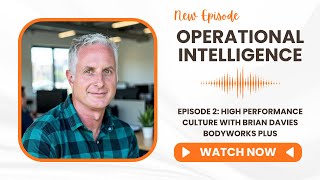
Brian Davies, owner of Bodyworks Plus, built a high-performance shop culture around daily public commitments to production goals, transparent compensation tied to targets like 60-65 cars per month, and rewarding employee ideas that save money. His approach blends military discipline, sports coaching, and continuous learning to reduce micromanagement and align the team toward shared success.
Chapters
In the last 15 years, I've been inside a lot of collision repair shops, probably over a hundred. And in almost every one, there was something unique about the way that that shop operated. Some kind of an edge, a system, a habit, a way of leading people that made things run smoother than some of the others. On my sales calls, we'd end up talking about that more than the marketing thing I was actually selling. And those conversations always felt like mini podcast episodes. You know, I'd ask questions like, I really like what you're doing here. Nobody else is doing that. How did you get it to work so well? Well, operational intelligence is my way of bringing those conversations to you. So last week I was in Charlotte and I sat down with Brian Davies of Body Works Plus. Brian's got one of the strongest shop cultures I have ever seen anywhere. It's a master class in how to create a culture within a body shop. And I wanted to understand how he built it, how he protects it, and what it actually does for him as an owner. You might be surprised to hear how much of that culture he didn't design himself and what that gives him. A team that holds itself accountable, numbers that are front and center, and a shop that doesn't need him to watch every move. I'll be honest with you, the audio is not perfect in here because I wasn't equipped with all my studio equipment. So bear with me on the audio and the video on this one, but I think you're going to enjoy the content. So this is episode two of Operational Intelligence with Brian Davies of Bodyworks plus, and I hope you enjoy.
Welcome to Operational Intelligence. I'm Morgan Felchner, here with my co host, Tom Zoblin, a 15 year collision industry veteran and former marketing agency owner turned AI software builder. Each episode, we dive into one shop owner's unique superpower and unpack the exact steps they took to master it so you can bring those ideas to life in your own business. Enjoy the episode. We hope you learn as much as we did.
All right. And so, Brian, thanks for being my first guest on this podcast is all new to me, so we'll. We'll figure it out as we go along.
Yeah, you'll. We'll make it work. Absolutely.
So, you know, I guess I just kind of want to start with your origin story, like, you know, how did you get in the business and. And how did you, you know, come to create Body Works plus and all that stuff. So why don't you give me a little background on yourself?
Sure. So I. I guess for lack of a better word or term, I'm a army brat. My dad was full colonel in the military in Vietnam and Korea. Fortunately, you know, he's not with us anymore. He died in 01. But, you know, he was the type of dad that kind of believed in everything that I wanted to do and kind of helped me a little bit and back me. But he got involved. He had a guy by the. His nickname was Ski. Skis are the world down in Fayetteville. I grew up working at that shop. But him and my dad were friends. And he painted my mom's 260Z. So after that, I think my dad kind of, you know, enjoyed Ski and his deal. And so him and a group of guys got into body shop and rental car salvage yard and a car lot. It was kind of a group of them.
I guess.
Long story short, my dad really was in heavy equipment insurance. And then him and Ski bought out the other guys. So that really gave me a place to grow up and work in the shop. So I've been working in the body shop business since I was a kid. Did a little go kart, racing motorcycles. So I've always loved kind of, kind of the mechanical, you know, engineering thing. So from there I came, met my. Actually my wife. Now after 30 years, met. We met in high school, came up to Charlotte, went to. She went to nursing school, and I went to community college, Central Piedmont, and then went to UNCC and got a degree in mechanical engineering and also manufacturing. And then from there I worked as a engineer for a company called Scheffler Bearing. But the whole time was kind of doing stuff on the side. And that shop down in Fayetteville, even though we let that owner, William Wi, buy us out, or like I said, Ski, I could use that shop on the weekends. So I was earning extra money. And before I got the engineering job, I worked for a company called Altel. They were putting in car phones. So I got to meet that whole group of sales people. A lot of people were driving, selling car phones, making big money back then, and a lot of accidents, a lot of wrecking cars. So I got to be kind of that resource and was taking cars home and then really kind of got out of it. But then there was a shop in Fort Mill that would let me use their. Their paint shop or paint booth on the weekends. So obviously my wife got tired of driving home, driving home to Fayetteville. So I used that shop. And then I found a small place that used to be the old city Toyota body shop in Charlotte. I rented that for 300 bucks for a while and met a guy by the name of Jim Harold that was doing at a Carroll Shelby dealership. So I started doing some Cobras. One of the guys I work with at Wayne's, he loved Cobras. So I just happened to go by there, and it turned out he didn't really have anybody doing a good job on the paintwork.
You talking about the reproduction covers, right?
Well, this was the CSX 4000 series, which. Okay, you know, we're basically, you know, how it was sold as titles that were still around that Shelby, like, re released. So they were real cars, and they did show in 2001. And I won best of show in Charlotte, got to meet Carol Shelby, which is really cool. But that kind of got me going in the neighborhood, and I was still working that job and doing the engineering thing. And then a good friend of mine, Chuck Hannah, his dad owned the original building on Corner Park Wood in North Davidson. So I cashed my 401k out and bought that property, and, you know, I was off to the races. But it was, you know, Charlotte in no Diary was really rough back then, but that was.
That was Body Works Plus.
Yeah. And that's when I started Body Works Plus.
Yeah. So that's. That is kind of what I want to talk about. So the whole point of this podcast is to find owners, you know, people that I've worked with in the past initially.
Right.
And kind of go deep on the thing that I think that you guys do the best here. And for you, it's. It's your culture, you know, that. That's. That's the thing that, you know, I've been in hundreds of body shops across the country, and certain things stand out to me that people are just doing. That's just above and beyond. And to me, it's your culture here, because I've been. I mean, I've spent, you know, collectively a couple months here at your shop, you know, all through the years. So.
Yeah, yeah, absolutely.
So, yeah, so that. That's kind of. That's kind of what this is about. So that's where, you know, I want to go kind of deep on that. So I've got some questions to ask you about it, but, like, you know, like, your culture. Is that. Is that something that you've just always thought about, or did it just kind of happen because of the way you. You run it? Is that something that you've identified as, like, if I want to have my own shop and I'm going to buy out My partners. I'm going to focus on this aspect.
Yeah, I think, you know, you know, I played sports and race motorcycles a little bit, and I'm involved in a little bit of, you know, hot rod stuff growing up as a kid. I was pretty fortunate to have some really good football coaches when I was a kid. Guy by the name of Junior Edge, he played for the Rams. And a couple of coaches when I was little were really, you know, inspirational to me. I think, you know, a big part of being, you know, a good leader is. Is, you know, being a coach. Right. And. And I think, you know, all the things apply, you know, honesty, integrity, but I think a true passion for really wanting to try to drive a team, to win. Right. And to be the best. And, you know, it's a fickle thing. There's a lot of great coaches, and I think one of the things that's really helped me, and there's several things, but I think one of the things is just a lot of reading and a lot of listening to audiobooks. You know, I've got a book list that I've shared with a lot of people, and I think that book list kind of shortcuts you on experiences that maybe you can get some wisdom from without having. Without having to go through the pain now, you know, without the pain, you don't learn those lessons. But I think that the coaching was a big part of it. And then I would say later in life, you know, Discover Leadership training. You know, I think Mike Jones and that team of people and that group also Mike Anderson, you know, so a little bit from him. But I think, you know, in the recent past, I went to Discover Leadership about seven years ago. And so I. I think it's, you know, the coaching, the wisdom from the books, and taking heed of the things that match you and your team, you know, and the satisfaction that I get, I think you get from building a crew of people that can do things independently of themselves.
Right.
They come up with their own ideas because the guys always have the best ideas. And I think, you know, give them enough slack and enough control to create their own ideas, but, you know, keeping them in a ordered environment.
So I. I probably should explain the cultures to people that won't be able to see this in the podcast. What I. What I observe as a guy that has been to a lot of shops, so. And why I chose this topic for you. So just exactly like you said. So, you know, I guess we could maybe talk about kind of how the guys operate in the shop, you know, Everyone has like a, a morning meeting or sometimes it's not every morning, it's maybe every couple days or something like that. And I've followed production managers around as they go and they hit every guy and they what do we got going on today? And then they write it down on their notes and they come back and they update ccc.
Sure.
But you guys do something a little bit different and it's evolved even in the couple years I've been coming here. So we started every Monday morning meeting, or I call it Monday, your morning meeting. Every morning on your. You had your board and you go through every single car led by your production manager, but with you standing right there and the whole team in a semicircle in the chairs, and you go through every single vehicle and who needs what and kind of get the team all together. That may be not so different than how some shops operate, but what's different about it to me is a couple of subtle things like they have to be there on time, where you make them do push ups, you know, so like.
Or you can dance. Yeah, yeah. Right.
And then the other thing that is on Fridays that I think is really cool is that you make them go around and tell something that they're looking forward to. Right. Over the weekend or just something positive. Right?
Yeah.
What, what, what succeeded this week? Something that they saw that, that they succeeded in. So something that they saw at the. Something that they observe. It could be in somebody else.
Right.
Something that went well or something that they're happy about in, in the work week.
Right. Well, the, the. And this is a Jones thing. And I think it's good because I think their culture in general always is looking for the negative. You know, we grew up in, you know, as little kids are always getting pointed out, what did you do wrong? And, you know, I think that the human nature is to point out the bad. So that really the goal. And I tell new hires and anybody comes in, it's like, you know, we want to catch somebody doing something good. Right. Or something positive or, you know, something in their life that is positive. So, you know, so trying to, trying to flip the, you know, the norm back and, you know, try to start the day on Friday on, you know, who caught somebody doing something positive or something good or something exceptional or doing something out of the ordinary that's, you know, not their job, you know, or just contributing to the team in some kind of positive way. Trying to, trying to catch people doing something positive. Yeah.
And then, and then what they're looking for, forward to over the weekend, I think is pretty cool because. Yeah, that's it then. You know, kind of what your co workers are up to. And now you got something to talk about the next week when they come back in. You know, hey, how was that fishing trip? Or, you know, how did such and such go?
Right.
And it builds a family, you know, kind of environment to the team. So I think that's. That's really a cool element, but it's evolved even to. Now you have Steve, who's your. Your lead production manager, and he's. Well, we should also talk about how you guys are paid, I think, because it maybe makes a difference that they're a team based. We can get to that in a second.
But.
So Steve has now abandoned. Well, at first it was. You guys had a rolling whiteboard. And I've taken video of it and I'll splice that in so people can see it.
Sure.
You have a rolling whiteboard that Steve has created. Goals for the day. Right.
Correct.
Their week goals, but also day goals. And it's by. By department. We're going to have one in paint, we're gonna have two in reassembly, we're gonna have three in this assembly, whatever.
Right, sure.
And he makes the guys commit to those numbers, right?
Correct.
Tell me if I'm doing any of this wrong.
No, I. You know, the overview is that we've set, you know, based on the volume, a number of cars we want to do in the month. Let's say we want to do. We want to try to process 60 to 65 cars. That's kind of the goal now with the crew we have and obviously clearly want to climb that to maybe 70 or 75. But we know what our average RO is. Whether the car is, you know, repaired or not repaired. It's a repairable car or it's total. We know our average RO is, you know, X dollars. And so how many of each department do we need to get done? Right. The goal is to deliver two or three each day. Right. So the goal is to have, you know, a minimum of two repair plans done every day. And our goal there is try to, when the car hits the door, have it repair planned within 24 to 48 hours. Right. And then, you know, two to paint, two to buff, and two to three to deliver. So, yes, each person is responsible. They commit to something for that day.
Right.
And at the end of the day, you know, we want those numbers to add up to whatever our goal is. Right. Basically, you know, three out minimum. Right. Two to three out every, you know, every day. And, you know, we do also tie the office into that, too. You know, they're committing to, you know, two or three supplements a day. Two or three leaving for the day, and then also looking at what's coming in for the day. Two or three.
Right.
So every department or every person really is responsible for that day. And they commit in front of everybody in the morning. And I think this is the key. And again, like we've talked about, that's evolved by the team. Something I created.
You didn't create any of that. They did.
No, they did. And I will tell you, just being enan on the manufacturing floor, the people on the floor, if they came up with an idea that saved in money, they got a check. You know, as an engineer and designers and people like that, that was our job. That's what we were getting paid for. But the assembly people and the people working on the floor running the machines, if they thought of something that was going to save money, they would. They would get some money from that. And that, you know, to me, when you're in the thick of it, you're in the battle. Right. And you're in the weeds, you're going to see things that no manager is going to see. You don't. You just don't see it.
Yeah. You're not out there.
Yeah. I mean, you know, in the front office, you know, obviously we'll have those ideas with sales and dealing with insurance companies or, you know, new repair procedures or, you know, things that are changing with insurance companies. We do that. But as far as the team and the guys repairing the cars in the shop, you know, it's something that. That I think that culture evolves and it's something that they create things on their own to help try to reach the goals. Right. It's like, all right, this is the goal target that we want to hit. You know, what are some of the. What can we do on a daily basis to hold ourselves accountable? And then also if we say, hey, we're going to accomplish this, you know, you're committing to the team. So you don't want to let the team down, and they don't want to let each other down. And, you know, I think one of my biggest roles on a daily basis, you know, I always concerned about, you know, what can I do to facilitate their success. Right. And I think, you know, being a Serbian manager to some degree or owner, you know, you want to be, you know, in a situation, and I've got this from a lot of military books I know Steve likes Jocko, and, you know, a lot of the. A lot of military leadership books I've read in the past and things that you've just seen good leaders do. Guy I used to co coach with Mike Baker. Same thing. So I think if you. If you create that environment, that their ideas are valued. A few of the top ones that always stick in my mind are. And this. This, I think leads to the culture is, do I have the tools and equipment to do my job? To me, that's my job as an owner, is making sure everything's working. You know, from the toilets to the air conditioning to the frame machines, everything's working like it needs to be. And I think having the right tools and equipment is number one, and number two is like, are your ideas valued? Do you feel like you have a friend at work? You know, they're some of the things that you think would be most important to people or not. And I think, you know, communicating with the team, too, and trying to figure out what makes them tick. Right.
What.
What's most important to them, you know, so.
So did. When did Steve come to you with this idea to change your meeting structure, or did he just start doing it and then you observed it and then said, hey, I like this. Keep going with it?
Yeah, we talked about it. We. We'd say, hey, the guys were talking about this, and we're thinking about changing this up a little bit.
He. He suggested it.
Yeah. Well, yeah, and then I think he discussed it with the team, and they developed that board themselves. Like. Right. We have the electronic board. That's just a simple Google Doc, which.
Yeah.
You know, I've shared with a lot of shops, you know, and the key is, is finding something that works for the team that everybody is committed to, that they will do. Consistent.
Yeah.
Well, here you are. I first saw it, I was here in March, and it's November, and they're still doing it. It's very little change from what I saw what they were doing now.
Well, there's a few more things. We add the office thing to it.
Right. I mean, yeah, there's some evolving. But my point is this was generated by an employee, by the employees, and because I think one of the hardest things with change management, I mean, I'm learning this.
Right.
Yes. To get people to buy into it and keep doing it every day.
Right.
You know, and I don't know how long it takes. I'm sure there's some. Some behavioral science, 25 days before it becomes a habit. But I mean, no one's bitching and moaning about this new system and they're, they're, you know, if Steve's out, somebody else jumps in and, you know, so I'm curious. So did you, did you, when you saw Steve do this, did he, did you come in there and say, hey man, this is a great idea, but you need to do this, this and this, or did you just let him just completely 100% own it?
Yeah, I mean, you know, obviously I would, I offer up suggestions and what seems to be working, but my, you know, I'm setting the goals of what, you know, the break even on the business needs to be. And based on what our numbers were last year and the year before, these are the goals and targets we need to hit. So it's like, all right, these are the rules of the game, you know, how can we get there? And I think, you know, just like everything, what is it? The, you know, necessity is the mother of invention. Right. So the guys have invented what they feel works best for them. And it's simple and it's easy to do. It's a manual board, which I know a lot of everybody wants to go electronic. Now. We've done that, but I think the, you know, and we still do that. So when somebody calls, you know, the girls and everybody, anybody answering the phone can look at our, our Google Doc and you know, give a customer a realistic update. Right. Or say, hey, by the way, I, you know, I'm not 100 positive. I know things have changed today. So, you know, let me give you a call back and I'll go verify it. And you know, go shop and check with the guys and verify it, you know, because the board is not instantaneous. And I don't think anything electronic unless it's automated and it's connected to you, it's going to be 100 up.
Well, you know, I've tried to build that. Yeah.
Yeah. Well, and the problem is it's got to be something that the team engages in. You know, if you had, you know, and I'm sure we'll solve that problem when the time is right. And I, I just think the, you know, you know, some element of employees don't want to, you know, be under somebody's thumb.
Yeah.
Even though they might feel like that, they are, you know, they don't want that. I don't want that. I want them to be able to be free thinking. And I think sometimes when things are regimented and I think that's one of the things that makes the United States incredible is you Know, the ability for us to be creative free thinkers. Yeah. I think once there's, when there's too much structure, you lose that element. Then people are going to not do that because they don't want to be outspoken or, you know, I was watching. Was it Montelli? He's a guy that's got a theory on, you know, just human nature in general and some of the negative propensities, I guess, that we have as human beings spinning towards the negative and, you know, human nature constantly looking out for me, me, me. And I think, you know, building a team culture similar to the military and similar to, you know, great companies in the past, you know, built to Last, good to great, the E Myth, all those books, I think, you know, look at real world businesses and how did they, how did they do that? And I think one of the common things in a lot of that is, you know, listening to the people, you know, and you know, be in a culture of open mindedness and the willingness to change. And I think that really, you know, I, I talk about it all the time and even with new hires and people will bring it on is, I mean, one thing we can count on is change. And as us, as human beings, we hate change.
This business changes all the time. It does.
I mean, every, you know, two times a year you get different models and different, you know, equipment and new stuff constantly, so.
And insurance changes, I mean, everything.
Laws change, you know, the environment, you know, what we're dealing with on a daily basis with, you know, just what's going on with the world and you know, with the connectivity with the social media, hyper intensifies, I think a lot of people's emotions. And so I think, you know, if you have a, you know, you have a clear plan, you know, you come to work, you know, you kick ass, take names. We really strive to want to be the best and creating that culture of really trying to be the best.
Like the Best of Charlotte that you won.
Yeah, Best of Charlotte. Which is. That was a great honor and being voted that.
Another aspect of that meeting. And I want to go past just the meeting part too, but there's a thing that you guys do that's really cool and you play this game, right, where you have this little, like a basketball, right. And you guys sit there and, and in a circle. I took video of it, so I'll add it in here, but you guys bounce it, try to keep it off the ground for. And who came up with that?
I mean, I, I'd love to say that's our idea. But that's a, That's a Mike Jones deal. Ok. Something that they, you know, he does in some of his stuff. But now we did, you know, all. Most of the team has been through it and it's not something that we came back and started doing it. We really didn't start doing that consistently until the beginning of this year. And it. That kind of with the board came about organically again, so.
And you do it twice a day?
We do, yeah. And I will tell you, that's one of the things I, I think the whole team enjoys a lot.
Yeah. What do you think that does for the team? Like, does it. Does it build up?
Well, you know, one thing that you can not, you can see who's engaged right away. I think it livens people up in the morning. I think it gets their mind working. And when we're in tune, we don't miss the ball. We've got a record of, I don't know, 287 hits without dropping. That's a lot. And especially when you have, you know, you know, sometimes one or two people can't. They're handling the customer. But for the most part, we're all engaged in it. And, you know, on Fridays, if you miss the ball, you gotta do push ups. So Fridays is kind of our kind of pick on each other day. So if you get, if you miss the ball and it's your fault and it's a. It's a hittable ball, then if you miss, you gotta do 10 push ups.
I'm glad I'm taking my flight out here on Wednesday.
Yeah, yeah. We've had some people come. I know Ted's nephew Grady came out and he was doing a lot of push ups. Anybody that jumps into it?
Yeah, anybody have visit the shop?
Yeah. And you could do other stuff. You know, you can do jump jacks or you can do leg squats or, you know, any kind of exercise, you just have to do 10. So that's, that's kind of a fun competition. But. But I guess back to how it got created again, you know, that was organic too, similar to the new whiteboard thing. And I think it's just a way for us to kind of connect in the morning, you know, get each other going. And the other thing is you can see who's engaged if somebody's not like the ball is a bad hit and it's short, you know, how many people are diving to get to the ball. Right. So it's a really good way to kind of see who's engaging and who's kind of sitting on the sidelines.
So what do you do when you see someone that's kind of dis. Disengaged?
You know, everybody has good days and bad days, but, you know, you tighten them up a little bit, say, hey man, let's go for the ball. Or, you know, to me, if somebody makes a good shot and they, they, you know, it's a ricochet off of something and they make the hit, you know, encouraging a good hit. But I think the team really enjoys that and I'm sure that will evolve too. You know, we've had other ideas, but it's a. It's a pretty simple thing and, you know, I think we're pretty comfortable with it now, so it's probably time to change it. So I'm sure we'll come up with something that involves that. But I think it's, you know, it's a great way to kind of welcome each other. It's good for new people, kind of gets them in the groove. Get your hand eye coordination going, kind of get you. Get you in the right frame of mind in the morning. So that that meeting starts with everybody going to the board and putting up there what they're going to commit. You know, we play the game, but it's, you know, it's been something I think the team really enjoys and it kind of just ties us together, I think, and, you know, it's just a way to build a little bit of camaraderie and teamwork.
So, speaking of that, so in a body shop, you have departments, you know, and so in order to be successful, I think you have to have the departments all working together as a team. Do you think that these kinds of things help the departments? Does it break down some of the. Between the departments?
Yeah, absolutely.
Parts and body?
Yeah, absolutely. I think the stereotypical, you know, body shops, you know, you got body guys are kind of, you know, anti painters. Yeah. Then everybody's like, nobody knows what's going on in the office. And, you know, they're just another side of the wall. So I think, yeah, you know, getting everybody engaged is really good and, you know, talking about some of those positives on a Friday, you know, you know, team might be, you know, we might have done a really good job in the office getting a bunch of cars in. And the team sees that and vice versa. We push hard and, you know, guys stay late. Just the desire to really want to do the right thing.
So that's a good segue to. My next question is, is how, as an Owner. What does having a culture like that do for you? Like, does it allow you to not have to keep an eye on things as much, you know, and like, be up their butts about, hey, are you doing this? Are you doing this? Because do you feel like this kind of culture that you've built? Because I'll be honest with you, whenever I used to hear culture, I always thought that was such a term. Like, you know, like, I've worked for companies that say, oh, you know, culture, culture. And culture meant, you know, that, that they had like a Thanksgiving meal and they had, you know, Christmas bonus check or something. Like there was not really culture the way they thought there was. So culture, I think, can sometimes be a bunch of bs, but, but here I think it's, it's a legitimate thing, and so I appreciate that.
I mean, I think it's, it's fickle and. Are there days that it's not good? Sure there is, but I think the majority of the days we have here are better.
Yes.
And just, you know, go back to your original question. I think, you know, it's like the, you know, the, when you watch things.
You talk about where, when you, when particles are observed.
Yeah, when, yeah, when particles, when particles. Yeah.
Are being blasted through those lines.
Yeah, it's a, it's, it's the duals. Yeah, the dual slit experiment, basically. And what happens is if, when you observe it, it does, when it, when it, when it's on its own and nobody's watching, it does one thing, and then when you observe it, it changes. Yes. So I, I think there's a lot to be said for, if you measure it, it'll get better. So I think, you know, if you just let things happen and you don't measure it, you don't have some KPIs that are important to you and to them, and then also ultimately the customer. Right. And, you know, whoever you're, whoever the payer is, you've got to put enough accountability on some specific things that you can measure it. Because. Right. I mean, you got to put accounting together, you got to balance your books, you got to do taxes, you got to do those things. So to me, those are all measurements.
So I want to go deep on all these things. What are those things? What are those KPIs do you think are important?
Well, those, those evolve too. And I think based on what the demands of the environment are and what's going on in the market, they change. You know, like, I think the culture will get naturally better if you have really good targets Right. It's like you want to win the mission. Right. So I think identifying what your main overall arching goal is and then you target some real numbers that are easy to measure.
Yeah. So when I was building Boltonic and I was showing it to other shops, one of the features it has in there, it has potential revenue and so it'll track every, every lead that you have and every estimate that you've written and then sold jobs. I've actually had shops tell me that they want to be able to turn that off because they don't want anyone in the back shop knowing how much money the business was making. And that's completely the opposite of what you do here. It's front and center every single morning, every single day.
Right.
What the, what the revenue is you share because you, you have team based pay number one. And, and everyone's the shop success is their success. And so that's, to me, that's where I think culture really pays you back here. Because those guys are aware of the numbers, they're aware it's not just Brian's making this money. They're, they feel like they're making the money. Would you say that's the case?
Yeah. And I think, you know, I have a little bit of a different philosophy when it comes to that and you know, to my detriment at times I think, you know, in the past, but I think ultimately that's the truer win to me. I think you can always buy more stuff and you can always have more things. You know, to me I'd like to travel a little bit more in life and I want to cross the finish line, but I want, I want those guys to cross with me. Yeah, right. And I think if they genuinely know I'm not a greedy person and I want to do the right things for them so they're, you know, their families are taken care of and the end result too, if that's the case, then they're going to take care of the customers and I'll get taken care of too. And you know, as an owner, we sacrifice a lot and we're putting a lot of risk on the table. And I think sometimes employees don't realize what we're doing and I think that feeling of, of entitlement happens sometimes. And if you see that in people, you know, to me that our culture, you know, that wouldn't work here.
So by being transparent, you think that that eliminates people making assumptions like, oh, Brian's in there making all this money and we're struggling.
Yeah. I mean they're fully aware of, you know, what the break even is. And if we're not hitting our numbers, you know, what that. What's. What's going on there. That means that somebody's putting, you know, I'm putting more money into the business to, you know, to make sure things are taken care of. And the tools. We have the tools and equipment and the certifications that we need. But, yeah, I think. I don't think there's anything wrong with sharing the numbers. And I think if you're driving and, you know, to me, that's the target. Right. And if you don't know what the number needs to be and you don't, you hide that, you're not going to.
Get there by having this culture that guys are all sort of bought in on the same mission and sort of doing. Does that allow you to sleep better at night? You're not. You're not worried about, you know, stuff being kind of done behind your back or like, you know, being OEM certified, procedures aren't being missed and stuff like that?
Yeah, absolutely. Again, we're human beings, and I think that, you know, we're not doing 300 cars a month or, you know, we're processing maybe 40 or 50 repairs. So I don't think it's that difficult. Even though the files have a lot of detail on them, I don't think it's that difficult to keep track of it. And, you know, the checklists that we have in place and things that we put in place have been partially created by them as well. Matching, you know, the better OEM repair procedure. So we need to have those things in the file. And really, the way we've got things set up, it's. It's hard to miss because we're human, we're going to miss. I don't think it's that they don't want to do it, but I think they want to do it. But it's got to be systems that are easy to do, just like tracking the numbers and, you know, doing the games or doing it. I think a big part of it is making it a game a little bit. Right. So it doesn't get stale. Got to change the games up a little bit. But, yeah, I think I. Yeah, I do sleep better at night because I genuinely know that they are concerned not only for themselves, but for the clients and knowing that, you know, their name and reputation and their existence relies on it too, and they realize that. And I think that that needs to be a reality in any shop. You know, it's not, it's just not on the shop owner anymore. So on anybody that touches or deals with that car, including the insurance adjusters, you know, they're, they're responsible for. I mean, they're professionals in this industry too.
Yeah. My last question is if you were to either tell somebody how to do this at their shop or let's just say you had the opportunity to go buy another shop and it was an existing shop and you needed to import this culture into that shop, is there like a framework that you like? What would you, what would be your steps to get there? What do you think you would do if you had to kind of try to replicate this in some ways, you know, I'm.
One thing I'm trying to do with the team is being that I share the numbers and you know, we get them to higher level training, get them through Discover, you know, I want all those into every individual here that we're growing to be their own kind of mini operator. Right. You know, they're looking at growing themselves to maybe eventually someday operate their own facility.
So they know that from, from right now, they know they're being groomed to maybe.
Yeah.
Own their own shop.
Yeah.
Either that, run it.
You know, if we get in the location, if we get another, you know, environment that we can, we have the opportunities to do the right thing.
So every, every a tech out there could potentially be a GM at a location.
Absolutely. That's definitely something that I culture and talk about with them and you know, building those skill sets. So if you can, you can build a machine like an mso, but more of an independent, you can have those resources to help. So that way, you know, an A tech type person, which is described in a great book, the E Myth. You know, a lot of technicians, you know, have that, you know, entrepreneurial, you know, awakening and they want to open their business, but they're operating as a technician. Right. And they're not, they're not giving equal time to the business and the marketing. So, you know, creating the operator and an individual I think would be, you know, really good and then put them in an environment where they could focus on just fixing cars. Right, right. And then helping propagate the culture.
Right.
So, you know, if I, if I'm going to tell people how to do it, what's the path? I mean, I think you got to find some of it for yourself. But I think reading, you know, reading some of the really good books, like the goal is really good when it comes to fixing bottlenecks. And I think as we get further, we get down this road in the industry, we're going to have to have shared roles. There's just no way everybody's going to stand on the pillar. So being able to have people cross over and fill those bottlenecks without having to just hire an individual just for that job. So I think that's a big one.
So, you know, so cross training. Get everybody cross trained.
Yeah. Right. And, you know, you're not going to have a, you know, the parts guy welded on a quarter panel, but that parts guy can help with the repair plans and validate parts. Our parts people are.
Well, that's how you do it now, right?
Yeah, our parts. Our parts guy, our. Our parts manager. And our parts team, Michael and Angie, you know, they. They're working in the repair plans with the guys. So when the cars get disassembled, they're putting their hands on the parts.
Yeah. So. So to explain that visually. So when you guys do a tear down a vehicle, you lay out all the damaged parts in some kind of an order. It kind of looks sort of like a dismantled car, and it's in a bay next to the vehicle. And then you have your gm, who. Right. Who's writing this?
Yeah. Chris. Yep.
You have the. The technician that did it, and you have the parts people. Anybody else in that.
Well, and usually Rachel, too, You know. Rachel.
Yeah, Rachel, who's a csr, Right.
Well, she's. And she's a repair planner, too.
Repair planner.
Yeah. But she's doing both. Yeah.
So you guys have a mini meeting looking at the parts before anything's ordered, before the estimate's written at that point or.
Well, the initial estimate might be written, but. But this is our repair plan. So the technician is putting on any of the additional labor items after he's reviewed him personally with his own laptop, has reviewed the repair procedures. So we know they're current. And. And this is the different philosophy than a lot. I. I think the technicians are engaged a little bit more in the process with us than they are in some other cultures. So they're. They're in charge. They're the. A tech. They're the ones that are gonna write their name on that car. So they're the ones that are responsible for making sure that the repair procedures are reviewed. They're looking at everything that they need to. And then the parts team is validating all the little clips and fasteners.
Yeah, they're picking up the parts, holding.
It, putting them in their hand. Yeah. Making sure that, you know, because a lot of times, you know, you have a headlight that's got a black backing or chrome backing and we get that headline in the mirror, match it. But you know, you get a chrome backing instead of. So there's a lot of little nuances, especially with the small clips and fasters. So that to me, and that's something that we've kind of implemented this new. And that's another thing that we've, because of the need and we see these issues, what can we sort of cross. Yeah, yeah. Well, what can we come up with that's going to solve this problem? And you know, we got a car, you know, twenty thousand dollar job ready to go and then there's, you know, four clips missing. Yeah. And everybody knew they were there, but you know. Yeah. So taking on that ownership of that small error, I think that's a big, that's a big part of it. I think that's what's helped, you know, and I guess back to, you know, what, what would I tell somebody to do? You know, it's a lot of reading, it's a lot of listening to some podcasts. It's, you know, it's finding the path that works for you and your system. Because every environment is a little bit different in every culture. Like what we do down in the south and North South Carolina might be different than what goes on up North. Just the inherent differences in people. So you got to find what works there. But I think getting everybody through, you know, leadership training specifically, you know, with, with Mike, it creates an environment of accountability and, and you know, you got to continue to work on it and you got to stay outside of your comfort zone. But that to me that's a solid piece of it. But you have to have the right people that want to do that and are open minded to do that. So that's part of our hiring process that, you know, I offer that as part of our onboarding that that, you know, really is a condition of employment, is, you know, them willing to go through, you know, the training that's required.
So if you took over a facility, you would put those guys through leadership training. Number one, you would implement some of the systems. You have like your, your accountability meetings every morning, every after, at the end of every day.
Definitely put one of the guys, the senior A decks that are ready for that spot and they're, that's what they want to do. A big part of that would be putting them in there and then maybe if there was key players in that, we would swap those players, get them.
Familiar with it and then try to incorporate, find points where multiple departments could align on the phases of a job. So not just parts gets a parts order, but parts gets brought in on the disassembly meeting with the, you know, so try to, try to like cross train, but, but also like cross integrate, I suppose bring, bring the departments together at points where maybe it doesn't typically exist in a shop. Like look for, look for points where a quick meeting could make a big difference because it's not just solving the, the obvious problem in front of you, making sure that all the parts get ordered correctly. But, but it starts to build that culture of correctness and, you know, teamsmanship and getting the. Delivering the right product so you can get the right price for it and so on.
Sure. Well, and to me, a culture, one of the culture things is continuous improvement. So, you know, we'll always have a couple projects on the board that we want to accomplish that's making the space or the environment or some aggravating little nag that is not, you know, not working right or something that needs to be addressed. You know, we'll make that project and a couple people, you know, champion that and get that accomplished. So, you know, for example, the SOPs like we're going through those again and I think they need to be updated every couple of years and once you get something working, you can refine it or, or do it. So we did the repair plan one and it's, it's generic, but it's specific and it's giving, it gives a new tech, you know, the understanding of what the goals are. Right. And there's some very detailed pieces to it. But I think when people spend a lot of time developing a very specific sop, I think that's, you're wasting some time there. So what we're working on right now is, is the parts and that needs to be, you know, detailed enough. But also I want it to be in such a way as you bring in a new parts person, you hand that to them and it's two sheets, maybe a couple of visual pictures, handful of pictures, integrated, but not, not a document that's so complicated that, you know, it's, you know, it takes you a month to develop, you know, to learn it right and learn it and develop it. So we want it to be streamlined and as simple and easy as possible. So, and then neck and one more working on the next is going to be the sales one and how we're going to do that. And I think with the new tools and equipment that come out like the, you know, some stuff that you're working on, you know, innovations in the industry as a whole, you know, from robots painting robots to other things. I think you're gonna have to constantly evolve those.
Yeah. I have one question. I'm gonna jump it in earlier in here, but this is one that I did want to ask with regards to culture. What are some of the things that you tried that didn't work?
I'm sure there's a lot of them. I could probably ask the guys what didn't work. Not a moon. Three meetings today. Morning, noon and evening. The noon meeting didn't seem to help. That was always trouble, kind of coordinating the lunchtime thing. That was one that I think in the morning and even really worked. Some of the checklist processes we tried to put into play were too cumbersome.
But nothing like specifically on culture that you've tried.
Then I can't say, you know, no, I haven't really put the hammer down and said, we're doing this, and.
Yeah, because you kind of let it be employee led. Yeah.
Yeah.
Was there. Was there any, like, big aha moment that you had with your cult with regards to culture and, and.
You know.
Like when it just all of a sudden it clicked. Yeah, it clicked. Or you just realized that this is, this was a good thing or, or. Or this is working or. I don't know, just some kind of, like when you're.
I think the, The. The daily board, I, I think the aha moment there is really seeing the positive effect of everybody committing to getting what they said they were going to get done that day. And then everybody holding themselves to it. And then if we set the goal for that day, they. The team's moving resources around, including myself, to facilitate getting that goal met.
Right.
So if something fell off the plate, you know, we couldn't get it delivered. Rallying around another vehicle to get that car delivered, to make, to still get the three cars for the day. I think seeing that, you know, and trying to put that. A little bit of that pressure on every day. So at the end of the month or the end of the week, you know, you don't, you know, it's like. I know Andersen talks about it. Mike Anderson, you know, it's like the, you know, snake swallowing the rat. Right? You know, getting that rat all the way through the snake. I mean, if you could take those little bites, you know, if you, you know, eat that elephant one bite at a time. And I think if you can do that throughout the month and operate on a Daily level with a little bit more of a sense of urgency to where you're not, you know, pushing at the last week. I think, to me, that daily accountability with a target to get completed by the end of the day. I agree that that was.
That's huge. I think the aha moment for me, too, for you is watching that. Those meetings, you know, being here every single day for a week or a couple weeks, watching that. That meeting and watching the cars move through the team, and then that. That Friday moment that, like, you know, what. Who did. You know, what's your positive?
Right. What did we get done?
Right, yeah. What did we get done? Like, recapping the success of the week. What are we looking forward to over the weekend? To me, that was the aha moment when I was like, there's some. There's a culture here. Like, there's something. There's something really special here that you don't see in other shops.
Yeah, well, I appreciate that. I mean, it's. I'd love to say it was me. I. I think creating the environment to where it can happen, I think is the big thing. And again, you know, that Gallup deal and, you know, some of the books along the way that I've read, you know, that's really put us in a spot that, you know, trying to create that environment so that can happen. Yeah. And I think that's the big part of it is, you know, trying to be that. And I think that's that servient leader that is, you know, putting the. The team in a situation where they can win.
Yeah.
And that's what, you know, I think that's what it's about. You know, it's like going into battle. You know, we're going into battle to fix these cars. Right. And we want to come out the other side and make that car look like it's never been touched and. And, you know, winning, getting paid, what we deserve to get paid. You know, fairly not being exorbitant about it, but also, you know, getting paid what we deserve to get paid. You know, that's the biggest challenge, is trying to anticipate how to play offense a little bit and get ahead of the curve on, you know, what's going down the pipe, what rules are going to get changed, and then anticipating what you can do to help protect the consumer, still get paid a decent wage, and then make sure your guys aren't putting themselves in a situation where they're being forced to fix cars substandard because they don't feel like they're going to get the time that they need. Yeah.
Yeah. So I have one last question, too. I. I'm just curious about this one. If you were to kind of. To get where you're at with your culture and everything, Like, I've been in shops. Probably the worst one that comes to mind is I went in with my partner Raj to a shop where literally the guy, the owner, was in a different building, in an office, in a different building. It was in a. Like, they shared a parking lot, but it's a different building than the shop. And he basically spent all day hiding behind his monitors and the tail was wagging the dog. The techs were doing whatever they wanted. So if you were like, that's an extreme on the one end, but if you, if you were a shop owner listening to his podcast, came to it because you're. You realize that you need to shake things up in your shop and you need to make a cultural change, how long do you think it would take to do something, or at least is this a long game? Do you think you could start to see immediate results if you started to put some of these things into place? Like maybe change your morning meeting? You change some of these things. Do you think they. Is this something. Could you start to feel a quick fix happening at your shop? Or is this a long. Is it going to take a long time to get there, to get any noticeable results from. From, you know, trying to change your culture?
I don't think so. I think it's about having, you know, committing yourself and then having a couple champions in the shop that see it that way too, and having a couple of key players that want to see that change. Because, you know, really good employees and I think good, you know, technicians, they want to be around other people that are doing the right thing, I think, and getting help from them, you know. And if I were going to say just, you know, like, with marketing, I think one of the silver bullets everybody's, you know, always asking about, I think Google reviews are one of those. I mean, you know, if you focus on those Google reviews and, you know, really get that word of mouth and do the right thing by the customer, that's going to get, you know, more cars in the door. But when it comes to culture, I think, you know, going inside and, you know, starting with yourself first, right. You know, you're in the biggest room for improvement. Right? And this is a Jones thing, too. Biggest room for improvement is. Is yourself. Right? So not pointing fingers at anybody else, pointing at you first. You know, I think one of the philosophies of Good to great and Built to last is, you know, it looks at the leaders and Good to great talks about, you know, when things are good, things are going great. You know, the, the leaders look out the window like, oh, the universe is good. Thank you. You know, it's, you know, I'm lucky. Count my lucky stars. Right? It's just things are good, but then when things are bad, they're looking in the mirror and they're blaming themselves, you know, And I know Steve and I have talked about this, like with Jocko, you know, if there's any problems with the business, it's the leadership that's number one. So I think if I were going to tell somebody and I encourage people to go to discover all the time, it doesn't necessarily need to be that, but I just know because I've experienced it. And Mike Jones has got a unique environment for body shops because he spent so much time going to our conferences and coming to our, you know, doing it freely, volunteering to come to our association meetings like Mike Anderson as well, you know, and taking that commitment to go, to go to something like that. And I think that's an opportunity for you to change within. And then getting a couple of your key players to go as well.
Some internal champions.
Yeah, yeah, some internal champions. And you get on the same page and, and then, you know, is it going to create some pain? Yeah, you're going to have some people that don't like it. There's always going to be those people that, you know, put their foot down and draw a line in the sand and say, I'm not doing it, I'm not doing it.
So how do you deal with that?
You got to give them ultimatum, you know, you gotta, you gotta say, look, I really like to have you here. We want you to go and take this opportunity and do it. But unfortunately, there's some people that you have to stop the bus and let them off, you know, so I think just really trying to, to, you know, get those right people on the bus.
Even if that means leaving losing an A tech, it might be the best thing for, you know, there's a lot.
Of great technicians out there, but, you know, the, if they're really the right kind of technician, they're going to want to help you change it and make it better. Yeah. You know, and the worst thing is you got a really good player and there's a couple other players that are doing whatever they want. The tails wagging the dog.
Right.
You got a couple of Good technicians that have families, and they, you know, like the core of the business, and they wish the owner would do something, but the owner really doesn't know what to do, or the manager doesn't know what to do, and they allow that bad behavior. So you've got a good person that's going to leave because you're not controlling.
Because they're a bad fit for a bad environment.
Right. Right. And nobody's holding them accountable. You know, you've got to. Have. Got to have some lanes to keep everybody in. Right. And, you know, you got to be on work on time. They've got a certain expectations they meet. And if you don't have a, you know, an employee handbook and you don't have a course of action to discipline those people, and nobody likes doing that, it's not fun. But if you don't do that, you know, people are getting this.
Yeah. I mean, I've seen you guys bounce guys out of here.
Right. I mean, that, you know, it's. It's intense. You can't. You can't hide. And if you come into this environment and you're gonna goof off, it's gonna. It's gonna be so obvious that you're just not gonna be here. Right. And we do give them an environment to, you know, change. Right. And work through that and give them some opportunities to fail. Because people are going to fail. We're all going to fail. But if their heart's in the right place and you're really trying to get to that goal of, you know, being the best, you know, you. You want to give them some time to kind of, you know, create that environment for themselves and figure out how they're going to fit in. But. Yeah. Yeah.
So, Brian, thanks for all your time on this. I. I think that covers all my questions, so. Okay. Yeah.
Well, I look forward to seeing how these podcasts go. I think this. I think you're onto something. Just like you're on something with the. The software. I think, you know, I'm looking forward to what we can build together. Yeah.
So if you like the format of this podcast and you think you've got something that you'd like to share with other body shop owners, something that you do exceptionally well, I would love to hear about it. Please contact me and let's see about getting you on our show. Thanks.
More from Thomas

Sal and Vinny Grill me about Insurance company estimate denials at body shops


Customer Service as a Competitive Advantage - Dan Bernier - Moay Collision Episode 10
How to Build a Daily Competitor Report With Claude Episode 13 Hero Group AI Labs
These 3 Free AI Tools Can Help Collision Shops Hire, Sell, and Grow Hero Labs Episode 12
