The New Rules of SEO (2026)
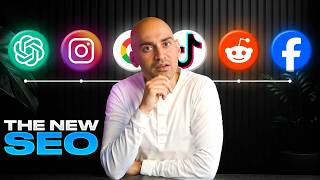
A YouTube video transcript in which Neil Patel argues that traditional Google-focused SEO is obsolete and businesses must optimize for "decision moments" across multiple platforms (TikTok, Reddit, ChatGPT, Amazon, YouTube, Instagram, etc.). He introduces "Search Everywhere Optimization" as the new approach and recommends prioritizing platforms using a RICE-style framework (Reach, Impact, Confidence, Ease).
Chapters
Consumers aren't searching anymore, at least not the way you think they're deciding. And they're doing it in the weirdest places, in the strangest ways. A TikTok comment, a Reddit thread, a ChatGPT answer, a friend's Amazon review, even a YouTube video they barely watch. Those are the new decision making moments. And if you're still optimizing for rankings, reach or relevance without knowing how decisions actually happen now, you're not just behind, you're invisible. This isn't about doing more, it's about showing up in the exact moment someone chooses, not just searches. I'm Neil Patel. I run one of the largest digital marketing agencies in the world. In this video, I'm going to show you what the shift looks like, why your current strategy is probably invisible in today's market, and how to fix it by optimizing for decision moments, not just keywords or content. Let's get started.
Most businesses are still playing the Google game that ended three years ago. They're obsessing over rankings, tweaking meta descriptions, building backlinks, chasing that sweet page one spot. And look, I get it. For the longest time, that was the game. Google was the Internet. If you weren't on Google, you didn't exist. But here's the problem. Even if you're winning at Google, you're still losing customers. Let me show you why. Google handles about 13.7 billion searches a day. Sounds massive, right? But that's only 27% of all search activity happening on the Internet. The other 73%, it's scattered across Instagram, TikTok, Amazon, Reddit, YouTube, ChatGPT. Platforms that most businesses aren't even thinking about as search engines. So while you're still fighting for that number one Google ranking, your customers are making actual buying decisions on TikTok. They're validating those decisions in Reddit threads. They're asking ChatGPT for recommendations, they're checking Amazon reviews. And where are you in that process? Nowhere. This is what I call the Google Trap. You're optimizing for visibility in one place where customers are deciding everywhere else the result. Your traffic might look decent, but your conversions are flat. Your rankings are solid, but your sales are stagnant because you're showing up in search, but you're missing the decision.
So what's changed? Why isn't traditional SEO working the way it used to? Because consumer behavior fundamentally shifted and most marketers missed it completely. People aren't really searching anymore. Not in the old sense. They're not typing keywords scanning through 10 blue links and carefully evaluating options. Instead, they're making rapid fire decisions across multiple touch points. And those decisions happen in the weirdest places. Let me break this down from a neuromarketing perspective. The modern consumer journey isn't a funnel anymore. It's a constellation of micro decisions. Here's what it actually looks like. What to click that happens on Google what to trust Reddit threads and reviews what to buy Amazon TikTok shops what to try App store rating what to think YouTube videos and podcasts what to believe ChatGPT, Claude Other AI models who to follow Instagram and LinkedIn who to cite or reference AI pulls from everywhere. Each platform serves a different psychological function in the decision making process. And here's the kicker. These aren't sequential steps. They're happening simultaneously, sometimes within minutes of each other. Someone sees Your product on TikTok, checks reviews on Amazon, validates it and are Reddit threat And then ask ChatGPT for alternatives. Then they buy it all without ever visiting your website. Each platform represents a different context. Each search represent a different behavior. Each mention becomes a trust signal. Each content format becomes a lever of influence. If you're not showing up in those moments of microchoice, you're not in the conversation, no matter how good your Google ranking is.
So if the old playbook isn't working, what's the new one? It's called Search Everywhere Optimization and it's exactly what it sounds like. Instead of optimizing for one search engine, you optimize for every platform where decisions get made, including Google. Think about it this way. SEO isn't dead, it's just gone a lot bigger. Traditional SEO was about getting found on Google. Search Everywhere Optimization is about getting chosen across the entire Internet. This means designing your content, your presence, your and your brand to show up in all the places where your customers are actually making decisions, not putting outside the traditional ecosystem that you're used to. And if you're not optimized for that reality, you're invisible.
Here's where most businesses mess this up. They try to use the same strategy everywhere. They take their blog posts, copy and paste it to LinkedIn, post a snippet on Instagram, maybe turn it into a YouTube video. That's not how this works. Each platform is essentially its own decision engine with its own psychology, its own algorithm, and its own way that people make choices. Let me give you some examples. On TikTok, decisions are driven by emotions and novelty. People don't want to think, they want to feel. So your content needs to be immediate, visual and emotionally resonate. YouTube is opposite. It's about retention and perceived expertise. People come here to learn and evaluate. They want depth, authority and proof that you know what you're talking about. ChatGPT, that's all about citations and somatic clarity. AI models don't care about flashy visuals or emotional hooks. They want clear, factual information from authoritative sources. Amazon is pure social proof and trust. People don't read your product descriptions. They scroll straight to the reviews. They want to know what real people experience. Instagram is an aspirational identity. People aren't just buying products, they're buying into a lifestyle, a version of themselves they want to become. Reddit is raw authenticity. Any hint of marketing speak gets destroyed. People want honest, unfiltered opinions from real users. The point is, you can't just use one playbook across all platforms. What works on TikTok will fail on LinkedIn. What converts on Amazon will flop on Reddit. Each platform has its own decision code and you need to match your content and presence to that code. This is why search everywhere optimization requires platform specific strategies, not just platform specific posting.
Here's the thing that trips up most marketers. They think visibility equals success. They see their content getting views, their posts getting engagement, and maybe even some traffic to their website and they think they're winning. But visibility is just the entry fee. What actually drives decisions is validation. Let me explain the difference. Visibility is showing up in search results. Validation is being mentioned in the conversation. Visibility is having a TikTok account. Validation is having someone reference your brand into their own TikTok. Visibility is ranking on Google. Validation is being cited by ChatGPT when someone asks for recommendations. See the difference? Visibility is what you do. Validation is what others say about what you do. And here's why this matters more than ever. AI doesn't scroll through search results the way humans do. AI summarizes and it summarizes based on who gets mentioned the most and trusted the fastest. If your brand isn't part of that validation network, if you're not being mentioned in Reddit threads, cited in articles, reviewed on Amazon Reference and podcasts, then you simply don't exist in AI's decision making process. This is why search everywhere optimization focuses on earning trust signals across platforms, not just creating content. In a world where AI is increasingly making recommendations for people, being trustworthy isn't just good business. It's the only way to stay visible.
Okay, so by now you might be thinking, neil, this sounds overwhelming. Do I really need to be active on every Single platform. The answer is no. And that's the beauty of search everywhere optimization. You don't need to be everywhere, you just need to be trusted somewhere that matters. Let me give you a framework for this. It's called rice and it's how we prioritize which platforms to focus on. R is for reach. How many people search on that platform daily? I is for impact. How much business impact could this have for you? C is for confidence. How confident are you that you can succeed here? E is for ease. How easy is it for you to execute? You can score each from 1 to 10, multiply by the reach number and that tells you where to start. For most businesses that's going to be two to three platforms maximum, not 10. And then eventually you can add in more into the fold. Maybe you focus on getting cited by ChatGPT and mention in Reddit threads. Maybe it's dominating Amazon reviews and YouTube search. Maybe it's becoming the go to expert that podcasts reference. The goal isn't omnipresence, it's strategic presence. Because here is what happens when you nail this. Your influence compounds across platforms automatically. When you're mentioned in a popular Reddit thread that gets indexed by Google when you're cited by ChatGPT, that reinforces your authority everywhere else. When you dominate Amazon reviews, that influences buying decisions. And that started on TikTok. It's not about being on every platform, it's about being woven into the fabric of how decisions get made in your industry. Once you're part of that cross platform trust network search everywhere optimization starts working for you instead of you working for it. The truth of the matter is your competitors are stuck in the Google trap. They're still fighting yesterday's war, and in reality, most marketing teams are barely keeping up with Google's algorithm updates, let alone optimizing for TikTok and ChatGPT and Reddit all at once. Which means right now, today, you have a massive opportunity to get ahead by playing the new game while everyone else is still learning the old rules. Start with one platform outside of Google. Pick the one where your customers are most likely to validate their decisions. Then focus on earning trust there before expanding anywhere else. And if you want to go deeper in how AI and LLM optimization work, because that's honestly where the biggest opportunity is. I just released a video on how to train AI models to choose your brand over your competitors.
More from Tiago





How To Build Momentum With Content: Social Media & AI Best Practices | Tea With GaryVee ep 78



If You’re Serious About Winning, Watch This: The Business Playbook For 2025 | GaryVee w Leap Academy

AI + Content = The Only Business Strategy That Still Works | Tea with GaryVee Ep 76