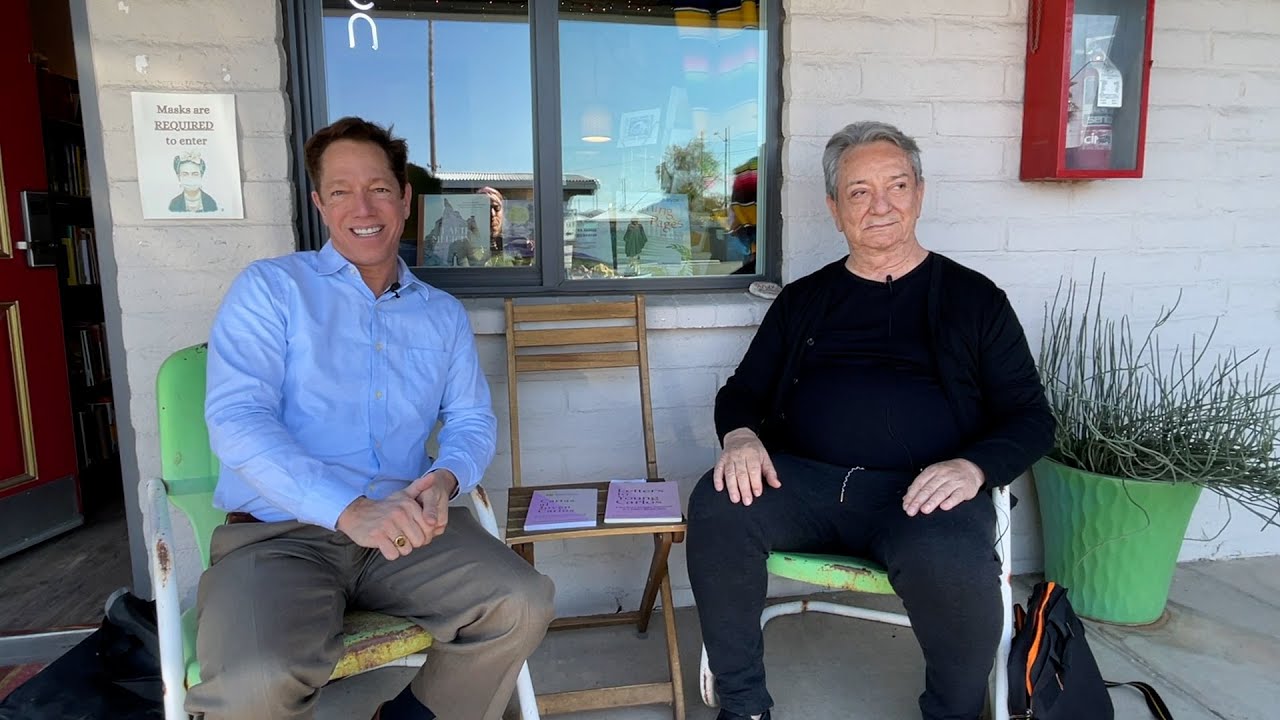
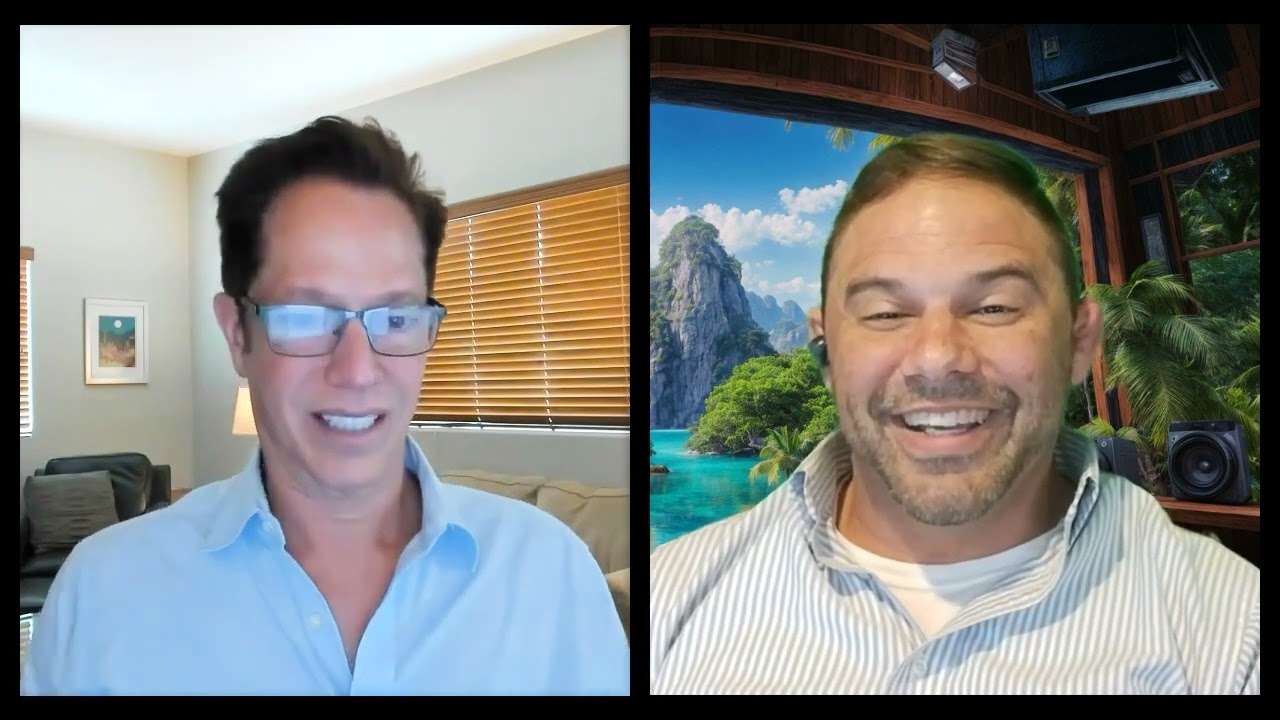
In this interview, real‑estate professional Tony Ray Baker (RE/MAX) sits down with author Carlos Valenzuela to discuss his debut novel Letters to Young Carlos. Valenzuela explains that the story follows a young gay boy growing up in the late 1950s‑early 1960s on the U.S.–Mexico border, drawing on his own experiences and those of other gay men from his hometown of Douglas, Arizona/Agua Prieta, Mexico. He describes the novel’s exploration of gender roles, Catholic influence, and bicultural identity, noting the presence of a sister character who hints at early feminist rebellion. The conversation covers the book’s recent release (April of the previous year), its bilingual edition—particularly a Spanish translation rendered in Northern Mexican dialect—and its availability at Barrio Books in Tucson. Valenzuela shares his motivation to write a message of resilience for LGBTQ+ readers, encourages people to pick up the book despite modest sales expectations, and announces upcoming appearances at the Tucson Festival of Books and a guest‑blogging partnership with Gay Tucson. The interview ends with light‑hearted banter about the production crew and a reminder that the author’s work will be featured on the website’s blog.
Chapters
Hi, I'm Tony Ray Baker with RE/MAX and GateTucson.com, and today we're here with Carlos Valenzuela, and I'm super excited to talk to you about your new book. Well, how welcome.
How new? Oh, thank you very much. We actually get to shake hands. This book is about 9 months old.
9 months old.
It came out in April of last year, so it's almost going to have a birthday party.
Oh, nice. So Carlos, how long have you been in Tucson?
I've been in Tucson for 10 years now. I'm going on 11. I moved here, my last pit stop was from Chicago, Illinois. I lived in Lakeview.
I'm from Chicago always.
You're familiar with Boystown. And I came to Tucson, and Tucson was not a random choice because I'm originally from the border area of Douglas, Arizona, and Agua Prieta, which is part of the setting for Letters to Young Carlos.
Nice.
So let's delve into that. This young Carlos would be you?
No, not really.
There is—
what I did was I sort of did a fictional setting using what I knew of the town and the time.
Yeah.
In other words, I think if anybody is watching us and they're writers or would like to write, they probably could understand that as a first-time author, I would have a much easier time writing about my hometown as a setting than, for example, the jungle of Brazil, which I have no— nothing in common with. So it is— although on the introduction right away, I do say that this— I've had a wonderful life, but not as wonderful as to deserve publication. So this is a fictional work. I mean, people always ask me, Tony, is that your father? And no, this is a very bad man, the father. My father was wonderful. He was a very nice man.
Yeah, nice. So I wanted to get into that part with you right away. Tell me, so can you give me a little premise or give us a little premise on what this is about?
This story is about a young gay boy growing up in the late '50s, early '60s along the border and what it is that he went through. A lot of it borrowed from my life and borrowed from the couple of other gay people that I managed to know ever in that hometown, uh, and, and the challenges and struggles. And I also revisit 1960s and '50s as an era when men were totally in charge of everything, and you kind of stepped out of the way if they were coming regardless. And women's roles were very diminished. I mean, you were very lucky if you were married to a man who was successful, and that you consider that a real achievement. And there's a— I have a sister, or there's a sister, Bonita, in the book who is actually the sister, and you begin to see the signs of rebellion in women, like, uh-uh, I'm not going to put up with that, with with the sister but not with the mother. A little perspective. So there's a little bit of that in it, and of course there's a little bit of church in it because young Carlos— the book starts when he was like 7 years old and he's an altar boy, and you know, we have Padre Sancho and he's telling him that, you know, he can't even go to the movies if it's not an A movie. So all of those influences are in there and revisited in a way that I hope, and readers have told me, that they really find it to have a bicultural feeling. There's some stuff about Douglas and how it is in the United States, and some stuff about, you know, small-town homophobic Catholic-leaning small-town Agua Prieta at the time.
Nice. So what would you like the folks watching right now, what would you like them to know about picking up this book?
I'm always so grateful if somebody picks up the book because again, for those of you that are not authors or have not gone through the publishing or self-publishing, a first book is not like a moneymaker, you know. And I knew that going in and still continue to do it because it's the message that I feel is so important about understanding how it is to be gay if you're not. And a lot of people from my generation, or I should say quite a few, have said, "Oh, you took me through memory lane to a place where I remember all of those things." But what I would like for them to know, because the story has a good ending, I mean, the challenges are overcome, in other words, And I think it's a come-from-behind story where if you, if you really try, if you really accept a little bit of the struggle but keep pushing, you're going to make it.
I love that message. That's a great message.
Yes.
We're sitting here at Hotel McCoy.
I love this hotel. Yes.
Yes.
I haven't got to peruse through the whole building, but I'm doing that next.
And we're in front of the Barrio Books, right? And they carry your copy of the book. They do. They do. I'm sorry, this is Spanish and English version, correct?
The English— the Spanish version just came out a month ago.
Nice.
It took— it was an act of faith and a lot of work to translate it because the translation is not just into Spanish. I wanted it to be Northern Mexico Spanish. Which, you know, we do have our accents just like you do here with English, right? You know, the Bronx and California, you can definitely tell the difference. So I had to have it redone a couple times until I felt that the people were speaking like we spoke in the 1960s in northern Mexico. Yes, there's some words that we we would use that aren't even used today. Yeah. But they were the common ones. So I took on the translation and it, and it, I'm hoping people like it.
Oh, I'm super excited for anybody who speaks Spanish.
Yes.
And from that era.
Yes.
That will be a trip down memory lane. That's really great that you went to that extent.
And they can come right here with Serena at Barrio Books and pick up a copy.
That's awesome. Well, thank you so much. I'm so excited about your book. Are you planning another one already?
I am planning on the sequel, and I like to write about this message. I mean, Tony, I'm 76 years old now, and there's a generation of us that really went through a tremendous amount. I mean, when we were in our 20s and 30s, it was not a nice world. And we went through AIDS and I did— I survived all of that. I think it's for a reason and I think it's for me to let everybody else know that, you know, everybody's cool.
Yeah.
Everybody's good.
Well, and if you keep pushing, you can make it.
And if you keep pushing, you can make it. Yes. Yes. Just be grateful for what you have and accept everyone. Allow everyone to be themselves. And you'd be surprised what a relief that is. It's like taking a big weight off your shoulder when you don't have to judge people anymore. Yes, I totally agree. That is the gift of being queer.
That's awesome. Thank you so much.
You're welcome.
So good to see you again.
Thank you.
And we have a question from the audience.
Yes!
Where can people find you? Jen is behind the camera. Thank you, Jen. And the noise you're hearing is a gentleman washing sidewalks.
Yeah.
If you're picking that up.
And I have to let everybody know that I have a very bad I have a bad crush on Jen.
Everybody has a bad crush on Jen.
Where can we find you next?
My book or me? Oh!
I heard you might be at the Tucson Festival of Books.
Oh, yes. I will be at the Tucson Festival of Books, but you can also, if you check Gay Tucson or Tucson, the magazine, the online magazine, you might be able to read me there too.
Oh yes! You want to talk a little bit about that, Jen, real quick? He's— no? All right, I'll talk about it. So you're going to be doing some guest blogging for our website.
Yes. That's really cool.
Jen, are you setting up a separate page for him for his blogs, or will it be under blog?
It's going to be under blogs, and I'm talking with James today to set up his own authorship, so it won't be— I won't have to add in Carlos and then my, my pictures under it. Like, it will just be Carlos. So you'll have your own section now.
Well, that's good. That's great. Thank you so much. We're all in this together.
That's right.
Absolutely.
We're excited that you're going to be writing for us.
Thank you. Thank you for allowing me.
That's really fun. So thank you so much. I'm Tony Ray Baker with RE/MAX Select in Tucson.
Bye.
And, um, if you need anything, give me a call at 631-8669, area code of course, is 520. And look for our app, just search Tony Ray in the Google Store or the Apple Store. That's Tony Ray, T-O-N-Y-R-A-Y, and you'll see our app. And, um, we're gonna have great places like Barrio Books here behind me in that app under fun local shops. Have a great day. Bye.