Tour the Presidio Museum with Darren and Tony Ray!
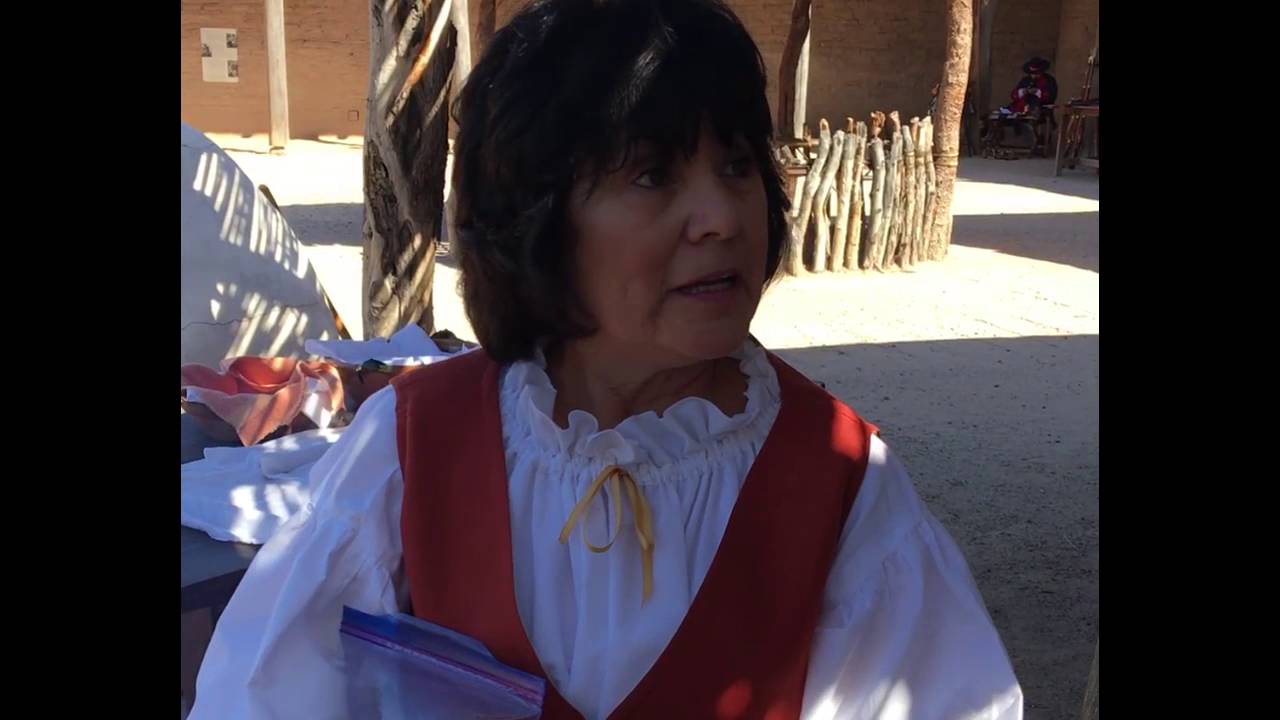
In this on‑site video, real‑estate professional Tony Ray Baker and local host Darren Jones explore the San Agustin Presidio Museum in downtown Tucson. They are guided by Aaron, a docent and reenactor, and volunteers Rebecca Ruiz Valenzuela and Rachel Reese Pollock. The tour showcases a 1/16‑scale reconstruction of the 1700s Spanish Imperial Presidio, explaining its original size, foundations, and archaeological layers (including pit houses and burials). Visitors experience living‑history stations: cannon and musket demonstrations, blacksmithing, weaving, naturalist specimens, and hands‑on games for children. The presenters discuss the fort’s construction (adobe vs. modern concrete‑like blocks, moisture‑wicking), the historic fig tree, and the broader environmental context of the Santa Cruz River valley in the 1700s. Food demonstrations feature traditional tortillas, pork‑and‑hominy pozole, prickly‑pear jelly, and churned butter, with explanations of historic ingredients and preservation methods. The volunteers share personal ancestry linking them to a 19th‑century soldier, emphasizing community legacy. Throughout, the video blends historical facts, cultural interpretation, and practical visitor information (location, schedule of cannon firings, nearby landmarks).
Chapters
Hi, I'm Tony Ray Baker, and I'm Darren. Hey, we're at the Presidio Museum today in downtown Tucson, and we're excited to show you what's going on down here. Today starts some events. We want you to meet Aaron.
Hi.
And Aaron, what do you do here?
I am a docent and a reenactor. I help out people to get an idea of what happened here in the past and provoke thought. That's some of our job.
Interesting.
Not to be perfect, not to speak in Spanish or Indian languages. But tell a little bit about the history of all of our ancestors.
Nice. And then you're gonna show us a little bit about how this was laid out. Where are we standing right now? Am I in a—
Okay, we are in downtown Tucson in this— in a recreation of a territorial area here.
Okay.
We will step up shortly into recreation of part of the Spanish Imperial Presidio from the 1700s. Note that this whole area is is only 1/16th the size of the original fort, which was 700 feet to a side, went all the way down to the Santa Cruz for the west wall.
Wow.
So note that the original foundations go under this area. The original fort, along with things much older, including Indian pit houses, like the two, at least two under the house you just came through. Yeah. And some burials too are under our feet.
Nice.
And we're going to step up. You have a number, see the numbers here. We have a number of stations, reenactors showing everything, soldiers, a blacksmith, weaving, number of food making, number, and each of these people tells you a bit about the history. And note, some of our jobs on the Tumalipas, each of these people has about 5 minutes to really engage visitors that come through, right, when we do these living history So when I see the food and the candle making and the toys and the games, then if somebody brought their family here with children, they would actually be interested.
The kids would have something. Do they actually play games or show them what games are like?
Yes, we show them some of the games, engage them. We have them hands-on to do a number of these things.
And then the food part, I get to eat?
Yes, you get to eat. I get to eat. That's important.
That would be big.
Yeah, but no, yeah, now some things I have to the blacksmith. I was helping run their bellows, and usually when there's a visitor, adult or a kid, they have at least get a visitor to help out pump those bellows slowly while the blacksmith works and explains. There's all of these things, there's at least something to try and do some hands-on, like the naturalist, let me point there.
Nice.
We'll look at that table shortly. He has a number of specimens. But we'll go out into here. Later, I'll note the word cannon set up right here. We'll fire that off about 3 times today.
Wow.
And there'll be at least one musketry demonstration by the soldiers.
Is there a specific time that those cannons go off if somebody wanted to see that occur?
Yes.
It's on a schedule?
Schedule. Notice we have also our sign-in every other thing here, right? But musket— actually, the musket volley fire with the explanation how it works No hands-on for the kids or anyone else.
You won't let me fire the cannon?
Don't forget some important person here who helped us raise funds. I hear 11 AM, 12, and 2, and another 1 PM musket. So 3 cannons.
Nice, great, we're following you. Okay, awesome.
Something about the missions here. That is a 100-year-old fig tree growing well because it's on the site of the outhouse for that home, the 1800s home. Yeah, but it's a black mission fig. Remember, all— think of all the Jesuits, all the Franciscans, Dominicans, all those orders bringing all the knowledge from Europe and the Mediterranean world, how to grow food here to try and make friends with the Indians, which is hard enough because they're occupying and taking over. Right, right.
So, for the fig, it's beautiful.
Is it delicious?
Yes, that's a beautiful tree.
Yep, don't eat it directly. Pomegranate, and so I've worn out from the tree. The rest are harvested or in the shop. I've got 2 in my fridge. And a couple other trees.
He's now gonna let you get a pan over there of all the soldiers at the back of the cannon.
I'm not going to interrupt because— to explain it is he's rechecking them through the procedures. Okay, because they drill. A number of the soldier crew here went to cannon school in, uh, St. Augustine, Florida, where they have a much larger preserved mission, hospital, and fort.
That's awesome.
And so they look— they're going to do what they learned, proper procedures. That's number one.
Yeah.
Then also, they are doing commands in Spanish, but period Spanish.
Oh, okay.
It's not just modern Spanish. They're doing procedures as they would have been done Spanish Imperial Army.
So probably no inappropriate slang.
Uh, no. I'll note, uh, legit, they also One part of the step is they pray to the saint of artillery, Santa Barbara.
Hmm.
And the charge that they do fire here is about a third of what it would have been on the original cannon. Black powder, oatmeal, and then coffee creamer. Coffee creamer for flame.
Okay.
Oatmeal, uh, it helps combust and make a show. It used to be dried old bread, but there used to be— basically, what unfortunately happens when we fire it down the alley there, it went into the restaurant, La Cocina, little big chunks of toast in the wall. So that had to be changed.
So, um, you just gave us a little secret that the coffee creamer makes—
helps with the flame. Uh, basically the powder.
Yeah, yeah, it's crazy. And then what is We have a cute little bird here. He's ready to attack. It's a chicken. It's an attack chicken.
This is our Presidio chicken.
Presidio chicken. He's adorable. He's really pretty.
Say, "I'm a girl." Oh, she's really pretty.
Oh, I'm sorry about that. I'm sorry, girl.
Pretty girl.
Nice handles. So, um, can you get a pan? Can you get a pan this way so you can see how pretty this is? So I've been here all my life and I've never known this existed.
I'll add a couple things to this. This here, 2007 recreation build. Although you can almost see it on the ground there, why this was preserved was it is—
see right here, Jim, check this out.
Why among all these buildings was this here? Because the city had this as a parking lot.
Okay.
That's why it was available. So even though the fort went actually from that street to that tall building there, yeah, two-thirds, two times more beyond.
Wow.
And just remember, there are other archaeological finds because that Santa Cruz River, which you see is dry and you can go running or walking or dogging it, right up in the late 1800s had water here above ground most of the year round. So think, all this Tucson area actually up to around to the mountains used to be mostly grassland, and there were about, what, 7 marshes in it. As well. This is a place with deer, not just the mountains, it's all around. Deer, beaver, all the water animals, many birds. That's what it looked like starting in the 1700s with some, then starting some Indian fields around near the river, water source for food. Then the Spanish came about starting to settle, well not settle, to make a fort, 1775. Then it would have looked like fields all around for a few miles.
Wow, I had no idea. That's really interesting. So, and then this is a block made from the—
this is not adobe because of making all these walls. All these walls are not stucco, they're real walls, but they're dekoed. These are not authentic adobe because the maintenance costs are horrendous. Yes, these are halfway to being concrete, but to illustrate, inside the fort you're always rebuilding. You're having the task of making new blocks, making new storage ways. And I'll note, you might not be able to see it, but you see some little white tufts on the base of that wall?
I do.
Those are little wicks to wick out moisture. And think here in Tucson, there's some other projects, mainly like one of the Catholic, uh, Tremain churches downtown, rebuilding, they had adobe. It's a horrendous problem.
Yeah.
So, but even those wicks, even though this is halfway to being complete, you still need to wick out the moisture, right? 10 times more with adobe. Wow.
Okay, very interesting. And then, so can you tell me, um, what's happening over here? That's the food place that I got all excited about.
No, under that ramada, food stations. It's all tortillas. Also, you note the oven there, the horno.
Yes.
And they're cooking up a fire. What will happen later is probably they'll be making some bread, though, because the fire is not to mainly cook it, right? Fire is to cook and heat that thick walls of that oven. Then you put a shut door on it and you cook whatever you're doing. I know behind there, that's a storehouse for all this stuff. Then the other This door is entrance to two kinds of living quarters, which you can also show around if you like. Nice to meet you.
We're okay, we're totally fine.
Okay, do you want me to float back? I can just take them around for now. Do whatever you want.
Okay.
So you said, "The sole," like the pork soup? Let's see who's here, and we can also plug around the tables, whatever you like. And introduce— but you caught me on the spot.
Your name is Anne?
What are we doing?
Your name is Anne?
No, my name is Rebecca.
Oh, Rebecca. Hi, Tony Ray Baker, nice to meet you. We just thought we'd throw you on the spot. This is Darren. Darren. Yes, so what are you making? He was saying tortillas and pozole?
Yes.
Soup?
Yes. Pozole was a, or is a traditional stew that was eaten by the gente back in the day of the Presidio.
Yeah.
The pozole that we'll be serving today is with pork and the hominy.
Which is more traditional pozole with the pork and the hominy.
Right.
I love pozole.
Yes. But really back in the day the chicken was more prevalent because the Spanish ate the chicken, but the The natives would eat whatever they could, rabbit or javelina, whatever they could get, and then they would add that to their—
so there was rabbit pozole.
Yeah, back in the day when people couldn't—
that's crazy to think, huh?
Pork was also very prestigious too. So we're having pozole. We're also going to be making tortillas. We are making tortillas out of the white flour. We also have some that we'll be making out of the Sonoran wheat flour, which was really more traditional of what was milled here.
Okay.
In the Presidio. So we're going to try that today. We also have prickly pear jelly that's made from the fruit of the prickly pear.
Beautiful.
And then we also have some churned butter that we're serving today. So folks will be able to put this on their tortillas and try the pozole and get a taste of what the food was like back in the day.
Incredible. So, so like I said, you know, we've lived here all our lives. I've been here for 40-plus years and I've never been to this location. Um, you're at 196 Court, is that right?
I have to double-check what that is. Yeah. Okay.
Um, and you're right near, um, El Charro Restaurant.
El Charro and Bacuchino, or the Tucson Art Museum.
The Tucson Art Museum. Museum, so you're really easy to find. Um, wow. So can we check this out before we leave? That's— I heard there's— thank you for doing that.
You're incredible.
I just wanted to add, please, what this is also is that we are in the process of drying the chili. And what will happen is that the chili— the goal is to dry it completely so that it can then be boiled down, and then it can be— um, back in the day they They didn't have blenders, but they would use their— I can't remember what that thing is called, but they would kind of grind it down from a paste into more of a liquidy, and then they would be able to cook it. Wow.
And do you put some of that in the pozole?
Yes, that's what is in the pozole now. It has red chili, it has spices, it has the meat product, and then it has the, the honey. But this is how the people back in the day would be able to preserve the red chilies so that they would use it whenever they need.
Yeah, it's very pretty.
Isn't it lovely?
Yeah, we do those too. We buy them and then the dried strings, and then we take them and make the chili powder ourselves for cooking for throughout the year.
Absolutely.
Yeah, it's beautiful.
Thank you so much.
Yeah, thank you for joining us. Just invaded your space really quickly.
I'm delighted to have you.
You know, people mix the chocolate with the red chili and and they make mole. Oh, this is supposed to be good, but it's very good. I, I don't know that I would recommend you take one of these and chop up like this, and it's, it's conditioned nice.
Thank you so much. And then this is the entrance to living quarters.
Yeah, two separate— or any exhibit. It's not exactly as it would have been. I'll note what I usually do though when I have people in, and I have guests, they're in the heat, then I bring them into this thick-walled place and even with an open door, there's immediate temperature drop. Really works. Original, um, I'll rattle off a couple of things. This wall would have gone up higher, up to the wall. There would be a doorway for this room, one doorway for that room. And no, I said doorway, not door, because originally would have just been hide strips. Interesting. Why? Because this is a frontier post. I think this, stay here, this fort The Pseudotucson was part of a chain of forts going from gulf to gulf.
Okay.
From the Atlantic all the way to Pacific. Why was it on 1700s and not the 1600s? Spaniards have been fighting Indians, assimilating, conquering, whatever. But, uh, now I mentioned that they brought over trees and then other animals. There's pigs and there's other things brought over. Spaniards also brought the horse. Horse died out in the Americas sometime around the Ice Age. No horses. Birds got loose, spread out all the way north to Canada, all the way, all those Great Plains horse herds. Now all the people here, all the Indians, before that, they're going someplace to some other place, they've got a sack they're carrying, or they've got a dog pulling a travois. That's it. They're on foot. Everybody's on foot. Then the horse comes. Note the word for horse might be like 6 dogs. Because it can carry or pull the weight of 6 2-way pulling dogs. So now you've got a new kind of Indian that did not exist. So we have the Sioux and all their neighbors. And remember, the people who were there before, they either changed into horse nomads or they went away. They got pushed out or gone.
Okay.
And then, so, north here, and they pushed people down, including the Apache and their cousins, the Navajo. And then over in the Texas area, similar forts because of the Comanche. Texas, lots of flat. You drive through, lots of flat. Good place to run horse nomads through. So very dangerous. And here, the Apache, not the big— say, horse warriors, but extremely clever, extremely dangerous, adapted to survive. When they're being pressed, think, by the Sioux and the Comanche, and they're running into all the city or town-dwelling agricultural Indians here who they're, the Apache, raiding, and then the Spaniards come. So all those people who are dangerous, the Apache are being squeezed or squeezing back on to get food.
Indians.
Okay, so a whole kind— new kind of Indian. So a whole new chain of forts on the edge of Imperial New Spain. Okay, now to take a look here, and this would be a typical soldier's house, or actually no, I'll say this would be soldiers' quarters, 3 or 4 guys. Okay, this— yeah, 3 or 4 guys, soldiers' quarters. And they're private soldiers, not their wives. Notice they're— come on over here. This is where they'd be sitting down or kneeling on these pads. Not the— and this, remember, on the frontier they don't have all the fine dishware. Commandant might have ordered something up over time, but remember, when they start up here, they build a wood fort, they chop logs down, then they later build an adobe fort. Frontier, they don't have all the— quite the menus. But even as simple as it is, a soldier up here is relatively middle class compared to most people. We in Spain— that'd be Spain, or actually same Europe, and elsewhere in Europe or Asia. Soldiers of this level from Imperial Spain is middle class. And note here, long lances because most of these guys are cavalry. If you're on foot, you've got a lance or spear this high. Muskets, smoothbore. They're a different pattern than what, say, the British would use. But remember, this fort was founded 1775 to link it to back east. Think what's happening in the British colonies, 1775. This is about the same thing as say a British brown bass. All this history is going on at the same time. There are even records of a number of the Imperial Spain and some Spanish soldiers sending money to the American Revolution, partly because they're— Spain and Britain are fighting as well. So all this is going on. And I'll mention some of the walls out there were on the four corners of the remaining crumbling walls decades ago, uh, was it 4 monuments put there by the Daughters of the American Revolution? Why would they celebrate a Spanish fort? Because Imperial Spain did support the American Revolution, so that group posted markers for them. Now, I don't know— clothing.
Wow.
Now, this is saying women or men, top garment. So these are— is going to be in wool. That includes June, July, August.
Oh, that sounds refreshing.
Why? In Spanish society, you had whatever your ethnic background, if you wanted status, whether you're pure Castilian or Indian born here, you had to dress and talk and so on like a Spaniard. Top clothes would then be wool. Now, if you're out working, more like my clothing, then this is wool, but this is not. If you're out immediately working, that's different, but mix. But otherwise, not fine wool. These are actually not wool. Why? Because the authentic ones that were put up by people who originally set this, uh, reenact— recreation up, they put wool ones up. Bugs got to them, so we can't be entirely authentic. Yeah, which is also the reason why some of these buildings are set up the way they are to meet building code.
Fascinating.
So Aaron, there's a lady here that has some history with, um, the Rebecca. They're connected in some way.
Uh, she— Rebecca, at least I believe one of her ancestors was related to people who lived here at the fort.
Wow, that's pretty—
they're, uh, let's group Los Descendientes, there are that trace people back to original roster soldiers and others who were at the fort.
Nice.
There are records, whether in Mexico City and other places around, of correspondence, what the Spaniards here did.
Nice.
Oh, and I'll note, when I say Spaniards, the original, let's say, 1,600 groups of Spanish and Imperial regiments that came over would often— some were, say, uh, Basque or Catalan. One group was Catalan. They came over from Spain, what's called Spain, but they didn't grow up speaking Spanish. When they entered the Spanish Imperial Army, then they started learning Spanish.
Yeah.
So I think that it was a multi—
it's a different language. We've Spain. It's very different. The language, it's very different than Spanish. So here's the lady. Can we meet her? She was just wanting to say hi.
And, uh, there she is.
Hello. Okay, so, um, if you'll introduce us, that would be great.
Okay. Okay. My name is Rachel Reese Pollock, and this This is my sister Rebecca Ruiz Valenzuela, and we both work here volunteers, but we have a specific reason. And okay, and that is because we, we are very proud to say that we are volunteers here and proud of the Presidio because this is for our fourth generation grandfather. Alejandro Granillo was a soldier in 1831.
Wow, that is so cool.
So yeah, so we have ancestors here, so we feel like we are obligated to be here, keep them alive. Incredible. And to pass on that legacy, not only to our children and our families, but also to the residents of Tucson who may not know, like you said, about the Presidio. They don't even know they have family here that once walked here. Right. They probably don't even know.
Incredible. That's amazing. Thank you for being here and doing this, and hopefully we're going to have a lot more people that get to come appreciate this beautiful place.
Thank you so much.
Thank you so much for taking us on this walk today. You're doing fantastic.
They're getting ready to do their drill. So they're getting ready to do a musket volley because they line up the men and they all fire either one at a time or simultaneously.
Go ahead, James, and spin over there, and then that will be our goodbye from here.
So many Japanese at Harvard. Pieces have the very dark blue lace, you know. Oh yeah, I have Coach O'Neil. No round-robin, just go through the motions for now.
Cargen!
Cross.
Ouch.
Go back out.
Okay, Kargan, you're going to be on the right side like that. Okay, remember, after we fire, we come back to the side at half cock. You should be like this. One more run through and then we'll go out.
Target! Are we still going?
Yeah.
That was pretty awesome. So we— you have to come out here. There's so much more to see than what we showed you. Actually, there's a lot of really really neat people with a lot of information here about history. You were just talking to a lady about how they did clothing. There's the toymaker. We didn't get to meet the blacksmith. So, how they collect the dyes. Yeah, bugs. There's bugs involved in dyeing clothes. Yeah, it's pretty amazing. So you have to come out here. It's 196 Court Avenue. This is called the San Augustine Presidio Museum of Tucson. I may have messed that up a a little bit, but it's still worth— you've got to come out here and see it. And, uh, thank you so much for being with us today. I'm Tony Ray Baker. I'm Darren Jones.
More from Tony

🏡 Stylish Updated Golf Course Home with Scenic Views | 6864 E Vía Dorado, Tucson, AZ 85715
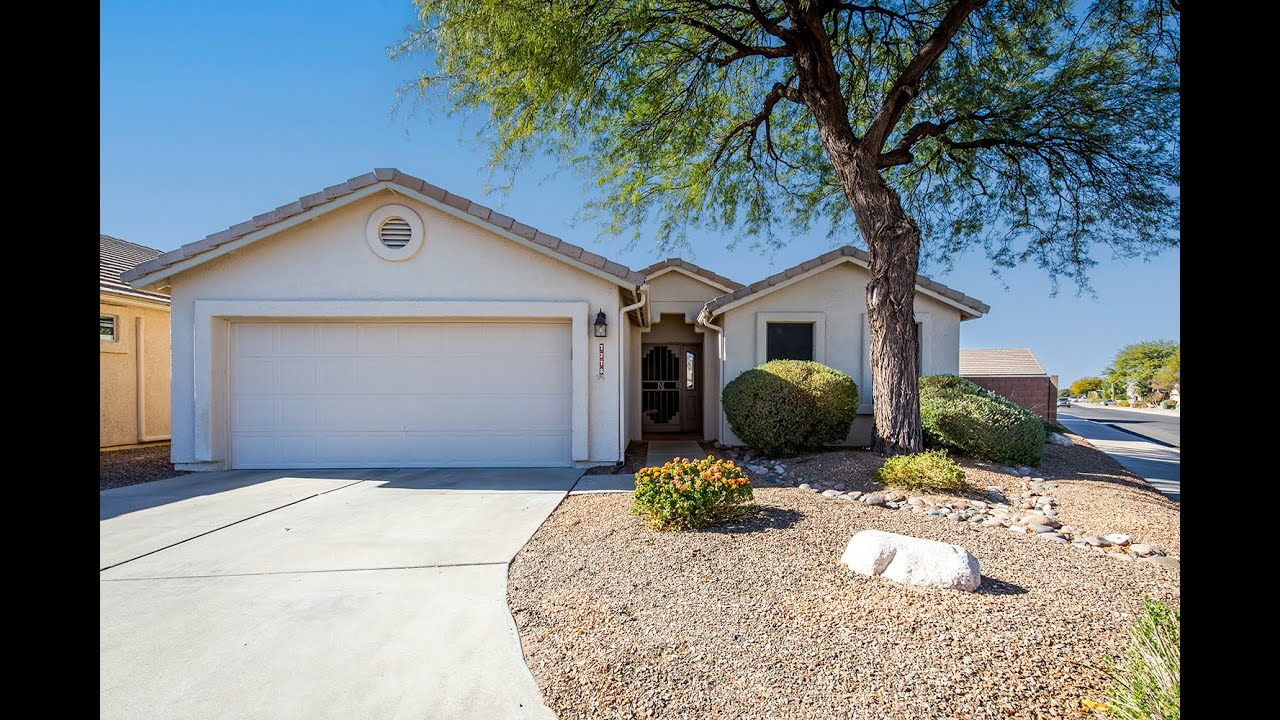
Live the Resort Lifestyle in a Premier 55+ Gated Community - 7278 E Maritime Drive, Tucson, AZ 85756
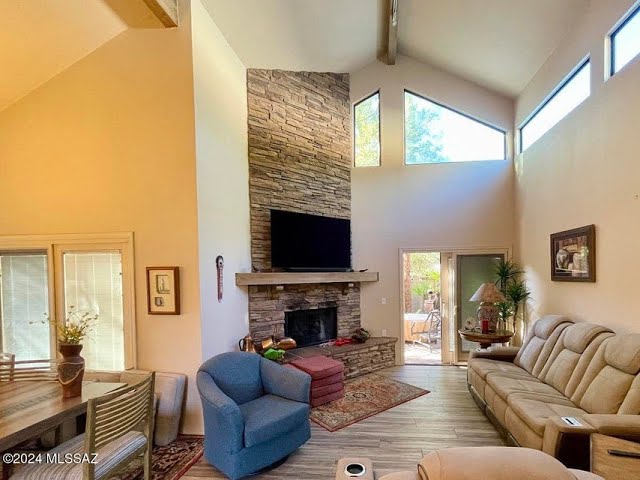
Luxury Living in Ventana Canyon | Modern Southwestern Elegance in Tucson, AZ Gated Community


Real Estate Investment Basics: A Journey to Financial Freedom | Mastering Real Estate Investment
Legal and Tax Considerations in Real Estate Investment | Mastering Real Estate Ep. 6
Unlocking Real Estate Success: Down Payments, Loans, and Smart Strategies | Master Real Estate Ep. 4
Maximizing Real Estate Investment Profits: Strategies and Analysis | Mastering Real Estate Ep. 3
How to Retire a Millionaire with Real Estate | Introduction to Mastering Real Estate Investment
Financing Commercial Real Estate: Leveraging Other People's Money | Mastering Real Estate Ep. 2