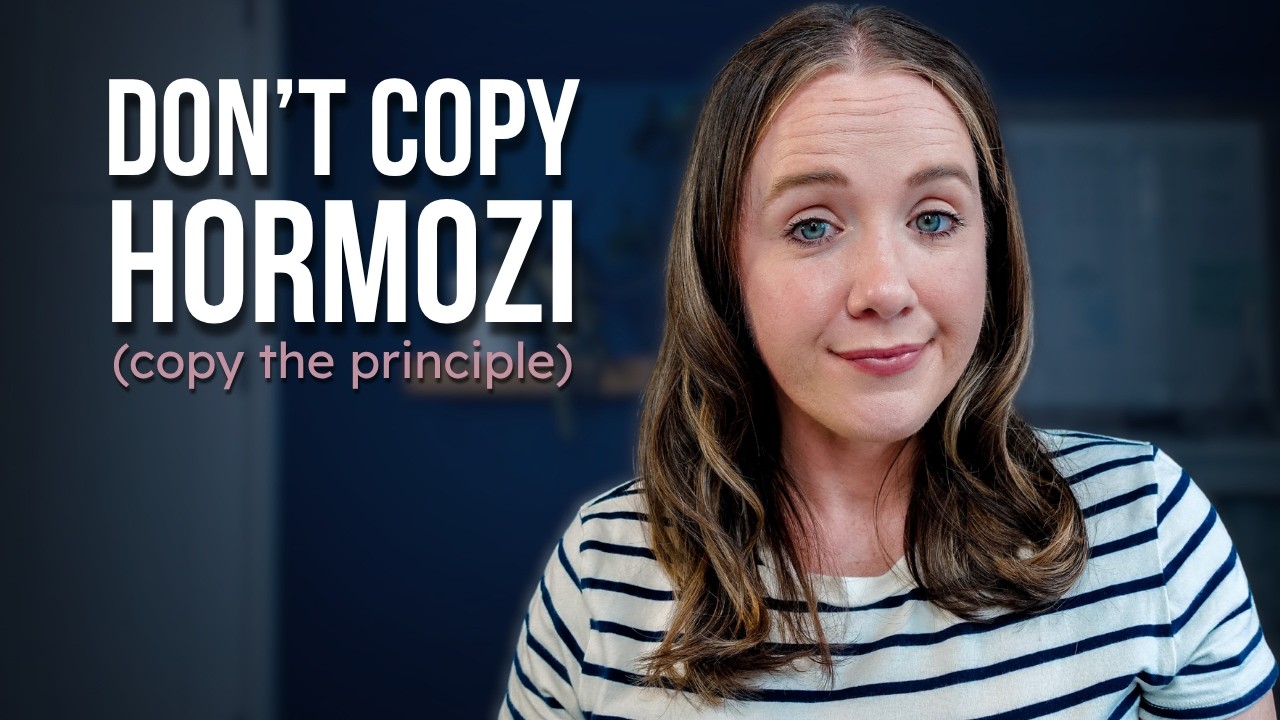
In this solo instructional video, Trena Little explains why roughly half of the YouTube videos her coaching clients plan never succeed, even before any filming begins. She attributes the failure to poor pre‑production vetting and introduces three concrete checks that any coach or business‑owner should run on a video idea before committing production resources. 1. Title Clarity – The title must instantly reveal who the video is for and what concrete takeaway the viewer will get. If the title is vague (e.g., “How to be more productive in your evening”), no one will click. 2. Defined Job – Every video must have a specific business purpose: shifting a belief, building trust, proving a result, or directly nudging the viewer toward a purchase. Content without a job is “content for content’s sake” and won’t generate sales. 3. Thumbnail as Problem Mirror – The thumbnail should visually depict the viewer’s problem, complementing the title’s promise. A generic face‑only thumbnail wastes the platform’s most valuable real‑estate. Trena illustrates each check with two of her own recent client‑story videos that flopped because they were framed as the client’s story rather than the viewer’s benefit, and contrasts them with a successful video that passed all three checks. She stresses that specificity—being explicit about the audience and the problem—helps both the viewer and the YouTube algorithm, avoiding overly broad, highly competitive niches. The video ends with a call‑to‑action for viewers to rewrite failing titles, submit them in the comments, and consider her channel‑review service. Overall, the video serves as a practical pre‑production framework for turning YouTube videos into effective sales‑oriented funnels.
Chapters
I kill about half of the YouTube videos clients bring to me that they wanna film for their YouTube channel. They're following the exact process that I'm teaching them, and still half of their videos are dead before they even hit record on them, which means the video that you're planning right now, go ahead and flip a coin on whether your video is good enough to move forward and film. So I wanna give you 3 checks that will decide whether a video deserves to exist and use your precious time to produce, And then I'm going to show you how I run these 3 checks on 2 of my own YouTube videos that actually flopped. When coaches send me their YouTube channel before we even work together, I usually have to tell them something pretty hard. About 80% of the videos that they spent time on and created probably should have never been made. Not because the delivery was bad or the editing was off or the background wasn't right, but because the idea, the video topic, will never reach a buyer. The video failed when you were brainstorming with ChatGPT or in your notebook during that planning phase before you even did your hair and makeup and turn the camera on. And almost everybody has this planning process backwards. All the hours that go into the filming and editing and redoing the take and doing the hair and makeup, and almost no time goes into the decision that controls it all. Does this video even deserve to exist? Here's exactly how I decide. The first thing that I look at is the title, and I'm going to ask 2 specific questions about that title. Can I tell exactly what I'm going to take away from this video and who Who is it attracting, calling in specifically? When a client brings me a video like how to be more productive in your evening, that title tells me nothing. What am I going to get out of this video? What's the change I'm going to have after watching it? And who is this even for? Is this for evenings with parents with kids? Is it for high school kids? Is it for college kids? For people who have struggled getting to sleep for years? If I can't read it and answer who this video is for and what you're going to walk away with from the title alone, nobody's gonna click it, and that's when the video dies. The second test: the video has to have a clear job. Every video, specifically on a business owner, whether you're a coach, a course creator, one-on-one service provider, VIP day person, your video should have a role to move somebody closer to saying yes to working or buying from you. Is your video shifting their belief about something that they need to have before they say yes to your offer? Is this video building trust to make them want to actually work with you and trust their investment will be Is this video to show her that it's not her fault things aren't working? She's just been taught the wrong things, and here's the right way to do things. Is the video to give her proof that here's what I've done with people just like her in the past, or to show the full transformation she could get working with you, buying your course, jumping into your VIP day? I need to be able to know what the job is of that video, and if a video doesn't have a job, it's not strategy to get people to buy; it's just content for content's sake. And random content is exactly what will get business owners, coaches views on videos, but won't result in any sales. And now you become a content creator and not a business owner. The 3rd test is the thumbnail. How are we going to visually represent the problem that they are having? The problem that the title will promise to solve. You see, your title and your thumbnail are a team. The title's gonna name what she gets from this video. The thumbnail is like a mirror reflecting to her the problem she has. If the thumbnail is just your face and some of the same words that your title has, you wasted the single biggest piece of real estate that you get on the YouTube platform to win the right viewers watching your video. Now here's why even my own clients, people following my exact process, still bring me ideas that I will kill 50% of the time. They're afraid to be specific. So many business owners are so afraid that if they get too specific, nobody is going to watch their video. And the reality The reality is it's exactly backwards. The less specific you are, the broader your video goes, and the less likely a viewer who is ready to buy a solution to their problem will actually find your video. Specific is what's gonna make the right person scroll through YouTube, stop at your video, and wanna click on it. It's also gonna give the YouTube algorithm specific information about who this video is for. Otherwise, the algorithm is just gonna throw your video out like spaghetti on the wall and hope something sticks. So it's gonna take you even longer Because the YouTube algorithm doesn't understand who you're for either. The third reason is that when you go so broad, you're going to get into a pool that is usually overcompetitive and you as a new channel, as a small channel, are not going to be able to compete in the channels in these broad categories that already have established trust with YouTube. The channels that are already getting thousands of views, have tens of thousands of subscribers, they will beat you out. Every single time. So I need you to keep these three checks ready to go when you're going to film a YouTube video, and I'm going to show you now how I run these tests on my own videos, and you're gonna watch me fail at my own test. I don't always get it right 100% of the time. I'm here to say I'm not perfect. It's okay. So in the last three months, I've gotten this wrong twice. I posted two client stories, and I genuinely thought that they would do really well, and they pretty much flopped. They're my lowest viewed videos on my. Channel at this moment from the last 90 days. And looking back at them now as I'm reviewing them and taking them through these 3 tests, it's so obvious why they flopped. I approached both of these videos as the client story instead of what's in it for the viewer watching. So this particular video was about a client of mine who was getting about 300,000 views a month, and he was only making about $1,000 sale a month. And so he changed his strategy to how I teach the playlist funnel. He got 8 sales in 18 days after he started posting this way. He stopped chasing views. It was proof that you don't need a lot of views to get sales, and it was also proof that the more views you get doesn't mean the more sales you get. It was a great story, but then when I look how I packaged it, it was framed as his story. The viewer probably just scrolled past this video and had no reason to click because this is about my client. What the video actually needed to be about was proof Beamed at my viewer. Proof that chasing more views, getting 50,000 views will not get you a sale. Because that's the belief shift I have to make with so many people that they don't have to be a YouTuber and go viral for it to work to bring you clients and bring you course sales. Because that's what my audience is constantly hit over the head with. More views, more subscribers, go viral, the secret to sales. The video's job was a belief shift and my title gave it the job of like a biography. The second video was a client story who hadn't posted to YouTube in over a year and her channel was still making her money. The goal was for me to show you that you can post on YouTube, take a break, and have evergreen content continue to drive you new people, new traffic, new sales, even without posting, as opposed to what Instagram does. But again, I titled this as her story. What the viewer needed the title is the question she's asking to herself: is YouTube worth more of your time than Instagram? Here's what actually happens when you stop posting on YouTube versus Instagram. The same video can work, it just needs readjusted in the hook. But now there's something to grab the attention of somebody who's deciding where to spend the limited amount of time they have to create content to market their business. Client stories are great and testimonials are amazing, but nobody's gonna click on it unless you let them know what's in it for them. Listen, when it comes down to it, we're all selfish people. What are you gonna do for me right now? Here's the flip side, the proof that this process works. One of my best videos in the last 90 days was how coaches will get clients in 2027 without posting every day. Before I even move forward that video, it passed all 3 tests. It calls out coaches by name, it presses the exact pain that they are living getting clients, and it takes the second pain, that daily posting treadmill, right off the table in the title alone. That video had a job, it had a person, and it had a promise before I even moved forward my hair and makeup to record that video. That's really the difference between a video that deserves your precious production time and the 2 I showed you that I should have killed or re-angled. I'm gonna tell you, once you start looking at videos this way, you're never gonna be able to unsee it. In fact, drop in the comments a video that you're now seeing how you maybe you can redo with a new updated title. So share me the before title and the new title you're gonna do. I would love to see this. And then I want you to think about the next video that you're planning that you want to do and run it through these 3 tests. Can a stranger tell from the title exactly who this is for? Does a video have a specific job? Does the thumbnail show her problem? Because remember, thumbnails are visual. And if you can't answer all 3 of those, don't film it yet. You heard me talk about how I give my clients this advice. If you'd be interested in me reviewing every single video that you create, analyzing your current YouTube channel to tell you how— what I would change, how I would start building YouTube funnels on your channel, watch the video that's on your screen right now because it walks you through exactly how I create a weekly video sales system with my clients so they're making sales within the next 90 days.