Can You Earn More Through Social Media as a Tradesman? w/ Ryan Mills
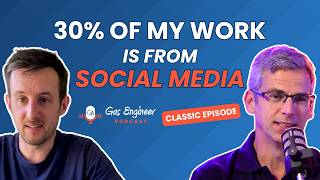
In this Field Rocket Podcast episode, host Alec Priest interviews Ryan Mills, a plumbing and heating contractor from GD Mills, about how he leveraged social media to grow his business. Ryan recounts his journey from a modest Facebook page to using Twitter for manufacturer incentives, then expanding to Instagram, TikTok, and local Facebook groups. He explains why posting authentic, frequent content (often daily) builds trust, leading customers to choose him because they feel they know him. He shares practical tactics—short reels, trending audio, daily stories, using the Videoleap app for quick phone editing—and the time commitment involved (about 2–3 hours a day, spread across the day). Ryan discusses handling negative comments by ignoring trolls, the importance of community engagement, and the measurable impact: roughly 30% of new jobs now come from social media. He also touches on branding decisions (keeping the personal handle @rdmills88), the differences between platforms (Instagram for personality, Facebook for direct leads, TikTok still experimental), and the challenges of scaling his 41‑year‑old family business. The conversation ends with actionable advice for other tradespeople: be consistent, be yourself, engage with others, start with Facebook groups for reviews, and gradually build a personal brand across platforms.
Chapters
I'm starting to get a lot of work through Instagram. Now when I start the job, I always say, so why did you pick me? Did you get any other prices? They say, oh, we followed you for years, Ryan. We feel like we know who you are. We can trust you. We see your work. We just went with you. It went from posting pictures of boilers to radiator installs or bathrooms or just started growing and then it just went from there. And it wasn't at all about getting work or customers through it. It sort of started— I enjoyed putting stuff up and getting feedback from people and praise. Like, everybody loves a bit of praise, saying, oh, good job, like that, like this. But it also made you better yourself because you were seeing other people and how they do things. And the one question a lot of people will ask is, how do you get work through social media? And I've always said to people—
this is Field Rocket Podcast, I'm your host Alec Priest, and today we're joined by Ryan Mills. From GD Mills. Welcome to the show.
Hi, thanks for having me.
Today we're going to talk about using social media to get more customers. Could you tell us a little bit about your own journey with social media and kind of where you started and where you ended up?
Yeah, so like most companies, first opened up a Facebook account, but that was sort of just putting up some bits and pieces nothing, just because everybody had it. But my social media thing sort of started through Twitter. So Vaillant boilers, which is what I sort of predominantly installed, they started a scheme where for every boiler you installed, if you shared it on Twitter and tagged them in it, you were getting credits and points to use against workwear and things like that. So that's where I originally started. And then it went from posting pictures of boilers to radiator installs or bathrooms or just started growing. And then it just went from there. And then I found myself moved to Instagram and then moved to TikTok not that long ago. But I'm not old, I'm only 36, but I feel like I'm 86 when I'm on TikTok. It's, it's taken its time for me to understand how it actually all works.
And did you just do like, so initially you did it for the, you know, getting a little bit of benefit credits, whatever. And then you found you kind of really enjoyed it or did you kind of like set out, okay, I'm going to sit down, I'm going to get more customers or it was just kind of more of like a natural progression?
Natural progression. It wasn't at all about getting work or customers through it. It sort of started, I enjoyed putting stuff up and getting feedback from people and praise, like everybody loves a bit of praise. Saying, 'Oh, good job,' like that, like this. But it also made you better yourself because you were seeing other people and how they do things. They say, 'That guy's done a cracking job,' or, 'They've done a brilliant job,' and you're always trying to better yourself. And then I found over the last, I don't know, 3, 4 years or so, I'm starting to get a lot of work through Instagram. And the scary thing is customers have been following me for a long time. I'm not aware of it. And then I'll go and price the job, gets accepted. And then when I start the job, always say, so why did you pick me? Did you get many other prices? So we followed you for years, Ryan. We feel like we know who you are. We can trust you. We see your work. We just went with you. So it's quite nice knowing that. At the same time, you say, I could have put an extra £100 on if I knew that.
But you, okay. So it just kind of builds up that trust. And okay, they see your work because you kind of know, like, if you're posting on, if you're proud enough and you're posting on Instagram or wherever, you are doing a good job. You're kind of opening yourself up as well. So you're saying, I'm doing a good job and you're showing the world as well.
So that's what I think. And that's the way I look at it and say to other people. So if you're confident to show yourself on there, for a start, that's a big thing as well, putting your face in front of the camera. But I said to put your work there as well. And social media can also be a horrible place. You get a lot of negative people, what, criticize just for the sake of it. They just— that's what happens on social media a lot of time. So to just put yourself up there and show everything, I think helps in getting work because, like I say, customers feel like they know who you are, can trust you. Not just, you know, they've been given a number, Ryan, never met me, never seen me, and taken a bit of a punt at me. Where this way, you've got an opportunity to get to know who I am before obviously paying me or having me into the house to do some work. Yeah.
And you also mentioned it's taken a long time. So at which kind of point did it move from this is kind of a fun thing to, oh, I'm actually getting customers from this?
I lose track of time through COVID. That's what mucks up my calendar thinking. But probably about 2 years before COVID is when— yeah, let's see, that must be— let's say 2017, 2018, something like that, round about then. I could tell it was going somewhere, and I was getting opportunities, whether it's coming through manufacturers or people wanting work done. And like, I could think of loads off top of my head— cafes in Edinburgh, just randomly following me, want a job done in a cafe and things, you know. It was just— seemed to all of a sudden start to snowball and pick up more work through it, which obviously makes it far more rewarding. That's not the reason I went on to begin with, that makes far more rewarding thinking, well, the time and effort I put into it is paying off. Because I do it through enjoyment, that's maybe the main reason. I enjoy interacting with people and putting my work out there and stuff like that. And it's just a nice bonus to get work and stuff off the back of it.
I think that probably that intent comes across as well. If you're doing it in kind of like a forced way, I hate this, but I'm doing it anyway. You know, that would possibly not work quite so well.
Yeah, well, I think you can see through people if they enjoy what they're doing. And certainly I hope people look at and see that I enjoy what I do. Don't get me wrong, it's not the job I originally thought I was going to do. I wanted to be a policeman. That's what I fancied when I was in school. But because my dad started the business my last day of school, came home to a bag of tools, he said start tomorrow. And 19 years later, I'm still here, and I wouldn't be here if I wasn't enjoying it. You know, it's— I would soon be away.
If you would like— if you have a, uh, if you're an engineer and you're going to start the social media, um, doing, you know, exactly what you're doing, posting up boilers, what kind of— or how long could you kind of expect before you see some kind of results? Like, like, how long did it take from you kind of doing it properly to actually when I mean properly, I mean seriously, to actually getting a return from it?
Seriously, it could have been 2, 3 years before I started to see. So that was just through Twitter. Now I think you've got so many different platforms that you can go to where all others existed back then, but Twitter was only one I was sort of working on. But I got a lot of people message me and say, oh, how do you get these promotions through companies. How do you get this? How do you get that? How do you get these amount of followers things? It's a lot of hard work. You can get lucky. Some people have got lucky and put up a few things and it goes viral, and you can grow quite quick. But if you're just sort of going steady pace, it can take time. And you have to be consistent. You've got to be posting all the time. You've got to be engaging with your audience. And if you're only putting one post up a week or every couple of weeks, it's not going to grow because of the way— sort of like Instagram's the main one I use— their algorithms can be a headache knowing what they want you to be doing to make it grow. Like, there's specific things they're after.
Are you able to share some of those things? Like, like, what are they looking for?
Well, that's a million-dollar question because at times it confuses me what they're after. But, um, they went through a period where they were wanting reels, constant reels rather than posts, and within between 30 and 60 seconds. And then they want you to use audio that's trending online rather than your own audio. And you're really— that first 5 seconds is key on the start of your video, has to be able catch someone's attention, otherwise they'll just swipe to the next thing. So it's, it's quite difficult. There's things I've posted that have been very basic and boring, and I've thought, I'm gonna post anyway, and it does really, really well. And then there's stuff I put a bit of time and effort into and it flops, and you just think, can't get my head around it. But you're just going to keep going and going, you know.
It's like, like, from the actual basics, like, how many times should you post a week?
I would say you want to post every day. You want to do a real lot of posts every day and be on your stories every day.
This is a big commitment.
Oh yes, like, like, for someone who was starting out, I can see that could really sort of take over. And but when you've been doing so well, I think you're quite quick at it and you just— I can do it no more. I've got a young family. Running a business and then try to do that on top, but I can manage it, you know, I can do it, no bother. It's not like it takes over me, but, um, yeah, it's certainly a commitment.
Yeah. How, um, how much time do you think you would spend a day on it?
I would hate to think that, um, it's probably more than it should be, more than I would want it to be. I would say it could easily be 2 hours a day. Can you tally up the time? 2-3 hours a day, which is too much for me personally. But when you're doing it just wee bits and pieces, and then kids go to bed and you go on the phone like everyone naturally does, you sort of spread it out. But yeah, when you say 2-3 hours a day, that just sounds too much.
It does sound like a lot, like especially if you had to like block out that section of time. But if you're doing it like if you're getting the most important things, like getting the kids to bed, feeding, whatever, and working, if you're doing it in all of the downtime, you know, it possibly doesn't have quite as such an impact.
Exactly. That's what I'm saying. Do it over just bits and pieces. I'm sure if you tallied up, it's gonna probably be a couple hours a day. But do it as you wake up, click 5 minutes here and then another 5 minutes, 10 minutes. It's just too easy to unfortunately pick up the phone and click an app and you're in, you know.
Okay, so you definitely have to enjoy it then.
Yeah, yeah. If you don't enjoy it, then waste the time, you know. You can spend as long as you want on it, but you won't go anywhere with it. You've got to be dedicated and enjoy what you're doing. Like in anything, if you're not enjoying what you're doing, you're, you're just going to lose interest in it pretty quick. Where—
what kind of percentage of work and new work comes from social media for you at the moment?
The new work, maybe 30%.
Okay, so do you do any other marketing?
Nope, don't promote anything. The only things I've got is sign written van, website, and that is about that. I'm very lucky through the website that it's not social media, but it's obviously through internet as well. Um, this, I seem to hit quite high up on Google searches and stuff, and then through that it brings up my social media accounts as well, pinned towards the top. So it's quite good. But yeah, through new work, new business could be about a third at the moment.
Okay. And are you still— is your business at a kind of a growing stage? Are you, um, like, do you need more work?
No, because the business is 41 years old now. We've got a vast customer base. And when I started in 2005, there was about 7 of us in the business, where now it's just me and my dad. But my dad's semi-retired. He just does a day here and a day there. So I'm almost at the point where it's hard for me to manage, and I've got to be careful with taking on new work because we've got a loyal big customer base that you don't want to upset. So I'm at that point where I'll probably have to grow, certainly take somebody on, maybe two, see what happens. But I'm at a manageable point with it, the, um, Yeah, I think to take the stress off, it would be helpful to have an extra pair of hands.
You kind of mentioned, slightly off topic, but you mentioned that you had 7 engineers before. What was the reason kind of to sort of downscale and then, you know, possibly look to grow again?
So a lot of people would look at and think, oh, 7 engineers, all these vans, they must be doing well, must be making a fortune. But it's you make similar money because you're paying wages, vans, more insurance, more tools, a lot more outlay that way. And it's not that we couldn't trust them or anything like that, but it's hard to— they're not going to put in the same level of commitment as yourself. You know, it comes to 5 o'clock, they're like, well, I'm done, I'm out of here, and stuff like that. And I can't be bothered doing this, can't be bothered doing that, where when it's yourselves, it falls on you, you know. Everything has to be spot on. I've set a standard, my dad set a standard, that's what we want met. And we have other people work for you, they might not necessarily care as much about it. It is, it's just easier if I decide, well, I might go on holiday and take some time out. I haven't got to worry about all these people and where's the work coming from and stuff like that.
At the beginning of the conversation, you said you started with Twitter and then you moved. What was the reason for kind of moving, and did you lose any followers when you actually transitioned from one social media platform to another one?
No, I felt Twitter just sort of reached its peak. It couldn't really go anywhere else. It sort of just seemed to die of death for the plumbing and heating side. It just reached a point, and then Instagram felt like the one that was on the up and growing, and I just preferred this format of, you know, it was all pictures, it was easy to scroll through, see what was happening. It just felt quicker, a bit more enjoyable. I like the idea of the stories. It just had a lot of better features. And it was certainly easier to, to grow it as well. But Twitter had a point where I felt like it was a close network of people on it, which was really nice. Instagram's got— really got that. Yeah, but certainly I've made a lot of friends through it as well. I always have that joke. My wife say, I'm away to meet a guy I met on the internet, you know. But, um, but it's, uh, no, it's nice. I met a lot of a lot of people through that that I can call friends as well. So, but Twitter, I'm not— well, X as it's known now, I'm not on it as often these days.
And what about TikTok?
Yeah, TikTok looks like one that you could grow your following quite quick, but like I said, I feel, I feel like a dinosaur on there. I'm a bit— I probably need to just sit down and actually get to grips with it and see what's going on. But TikTok, it's got a right toxic bunch of people on it as well, where people like to just be negative. Not just on me, I see it everywhere, just want to be negative. And that can be difficult for some people, but I've been on it long enough now, social media, that I can just let it go over the top of my head. But I can imagine where some people start, and now you post your first one or two things and you get negative comments, it's it'd be tough, you know.
Any kind of real tips to deal with that?
Just rise above it. Don't engage with them. Just try and ignore it. You're always going to get people like that. Goes on everywhere. Doesn't matter whether you're just the local plumber in the local town or you're a big-time celebrity. Everyone gets it. So then just rise above it.
I would imagine some of them are quite hesitant to actually start just because of— you are opening yourself up, you you are going to be more exposed.
Yeah, definitely. And jealousy is a horrible thing. So a lot of people see, oh, he's got paid partnership, he's been given these new tools, and just annoys people, just winds them up. So they'll just look for a way to sort of try and put you down. But it's just what goes on, you know. It's— that's just what goes on in life, you know. It's not just on social media. Some people would just be like that, unfortunately. Doing. But yeah, I've just got to a point where I've made the problem to begin with where you would engage and question them, and it just makes things worse. You're better just totally ignoring it.
You just engage in the positive ones and then, um, you kind of meet and build from there. Is that, is that what you do?
Exactly, yeah, exactly that. And that's what I was saying, like Instagram and other people as well, but through doing that, that's where you meet people and get closer to people. And that's what started on Twitter, you know, speaking to people. You engage with these people and then you get chatting and they'll tell you how they do things, you do things. And yeah, it's nice just to get— so you don't know at all, and a lot of people will share tips with me and I think, oh, I didn't know that, you know. And do it the other way around. So obviously the job I do, I'm in the van by myself, which can be quite a lonely place. So to have social media there as well, almost feels like you're not alone.
Like community. Yeah, you definitely— everyone needs a community, otherwise it's just, um, yeah, you kind of lose touch and it's just not healthy for you.
Exactly, exactly that. Community is the word. And so that's, yeah, having social media there's obviously helped with that as well.
What kind of things do you post? So you post boilers, radiators, do you do post like the, um, like the pipe work, anything else?
Yeah, tips, pipe work, tutorial stuff, everything, anything and everything that a plumbing and heating engineer would be doing, basically I've put on at some point, has been shared on my social media.
How do you decide, like, if you've If I was sitting down and thinking, okay, I need to come up with one post every day, that would make me quite stressed.
It can do sometimes. Sometimes if I'm doing like a bike— I've done a bike job recently, so I'm doing so much variety on it. I'm doing pipe bender, I'm doing soldering, I'm hanging radiators, boilers, cooling holes. I can grab loads of content from that and it's really easy to do. I just do it on my phone. Set up away, and then I can edit later. I can generate so much content through a job like that, which will do me for weeks. But at the moment, I'm going through just gas servicing and repairs day after day after day. It's been like this for almost 3 weeks. Gets to that point, you're like, I can't keep sharing gas servicing repairs, it gets boring. So you can get to a point where you do stress, think, well, what am I going to share now? What am I going to do now? But there's always something. And whether you even pick up something that you've done 5 years ago, something you posted 5 years ago, doesn't mean all your followers seen it, because your followers is obviously growing. So you can reshare stuff you've done previously, and that works as well.
You kind of mentioned that you, with a big job you're doing, recording a lot of content, and then you're editing it Do you have, um, what do you use for editing?
So there's an app called Videoleap which I use. Um, there's other ones out there. This one you've got to pay for, but I just feel like I know how it works, you know. It's, um, I've got the hang of it. It's quite simple, and I just, yeah, I prefer using that. Where there's other ones, obviously are free, but to start again from scratch and understand how the software works just isn't for me.
Okay, so you do all of the editing on your phone or on a tablet, and then you just post it up. So you're not going, not like recording the footage, going home, sitting on a PC, editing it, and then doing it that way?
No, no, just everything through my phone, everything. Nothing on a PC. I'll come home at night, be sitting down and just fire on, do a quick edit. That's like, some people go to town through the Reddit, and mine isn't basic, but it's— I've made it as simple as I can so that I'm not wasting loads of amount of time.
I'm still kind of thinking about one post a day. It's, um, it's a lot of content, and it's a lot of— you could make it a lot of work.
Oh yeah, definitely. But in a day, I could do 6, 7 jobs. Do a post, literally I could make it the most basic thing, just take a picture of a set of taps that I've fitted. You know, it can be as simple as you want. So you're on, if you post up a set of taps, it's not interesting, so you, it probably isn't going to do that well. That, you know, you can do that just to try and beat the algorithms because Instagram basically want you to be consistent. So if you think, well, I need to post something you're better posting something than nothing.
Okay, so just kind of be a little bit more relaxed about what you're actually posting and just actually just get into the habit, would you suggest? And then over time you can actually modify it, try different things.
Exactly. And what I find interesting may not be interesting to other people. Same way, I might think something really dull, but to other folk, they'll love it. So you'll always have an audience for something. But I would just not worry too much about what you're posting and just see what it does. And then you get a feel for what people like and what they don't like, and then use that going forward.
Any other kind of tips, like if, if somebody's not doing social media, um, you know, anything else you would kind of say or add to kind of help them get started?
No, not, not really. I can't think of anything else, to be honest. Just just try and be yourself, post as frequently as you can, and engage with accounts that are on there. You don't really engage with anybody, no one's really going to come across you unless, like I say, you maybe post something that goes viral and you get sort of lucky that way. Then you'll naturally just appear in people's timelines. But if you— no, just be yourself, engage, and try and, well, make sure you enjoy it, otherwise just don't bother.
How— when you say engage with other people, what, what exactly do you mean by that?
So say if I was to post something, you really liked it, but you found it interesting, just comment, like the post, comment, say, oh, thanks, that tip was really helpful, use that, or like the way you've done this, I'll do that, rather than just looking at and thinking to yourself, well, that's good, and then scroll past it. Actually engage with the post. And if you start doing that, people like myself and other people on social media will pick that up, and that's how you'll start to like get into that community type feeling. But if you're just sitting in the background enjoying what you see but not engaging in it, then no one's ever going to know who you are.
Okay, so you need to— yeah, definitely just look at other posts, comment on them, and actually just start, you know, it's going to take quite a long time for that sort of flywheel and that momentum to kind of build up.
Yeah, yeah, definitely.
Okay, fine. Anything else that you can think of that would be good? You're making it sound really easy. So I know that I'm asking the same question a few times, but, but, you know, there is some subtlety in there. Like if you were doing like the posting, and you weren't doing the engaging, you know, that wouldn't work. So you, you need, you need both sides of it. You need to start speaking to people, you need to be getting out there.
Yeah, definitely. I think if you're just posting the odd thing up, and if you look at Instagram, though, there's specific sort of things that they want you to be doing, and you need to sort of be doing what they want. For you to grow. If you don't do anything, you'll actually put a picture up, that's it. That's not what Instagram's looking for, so it doesn't get that push to get out there for people to see it. And the one question a lot of people will ask is, how do you get work through social media? And I've always said to people, I find Facebook can be one of the best ways of getting work. You get a lot of time wasters through it as well, don't get me wrong, But all new build housing estates have Facebook groups now, vast majority of them up in Edinburgh area where I am. And if you get in and do a job for one of them, you'd be amazed how many then recommend you on that group chat to do work for them. And it's a way of getting yourself in the door and just doing repetitive work. And then the more you start doing these estates, your name just starts to grow and grow and grow. That's what, for me, it's not necessarily something I've looked to get involved in, but I've done a couple of jobs in Newbill Estates and I keep getting called back to the same estate. And also, you've done a job for number 24, they recommended you. Number 53 is used to you as well. And Facebook can be very good for that, but it can also say my local town People will ask for recommendations of plumbers, but that's a race to the bottom price-wise, these sorts that are put out. But certainly getting into the community groups can work really well for getting repetitive work.
So, so would you kind of classify Facebook as more, you know, it's actually closer to the point of sale, so people are actually within the group, they're looking for a plumber, etc. And where, so that would be more of like a faster way to get work, whereas something like Instagram is more brand awareness and that would be a much longer term strategy. Would you say that's fair?
100%. Yeah, 100%. Where Facebook, I find vast majority of people have it. I would say if they were looking for a plumber, or if I was looking for somebody, I would turn to Facebook before I would turn to any other social media platform. Facebook just seems like the go-to one. And certainly what I post on Facebook is nothing like what I post on TikTok, Instagram, and Twitter. It comes across just a bit more corporate and business-like, you know, just the 'we've done this heating job' and such and such, and then just a bunch of pictures where you don't necessarily see me facing the camera talking. It's just a bit more robotic.
Okay, so that's slightly drier. And then Instagram and TikTok, would you say, or possibly more Instagram, that's more personality, that's you. So that they're looking, that's basically your brand, they're looking for trust, etc. Where, let me know if I'm going off track. And then Facebook is just it's more of a company website kind of thing. We did this kind of thing. Is that correct?
Exactly. Exactly that.
Okay. And then for TikTok, you said you haven't quite worked it out yet, but what would you kind of guess would be the difference of what kind of posts and stuff you would do there?
I'll post on TikTok almost the exact same as what I post on Instagram, but I'm not as frequent with it. So Instagram will be on every day. TikTok, maybe once a week, twice a week. Again, because I just don't understand what is— I might post a video on Instagram and it gets 50,000 views, for instance, let's say. I could post that on TikTok and it gets 100, and then, you know, 100 views. And then I could post video on Insta and TikTok, and it could hit a million views. And then Instagram is different, so I can't quite work out. And they're like so wide apart, it's not like they're quite similar in their view counts and engagement. They can be miles off. So I can't really work out what I should be doing on TikTok and what I should be doing, you know, what Instagram likes, what TikTok likes. It's a bit of a sticky thing for me.
Why not just post the same content on every site all at the same time?
You could do that, but I think if you do that, you might see if you've got a bunch of followers who follow you on every channel, they might then just stick to the one because they think, why, why would I look at stuff there because it's exact same as what I'm seeing here? And that's what you want. You think you want to mix it around.
Okay, so you have a little backup. It's the— you're quite right, the different channels have slightly very different demographic demographics because you've got TikTok, which is obviously a lot younger, Facebook a lot older. Um, you haven't mentioned it, but LinkedIn is something that we do, and then that's slightly more business owners. Um, so you do need to actually kind of split them out a little bit more. Okay, that's quite useful. So starting off, you would suggest start with Facebook, join some groups if possible, local community groups, new builds, etc. And then in the background, just start building up an Instagram or TikTok account.
Exactly. And certainly we can start on Facebook. Ask people to leave your reviews, start a business page. People— reviews are massive, you know.
Get a lot of work.
Why'd you pick me? Well, I can see all your reviews online, you know, trust you, you've done this, you've done that. I can help you grow. The best way of getting work is through word of mouth. That's, that's the best way. So if you can grow yourself, say, through Facebook get the reviews, build up the trust there, move to other platforms, share, you know, share between them that look, I'm also on this, I'm also on that, and slowly grow it. But Facebook, I would certainly say that's the one I always recommend to people. If you want to start out, like, not so much starting social media, when people say, oh, I'm starting up, I'm going myself, I'm going self-employed now, how am I going to get the work? How am I going to grow? Obviously, yeah, Facebook. Page. That'll help you set them out. That's my opinion.
Okay, so, so if you were looking to, to start, you would, um, start doing some private jobs, start posting them on the Facebook, get a few reviews in, and then when you're ready, you can transition to your own business if you wish to. Have you ever thought about, or have you ever tried asking customers for a video testimonial while you're on site?
Never done it. I thought about that and I'm just checking out of it, basically.
It's quite a big ask.
Yeah, I've seen a couple of people do it. Now, I don't like this. I know a lot of people won't want to be on camera and I don't want to almost put that pressure on and make them say yes when they don't want to. I wouldn't want to put someone in that position.
Yeah, yeah, no, that's, that's a fair comment. I was just kind of thinking about the, you know, the word of mouth kind of thing that you were kind of mentioning. But you're right, a written review is, is a lot less intrusive. And especially if they do it in their own time, you know, they can either choose to do it or however they feel. That was very, very helpful. Thank you very much for that, Ryan. Really appreciate your time. And yeah, can you let us know what your handles are so if people wish to follow you? They can do.
So on everything, it's @rdmills88. Not originally how I planned it. So I think originally when I got Twitter, it was to follow sports personalities, things like that. And 88 is the year I was born. And RD Mills, that's Ryan Drummond Mills, my name. But if I thought about it now, it would have been more along the lines of the business, but when it started to grow, I thought, oh bugger, this will be a nightmare now if I change my handle because people have known me as RD Mills. So that's why it never changed. Yes, if I was to go back, I would pick RD Mills 88, but that's what it is.
Kind of a follow-up question or a point, I kind of feel like if you had named your handle after, say, your business people might not, you know, engage with you quite so much because it's that, is there a real person there, etc.?
Yeah, possibly. That's a valid point. There's a good chance. I just think it would have been better if it was, say, GD Mills, but we would never change the company name, name now because it's, um, established 1983, GD Mills. It's been well known. If I was to change it to RD Mills Plumbing and Heating, I have to start everything from scratch. It would be established 2024. So technically, so that's why we've just left it as it is.
I've kind of looked at this quite a bit, and there's like, if you look at companies versus like a personal brand their personal brands, especially on some of the social media like Instagram and stuff, are a lot more successful than, say, a company brand. So I agree, it's probably not the world's best handle, but I think you did well with being at your name and not the company's name. Because when somebody's reaching out to you, they're actually reaching out to you. They're not actually reaching out to the company.
Yeah. I get what you're saying.
Okay, well, thank you very much. Really appreciate your time. And yeah, please follow Ryan. And thank you for sharing everything.
No problem at all. Thanks for having me.
More from Tulloch

Your Profit Is More Than Your Salary: Pricing A Trades Business w/ Doug D'Aubrey

Is taking over another gas business a realistic alternative to hiring from scratch?





He Took Over Another Gas Business After 3 Years As A Sole Trader w/ Dan Giles


