Heat Pumps Are About To Get Way Easier To Install w/ Luke Hodgkinson
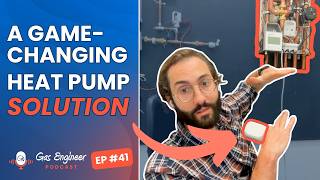
Luke Hodgkinson of Eddy Thermal has built a heat pump that installs in two days using existing pipework, costing about the same as a new boiler. A hydraulic-separation system keeps the pump efficient while smart radiator valves control temperature room by room. Pilot data show 80% of homes hit bill parity or savings.
Chapters
Now is a really good time for people to start thinking about heat pumps if they weren't already. They're in the gas industry. They're really complex machines, finicky tech, but that's all changing pretty rapidly with technology. It is possible to install a heat pump in 2 days and to have it running as well as your gas boiler and to not cost much more to install. Now that is a more compelling value proposition for most people in the country than spend £20,000 and this thing will be 30% cheaper and it will pay itself off in 12 years.
In a sentence or two, why should people care about this conversation?
Well, I think because the UK is at the cusp of a major energy transition, and we're going to need to move from gas and oil to renewables over the next decade. Historically, this has meant retraining, complex tech, lots of paperwork with not a lot of demand. That's changing, and with both new tech on the heat pump side and controls like ADIA, it's now easier to get involved in installing heat pumps. The demand is increasing, um, and so it's the right moment to get involved and to, and yeah, I think this is the conversation that kind of talks about how we're, how we're helping with that.
This is the Gas Engineer Podcast. I'm your host, Taluk Priest, and today we're joined by Luke from Eddy Thermal. Eddy Thermal has been making waves in the heating industry by simplifying heat pump installations and introducing AI in the world of domestic heating. Welcome to the show, Luke.
Great to be here. Nice to meet you.
Oh, it's great to have you. Heat pumps have had a shaky introduction to the UK, but AI and smart tech could change that. In today's episode, we'll be exploring how edithermal is bridging the gap between heat pumps, installers, and common myths surrounding that technology, and real-world examples of engineers that make the shift. Could you give me like a little, a quick run-through of like, like how it actually works and, um, how you actually control it room by room?
Yeah, absolutely. So I mean, the, the problem we're trying to solve is how do we increase the proliferation of heat pumps? We have this It's great technology, but it's been around for 50 years. Some countries have managed to adopt it and, and have really affordable heating because of that. Um, but we have a challenge in the UK, which is that we've got older buildings with pipework and radiators that's been designed for gas boilers. And heat pumps can be anywhere between 200% or 600% efficient depending on their operating environment. 200% efficient sounds great until you realize that electricity in this country is 4 times the price of gas, so you need it to be running. Roughly 400% efficiently. Otherwise, you're going to be increasing your bills. And the main contributors to that are flow temperature, flow speed, and delta temperature. These are all things, you know, going— that the— with a boiler, you're looking at a high flow temperature, massive delta temperature across the loop. And, um, that's, that's how a condensing boiler generally likes to operate. Not, not that high flow temperature, but, you know, 60, 65. With a heat pump, it wants a a really low delta temperature, which means that it needs higher bore pipework in most, in most cases in order to get enough flow through the system to deliver enough heat, and larger radiators as well. And that's the biggest kind of— that's the biggest barrier to people adopting heat pumps, because changing pipework and radiators, designing a new system, that takes weeks. You know, it's, it's— you need to do a survey, understand the heat loss of each room, design, and, you know, understand what size radiator is needed, what, what size pipe diameter. And then go and do it. And over 50% of boiler sales are boiler breakdowns. So we have a— this, this kind of complete mismatch of market and solution. So what our system does is, as long as you have the right-sized heat pump for the property— and lots of people can size these remotely now because you just look at energy bills— you put it in, you install it with the heat pump. So you install it with the existing pipework and radiators. There's just 5 connections: heat pump flow and return. There's the, um, so the pipework to the radiators and then to the cylinder and then a shared return. So it's a really quick installation. This will go on the wall where the boiler used to be. This will then manage the heat pump's operating environment. So we've got a pump that will match the flow of the heat pump whenever it can. So if the pipes are big enough, it will allow it to run full open loop throughout the circuit. If it's not, we— it has hydraulic separation, which means that the heat pump can run fast on its own circuit with a low delta temperature, and then we can then run a slower— we can run the loop of the radiators slower with a higher delta temperature so we're delivering enough heat to the home. And we can switch between the two modes. So on the shoulder months where it's not as— where it's not too cold, we might be able to get enough delta temperature through the radiator whilst acting kind of open loop. But then on the colder months, we can switch into that mode. That means we get more efficiency out of the system. The heat pump's in its kind of ideal operating conditions. Low DT, high flow rate, and then we're still able to deliver comfort to the home. This also helps us to find the lowest possible flow temperature for the home. So we're not typing in a weather compensation curve and then letting it do its thing. We are constantly trying to find what is the lowest flow temperature we can keep the home comfortable at. And then we have our radiator valves, and I have one here. Hi, Producer Alex here, wondering if you knew that you aren't subscribed to the channel. More specifically, 93% of you are not subscribed, and we really appreciate you tuning in right now, but you're missing out on even more interesting content. You're already this far into the episode, so why not subscribe to the Gas Engineers Software YouTube channel? Because showing your support genuinely makes a difference. It's free, takes a second to click, and helps us continue to make the content that you want to listen to. Speaking of, let's get back to it.
Um, before kind of moving on, I think I kind of missed— I didn't quite understand. So you've got the Option 1 is that you can do the flow, how the heat pump is supposed to work. So you've got the, so this is your shoulder period. And then how does the actual, the high speed kind of work? So you've got the kind of the normal one. And then does it, how do you get the more, how do you get more heat into the house with the Option 2 during the colder period?
So during the colder period, what we're essentially doing is increasing the delta temperature across the radiator. Okay. So if we run, if we, if we leave the hot water for longer in the radiators, so when it comes out the other side, when it comes back to the hub, it's colder. More heat has been transferred into the house.
Okay, so you just, you're pumping the, um, the water around the loop faster? That's the only difference between the two options?
We're pumping the water around the loop slower.
Okay.
Um, we're letting more heat— with the slower you go, right, the more heat is transferred into the home, and that means that that the heat pump would have to— if, if it was all open loop, the heat pump's then going to have to heat it up from a colder temperature to a hotter temperature, and that would impact its efficiency. But then what we're doing instead is we're mixing the water here, so it goes slower through the loop of the radiators, but the heat pump's still running fast on its own loop with a smaller delta temperature. And then we're mixing that in, in our hub, and that allows us to essentially get, get the best of both worlds.
Okay, so you've got the, so you got the heat pump on its own loop, and then you can choose where to send that water, but there's still the same amount of energy needs to be transferred, you know, to heat the house up.
Yeah, that's absolutely right. We're not breaking physics. The same amount of energy needs to be transferred, but we are creating the right conditions for the heat pump to perform well, and that's a low delta temperature and a high flow rate going through the unit itself. Which allows it to perform closer to its kind of manufacturer specs. And, you know, in that kind of 300 to 400% range rather than the 200 to 300% range, which is where it would be if we were, if we were giving it water from with a delta temperature of 25 degrees, you know, trying to get it from— if it comes back to the heat pump at 25 and it has to leave at 50, that heat pump's going to really struggle and it's going to be, you know, it's not going to deliver the flow rate it needs and it's going to just have a poor efficiency. So we're keeping it in its own loop, kind of really happy. Sending away, and we're delivering the same amount of energy as it would have to either way. But that's just where we can get more efficiency from it. And the other side— there's two other sides— the other side is our radiator valves, and we use these to balance.
Sorry, just a, just a quick summary before we move on, just so I really make sure. So the, um, the heat pump is at its most efficient setting. So you have a choice, you could either have— you're going to get that energy from the heat pump into the house somehow, so you've got a choice. You can with your system, you can keep it in the most efficient kind of settings or how it likes it. Or the other option is you could force it out of that, still get the same amount of energy into the house, but you're actually expending a lot more to get there. So you— is it— is it—
yeah, exactly, you're using more electricity. Yeah. And then the radiator valves, I'm sure your, your listeners will be very familiar with smart TRVs. Um, ours work a bit differently. So there's another kind of quirk with heat pumps, and you know, they are quite fussy machines, and that's, that's really why we exist as a company. Which is that because they like to continually run at that low flow temperature and at a higher flow rate, if you reduce system volume, if you reduce the amount of water there, it causes them to cycle or turn off. And they don't like to turn on and off too much. They like to kind of run low and slow for long cycles. That's how you get the best performance out of them. So normal Smart TRVs will close when a room reaches temperature, and that's kind of how we control the heat. It's just pulsing on and off, on and off. When the room is too hot, we turn off the radiator. When it's— when it goes below the temperature, we turn it back on. And we— we get this kind of— that gets us close enough to a consistent temperature. Our valves work differently. So with our valves, you would open up all the Lock Shields in the house, and these work to balance the system. So what that means is we're actually modulating the flow to each room rather than— we are deciding that the rate of flow— where if a room— if this room's met got a slightly smaller radiator, we'll make sure it gets more flow and that it's, you know, it's able to— that is getting enough, enough energy. And the other room has a perfectly sized radiator, we can, we can reduce that and make— and prioritize heating other rooms. And that means we're keeping all the system volume available for the heat pump, again trying— making it run more efficiently. And the other side of that is it does give room-by-room control to the homeowner. They can say, I want this room to be 21 degrees, I want this room to be 18 in our app and, and we will, we will achieve it.
Yeah. So you're kind of balancing all the radiators and then you're just, but also taking into account the size of the radiator, the amount of flow, etc., and the actual wishes of the homeowner. So, you know, what the actual temperature and.
Yeah. And this is how we get more efficiency out of the existing system because a well-balanced system means you're not sending too much heat to a room that doesn't need it. And wasting that energy. It also means that you're not pushing up the flow temperature to overheat that room, which would impact the efficiency of the heat pump. So we can get significant performance improvements just by balancing the system as well as possible. And yeah, it has those nice side effects of giving the homeowner that control as well.
So in this, if you kind of like stand back, your solution, is it an alternative to putting in sort of thicker pipes and bigger radiators, or how do you kind of see that the two options kind of compare?
We see it as a different journey. So fundamentally, you're replacing pipework and radiators is going to— well, I'll say replacing radiators and upsizing your radiators in your home is going to help to bring down the flow temperature of your system and to improve its efficiency, just like insulating your home will. They both have the same impact. However, it's impractical to expect people to do that before they get a heat pump, and you shouldn't have to do that to get parity in running costs. Our belief as an organization, our kind of, you know, the way we see this is it is possible to install a heat pump in 2 days and to have it running as well as your gas boiler and to not cost much more to install. And that is a more compelling value proposition for most people in the country than spend £20,000 and this thing will be 30% cheaper and it will pay itself off in 12 years. Right, it's better to say, look, actually, you can get this— your boiler breaks down tomorrow, you've got two options. You've got— you can get a heat pump or a new gas boiler, and they're going to cost the same, they're going to cost the same to run, but one's going to give you more comfort control and it's going to give you the data you need to improve the efficiency of your home. That's the kind of journey we want to— we want to get people onto, is this is a really viable alternative in any situation, and it's going to give you insights which will help you make the change, make these upgrades to your home on your own schedule. And only if it makes sense. So a lot of the kind of approach right now is quite conservative. It's based on estimates. People come around your house with a survey and they say, oh, it looks like you need to change 13 radiators. And quite rightly, people are quite skeptical of this. And we often have homeowners come to us and say, I've got 3 quotes, they're all going to cost me £20,000 and involve all this disruption. Can we just do it without? And we say, absolutely. Let's get your heat pump in, we'll make sure it's the right size, we'll make sure that it's running well enough that your bills don't go up, and then you can go for a winter, see how it goes, and you'll have the data on the other side to know which radiators are actually worth changing. And in most cases, it's going to be instead of 8 to 12, it's going to be in the 2 to 3. It's going to get you most of the benefits, much less disruption. And, and, you know, from there it's happy days. You're starting to save money on your bills.
Okay. So it's kind of like it's breaking that journey down. It doesn't have to be a big bang. You can actually— so if you're, if you're a homeowner and your gas boiler is broken down and you really wanted to transition, you could transition to possibly your system, you know, obviously with a correctly sized heat pump. And then would your bills be very similar, similar to where they are now? Would they be taking into account electricity and gas prices, or would it be slightly more or less, you know, the cost of gas?
So we've done— we're in our kind of second, just about to start our second winter of commercial pilots. And what we've seen from the last winter is that about 80% of homes have seen parity or reductions in their energy bills. And I think we're confident that number is going to increase this winter because we've improved quite a lot of our controls. And one really big contributor to this is our ability to optimize to you're a variable electricity tariff. So one of the— and I, I, I always recommend basically anyone who's getting a heat pump should get a— have a variable rate tariff, which allows a system like ours to prioritize heating when electricity is cheapest. Because as important as making a heat pump more efficient is bringing down the average price of electricity that you're paying. And we can do that if you have a tariff that overnight is 7p a kilowatt hour but during the day is 28p, or well, we can just make sure we're doing a little bit more heating at night. It's, it's already the coldest time, but if we can, we can put more energy into your kitchen, your living areas, the ground floor, whilst keeping the bedrooms comfortable and cool, which we can do, um, we can save between 30 and 40% just, just by reducing the average cost of electricity on that bill. And that's, that's a, that's a huge impact. So we only managed to roll that out on 3 of our 15 homes last winter. This, this winter it's going to be on all of them. So we're expecting to see a really big improvement. And I think I'm very excited to see, you know, the overall impact.
Yeah, because you're at the moment with the electricity prices, you do get like on windy days, you do have, you know, some of the providers, I think Octopus is possibly one of them. They do provide like a, they call it like a free electricity period. So they actually tell you, you know, when you could actually, if you use electricity over and above what you would normally use, you know, that would be used and that would be free. I'm assuming those kinds of things would take to be taken into account at some point.
Yeah, exactly. Um, so just taking those price signals, and, and in that case, you know, it's, it's the perfect time to heat up your hot water cylinder really hot, you know, to that, just to store energy for usage later. You've got free electricity, use it, you know. And, and especially if otherwise you might be reheating it at 7 PM, so your kids are going to have a bath in the evening, and that's a really expensive time to top it up. You could be saving a pound a day. On something like that. So it's, it's that, that kind of variable pricing of electricity is a, is a, is a great tool to get more, to get, to get that parity or improvement in bills even without changing any, any kind of infrastructure in your house.
Okay. So from a, like, from a gas engineer's point of view, how would you kind of describe at which stage that you're at? I'm just trying to work out how, you know, what you're doing. You know, it's a really good, you know, it sounds like a really good interim possible step. Instead of like a big bang for the— but from like an installer's point of view, at which point could they kind of offer possibly your product or something similar to it?
Yeah, I mean, we're doing commercial pilots now. So, so the products, the products available with— and, you know, we're, we're always talking with new installers who are interested. We're still kind of making sure we have a relationship with every installer that we work with because we want to get feedback and improve the product. And I think that You know, now is a really good time for people to start thinking about heat pumps if they weren't already, if they're in the gas industry. I think historically we've seen that heat pumps meant a lot of retraining. They're really complex machines, finicky tech that's hard to get working, kind of unpredictable, and also meant a lot of paperwork, you know, getting the grants done. It's just not the way a lot of gas engineers work, and I'm completely sympathetic to that. That's why we started this business, is because we want to simplify all of this. And lastly, there's relatively low demand. I mean, compared to, you know, I'm sure a gas engineer will know, you can get a boiler breakdown a week and you can turn it around in 1 or 2 days. Getting those kind of leads for a heat pump is really difficult, but that's all changing pretty rapidly with technology like Aedia and with the improvement in high temperature heat pumps that we're seeing. It is possible to do much less disruptive, much lower cost heat pump installations and to achieve that, and that is bringing a higher demand with it. We've seen an uptick, I think, around 50% in heat pump sales over the last year in the UK. And, and so it's, it's a good time to do it. And the existence of umbrella networks that will manage all the paperwork for, for the grants as well for you and help with the designs and all of that means that it's possible to transition to this space now with much less retraining and to start to install heat pumps with the guidance of an umbrella network and technologies like ADIA that that make it much, much more comparable to replacing a gas boiler and the kind of work that needs to be done. Replacing a gas boiler—
I've got to ask, old Victorian property, how well is it going to work? Like, let's say a 2-bed, 3-bed, mid-terrace, um, classic Victorian terrace.
We've got it. We've got a great case study actually we're going to be publishing very soon, but there's already a testimonial on our website. So, um, we did a mid-terrace Victorian house in Sheffield right on top of the hill, really cold place, um, really windy. The MCS survey said it was going to— that 12 of the 13 radiators needed replacing to get to a, you know, a decent SCOP, decent level of performance where they'd have break-even or a little bit of saving on the bills. They had engineered wooden flooring and it was just a non-starter because they were going to have to rip it up to replace some of the pipework, and the overall cost was going to be, I think, around £6,800 just just in terms of the radiators and pipework changes, never mind the replacing flooring that might get damaged. And they just, they put it off for years. This is the director of a heat pump installation company, didn't have a heat pump because of this. So they trialled our product, they put it in, no changes to pipework and radiators at all. The whole install took, I think it took 3 days but could have been done in 2. It was just, it was the first time they'd installed our product, so we, you know, we were doing quite a bit of training on the job as well. And kept the home warm. They liked it at 22, so every room was, was between 21 and 22 over the winter. So very warm house. And the bills were £45 cheaper at the end of the season than they were the previous year. And I must also mention that they had the kitchen— kitchen doors open for the whole month of November while they were doing— they were doing building works. So I think what we should see this winter coming is an improvement that's even bigger. We gave them the data, they've now changed 3 instead of 14 radiators because they wanted to improve the bills further. And yeah, we're excited to see what it's going to be like next winter. So really there's this kind of, there's this kind of myth that if you've got an uninsulated house you can't have a heat pump. And I think that we just need to kind of simplify it. It's all about heat loss, right? Your house is a bucket with a hole in it. The, your heating source just has to fill that bucket as fast as, as the water, as the water is escaping or as the heat's escaping. And A gas boiler, you know, we know what the peak heat loss of a house is, you know, we can learn that whether it— we can estimate it or use the data. We just need to make sure the heat pump's big enough. As long as the heat pump's big enough, it's going to be able to put enough power into that house. The next step is just making sure it does so efficiently and does so at the same price as a gas boiler.
Just to kind of jump back, that extra— the, um, the saving of 45, is that per month or was that over the, um—
no, that was over the whole season. So that was pretty much parity. But the energy bill for November alone when they had the doors open was like £450. So I think we should see, we should see a bigger saving in the next season.
Yeah. And just to kind of go back to this idea about calculating it. So if you've got the— I'm guessing if you've got the existing annual bills, you can look at the calorific value, work out the actual heat loss, and then you kind of match it up from there. Is that how you're kind of doing the calculations?
Yeah, so we, we kind of help with that. We work with our installers through that, but there are other tools that do this really well. Um, and, you know, companies like Spruce, I mean, you can do that with a really quick survey, or they'll, they'll do a remote heat loss based on your EPC. Um, and then others are factoring in the energy bills as well. But yeah, essentially what you're looking at is, you know, I'm not the right person to talk to about this, but, you know, you're figuring out the degree days, and, and based on that, what is the What is the maximum heat loss on the coldest day of the year going to be? And that's what you need to size the heat pumps.
Okay. Are you fed up with drowning in a pile of paperwork that comes with running your heating and plumbing business? Gas Engineer Software is an easy-to-use, all-in-one job management system made especially for UK heating and plumbing companies. From handling customer details to building quotes, issuing certificates, and sending invoices, Gas Engineer Software will help you save time, eliminate paperwork, and make running your business easy. Start a free trial by clicking in the link in the bio. Okay, I see. Anything else that would be useful for, you know, gas engineers to kind of, who are kind of thinking about it and wondering what the kind of the next steps are?
Yeah, I mean, I think we're, we're always interested in speaking with gas engineers that want to make the transition, and we can always help to hook them up with umbrella networks, installers that need more help. Because there's a lot of installers that, that are trying to expand their networks and, and to work with, with more engineers. Um, so we're, we're always open to have that conversation. I, I would ask them to reach out to us. And, um, we're also trying to do pilots this winter where we're actually trying to convert boiler breakdown customers to heat pumps. Um, and we're going to be offering bounties for, uh, engineers that can bring us leads where homeowners will actually convert. To a heat pump. We want to prove that with Aidea, we can install a heat pump in 2 days, lead to heat no more than 4 days. So essentially, it's a very similar timeline to a boiler breakdown, and that we can get an actual good result, a happy customer, a warm home, and lower bills from that.
From the engineer's point of view, you know, if they pass on one of their customers, you know, there is an element of trust Course. And how do you kind of deal with the, you know, just to kind of reassure the homeowner that they are going to get something that's going to work, and also the engineer, because it is their customer?
So for these pilots that we're running, we're going to be offering a year-one bills guarantee, and that's essentially that the average price of heat that they get is going to be cheaper than or the same price as gas, or we're going to refund the difference. And we are also offering kind of standardized pricing for this, so So, and I think that's really important. That's something that is really good about the gas boiler industry, is that they're able to basically just run a quick survey and say that's going to cost you £2,000, or that's going to cost you £2,500. Whereas with a heat pump install at the moment, the status quo is for somebody to come around, survey your house, go away for 2 weeks, and then come back to you with a, with an estimate that could be anywhere from £2,500 to £10,000. And it's not, not particularly transparent. We are working with installers to come up with standardized packages that allow us to have a much similar approach to the gas boiler industry, whereby after a short survey, um, you know, quick conversation with the homeowner, we can put them in, in a, you know, one of three buckets, which is pretty much just driven by the size of the heat pump that they need to keep their home warm.
That sounds very good. Well, I really appreciate you coming on the show, um, Luke.
It's great to be here.
It does seem, um, you know, a really kind of interesting approach. It's not something that, um, you know, I've come crossed before, and, um, it was very helpful. So thank you very much for that. Appreciate your time.
Thanks a lot.
Bye-bye.
More from Tulloch

Your Profit Is More Than Your Salary: Pricing A Trades Business w/ Doug D'Aubrey

Is taking over another gas business a realistic alternative to hiring from scratch?





He Took Over Another Gas Business After 3 Years As A Sole Trader w/ Dan Giles


