Is a Work-Life Balance Even Achievable For Tradespeople? w/ Michelle Ibbs
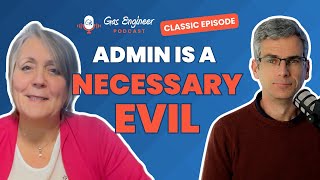
Michelle Ibbs, founder of I Am Your PA, explains how virtual assistants help tradespeople like gas engineers handle admin overload, routing, and follow-ups. Her company charges £30 a month plus per-second billing, far cheaper than hiring full-time staff, and lets engineers focus on their work and family instead of drowning in paperwork.
Chapters
A lot of tradespeople are incredible on the tools, but when it comes to the admin stuff, it doesn't interest them. But unfortunately, it's a necessary evil because what is the point, Tuluk, if you have, you know, you build this business, but in the process you've lost your family? Surely building the business is about creating a better life for your family. Not creating a monster.
This is the Field Rocket Podcast. My name is Tullik Priest. I'm your host, and today we have Michelle from I Am Your PA. Welcome to the show.
Good afternoon and welcome. Yes, thank you for a warm welcome.
Thank you, thank you, thank you for coming. Could you tell us a little bit about your background and what you do?
Yeah, you might be quite surprised to hear that I actually started life as a nurse, and so I worked in nursing for many years, then moved into medical sales, ended up joining my now ex-husband in the steel industry. And when we became ex, I needed to find another position. And somebody said to me, this is going back to 2007, have you ever thought of being a virtual assistant? They weren't common in the UK at that point. And I just said no. What do they do then? And to be honest, having just lost a £100,000 a year job, I did what I thought was the only sensible thing. I downloaded all the information I could find, which was mainly from Australia about virtual assistants, put it all in a suitcase and went and lay on a beach in Antigua and read it up, read up about it, came back, started the business, realized I got a slight hiccup in my plan because I'm a two-finger typist and these VAs were doing everything, was just admin, typing letters up for people. I was too slow, so So I thought, I'll answer phones, I'm good at that. So, and that's how I'm Your PA was born.
Okay. And then you— so you're— how many people do you work with, or, you know, what size is your company at the moment?
So we started for the first 10 years, we actually— I ran the business from home, and I got up to about 4 or 5 staff. But that was quite a big imposition, having people coming into the house every day. So we then went and bought offices, and I now have a team of 19.
Okay, and they— do you kind of specialize in helping tradespeople, or who's your sort of ideal customers?
We have 3 teams. So my co-director— I've appointed a co-director— he has a great love of Star Wars. So we have Team Ewok, Team C-3PO, um, in fact 4 teams: Ewok, C-3PO, Yoda, and R2-D2. And they all have different things. So Ewok is very much trades. That is their— everybody in Ewok, they, they specialize in trades because it's very different. Trades is very, very different to working with, say, clinicians who fall under Yoda.
Okay, and what's that kind of— so what's the kind of differences for trades Is it sort of more about routing and those kind of things, or what's the difference?
It's— well, obviously there's the software, because a lot of tradespeople will use a software, and we would highly recommend that they do use a software. There is the routing, because it's very different than bringing somebody into a clinic. You've got to make sure that you manage the routing, otherwise they're using too much time and too much fuel. And you get very angry tradespeople. There's also— they work, they work differently, their needs are different, you know. There's a lot of the people that— a lot of tradespeople are incredible on the tools, but when it comes to the admin stuff, it doesn't interest them. But unfortunately, it's a necessary evil. So it has to be done, otherwise it does scupper their businesses.
What kind of issues or what kind of challenges do they normally come across?
We see them trying to fit it all in at the end of the day, which I have actually had a tradesperson come back to me and said, "I need you to help me because my wife is going to leave me if I don't. I haven't had anything to do with the children." She said, "At least you could read them a bedtime story, but I'm in the middle of doing my invoicing and stuff." So it's causing a lot of family issues. We see them losing business because they don't have time to follow up on the quotes that they've gone out and sat for hours putting together, but don't realize they need to follow up. Sometimes it can be up to 5 or 6 times, and if done correctly, it doesn't wind the clients up. It makes the client feel loved because they know that you really want to work with them. We just, we see them not getting everything done, so they lose business because they're not proactive. You know, you look at gas engineers, your software will tell us when a gas service is due. Yes.
Yeah.
You've got to actually make contact with the client, and quite often you can't rely on software just sending a text or an email. Clients actually like a phone call, but where do you fit that in when you're not finishing till 7 o'clock at night? You've now got to do follow-up on the messages that have been left during the day. You've got to write your quotes up, you've got to do your invoicing, and you've got to help bath the kids and put them to bed. They don't get followed up.
I, I think there's kind of a couple of parts to it as well. Like, if it's something that you don't love doing, you know, naturally you, you have like a bit more of a hesitation about it. So, but if you, if you can find somebody who actually loves doing it, you know, the, you know, you wouldn't quite have that hesitation. And when they actually do it, if they really love it, you know, the quality of the work is going to be so much quicker and also better, which is kind of natural, I guess.
Yeah, it is. It's very much the case that I find gas engineers, when you put them in a face-to-face setting, which they're in every day if they're doing— especially if they're doing domestic, they're, they're with people every day and they're brilliant. They've got a majority— have got charm, you know, they'll have a, have a joke with their clients and, and they're great. But give them the phone to try and do the same thing over the phone and it just becomes an alien object that it's like, I don't want to do it. So it's— what was the book? Eat the Frog. You know, they just, they will put it off. Yeah, they just put it off. And it, it's sad because you see them, especially the younger gas engineers that are fitting boilers left, right, and center. That's, that is their business. For as they get older, when they're not in a position to fit boilers, you know, as they get older, they don't want to be doing as much heavy work. But if they followed up on every one of those boilers, and they've got annual services, that's brilliant. They go out and they fix, they fix boilers and fires and things. If you keep that in a software system, because you've helped that person, that's your service for next year. This is the database that you're building. We've even seen them come in with a card system You know, they've still got people written down on cards to try and follow them up. I'm sorry, we've gone past that. It's— we're in a different century. You know, we really do need to be using the software systems.
Yeah, I have seen people using Excel before, but yeah, you know, using a software that's designed for it is, you know, just makes life so much easier.
It is, it is life-changing. And I mean, I've still got the odd one that— and it's like, please, can we just get you converted across? And I did a calculation the other day, and it's probably costing them about £500 a month more than anybody else because everything is manual. And you look at the systems, you know, like Gas Engineer Software, they only need us for top-ups because the system does so much of it. Now everything is easy, but yeah, there's still a few that we need to convert between us.
Yeah. You say that they're kind of losing money from lost jobs. And then is it time? And, you know, where else do they kind of lose the money?
Well, that particular one is because a lot of the systems now, um, you can literally get the system to confirm a job because it will text out or it will email out to confirm the job. This one particular guy, we have to phone every single one of his clients to confirm. Okay, you don't need to do that. We have people that say you'll have to phone everybody to check it was okay and to ask them to leave us a review. Well, at least they're, they're saying, you know, we need to leave a review. But what if you actually input that information, the email and the text number, into the system? It can do it for you. You don't need to be paying for my team to be phoning out because that can be done for you. So there's so many clever things now that— and these systems, you know, like Gas Engineer software, they're coming on so fast and there's new bits being added constantly that they don't need a human being as much as they did. This— it still does need some human contact, but we can cut the bills right down by using software. So that's where it's costing them.
So where— so if you met like a, say, a sole trader, somebody working by himself, he's working, he or she is working sort of evenings, weekends, you know, exactly what you were saying earlier, you know, doing, you know, all the stuff during the evenings. What is— what's kind of like— what kind of options have they have?
They can, and we have had those that have grown to the point where we've recommended they now go and find somebody, and we'll even help train them to work with them. But if you think, I mean, we've just— minimum wage is now going up to £11.44. You've got National Insurance, I think 13.8% on top of that, and then there's the pension on top of that. They can work 40 hours a week, and that's probably as much as you're going to get them. But half an hour of that obviously is going to be their break time, because you've got to give them a break. That's the law. You still need to give them, on 40 hours a week, 28 days holiday paid, because that's the law. And then there's going to be time where they're off sick, or, you know, something's happened with a little one and they can't come into work. There's dependents leave. It's— if they have to go off on maternity or paternity, then you've got that to think about. Out. So there's only so much that they can do, and do you actually need somebody for that amount of time? Because there's very few sole traders do need that amount of time. So then they'll say, well, I'll go for somebody part-time. Okay, that's great, as long as your customers are kind enough to be in during the hours that that person's working. You know, if your customers happen to work mornings and your member of staff works mornings, then they're not going to be able to contact each other. So you're still going to have a problem. There's still going to be stuff that needs to be done outside of those hours. So with us, they get somebody 8 AM till 6 PM Monday to Friday, uh, 9 till 1 on a Saturday. They only pay for the time that we work for them. So if they need us at 11 o'clock on a Monday morning but then not again until 4 o'clock on a Thursday afternoon, then we'll only pay for the time they use on the Monday morning and the Thursday afternoon. They're not paying in between, but we're still available.
Okay, so if a customer calls, um, see, they'll pay for that time they're on the call, but for the rest of the time—
No, well, this— it's— we charge £30 a month and then we actually charge by the second. So I've got gas engineers who we do quite a bit of work for, and they will be paying around £300 a month for a member of staff, but they've actually got 3 members of staff that they can call upon from 8 AM till 6 PM Monday to Friday, and as I say, 9 till 1 on a Saturday. And that's to do their outbound calls, to phone all those people that are coming up for You know, that the gas engineer software has said they are due for a service, so we're able to phone out and do that and get it booked in. If we don't get them now, we can phone another time. It's to chase up on any payments, it's to chase up on any quotes, all of that good stuff we can do as and when they need it. And they don't pay for the time that we're not working. It's only when they give us stuff. But there's always somebody there because obviously we cover the holidays and we cover the sickness, um, because that's what we're geared up to do. So they've got 3 members of staff sat there that they only pay as they need them.
Okay, so that like when you have the— so your service is kind of suited for when you first get your like first admin, um, person, and then as they grow there will be a point where it becomes more sensible to get somebody sort of in-house?
Yeah, but they realistically, they need to be remembering that it works out. I think it's going to be on the new minimum wage, it's about £28,000 a year it's going to cost them, plus National Insurance, plus pension, plus they've got to supply a laptop, plus they've got to supply them a phone and broadband, and they've got to cover the insurance, and they've got to supply heating, gas and electric. It, it's— it just goes on and on. So they're not going to see any change out of £30,000 a year, which is— it means that they could get an awful lot more. And they will only have that person for maximum of, um, well, if there are 40 hours, it's 37.5 hours working, um, but they've got to lose 28 days and pay for that too.
Yeah. Because generally what we see for the engineers that you kind of— there's 3 main kind of stages. We see the sole traders, engineers that working by themselves, and then they grow to having other engineers helping them, but they are still on the tools and then they are using— they trying to organize everything on their phone while they're fixing a boiler. And then we just kind of find that for those engineers, and also the sole traders as well. But it just kind of slows them down because you're kind of halfway through taking the calls, and then you— there's also the chance that you start dropping stuff as well. Because if you think, I'll remember that, but then once you get into the van, etc., get to the next site, you know, things are getting dropped. And then the third sort of major stages that we see is that when they get a full-time admin person. But that, by that point, they normally have around about 4 or 5 engineers. So is that kind of what, similar to what you see as well, or?
It is. We've had a few recently that have gone away from the full-time member of staff. Something may have happened, maybe it's somebody that's come up for retirement, or the member of staff's got another job, and they've said, not going to replace them. Just going to come to you because it works out cheaper. Because the other thing is we can have— and we've had this especially, um, you know, where we've still had issues with people going down with COVID and it's like, I need my whole diary reorganizing. We can put 2 people on it to literally just blast it out quickly to get it done, whereas if they've got a member of staff, they've got to do it one. By one, by one, um, you know. So we've had instances where all 3 members of staff may have been on calls for one particular client just to resolve a problem fast. Um, so we have lots of options.
Um, or why do you think people kind of hesitate in getting a sort of an admin person? Because, you know, as you said at the beginning, you know, the engineers don't enjoy it, but they kind of feel like they need to. So there's kind of like something in the way.
I think it's number one, it's letting go because it's their baby and nobody's going to know how to do it as well as I do. Well, we've got about 75, I think, gas engineers. You know, we have great relationships with our gas engineers. One of our staff actually came to us from a gas engineer company who was stopping having a member of staff. They've made changes in the business and they said, we don't— and she, by this point, she was hot desking with us. So Emma worked for a gas engineer who'd also got a shop. They closed the shop down And he said, "I don't know where to put Emma because she doesn't want to work from home." And I said, "She can hotdesk at our house, it's fine." So she was hotdesking for us and he said, "There's not enough work to keep her going." I said, "Fine, let me have her." So we actually transferred her over with continuous service, so she didn't lose anything. But she's been working in the gas side for 12, 13 years. So she, I mean, she refers to parts by numbers, you know, if you phone her up with a number, there's a very good chance she'll know what the part is. Not that she can ever give that out to a member of the public calling in, but it does mean that we're, you know, she gets it. So our team do get it, but I think people worry about letting go and they won't have a clue. And it's like, what we do, that's why we have a specialist trades team, because we do have a clue.
Yeah, but it's definitely kind of, you know, it's a lower risk than, you know, having to find somebody, train somebody, you know, that's quite a sort of a big investment. But yeah, and what's kind of the big change that you see with the engineers, you know, once they do get an admin person?
I had a lovely, lovely testimonial come through from one guy, and he just sent in a quick WhatsApp and he said, oh my God, I have just had my first holiday in 15 years. I have never had a holiday because people will phone me while I'm on holiday. And he just diverted his phone to us, so nobody got him. And him and his wife had their first holiday. You know, that makes— that gives me great joy when I see that they are now putting effort into their family lives and everything. Because what is the point, Tuluk, if you have, you know, you build this business, but in the process you've lost your family because you gave it your heart and soul? Surely building the business is about creating a better life for your family, not creating a monster.
Well, I, I think you should be able to do both. You can't You can't just have like one and not the other. You know, it's part of, you know, if you organize things correctly, you can do both at the same time.
Exactly. But it is the building the business is to have, you know, you have the business and you have your life and it's wonderful. But we do see so many of them that they start with us and they've actually, they've not built a business, they've built a monster. It's something that strips them of their family life. It becomes a chain around the neck. They're stressed out because they're having to juggle so many things, and we just take over and let them do what they're really good at, and that's getting on the tools, fixing the, the boilers, fixing the fires, leaving really happy customers that want to come back year in, year out. And actually making sure that they have a reasonable route and they finish on time. We also act as the block in some cases. When you get into the— as soon as the temperature drops, and what is it that they say about -5°C for 3 days, and then the old condensing boilers, they all start to freeze up. And, you know, nobody's got a cat and mouse chance of— the phones just go mad. Um, but we can— some of them will actually tell us, I want you to say this. It's the only time we use a script, because I don't believe in scripts. But if they give us the information that they want us to give to people calling in, we will do that. We, um, But we can also make sure that we, we block people, so it gives them the ability to go out to the most vulnerable first, to assist with the elderly, those with little babies and everything. Because to be fair, somebody like me, I could, I could cope if it happened to me, but little Mrs. Jones down the road who's immobile, she won't cope. So we can block and guide them into the right places while they just carry on. So some of them will say, you're going to have to phone and ask for the money for that, or you will have to do that because I don't want to speak to them. And it's fine. It's— I've had to tell people in the past, I'm sorry, my engineer won't be coming back because they've had a customer that's been a nightmare. But they find it difficult to have that conversation. I don't. Because I'm not emotionally involved.
You're kind of a third party, so you, you know, it's a lot easier as well. So, and what about from a financial point of view? So you've, they're saving a lot of the time, you've got the financial kind of part as well. And like, do you, I guess the question is more about depending on what the engineer wants to do, because you've kind of got choices, like do you want freedom or do you want, you know, more financial returns?
We will do— so we've had people that just say, listen, just answer the phone, send me a message, and I'll get back to them. That's what I call a human voicemail. Yes, we can do that, and we do it for quite a few clients, not too many of the trades. It's— I, my team, find it far more satisfying when we've taken the call and we've actually booked it in the diary because we now know that you've got some money coming in because the appointment's there. You know, we can quote them. When you get the people that you tell them what your rate is and it's like, oh, I can get that cheaper, fine. They, you know, they can't say, well, can you do it so much for cash? Because no, they're stuck with us and it's like, no, we can't, it's that price. Or it's not, it's your choice. So we protect them from, from that point of view. But if we're doing all those bookings and getting them first time, as opposed to somebody leaving a message on their voicemail which they've then got to go and try and ring back, and they phone back to find out that actually it's been booked with somebody else, you know, they're wasting time and money then. So with us, it's just Yep, go on, we've set your appointments up, off you go, go and get your money.
So you, so the, you know, you're responding fast to the customers, so there's better, you know, customer service. And then you've also got, you know, the engineers have a bit more time so they can actually do more work on the tools, which is what they like. And then, you know, you actually, yeah, it's, I'm guessing the engineers are a lot happier as well.
On the whole, yeah, if they've had— some of them, if they've had problems, we all get a difficult customer and they'll drop it back to us and we will get them, get it sorted out. And, you know, we will say to them, actually, they were okay at the end of it, or no, they were a complete nightmare and you might want to rethink that one for next year. You know, I say all this, tolerant-judge, but The amount of bad customers out there is actually very few, but unfortunately, they do take a lot of time away from the engineers. You know, one bad customer can take so much time up and upset them because, on the whole, every engineer I've come across is proud of the work they do. You know, they they'd like to get it done right. So when somebody is complaining, and often falsely complaining, it eats away at them. That's not good, you know. So if we can take that pain and deal with it, and that's fine, they can just carry on knowing everything's dealt with. They carry on, um, and go and service some more boilers and make more people happy and warm.
I think that's a really good point because you kind of, you've got the time side, saving the time, but you've also got the, you know, the saving the energy. And there's also the focus as well. Like if you're in your mind, you're dealing with, you know, like a customer that wasn't, you know, that didn't work out or they've sort of been really awkward. If that's kind of sitting in the back of your mind while you're actually trying to do, you know, the work, you know, it does slow you down. So it is quite a distraction.
I mean, we've even had— because my co-director used to be in insurance— so we've even had one of our engineers who unfortunately a lorry reversed into him and took out the front part of the vehicle. He was trying to deal with the insurance and it was a nightmare, so he said, just sign it over. And we dealt with a lot for him. And he said, I couldn't have dealt with that because it was winding me up so much. So we made sure he got his other vehicle, so he carried on. He was in a hire car for 6 months while I sorted this out, um, but we did all the stuff behind the scenes to make sure that they, they couldn't get to him. And we just said, yeah, it's okay, it's all going through, be a bit longer. Yeah. But we took away all of that, which he was finding very distressing. So you'd be amazed at the sort of things that they throw back at us and say, can you do this? Can you sort me some flowers out for the missus?
Valentine's Day is coming up. What's a slightly different question? Like, if a company is at the point where they're looking for their first full-time admin staff, What kind of attributes and like, how would you actually interview, you know, for that role?
I possibly interview quite differently because we are a values-based business. So our core values are honesty, kindness, and humor. So the first thing that we do when we're looking for staff is we put the advert out, we take every CV, I actually don't read CVs because I haven't met anybody yet that has told me on their CV something that they're not good at. They just inflate it to say how wonderful they are. So we send them a survey out to, um, to do their values, to establish their values, and we bring in based on those values. Then we get them to present to us, um, something that they're passionate about. And the reason I do that is because if you can't talk about something you're passionate about for 60 seconds, you're not going to be able to answer the phones of my clients. They need to be organised. You can teach systems. You can always teach a system to somebody. That's not the end of the world. Sorry, that's my dog in the background. That's not the end of the world. What you can't teach is honesty, kindness, humor. You can't do any of that, um, because you need to know that they're going to be able to dealing— to be able to deal with your clients with compassion, um, and empathy. And if they can't do that, pointless.
It's quite difficult to kind of test or to, you know, those core values Because I did, um, I did slightly off topic, I did hear one company that was testing for empathy and they would have the other interviewees, sort of a group of them, and they would be— the one person would be telling like something, you know, not, not very pleasant happened in their life, and then they would watch the other, the other candidates to see what their reactions are. If they were kind of sort of aghast or something like that, you know, then you would have your empathy. But if they were kind of, you know, nonchalant, then they were, you know, probably wasn't a good fit.
Yeah, it's similar thing. The way that we do it is quite similar. We, one of the things that we do is we do bring them in in a group. And if, for example, you were to bring a photograph of your dog and say, you know, this is my dog, I rescued my dog, and, you know, give us a talk about your dog, and then somebody says, why didn't you rescue a cat? That's a non-team player because they're trying to throw you under the bus. So that one's just been removed now because you're a non-team player.
Okay, yeah.
You're trying to knock others down to make yourself look good. So, and I actually have had that happen where somebody has knocked some— knocked other people down just so that they could shine. And it's like, you don't realize what you've just done because I'm not employing you. Yeah, it's a good catch. Yeah.
Any other thoughts? I'm kind of putting you on the spot here a little bit. Like, anything else that kind of— that's kind of signs like, like I'm just kind of thinking like, let's say you've got a team of 4 or 5 engineers and you need somebody to organize the office.
I personally think that you need to have humor in there because if you can't have a laugh every day, it's— you don't— for me, I don't want anybody too bossy, but they can be bossy if they've got humor, because you can say, come on, lads, I'm going to need you all to do 8 jobs today to get through this backlog. So, you know, let's get going. You can do something like that, but it's all about tone. It's— if you can do it with fun and humor, that's one thing. If you If you're going to be going in there and saying, "Right, you lot, you need to do this," what you're going to find is your engineers are going to be so wound up, they're probably looking to go elsewhere. So, they need to be very much a team player and realize how valued, how valuable they are in the team, but actually, they are nobody if they don't have the engineers because there is no job without the engineers. So you might think that you're the all-important person because you organize it in the office, but actually, if there's no engineers, they don't need you anyway.
Yeah.
So you've all got to be part of that team and respect that.
I think it needs to be a balance, you know, like you've got the engineering, so that needs to be strong. You need your admin and then you need your accounts receivable to be strong as well, because if you've just got one of them that's not strong, you know, it's unbalanced. So if there's, yeah, you know, if the engineers are strong but the admin's not, you know, the time is lost, etc. And then if the receivables is not strong, you're just not getting paid. So yeah, it definitely needs to be that balance, that's for sure.
Yeah, and to be honest, whoever's doing— if they're organized, whoever's doing the calls in. But when you've got, I mean, even with companies that have a full-time admin will often act as the overflow, because if you've got 5 engineers on the road, the chances are you are having to do a lot of calls out, the proactive calls to book services in, and you are probably getting quite a lot of calls in. So one person can't handle that. So now we've just gone from £30,000 a year to £60,000 a year for 2 people. And that's a big chunk out of your income. Whereas for us, that might actually go from £300 a month to £600 a month. So I think that the, the most expensive bill I've ever seen for a gas engineer, and we were doing— we got somebody on it full time was around £2,000-£2,500 in peak season, and that was doing a lot. You know, you can't— it's going to cost you more than that for a member of staff.
Can you think of anything else that would be kind of helpful for sort of engineers, just kind of around this admin side of the business?
Be organized. If they're VAT registered, one thing that I would strongly recommend, because that VAT bill comes in and they're like, I haven't got the money for it. Every time, have a second bank account, and every penny that comes in— if you take £120 in, you put £20 of that in the second bank account and you do not touch it for any reason whatsoever. When you come to do your VAT return, it won't be a full 20% because obviously you've bought stuff, so that VAT comes off it. Whatever's left, just leave it there because that's now going to pay for your Corporation Tax, uh, because it's adding up. And whatever's left at the end of the year, there you go, that's your Christmas bonus because you never missed it. But don't touch it for anything, um, and Networking does work. And in fact, if you look on my Facebook profile, you'll see it says, 'I could— the networking queen,' because in more so locally these days, but it's like everybody, it's like— and I think because I always wear pink, so everybody spots me. It's like, 'Oh yeah, that's Michelle from I'm Your PA.' It's because of the pink. But, but yeah, networking can be very, very lucrative. But again, it's something that some of the trades struggle with, and they don't like speaking in public. And it's like, do you know what, nor does anybody else, so don't worry about it. You're the expert. But we can give them tips as well, how to make a massive statement. One of the best 60 seconds I saw from a gas engineer And he stood up and he said, "Hello, I'm Stuart from Technogas." And then he said nothing for about 45 seconds. And he said, "And that is the sound of carbon monoxide killing your family." He said, "I'm Stuart from Technogas. I service boilers and fires and make sure there's no carbon monoxide." It's like, oof. and he had an absolute barrage of people coming through to him, um, because it was like, 'Oh my God, I never thought—' And it was chilling because everybody's like, 'What's the matter with him? Why is he not speaking?' Um, so I love to come up with things like that that make them think outside the box and actually help them to get the best out of their networking, you know. Do they want one of these caravan parks? Well, fine, find out who the owner is and go and ask. Chances are somebody will know and get you that warm introduction. But you have to put a little bit of effort into networking. I'm a big advocate. B&I alone brings us around £250,000 a year in.
I honestly think that servicing is the way to go because I've I worked, we worked with one engineer and he was saying that with the installs, like if something's not quite right, like it's delayed a day or something like that, and you can't quite predict. But if you work with a letting agency and they give you all the keys and then you can just go through, you know, 10 or 12, you know, properties you know, you know, in a stretch. So you just go from one to the other to the other. Yeah, it's, um, yeah, it's just more reliable and more, you know, it just works out better in the end.
Yeah, but it— but even some of the— yeah, and this is why I'm surprised that a lot of the gas engineers don't turn up at property events, because you're getting more and more property investors now that might have a portfolio of 20, 30 properties, but they won't use a letting engine— a letting, um, what's it, a letting agency. They won't use one because it starts to get really expensive because they've got so many properties. So they actually manage it themselves. And it's funny how many of them we have, because they'll do the day-to-day stuff, but they don't want to answer the phones because it's normally a whinging tenant. So it's like, you deal with the whinging tenants and give us the actual version as opposed to the emotional version. And we'll get it sorted. Some of them even give us the contact details of the engineers or electricians or whatever that they use. These are our trusted contacts. If it's less than £100, just tell them to do it.
Now, if it's going to be more, I need to know. But yeah, the industry is slowly dying at the moment.
Well, they're not making it easy with all these heat pump things, which I really cannot see how the hell they can do it. I was speaking to a gas engineer and I said, Okay, I said, you know, I've just had this new boiler fitted. Should I have gone down that route? He said, absolutely not. Do not touch it with a barge pole. Fight it every step of the way, because by the time you've looked at the things that you've got to do— he said, in your house, I can tell you now, your floorboards have got to come up, uh, it's for us to be able to do the various things. You'll have to change your windows, um, it's going to have to be sited because of distance from neighbours and all the rest of it, you know, it's where are you going to site it? He said, I think you might have a problem. He said, but also, and I don't know how true this is, he said, you need a backup system for February, March, or January, February, he said, because it doesn't work particularly well. He said, and it's got to be on all the time because it's a lukewarm thing. He said, you come in and you blast the heating up to warm the house up, he said, you can't do that. He said, your radiators have got to be much bigger radiators. And I'm like, I'm 60, I ain't having that done.
Well, that's perfect. It's probably a good place to end as well. So yeah, thank you very much for that, Michelle. And it's Michelle from I Am Your PA. And yeah, I really appreciate you coming on and that was very helpful.
Thank you. Thank you, and thank you for Gas Engineer Software, because, you know, it's— every gas engineer needs software, so thank you.
More from Tulloch

Your Profit Is More Than Your Salary: Pricing A Trades Business w/ Doug D'Aubrey

Is taking over another gas business a realistic alternative to hiring from scratch?





He Took Over Another Gas Business After 3 Years As A Sole Trader w/ Dan Giles


