The Honest Reality Of Taking On An Apprentice w/ Hollie Stallworthy
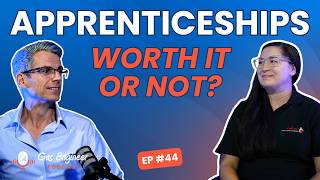
In this Gas Engineers Software podcast episode, host Tulloch Priest interviews Hollie Stallworthy, the owner of Holly's Heating, about the practical and emotional realities of hiring an apprentice in the UK heating and oil engineering trade. Hollie explains that the initial phase of apprenticeship is time‑intensive and costly, with jobs taking longer as she teaches fundamentals and tailors explanations to the learner. She estimates a productive learning window of six months to a year before the apprentice becomes genuinely useful, and stresses the importance of observing the apprentice’s engagement, information retention, and attitude within the first three months. The conversation details their business structure: partner Daniel handles servicing while Hollie focuses on breakdowns, and their apprentice Charlie (Hollie's younger brother) is a full‑time trainee who learns on the job rather than attending college. They outline a roadmap where Charlie first masters boiler servicing, then progresses to breakdowns, and after two years of experience aims to sit OFTEC exams, obtain a driving licence, and work independently. Financially, Hollie cites a salary of about £12,000 per year for a 16‑18‑year‑old apprentice, rising to £15‑16k after 18, plus employer National Insurance and insurance costs, noting that government apprenticeship funding offsets some expenses. Hollie highlights non‑financial rewards: reduced loneliness, mentorship satisfaction, loyalty, and the ability to shape a trusted employee, especially when the apprentice is family. She discusses the cultural fit of hiring within a close‑knit family business versus bringing in external staff, noting potential impacts on company culture and customer perception. Finally, she advises other businesses to only take on apprentices if they are financially and mentally prepared, to select the right candidate, and to view the apprenticeship as a long‑term investment rather than a short‑term burden.
Chapters
Jobs take longer at the beginning because you're trying to explain everything and you're trying to teach in a way that suits the person, but then there comes a point where they start doing jobs for you and they start making the day go easier and they understand things. Self-employment can be very lonely and having an apprentice there— yes, they're a financial drain, yes, they, they might annoy you with their lack of drive, but it's someone there and someone you can have conversations with and you can banter with.
And a sentence or two, why should people care about this conversation?
Because there's a huge gap in the skills. Training apprentices is bringing forward the next generation of heating engineers, so that's important.
It's expensive.
It's expensive, but it's important.
It is important. It's the Gas Engineer Podcast. I'm your host, Tullik Priest, and today I'm joined by Holly. I'm Stalworthy. If you missed our previous episode, Holly is a sole trader Sorry, limited company.
Now limited company.
And now limited company. And an OFTEC registered oil technician who's built her own business into huge success with a loyal customer base of over 600. Welcome to the show.
Thank you. I didn't know it was over 600. It makes me sound successful.
Well, it's because you are.
So yeah, well, thank you for that. That really makes me—
It kind of like creeps up on you and you—
Yeah, just when you've been doing it for so long, you just, you know, just do it. And I didn't realize it was over 600 customers. So yeah, thank you, thank you for that.
For context, uh, you know, Holly uses Gas Engineer Software.
I do.
Today we're talking about the big step of taking on an apprentice. We'll talk to Holly about why she decided to bring somebody on board, what it's been like, and the challenges and the rewards of training the next generation of tradespeople. As always, if you enjoy these conversations, then please like and subscribe to support the podcast.
It is expensive, and, um, mentally expensive, I would say, as well.
So it took time, money, and bandwidth.
Yes, jobs take longer at the beginning because you're trying to explain everything and you're trying to teach in a way that suits the person. And yeah, definitely expensive, but rewarding. A bit like having a child or going self-employed for the first time. There's a lot of effort at the beginning where you feel like you don't really— you don't— you're not getting anywhere, like you're a swan with your legs under the water. But then there comes a point where they start doing jobs for you and they start making the day go easier and they understand things. So, well, that's my experience anyway.
How long do you think that period is?
Gosh, the period between when they first start to where they start being useful, to say it bluntly?
Yeah, I'm sure there's not like a, like a line in the sand because it's more of a scale.
I would say within 6 months. 6 months to a year.
So you're investing for 6 months to a year.
Yeah.
Do you have kind of, if somebody was thinking about taking on an apprentice, like, at which point, like, if you're 3 months in, how would you know that you're actually onto, you're on the right track or not?
Oh, that's so difficult. I think it's, you'll know with the person that you've employed, because with an apprentice, they're with you constantly at work. Arguably, you probably spend more time with your apprentice than you do your family. Because—
Yeah, yeah, you're—
Yeah, so you would, you would pick up on whether they care. You would pick up on whether they've learnt anything in the first 3 months.
So you're looking at for information retention?
Yes. And general, like, excitement of doing the job. I mean, I know it's not an exciting job, but the fact that, for example, my little brother's gone from school to work straight away. He was so excited about, "I'm gonna go and earn some money and I'm gonna, you know, learn to do something that's useful and work with his hands." and things like that. And just having that, I don't know, zest for life, excitement, um, I don't know, je ne sais quoi, I don't know what it is, but it's when you're dealing with someone that is like flat and just staring at their phone, or you get the vibe that they're not really interested in what they're learning. And I think that's when you, within a good couple of months, I think you would know that. If there's nothing else going on with that person, they might be personally going through some stuff, but you have that conversation, you talk. If they just genuinely do not care, and they're only an apprentice because their dad told them they have to be, then you can make that decision then.
Okay, because it's, you know, it's quite an investment, and you, you know, if it's going to take, let's say, a year to actually get to see a return—
correct, yeah—
um, you want to make sure that you're, you're kind of backing the right person.
Yes, and I, I don't have too much experience in the amount of apprentices that I've only had the one, and that has been my little brother, so I knew him before Okay, so you had some background. So yeah, I'm a little bit biased when it comes to, comes to that, but I've, I've heard them with other companies that take on apprentices. I mean, people just moan about them, don't they? They say, oh, they don't want to work, this generation of kids, they, they just want to sit on the, in the van and be on their phones. And I don't know how true that is because I've not experienced that. It's just what I've heard from other heating engineers and other companies. And it is a shame when you're in that situation because you have invested so much money and time I don't think my little brother has that choice. Bless him.
No, he hasn't.
He hasn't got that choice. He's like, you have to be good. Oh, that's it. Which is nice. And it's really nice to keep it in the family as well, if I'm honest. Like, my customers absolutely love the fact that Charlie's my little brother and that we're training him up. And they just, they love it. They just want to wrap him in cotton wool and look after him. Bless him.
Hi, Producer Alex here wondering if you knew that you aren't subscribed to the channel. More specifically, 93% of you are not subscribed, and we really appreciate you tuning in right now, but you're missing out on even more interesting content. You're already this far into the episode, so why not subscribe to the Gas Engineers Software YouTube channel? Because showing your support genuinely makes a difference. It's free, takes a second to click, and helps us continue to make the content that you want to listen to. Speaking of, let's get back to it.
So from like a straight business point of view, how did you actually kind of think about— so you had more work than you um, you could handle. Um, but then obviously when you bring somebody, an apprentice on, that slows you down, and so that actually makes it harder. So how's— like, how did you actually work out through these kind of calculations? Or it's a short-term pain for a long-term gain?
Yes. So the way that my business works— our business, sorry, Daniel— the way that our business works now is that Daniel, uh, my partner, does the servicing and I do the breakdowns, the annoying little jobs, the draining downs, the, you know, the zone valves, the pumps, you know, silly things like that. And the way that we work, well, the way that I learnt was that the first thing I learnt how to do is service a boiler. So Charlie has been assigned to Daniel, because Daniel services all day, every day, and that's all he does. And that way you gain an understanding of what a normal working boiler is. And what is normal, what's not normal, how they're installed. You're looking at the Oftec regulations as well. So it's not too much information to sort of throw at—
I mean, it is a lot to take on, but the scope is quite tight. Yes, there is like a repetitive—
correct, yes, which is, um, really, which is really good for a young brain. Yeah, um, it's repetitive. He's, he's learning all of the regulations. And then every now and then, because I'm in the situation that I'm in— Charlie comes— so she's pregnant, by the way.
Pregnant, yes.
Um, I'm finding difficult to do certain things like go into loft spaces and things like that. So it's been really handy actually to have Charlie join me for the day, and he gets a whole different experience of the way that I work because I am not as organised as Daniel, but I also have a different perspective on breakdowns and what's normal, what isn't, things like that. And Charlie's doing other things with me, so it's kind of like he has two engineers that he's working off and he's learning from. The majority of it is the servicing because I want him to get that nailed down and, and perfect and how I would do to do it and everything. And then once he's got a really good knowledge of that, that's when we move him over to the breakdowns, which is probably when I go on maternity, and Daniel and Charlie will be going out on breakdowns while I'm not around.
Okay, but they'll still be working together?
Yes.
Did you kind of set like a, a roadmap or a career path for him? Like, is it kind of like a set time at some point that he'll be off-tech registered?
Yes. So he's a full-time employee. Yeah, he does not go to college. He's a full-time trainee. Expensive. But I appreciate that he's learning the job as we do it. He's not getting any nasty habits from anywhere else.
So he doesn't have to unlearn sort of a different style.
Yeah. And, and the work that we do as a business is more domestic. We don't ever really do site work. We don't really do bathrooms. You know, it's a very specific, very niche thing that we do. So I didn't really want to send Charlie to college to learn about bathrooms and site work and CSCS and stuff like that when didn't apply to the job that he was doing at the time during the week. So we made the decision to take him on as a full-time trainee so that he gets 100% of, this is what you do every day, Monday to Friday. Poor kid.
Does he have like a study plan or something for like the off-tech kind of things? Or is it, it's more on the job?
It's more on the job.
Yeah.
Because that's how I learned.
Yeah.
But at the same time, in my head, and this is what we've discussed with him, In a year to 2 years' time, he will then sit his Oftec qualifications. By then, hopefully, Charlie, he will have a driving license and he can then go up.
He needs some of that as well.
Correct. Yeah. All the time he doesn't have his driving license, he's got that freedom to sort of be with one of us and learn and just be that sponge and take all that stuff in. As soon as he gets—
But the value to the company is a lot lower.
Correct.
Yes. He can't go and pick something up.
He can't— No, he goes to the van and gets me stuff. He can't drive anywhere else, so he's always with one of us shadowing one of us, which, yes, from the business perspective is very expensive. However, I have noticed that Charlie's been with us for a year now, and Daniel and Charlie can do more services per day than just Daniel on his own. Just those little increments of time of going backwards and forwards to the van to get stock or getting the hoover and things like that, Charlie is now doing whilst Dan is working on the boiler or vice versa.
Oh, he can do tidy up while—
yeah, or he can do the paperwork while— I say paperwork, digital paperwork, um, while— and also if the customer has any problems. So normally, um, like I would be servicing a boiler and the customer would say, right, I can't, um, I can't use my programmer, can you help me with that? So then I've got to stop what I'm doing, then go to the customer and sort out their problem and things like that. Whereas I find that Dan now has the freedom to have these big conversations with customers. It's a bit more What's the word I'm looking for?
It's kind of like customer relationship and brand building, you know. Okay, so would you, like, from a purely financial point of view, would you say that it's like a 20% reduction in the time he can do it? I'm just trying to get to the point where, like, if other companies are thinking about taking on an apprentice just to actually work so they can do some basic financial forecasting. Wow. You know, it's going to be roughly, it's going to cost me this amount of money, I will gain a little bit from these ones, but we're going to have to invest for this period of time, like for a year.
Wow, yeah.
You know, just to actually, not like, we're thinking more like the back of an envelope kind of calculation, so you can actually wrap your mind around about, you know, what it actually looks like.
Wow, so I can only, I can only say about a trainee, so a full-time trainee. I don't know about the government paying for wages. I don't know quite how much they pay if they do the official apprentice route.
Okay, I see, yeah.
Um, that's always going to be cheaper because I don't know the numbers, but I know that the government do pay you for the apprentice's time and XYZ. I don't know the basics, but the way that I'm doing it is probably the most expensive way of doing it, and it costs— between the ages of 16 to 18, it will cost you about £12,000 a year in terms of salary for your trainee.
Okay, and is that including like the, um—
That's just what he gets paid.
Oh, that's where— and then you've got the company's, um, National Insurance and stuff on top?
Yes, which on minimum wage is about, I think it's about £50 a month.
Okay.
And then I've got really good accountants, by the way, and they, they sort out quite a lot for me in terms of like employers' liability insurance and things like that. It's a huge investment, really. So you have to make sure that it is the right person, which is why probably if Charlie was not my brother, I would have a better— every month we would have a meeting about how he's happy, what he's not happy with, and what I'm happy with, etc., etc. It would be a little bit more planned out.
So it'd be defined, are we making progress?
Correct, yeah. I think so. If it's— if it was someone that isn't family.
Yeah.
But Family complicates things, doesn't it?
It's both good and bad.
Good and bad. Um, but I do know that Charlie's a good kid and he cares and he wants to do well.
Yeah.
And I know that of him, so it's sort of like takes all of those little stages out in a way, which makes my brain very happy because then it's less for me to think about. But in terms of financially, how much you're investing, I do not know how to answer that. Okay. Fair enough.
Yeah, that's—
It's about £12,000 for his salary. Once they reach 18, it then goes up to £15,000, £16,000 because of minimum wage.
But then in reality, that's going to be what, 18 or—
Correct.
Yeah.
But then by that time, hopefully he'll have his driving licence and he'll be able to go out. I have no idea how much insurance is going to be for him in the vans. That's going to be a huge expense, I'm sure.
Yes. Yeah.
But at that stage, on paper, in theory, he will be able to go out and do his own work once he's got his Oftec qualifications and the prerequisites.
And he's confident enough.
Yes.
Yeah, he's capable, etc.
Yeah, yeah. He's a very capable kid and it is getting to the stage sometimes where he's doing things on jobs where I don't even have to ask him to do it. He just makes the decision and he does it. So I'm, I'm very pleased with him at the moment. He's going the right way, put it that way. But yeah, the prerequisite for Oftec is that you have to have 2 years worth of experience before you can sit your Oftec exams. So after 2 years, I mean, he's been with us for a year, so another year needs to go by before he then sort of qualifies for sitting his Oftec qualifications. And then hopefully he'll do that, get a driving license, and then go out on his own. Hopefully. Yeah, fingers crossed.
What was your thinking about hiring an apprentice or a trainee as opposed to just hiring like a fully trained oil technician?
Loyalty. It would be the main thing. When you hire someone else that's not part of your business not part of your family, not part of your friendship circle, it's just a random person, you— and they're an employee, you have to provide them with a van, you have to provide them with— there's a big expense that comes with taking on someone else that's fully qualified already or a junior technician. And my business, not that we weren't at that stage, but with me going on maternity, I wanted to sort of organically grow someone from scratch, like the little acorn, rather than taking on a full-blown oak tree. Financially. So that for me is the reason why. And plus the trust and the loyalty.
So you're going to be stepping back and then you've got somebody else coming in who might have a different approach to, you know, the way that you work.
Yes. Yeah. I'm a little bit of a control freak, I think, when it comes to the work that we do.
Yeah.
So yeah, not knowing where they come from, their experiences, because they can tell you what you want to hear. Yeah, I'm Oftec registered, but how do they work? Do they take their boots off when they come into houses? Do they talk to people like, like really abruptly? Or do you know what I mean? At least with the way that I've sort of controlled my business, I've got my partner who is an equal director with me, and we've got our apprentice who is my little brother. It's very close-knit, very family orientated, but I know what they're like as people.
You're culturally, you're going to be quite closely aligned.
Yes. And then having someone that's completely separate from that coming in, I don't know, it's—
I think for businesses, when you do have like a really core family and then you're having like external people, the style of the company or the culture within the company will change.
Yes, yeah.
And the way that it comes across to the customers and stuff will, you know, it has no choice, it must change.
Yeah, and maybe I'm not quite ready for that, maybe. But, um, but you can choose which route you go down. Yeah. Yeah, yeah. I mean, um, there are other companies that are local to me that have gone down that route where they take on young apprentices or they take on young junior technicians and then they send them out completely on their own when they're not 100% ready for everything that comes at you.
Yeah.
They can do the basics.
But yeah, there's the edge cases that there's a, you know—
With oil especially, there is, there are strange situations, um, that arise and nothing is is generally— I don't know what I'm trying to say. I'm trying to say like people are more likely to have a play with things first before they call you. So it's all about deciphering what they've done versus what the original problem was.
And it's okay, so kind of muddied the waters slightly.
Yes. Yeah, it's a very muddy, muddy work, I find. And sometimes you have to, um, not say to the customer, you've touched this, haven't you? And be all like that. It's just you know what they've done, but it doesn't benefit the customer to be like confrontational in that way, if you know what I mean.
Yeah, there's no, there's no need to highlight it.
No, there's no need to. It's just like, I fixed it, it's now sorted. Maybe if you have a good relationship with them, just say, don't do that again, or, you know, I wouldn't recommend touching that, or—
well, it's kind of a learning curve for the, the customers as well. They might not have always had oil, or— yes, yeah, and it is different from gas.
is massively different, yes. But no, that's the financial as well as emotional ties into bringing on a junior technician, I would say, is the reason why I did not. And with Charlie being so young, I've got time to sort of grow him into what I want him to be like.
So your company will have time to grow financially?
Yes.
And then he will actually grow as well into the role?
Yes, in terms of like, we can afford his salary.
Yeah.
That's, that's okay. It's a bit of a drain, but we're not— we can still eat at the end of the day. But at the same time, he's learning, and once those 2 years are up, that's when he will then go out on his own. I'll be able to take a step back with baby and, you know, manage things slightly differently.
Yeah, because it will change.
Because life's gonna change. I'm a ticking time bomb at the moment, so it's, it's nice to have that foundation coming up behind you, if you know what I mean.
What's the kind of— what's the most rewarding part of training a trainee or an apprentice?
Their faces when they get it. So if you're explaining something and you're trying to explain it in a way that they understand and they finally realise it, I really like that part because obviously they get it and it's like, okay, so all that explaining I've done for the last 20 minutes wasn't for nothing. The second most rewarding thing, and I've mentioned this a couple of times, is that self-employment can be very lonely, and having an apprentice there— yes, they're a financial drain, yes, they might annoy you with their lack of drive or the fact that their phone is always on them and things like that, but it's someone there and someone you can have conversations with and you can banter with, and it almost feels like I don't know what the word is, but you are imparting and investing into the next generation of heating engineers, and there's a certain responsibility that comes with that, I think, emotionally. I would say I quite like the banter because there is 20 years difference between Charlie and I. Yeah, which was— he was a shock baby, but a very much wanted shock baby. And it's just not— it's, you know what, it's so interesting for me to learn about this generation and how they talk and what they think is important and things like that. I find it completely mind-blown. And also the pride in his face when he does something and he gets it right. It's like, yeah, you did that right. And he's like, oh, did I? Am I really good? Am I? I'm like, yes, you're, you're doing all right, Charlie. Um, so for me, maybe it's more of an emotional thing, but it's— well, it can't be, it can't be anything else because you don't get any financial reward from having an apprentice, do you?
Well, not at this stage.
No, apart from potentially just being more efficient on the job, like he can tidy the van away while I'm doing the paperwork and things like that. But yeah, I would say it's probably more of an emotional reward, I would say, where you are investing into the next generation of heating engineers. You are explaining things to someone who's never seen a boiler before in their life and they get it. And it's just, it's nice, it's a nice transition, if you know what I mean. And just the general banter, which is quite nice. Yeah, I I think so.
Humans are quite social, so yeah.
And I think people forget that as well. It's, it's been really nice spending— well, obviously he's my little brother, but if it was another, if another 17-year-old, it would be exactly the same. It's, it's been quite nice to socially get to know them, if you know what I mean. Yeah, it's nice. I would say that's the most rewarding part.
Are you fed up with drowning in a pile of paperwork that comes with running your heating and plumbing business? Gas Engineers Software is an easy-to-use all-in-one job management system made especially for UK heating and plumbing companies. From handling customer details to building quotes, issuing certificates, and sending invoices, Gas Engineer Software will help you save time, eliminate paperwork, and make running your business easy. Start a free trial by clicking in the link in the bio. What would be your advice for other businesses that are thinking of taking on like a trainee or an apprentice?
Don't force yourself to do so if you're not in a, in a position to do it. Then obviously don't. Because a lot of people are sort of, take on an apprentice, take on apprentice, and they're sort of forced into it. If you are okay financially and you've got that personality where you are relaxed and you can impart the knowledge and, and you can see the bigger picture, if you know what I mean. I think it's quite closed-minded to think, oh, if I take on an apprentice, it's going to take me ages to do the job because I'm explaining everything to him and it's all me, me, me. Do you know what I mean? I'm If you can just stop that and be open-minded and see the investment.
A bit more long-term.
Yeah, in long-term. I mean, yes, it's tough at the beginning, but they're an empty sponge.
But every day should get better.
Yes. Yeah, there's, there's little increments every day. And obviously if in the first 3 months it's not okay, then you've obviously not got the right apprentice. But I would say find the right person, someone that deserves it. If you're not in a position to take one on, don't, because It's like trying to force water into wine sort of thing.
Yeah, and you're just going to get frustrated.
Yeah, you're just going to get frustrated and you're not going to reap the benefits of it. So you yourself need to be in a place of, yeah, I could do that, I could, you know, forego however much money and then see the long-term benefits of it. In a couple of years' time, we're going to be able to do jobs a lot quicker, or, you know, he'll be able to— he or she, sorry— will be able to go off and do their own thing. So they're earning money while I'm over here earning money over here. So not really very good advice, but I just think if you're not in a position to do so and you have that closed-minded attitude, maybe they're not for you.
I think it's quite important to— because you could talk about like just a financial point of view, but, you know, having that mindset about— you actually be in the right frame of mind.
Yeah.
Because if you did take somebody on board, okay, in the first 3 months, if they're not actually working out there is a chance that maybe they're not the right person, but maybe your approach to it or your—
Correct.
—your point of view could also have an impact. Yeah, definitely.
You've definitely got to be in the right frame of mind yourself to take one on. And I see the benefit of it. I mean, I know financially he's costing us quite a lot of money, but that's not going to be forever. That's going to be, you know, in a couple of years' time, I'll be hopefully at home with the child and he'll be able to go out and do his own thing, and he'll feel that freedom that I felt when I first went self-employed. And you can't— you can bottle that feeling and sell it, I think. When you're in your van, you've got your own music going, you've got— you're like, I've only got— I've got 2 or 3 jobs today, and it's just— I don't know, there's something about it. Independence. Independence, yeah. When you're 17, 18 and you've been told at school, you know, sit down, and you know what school's like, um, Well, there's probably quite a few things in there.
Self-worth, confidence, yeah, yeah, be given your responsibility.
I think Charlie would definitely thrive on being given the responsibility as well. I just want to make sure he's at that stage before obviously we let him do that, but I think that's very important for him. But yeah, okay, well, thank you very much for coming on the show.
Thank you. It's from Holly from Holly's Heating, and we really appreciate your time and your insight.
Thank you for having me. Thank you.
More from Tulloch

Your Profit Is More Than Your Salary: Pricing A Trades Business w/ Doug D'Aubrey

Is taking over another gas business a realistic alternative to hiring from scratch?





He Took Over Another Gas Business After 3 Years As A Sole Trader w/ Dan Giles


