Walking Away From British Gas: How Jones the Gas Got Started
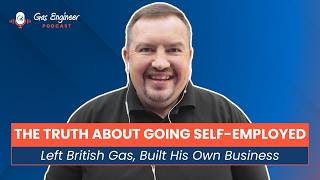
Dean Jones left British Gas after contract changes and started his own plumbing and heating business in North Wales during COVID. He credits social media branding and word-of-mouth for early clients, and says the hardest part was learning to say no and managing time once he hired staff, including his wife Kay.
Chapters
I was actually looking into going into a completely different industry altogether. I was that fed up with the job and stuff like that. Everyone thinks that self-employed plumbing and heating engineers make an absolute fortune when in fact I think times now are tighter than they've ever been. I think most people could probably make more money staying employed. Some advice that other business owner I talked to you about said to me from the beginning, which doesn't work for everyone, but it's worked well for me and him.
He said, this is the Gas Engineer Podcast. I'm your host, Tulloch Priest, and today I'm joined by Dean Jones, better known online as Jones the Gas. Dean spent years at British Gas before leaving and starting his own family-run business in Wales.
Welcome to the show, Dean. Hello, how you doing?
Very good, thank you. It's good to have you on the show. Thank you. A lot of engineers think about going solo but never do. Dean did and had to figure out everything from finding customers to handling admin who have no safety net. Today we're getting into what that jump actually looks like, and as always, if you enjoy these conversations, then please subscribe and follow us on whatever podcast platform you tuned into. And in a sentence or two, why should people care about this conversation, Dean?
So sometimes people feel like they could be perhaps trapped in a job. They might be doing things that you don't particularly agree with or want to do anymore. And, you know, it can be quite difficult to make the jump over to self-employment.
What kind of— or tell us about leaving British Gas. What made you think, um, I need to do this on your own?
So there was a couple of reasons initially. The main reason was in the end I didn't really have much choice. So there was a sort of fire and hire, fire and rehire tactics used to, um, I think get rid of some of the workforce and, and, uh, different things like that. But there was a few adjustments made a few years before that to pensions. So when I started 20-odd years ago on a final salary pension It looked like you could work for a company until you came to retirement age and then you'd have a great pension. But they made some quite big changes to that that made me realise if I stayed where I was, then my pension and retirement wouldn't be what I expected it to be. So I'd sort of already thought of plans of moving before the contractual changes. But to cut a long story short, we were given a new contract which I didn't like or agree with. And you had to sign it, and if you didn't sign it, you went. So I did, and that's when I started up Jones the Gas.
Okay, and did you kind of plan prior to that, or did this kind of come out of the blue and you were kind of like, oh, I need to do something now?
Yeah, it was, to be honest, it was almost like a perfect storm because COVID was happening. I was furloughed at the time. I was actually looking into going into a completely different industry altogether, and I was that fed up with the job and stuff like that. Which is strange because I absolutely love heating and gas engineering. You know, I eat, sleep, and breathe it. It's, uh, it's something I've done for a long time and I love doing it. So to think that I was going to leave and do something else, you know, seems a bit alien to me now. But it was just at a point that I had a lot of time on my hands, so I could do a lot of research. I could look into what van I was going to get, what tools I needed to get, and then I was looking into software. Obviously found Gas Engineer Software, which has been a massive help from day one, to be honest. And that's probably a whole side of stuff I didn't have to get involved with, with paperwork and other things, because it was all taken care of. So that took the pressure off me an awful lot. And then I had to redo some of my qualifications, get all the insurances. So luckily at the time I had a lot of time on my hands to do a lot of research, find out what I could get the best from everything I needed. So I wanted the best van, the best software, even uniform, getting the van stickered up, things like that. So yeah, it was, it was, it was great at the time. As I say, almost a perfect storm.
Yeah, it's kind of tricky because you kind of, like, when you set up a business, you kind of underestimate how much time this stuff takes. Like something like setting up a business bank account, it just takes time. I don't know why, but it's—
Yeah, it can take an awful lot of time. And the other thing I soon realized is when you're used to dealing with sort of personal banking and other personal contracts, even phones, the customer service I find on the personal side is much better than business. I think that a lot of the business side to a lot of companies, especially banking— so I soon found out that if I go to my high street bank and walk into the bank that I've set my business bank account up with, they're not interested in talking to you. There's absolute separate— it's almost like a separate bank. And I found the same with sort of mobile phone providers and stuff like that. You can go to the shop where you think you're gonna get the help and support, although I have recently changed providers to one of them, and I went in and they've been fantastic. But yeah, I've just sort of found the difference between personal stuff and business accounts to be quite different, to be fair.
Hi, Producer Alex here, wondering if you knew that you aren't subscribed to the channel. More specifically, 93% of you are not subscribed, and we really appreciate you tuning in right now, but you're missing out on even more interesting content. You're already this far into the episode, so why not subscribe to the Gas Engineers Software YouTube channel? Because showing your support genuinely makes a difference. It's free, takes a second to click, and helps us continue to make the content that you want to listen to. Speaking of, let's get back to it.
Could you kind of take us back to those first kind of months? Like, where did you find your first jobs from? How did you— were they friends and family, or, you know, how did you build up that momentum?
Yeah, so it seems to be really busy right off the bat, to be honest. But like you said, like I said before, I had a lot of time to prepare, so I'd sort of set up all the social media pages ready. There were certain things I had, I had the software ready to go, so as soon Soon as my last official day at British Gas was over, I was straight onto the socials telling them sort of what had happened. I've set up my own business and anyone like any sort of gas work doing this, that, and the other. And it literally exploded from day one. I was really lucky, to be fair, because it was a massive worry. There was a few people who I trusted with information before I left, and they got back to me, and a couple of them wanted boilers doing and things like that. So I just had to I literally— and the, um, the process was leaving British Gas through the contractual stuff. It was delayed and I couldn't do any work for myself until I'd finished employment with British Gas. And there was one point where I literally had my van, all my tools, everything ready to go. I was so excited and I had to wait until this final day that got kept getting pushed forward. Uh, and then from that it just snowballed, to be fair.
And do you think that it's because of the area that you're in, there was more demand, or Do you think it's just like the time with COVID or what was the kind of the reason behind that?
You know what, it was a whole lot of different things, I think. The name Jones the Gas, which is one I was sort of called by some of the old boys in the village anyway. People seem to like the name. It's easy to remember. The branding on the vans really went down really well. You know, you can easily see it and remember it. And I think people on the social media really like the story that I'd left British Gas, left there with nothing, literally no redundancy or anything. I didn't sign the contract, wasn't re-engaged, and I was setting up on my own. I think a lot of people wanted to support that. I think, you know what, this lad's trying to make a go of it, let's give him a chance and see what he's like. And then I think as long as if you do what you say you're going to do, you turn up when you say you're going to turn up, and you do some quality work, I think you'll never be short of work, to be fair.
Yeah. And then that social media has been quite a big part of your journey, really.
Yeah, yeah, the social media works really well. There's a few different lines that I went down to look into how to get work and things like that, and I soon realized after speaking to certain people that there's quite a few out there where you can pay to be part of, and then you pay for leads and stuff like that. And I was warned off doing that. A friend, another friend of mine who's got a very successful business, had said, don't go down them routes, you know, you end up paying for leads and stuff that you might not get, and contract servicing where you get paid peanuts. He said, I don't think that's going to suit your, your business. So I thought social media is great free way to market your company. It does take a bit of time and effort. I probably spend more time doing it than I should sometimes, but, um, it is a free way to market your business, and it's obviously straight from the heart. You know, you're doing it, you're not getting things twisted or anything changed by anyone else's views. You can put out there what you do. With that, we've started the social media side of things as well. That's a steep learning curve as well. You've got to really behave yourself. You know, you want to be as positive as you can. You've got to be careful what you say, especially about other companies and businesses that you might not agree with, and just be nice and diplomatic and try and treat people how you'd like to be treated yourself. But yeah, social media has been a fantastic part, and I've met some fantastic people through that as well. You know, you go to these different trade shows and stuff and you meet people and they have a chat with you, and you know, they— sometimes you don't realize that the odd video that you're putting out really helps other people. And then that turned into something else where I thought, yeah, you know what, this is really good. You know, if you're getting a bit of fulfillment out of your life teaching other people and helping other people, sometimes running a business isn't just about making money. You know, if you can help other people get into the industry and help them out, it makes you feel really good. You know, it's not all about the money. Sometimes you've got to look at the bigger picture and the industry as a whole.
Definitely. Well, your social media has a lot of engagement on there, you know, it's really good.
Yeah, it's, um, I really like that. There's an awful lot of plumbing and heating engineers follow me on there, which is kind of humbling because it's nice to that there's lots of other people in the industry that, you know, like your content and they, um, they give you some help and support. And it's nice when you see, uh, this morning I was going through some stuff in my van from a job yesterday and there's a, uh, a localish heating engineer pulled up to do a job down the road and he recognized me and come over and had a chat. And you know what, it's just really nice sometimes.
Yeah, because you've spent quite a bit of time by yourself on some of the jobs, so it's, uh Yeah, it's definitely good. What's something that's— what was kind of like the hardest part of those earliest days that you weren't expecting?
So by far the hardest part of my time there was job management and time management. Nearly every job I was going to, people wanted extra things doing. While you're here, can you do this? Things took longer than I was expecting them to take. And yeah, there was a— then for that first year was mental. There was a few nights I was working till midnight and trying to squeeze stuff in. And you're just trying to keep everyone happy, turn up to everyone you said you were going to turn up to, and you were too afraid to say no, which is something that you soon learn to do.
So then you just kind of— what would kind of happen there where you weren't setting like a realistic expectation for people, or you're just saying yes to everything and then just somehow trying to make it happen?
Yeah, I think from coming from a very well-organized company that had everything set out and planned for you, And if you got stuck, you could always hand work back. I know there was other engineers that help you out and you could ring them up. But when you've gone from that to going on your own, when you hit a problem, there isn't anyone else coming to help you. You know, you can't send work back, you don't want to let people down, so you've just got to do what you need to do to get the work done. But you, as I say, if there's any advice I could give to anyone who's starting up, it's just allow for a lot more time than you think you need to get jobs done. You know, sometimes it's better planning a bit lighter, but you're obviously worried about money coming in and paying the bills. And getting that balance right is probably the hardest part of setting up your business.
Is it a skill that just comes sort of over time as you kind of learn and experience a little bit more?
Yeah, it is. So after you've been doing it for a little while, you start to think you've got to get this done, doing that. And then when it came to taking employees on, obviously employees have got to go home. You can't have them working with you late every day. It's not fair on them. So you learn to plan a little bit better then because you want them to have a good work-life balance and not be doing the ridiculous hours that I was doing early on.
I think as a business owner, sometimes you just kind of do whatever it takes to make it happen.
Yeah, that's it. If you're passionate about things like that and looking after customers, you've really got to do what you've got to do.
You kind of mentioned about other employees. You, I understand you work with your family quite a bit. So there are pros and cons to this?
Yeah, so my, my wife Kay, she's fantastic to be honest. So she takes all the phone calls, books all the jobs in, sources all the materials, gets rid of the waste. Uh, in the past when I was— because I worked on my own for a few months, uh, she was out helping me on jobs as well, hanging radiators, doing all sorts. So she really is fantastic, and she's extremely busy these days in the office answering the phone. Organizing stuff, dealing with the merchants, which basically maximizes all the time that we have on the job. So we can just crack on with getting the work done, and she's fantastic in keeping the support up and making sure everything runs smoothly. It's a massive help.
It's a challenge if you're trying to do the work plus answer a call book and stuff, reply to messages. It's just, it's not practical.
No, that's, that's pretty much where it came from. So there was one particular day when I'd had 30 or odd phone calls come in I was extremely busy. I'd gone to a friend's house to second fix a radiator in a brand new kitchen that I'd first fixed the pipework. And just as the phone kept ringing and I was thinking, I've got to ring this back, I've got to do this quote, I drilled through the pipe that I'd put in the wall to hang the radiator. And I was like, oh my, this is in a brand new kitchen. And obviously I overcome that and sorted that out. And then my wife had come home later that day and she'd had a particularly bad day in work. And I said, you know what, it might just be work out better if, you know, we work together and you can help me do this, that, and the other. And, uh, we went from then and it's been great, to be fair.
Yeah, because it can be quite challenging. I also work with my wife and, um, you know, there is a learning curve.
Definitely. Yeah, work— working with your, your wife or your partners can be really tricky. We normally get on really well, but you speak to each other a lot differently than you would somebody in work. So, you know, sometimes you've got— and the other thing is when you're away on holiday or not in work, you know, emails come in, phone calls come in. It's hard not to end up just living your whole life in work, you know, talking about things and doing things because you're never really off work. You know, there's always something. I don't mind that, to be fair. If I'm away or something like that and someone comes in and I can deal with it, I'd rather do it then than let everything build up and come back from a holiday and have a huge mountain of stuff to get through.
Yeah, well, I'm, I'm, I really enjoy work and, um, but yeah, there's probably the biggest challenge that we face is constantly on and then just kind of trying to find time for, you know, ourselves as a couple as opposed to just talking about work.
Yeah, sometimes you've just got a, just as simple as going out for a walk or something like that where perhaps you're not really looking at phones and even though you've got other distractions, I think that really helps.
So British Gas kind of taught you about the technical side. Yeah. But what about, you know, the technical side is obviously very helpful, but then you also have like the marketing, customer relations, all of that side. How did you kind of work that out? Or was it as you kind of went along?
Yeah, it was kind of as it went along. I'm sort of one of these people that does a lot of research and I get obsessed with certain tasks and I'll just research it to the nth degree and try and find the best way of doing things. But yeah, it was, it was really difficult, you know. You've got to— because you don't know whether you're doing things right. It's just, it turns out that quite a few times things happened accidentally and it just worked really well, like signwriting the vans and a few other things. But there's quite a few things it doesn't teach you. It doesn't teach you marketing, doesn't teach you how to use social media and how to use it correctly, managing people. That's something I've never really done before and it's something I have to do now and that can be quite challenging. But yeah, I find speaking to other people who have done and been where you are and they can offer you help and guidance, I think really helps.
What would you say about somebody thinking about going solo now? Because like your situation, you had that furlough, you had a little bit of time. How would you actually do it now if you had to do it again?
Well, to be honest, the industry's changed massively even in the last 5 years I've been sort of running my business. I honestly think that the majority of people these days, if they could find a good company that looks after them and pays them well, then they're probably better off staying employed, which I know sounds mad. But if you were to work the hours that I work employed, you'd earn a massive amount of money. And the other thing is, when you finish work at the end of the day, you can turn your phone off. You can go on holiday, you can forget about work and stuff like that. But it depends what kind of person you are. You know, if you love what you do and you love running a business, then that's what you'll do. So if you're gonna do it, I think the biggest advice I can give anyone is one thing I didn't do at the beginning was use a work mobile phone. That's something I always say, I should have had a different number. Uh, we've got a proper landline and everything now, luckily, but some of the customers still ring me quite regularly on my own mobile wherever I am. And just planning— get yourself tools and software that can help you out. You know, there's always sometimes like, obviously we're talking about Gas Engineer Software. I've used it for 5 years. It has been absolutely fantastic. The service reminders, you know, bringing work back in, uh, all the legal records, photographs, customer details. You've got the history. I honestly don't know what you do without it. You know, how would you document all that stuff and keep on top of things if you didn't have the software doing that for you? I think having that in place. Obviously, insurances, things like that, they're mega important. You need to make sure that you're fully insured and for everything. The other thing I've found out is insurances need looking into. Like good tradespeople, usually there's a reason why there's massive price differences. I've had friends that have had their tools stolen out of the van. They've gone, 'Oh, it's all right, I've got tool cover.' They phoned up the company that they've got cover with and they've said, 'Well, we need proof of purchase for everything that you've had stolen, and we're only going to give you secondhand market value for the tools,' which is just Bananas. You know, how's that going to help anything? Because if they're just giving you the value for the secondhand tools and you can only afford to go buy secondhand tools, ultimately you're going to end up buying somebody else's stolen tools and it just funds the whole industry. And yeah, that's it really. You know, that's what I can think of off the top of my head at the moment. So I'd get a phone, good insurance, and make sure your time management's good.
Are you fed up with drowning in a pile of paperwork that comes with running your heating and plumbing business? Gas Engineer Software is an easy-to-use, all-in-one job management system made especially for UK heating and plumbing companies. From handling customer details to building quotes, issuing certificates, and sending invoices, Gas Engineer Software will help you save time, eliminate paperwork, and make running your business easy. Start a free trial by clicking in the link in the bio. And, um, just going back to that question about whether it's the right choice or not. Yeah. Like, like, like to running a business, like from my point of view, obviously run Gas Engineer Software. I think for me personally, if you really enjoy learning and pushing, you know, it's a, it's a challenge. It's a challenge and you have to really improve. You know, you don't have a safety net. You get feedback all the time, which you need to deal with.
Yeah.
Right. So I, I think it depends. It's a good thing. It's not always you know, the way forward for everyone to run a business because it can be quite brutal at times.
Yeah, really brutal. And there's this sort of common misconception that if you work for yourself, you've got all this freedom and time to do what you like, when I find it's the opposite. You know, you haven't got that freedom and time. You've got to really love what you're doing, which luckily I do. So, you know, when you are working these long hours and doing these sort of different things and sorting out feedback and trying to make things better, it's just a I don't know, a bit of a challenge to me. I quite like it.
I personally really enjoy it, but I'm also conscious that, you know, back to your point about if you— it depends what you want.
Yeah, it doesn't suit everyone.
Okay, any final kind of suggestions or advice to anyone else who's thinking about going out solo?
Yeah, I think if you think you're going to be doing it for the money, then that might be not the best choice. You know, everyone thinks that self-employed plumbing and heating engineers make an absolute fortune when in fact I think times now are tighter than they've ever been. I think most people could probably make more money staying employed, especially if they've got a good company who's paying them well. But if you're that type of person who wants to grow and push your business and have a nice challenging time doing something you like, then I'd go for it. You know, don't let anything hold you back. Do the, uh, get on the social medias, put yourself out there, Some advice that other business owner I talked to you about said to me from the beginning, which doesn't work for everyone, but it's worked well for me and him. He said, don't pay for any of these companies that give you job leads or contracting stuff like that. He said, I wouldn't work for letting agents because they want to pay the smallest they can get away with paying you and you've got to pick keys up and deal with tenants, stuff like that. And he said, choose your landlords very wisely. So that became very true in the end. You get certain landlords who really care about their tenants and their properties and they'll take you to their— there's a couple of them every year, they meet us at the jobs because they want to speak to the tenants and see if they need anything doing. Really sort of conscientious people. Whereas you get certain landlords, same again, they just want it doing the cheapest, easiest way possible, which doesn't really suit our business model. So I think you've got to really have a good think and decide what you want to do, whether you want to be the cheapest out there and be mad busy and a busy fool, as they say, or keep the quality high and try and push the standards and do the right thing.
Definitely wise words, choosing you know, what kind of service, level of service, and also perhaps looking in what your local market is. Yeah. The demographics, size, how far you can actually travel sensibly in a day. Because you are essentially, if you are a sole trader, you're essentially geographically locked. You can only travel so far.
Yeah, definitely. We try and keep our travel under half an hour if we can. You know, it can be pretty rural up in North Wales, but we're not too far from the Cheshire border. Some quite big towns around us, so we're quite lucky. We can usually stay really busy. Some days we can stay in the village where I've grown up. You know, you can have 5 or 6 jobs there and stay in the same, you know, don't have to travel at all really.
Yeah, that would definitely make a huge difference to the bottom line. Yeah, just getting stuff done. Well, thank you very much for your time. That's Dean from Joins the Gas. I really appreciate you coming on to the show. And thank you for all your help and advice. Thank you.
Thank you very much for having me on. Really enjoyed it. Keep up the great work.
More from Tulloch

Your Profit Is More Than Your Salary: Pricing A Trades Business w/ Doug D'Aubrey

Is taking over another gas business a realistic alternative to hiring from scratch?





He Took Over Another Gas Business After 3 Years As A Sole Trader w/ Dan Giles


