Why Tool Thieves Keep Getting Away w/ Amanda Martin MP
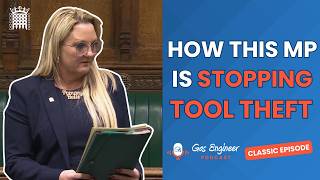
Amanda Martin, MP for Portsmouth North, discusses why tool theft keeps devastating UK tradespeople. Up to 85% have been hit, with current sentencing treating it as minor crime. Her proposed bill would impose up to a year in prison for repeat offenders and count the full cost: repairs, lost income, emotional damage.
Chapters
1 in 10 tradespeople has their tools stolen, but not just once, 3 or 4 times. And you see some of the images that we've been sent with doors ripped off, things drilled, you know, locks drilled out, whole vans emptied. I think there's a massive, there's a massive picture of crime in this country. We've had a real loss of police officers on the beat. And if I'm honest, before I started this and started to look into the detail, I wasn't aware of the huge impact and the real mental health toll on people.
This is the Fieldworker Podcast. I'm your host, Talaq Priest, and today we're joined by Amanda Martin. Amanda is the MP for Portsmouth North and is one of the MPs putting forward the Theft of Tools of Trade Sentencing Bill. Welcome to the show.
Morning, Talaq. Thank you for having me.
Yeah, well, thank you for coming on the show. Uh, today's episode is all about tool theft. Over 85% of tradespeople are affected by tool thefts, and are dissatisfied with a lack of justice. How could this bill help?
Well, I think what we need to sort of address is the fact that you've just said there's 85%, and although that's a number, behind every one of those numbers is an individual, a livelihood, and somebody's job, and potentially, you know, their lifestyle and their family. I think in a number of ways the bill will help. There is an Equipment and Theft Prevention Act which is helping to stop the sale of those goods. But actually what we want to do is really push for tougher sentencing so that when people commit this crime, those that have the crime committed them feel that justice has been done. And also it will act as a deterrent, uh, for people committing the crime.
So when we've got the— you've got the act already at the moment, why isn't— or what's the kind of like the difference between the current act and, and this new bill that's coming through?
So the current act looks at marking up tools so that they can be identified from theft. So it's kind of the proactive element. So if, you know, you go to steal some tools and you see that they've been marked up or they've got a chip, whichever way that the tradesperson chooses to use, then that is a preventative measure. But that has been in place for a while. We've had lots of companies working towards marking up tools, but it's not stopping people from stealing them because actually they can steal them and there's a market out there for buying stolen tools. So what we want to do is actually make sure that the crime of tool theft is taken seriously.
Okay, so the challenge at the moment is that the actual, like, if you get caught red-handed taking tools out of a van, what is the actual penalties?
Well, at the moment, because, um, and it's quite complicated, but if you're caught and the police prosecute you and it goes to court, every single piece of legislation, every crime has what's called sentencing guidelines, and that is designed where there's something called a culpability level, so that's a letter A, B, or C, and then a financial loss level, and that's a 1, 2, and a 3. And it's quite detailed, but briefly to explain, the culpability level A, if you are involved in serious crime or you are coercing someone into crime, it would come under that level. If you are a coerced victim of crime, you would come under C, and everyone else is lumped together in B. And then when we look at the money, if it's over £100,000, it's category 1. If it's between £100,000 and £10,000, it's, it's Category 2, and if it's below £10,000, it's Category 3. So essentially what we're asking for is for all of the financial losses to be taken into account, so that the financial level of losses can be losses with an 'es' on the end, and so that the culpability level can be raised, the harm level, because actually the rates of depression and suicide in this profession are growing. And so what we want judges to consider is the, the harm levels of this crime, and therefore what will then happen is rather than have a sentencing of a recommended 36 weeks community service, so you're working out within the community, or you're just told don't do it again and come back, you know, if you repeat offender, it would actually carry a recommendation of 1 year in prison.
Okay, so that's quite a serious change from, you know, community service. How many hours community service a week?
Well, it— that would all depend. It would depend on previous crimes, it will depend on those things, but that's a recommendation. What we would want to do, because we're getting repeat offenders— 1 in 10 tradespeople has their tool stolen, but not just once, 3 or 4 times. And so 3 or 4 times tools are stolen, and it's not just the value of the tools, it's the fact that they have to repair their damage, and you see some of the images that we've been sent with doors ripped off, things drilled, you know, locks drilled out, whole vans emptied. They have to repair the van, they have to cancel the work, and then they have to find a way of replacing those tools. And not all insurance companies pay back the tools in the amount. They're then faced with higher premiums, potentially on their house insurance as well as their business insurance, and it's just really unjust.
Hi, Producer Alex here, wondering if you knew that you aren't subscribed to the channel. More specifically, 93% of you are not subscribed, and we really appreciate you tuning in right now, but you're missing out on even more interesting content. You're already this far into the episode, so why not subscribe to the Gas Engineers Software YouTube channel? Because showing your support genuinely makes a difference. It's free, takes a second to click, and helps us continue to make the content that you want to listen to. Speaking of, let's get back to it.
Okay, so, so at the moment, the, the courts are just looking at the value of the tools. They're not looking at the business losses, um, you know, the actual time it takes to, you know, either to claim, because there'll be a bit of a time lag, um, if you had insurance, um, and then you're buying the tools, etc.
And also, yeah, they're not looking at that, but they're also not looking at the harm level that it's causing. So the amount of, of tradies that you know, affected, mentally affected by this, the rise in suicide rates, the rise in depression, the rise in everything that comes with that in affecting your family and your life, your working life and your outside life. And none of those things are taken into consideration. And I know that when I've been talking with tradespeople, I think the more that I looked into it, really the more shocked I was, you know, I was. At the scale and at these, you know, at these crimes, but also at the impact on the people that the crimes are committed to.
Okay, was it kind of one or two stories that kind of stood out to you?
Yeah, there was a young man who'd got married, come back from his honeymoon, was due to go back to work, and he came down and his entire van, you know, was stolen. Over £6,000, over £10,000 worth of tools. The person was never prosecuted. It's taken him, you know, almost 6 years to replace those tools and enable to do that and to get back on work. It cost him, but the thing with him is he's become really angry and it's really affected his mental health and it's made a real impact in his relationship. We had another man come down who literally caught the person stealing the tools. And they just nonchalantly looked at him as if to say, "Well, what are you going to do about it?" And there, you know, there really was, you know, nothing was done. You know, in a study of 451 theft cases, fewer than 10 went to court, and only 2 of those ended in jail time. And that was because of the scale of the tools that were stolen.
For the people that are stealing the tools, are these like one-off, or are these, you know, it's mainly, it's like repeat?
It's a mixture, and I think one of the things that is also a concern is how the thefts are registered. So firstly, just to cover the people stealing the tools, so it's individuals, um, it could be individuals that repeatedly do it for whatever reason, could be local people, but it's also increasingly becoming part of an organized crime unit. So in my city of Portsmouth, um, we had a spate of organized crimes where vans would drive into the city with one set of number plates on, draw the entire back doors of the van out, load all of the tools in, do that around the city, and then leave the city with different number plates. So it's, it's individual stealing, people stealing to order, people stealing because of addiction, but also it's becoming increasingly organised crime. And that's worrying around that because of the level of it and the size of it. But the other issue that's worrying is depending on which police force and where you are in the country, it might be registered as a different crime. So one of the other conversations we're beginning to have, it's not part of the bill, but just as a practical measure, is how do, how do constabularies register this as a crime? Because that also then hides the level of it, because if it's being registered in different areas as different crimes, we can't see the full extent of the crime.
And then just kind of go backtrack, the two examples you gave, they caught the people doing it and in both cases nothing happened.
Yeah, nothing.
I'm just trying to get my head around that a little bit more. So the actual, like you mentioned earlier, about the community service, but then you actually catch them, but then they don't actually get it, or?
Yeah, and that's the recommendation. So obviously the recommendation is of community service, and these are specific cases, and, you know, we'd need to look in at the detail of those specific specific cases, but it's a recommendation of community service. And it may well be someone is already serving that, it may well be there's a further crime, so before they do that, they're not going to be served that, or it may well be they've not been caught before, and therefore, you know, a rap on the knuckles and off you go.
So I know we're talking about like one or two particular cases, but say the first example that you gave, if this bill had been in place, you know, what would have been different between those?
Well, I think we would have been able to do a number of things. We would have been able to improve the, the size of the crime, the amount of times this crime is committed, but also we would be able to include the, the larger losses. So not just the tools stolen, the damage that was done to the van, you know, the work— these work vans are literally off of the road for months getting fixed, getting, um being back to be able to work, people having to buy tools, borrow tools, but also the mental impact on this crime. Because actually it's not just done once to people, it's 2 or 3 times. And tradespeople have told me they are constantly looking over their shoulders. They go out to their van on a job to do a job, they have to unlock the van, check around, lock it back up, go back in, come back out, emptying, you know, sites, at the end of the night and making sure that their vans, whether they're on a yard or whether they're outside their home, are locked and alarmed. And that's still not enough.
So this is quite a, quite a difficult kind of thing. You were saying that, you know, if they report it, nothing's going to happen and the insurance is going to go up. That's not much incentive there, is there?
No, there isn't. And, you know, I think that we can't underestimate the impact that this has on people. I mean, the more that I looked into it, you know, 80% of victims say that they've suffered mentally and emotionally, and over a third describing, you know, this is a real major impact on their lives. And when I looked further into it, it's totally heartbreaking that the construction industry has now one of the highest suicide rates in the UK compared to other occupations.
Yeah, well, I, you know, I could imagine like if you've spent many years building up your tools, you know, you're kitting out your van just how you want to need it so you're efficient. Yeah, it's just, yeah, it'd be heartbreaking.
Yeah, and there are some, there are some people, you know, that they might have had their dad or their granddad was, was in the trade and they've got that one specific tool or, you know, there are some things you just can't replace. It might have been used since, since you're an apprentice and it's just It's the impact on that, and some things aren't replaceable, and even those things that are replaceable, everything is so expensive. And the guy that had, you know, the £6,000 worth of tools stolen, not only did he have to replace his tools, he had to extend his garage and pay out for that so he could put his van in because he just couldn't sleep at night. He didn't feel that his van was safe outside on the street outside his house, and that's awful.
Yeah, well, it'd be extremely frustrating if you actually catch them, you know, in the act. You know, there's not much more that you could actually do. So this bill, what is the actual scope of it? Like, which bit does it— what does it actually do and what doesn't it do?
So I guess in— we've tried to keep it really simple with one particular aim, which is to toughen up the sentencing for tool theft by recognizing the full impact on tradespeople. And it will do this by reclassifying the harm category to account for the serious knock-on effects of tool theft, all the things that we've talked about, and it will also factor in the total financial losses, including the repair costs, the loss of income, and when sentencing offenders. And it doesn't require a legal change, it requires a change in the sentencing.
Okay, so that would— when you take the other losses into account, that would bump it up into the next category. So the general aim is to get it over that £10,000 limit, is that correct?
And also the harm category, to raise the level of harm that it causes. It's not just, you know, someone nicking your bike or someone, you know, walking in a shop and stealing, you know, £100 worth of stuff. It's actually somebody stealing your livelihood.
Yeah. When this actually goes to the judges, there's a, you said there's kind of like a recommendation. Is there sort of like guidance around that which kind of talks about the impact.
It's called sentencing guidelines. So every judge has for each crime— it's how we work in the British system— each crime from that. And from time to time they're reviewed. And, you know, one of the things, you know, I'm in the Labour government, I'm a Labour MP, and one of the things and one of the reasons for bringing this is we've already shown that we are taking the construction industry and tradespeople seriously. We've made changes to the apprenticeship hourly rate. We've begun to look at changing apprenticeships so that we can get more people into the profession, so making modules, so shortening those. And this is one of the things that would also, once we've got people in the trade, would help them feel that is respected and that they're doing a great job. Everywhere we look in this society, everywhere we are, tradespeople have put the pavements down, they've built the buildings, they put the heating systems in, they turn the lights on. In everywhere we go. And without them— and, you know, as a government, we want to build 1.5 million new homes. We're not going to do that without tradespeople. So as well as making the profession more attractive and, and more open for people, we also need to make sure we're protecting those that are in it.
Okay. And then once, once the actual bill is passed, does the police have enough resources to actually enforce it?
So, I mean, That's one of the things that is under review. We have a government that are under review. We've just put more police out on the streets. I think police do make the arrests, so I think it's not around the arrests. Police do make the arrests. They do seize some of the equipment. Some of it isn't seized, but actually it's when it gets to court. I think police are just as frustrated, particularly if you have repeat offenders, and particularly when they come into the public who it really does affect their lives.
Okay, so, so the major issue at the moment is the actual— is the actual sentencing side of it. It's not actually catching them.
I think there's a massive— there's a massive picture of crime in this country. We've had a real, um, uh, loss of police officers on the beat. It's something that we as a Labour government are working to, um, to put more police on the streets and having community and neighborhood community policing. And we're working with our constabularies. But my bill, I wanted to concentrate on one particular thing. There are so many things we could do but actually, if you do too many things, you never get anything done. So, what I want to do is to really make this one change so that actually those that are caught, that take up public money going through the process of going to court, people's time, there is justice given to those people that are victims of this crime.
Okay. Are there any kind of challenges for the bill? Like, will it get passed, or is it the kind of—
Yeah, I think there's always challenges in a bill. There aren't any legal changes, so that makes it slightly easier. There doesn't need to be a long, drawn-out process of changing something legally. Um, it isn't a private member's bill, which is— I know some of you might have seen the assisted dying bill, which has come through as a private member's bill. This is called a 10-minute rule bill. So what it is, is I moved it in December. I then have a second reading on the 25th of April. And, um, if that second reading doesn't go ahead, what we've done to back that up is we are running a petition which we've put out across the country. We're encouraging people to sign the petition to back the bill. We're also encouraging tradespeople, families that have been affected by this to go and meet with their own MPs to ask to talk to them in their surgeries and tell them the impact of this so that behind the numbers we get the real stories. And then if we don't get the second reading, I will be able to present it as a petitions bill. And in the meantime, the more public perception that we get around this crime, the more knowledge we get around this crime, we do two things. It pressurises the sentencing guidelines that we're able to look at, and when we're reviewing those, it's a push to try and do that. But it also raises public awareness to stop buying stolen tools.
Okay, and with the actual stop buying the stolen tools, you've got the— we've got the Act in there already. Why, what kind of challenges do you actually see with that Act? Or like, why doesn't it actually stop the stolen tools being stolen?
Well, I think it costs money to mark up the tools. I think some tools people have had for a long time. I think even if they are stolen, repatriating those tools to a tradesperson is really quite difficult. Modern technology is growing, we're getting better with that, but that's going to build up over time. And in the meantime, tools are still being stolen. So I think that both can work together. I absolutely believe both can work together. But actually, if we're marking up the tools, we're managing to repatriate those, but at the same time, people committing this crime are given the sentence that they deserve, that gives justice to these victims.
Okay, yeah, so you're just kind of working at both sides. But, um, so like, currently at the moment, it's a little bit one-sided, you know, the sentencing is quite light, but then the actual, you know, there's, there's things at the other end. Uh, we've got one question from Adrian, uh, from AMC Heating. His question is, how will the actual bill stop or even reduce, um, tool theft?
Well, I think, um, the Tools of Theft Trade Sentencing Bill, which is what it is, my aim is it sends a clear message to tool thieves that it's just not worth it. It's not worth committing this crime. It will carry a prison sentence. And I think once we begin to put in prison sentence, that disrupts thieves' lives. So that disrupts their lives. Also, it will, like we've talked about, it will add to the— the aim is to raise the harm level, raise the financial losses, so that it is seen as a more serious crime than it is now, and that then will in turn carry with it a tougher sentencing from that. So I guess, and alongside that, it aims to shift the attitudes to tool theft crime, to us as a country taking it seriously, but also behind every one of those numbers, identifying that there's an individual.
Yeah, for that changing of attitude, for the, you know, that's quite a big ask and it would take quite a bit of time. But what would you kind of view like the current sort of attitude towards tool theft?
I think that people don't realize the impact. I think they think, oh, it's only, it's only a toolbox, it's only a tool. I'll sell it on, they'll be insured, they'll be able to get it. And particularly even people that work for companies, they often have their own tools. But actually it's more those self-employed people. And I just don't think people realize the real impact. And if I'm honest, before I started this and started to look into the detail, I wasn't aware of the huge impact and the real mental health toll on people.
Yeah. And how did you actually get started in this?
So I became an MP back in July, so just been in 7 months. I work— I am in a city that has got a lot of construction workers. My brother is an electrician, my dad was a plumber, my granddad was a painter and decorator, and I have many cousins that are in the building trade. And there's a great non-for-profit called Vanwatch, who's run by a guy called Ray, who is based in my constituency. And when we were looking at 10-minute bills, you know, and how we can begin to change things for people in the constituency, hearing their stories. We then looked into sentencing and got in touch with Ray. It's a campaign he'd begun to look at from Vanwatch, and it just seems something that, you know, charities hadn't managed to change, groups hadn't managed to change, and it takes— hopefully it will take, you know, with an MP and other MPs being involved and raising this will be able to get the change in place.
Okay, yeah, now it sounds, um, you know, it could be that, that missing piece just to actually get it through.
But it's also raising that awareness and, and raising the level of, of crime that is committed, the amount of crime that is committed, the amount of people affected by it and the harm that it covers. And every— I, I don't, you know, that I don't think there'll be one MP in one constituency across this country that doesn't have people affected by this crime.
Are you fed up with drowning in a pile of paperwork that comes with running your heating and plumbing business? Gas Engineer Software is an easy-to-use, all-in-one job management system made especially for UK heating and plumbing companies. From handling customer details to building quotes, issuing certificates, and sending invoices, Gas Engineer Software will help you save time, eliminate paperwork, and make running your business easy. Start a free trial by clicking in the link in the bio. Like, just talking about the challenges for the bill, like, how— I'm trying to get my head around, like, how wouldn't this bill get through?
I think it's, it's just whether— there are many ways that we can do it. If the bill doesn't get an airing because we're raising the awareness, because it's, it's, you know, it's a really common sense— to me, it's a common sense piece of—
but why wouldn't it get it? Why wouldn't it get a hearing? Or what? I like— I don't know that how the government works.
So, well, I guess it's the problem we have is Parliament works in set ways. So you bring a— bringing bills, they don't necessarily become a legislation. They work in different ways. But actually it could be hooked onto another piece of legislation or another bill. And the, the way to do that is just to raise the awareness more and more and more.
Okay, because I, I had the assumption that you would raise a bill and then there would be kind of some kind of voting kind of procedure and then it just goes through.
Private Member's Bill operates in that way, and a Government Bill operates in that way, and an Opposition Bill can operate in that way. Um, and it won't be a Government Bill at this point because we've already laid out all of those things, and particularly there is a lot to do in government. Um, I'm currently sitting on the Children's and Wellbeing Bill and the various legislation and legislative of things that change. It's not asking for a law change, so we have to bring it in a different way, which is through a backbench— so I'm a backbencher— a 10-minute bill. We have a second reading of that. If that reading takes place, then a debate will take place, and that's pretty much on timing. It's just the traditions of Parliament. But actually what we aim to, which is why we're running the petition so we can bring a petitions bill, which is why we're lobbying writing into government, asking the questions, getting information from the constabularies across the country, um, so that we can have as much evidence, as much reasons for this to become part of the new sentencing guidelines.
Okay. And how— is there a kind of expected time frame? Like, how long are you kind of expecting it to, to be passed?
My aim would be in the time that we're in government. So, you know, it's— we're pushing it now. We've got in March, we are hosting on the 26th of March, we are hosting a parliamentary breakfast in Parliament where we are inviting MPs to come along to meet tradespeople, to meet people like Chequer Trade, who I started working out with right at the beginning, to come along and hear from tradespeople in their constituency and outside to also raise that awareness. So we— and they will also sign in Parliament. You can have electronic signature, but you also have to have the old wet signatures as well. So they will be signing the wet signature while we're there to raise the profile, but also so that other MPs can get on board.
Okay, and whereabouts is that going to be held?
That will be in Parliament.
So that's in London, in Westminster?
Okay.
And if a tradesperson wanted to come along to that, how would they do that?
They can contact their own MP, and if they get no joy, then please contact me.
And then you turn up on the day and you just share?
Yeah, what we'll be able to do is they'll obviously have to get a ticket to come into entrance, but yeah, absolutely, we want those and we want people just sharing our petition. Petition will be shared there, but also the conversations around that. And, and, um, you know, if not, we'll get— if we can't get everyone in, then doing small videos on WhatsApp and sending them in. We'll find a way for people to do that because to me it's really important that MPs hear the actual extent of this crime.
Okay, so if, if we— if you get the support of the MPs then you have a higher chance that you'd get the schedule and the time and you can actually get it through.
Yeah, it all becomes that, that perfect circle of people, people's stories, the facts and the figures, working with the police on the extents of the crime, making it, um, the justice follow the extent of the crime that it is.
Do you have a message for those directly affected by tool theft?
Yeah, I do. I mean, as the daughter of a plumber, a granddaughter of a painter and decorator, and the sister of an electrician, I really know firsthand the vital role that tradies play in our economy and in our everyday lives. And you know, you build our homes, you fix our pipes, you keep our communities running. And for me, you deserve to work constantly without having— you deserve to work without, you know, constantly looking over your shoulder. And I think that we need to send a message that tool theft will not be tolerated in this country. And I think it's really time that we took a stand up for tradespeople. People.
Do you mind if I ask you just a personal question?
Yeah.
What did you do before being an MP?
I was a teacher.
Oh, okay. What did you teach?
At primary school for 24 years. Okay, um, so one of the other things that I've been doing, um, alongside this is I had a Westminster Hall debate, which is raising the status of trades, so elevating the status of tradespeople, which is why I've been working on and having conversations around apprenticeships And as a government, we raised the minimum wage. We've also raised the apprenticeship hourly rate. Looking at why they're falling out, looking at why and how we get people into schools so that kids see it as a career and a job, but also that people maybe in their late 20s, because let's be honest, we're working till we're 70 nowadays. People in their late 20s can also look to change career. If you've been on a building site, you've been a grafter, hod carrier, those kinds of things, and actually think, I want to get a trade. How will we be able to help you into that as well? So to me, it's, it's the bigger picture.
Okay, so you're looking at challenging or tackling the challenge of getting more people into the trade and actually supporting them while they're in the trade itself?
Yeah, yeah, because, because, you know, like I say, we can't— we wouldn't be— and every other country in Europe, we, they call them craftspeople. They, they just treat tradespeople so differently in Europe. And in Australia and in America and places like that. Whereas here, quite often, and it's really sad to say as a teacher, but I've heard stories of some teachers saying, if you don't do this, you'll just be a plumber, you'll just be a whatever. And it shouldn't, you'll just be. They are brilliant professions and brilliant trades.
Yeah, essential.
And if I can just ask people, if they visit my Instagram, it's Amanda Martin_MP. There is, um, a QR code and there is a link to the petition. Please sign it. Please contact your own MPs. Please ask them to take this seriously. And please tell your stories. Feel free to also email into me at amanda.martin.mp@parliament.uk with your stories, because the more we have a face on this, the more we have the real life, the more people will realize that this crime really needs justice.
Okay, that sounds very good. So if you want to, if you would like to get involved, please contact Amanda or your own MP, and we will leave some of the details below, and you can get in touch and push this forward. Well, thank you very much for that. I really appreciate you coming on and your time. But yeah, no, it's a really important issue. So, so thank you very much.
No worries.
More from Tulloch

Your Profit Is More Than Your Salary: Pricing A Trades Business w/ Doug D'Aubrey

Is taking over another gas business a realistic alternative to hiring from scratch?





He Took Over Another Gas Business After 3 Years As A Sole Trader w/ Dan Giles


