Why Tradespeople Can't Trust Social Media w/ @tomkatgastraining
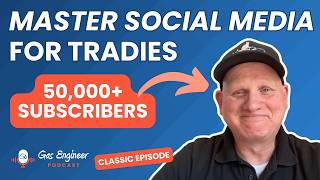
In this Field Rocket Podcast episode, host Tarek Priest interviews Derek Robin (online as Tomcat), a seasoned gas engineer and trainer from Manchester. Derek explains how social media has become a powerful marketing and educational tool for tradespeople, driving significant growth for his training centre and attracting trainees from across the UK. He also warns about the dangers of misinformation on platforms like YouTube and Facebook groups, citing examples of unsafe practices (e.g., wrapping tape around copper pipe instead of using a sleeve) and the backlash he receives for sharing correct procedures. The conversation covers the dual nature of online communities: they can provide valuable peer support and mental‑health benefits for isolated tradespeople, yet they also contain “pinch‑of‑salt” banter and abuse. Derek shares the origins of his YouTube channel, early viral success, the role of quizzes, and the challenges of dealing with negative comments and death threats. He offers practical advice for anyone in the trades wanting to start a channel—use simple equipment (iPad on a tripod), ignore early criticism, persist through the first 200 low‑performing videos, and treat the channel as a hobby rather than a primary income source. The episode concludes with reflections on how a strong online presence builds trust with customers, enhances training, and creates a supportive community for tradespeople.
Chapters
Even really highly skilled, highly trained engineers are wrapping tape around the copper pipe and pushing it through the wall and saying this is better than a sleeve. And these are guys who have got more followers than me on social media, and they're doing videos like that. But you won't find me commenting on Gas Chat. There's a hell of a lot of banter goes on on that channel. It's abuse, but it's, it's supposed to be light-hearted banter. But again, it's take it all with a pinch of salt. So whether you're a plumber, gas engineer, bricklayer, joiner, everybody seems to be using social media. I found it to be a massive tool for—
This is the Field Rocket Podcast. I'm your host, Tarek Priest, and today I'm joined by Derek Robin, better known online as Tomcat. Derek is an experienced gas engineer who also runs a training centre based out of Manchester, offering ACS, boiler breakdowns, and many other courses. His YouTube channel was started during COVID and now has over 50,000 subscribers. Welcome to the show, Derek.
Hello, thanks very much for having me.
Oh, we appreciate you coming on. And today's episode is going to be all about online communities and advice within the trades. In a sentence or two, why should people care about this conversation?
I think social media is playing a massive part in it, in any industry, in any industry really, and especially the trades. So whether you're a plumber, gas engineer, bricklayer, joiner, everybody seems to be using social media. I found it to be a massive tool for promoting the business. We saw a massive uplift in guys coming to the centre for mainly reassessment due to our YouTube channel. People come from London, Wales, Scotland, Northern Ireland to do— just to do training with us, mainly because they've seen me on social media. So hopefully any information you get from this will help you with the social media.
Yeah, just to kind of back up a little bit, your first point was social media is having a big impact on the trades. How does it actually have an impact on the trades?
The internet's amazing, isn't it? The amount of information that's in the internet, you can pretty much Google anything you want and it will come up and give you an answer. So for us in our industry, especially the gas industry, I get a lot of hate for giving information out on social media. For what I do for the gas, especially the gas side of it. Because at the end of the day, it's incredibly dangerous playing around with gas if you don't know what you're doing.
But what kind of— you mentioned quite a bit of heat for giving out advice. What is the concern that people have about giving out advice?
Well, I did have one guy message me and say, stop telling the customers how bad I am. And it's like, because he said, I'm going around to customers and they say, oh, I've seen this on YouTube and you're not doing that right.
He's not able to kind of give some context to the reason why he's doing it this way, or, you know?
No, it's— the thing is, with, again, with social media, you've got to kind of take it with a pinch of salt and not really believe everything you, you watch and you listen to on, on there. Some of the things that, that makes my blood boil basically is when I see stupid things like guys showing people how to put outside taps in. You know, garden taps. And they do things like, don't sleeve the pipe going through the wall, and they've just wrapped tape around it. So I see it loads now where even really highly skilled, highly trained engineers are wrapping tape around the copper pipe and pushing it through the wall and saying, this is better than a sleeve. Whereas the water regulations are quite clear that they have to use a sleeve. So things like, you know, even things like again with the outside taps, double check valves in taps. I see it all the time where they go, I don't need a double check valve inside, and it's a brand new install because it's in the tap, it's built into the tap. And these are guys who have got more followers than me on social media, and they're doing videos like that. And when I see them, I pull them up on it. They don't really appreciate it, but they don't appreciate the feedback. No. I go, what are you doing? It's like, do it properly or don't bother doing it at all. So I guess the general public see the big YouTubers who are doing these things and the guys who are big on social media doing these things and go, oh, that must be the way that you do it. So yeah, there's some great information out there, but there's also a load of rubbish out there as well.
Yeah. So the commenter you mentioned earlier was, I'm guessing he was referring to that his jobs take longer because of the explaining or micromanagement from the customers.
Yeah, I get a lot of that when I do a training video on things like servicing a boiler. The amount of comments I get on that and they go, if I did all those tests, I wouldn't get any work done. But all I'm doing is showing what the manufacturers expect you to do when you do a service. So looking at those comments and the amount of comments I get saying the same thing. It seems to be the norm that there is a standard out there which is a standard of just enough. Don't get me wrong, there are some absolutely fantastic, amazing engineers out there who give customers more than they're charging for, and hugely the quality is immense. But then there's also, like anything, there's also some rubbish out there who just did it for a quick buck and that's it, not to continue with the customers in the future.
Hi, Producer Alex here, wondering if you knew that you aren't subscribed to the channel. More specifically, 93% of you are not subscribed, and we really appreciate you tuning in right now, but you're missing out on even more interesting content. You're already this far into the episode, so why not subscribe to the Field Rocket YouTube channel? Because showing your support genuinely makes a difference. It's free, takes a second to click, and helps us continue to make the content that you want to listen to. Speaking of, let's get back to it.
I see you on GasChat quite a lot, and there's quite a lot of it, you know, on the Facebook group. There's quite a lot of, um, kind of feedback and advice, you know, within that. What are your kind of thoughts about, like, the feedback and advice on the—
Well, you won't find me commenting on GasChat. It's, again, things like social groups, social groups, um, for just a trade, like Gas Chat is supposed to be just for gas engineers. There's a hell of a lot of banter goes on on that channel, a hell of a lot. There's a lot of mickey-taking, there's a lot of— it's abuse, but it's supposed to be light-hearted banter. So, and that's engineers against engineers as well. So, but there is also, if you'll read between the lines of the other comments what are on there, especially for new guys coming into the industry, there is a lot that they can pick from it. But again, it's, it's take it all with a pinch of salt, really. There's nothing— you should really be looking at training manuals, um, listening to what trainers say in the training centers, and, and using— taking that as what should be done, not listening to a guy on social media telling you completely the wrong thing.
Yeah, well, the other thing is that, you know, engineers spend a lot of time alone they're in their van, they're working alone, and you, you know, you need a community around you, you know, just for your mental health. So, you know, I kind of see that, you know, this is where these kind of groups come and play a part.
Oh yeah, completely agree. I hate working on my own, absolutely detest it. I don't like my own company. So that's why the— what I've done when I've been self-employed, I've always had business partners until I came into training. And then because I had Kate, my daughter, she's been with me from the start. I wouldn't be where I am today without Kate being doing all the admin, all the— she does everything. The only thing she doesn't do is the social media. I do all that myself. I do all the filming, I do all the editing, I do all the prep work, I do everything myself. She just leads me to that, but she runs the day-to-day running of the, of the center. She does all that. And now we've got Grace, my granddaughter, involved as well to help it even more. Without those type of people behind you, then like you say, it's a very, very lonely, lonely job, especially when you go into customers' houses and they go, right, okay, see, I'm off now, and they leave you. Some guys prefer that. I didn't. Hated it. Absolutely hated it. Used to find myself talking to dogs and budgies and stuff just to keep me sane.
You started your YouTube during COVID and now you've got over 50,000 followers. How did that grow so quickly? What kind of content and how did you actually do that?
I actually started YouTube 13 years ago, believe it or not. It was just, so Kate came into the office one day and she said, Dad, Dad, I've seen this thing, you've got to be doing it, you've got to be doing it, you'd be perfect for it. I'm like, what are you talking about? She said, this thing called YouTube. And I went, what is it? And she went, it's your own TV channel. It'd be brilliant. It'll be brilliant. You'll be really good at it. And right at the very beginning, I was like, really? And she helped right at the very beginning with it. Kate is very tech savvy where I'm not. So it was all, it was, it was at the beginning a massive learning curve. And I did a few, I think it was 4 videos, very short videos. And I just thought, this is just going to go nowhere. This is nonsense. And then Vailant saw one of the videos and they asked, they asked if we would do, if I would do a video installing a stat for them. So they sent us a free stat and I ended up installing it in Kate's house, and Kate did the camera work for it, and then I edited it. We put it up on YouTube and then just kind of forgot all about it, didn't really bother. And then I think it was about maybe a month or 6 weeks later, Kate said, I've just got an email from YouTube, you've got a you've got a cheque on the way. I'm like, what? She said, you're getting some money. And it was £105. So my first payment was £105. And I think the video then had 150,000 views on it in about 7 weeks. It's only got about 250,000 now. But anyway, that's another story. But it was kind of like, I might start doing this. And then it kind of, with work and stuff like that, it kind of got put on the back burner. But then when COVID came along, I had to find a way of keeping the trainees interested. And then this is where I started doing more on social media. I started doing quizzes. Again, I got a lot of hate for it, massive. Got death threats, I got all sorts for it.
What kind of quizzes and why was such a reaction?
Yeah, it was just the quizzes were just all gas-related questions. And it was just multi-choice and it was just, you know, I'd put out 10 questions and I even did, I'd do the 10 questions, do them all and then say, right, tune in tomorrow or next week or whatever for the answers. And I even got a load of hate for that. Just tell us the answers, you know. So then I kind of changed it a little bit where I did, I did the questions and then at the end I pause it and then say, do the answers. So kind of pacify the abusers. But, um, yeah, it was— again, it's a good job I've got broad shoulders and I don't really care, because some of the stuff what I got sent, right, over during COVID people must have gone loopy during COVID some of the stuff they sent me. So it does have its bad side, social media, as well as its good side. I think its pluses definitely outweigh its cons, really.
The way to kind of, or the way that I kind of look at it, that kind of feedback is I put them down as confused fans.
That's a great way of dealing with it. Yeah, they're just, they're watching you at the end of the day. They watch you, don't they? And some do, some don't. You know, I get some comments where they go, I've not even watched this video. I know it's going to be rubbish because he's ugly.
I'm trying to get my head around why the reaction is so large for, you know, like a quiz, like just a technical quiz?
Yeah, maybe frustration as well. Gas Engineers thinking, oh, these are, these are going to be easy. Then I made sure they weren't easy, and maybe they didn't answer, they couldn't answer all of them, and they felt frustrated by that. I don't know, but it was, it started making the channel grow and grow and grow. So it did sow the seeds, as they say. For, uh, in people's minds about getting the information.
Okay, I think it probably— those kind of reactions, as you say, probably helped you quite a lot. You know, there's more engagements, you know, you would have got up in the algorithms, etc. Um, so it's— yeah, and it's interesting. So how did you— like, from COVID to now, is it— was that where the bulk of the 50,000 came from?
I think the last year Trying to think when I got 20,000, because my wife threw like a little party for me when I got 20,000. I think maybe that was 2 years ago, something like that. So it's definitely over the last 2 years, it's grown more over the last 2 years than it has done. And I think that's maybe I've slightly got better with the videos I do. You know, some of the comments when you get them, you think, hang on a minute, I'm not the BBC here. I'm just a gas engineer trainer doing a little video and they whinge about the quality, the sound, you know, the background, the noise, all that kind of stuff. And all you're trying to do is give out a little bit of information.
Have you seen social media work for plumbers and heaters directly for their businesses, getting more customers?
Oh yeah, yeah, the guys who are big on social media, again, they do a great job at balancing what they're doing and doing social media. I think marketing's, it's massive, isn't it? If you're not out there, if you're not in it, you can't win it. So I look at social media as something, it's a necessity in my job and I'm doing training. And like I say, the amount of guys we've got coming up from London and coming down from Scotland and all over the country, you know, they might pass 50 training centres to come to us. And it's, so it, you know, that's been great for us. So, it does play a massive part in our industry now, you know, just for advertising who you are, so your customers, things like Facebook as well, not as much, but you know, these guys get lots of work off Facebook.
Why do you think that, do you think it's that they, like the people come to you because they've obviously watched you online, they trust you online, you know, you've built up that rapport, and I'm just trying to think like from a, because it's just quite hard to measure the return that you get on social media, and initially it takes a long time to get that momentum up and running.
Yeah, I think it's— they must— one of the things when they're booking on, they're asking Kate, is Derek going to be doing this, you know? So they must trust me, like you say, and they must— I must be a familiar face. And they, like you say, they must trust what I do. They, you know, they know I'm not going to be— well, hopefully I come across that I'm not a nasty person. I'm quite a chilled and laid-back guy. So there must be something in that. It still amazes my wife when we're out, we could be anywhere, and guys will come up to me and want pictures and say, oh, it's you, it's Tomcat. And it still amazes her that she thinks, why are they doing that? So, and it does amaze me as well that they come up to me. We were on the Isle of Wight a couple of weeks ago and the guy was sat on the table next to me and I didn't have any Tomcat gear on at all and I was talking to my friend Andy, my ex-business partner, and this guy just turned around and went, I knew it was you, I could tell by your voice, I knew it was you, can I have a picture? So, you know, it makes your ego quite good when somebody recognizes you and you think, oh, thank you.
Well, kind of talking about that, like when you're first starting, you know, you will get some bad feedback, you will get comments that, you know, are not entirely positive. How do you actually kind of think about this and process this?
Like I say, my daughter Catherine couldn't do it. She's, she's a delicate little flower. She couldn't put up with it. But I was ginger when I had hair. I spent my life being mocked for being ginger. Got a gap in my teeth. It used to be massive before I had my false teeth done. But anyway, I've always had that people always commenting on the way I look and stuff like that. So maybe that just gave me broad shoulders enough to be able to cope with it. I look at the comments and it's— they make me laugh. And especially when they do really bad comments, I will send them a comment, not a bad comment, but I will send them a comment to keep it going. And then a lot of the time they can't. Once they've insulted you, there's nothing else they can say. So it's— yeah, but I think you've got to be a special breed to be successful on social media. I don't, I don't look at myself as being a YouTuber. I don't look at myself being successful on social media. I haven't got enough subscribers for that, and I don't get enough views. It's a hobby for me. It's something I enjoy doing. I really do enjoy doing it. Social media for me is a hobby.
I would kind of say, like, from, from my point of view, like, 50,000 followers Yes, it's not the biggest following in the world, but if you are doing content or you're kind of like B2B, that is a, it's a good number. Like if you're doing like B2C where it's more like a, like a singer or something like that, you know, the metrics are different. You know, it's a lot easier to get, you know, like B2C, you know, those kind of things. But if, you know, if the content you're putting out is educational, you know, it's different from like purely entertainment content. So I wouldn't downplay it. So I think you've done well.
Yeah, it's, don't get me wrong, I'm incredibly proud of the channel and people who follow me. I just, let's just say, you know, it's amazing that, you know, that they do follow me. And I probably have a core of 200, 300 people who I upload a video and instantly, poof, 200, 300 views. So there must be a core out there who appreciate what I do. But for me, like I say, it's something I love doing, I enjoy doing. It also helps me with the training as well. I can say to the trainees, if they're struggling in the class and they're not quite getting it, I can say to them, right, you need to go home and you need to watch this video, and then you need to take these bits out of this video and then have a go And when they come back in the day after, they go, I get it now, I get it. So for me, yes, it's my hobby, but it's also a fantastic tool for me to help the trainees who don't quite get something in class when we really don't have the time to sit there for an hour going over and over and over and over the same thing. The rest of the class get incredibly bored with it. So it's great for that. And that's what I will always continue to use it for.
If anyone else was kind of, or somebody was thinking about starting a YouTube channel and doing it seriously, any kind of tips or thoughts that they should think about?
Yeah, the main thing is, in it is, like with the comments, don't read them. Right at the very beginning, don't bother with them. You know, don't turn them off because it helps with engagement. Don't turn them off, but don't read them. Just leave them. And then the next thing is your first 200 videos will be rubbish and you won't get any views on them, or very rare you'll get views on them, or very few views on them. And it's perseverance. So if you definitely want to do it, you've just got to keep on with it. And don't look at it as I'm going to be a multi-millionaire, because there's only a very, very small percentage of YouTubers get to 100,000 subscribers. And make money out of it. So it's my son's friend at school, Tom Cassell he's called, he does, he's a big YouTuber. He does, it's called Syndicate on YouTube. He has a massive following. And I knew straight away from him being a young kid that he was something different. He was going to be some kind of an entertainer. And he's thrived in it and done really, really well. And it's his life. Whereas for me and you, it's not our lives, is it?
No, it's definitely not. Are you fed up with drowning in a pile of paperwork that comes with running your heating and plumbing business? Gas Engineer Software is an easy-to-use, all-in-one job management system made especially for UK heating and plumbing companies. From handling customer details to building quotes, issuing certificates, and sending invoices, Gas Engineer Software will help you save time, eliminate paperwork, and make running your business easy. Start a free trial by clicking in the link in the bio. Um, I'm just kind of thinking about like an, an engineer, like if you're doing the work and you're doing the filming, the filming slows you down. And it's, I would imagine it's tricky to get that kind of that balance of, you know, if you're doing it to get the extra work, but then it slows you down, et cetera, you know, it's, it's, it's a big investment. Yeah.
Well, one of the things you can do instead of, um, and this is what I did at the very beginning. I used an iPad at the beginning to film. I didn't have a camera. I used an iPad. So is just set it up on a tripod behind you and just film yourself. And then do voiceovers, speed it up. A lot of people put me on speed 2. I don't know what the heck I sound like when I'm on speed 2, but there you go. So just do that at the right, at the very beginning, and then obviously you can grow with your channel. So, and then just don't take it so serious. At the end of the day, it's just purely entertainment, whatever niche you've got. My niche is incredibly small compared to most of the plumbing the plumbing and gas guys on social media because they're showing the public and they're showing other trainers, other engineers what they're doing, where I've got the boring bit of telling them the rules and the regulations. So it's, yeah, it's a fantastic tool. It's— I don't think I'll ever stop doing it until probably the day I die. I'll probably do a video then. But then, yeah, it's just something that I love doing and nothing's going to stop me doing it, whether it's views or whether it's bad comments. It's not going to stop me doing it.
So if you enjoy it, go for it.
Exactly. If, yeah, you know, it's, it's amazing. It's great for your, for your esteem and your mental health. And I'm meeting people as well, you know, people who wouldn't normally come up in the street and speak to me. I wouldn't know they were gas engineers or plumbers. Now when they come up to me, I know what they do for a living, and we have a chat, and it's great. It's, it's like a community. It's brilliant.
No, well, you've done very well. So thank you very much for coming onto the show. We really appreciate your time. And, uh, that was Derek from Tomcat Training. Thank you very much.
Thanks very much for having me. I've really enjoyed it.
More from Tulloch

Your Profit Is More Than Your Salary: Pricing A Trades Business w/ Doug D'Aubrey

Is taking over another gas business a realistic alternative to hiring from scratch?





He Took Over Another Gas Business After 3 Years As A Sole Trader w/ Dan Giles


