You Are The Bottleneck In Your Own Business w/ Edward Lovell
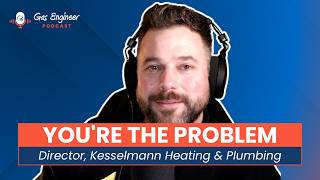
Edward Lovell, owner of KM Plumbing, moved from text messages and scrap paper to structured job-management software and accountability systems. He uses color-coded calendars to separate work in the business from work on it, and credits clear processes and delegation for stopping himself from being the bottleneck that kills growth.
Chapters
That's the whole point of having the systems and having the software, is that it gives you the ability to, if you want to, to scale the business.
Yeah, I think it's really important, Dave, when you say, okay, I've had enough. If you can do that, I've had enough sooner rather than later, your business will actually grow faster.
It's done in such a way that if you had to hand the process over to somebody else, they could do it. They could do your job.
In a sentence or two, why should people care about this conversation?
I think if you want to grow your business, there needs to be a realization that you need to make changes, especially if you're transitioning from being employed to self-employed.
This is the Gas Engineer Podcast. I'm your host, Tulloch Priest, and today I'm back with Edward Lovell from KM Plumbing. We've talked about growing a business and the pressures engineers are facing in 2026, and now we're getting into the more, into the practical side of how Edward's actually going to be setting his business up. To grow. Welcome back, Edward.
Hi, and again, thanks for having me back. It's great.
Every engineer has a system, whether it's an app, notebook, or just their memory. Edward recently made the switch to job management software, and so today we're talking about what the transition actually looks like when you're in the middle of it. Before any kind of systems, how were you running your business?
Prior to the business first time around, there was like task management software. I can't remember what we were using back then, to be fair, but it was very much— there was no system and there wasn't anything at all. It was very like text messages, notes, so on and so forth. Maybe a notepad, sometimes scrap bits of paper. It wouldn't be unusual for the odd material list to be on the back of a bit of plasterboard, put it that way. Yeah, very, very organic to say the least.
And then how did that work for you?
Varying degrees of success. I think that would be fair to say. It's like anything else, it falls down when it's under stress. All the problems with the bit of plasterboard, et cetera, is great when you're not too busy because it doesn't need to do anything more than just travel itself to the merchant. But when you start getting volume of work, customers' demands change, the type of work changes, the sums of money increase, and especially if you take somebody on, You really need to be tracking what you're doing, 'cause it's the amount of money you can lose just through being inefficient, let alone the actual financial losses you can incur from missing stuff, not charging for materials, having supplied them, things like that.
And was there kind of like a specific moment that you kind of realized that it wasn't gonna work, or was it more of a kind of a slow build to—
I guess like anything else you learn, it seems like there's a singular event, a singular learning event. You go, oh, that's it, I've figured it out, I need to go and get some software. You don't know what software you need, but there isn't a single moment that— I think the reality of things is that it's like anything else, it's a journey that you grow into, and you do. And it was, um, as the realization that we need software became more, more prominent, it then became a question of like, what software? Because you initially, if you're using some sort of task management software, it's not uncommon to try and try and adapt that to sort of suit your needs. And especially in today's modern day and age, there's so much out there to choose from. And there is, and most of it, most of it works sort of, but it doesn't mean it's a good fit. And you need to just go and try them. You need to go and explore. Really important.
Hi, Producer Alex here, wondering if you knew that you aren't subscribed to the channel. More specifically, 93% of you are not subscribed. And we really appreciate you tuning in right now, but you're missing out on even more interesting content. You're already this far into the episode, so why not subscribe to the Gas Engineers Software YouTube channel? Because showing your support genuinely makes a difference. It's free, takes a second to click, and helps us continue to make the content that you want to listen to. Speaking of, let's get back to it.
I think it's a really important day, you know, when you just kind of say— this is talking about when you're, um, uh, when you get kind of transitioning to that from, you know, like non-systems-based to more systems-based. I think it's a really important day when you say, okay, I've had enough, this is not working.
Yeah.
And I think if you can do those, do that, I've had enough sooner rather than later, your business will actually grow faster. Because if you wait, it's a bit like boiling a frog. I don't know whether you've heard this before, but you know, if you put a frog into boiling water, it jumps out. That if you actually just put it in the water and then just slowly warm it up, it just stays in there.
Yeah, you end up boiling the frog, yeah.
Poor frog. But yeah, I just wanted to really highlight this concept or the idea that I've had enough. If you can actually have your standards or, you know, actually pick up these pain points really early, it will make a huge difference. 'Cause if it's not working, your focus is gonna be there and you won't be able to grow the business as fast as you want to.
No, that's an important distinction you made there. You said pain point. I think people will, they will fundamentally learn many ways, but generally it would be because the pain of what they're experiencing is sufficient enough to get them to change their course, or their environment would dictate that they see things a different way. So it changes, it would change their perspective. So for example, let's say as you were growing up, your parents were entrepreneurs and they seen things a particular way, or maybe your father was a business owner and he was quite successful, you were exposed to that way of thinking quite early on. That would potentially cause you to look at software a bit sooner, I think, because you see it differently.
I think so. I think that point about you making about it's hard to change. So I think that change can either be driven by like a large amount of pain or like a desire that you're trying to move to. But if you, because changing habits is challenging, like especially under pressure. And you, let's say you need to learn a new software or whatever, and you've got a bit of plasterboard next to you, it is tempting to use the plasterboard. So you either need that discipline or that just, yeah, just that commitment to change.
Yeah, it's difficult. It is like any skill, 'cause it is using the software, sorry, you are developing a new skill, and that skill is one, incorporating the software, And another skill is actually learning to use the software properly, you know, for leveraging in its strengths. Because you can have all the software in the world, and you can spend all the money on it that you want to, but if you don't use it, it's a complete waste of time.
When you started looking for software, what was the main thing that you needed it to do?
The transition to looking for software was born from the coaching. So the structure of the business then dictated the roles and then those roles became quite obvious that you could actually run a role within a piece of software. So you've got, you've got sales pipeline software. I think there's one called Pipedrive, for example. So there was one for sales. So sort of took care of that. And then it was understanding we needed something for operations. That's where, that's where you guys came in, to be fair. And it was, yeah, it was the understanding the structure of the business and the systems that sat underneath them.
So just for clarity, you had something like an accountability chart or something like that where you had all of the roles kind of spaced out?
Well, I mean, part of the coaching exercise was to actually draw out your organizational chart. So, you know, to be fair, it's got my name under a lot of them. But if you're a director, it's me, and sales and marketing, that's me again, and operations, it's me too. And then underneath the operations sort of manager, there's the engineer, and shock horror, it's me again. And then the same thing for bookkeeping. And it sounds like a really silly exercise, and it does, but what it's doing is it's giving you perspective, it's giving you structure. It's a really good exercise to do, believe it or not.
And so I take it you're essentially wearing all of these hats, and the goal is to fire yourself from each of these roles.
Some sooner than others, given the choice, yeah. Definitely. Yeah, yeah. There's, there's some things I'm not very good at and there's some things I am good at. I think a, a lot of guys in industry, administration isn't their strong point, potentially why they got into plumbing in the first place. And admin's not my strong point and it's not— so leveraging the systems and then having something I can then very politely sort of pass over to somebody else, invoicing and such would be the first thing I'd like to get rid of.
You know, some people love, you know, the admin, they they thrive. That's a natural element. I think it's kind of like a way to think about like when you're building a company is you have a bus and you're trying to get the right people on the bus, but then within the bus you need to— they need to be on the right seats, sort of, you know, where their natural interests and talents are, and then they will thrive.
It's an interesting analogy.
If we kind of go into a bit more, it's like this is what— this is when you're you're gonna have more employees, but the idea is that the people on the bus, so that's, you're talking about culture.
Mm-hmm.
So everyone has the same kind of culture. And then within, next to that, the right seats is talking about where their natural interests or talents are. Does it suit that particular role? So let's see, so the really important one is that, this is a bit of a tangent, but if you hire somebody or you have somebody in your team which is a superstar, but they don't have that cultural fit, that's never going to work long term, and that's one of the more difficult challenges.
Yeah, it serves us. We used to refer to that as buy-in. We had, yeah, we employed more than one engineer who's good at what they do but doesn't buy into what you're doing. And you're quite right in what you say, it's like a bad apple. Yeah, it breeds in there as well. It's not ideal, it's not ideal.
Yeah, but the challenge comes is because they're really good at their job, it's a challenge, let's say.
I've been there more than once.
Yeah. So, you use Gas Engineer Software for the operations kind of side?
Yes.
What did you kind of, like, as you, before using it and then kind of after using it, like, how did you, like, what were you actually thinking about what it would be used for and, you know, how did that change? Because it, you know, changes as part of that journey.
Yeah, it's funny actually, because prior to sort of being introduced to these types of software, you've got an understanding as to what they do. But there's this— because you're going for like a learning phase, there's one learning about the business and the structures and the roles and responsibilities, and you can, you can sort of understand how it's structured. And then you're bringing in the software, and it's trying to understand what comes first, because sometimes you can see how the software will be used in one environment because there's some level of customization that can be applied. And you sort of play around with it. This is why they give you trial periods, just to see if it's a good fit. So initially, if I'm gonna be honest with you, I wasn't really, I wasn't sure. Like you play around with the software and you go, "Oh, that's really cool. Oh, that's really good." It's not until you start interacting with it and trying to use it that it becomes clear that depending on what you need, I think what most of us engineers need is quite similar on the operational side, especially when you are doing recurring work like services, breakdowns, and such.
Yeah.
When you sort of understand what you need, you can see the fit better. Whereas prior to that point, it is almost like it is a little bit hazy as to how you're gonna use it and what software is the best fit. It's difficult to explain. You sort of need to walk the path and actually go and do it. It's one of the reasons I settled on your software was because it did exactly what it needed to do and it did it well. There wasn't anything else. Like, I'm not, outside of the quoting, which I don't use, I use every single part of the software. Like lots of other software, there'd be so many other things you just, you just, you just, it's very nice to have them, but you just don't need it.
Yeah, I think, um, like as you're trying to grow a business, when I look, complexity is kind of the enemy. So if you can keep it as simple as possible, it just requires a lot more brainpower and it doesn't add value.
No, it's one thing I like about, I like about your software again, with it being simple, the actual apps It's actually really nice to use. It's really easy to use as well. So as we start taking on engineers and sending them out into the field and they've got access to the app, I know from experience that they're not going to— it's not going to be too difficult using the software, or at least adapting to it. And it's capturing the information for the client's addresses, the boiler information, GT numbers. I love that. I really do love that because there's so many pieces of paper I used to have with boiler details on. And it was so easy to forget. And it's not until you've got it on file, and it takes a bit of time to actually collect the information, but when you've got it on file, you go, I'm so glad I did that. That was so worth it. And I like all the forms as well. It's the fluidity, and it brings, from the customer's point of view, we can be on the job, we can deliver the job, get all the signatures, feels quite professional, issue the forms and issue the invoices all in one fell swoop. Mm-hmm. Gives that, quite rightly, gives that impression of fluidity and professionalism, and I like that. And all the emails, documentation the customer receives looks really good. It sends the right message. I like that.
I think what's quite important when I look at the ideas or designs behind it is that this idea of keeping these open loops, you know, where you have to remember something. So if you can do the quote before you leave the customer site, you could be in your van or whatever, or send the invoice before you leave, or take the payment before you leave. It's just quite important because, like, especially with the invoices, the customer, you know, let's say it was an emergency call out, you fix the boiler, they have heating on. They are very, very happy to, at that point in time. But a week later, they would have forgotten about how happy they were.
Yeah.
Just catching— there's quite a few things like, you don't have to remember about the invoice because they got paid. You know, you're catching the customer at just the right time, they're very happy about it, and obviously your cash flow is better. So the whole design of the app is to be as simple as possible to use, but also able to do it on-site and capture these, you know, all these little things that you need to remember.
Yeah, I think it's fair. And in my personal opinion, it does that quite well. It's something that we've seen the benefit of quite quickly, and it's something that I intend to keep using. It's become an integral part of how we work.
Is there anything that you were skeptical about before you started that turned out to work better than you thought?
I would say the skepticism wouldn't necessarily have been surrounding the features of the software. It's coming from trading where there's always somebody trying to sell you something and you sort of build up a, you build up a sixth sense for it, like smelling it out. And it was having phoned different software providers and depending on who you're speaking to and whatever sales pitter-patter they've got, you sort of get a feeling that, do you know what, I don't really know if this is a great fit. And it was, again, it wasn't skepticism, but when, 'cause the first contact I had with you guys was with Alexa, and she was really, really good, but she spoke to you like a normal person. And she's got some, she's got quite a lot of in-the-field experience. So what you're also getting there was somebody who's actually used it as well. So you're talking to somebody who understands your position, where you're coming from and understands that because she's walked the journey. There's certain things that the questions you're probably going to ask, you don't know what the questions are yet, and she can help guide you through that. And from my point of view, there was one, the software is good, but then there was the support that came with it. And then that coupled with the fact that it was very, very clear that you guys want to keep improving, you know, that you're taking feedback from your customers. And that was If I had any skepticism, those were the key elements that removed that. And it was, 'cause like people buy from people at the end of the day. And I had trust that it would deliver what I needed it to. And if I had any problems, they would be addressed. Whereas with some other companies, it can feel really sort of salesy and you feel just like a number. And I suppose fundamentally that's not necessarily that important. Because all you need it to do is do a job. And maybe I'm a little bit old school where I think it's important that you have some sort of human connection somewhere. But going back to previous conversations that we've had, how people feel about something is a huge driver as to what decisions that they're going to make. And because I felt confident, I made the decision. And I'd make it again, 100%. It was the right decision to make, definitely.
Thank you. Yeah, Alexa is excellent and has a huge knowledge about the industry. But yeah, just this thing about the confidence. You are, you have to be confident. You know, we are holding your business. You know, you need to be able to trust us that we're going to be there.
It's the fact that I get the feeling you care. I think that's the fundamental difference. It's, you build the connection, because every so often she'll send an email and she'll touch base. And that's Alexa, but it's also Gas Safe Engineer Software touching base with us. And from my point of view, it's important. You still, you don't feel like you've, you're spending the money each month. Yes, it's working, but you feel like you're, you're still valued. You're still important. I like that. It's customer service. It's so important. It's so important.
Well, part of these podcasts, the reason I enjoy them so much is I actually get to to speak to our customers and different— I have different points of view and, you know, I just, you know, I get closer to understanding what the problems are.
That's good.
You know, that's, that's really helpful in like planning the roadmap, you know, how we can help more, etc.
That's brilliant. Yeah, I do find them— yes, your podcasts are pretty entertaining, to be fair. So I guess it depends like sort of like who you've got on, obviously. But yeah, it's good, it's good. I think there's a a lot of value if you listen to how people, what people talk about, their experiences. Like, this is from a listener of the podcast, and you take time and you listen. There are some really good nuggets in there, some really good advice, and I think there's a lot to be gleaned from it. I really do.
Well, I've learned a huge amount by just by being on the podcast.
I can imagine. I can imagine.
It's really good.
How many episodes you done now?
I don't know, actually. I don't know. There's quite a few, so.
Yeah, it's like 200 or something, isn't it? Something along those lines.
I'm not sure. I would need to check. It's not really something I thought about, actually.
You should have a look. I haven't watched all of them. I'm gonna be completely honest. I watched a few. I haven't watched all of them. I'm too busy running my business.
What's kind of like the first noticeable difference, like pre-software and all like pre-systems and, you know, post systems about how your day actually runs?
Because you're removing friction, the day gets a little bit easier. It takes time to adopt and you need to adapt your systems around it. So I've got processes that, we covered it, like run in the morning, run in the evening, run them weekly, run them monthly. And that's all it's, the scale is relative to how we're viewing the business. And having the software, because you've, if you've got any sense, you've sort of leveraged that software to your advantage. It just makes everything run smoother. It's not perfect, don't get me wrong. You still got to make an effort, but everything just runs a little bit smoother. Like, like the— with the invoicing, for example, it runs a lot smoother. You're not finding yourself in this position where you're getting to the end of the month or the end of the week and then you've got this massive pile of invoices, or you're potentially looking at cash flow issues because you've already taken care of it. It's happening as you go. That's been really beneficial. Like, the sales software that, that we use, same principle, exactly the same principle. It's systemized, it's a process that we run through. It's done in such a way that if you had to hand the process over to somebody else, they could do it. They could do your job. With a little bit of training, they could do it. And that's the whole— that's the whole point of having the systems and having the software, is that it gives you the ability to, if you want to, to scale the business. Because things are repeatable, they're measurable, and they can be monitored. Whereas when you've got the bit of plasterboard and and notes, etc. Because it's you who's got it, you start to become a constraint for that process, for that business, and then you're the bottleneck. So you stop it from growing because you won't potentially want to adopt new systems or new ways of doing things.
Are you fed up with drowning in a pile of paperwork that comes with running your heating and plumbing business? Gas Engineers Software is an easy-to-use, all-in-one job management system made especially for UK heating and plumbing companies. From handling customer details to building quotes, issuing certificates, and sending invoices, Gas Engineer Software will help you save time, eliminate paperwork, and make running your business easy. Start a free trial by clicking in the link in the bio. So just to kind of clarify, I'm guessing if you, you're talking about repeatable systems, I'm guessing you have the software, but then you've also got possibly a handbook Um, that goes along with it. And then there's also maybe a dashboard. I'm only guessing at some of these things that shows progress.
So what we've got, we've got, um, sales, sales funnel, sales dashboard to collect all the necessary information. Obviously we've got Gustav engineer software with, with some form of dashboard we've got there as well. So those are those systems that are in place. Then when it comes to actually day-to-day running of the system, So if we actually use Trello at the same time, but that's more for task management on the jobs, like project management. So it, it then becomes a case of each cycle. So each month, week, or day when we're compiling a list of what needs to get done. So this week we're gonna do X, Y, and Z jobs, and each of those jobs will have some sort of task list, uh, list associated with them. Again, that's templated, so that's repeatable. So, and that's why it's important to do the same sorts of jobs over and over again because you will always have to order materials, you will always have to send out the invoices and, and, and, and actually go and do the job and quality control, so on and so forth. The same fundamental tasks always exist. So because we've got the, the process and the system for it, that day I've got, I use Google Tasks and all I do is I, I make a list of the jobs I have to do that day. And in that list will be jobs I have to do for sales, jobs that I have to do for operations, and then jobs I need to do to actually grow the business, because there's the sort of drive and what direction we're going in longer term. So you've got the operational systems thing and then the actual growth of the business. There's a list of things I have to do.
Yeah, sorry, just to interrupt this. So the ones to grow the business, those ones are working on the business.
Yes.
And the other ones are the in the business.
Yes, 100%. Yeah, that's a much better distinction, to be fair. And I have to do, no matter what happens, I have to do those tasks that day. It doesn't always work out that way. Because this is life. But it's, um, the goal is to achieve those, and then just the next day do exactly the same thing. And because it's running along some sort of plan, when you get to the end of the week, you find that you've managed to do— generally, we're probably about 85% of tasks have been completed. And then when you look at the month, you can then look at your performance again over the month and sort of see where you are with it. And if, if you're not completing enough jobs, you can see that you maybe you're booking too much stuff in, you're keeping yourself too busy, is the importance of collecting the data on it. It's pretty boring, don't get me wrong, but it's really, really useful once you've done it. One thing I know that I do is that I used to, not so much now, I overestimate what I can do in a day, but I underestimate what I can do in a month.
I think it's, you know, the comment about it's a little bit boring but useful, but I think the important thing is that having the discipline to fill it in and carry it on. Yeah. You know, you just need to make it one of your non-negotiables daily.
Yeah, it's one of the promises you need to make to yourself that, that you're going to do it. And I think it's, um, having a calendar, because all of these things are— so my calendar is blocked out. So fundamentally we've got, again, so we've got the, the in the business, so sales, operations, finances, and they've all different colors. And I've got my, my personal tasks, things that I need to do, like going out for dinner, so on and so forth. And then we've got another color for the working on the business. So they're like 5 or 6 colors and you block out time, and then whenever you hit that period of time, that's when we perform those tasks. Is, is, it's, it's a pretty simple system, but it all hinges off actually using the calendar. Because one thing I found, that you can have all these fantastic lists that you want and they can all be pointing in a fantastic direction, but if you haven't decided when you're going to do them, they essentially never happen. And just simplest, something as simple as using Google Calendar if, um, just running your tasks, um, because I use the calendar in Gassav Engineer software for other things like engineers and bits and bobs. Yeah, it's a really useful tool and I recommend anybody who's not using it, use it.
I think just having that default week, so deciding what the most, where you're going to spend your time in advance, and if you do the same time every week, it comes into a pattern.
Yeah.
And then For me personally, I have a default calendar as well. And then within the time blocks, I'm guessing you do the same, but you rank the tasks of that type of task in priority order. So the top, the most important ones get done within that time period. The ones that fall off the list are the least important ones.
Yeah, it's essentially try and view things as simply as possible as anything that pushes towards the objective in hand. So if your objective is to get, say you got a boiler installation that week, one of the objectives, you have to order materials, is crucial, you have to get it done. So that's a key task. Answering emails and such, it's got a level of importance, but it doesn't feature in that at all. That's not what the allocated time's for.
So until, so kind of in summary, if we're talking about like systems and how to grow your business, I think you mentioned it earlier that if you don't actually put these systems in place, you are the bottleneck.
100%.
And it's not going to be possible to grow.
You won't, you won't grow. You just won't. And I think it's easy to sort of think that you're going to be the anomaly and that these rules don't apply. And I think when I was younger, that was something that, uh, that was a mindset I definitely had to some degree. I think, you know, it's something that comes with age sometimes. But it's one thing I've realized now is that, especially as my memory is not as good as it used to be, having these systems is crucial. It's absolutely crucial to have that, and also not trying to do everything. Initially, you have to say yes to almost every job, but having a clear direction as to what sort of work you want to do and what direction that business needs to go in is massively important, because those systems need to be pointing at something.
And I think having, like, if you have the end in mind, once you have that, you can actually track your progress towards that. So you know, and especially if you have that end in mind, it has fixed figures. Like I'm using the word grow loosely. It could be more time off, et cetera, whatever your goal is. But then you need to break that down. How much, how many jobs do I need to do? What is the daily activity that would actually make, you know, reach that goal? And then you can track before that. Do you go to that level or this is what we do in our company? No.
So we've got annual plans. So what we need to do for the year, what we need to do for the next 3 years. Those things can sort of shift slightly. And then we've got, this is obviously a lot of this, almost most of it I've learned from the coach. And then we set, we've got quarterly plans as well where we run OKRs, objective and key results. So there are objectives for that quarter and they're framed around how he structures his system. I can't share too much because it's it's copyrighted, so I can't, I can't say too much. But those objectives point towards different elements of the business, and then you've got key results that you need to achieve to reach that objective, and that's part of the, that's part of the bigger plan. So the idea with this is, is to— it's like understanding that there's a fractal nature to how you organize things, how you plan things out. So you've got the— you've got smaller objectives, like what you need to do that week, and then you've got little key results that would get you towards that objective. So whether it's fitting a boiler or maybe it's getting a website made for your business. And then you've got things that you'll do on the quarter, like you need to say, this quarter we need to improve, for example, we need to improve the amount of profit made per customer, for example. Or maybe you're trying to improve your conversion rate for that quarter depending on what part of the business you're looking at. Or maybe you want to try and collect this quarter, we want to collect 100 Google reviews. You've something for that quarter, and then those point towards the bigger goal. It's a really useful structure to have. It keeps you— again, it keeps you focused.
I think just being— it does require discipline, and it does— and intention. You need to be intentional about this. But, um, yeah, if you don't know exactly what that end vision is, you know, it's, it's not possible to build this level of detail out.
It's like flying a plane without having a destination.
Yeah, it's tricky. And I would even go further than that, saying flying a plane without the gauges, so you don't know how much fuel you've got left, you don't know which way you're traveling, you need those dashboards and stuff. Yeah, they're really important. I would kind of say that it kind of depends on where you— what you're trying to achieve. And, you know, for a larger company, the detail needs to be a lot more. For a smaller company, it can be Relatively straightforward and simple, so it doesn't take too much. So you need to just juggle that effort in and, you know, benefit out. You definitely need to have a clear vision of where you're going.
I would argue that there is, because as a business owner, even if it's just you, or maybe you've got a couple of employees, you are in competition with everybody else who's doing the same thing that you are. So all the things, providing they have value and utility, don't get me wrong, wrong. But all the things that you are willing to do that your competition isn't can give you an advantage. So if you're willing to— even if for a small business you're willing to make the effort to collect some more data like, like the guys aren't collecting, you know, how quickly you turning quotes around, you know, what are your conversion rates like? Cuz most people, most small companies don't know, they haven't got a clue. And then making those small tweaks over a long period of time, the effects that can actually be quite profound doesn't mean you have to grow. You don't have to take more people on, but you might find that you, you make more money or you provide a better service to your customer. But without collecting the data, you don't know, and you don't know. And I think until you've explored that and you've tried, it's quite difficult to say what you don't need. You almost need to, almost need to go too far and then, and then bring it back.
Okay, yeah, find out what, you know, what's useful and what's not.
Yeah, I guess the kind of thing else is that you— like, learning is all about exploration.
Yeah, that's a very good point. Well, thank you very much for coming on the show, Edward. It's very, very helpful.
Thank you for having me on. It's been great. Thank you.
More from Tulloch

Your Profit Is More Than Your Salary: Pricing A Trades Business w/ Doug D'Aubrey

Is taking over another gas business a realistic alternative to hiring from scratch?





He Took Over Another Gas Business After 3 Years As A Sole Trader w/ Dan Giles


