Everything I wish I'd known in my 20s about PROCRASTINATION FT. Terence Meagher (mindset coach)
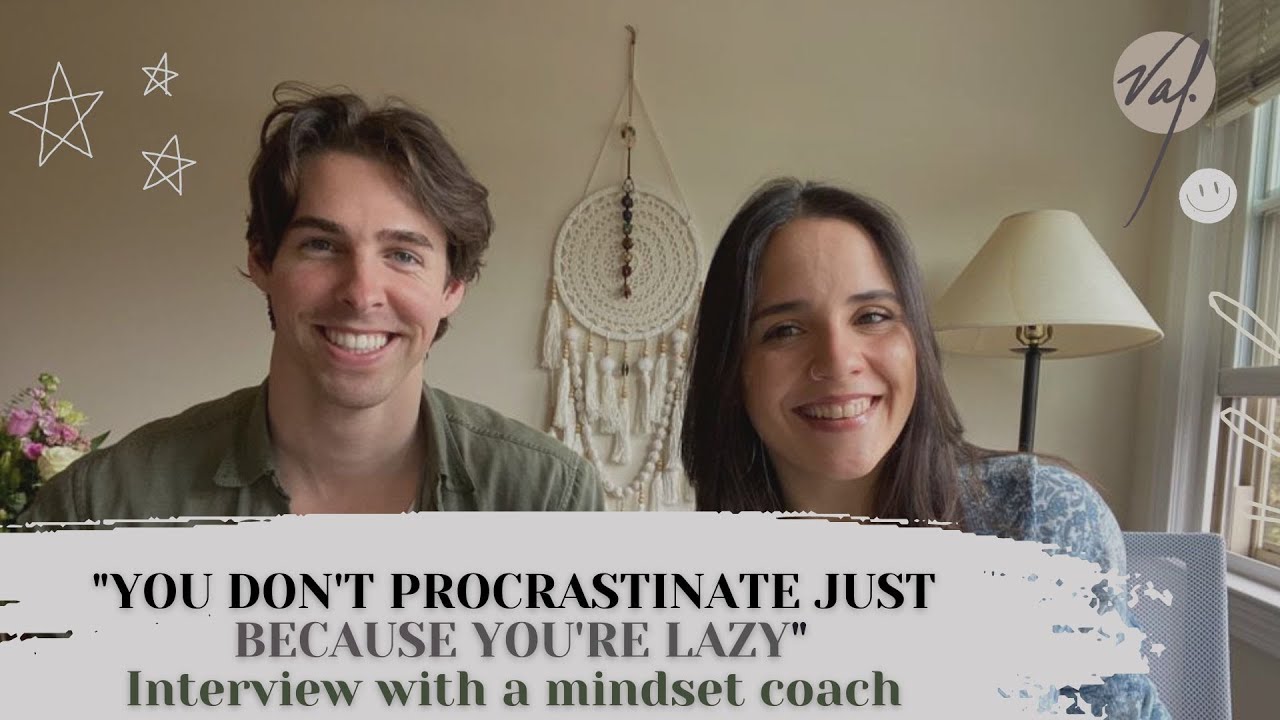
Mindset coach Terence Meagher explains procrastination as internal conflict, not laziness. Stress, guilt, and perfectionism create a feedback loop. He recommends cognitive diffusion to observe emotions, embodied release like boxing to mobilize trapped anger, and self-compassion to increase capacity for difficult work.
Chapters
Well, I'm super excited that you're here. Um, I would like to start this in a more like very neutral way because I think the topic we're going to talk about today, it's super important and super personal. And I think it's going to be also like a space for you to talk about from your experience as a mindset coach, what procrastination really is and what's that about. For those who don't know, Terence is a mindset coach. He's been working with professionals and working with procrastinators and their core belief and all this topic that is actually very related to content creation. I think one of the things I told you when we were talking is you have your business as a mindset coach, but you also have to create content in order to put yourself out in the market, right? So welcome to Questioning I think this is going to be a great space to talk about this.
Yeah.
Yeah.
I'm excited. Thanks for actually inviting me. And, uh, this is a, like you said, a really, really personal thing because I decided to focus on procrastination because it's something that again and again came up for my clients and myself, and I'm hard on myself, you know, and it's a, it's a really, um, it's a daily thing. So I think that this is something that people don't often focus on. They just, they think, ah, it's laziness, I should just be a little bit more disciplined and then it'll solve the problem. But it doesn't go away, right? So it's something that I personally struggled with, and I think we'll dive deep into it today.
You said something that is very important, and you said something like a word that I think is very important and key is, am I, am I being lazy? Is this laziness? And, and I think it's curious because like you're saying, it's something I struggle myself with, and you are a mindset coach. So it's like, if I, I always feel like if for you it's hard, right, right. I don't know, you know, how hard for people out there that maybe they have no idea that I think laziness is not connected to just not being able to do stuff because you don't want to. It's just like, or you leave them behind. It's just because there's something inside. And I think it comes from yourself and the belief, like, your capacity of knowing that you can do stuff. And I don't know if it's related, uh, and I, and I want to ask you if— one of my biggest questions always been like, am I just being— because I'm like hype all the time, my brain is always working, right? And when you are a content creator, you don't have like that space when you just say, oh, I'm not working anymore, right? Because you're constantly working. So where's the moment that you can know how What can you identify and what's the difference between laziness and procrastination? And what does procrastination even mean?
So the way that I'll make it really like simple for people to understand is that laziness is a lack of motivation, but procrastination is a conflict of motivation. And wow, so what I mean is that procrastination has nothing to do with your drive. It has to do with your stress levels. So we procrastinate not because we don't want to do something. We procrastinate because we're trying to feel good now. And when we procrastinate, it's an avoidance of stress. We have a lot of stress and we're burnt out, and we may say to ourselves, but you didn't even do anything, like, what are you talking about? You don't deserve to be stressed because you didn't actually do anything yet, right? But it's— yeah, right, right. But it's—
you don't deserve to be as stressed.
Exactly, right. And I've said it to myself, my clients have said it to me, right? Yeah, go ahead, jump in.
No, no, no, no, it's just like, it shocked me because it's like, you don't deserve, you don't deserve. It's a belief, it's like a belief that you are not allowed to feel certain things And I think that when we procrastinate, when you're saying and what you're explaining is it comes a moment in that process of doing things that we lose intention and we lose the main point of what we're doing and the belief that we're doing something that makes sense for us. And I think that's what the thing you're saying, like, how can we access those feelings when we are so packed and so burnt out and so overwhelmed? I think that will be my question. Because denying ourselves the access to certain emotions just because we don't believe we deserve, it's like a really complicated thing to admit. It's admitting that we are denying things to ourselves. And we cannot— I mean, for me, it was really hard to know that I'm playing, like, I'm making a mockery of my feelings. All right, right. Yeah, I just think um, it's really important to understand where that comes from. That's why whenever that this is happening— and this happened to me last week— it was like I was getting into this process of, what am I doing? I don't, I don't deserve to feel burned out because I have no advance this week. I just did a quarter of what I wanted to do, right? So how do you deal with that?
How do I— your question is, how do you deal with like the internal voice? Yeah, of kind of like invalidating your stress.
Yes.
Well, I think a lot of it comes to, for me, actually realizing what that is trying to do, right? I think if you make an enemy of the— that voice, then that part of you doesn't get to be heard, you know? Because if you say to yourself, oh, that internal voice, that negative self-talk is bad, you know, if you say that, you fail to understand the positive intentions of your self-criticism. And but the, the way to do that, the way to like shift that, is to see or ask yourself, what is my self-criticism trying to help, to help me to do, right? Right? And if you can see that that self-criticism holds you to a higher standard because you believe that you accomplishing a certain thing is going to make you feel good about yourself, then you can realize that that self-criticism is just like the procrastination is trying to make you feel better. Same with the self-criticism. It's saying, hey, but your future self is going to be sabotaged by that procrastination. Hey, do it now. Hey, like, you should, you should be doing this thing, right? So You have to welcome all voices within yourself, and the self-critical voice is just another. It's not the, the, you know, tyrant or the, you know, uh, the stressed parents. It's like, that's not the internalized voice of that. It's, it's you trying to help you. And if you can bring compassion and understanding to that internal self-critical part of yourself it allows you to see its intention. And when you can see its intention, you can show compassion with it. And if you can show compassion with it, you can see it very clearly. So what that does is practically it reduces internal conflict, and then you can act with all of the parts of yourself in mind. And what that would— this is very conceptual, I know.
Yeah, no, no, you're good. I, I get— I'm getting it. Right, right.
But I just want to make sure that people also get a real version of this, of what this actually looks like. So it might look like something— an internal conflict is kind of— can be very complex because there's many layers of self, right? There's not one version of self. So to create cohesion and integration between these parts, you know, you have to hear both sides. That, okay, the procrastination wants me to feel better now. The self-critical part wants me to feel better later when I achieve something, there has to be some kind of dialogue between those two and some kind of compromise between those two, right? That say, okay, well, I know that it's gonna feel a little uncomfortable for me to act now, but at least I can start with this, right? At least I can maybe just do this. And then both sides feel heard, right? Then you can—
Oh, okay.
You see? It's, it can be difficult, but it's something like, okay, I know I have to edit all 20 of these videos. That's gonna take a long time, and I know that I'm perfectionistic about it. It takes so long for me to edit all these videos. Well, I could procrastinate and do it tomorrow because I don't feel like doing it right now, or I could do it all right now and I could push through it and just use willpower, which is going to really create more stress.
Right?
So what if I just do something that would be a little bit uncomfortable but not create too much stress and then take it from there?
Like 10 videos, Axel.
Right, 10 or 5 or 1 video and take a break.
Whatever you can.
Yeah, so that, that's what I'm talking about is that the initial thing I said to you is that it's a conflict of motivation, right?
A conflict of motivation. Right.
And those motivations are different parts of yourselves. That remember and protect different parts of yourself.
Okay, it's like very egocentric type of feeling, right?
Yeah, it's, it's different.
Like, to explaining in another way, because people allow— everyone talks about the ego and killing the ego and whatever the ego means.
Don't kill the ego.
You just have to— yeah, it's exactly like that. I was listening the other day, I was listening to a podcast of this guru. He was saying, in your 20s You can't kill your ego. You can just reframe it and like, like, give another meaning to it. Um, and I think what you're saying about having this dialogue between both parts, like the part that wants to do things and the part that is like burned out and tired, it's exactly like integrating what in shadow work will be the shadow, which is all about integration. I think balance comes when you're able to listen to that voice Or to feel something and know this is just a feeling, or this is just an idea I have in my mind about something that does not define what— I mean, my quality as a person, my quality as a content creator, my quality as a professional, your quality as a mindset coach, right?
And that, you know, balance is a really broad topic, but I think it's in— it's important for this sense of procrastination, because if you don't have balance, you're going to be stressed. If you're stressed, we know that stress is the main cause of procrastination, right? So I definitely can see how these two relate. And what you're mentioning there is called cognitive diffusion. It's when you're able to see yourself, your, your own identity, as separate from the ongoings in your mind of the thoughts, or even, uh, in your body, right? Your emotions. You're not saying I'm sad, right? Or I'm stressed. You're saying, oh, I feel stressed, or, oh, I notice that I feel stressed, right? You're—
you identify that feeling. You're able to separate yourself and say, oh, this is— and you're giving a name, like a correct name. That's when people talk about depression and sadness like it was the same thing, and it's, it's a totally different— like, I'm so afraid of people just like going out there and saying that they have ADHD, not diagnosed, because it's like It's not the same that you feel a little bit sad or you have seasonal depression, right, than having and going through ADHD, which is the way your brain and your chemistry is shaped.
Yeah, right, right. These labels are very important. And when you have cognitive diffusion, when you practice cognitive diffusion, because it is a practice, um, it's not natural that you do that. You have to practice that, um, by like you said, one of the ways by actually labeling, oh, this is an emotion, I'm feeling this. For example, if you're procrastinating, you're probably very overwhelmed, you know, so you could probably label, oh, I feel overwhelmed, why do I feel overwhelmed? And you could label your, uh, cognitive distortion. Maybe it's, oh, I'm thinking in black and white terms.
Yeah, right, there's no gray.
Right, exactly. For example, like you're saying, it's all or nothing, I have to do this, right, or I can't do this.
But I'm not— I'm not worthy enough for stress because I'm a failure, right? Because I didn't do what I said I was going to Right.
Like you're catastrophizing, you know, happening a lot. Yeah. Like, yeah.
How do you deal with that? How do you access to that? How's your process? And I think I will tell you more than as a mindset coach, as a person.
Yeah. Yeah.
Right. Uh, like what's your process to go through that listening process and then you identify what would you do if this happened to you, like in a regular daily basis with your content, for example, but you have to create content of the things you do. So you have this both reality, like, okay, I'm a mindset coach, but I want to create my social platforms and I need to do both as like good so I can generate leads from the things I'm doing and whatever. So how do you do like when you feel overwhelmed and you fall into the procrastination trap, how do you, what would you do? What do you think is your core belief and how do you access to that?
Okay, uh, there's kind of 2 or 3 parts of that to that question. So I can tell you the external work, and I can also tell you the internal work that I do.
Okay.
Right? Because there's a lot of— there's different ways I respond to myself in different scenarios.
Right?
So if I'm, if I'm, for example, procrastinating on creating content, or I'm not doing it well, I'm not like recording it really well, um, what I have learned from just my own, my own mentor and sessions with my own coach, um, is that What I tend to do is I will internalize frustration and anger at myself and disappointment, and I will internalize it as guilt. And guilt creates procrastination, right? Because when you procrastinate, you create guilt. You criticize. That self-criticism creates guilt, and guilt furthers the— that perpetuates the cycle of procrastination. The guilt creates more internal pressure. And that internal pressure creates more procrastination.
It's like a cycle.
Exactly, it is a cycle, right? So that's, that's the reason why procrastination is a habit, right? It's not a personality, it's a habit. And every habit has a cycle, right? Because it gets reinforced. That's why— that's how habits get created, right? So, um, I'll explain this and I'll go back to my— what I do about it, but it's good to understand the internal workings, right?
Yeah, 100%. You're saying like creating habits is just a main part of the process, and that saying that like procrastination is a habit, it's just like, it's mind-blowing. And it's—
what is it for you that— what's, what's mind-blowing about that for you? Wow.
Because you know what, it just— actually, I'm part of, part of the things I'm doing right now, it's every month I do 21 Days of Building a New Habit. So I started this year with like a One of my main things is going to be radical care. I mean, we're friends and you know me for like a while, and you know that I was last year going through this path of like healing and whatever. That was like, I was stuck in the idea that I was healing, healing, healing, and there's a trap in there. It's like a habit. Yeah, it's like a habit of healing. But I think there's a lot of people out there, which is amazing. We're, we're more awakened. This generation is more awakened in like spirituality and whatever, but there's a trap in there But if you do not do anything to build habits to get out of your bad ones, like you have to replace your bad ones with good ones, right? That's what I feel like. Okay, I know that healing is not something that I, I need to do. It's just part of who I am, and I'm gonna get triggered in certain situations, and I need to, I need to learn how to self-regulate and how to deal with that to not get triggered all the time, because I'm gonna be— it's gonna be a habit to get, um, triggered, right? Oh, this is my story. Yeah, I was abused. Yeah, I dated narcissists. So it was like, that's enough. For me, it was enough. And I created this thing called Radical Care.
Okay.
And Radical Honesty, which is basically with myself. It was— I needed to oscillate myself and get into this process of what am I doing with my life? What are my healthy habits and where are my toxic habits? Right. Which that cycle of healing was very toxic. And I was like, Every month I'm gonna do a new challenge. So January for me was running, February was yoga, and this one actually I'm gonna play that with you at the end of the episode. It's gonna be— it's a game by The School of Life.
Ah, it's—
yeah, it's a dilemma.
On the bottom?
Yeah, yeah, yeah, it's a dilemma. Uh, and it's just like they have cards and you take one card with a random situation and you answer what you do in that situation.
Yeah, I love that. So it's good.
My point of this was For me, I needed to have this radical care of I need to stop blaming myself for what happened and stop creating guilt, right? This is the thing you're saying, like, that's it, that's part of who I was and that's not gonna be like— it's not something I can delete from my life, but I can accept and go through life from a different way, like replacing bad habits with good ones, new ones.
Yeah, yeah. And I think it's to cycle this back to what we're— to what we're saying, right? Because to connect it Guilt is an emotion that— it's a moral emotion. It's an emotion that tries to, like, biologically, it's trying to guide us toward what is right and what is wrong, right?
Guilt.
Yes, it's a moral emotion, and it's trying to say, hey, you didn't act in accordance with your highest self, right? But sometimes there can be a kind of perfectionistic, kind of toxic guilt where you're beating yourself up in order to push yourself further, right? And that's the kind of guilt that creates toxic procrastination in the sense that you're avoiding something. Because if you're procrastinating in the sense that you are overwhelmed and you want to take a break for a little while and come back, that's healthy, right? Normal, right? But that sense of guilt is a moral emotion, and if we use it in a harmful way, in a way to dissociate or to move away from something, then we're avoiding what we're trying to actually do, right? So to bring this back, right, because you were asking me, how do I deal with that, right? So I internalize anger as guilt, right? I'm hard on myself, but I tend to be easy on others. And yeah, And that's my internal, that's my work, right? That's my personal. It might resonate with people, it might not, but that's what I do. And what I've—
Explain me a little bit more of that. Give me an example, like a situation that you think you did this before.
Okay.
So I can have it.
Well, when someone is harder than— I mean, that's when someone's hard on themselves but easy on others is that they have internal rules that apply to them that they don't apply to others. They have rules and codes of conduct, how you're supposed to behave, that only apply to me but not to others. Like, if you procrastinate, you're lazy. Like, it's not because you're stressed, it's because you didn't use enough willpower. You have potential and you didn't use it. You see that? See the tone of voice even?
Oh yeah, right.
So it's strict, right? So me That, that comes from, uh, kind of in some way growing up where it was, I guess, sometimes difficult to express those feelings of disappointment, you know, or like it comes from just like a high achievement family. Yeah, right. But, um, what I learned to do is because I, when I grew up, I think I didn't have enough space to express anger Okay, right. So, and this is so funny, literally yesterday I was, uh, with one of my friends and he has a little child and he was saying how he doesn't know how to deal with the child. Yeah, Charles tantrums. He's like, oh, my, my kid's very aggressive and not passive-aggressive but physically aggressive. And I said like, hold space for that, for that anger and tell him to punch a pillow and express that anger, get the energy out of his hands and out of his body so that he can then regulate and The emotion isn't flooding him, but he can handle it because he's expressed it. He's mobilized the anger by punching a pillow, getting it out of his body, and then, okay, now what is actually going on, right? And I said that to him, and he was like, damn, you may have just changed my kid's life because I was repressing his anger. And I was like, yeah, because I learned to do that just fucking a week ago, like a month ago, you know?
Boxing, right?
Yeah, with boxing, right? So I told you I do boxing, right? So like, that's what I'm doing is like I'm mobilizing my anger, your energy, right? Instead of repressing it, instead of saying that anger is dangerous and bad. So in the same way, if you're procrastinating and you start to feel bad about yourself, don't say, oh, that's a bad thing, I can't criticize myself. Express it, mobilize it, get the energy out of your body. Do a workout. Cortisol and adrenaline are pumping through your body. That's those stress hormones and fight or flight, right? Because procrastination is a freeze response, right? So you want to mobilize that.
Freeze response? Yes. Interesting.
Yeah, it's a paralysis, right?
Like a mind paralysis?
Yeah.
Okay.
Right. You want to mobilize that, right? Because if you're in paralysis, the next step up is to mobilize, right? So if you're procrastinating and if you're feeling guilty and angry, mobilize that. For me, I punch a pillow or I have a little dummy at home that I punch.
He doesn't punch pillows, probably.
Not in public. People are like, this mind's like going to just punch in the face.
I don't know if I want to be in the middle of the night, you know, get punched in the face.
Right, and it's very like therapized. It's like, scream into this pillow, you'll feel better. Like, it sounds very much like pretentious like that, and you know, it does sound like that, but it actually works for me, right? So this is the kind of taking the internal, externalizing it.
Take action, like Once you go through that and you identify, okay, this is what is happening, right? Right. Instead of just like, but you were stupid, right? Why are you feeling like this? Because you didn't do— and it's so easy to fall into the trap of being your best, being your like best bully. Like, and it's so easy to just go through that and like, you're doing this. It's, it's great because it's like your kid, the story of the kid you were saying. I remember that when I did, uh, when I was taking care of Anna, she wouldn't have these moments of rage. Like, and I also grew in a household that I was not able to express my emotions, right? So for me, it was like, you go to your room and you deal with stuff you don't really know how to deal with because you have no self-regulation capacities. But you grew up in this survival mode, and when procrastination comes, like any emotion, bad emotion— because it happened for me with bad, bad emotions. Yeah, bad emotions that my family or whoever that was out there told that feeling sad was a bad emotion, or even like a Disney movie told me that it was a bad emotion. And at the end, it's just like, it's just an emotion. It's not about feeling that. It's about what you do when you're feeling like that. That's for me. I remember in January when I said I'm going to run more and physically I felt like lighter and everything. I just, you know me, I go really hard on workouts. I did CrossFit for 2 years and I think like if I don't work with weights, I'm not good enough. So if I procrastinate and if I don't— if I did not do the workout with 20 pounds and whatever, I'm not gonna be good enough, right? And it's like, I was running and there was a guy run— like, I use Nike Running Club, the app, and the coach said, you don't have to run every day to be a runner, right? Right. For me, for me was like, no, it changed so much my mind because I was running and for the first time it was like I'm not getting to things to avoid feeling this. I am doing something to navigate those feelings or those habits of procrastination, right? And it's just like, we all go through this eventually. And I think it's about creating systems and mechanisms. Like, you can go to the street if you're feeling sad and just look at— stare at the sun, have serotonin in your— like, going on in your brain. You People should invest time, and I don't want— I don't want to tell anyone what to do, but we should know how our brain works and what actually makes it feel better or worse according to whatever we are. It's easier to say, oh, it's a great— it's a great day, I'm gonna procrastinate because there's no sun, and then I'm not gonna do my workout. It's just like you start creating little excuses. Yeah, that puts you in this buckle of toxicity, productivity Toxicity.
Yeah, right, right. You know, and I think, um, we're— we are not batteries. We don't like drain out. We're generators. And so if we do things that make us feel good, it's going to increase our capacity to do more difficult things, right? Resilience, right? And that, like, that's why I think feeling good is very important, because when you feel good and when you start to feel good about yourself because you're starting to do things that make yourself feel good about yourself. And when you do that, it increases your self-esteem, right? Even just doing things for yourself, being nice to yourself, right? So even just starting with that, because small things— we very often think the self-critical voice says we have to be mean to ourselves because if we don't, we're letting ourselves off the hook, and then we're gonna not, you know, do anything, uh, do anything difficult.
Right?
So that's what we think, we have to be hard on ourselves. But actually, the nicer you are to yourself, not letting yourself off the hook, but rather being more compassionate with yourself, the more honestly you're able to look at the parts of yourself that you're unwilling to look at previously. And the more willing you are to look at parts of yourself, the more willing you're able to make a change, like the more willing you are to make a change towards that, right? So that's why I say feeling good, quote unquote, doing things for yourself, showing compassion, you know, getting outside, these things increase your capacity to look honestly at the harder parts of reality. And when you do that, yeah, right, then you're able to look honestly at why you're procrastinating and the stress behind it, right?
And you don't fall into the trap that often. Like, it's not— anyways, it's not a linear path. I see— I think like when you understand you've been in this survival mode and getting into the habit of procrastinating, and habits You said something that we are generators and that's marvelous because I think that connects with the fact that habits are also generated and pumped by you. So the more energy you put to certain things, the more they're going to grow. It's just like a monster under the bed. If you don't say it, if you don't talk with the monster, the monster is going to grow and grow and grow, and it's going to be bigger than the bed and it's going to eat you.
That's— Sounds like you had a good imagination as a child.
Yeah. I was, yeah. For me, art, like, for example, for me, art, and I am a very artistic person, and I think for me, I didn't have a household that was open, so I needed to look for things that, you know, gave me that, and I did it through art, through music, through singing, through dancing, through painting, through whatever, and books were my savior, you know, it was like the way I wrote all the stories, and I love Disney, But at the same time, I lived in that trap for years when I felt the world worked in a way that no one told me to work. It's just like, I don't know, I'm going like to the sky.
But the thing is, um, it's good to see, it's good for you to share, and I like that. I think people that are listening will also like that too, you know, if you share more of yourself, you know.
Yeah, for me it's been very, very important that process of breaking the myth about procrastination and about the story I have of Valeria Itriago. Like, who am I and what defines me? Am I a good person? I'm not a good person. Am I good enough to do this? I'm gonna connect with people. So I've been going through ups and downs, but one day I woke up and I was meditating, and I remember I had this thought in my mind and it's also from The Art of War by Sun Tzu, which is the most strong warrior is not the one that is the bigger or have more muscles, but it's the one that is more flexible and can adapt to battlefield situations. And I realized that, yeah, this is not going to be linear. Some days I'm going to feel fucking great and some days I'm going to feel like shit, but The important thing I like to question to myself, and that's the name of my podcast, is because I'm constantly questioning things about life. And I thought it was a bad thing.
To question? Yeah.
I came into a moment, TJ, that I said I should shut up. Why life can be easier for me. Like, I envy people This is so great that I'm gonna tell, but I envy people that have everything easy in their mind.
But how do you know that they actually do?
That's the thing. I used to believe that because it was easier for me to believe that than accept that we're all humans and we all go through ups and downs. And the exact idea what I want to connect is it's just not linear for everyone. Anyone has something they struggle with eventually that you might never fully understand because you're not in their brain. That's why compassion and acceptance is so important in this process. Like, that's the shift that you have. Like, if you do not have compassion and acceptance, and you know, to understand that there's so many things that you cannot control, and the— you understand that a good warrior is also a warrior that is flexible, it can adapt. So you don't have to run every day to be a good runner. You don't have to produce content every day to be a good content creator. You don't have to work with a bunch of brands to be an important content creator. It depends of who you want to become, and sometimes you might not have the big picture. What would you say to that, people that they're in the process of creating but they're not sure where they're going? Because that's, that's the most challenging thing for me.
I guess I would say to people that don't know where they're going, um, keep going because you're going on a path that is yours. And if you're lost, it means it's your path. You know, if you're, if you're lost, it's an indication that you are— you had the courage to go on. You had the courage to get lost, and you start a journey.
It's like you start a whole new journey, right?
Yeah, yeah. I would say that, um, I guess I would continue with that to say that Yeah, stop trying to control the path. Like, the universe is way smarter and more powerful than you, so stop trying to—
like, control freak.
Yeah, right. It's like you stop getting in the universe's way.
Ouch.
It's not like a sound bite.
Like, yeah, it's like the spicy food. You're making like, oh, this was spicier than I thought. Yeah, yeah, yeah.
We just we get in the universe's way because we think that we have to control the outcome, and we think that our, our outcomes that we have in our mind, we think that they're the best for us, right? So that's why we hold expectations. Expectations are a means of control. They're a means of prediction, and they give us the illusion that we can predict the future. And we do that because we're afraid if we don't have that specific outcome, then bad things are going to happen. Maybe someone's going to reject us, or we're going to fail, or whatever we— whatever hurt in the past we think is going to repeat. And that's why we create control and expectations in order to navigate around that and not have that happen again. This is why perfectionists who have deep shame about who they are, and even narcissists who have shame, deep shame about who they are, want control and also fall into procrastination very easily.
Hmm.
Yeah.
This is very interesting. We can do a whole episode about how narcissism is getting through.
I'm kidding.
Narcissism is so important right now, narcissism and everything. Um, TJ, how, how is for you— what does creation mean for you? What's the connection between creating content and not being connected with yourself? Do you think you can create without that connection?
You can. You're just gonna do it inauthentically, right? You're just gonna do it based on other people's information. So, I mean, is your question, um, is it more of a philosophical question of like, what is creation? Or is your question, how do we create and get past— how do we create authentically and get past the limiting beliefs?
Is that— I think that— I think that's— yeah, that's— that's a mindset. I think that's the question, the second one. The one was more like creation loop, but I think that's what I wanted to ask you.
Yeah. Mm. I guess there's many, many ways. I don't want to proclaim that there is a only way, a way, right? There's many ways. And one way to do that is to remember that the people that you look up to that are creating really good things in your industry, they're not creating your content. And what I mean by that is nobody can create content the way you do.
No one is you.
Yeah. Like that, that's valuable. That's valuable in itself.
Right.
And when we have limiting beliefs that we think that we're not good enough, or we have imposter syndrome, it doesn't feel good enough.
Right.
But you have to kind of look at it as like your uniqueness is valuable because you exist.
That's it. That's the core thing.
Right.
I think that's also a good way to go out of this procrastination loop. You think it'd work. The same if you do it?
Say, in what way?
Like, if you, if you grab that insight that you understand that no one is like you, and it's okay because your path and your progress, it's totally different from the other person. And if the other person did 10 things and you did one, you're still producing and creating.
It, it will help if the source of your procrastination is comparison.
Okay.
You know, if you're specific reason for procrastinating is because you're saying, well, fuck it, because they did that and I only did this, and so why am I even doing this? Or if you're comparing to the expectation, not just a person, but rather my boss thinks that I should be able to complete these 7 projects before Tuesday and I can only do 2, and the expectation is not being met, and you say, well, fuck it, well, I'm, I'm compared to the expectation, I'm getting nothing done. If that is the source of your procrastination, then yes, that insight that we talked about, about recognizing that it's, you know, your unique path is lovable and exactly where you should be, then that's the answer. But that's only if you were in a place of comparison to other colleagues or to— for those of you on the podcast not listening, Val just points to herself. Very— yeah.
Yeah, thank you. Yeah, um, thank you for that. I think again, like, there's no way of going through this without acceptance, and— but I think it's very important to have clarity in the matchup, like clarity of this is what I am feeling, and for me it's comparison, right? My procrastination thing comes from I compare myself with all these content creators that they made it, that they are successful and they are 6-figure content creators.
Right.
They just— and you know, it's hard because my path, it's, it's quite unique and different because of a lot of situations that are around my circumstance, which is I'm an immigrant. I have— I think I, I share it with you— I have no control over things. Like, for me, monetizing on YouTube is not even an option right now because I'm just like waiting Um, so for me it's like, it's hard because it's comparison, but it's comparison with people that are not even in the same spot I am. So it's like I compare myself, but I'm not in the place of comparing myself because I don't have the access to the things they have right now.
Yeah, right.
It's a dissonance.
Yeah. And one, one thing that, that kind of sparked up in me when you were talking about that is, um, so Emerson, Ralph Waldo Emerson, he's an American philosopher. He, he said Shakespeare did not become Shakespeare by reading Shakespeare. And so what I mean is that— or what he meant, and I would— I take it, take from that is that what makes a genius a genius is that They are not afraid to be themselves. They're— you see, yeah, they're, they're totally just being themselves. They— it's their word. They, they trust their word. You know, they don't read people from the past or see people that are doing amazing and so I must, I must become like him or her.— or they— to, to, to— for me to become a better version of myself.
Yeah, right.
Like, you— it's a process of moving inward, right? Not of imitation and regurgitation. It's a process of moving inward and discovering your own inner resourcefulness, your own inner creativity, your tool.
Yeah, toolkit, right?
That, that is— of course, these toolkits can be taught from outside. That's useful. But you can't make, uh, you can't make any real, like, uh, meaningful success without bringing some of your most— yeah, yeah. Right.
It reminds me of Van Gogh. And I always— he's my favorite painter for many reasons, but you know, it's— he's my favorite because he's like, this whole thing that he has in his head, it's all demons of, you know, his schizophrenia and everything were like factors that would allow him to be a normal persona, uh, or connections in that moment or whatever. And I know, like, I think I like to tell myself, I, I know that he was not thinking about how much money he was going to make from this. He was just painting art and writing letters to his brother while he was doing that, and he was totally enjoying the process. Of course it's sad because he never got a penny for what he was doing. But I know that if he can see what happened with his work now, he— I think he will know that whatever he was doing, that it looks like it was not enough, it was more than enough. And it represented a whole, like, a whole thing for art and the way art was made in that moment. Just because he listen to his voices inside of his head. And he didn't say good or bad voices, they're just voices that are in my head and this is my reality.
Yeah. And I think the way that that translates to people, or at least for me, is that to trust your process, to not, um, like if you want to do something that really does kind of inspire you, right? But you struggling, "Oh, should I try this out? Should I try this or not try this?" It's like, look at the value of people that bring in something unique to the world, you know? Like, that is like a part of why we're even here. It's to bring something unique into the world. Like, if you die, like, quote unquote, "the music's still inside of you," like, your song unspoken, like, that is a real, real tragedy. And any fear that you have around bringing out your voice, that it might be rejected or it might be criticized, or, you know, you might— yeah, whatever those fears are about bringing that out, be way more scared of the regret of dying without actually speaking truthfully about who you are. That's, that's way more scary to me.
Yeah, it is dreadful. Yeah, yeah, I know. That's— I'm worthless. I think it's so soft in the way you feel. It's so bittersweet. Um, yeah, I think this was great. This was a great conversation because we, we navigate basically, um, everything that is in procrastination. That it's, it's not about procrastination itself at all. It's about all the factors that are going around that, that comes from who you are. And at the end, procrastination is just connected with who you are being. Right now. And you have that. I think for me it's a decision, like building habits, doing something which you don't feel like it, or not doing anything which you just don't want to do anything. And that's not gonna define who you are. And you're gonna have these moments along, a lot along the way. Um, thank you, thank you for being here, um, for taking the time to talk about this, because I think a lot of people would like just to understand their feelings and why are they feeling this and how can you stop.
Right. Yeah, this is great. This is, uh, this flowed very nicely. And, uh, yeah, people can take some little gems out of there.
If people want to contact you, if like you want to talk a little bit about, to wrap it up, what do you do professionally and how people can reach you? And what are you doing right now? I think that will be very important before we wrap it up.
Right, right. So what I do is I mostly do ontological coaching. So I coach people on their sense of being, right? It's, um, it's that I, I help people that come to me with kind of scattered thoughts, or they're procrastinating and they want to become more productive, they want to work on their confidence, their self-image, or they're having self-sabotaging kind of behaviors in their relationships. And what I help them to do is to— not by my advice or my wisdom, but by intuition and understanding of human psychology and themes in psychology— I help them to navigate and see the ways that they're kind of sabotaging themselves, or the ways that they're living in a suboptimal way. And I help them to understand and bring compassion to those parts of themselves that they are kind of banishing and kind of contorting themselves. And just by doing this internal work, we then come into a point of like, oh yeah, that's happening. I realized this. I have words for this now. I understand this in a new perspective. And from that internal shift to create accountability that pushes them towards their potential. So they're kind of— they're mobilizing their, you know, their grit, their gifts, right? And getting the things that are in their way out of their way so that they Some clients will double their income. I have this one client, past client, who doubled their income.
By facing these things that were in her way.
Right, exactly. Yeah, she owns a swimwear business and another business, and that was pretty cool. I have other clients that have gotten into healthy relationships from this. Clients that have been able to let go of things that have been plaguing them for years. Toxic productivity, the way they talk to themselves. There's a lot of different outcomes, but that's essentially what I do with my coaching. Um, and people can contact me on Instagram mostly. That's where I have a lot of my stuff. I mean, I have a website too. Um, it's TJMEAGER.
Yeah, we're gonna share it. We're gonna share it in the episode description so people can contact you.
Cool. Yeah, so just click that button down there, or you can go to my Instagram. So it's _TJMEAGER. That's where you find all my stuff.
I'm gonna post it anyway because I'm gonna post a lot of things from this interview. So thank you.
Yeah, this is great.
Thank you for being here. And well, people, you know, if you're struggling with procrastination, this is the man. Well, thanks, Nick.
More from Valeria
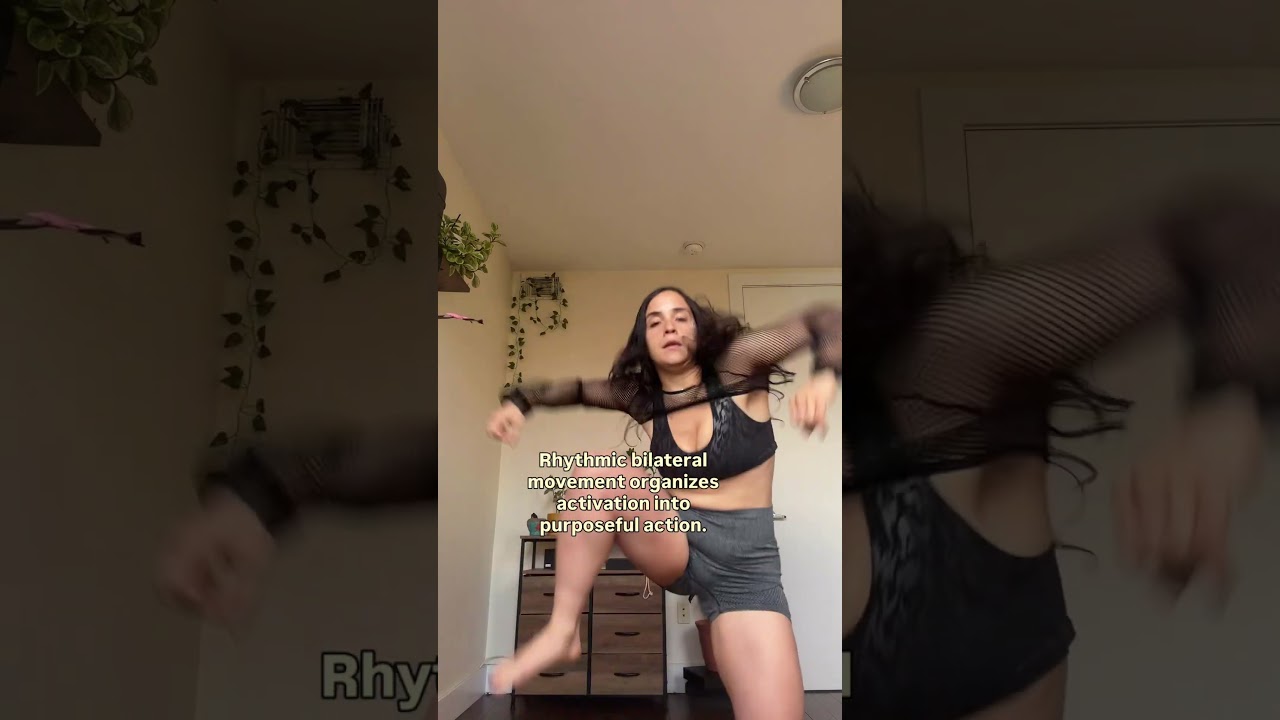
Feeling that you can’t access anger? Move with me #nervoussystem #samadkimovement





Expressing anger and frustration can be done without hurting others, let’s get out of the fight.
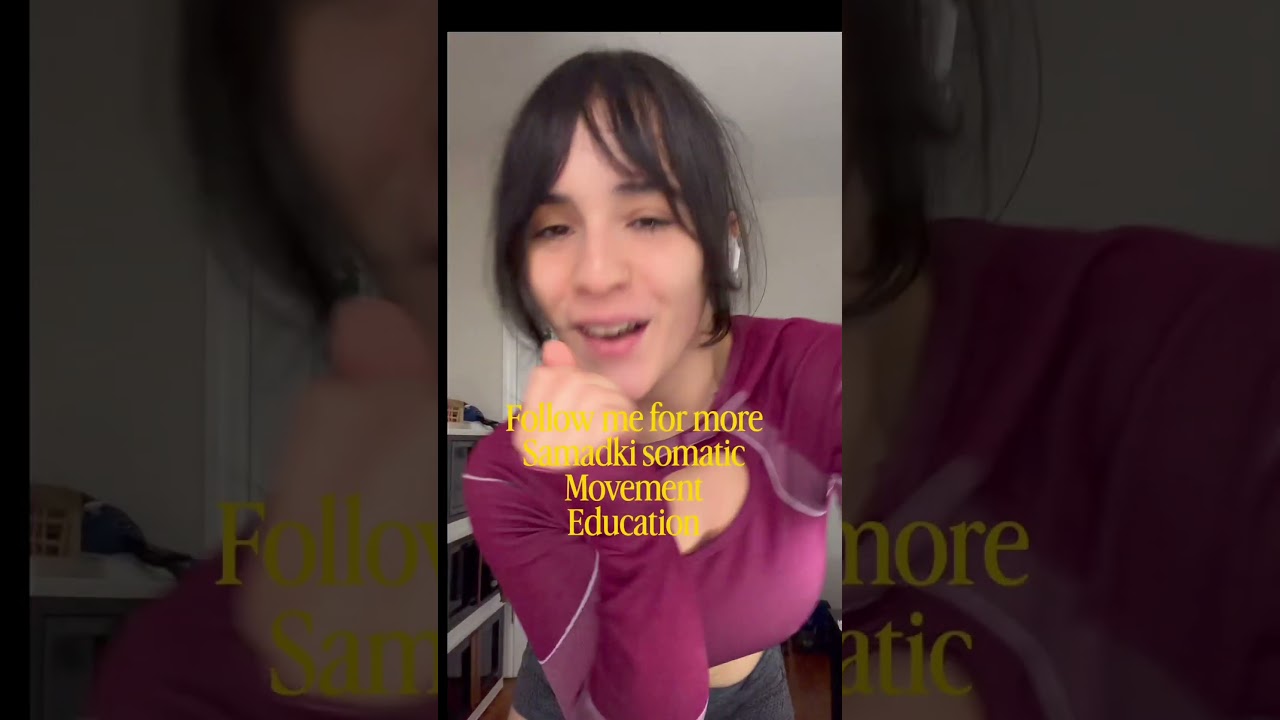

Release anger with me. #somaticexperiencing #somaticmovement #somaticcoaching


Navigating the hardest season for me as an immigrant and an entrepreneur in NYC #motivational

What happened needs to be felt so it will stop chasing you #somatichealing #somaticexperiencing