Iran’s Grand Strategy | Distinguished Lecture by Prof. Vali Reza Nasr
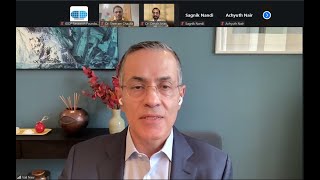
In a distinguished lecture hosted by the International Dialogue and Diplomacy Foundation, Professor Vali Nasr presented a comprehensive analysis of Iran’s modern grand strategy, tracing its historical roots from the 19th‑century imperial incursions, the 1953 coup, and the 1979 Islamic Revolution to the present day. He argues that Iran’s foreign policy is driven not merely by religious rhetoric but by a long‑standing quest for “independence” – an anti‑imperialist war of independence against the United States and its allies that has shaped every aspect of the Iranian state, economy, and society. The lecture covered Iran’s use of proxies (Hezbollah, Iraqi militias) to extend its defensive depth, the impact of four decades of sanctions and wars on its economy and internal protests, the collapse of its regional lines of defence after the Gaza‑Israel war, and the resulting strategic dilemma. A Q&A explored the Iran‑Saudi sectarian rivalry, Iran’s growing reliance on asymmetric partnerships with Russia and China, the limits of those ties, and the shifting India‑Iran relationship. Nasr emphasized that Iran remains a consequential regional power because of its size, civilizational self‑image, and strategic geography, even as its grand strategy faces sustainability challenges.
Chapters
very tough time. It has faced attacks from Israel, and now it has been going through a very serious kind of internal protest, and young population is bulging, ambitions are also increasing, and economy is going down. In this context, Iran makes a perfect case of a major internal and external challenge So we have Professor Vali Nasr, who has been studying Iran and the Middle East very closely for the last 3 decades. He has been a professor at Johns Hopkins University. He has so many books on his credit, including The Shia Revival, The Dispensable Nation, How Sanctions Work, and Iran's Grand Strategy. And He's currently, I think, in 2024 and '25, he was holding Henry Alfred Kissinger Chair at the Library of Congress. So his knowledge about the region, and he has been known for his expertise about Iranian politics from very deeply and from inside. We also have Professor Chaulia, who is going to chair this session with us. Professor Siddharth Jolya has been Dean of Jindal School of International Studies, one of the most prominent international studies departments in the country, and he has been producing a show on international affairs, India's foreign policy. He has so many books including The Modi Doctrine and Crunch Time and many other books. So, uh, I would like to say that International Dialogue and Diplomacy Foundation has been trying to educate young generation and Indian diplomats, policymakers, Indian think tanks, and there is a growing interest in the country, in India, about the Middle East, about Iran, about West Asia, and there is greater curiosity. So without further ado, I would like to hand over the chair to Professor Sri Ram Chawlia to start the proceeding and the session. Over to you, Professor Chawlia.
Thank you, thank you so much. Welcome everybody. It's great to have an interested audience to engage with the top international scholar like Professor Vali Nasr. I have been reading his works since my, you know, days as a master student. And I still remember quoting from his early writings. And obviously, you know, he has vast insights about the region, which is Middle East or West Asia. And his new book, I've had a chance to glance at it, I haven't read it fully, really is like a tour de horizon of the whole you know, evolution of an important regional power's approach and outlook towards the world. I think he has made an important point in the book about going beyond just the rhetoric of the regime, the Islamic Republic since '97, but also looking at how, as an ambitious power, it has tried to sustain its influence and expand its security vis-à-vis external players. So I think, in other words, sometimes, you know, my takeaway from what I've read of the book is that one need not get stuck in just the propaganda of any state or what, you know, its official discourses, but one has to really analyze the fundamental structural dynamics that determine its behavior in the region and in the world. So that's something we must all ponder about, because, you know, we often hear that Iran says that, you know, we will annihilate Israel, or that we will not allow it to exist, or that, you know, we are in an eternal war against you know, the, um, the Western imperialism and all these things. And there is a lot of Islamist, uh, Shia Islamist rhetoric in what they say. But at the same time, what Professor Nasr seems to be arguing is that you have to also look at the, um, you know, the longer horizon of how this state, uh, and before it, even the regimes that came before it, how they approached the region and the world, and what kind of, uh, so it's not only identity, uh, that is driving, uh, the foreign policy, but there's something more which is more dynamic in relation with the others. So I think that's a fair point and important, uh, starting point. So, uh, we really look forward to learning from Professor Nasr. I'm sure, uh, our libraries here in India will get copies of this book, uh, and it will be a great reference for students and for scholars on Iran as a country, but also broader IR, the IR literature, international literature. We need a lot of case studies of important middle and small powers. Often the, you know, the entire discourse is driven by studying great powers and great power behavior, but what about middle powers and regional powers, and how can we situate them? So in the broader context of size and ambition and power play, so I think Iran is a very important player, although as the moderator mentioned, it has been kind of cut down to size by, you know, concerted military attacks and also Western pressure, sanctions and economic doldrums and domestic pressure. But still, it will weather You know, we don't know how long or what will this regime will survive, and it's all up in the air. The point is, whatever is the case, Iran as a, you know, as a kind of like a civilization state with a long memory and long history will always be a big player. And so we have to engage with it. In India, we have a strategic partnership with Iran, but has it has been under some kind of, um, um, you know, in abeyance because of the Western sanctions. So we have cut down on oil purchases from Iran, and our investment in the Chabahar port of Iran, uh, is dicey, uh, especially given the hardline approach of the Trump administration and of the current Israeli dispensation to try and, uh, bring about, uh, potentially regime change or overthrow the system in Iran itself. So, uh, we are, uh, still looking to harness the Iranian relationship and to sustain it And I think for India, understanding this country is of great strategic and policy relevance. So thank you all for being here, and let me invite Professor Nasr to tell us more about his new book and his core arguments. Over to you, sir. It's an honor to have a big name like you addressing an Indian audience.
Thank you very much, Dr. Chawlia, and thank you very much IDDF for inviting me to this session. And it's really great to be here and talk about Iran and also talk about the larger issue of conflicts in the Middle East and the scenarios that might unfold, to which Iran is obviously a very central player. Now, as we— it happened as we are having this conversation that Iran is very much in the news. In June of last year, there was a war that actually started between Iran and Israel. Israeli forces attacked Iran. Attacked its nuclear facilities, attacked its military leadership, and then the United States joined in the war. The war was not conclusive in the sense that it didn't topple the Islamic Republic. It's still standing. And then 6 months later after that war, Iran is right now facing very critical protests that are ongoing and has put to question again in the West the fate of the Islamic Republic. So the larger issue is really why is Iran where it is today? What has brought it to this point? How to explain the behavior of the Islamic Republic and why does it matter to the Middle East and particularly to the stability of a region where India is also greatly invested in, namely the Gulf region? Now, Iran in terms of size is a very important player in the Middle East. It's not Arab. Its version of Islam is Shia. Not Sunni. But when you look at on the map of where Iran sits between Central Asia and the Caucasus and the Gulf on the one side, the Arab world, separating the Arab world from Southwest Asia and from India, it is a huge landmass. It's a country of 90 million people, and therefore it's a very big player by virtue of its size. It's an ancient civilization. Much like India. It sees itself as an ancient civilization, the way, for instance, India views itself. Obviously, it's a modern nation-state, but its conception of its role in the region, its conception of its own history, is much more ancient. But also, one other fact which is important about Iran today, Iran is the last great revolution of the 20th century. I mean, I know we use the word revolution left, right, and center about everything, but in reality, there are three great revolutions in the 20th century. It's the Russian Revolution, the Chinese Revolution, and it's the Iranian Revolution. There are all other subsidiary revolutions like in Cuba, Vietnam, which were subsidiaries of the Russian-Chinese revolutions. But these revolutions were great ideological, social transformative events with massive implications for the regions that also recreated the entirety of society and politics about where they occur. So with the Russian Revolution and the Chinese Revolution, you had an endpoint. In other words, after the death of Brezhnev and Mao, you had a gradual process of transformation and transition into something different. So the Soviet Union ended, it became the Russian Republics and a host of other states. The Chinese state went from communism to capitalism, and it is in the shape that we see it. Iran, that has not yet happened. In other words, Iran is still in the mold of the revolutionary state that was created. And perhaps it's at that transformation point where China went from Mao to Deng Xiaoping, or the Soviet Union went gradually from Brezhnev to Gorbachev and what came after. So this is also a very important fact about Iran. It's not as simple to say Iran is an authoritarian state or is a dictatorial state, because we have to also understand its history of the revolution going forward. Now, the revolution in Iran happened in 1979. And since then, Iran, for the past 45 years, effectively has been at war with the United States in one form or the other. It is one way of looking at it from the outside is to say, well, it's anti-Western. It's opposed to the West. But looking from inside Iran, this is not just opposition. This has been an ongoing state of war, of clashes that have happened sometimes in Lebanon, in Iraq, and now directly on Iran's soil itself. But also that Iran has been under economic sanctions for over 40 years, probably one of the countries that has been longest and most severely sanctioned. And economic sanctions are a form of warfare on a country. I mean, the countries that impose sanctions don't see it that way, but the countries who are under sanctions understand that it's an aspect of warfare. So Iran has been at war for 40 years, and everything about Iran today reflects this 40 years of war. So now the question is, why did this happen? And I know that it is often in the West and in the media Iran's behavior and Iran's confrontation with the West is characterized as a consequence of its religious and Islamic revolutionary ideology, or the fact that the country is being ruled by people with turbans on their heads. In other words, clerics. That all you need to understand about Iran is that it's a religious state, and a religious state is inherently anti- American, anti-Western because of its religious character. This perhaps has resonance. It is true, but it was perhaps more true earlier in the revolutionary period, the first decade of revolution, than is really true now. But even if you go back to early revolutionary period, and I discuss this in my book, Iran's revolution was religious in the sense that the ideology talked about Islam as being a salvation, as creating a perfect state the way communism had a promise of creating a perfect state in the Soviet Union or China. But even from the very beginning, there was another discourse of power in the Iranian Revolution. I mean, I give an example. Then when Ayatollah Khomeini, who was the founder of Iran's revolution, was sitting in Paris planning for the revolution, secular democratic leader, the leader of the secular democratic forces in Iran, went to Paris to sign an agreement with him about what would follow the monarchy in Iran. And this secular democratic leader thought that perhaps the best way to create an alliance between the religious element of the revolution, Ayatollah Khomeini and his religious forces, and the secular democratic forces, was to argue that Iran's future government had to be based on two principles only. One principle being that it would be independent— sorry, that it would be Islamic. And the second principle, that the future government of Iran would be democratic. And he remembered that Ayatollah Khomeini, within his own handwriting, wrote on the margins of the document that it would be independent. Now, for Khomeini, independence was a very important fact, and it was his belief that Islam alone would give Iran independence. So it wasn't that Iran just had to be Islamic for the sake of being Islamic. In his view, the gift that Islamic Revolution would give Iran was genuine independence. And in fact, after he arrived in Tehran, One journalist asked him, okay, what is different about now, Ayatollah Khomeini, with you having carried out the revolution? And he said, now all decisions will be made in Iran. This is very important to him. And it's been very important in the psychology of the Islamic Republic. Its former foreign minister, Javad Zarif, only 2 months ago said that In the past 200 years of Iran's history, the Islamic Republic is the only government that has given Iran genuine independence. Now, this is an exaggeration. I don't think historically it holds, but it tells you about the mindset of the revolutionaries, that to them, independence matters more. Now, why independence matters a lot is because Iran in the 19th century had a history which was not dissimilar to India. India was obviously directly colonized, but large parts of it were also ruled through indirect imperialism. Iran in the 19th century was not directly colonized because the British did not want to divide Iran. The British wanted to keep Afghanistan, Iran as semi-independent states to create a buffer with Russia. But Iran was deeply penetrated by imperialism. The British, the Russians, and then the French took over every aspect of Iran's economy, abused power, bullied the kings in the 19th century to do their bidding. And then at the end of the 19th century, they actually made a deal to divide Iran between Russia and Britain. And Iran was lucky that the Bolshevik Revolution in Russia dissuaded Britain from going through with that. During World War I, Iran went through a great famine, which was not unlike the famine that happened in India during the same time period. And then finally, Iran basically pulled itself by its own, you know, shoelaces during the time of Reza Shah, you know, created certain stability. But by then, it also had lost large territories in the north to Russia, what is today Azerbaijan, Armenia, Turkmenistan, Uzbekistan, Georgia. These were all Iranian territories that the Russians took. And in the south, Britain separated Afghanistan from Iran completely, took the island of Bahrain, wanted to take even larger chunks of Iran. Iranians arrived in the 20th century with a very, very sort of a jaded view of the West, that Britain is always up to no good, that the imperial powers want to abuse Iran. And then in the 20th century, after World War II, all three Allied powers invaded Iran. They took over Iran. They took Iran's food to feed Stalin's army in World War II. And then after the war ended, the Soviet Union occupied northern Iran, claiming those territories in the same way as Russia is occupying eastern Ukraine today. And they don't want to give it back. And it was obviously American pressure that forced them to do that in 1946. And all of this galvanized into a nationalist movement in the 1950s against the British, which said that Iran should have control of its own oil. Iran's prime minister at the time, Mohammad Mosaddegh, was the first of the Third World leaders, what we today call the Global South, who claimed sovereignty over Iran's national assets. And obviously there was opposition to that even within Iran because there was always a threat of communism that this sort of anti-Westernism might lead to communism. And there was a military coup in 1953 by the monarchy and the military supported by Britain and England and the United States that threw out the nationalist prime minister. Now, in the thinking of the Islamic Republic, of the revolutionaries who carried out the 1979 revolution, the 1953 coup was a direct foreign intervention in Iran. And Iran basically lost its independence. So for Ayatollah Khomeini, Iran was not an independent country between 1953 and '79. So when he said that Iran was genuinely liberated in 1979, it comes from a particular reading of Iran's history that goes back to all the wounds Iran carried from imperialism in the 19th century and the early 20th century. So yes, Islam was there, this view that Islam would provide the perfect society, etc. But behind the view of Islam, Iran's revolutionaries carried a very aggressive form of seeking independence, of anti-imperialism, which is very much embedded in the thinking of Iran's current Supreme Leader, Ayatollah Khamenei. I mean, beyond his turban and Islam, he carries a very, very anti-American, anti-Western view because he sees them as imperialists. He sees them as wanting to subjugate Iran again. And this is very, very alive in the Islamic Republic's thinking. And so from the very get-go in 1979, the Islamic Republic positioned itself against the United States, and it viewed the United States as wanting to do Iran harm. And that led them to activities like taking Americans hostage in Iran in 1979, closing the American embassy in Iran, cutting ties with the United States altogether, having no relations with the United States, wanting the United States to leave the Middle East. And it's deeply ingrained in the thinking of the Islamic Republic that the United States has only one aim in Iran, which is to overthrow this revolution, undo the revolution, and subjugate Iran. So, for instance, the Islamic Republic would look at what happened in Venezuela in the past week and see this as a vindication of how they see the US. The US wants to topple a regime to take its oil. This is exactly the way Iran looks at the US and explains why they're so antagonistic towards the US. And every experience that Iran has had since the 1979 revolution has sort of reinforced this. Very early after the revolution, the revolution happened in 1979. In 1980, Iraq invaded Iran, and then there was an 8-year war between Iran and Iraq. And Iran's view was that The Iraqis invaded Iran with American support, with Western support, and that the war on Iran was an extension of America's project to undo the revolution. Now, there are lessons also Iran learned in that war. Iran learned that it was alone. Nobody supported it. The Arab countries, European countries, The United States, even the Soviet Union, then they all supported Saddam's Iraq during that war. During that war, Iraq used chemical weapons against Iran, and there was no condemnation or even acknowledgement that it happened. And so the Iranians sort of developed this view during that war that to protect their independence, they have to stand on their own feet. And the ideas that came out of that war are very deeply ingrained in the thinking of the leadership in Iran. That means the Supreme Leader, the commanders of the Revolutionary Guards, et cetera. It's sort of ingrained in them that Iran is continuously under attack and it needs to protect itself. And the lessons of Iran-Iraq War were then carried into decades of back and forth with the United States. In other words, Iran sort developed this idea that to dissuade the US from attacking it, that it had to basically defend Iran not on Iran's own borders, but deep inside the Arab world. So for Iran, Hezbollah in Lebanon was not an imperialistic project of wanting to conquer Lebanon and menace Israel. It was that Hezbollah's capabilities protected Iran from either an American or an Israeli attack on Iran. Or that after American invasion of Iraq in 2003, Iran decided that the only way to prevent the US thinking Iraq was really easy and now we can easily take the war to Iran was actually to train Iraqi militias in order to bog down the United States in Iraq. And so the Iranians developed an idea that they could use proxies in the Arab world and to fight against Israel and America in the Arab world in order to protect Iran's independence. And all of this, in a way, goes back to a revolution and a political regime that came to power in Iran in 1979, which is obsessed with the idea of independence, and an exaggerated pursuit of that independence through confrontation basically has shaped everything about Iran. Its domestic politics, its economy, its society, the thinking of its leadership, its military forces, they all have been organized around this idea. Now, Iran has paid a very heavy price for this because ultimately it is trying to wage, in its own view, an ongoing war of independence against the United States, which is a superpower, which has had the capability to impose enormous amount of economic pressure on Iran by putting sanctions on it, and particularly more drastic sanctions since 2018 when President Trump came to office, and now potentially even bomb Iran directly. And economic sanctions have also obviously put a lot of pressure on the population. And when you're looking at the protests in Iran, they're reflective of the fact that ultimately these sanctions, this kind of ongoing confrontation with the West, has exacted a price that is gradually exhausting the Iranian public. So the protesters are unhappy about many things, but the reason that they came in the street was the collapse of Iran's currency. So why is Iran's currency so weak? Is not because the country doesn't have capability, but because it's not allowed to sell its oil. It's not allowed to trade with the world, that Iran's economy is hugely constricted and therefore it's becoming poorer and poorer as a consequence of this war. And so, in a way, Iran's grand strategy, which I describe in the book, is not just an explanation for Iran's anti-American confrontations and behavior in the past 4 decades, but it also explains how state and society in Iran have been shaped around war. I mean, there's a saying by the famous sociologist Charles Tilly, who said that wars make states and states make war. It's a symbiotic relationship. In other words, states are born of war, not just that states arise out of conflict, but that conflicts shape the states. So what do we call a state? Why does it spend the way it does? Why does it organize the way it does? Who has power in the state? How is its economy functioning? These all can be shaped by war, and particularly for a country the size of Iran confronting the United States, the war becomes total. You know, every aspect of Iran's society, economy, distribution of power within the state, everything has been shaped by this ongoing war with the United States. So Iran today is a state, is not a state that Islam created. It's a state that war with the United States created. And the war with the United States is not an Islamic crusade. It is waged in the name of Islam, but it's a war that comes from this persistent pursuit of independence at all costs. So in its own mind, the Islamic Republic sees its greatest contribution to Iran to be to have given it independence. And Iran's Supreme Leader doesn't often talk about Islam. He is all the time talking about protecting Iran from American plans for Iran, from American subjugation of Iran. It is an ongoing sort of war of independence. But at the point that we are is that after the Gaza War, Iran's lines of defense in the Arab world collapsed. First, Israel was able to take the war to Hezbollah in a way that it hadn't done before. And the collapse of Hezbollah was followed by the collapse of Syria. So these important lines of defense Iran had to push against Israel, to deter Israel, collapsed. And then that basically allowed Israel to take the war to Iran directly, which was followed by an American bombing of Iran. So the 40 years in which Iran had been able to push against the United States have now collapsed, and Iran is facing a confrontation with the United States on its own borders and inside its own borders. And secondly, the overall cost of this 40-year war of independence is beginning to show in the exhaustion internally. So yes, a lot of Iranians are angry about hijab and authoritarian behavior of the state or its Islamic rules. But all of this is now more and more aggravated because domestically, Iran's economy is showing enormous signs of exhaustion after 40 years of carrying out this war of independence. So the grand discussion in Iran today is not whether or not the state should be Islamic, but whether the state should continue to persist in this grand strategy that it has had. What are its costs to Iran? Is it sustainable? Can Iran continue to wage this kind of a confrontation going into the future. So everything about Iran is really— has to understand why Iran is where it is today and where it's going to go forward from here. We have to understand what is the grand strategy that it has pursued until now and what is the logic behind it. And by grand strategy, it's a concept in international affairs, which means Now, when a country has a very critical objective and it organizes all aspects of its power and resources around achieving that objective, right? So it conceives of an all-inclusive grand strategy of achieving that objective. And so we have to understand that grand strategy with Iran because that's really what's the driving force in its decision-making. And ultimately we have to understand why did it decide on this grand strategy. And if you're getting, going to get it off of this grand strategy, you have to understand what is driving it. Let me stop here, and I'll be very happy to hear your thoughts and questions. Thank you.
Thank you, Professor Nasr. Thank you so much for a very succinct overview of the book and also of your more recent observations of what's been happening after the book has been published. We'd like to open up to the audience for questions, please. I think, can they unmute themselves and talk themselves, or do they need to type the questions into the chat box. I'm not sure what's the modality here. Omer?
Yes, I think that, um, Ahmad, have you forwarded the questions to Professor? Because we have received some questions.
Oh, they already sent? Okay, okay.
Why don't you ask them? Because I can't, uh, I can't see right now. So if you don't mind, why don't you ask them?
Maybe while we are getting those, maybe I will kickstart the discussion.
Yes, please.
Professor Nasr, one of the elements that we have heard in the last, especially, uh, 10-15 years is the so-called, uh, sectarian divide in the region, you know. Uh, and for a while it was said that Saudi Arabia and Iran is the most, you know, vicious rivalry, and it's even worse than Israel and Iran. But, uh, last few years we have seen Saudis have, uh, patched up with Iran, although there's still some degree of wariness between the two sides. So where does this come in and fit into the narrative? I mean, is this also from the Iranian point of view— Saudi is also one more element of the US imperialism and therefore needs to be checked? Or is there actually a kind of a fundamentalist Shia, uh, you know, theocratic thing that making them believe that the Sunnis are the enemies? I mean, you, you have written a lot about this. Since the Iraq War, last 20 years. So it will be helpful for our, uh, you know, Indian audience also to understand what is this element, is the sectarian element in, uh, in the— because one is the so-called religious. Yeah, yeah, yeah.
No, no, I think both are— I think both are at play. Uh, um, uh, I mean, first of all, Iran and Saudi Arabia are two large, powerful countries in the region. And rivalry between them ultimately would always have been at play, even if they were friends before the Iranian Revolution. Even when the Shah was in power, Saudi Arabia, as it became a more and more important country with the rise of price of oil after 1974, began to look at Iran as a regional rival, even though they were friends. There are periods that they come together. For instance, when you had Arab nationalism under Gamal Abdel Nasser and Ba'athist threatened Saudi Arabia, then Iran and Saudi Arabia came close to each other because they were both monarchies, they were both pro-American, they both viewed Arab radicalism as a threat. But when Arab radicalism subsided, Iran and Saudi Arabia began to view one another as kind of rivals. I would say something like French-German rivalry, even though they're both part of EU, they would see each other as rivals. But when the Iranian Revolution happened, much like the great revolutions of the 20th century I mentioned, that immediately it was threatening to its neighbors. It's the same way that when the Russian Revolution happened, all the European powers became very worried about the implications of of German labor or French labor or British labor also emulating what happened in Russia in 1917. And there was something that in Europe was just called the Red Scare, or in the United States, everybody was afraid and everybody tried to protect itself against it. Now, Iran's revolution was dangerous because it was an anti-American religious revolution. It was the first time that an anti-establishment movement had succeeded in overthrowing a pro-American powerful state. And it hasn't been successful. You have coups and things like that, but Khomeini achieved what communism in the Middle East had failed to do, which is actual overthrow of a pro-American regime. And so all the pro-American regimes, whether it was Sadat in Egypt, Saudi government or Iraqi government, they all got really worried about Iran. And then, Khomeini also had an anti-monarchy, anti-American rhetoric. And so, the reaction of the Middle East to Iran's revolution was the same reaction that you had in Western Europe towards the Bolshevik Revolution in 1917. Now, Khomeini claimed to be an Islamic leader then. Actually, Khomeini did not, even though he was a Shia leader and had a great deal of appeal among Shias in India, in Pakistan, in the Arab world, the Shias immediately sort of saw him as a leader, as their leader. The best way to prevent Khomeini having an influence on the whole Muslim world was for the Sunnis to problematize his Shia character. Sectarianism, in my opinion, in the Middle East did not start with Iranians being anti-Sunni. It was with the Sunnis pointing out that you cannot possibly follow this man. Look at him, look at his turban, look at his rhetoric. He comes from a sect. In fact, In my own studies, the very first massive attacks on Khomeini and Shias came from Lucknow, from Nadwat al-Ulama, and from the Deobandi seminaries in Lucknow, instigated by Saudi Arabia. And then it became much more prominent in Pakistan because Pakistan is a very interesting country. Pakistan is the second largest Shia country after Iraq. Based on percentage of the population. I mean, today, probably there is, if you said about 15 to 20, let's say 20% of Pakistan is Shia in a country of close to 200 million, that's about 40 million Shias. That's larger than all the Shias in the Arab world. Although they're not of the same language, some are Punjabi, some are Sindhi, some are Pashtun, some are Muhajir Urdu-speaking, they're not one community. But And also, they're not an underdog like they were in the Arab world. I mean, they are part of the elite middle class. You know, they have had prime ministers. The Bhutto family, whether they acknowledge it or not, is a Shia family, or at least people understand that they are a Shia family, right? I said in my book that the flag of PPP party in Pakistan is a Shia flag. Black, green, red. These are the colors of Shi'ism. Or, you know, the founder's name was Zulfikar, which is a very, very Shia name. Asif Ali Zardari comes from a very Shia family in Pakistan. But all of these. So that's sort of the first battle place between Iran's influence and Saudi influence actually came in Pakistan and India. And that's where the Saudis in particular found mobilizing Sunni animosity towards Shia as the best way of creating, if you would, a line of fire against Khomeini's influence. Khomeini's influence would remain limited to the Shia community and will not spread to the larger Sunni community. And this proved to be successful. In Pakistan in particular, it proved to be extremely successful. And in India, it had a very interesting consequence that ultimately the Shias became much more supportive of BJP over time, particularly in UP, and followed the very different track with the Sunnis who were much closer to Congress. But Khomeini, ironically, even though he spoke about Islam, created the tendency to break up the Shias and Sunnis. Now, secondly, you know, whenever we speak about Islam, Islamic activism, let's say in Pakistan, in India, in Arab countries, it can— I mean, end of the day, when you say I'm Islamic fundamentalist or I'm Islamist, it's not in the abstract. I mean, end of the day, are you a Shia Islamist or you're Sunni Islamist? When you— Islamism means going back to the law, right? So the law is then either Sunni law or Shia law. So Islamic fundamentalism by definition is Sunni fundamentalism or Shia fundamentalism. So the minute you emphasize Islam, you are de facto emphasizing sectarianism. Like if you were to say, like they do in Pakistan, that, okay, we're going to implement Sharia. Excellent. Whose Sharia? Like there is no generic Sharia. I mean, the Shias have their own interpretation of Islamic law, inheritance law, for instance. You know, in other words, there is no such thing as generic Islam. Islam is interpreted by different communities who follow it. So Khomeini, ironically, had a very difficult time as a Shia to pose as the leader of the entire Islamic world. He could be an inspiration, like we can copycat your revolution. But the sectarianism was immediately mobilized, if you were, by the very fact of the Iranian Revolution. And it became a facet of Saudi-Iranian rivalry. In the region. But I would say ironically, yes, it's true that the sectarian card benefited Iran. Shias everywhere, whether it's in Iraq or India, began to look to Iran very favorably as its supporter, etc. But in reality, sectarianism was more often than not used as a way of checking Iran's power very effectively. Right. I mean, part of the reason why the Gulf countries began bankrolling madrasas in South Asia, Sunni madrasas, and investing in Sunni radicalism was exactly to block Iran's influence. Because Sunni radicals, the more radical Sunnis become, the more hostile they are to Shias. Right. And therefore, it prevented Iran from having an influence. Now, you're correct, this eventually In some places benefited Iran, like in Iraq. In some places, Iran lost, like in South Asia. But Saudi Arabia and Iran ultimately decided to bury the hatchet 2 years ago to arrive at a cold peace. And then now it's getting warmer. And there is a strategic reason here. I mean, the Saudis realize that ultimately the United States is not going to provide a solution to Iran. And even if there is a war between Iran and the United States is going to be fought over their territories, and it's not going to benefit them. And now I think the Saudis are at a position where they view even the rise of Israeli power as a sort of a singular superpower in the Middle East as an issue of concern. The Saudis do not like anybody to dominate, right? When Iran was rising, they would ally with Israel to control Iran. Now Israel is rising. And the Saudis may look at Turkey and Iran as important to balancing Israel. So this relationship between Iran and Saudi Arabia warming up, although they're still rivals, they still have a lot of issues between them, means that both sides are sort of backing away from using sectarianism against the other one in that sense. So sectarianism has died down, but it's still very much there. I mean, ultimately, like any kinds of social divisions, ethnic, linguistic, religious, it's a fact of life. The question is, under what circumstances does it get weaponized and mobilized? And after the Iranian Revolution, that sectarian division got automatically mobilized and then utilized in the game of great power and in the game of containing Iran. And for Iran in a way of finding little holes in South Asia and in the Arab world in order to carry influence.
Right. Very thought-provoking response. Okay.
I have one question from researcher Shyam Rai, and I think that there is another student who has also asked a similar question. Do you think Iran's grand strategy is primarily failing and is becoming more dependent on an asymmetric partnership with powers like Russia and China? And is the revolutionary ideology of Iran responsible for these constrained strategic choices for Iran?
I mean, I think the revolutionary ideology itself is not a constraint. I think, I think Iran's grand strategy has been a constraint. In other words, Iran, Iran really is not talking revolution anymore. Even as we're speaking, they gave up on hijab inside Iran. They're not even enforcing it. Where Iran's revolutionary ideology has persisted is in this anti-Americanism. Right. In the sense of of insisting that it doesn't want to have relations with the United States, that it doesn't want to normalize with the United States, that it sees the United States as inherently hostile to Iran, that it has to defend itself against the United States. So this basically has been a constant in Iran's policy. Now, Iran recently, in the past decade or so, began to find a kindred spirit in Russia and China, especially as Russia and China have also begun to drift away from the United States. I mean, since the Obama administration and the rise of Xi Jinping in China, China and the US's relationship has become increasingly antagonistic. And similarly, Russia, since 2014 in particular, has been drifting away, farther and farther away from the West. Now, each of Russia and China are handling America and Europe very differently, right? But in Iran's thinking, and even in their thinking, the three of them have a common strategic ground, which is Russia, China, and Iran. Each of them believe that the United States is a hostile power. That United States ultimately will not accept any of these countries being a great power, that the United States has a policy of denying them control and say over their own near abroad, which is also something that periodically India has also found the problem with the United States, which is the US basically does not does not accept great powers having a sphere of influence around it. That's actually probably in Russia's case, the cause in their view for the Ukraine war, that the United States wanted to bring NATO right up to Russia's borders and integrate Ukraine into EU, et cetera. So in a way, each of them sees the necessity of backing the United States off. So Iran has sort of seen Russia and China as a strategic depth as it confronts the West. But it's very clear to Iranians that this is not sufficient. First of all, we saw during the 12-day war that Russia or China were not a solution to Iran's defense problems. That even as we're speaking, China is reluctant to provide Iran with advanced military hardware, or Iran does not have the money to acquire that military hardware from China, or that sanctions on Iran and hostility between US and Iran creates certain reservation in Beijing or Moscow about how far they would go in supporting Iran. So much like the Iran-Iraq War, Iran is alone. I mean, it's a huge debate in Iran right now. About what is the worth of Iran's relationship with Russia, right? We helped them in Ukraine. We relied on them, but they're not really a solution to our dilemma right now. And similarly with China, I mean, Iranians, there is an argument, yes, China buys some of our oil and gives us certain things and does some trade with us. But China cannot do for Iran what America does for Israel or Saudi Arabia. Right? It's not that kind of a partner. So in effect, and Iran, unlike many other countries, actually has a very open discussion about its strategy. And since the war in Iran, there have been very, very open debates about the nature and quality of this relationship. The Revolutionary Guards or the Supreme Leader have been very close to Russia and have been much more leaning in the direction that Iran needs Russia in a major way, or Iran needs China in a major way. But it's also a question about, can these countries really truly protect Iran from the United States? Yes, hello, please, please go ahead. But as we know, Iran is mostly Islamic country, uh, so Iran's foreign policy driven more by Islamic ideology or international, national interest? I mean, my own view, All countries, there are many countries that have a very strong religious or ethnic identity, and those are important in their behavior. But I think there is always a danger in overreading into that. I mean, yes, Iran is called an Islamic country, and Islam does play a role in the way it sees a friend and enemy and its role in the world. But ultimately, my argument is that it's behaving as a nation-state. I mean, it has a conception of national security, which may be wrong. I don't want to say countries always get this correct, but it's a mistake to think about the fact that Iran's Supreme Leader's view of international affairs is driven by the Quran. It's not. I mean, he has a very sort of a particular view of anti-imperialism, of protecting Iran's of national security, of how to develop Iran, which then guides policy, right? So I think 40 years after the revolution, I think Iran's view of the United States and Iran's view of the United States as having imperialist ambitions towards Iran, which may be completely misplaced, I mean, it's a very exaggerated view of the US, is more important in deciding why Iran continues to fight the United States. I mean, if you listen to Ayatollah Khamenei, if you listen to his speeches, he increasingly continuously talks about American imperialist behavior. He never sort of says, even in fact, if you looked at all of his speeches since Hamas's attack on Israel on October 7th, I mean, he doesn't use words like jihad at all. It's all about national security arguments. It's about national defense. So we have to balance this. I think if we thought about what is driving Iran today as being purely religious, I think we missed the point about what is the mental calculation there. So, sir, can you suggest books on it? Well, I mean, you could get my own book, which makes this argument, and also dissects the reasons for the way Iran's leaders think the way they do. Okay, sir.
We have one question from Mr. Ahmad.
Please.
Yes. Good afternoon, Professor Vali Nasr. I'm Hamadur Rahman. Contacted you. Yes, yes, it's an honor for me to be with you.
Thank you, thank you.
I have read your two books, Vanguard of Islamic Revolution, Jamaat-e-Islami Pakistan, and Madudi and the Making of Islamic Revivalism, and literally I was a big fan of yours.
Thank you, it's very kind of you.
Of mine. So I approached you for this program. It's an honor for me to have you here. I was basically curious to ask a question for a long time. It may seem very simplistic and very irrelevant, uh, like the Iranian Shia Revolution, it survived, but the similar efforts by, say, the Bilal-e-Mududi in Pakistan could not bring a revolution, or in the cases of, uh, Muslim Brotherhood, they brought a revolution but it could not survive. So like, just compare, and I just try to understand why Shia revolution survived and why Sunni revolutions in Arab world could not survive.
Well, uh, it's a very good question actually, and, and, and it really goes not only in, in the case of Iran and the Middle East, it's true of many other regions of the world, why certain political movements succeed and why certain don't. The way you asked your question, and many other scholars have asked, you put a lot of emphasis on the ideology of the revolution. But any ideology ultimately unfolds in a particular political environment. You know, ultimately, Iran's Shia revolution was also, put it in a different way, was an Iranian revolution. And a revolution succeeds or fails not in a vacuum. It depends also on the government that it's facing. Let's say if the Shah of Iran had the characteristics of Egyptian leaders or Saddam in Iraq or Bashar al-Assad, if he had been willing to kill at large numbers, maybe Iran's revolution would've never succeeded, right? Or Iran's revolution also had a very, very powerful Marxist communist element to it. And after the revolution, there was a battle between the Shias and the secular Marxist communists, and they lost, right? Yes, there are, and there are things in the ideology which is not ideological alone. The Shia world also has a much more organized network of clerics and mosques than the Sunni world has. But I think the larger issue ideology does not win in a vacuum. It has to have proper political organization and leadership. And then it is also the question of who is it fighting against and how does that other side fight back? Because the same question has been asked, why was a communist revolution successful in Russia but not in Germany? Which actually had a much larger labor force than Russia had at the time? Or why did the communist revolution succeed in China but not, say, in Indonesia? And so partly I would say it's the Shia side of it. Partly it is the character of the Shah's government and his decision-making. And partly it also has to do with the fact that once Iran's revolution happened, much like once Lenin's revolution happened, other countries in the region began to organize themselves in a way to make them less vulnerable to a religious revolution. Right? For instance, in Pakistan, which you mentioned, the military Islamized itself and the country in a way that made the Jama'at-e-Islami irrelevant. If everything the Jama'at asked for, General Zia implemented, then, you know, the picture was no longer black and white like in Iran. Or everywhere in the Arab world, immediately after the Iranian Revolution, all the leaders grew beards, and the first thing they began to build was a giant mosque, and everybody began to pass Islam-friendly legislation. So you began to sort of make the picture much more mixed. I mean, everybody tried to move into a gray area. And so it was not possible to organize in the same way. Or in Iraq, for instance, Saddam Hussein immediately executed all the Shia members of the Ba'ath Party, even though they were secular. Killed all the leadership of the clerics in Iraq and began to massively suppress the Shia population. It wouldn't allow them to organize in any way. So you could say that after Iran, there was very successful consolidation of power to protect against a repetition of Iran. And sometimes the states like in Egypt under Sadat and under Mubarak, proved to be much more brutal than the Shah was. And since this idea that if you raise the banner of Islam, the state, secular state, would automatically collapse did not prove right in Egypt, for instance, or in Algeria, a state that's willing to fight back and fight back brutally. Can actually suppress. And then finally, I would say that when the revolution in Iran happened, the secular Iranian middle class, the ones that are right now very angry at hijab, etc., they didn't object to Khomeini. They actually thought that Khomeini will come, get rid of the Shah, we're going to have a democracy, and all the clerics are going to go home to their mosques, and we're going to have a secular democratic republic in Iran. But when the middle classes saw what happened to the middle classes in Iran, they would no longer ally themselves with the Islamic parties. So the alliance between secularists and Islamists that allowed the Iranian Revolution would not be repeated in the Arab world or in Pakistan or in Indonesia or in Malaysia.
Right.
The example of Iran what happened to the Iranian middle class made Islam— the job of Islamists attracting a broader coalition to support an Islamic revolution much, much more difficult. Sir, thank you.
I think, I think, I think we are joined by some dignitaries.
His Excellency the Ambassador of Kuwait and also the Foreign Affairs Editor of Indian Express. So I would just request them, please, if you could join this discussion or put some questions, your observation.
Okay.
Yeah, I'm sorry, my camera is not working. But, uh, it's always a privilege to, you know, listen to Professor Vali Nasr. And thank you, IDDF, Dr. Chawlia, Omar, for inviting me for this wonderful discussion. Really, I'm looking forward to reading the book. I've been— I bought it at an airport in Abu Dhabi and have been putting it off, but I think you made a very compelling case for me to read, start reading it.
Thank you.
Thank you. So, you know, I had two questions. You know, first is the, you know, the Indian government's sort of approach to Iran, especially in the last two decades, you know, ever since sort of India's, you know, relationship with the US has sort of enhanced, and you've worked in the US administration. So that's why I want to get a sense from you How do people in Iran look at this particular relationship? You know, do they have a sense of sort of disappointment? Or, I mean, what is their sense? That is number one. And secondly, about Trump, you know, President Trump has obviously sort of, you know, taken a very, very strong and belligerent stance towards Iran, which is not new, but he, I think, crossed a threshold in June last year. So in the coming, in the 3 years now, what is your prognosis of the US-Iran relationship?
I mean, a very good point. I mean, I would say one of the paradoxes of the Iranian Revolution is that very soon after the Iranian Revolution, you know, whereas before the revolution, Iran was closer to Pakistan, and was a little more distant from India because India under Mrs. Gandhi was seen as much closer to the Soviet Union and Iran was much closer to the US. After the Iranian Revolution, ironically, even though Iran was Islamic, it became much closer to, gradually, to India, largely because Iran viewed the Zia government in Pakistan as hostile. To itself and also saw the Zia government as much closer to Saudi Arabia, which was a rival of Iran in the region. And then when it came to Afghanistan, actually, after the departure of the Soviets, Iran, India, and Russia basically forged a northern alliance against the Taliban. So Iran and India saw the geostrategy of Southwest Asia through the same prison. But gradually, I think in the past decade, decade and a half, I think relations between them has begun to sour, partly because the pressures of sanctions has reduced India's purchase of oil from Iran and also has forced India to wash its hands of the Chabahar port project that it invested in Iran as a way of using Iranian territory to go around Pakistan into Afghanistan and into Central Asia. That project has also ended up very dormant. And also India's other major relationships in the region, which was with the Gulf countries and with Israel for a long period of time, were not easily reconcilable with a closer relationship with Iran itself. And in the meantime, also, Iran has become much closer with China. So I think the relationship is no longer has an economic anchor, and I think doesn't have a very clear strategic anchor either, if you were to say. Now, the pressure that— I mean, obviously, this current circumstance with Iran, I don't think could drag out for another 4 or 5 years at the most. But I think overall, the whole region is in the throes of certain change, which will change the context for India and for Iran as well. I think the relationship between the United States and Iran is reaching a sort of a breakpoint. Either there has to be some form of a de-escalation or some kind of an agreement around the nuclear issue, missiles, et cetera, that we step back from a major confrontation, or that the US and Iran may be heading towards something much bigger. Now, obviously, there are other factors here that one has to consider. One is that the internal situation in Iran itself could be decisive. Let's say if the Supreme Leader passes, if the protests become much bigger, etc., could also change the direction that Iran is going on. And secondly, the United States is also taking on a lot of different issues at the same time, which is Venezuela, then perhaps Colombia, perhaps Greenland. I mean, we're seeing a lot of other issues emerging on US radar, which might impact, how much does it want to be focused on Iran itself? But all of this said, I think the entire issue with Iran has entered a completely new phase than it's been in the past 45 years. Iran's internal situation, open war with Israel, open war with the United States, I think all is suggesting that we're entering a period the results of which we don't know what it would be. But it's not going to be the same as it was before. And then now with India, you know, obviously India has massive amounts of trade and economic relations with the Gulf that are not likely to change. But potentially, how does Iran-Gulf relations impact Iran-India relations? How does Iran-China relations impact Iran-India relations? I mean, these are some of the things that are not very clear. But I think without, again, there being an economic anchor to Iran-India relations, it's just going to be quiet for now. In other words, there's no reason— India is not a major threat or a solution to Iran's strategic dilemmas. And Iran is not a clear, you know, solution or a problem, strategic problem for India either. So I think we're in that sort of a period which right now there is not, I don't see much dynamic changing in their relationship. Thank you.
Thank you so much.
Any other questions?
I think, I think, Professor, uh, we can conclude. Yes, yeah, go ahead, please.
Well, I want to thank everybody, uh, in the audience, uh, for joining this session. We learned so much from Professor Vali Nasr, and, uh, we're looking forward to, uh, reading it Um, the Indian— our colleague from the Indian Express just mentioned that he has a copy but hasn't read it yet. I have a copy too, so we are all— and those who don't have, please get copies. Libraries, I'm sure, will be ordering them. And like I said at the beginning, this is a consequential power, even though it looks weakened and bludgeoned lately. Uh, end of the day, the geography and its, uh, this identity of being a great civilization that Professor Vali Nasr spoke about, or an inheritor of a great civilization, that will take it— that will make it consequential for time to come. So we must all invest in scholarship and study and deep reflection and understanding and avoid simplistic or superficial renderings of Iran's motivations, intentions, and behaviors. I think that's the main takeaway for me. I want to thank Professor Nasr for taking out time for all of us, and I'm sure this session will be widely watched even by those who haven't attended today. Omer, we'll have you—
Thank you very much for inviting me. It was great being with you. Thank you. Thank you.
Thank you very much, Professor Nasr. I just want to say thank you everyone who have joined, and on behalf of all participants and IDTF team and all other friends I must thank you, Professor Nasr, for this opportunity to listen to you, and I'm looking forward to meeting you personally in New Delhi sometime.
I hope so. Thank you very much. Thank you. Thank you.
More from Vali
Trump has no easy solution for Iran's chokehold on global markets, says Vali Nasr
Why This War Could Be a “Turning Point” for the Global Order - Vali Nasr | Endgame #261
Iran Is Playing the Long Game to Exhaust the U.S. — So Far It’s Working | Vali Nasr
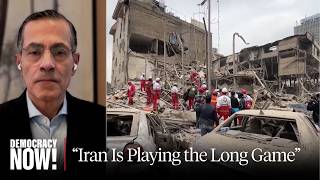
"Iran Is Playing the Long Game": What to Expect from Protracted War in Middle East



Middle East Crossroads: Is Turkey the next target? | Exclusive with Prof. Vali Nasr