Is a US-Iran war inevitable or can it be avoided? | Karan Thapar Live
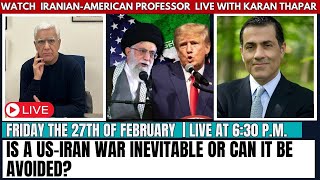
Johns Hopkins professor Vali Nasr tells Karan Thapar that a U.S. attack on Iran is highly likely and would be large-scale, not limited. Iran views uranium enrichment as a sovereign right and is prepared for a long conflict. Trump's negotiators lack technical expertise and offer no substantive concessions.
Chapters
Hi, I'm Karan Thapar. Over the last few years, I hope you've been watching my program The Interview on The Wire. During that period, I've interviewed doctors, politicians, businessmen, scientists, authors, and even the occasional Nobel laureate. For me, it's been exciting. I hope it's been enjoyable for you. But these, as you know, are tough times, and if this program is going to remain bold, independent, and sometimes even defiant, then I think we need your support. At the end of the day, it's a truism, but editorial independence is best defended by the viewers. So if you would like this program to remain the way it is— forthright, outspoken, and interesting— then would you consider supporting us? All you have to do is to click on the description at the bottom. But more than anything else, I hope you will continue to watch The Interview. Your viewership means an awful lot to me. Hello and welcome to a special interview for The Wire. With war clouds over the Middle East, we examine the likelihood of a US-Iran war. Did yesterday's talks in Geneva achieve enough to avert military action, or is it still a credible possibility? Do we have clarity about President Trump's ultimate goals, Or are they unclear, flexible, and even changing? Is a compromise by Iran on nuclear enrichment possible, or is it unlikely? And if in the end it comes to war, could it be a prolonged conflict rather than a short, sharp attack? Those are the key issues I shall discuss today with the Majid Khaduri Professor of International Affairs and Middle East Studies at Johns Hopkins University and author of Iran's Grand Strategy: A Political History Vali Nasr. Professor Nasr, as you see the situation today, what would you say is the likelihood that the US would launch a major military attack on Iran?
I think the likelihood is quite high, uh, and if it comes to a, to a war with Iran, I do not think it would be short, uh, um, you know, precise strikes, largely because that would leave in place Iran's ability to retaliate, which it has signaled that it would. So it makes sense that if the United States is going to start a war with Iran, it would try to take away Iran's ability to retaliate, which means that it will be a much larger war. But even then, the United States is not able to guarantee 100% that Iran will not hit back. So this can end up being a messy and catastrophic war in many ways for for Iran and also for Persian Gulf and potentially for America.
I'll come to the sort of war that might happen in a moment's time. Let's first talk about the likelihood of the war happening at all. Yesterday, as you know, talks were held in Geneva between Iran and the USA, and it was said by the Omani foreign minister that significant progress had been made. But this morning, the Iranian foreign minister has asked America to drop its excessive demands. I know also that technical talks will be held in Vienna next week, but how do you read these responses? Is this a sign that the prospect of war is receding? That's what the Omani foreign minister's statement seems to suggest. Or do you believe war remains a credible possibility, and this talk about excessive demands by the Iranian foreign minister suggests that there are serious differences between both sides?
I mean, first of all, I don't think Iran believes the United States is at all serious about diplomacy. I mean, after all, when the United States bombed Iran's nuclear sites in June of 2025, President Trump said that Iran's program was obliterated, by which he really meant that Iranians had nothing to really negotiate over. They were no longer enriching their— yes, they may have a little bit here and there, and but they really cannot do much with it. In fact, he was completely disinterested in continuing talks with Iran largely because, as I said, he didn't think there was anything to negotiate over. He then all of a sudden, you know, went to military option when there were protests in Iran. And the excuse then was that the United States was going to intervene to help regime change in Iran by protecting and encouraging the protesters to topple the Islamic Republic. He didn't intervene. That moment in Iran passed. And then all of a sudden he went back to, "I need a nuclear deal right now, urgently, otherwise I'm going to go to a massive war." So if you're sitting in Tehran, you're Ayatollah Khamenei, you would say that, you know, he's not serious about a nuclear deal. Either this whole diplomacy in Geneva is an off-ramp for him to back off of his weighing in into the protests. Or that regime change all along is the goal. And secondly, the Iranians have an experience of the president negotiating and bombing at the same time, which is what happened in June. And so they've gone, the Iranians have gone to Geneva with the expectation, with the hope that diplomacy will avert war. But at the same time, you know, the way the US is approaching these talks is not really negotiations. I mean, you know, he's sending two emissaries with no real diplomatic expertise or technical expertise for 2-hour, 3-hour meetings to solve a very major issue before they go into another meeting to solve another major issue between Russia and Ukraine. And at the same time, they've heard Steve Witkoff say that what the president is expecting from Iran is not a deal, it's capitulation, it's surrender. So they're basically going to Geneva not prepared to discuss, but essentially going there to hear the Iranians say that we accept all of your terms. And also, so far, the US hasn't even offered anything substantive to Iran that we know. All the US has offered Iran that if you give up everything, that is nuclear missiles and all of your proxies, We will not impose any new sanctions on you, not that we will take off sanctions. In other words, surrender in exchange for nothing. And so that's what the Iranian foreign minister means by excessive demands of the United States, that the US is unreasonable and unserious. Now, what the Omani foreign minister says is what diplomats would say, is that we're not going to admit that this has fallen apart. Both sides have agreed to continue talking, but there is no sense that this is going anywhere fast. It's not that the positions of the two sides are far apart. They are far apart in the sense that what US is asking is surrender, and what Iran is willing to give is not surrender.
Let's focus a little, Professor Nasr, on the negotiations that are happening. As you pointed out, the American side is being represented by Steve Witkoff and Jared Kushner, neither of whom have any real knowledge or experience of Iran, and neither of whom have technical knowledge required for the complex nuclear negotiations that must take place. Does that suggest that the American side is not serious about negotiations? This is a sort of put-up job to convince the world they're making every effort to talk?
Well, first of all, that's President Trump's approach to diplomacy. I mean, it's the same two people who are trying to negotiate something as complex as end of the war in Ukraine. And I think what President Trump wants is that the other side just agrees with them as they did, let's say, on the Gaza peace plan. And then the details doesn't matter or will be sorted out. I mean, when he stood up in Sharm el-Sheikh and said, I ended a 3,000-year conflict, aside from the hyperbole of that statement, what he was basically saying, the details of where the boundaries would be, what would be deployed, who will be the International Security Force. All of that is irrelevant. All that I care is that the two sides have in principle agreed that they would cease fire. And what he basically is looking for is Iran to come to Geneva and say, yes, we agree to give up our nuclear program completely. We agree to give up our missiles. We agree to give up our proxies. No details worked out at what day, at what time, how many centrifuges, you know, all the technical details that goes into any diplomatic negotiations. The US is not doing. And at the same time, you know, the Iranians do have an experience with this president, which is he walked away from a deal that the United States had signed and Iran had fully implemented. That's actually very important to underscore. It is not that Iran was in violation of the JCPOA, the 2015 deal. There are 11 accounts, 11 reports by the International Atomic Energy Agency saying that Iran is in compliance with all of its obligations under the deal before the United States left. And then he was negotiating with Iran last summer, and he gave a green light to Israel to attack Iran. You know, it was in the middle of the negotiation. They're negotiating over something. He says, you know what, I'm just going to take your leverage off the table. I'm going to bomb your leverage. Now you really have nothing to negotiate over. Come and talk. Come and just give up. Iranians are proceeding with the famous saying that you fool me once, shame on you. You fool me twice, shame on me. I mean, they are hugely distrustful of President Trump. And I think even if there had been an agreement yesterday, the Iranians would have thought that he's going to attack anyways, because there is no— or that he will sign a deal with Iran and not lift a single sanction. Or lift it, sign a deal with Iran once Iran has given up all of the things that Trump wants, then he's going to walk away from the deal again. I mean, that's the way the Iranians are approaching this, that they think the other side is completely untrustworthy and the other side is actually not even serious. So the Iranians believe that war is coming. I mean, in their mind, I think based on my conversations with everybody I know who knows at least something in Tehran is that Iranians are 90% ready for war. And they think, not that they're not serious about diplomacy, they don't think the US is serious about diplomacy.
There's a second wrinkle here. The first is the manner in which the negotiations are happening, the sort of people who are doing the negotiation, the amount of effort and time that is being spent trying to work out very difficult technical details. But the second wrinkle is Do the Iranians actually have clarity about what Trump wants? I noticed that in a leader on Wednesday, the Financial Times says ultimate goals are unclear as far as Trump is concerned. For a start, does he simply want Iran to curb nuclear ambitions, or is he actually looking for a wider regime surrender and change?
It's not clear. It's not clear. No, even on the nuclear issue, it's not clear. At one level, he says that I'm asking for zero enrichment. Then in his State of the Union, he says that the Iranians have never said the magic words that we don't want a nuclear weapon, which is actually not true. Iranians have been saying we don't want nuclear weapons for past 20 years. And there is a fatwa, there is a religious decree by the Supreme Leader banning nuclear weapons as un-Islamic. Now, you may say that doesn't mean anything, but he has said it. At least, you know, he has said it in the way in which is, in the mind of a religious figure in Iran, is the most definitive and most legal and the most binding way that he as the Supreme Leader of Iran could say it, which is, I put it in a religious decree. So then they, again, you know, if you're Iran, you would say, Is it you want zero enrichment, or is it that you don't want us to have a bomb? Even on that, it's not clear. And we talk about nuclear, then you shift to missiles and you shift to proxies. And so they're not even clear what he wants at that level. So does zero enrichment mean can we enrich at 1 or 2% for, let's say, cancer treatment isotopes that Iran does need? Or does it mean absolutely zero? Can we basically, you know, formulate a zero enrichment in a way in which both sides can claim that they had victory? You know, Iran will not enrich on its soil, but maybe be part of a consortium of countries around the Gulf that would enrich. Iran would enrich in Oman with Iranian centrifuges, not on its soil, but under international supervision in another Gulf country. I mean, all of these are things that you would sit down and negotiate for months before you got to an agreement that would then be binding on both sides. Now, Iranians believe it's all about regime change because this whole chapter started with the protests in Iran. Before that, Iran was on the back burner. The United States bombed its nuclear facilities. There was nothing urgent about Iran. There is nothing that has happened between some last summer and January that would put Iran's nuclear program back on the front foot. There has been no movement on their 60 kilograms, 400 kilograms of 60% enriched uranium. There is no evidence whatsoever of Iran enriching anything. There is no movement on the program. Yes, they're trying to rebuild the facilities, etc., but that's buildings. It's not— it's not— there's no evidence of enrichment. So why all of a sudden this urgency to go to a major war, assemble the largest armada since 2003 in the Persian Gulf to go to war with a country of 92 million? You potentially risk stability across a vast area in the Middle East over no change in circumstance since June. So the Iranians don't think that there is anything they can give Trump, you know, right now that he didn't establish in June.
Yesterday on the BBC, as the talks were happening between the Iranians and the Americans in Geneva, there was a lot of discussion and speculation about how far Iran might be prepared to go in terms of offering concessions regarding nuclear enrichment? One of the things that was being talked about was that anyway, Iran has not enriched even a gram over the last 8 months since the summer of last year. Maybe Iran would agree to a moratorium for 2, 3 years and then some limited enrichment thereafter. Do you think that could work for the Iranians if that was formally suggested and not just speculated about on TV?
No, I think those are the kinds of things the Iranians are offering the Americans. You see, I think perhaps Indians would understand the Iranian mentality more than many other nationalities. Iranians view the right to enrich as an inherent national sovereign right, and they do not want to give that up because that makes them an exception case under international law. According to the Non-Proliferation Treaty that they are a signatory to, they have a right to enrich in a civilian program at civilian levels. And so the Iranians absolutely reject to be basically denied a fundamental international right. So for Iran, it's not a question of whether they would enrich for 1 or 2 or 3 years or enrich as part of a consortium outside. They want to retain that right. And the Americans are not sort of— are not acceding to that. The Americans want basically to say that Iran accepts that it will not enrich at all. And as a result, they want Iran to accept an exception case under an international treaty that is signed. And there are many in Iran who say that if that's going to be imposed on us, let's leave NPT. Why are we in this treaty at all? I mean, if you're inside of a treaty which technically prevents you from proliferation and prevents you from building a bomb, then you are also given certain rights under that treaty. So Iranians don't want to accept all the duties and responsibilities of the Non-Proliferation Treaty, but not be given its rights. And that would make Iran a case of one under international law. And no country with any kind of self-pride and the kind of, you know, view of national integrity would actually accept that. No leader of Iran would accept that.
Yesterday, forgive me, on the 24th, Mahdi Takht Ravanchi, Iran's Deputy Foreign Minister, said the following to Reuters, and I want to ask what you make of his statement in the background of what we've been discussing. He said, we are ready to reach an agreement as soon as possible. We will do whatever it takes to make this happen. It's that last sentence that intrigues me. We will do whatever it takes to make this happen. How do you interpret that comment? To many, it was suggestive of a prima facie desire to make a deal. But I noticed that you also believe that the Iranians believe this is just a charade, these talks. Trump is not looking to make a sensible, equitable deal. So how do you interpret Takht Ravanchi's comments?
No, no. I think Takht Ravanchi is saying what is Iran's position, that Iran really wants to make a deal. And they actually are saying it publicly to later on also not be blamed for when the war comes, that it was Iran that was not ready to negotiate in earnest. And aside from the deputy foreign minister, the foreign minister said in an interview before the Geneva meeting that Iran is showing incredible amount of flexibility in the talks, which means that we have gone beyond our previous red lines. But then yet this morning he says that we obviously haven't reached an agreement because despite the flexibility, the US is not really— is asking for the kinds of concessions and surrender that we cannot contemplate. So all kinds of formulas like the one you just mentioned, Karan, that they would basically say because of the damage to our sites, we're not currently enriching. And Iran could actually even say something like, it's going to take us 4 or 5 years to rebuild our nuclear sites. So for the next 5 years, we will not be enriching, for instance. And after that, as I said, we might enrich up to 1 to 2% for medical isotopes in this small reactor at Tehran University, which is a research reactor they were given during the time of the Shah for production of medical production. And then, you know, we're going to join this consortium in the Middle East with Saudi Arabia, Oman, etc., where we will jointly run a civilian nuclear program under international supervision. All of these are feasible, but the Americans are just not biting on any solution other than we want to come out of this meeting declaring that Iran has agreed to zero enrichment without any details. And the Iranians won't accept that because that is basically like coming out of a meeting as if you're Japan in 1945. They don't see themselves in that situation. It may be foolish of them. I'm not saying that this is necessarily what they should be doing. And I'm not privy to what exactly was said, but I can say that they are flexible based on where they were before. They're willing to give a lot of concessions. Including concessions that they have leaked that they would have never contemplated before, that they would like to have the United States invest in Iran's oil and gas industry, for instance, as not just sanctions lifting, but actually entry of the United States, particularly in the energy sector, which is so important to President Trump. And that's also a flexibility based on what they would have accepted previously. But we're not close to a deal largely, uh, because Iranian flexibility is still not matching what American demand is.
I therefore see why you believe that the likelihood of a war is probably unavoidable, that there will be a war, it's just a question of when. In that case, let me ask you, how will the Ayatollah regime respond if or when Iran is attacked by US forces. In a piece that you wrote for the Financial Times on the 20th, you said, and I'm quoting you, this time Iran is preparing for a long war, a drawn-out and costly conflict that will affect US allies and interests across the region. What do you envisage Iran might do in response if they're attacked?
Well, uh, based on the indication there is, and at least from what I understand they have conveyed even to the Gulf countries, is they will not do a symbolic attack, a symbolic response like they did when General Soleimani was killed a few years back when they launched missiles at an empty building on a base in Iraq, or the way in which they responded to the June attack on their nuclear facilities when they hit empty buildings on the American base in Qatar. That this time they need to make President Trump realize that there will be costs to going to war, that wars will not be like Venezuela or like June in Iran, that, you know, you could just go in and out of war without any American casualties or costs. Because if that's the impression the US gets, it's going to keep doing it every few months. And ultimately, this regime's back is to the wall. Its population are rising up, and in the mind of the regime, the US and Israel have a lot to do with that uprising. And also it's being threatened by war from the outside. There is an economic chokehold around the neck of the Islamic Republic. There is no diplomatic way out of this, as we've been discussing. So the only way that Iran can change its fortunes and make the United States calculate the way it approaches Iran differently is through what comes in a war. I mean, when countries go to short-term wars or long-term wars, It's not always to catch territory or to punish. It's also to change the other side's calculations, right? So this kind of balance of power and calculation that exists before the war, Iran thinks should be after the war. And yes, Iran will suffer. In the mind of the Supreme Leader, Iran will suffer immensely, but it will come out of this in a way that the US is going to say it's not just easy to hit this country. So what can they do? They could attack varieties of elements in the supply chain of energy in a way to force energy prices much, much higher for the next 2, 3 months, which would impact midterm elections in America, would impact inflation in Europe, would impact many countries around the world. So if they hit tankers, if they hit actually depending on the ferocity and level of the war, actually hit oil exploration facilities in Saudi Arabia, in UAE, gas exploration in Qatar, in addition to closing the Straits of Hormuz, they could cripple global energy supplies. And they have that capability. They're sitting right on top of the Gulf. It's very difficult for the United States to snuff that out successfully. And they can actually also do something more daring, which is directly attack the United States and its interests, you know, try to attack a ship, try to attack bases in the Gulf, but also across the Middle East. They could also attack Israel at the same time. And so in a way, the Iranians, I think, although they may be bluffing, but I have a sense that they are not because they realize that they're now caught in a trap from which they cannot come out, as I said, unless they make the United States think about this differently, is that they need to draw blood. By blood, I don't mean necessarily blood. I mean like draw at a cost. And also, unfortunately for the region, there is very difficult to see how the economies of the Gulf will not be collateral damage here. In a sense, both physically, but in terms of if the shadow of instability comes over this region, then a lot of direct foreign investment, a lot of services, a lot of economic activity that requires peace and stability will not be there. In a very simple way, if somebody wants to go to America, to India from America, other than direct flights by Air India, you would say that don't fly the Gulf airlines anymore because for the next 2-3 weeks you may get stuck. Go with something else. And just on that point, it would be a damage to the entire airline services industry in the Gulf. And then there is banking, there's varieties of other services. And then you would say in the long term, would American technology companies be building this supply chain of AI etc., in over a region, in a region that you have potential instability there. Now, the Gulf is very clear in its body language and in the way in which it's very aggressively trying to avoid war, is that it is not convinced that the United States objectives in this war are clear, that the United States is able to do a clean, quick war and that the United States is able to protect the region from collateral damage to the region. I mean, they just don't have the confidence that they will not be bloodied also in this war. And I think they, as much as they dislike the Islamic Republic and fear the Islamic Republic, they fear the consequences of war and the consequences of, let's say, what's a day after a war, if the regime survives, if the regime collapses. They fear those scenarios more than they fear the Islamic Republic. I mean, it's the devil that they know is better than the devil that they don't know. And their body language, their response to this moment tells me that, you know, the kind of discussion we have in America, that this is going to be easy, neat, and clean, etc., is not believed at the highest levels in the region.
Let me pick up on the point you've made by quoting once again from your Financial Times article, because I think you've made it very effectively there. You say Tehran may calculate that the longer the war lasts and the higher the stakes become, the US will be more likely to look for a way to end it. Negotiations then could yield a different and more desirable result for Iran than they will today. This is a particularly intriguing new point for an Indian audience. Could you explain? Iran believes that a long war where costs are paid by everyone, where blood, to use your phrase, is paid on both sides, would actually yield a better outcome for Iran than a negotiation today?
Yes, because I think this is in some ways a game of chess. If your opponent is banking on clean and quick, the way you turn the tables on them and basically frustrate their calculation is to make the game not clean and quick, but messy and long. And so, you know, this is a lesson that they learned also in the June war. So, you know, Israel went for a knockout punch to Iran. Expectation was that you kill 30 military commanders, top military commanders of any military in the world, that the military is not able to fight, that the Iranian public would rise up and the Islamic Republic would collapse very quickly. What Israelis did not expect was 2 weeks of having to deal with Iranian missiles. And even though the damage Israel did to Iran was much more than the damage Iran did to Israel, but the damage Iran did to Israel was quite significant. They did hit neighborhoods in Haifa and Tel Aviv that could have, with a little bit of a difference, have exacted a lot more cost. And in the end, who is it that asked for a ceasefire? It was not Iran. It was the United States that asked for ceasefire. And the Iranians think that either the U.S. was getting worried that the balance was shifting in the war, that Israel would not be able to sustain longer than 2 weeks. It was going to run out of air defense interceptors, etc. Or that it's Israel that asked the United States to to end the war. But Iranians know that they didn't ask. So the calculations changed because that war was not a 2-day war or a 3-day war, it became a 12-day war. And now I think what they want to establish for President Trump is that it's going to be not short and clean, it's going to be long and messy. And then, you know, if 6 days into the war when Iran has shown that it can disrupt energy supplies, attack bases, etc., the U.S. may ask for a ceasefire again. And this time when they go to Geneva, the U.S. will think differently about the success of negotiations. In other words, just like President Trump thinks that military strike on Iran may soften Iran's position in Geneva, Iran could calculate that drawing blood from the United States in a war will soften U.S.'s position in Geneva as well. So although this can lead to miscalculation, I mean, you know, once you enter a war, whoever does it, whatever steps you take, you cannot control the outcome because the other side has a say, and all manner of unexpected things can happen. So it's a huge gamble if the United States starts a war. Maybe they will succeed, maybe are— my cautions are ill-informed and like Venezuela, it becomes very, very easy. But the Iranians are indicating that they basically want to fight. So you have to take that into consideration. It's also possible that the war can get out of hand. And you look around the region, nobody thinks that the risk of escalation is not there, that the risk of mess is not there. And that is an indication that everybody's holding their breath, hoping for the best, but preparing for the worst.
There are some reports in Western papers, I should add denied by the White House, that General Dan Cain, the chairman of the US Chiefs of Staff, has actually warned Trump that a prolonged conflict with Iran will not be easy, it could be messy, the outcome may not be certain. Do you believe that in fact Trump is at all likely to pay attention to that sort of warnings, assuming that they have been given and these reports are correct?
Well, I'm sure that the reports are correct. Any general who would not warn the president of the cost and the potentialities of what may go wrong is not worth that position. I mean, that's part of war planning. You would tell the president, this is what we can do and this is what might happen. And then it's up to the president to weigh that against other things. I mean, the reality of it is Trump is also listening to other voices and he also has domestic political calculations that are at play, both for and against the war. And, you know, for the first time, in the United States since I remember, we're arriving at this point not after a prolonged period of policy debate around a clear objective of why is it, what is our issue with a country and why do we need to use war to solve that issue and why war and this kind of a war is the best way of doing it and have all agencies of government debate and build a policy So you eventually arrive at a national consensus, if you would, around this issue. Then you talk to the other political party and you talk to the press, you talk to your allies, you begin to socialize and advertise your policy. How did we arrive at this point, Karam? All of a sudden the president said, I'm going to intervene to support the protesters. All of a sudden he said, we're sending a huge armada to the Middle East because the Iranians need to sign this nuclear deal. He has not outlined what is the objective. He has not said why is it urgent to go to war at this point in time. The policy is not made by the system. The policy is made by one man and what goes on is in his head. And then whatever decision at any time he makes, he pushes it down. It's kind of like, we want to take over Greenland. This is not something that the American system as a whole debated and said, why do we need to take over Greenland? And these are the costs, these are the issues. He first declares we want to get Greenland, and then the costs arrive afterwards in the form of a European rebellion, Denmark saying no, you know, Congress saying no. And then he sort of backed off of that for now, at least. So, you know, this— I cannot tell you that how he processes what General Cain told him, whether he dismisses it or that's the reason why he hasn't attacked until now, why he didn't attack when there was only one aircraft carrier in the region. Will he wait till there's two aircraft carriers? I don't know. But what is opaque to everybody, even in Washington where I'm sitting, is that nobody knows because policymaking now is not systemic. Policymaking is made in one man's head, and then this— the system is told, go do it. And then when they're told to go do it, they say, yes, sir, but by the way, these are the costs. And then he would think whether he wants to pursue or not. And so we are here at this moment in a very haphazard way. The military is doing what it's been told to do, which is amass this force, come up with a war plan, with a bombing plan. But the policy side of this is completely absent. So we still don't know what's the objective, why we're doing this, and there are absolutely no plans for what happens afterwards. What are America's plans if the regime falls? What are America's plans if the regime survives? None. There's absolutely no indication that there's any thinking gone into that.
So this is the outcome of an extremely powerful president with an extremely powerful army who acts instinctively and impetuously without thinking through the options and the goals that he's facing and without worrying about the consequences.
Yes, this is more like the way medieval kings used to act. Than a modern nation-state like the United States with sort of a vast network of institutions, or any modern state. This is basically one man's decision-making based on his instincts and his reading and what he thinks he wants, but it doesn't reflect the policy process. So when we look around for comparing this to 2003, or we look for, you know, tea leaves to read this, where our analysis would fall short is that this is nothing like 2003 unless you're just counting American soldiers and air power. But, you know, the idea to go after Saddam in '91, in 2003, was based on first the United States defining an objective whether you agree with the objective or not, or the reasoning for it, but there was an objective that we need to do this because. And then, okay, when the because was agreed on, now why war is the best option for getting that because? And then if war is the option, how do we do the war? And then, you know, in the process you create a consensus among all the different elements of the US government around this policy. And then, as I said, you bring the other political party on board, you bring the media, the intellectual class, the political class, you talk to Europeans, you talk to regional allies, you basically build a consensus as to why this is done, aside from whether it was wise or not. But then you could see the momentum of the system getting you to that point. This is not how this happened. We went from zero interest in Iran to an absolute urgent major war within the span of 40 days. And the reason shifted from we're going to go support the protesters to now we want a nuclear deal yesterday.
How do the Iranian people view the situation they face? Do you have any sense of what their response to the unknown is? Because there are so many questions hanging in the air to which they don't know the answer. I can't think of another word that sums up the situation they face. They just don't know what's going to happen.
Absolutely. I mean, I would say the Iranian people right now are petrified, traumatized, and sort of battered for a number of reasons. I mean, 6 months ago they were in a war with Israel and the United States, which already was a massive shock to the country. Then they had these major protests which the government suppressed brutally and with killing large numbers of Iranians, which also was a massive shock to the population. It already was a sense of anger, sorrow, despondency that took over the country. And before they could even catch their breath from the protest and its suppression, that now they're looking at a massive war, which this time they're being told by both President Trump and by their own leaders that it's going to be very destructive. When President Trump says bad things are going to happen to that country, And when they see their own government preparing for a massive war, you know, it creates a sense of resignation and sorrow and despondency. And, you know, how they will react when the war starts, we'll see. But right now they are anxious and they're petrified, as well as also still dealing with the wounds of what happened in the clash with the government and with the suppression just less, almost just a month ago.
Some of Trump's supporters believe that Iran will cave in if Trump can successfully kill the top leadership, if he can find a way of taking them out, as the Israelis last year in summer took out important generals and nuclear scientists. Do you believe there's some truth to that, or is it much more likely that there will be a rally around the flag which will give the regime the determination and the strength to carry on fighting?
Well, first of all, the question is, can they find to kill him? I mean, you know, the Israelis tried, but they didn't find him in June. And, you know, the element of surprise that allowed Israel to kill 30 Revolutionary Guard commanders is not going to work this time. You know, you play that card once. Yes, they could kill a lot of people, and maybe, and if they kill the Supreme Leader himself, I think yes, that could be a game changer. You know, it depends on then how does the system react. Does it put down its arms or does it actually react, does it lash out to the death of Khamenei? And then, you know, I think the Iranian public's reaction to the war will greatly depend on what happens during the course of the war. You know, there is no love lost among majority of Iranians with this, with the Islamic Republic, particularly after the brutal suppression in January. But the Iranians are worried about their country. So the rally to the flag does not mean rally to the regime. The Iranians, I think, would react in ways that would protect their country. So if they think an uprising will end the war faster, and there is an opportunity to, you know, maybe create a new political situation in Iran that would end the war, perhaps they would do that. On the other hand, if they see the war relentlessly destroying their country, then the kind of reaction they would have or no reaction would reflect that moment. So yes, they're a player in here, but they're a player that is, that doesn't have an active card to play. And you know, there is no one political organization in Iran that we can, you know, there's no political party. Let's say if we went to pre-partition days in India, we would say, okay, there is the Congress Party. You know, any kind of a national reaction to anything, you can read it by how that party will decide and call on people to do certain things. There is no equivalent of that in Iran. There is no political party, political organization inside the country that could basically take a very decisive position, which then would decide how Iranians would react. So there is a scenario in which different Iranians may react very differently to this based on their political beliefs, based on the region, based on where the bombs land. You know, in other words, there are scenarios in which you could see a mass uprising against the regime. There are scenarios in which you can imagine that the population will, like in June, will not do anything in particular. It all depends on what the war does. But I think if the Supreme Leader is taken out, of course, a change of a singularly important figure like him that has ruled Iran 36 years, that he's the glue that keeps the system together, basically opens Iran for a whole new succession process in the middle of the war. And that changes some fundamental rules of the game.
Let me end, Professor Nasr, by putting the opposite to you. After the enormous American buildup in the Gulf, after all his rhetoric and talk, can Trump back off without a substantial win to his credit? In a sense, is he not also boxed in by his own rhetoric and by his own actions?
At some level, yes. And that's one very strong argument as to why he will likely go to war. But a contrafactual to that is that he's backed off many other things, including Greenland, which we discussed, that he came on really strong and then backed off in front of— before European and Danish resistance. Now, you know, if you looked at his State of the Union, he only talked about Iran maybe a total of 4 minutes out of 1 hour and 48 minutes. Of speech, which means that he made Iran almost like a non-issue in the middle of so much else that he talked about for a much longer period of time. There is also a theory that, you know, that this kind of focus on the war is very much a Washington elite thing. It's not really Middle America, little man's issue. And that if he doesn't go to war, you know, the news cycle will move on within 24 hours to the next big any crisis that emerges. If he decides he doesn't want to do it, he's not a man that would be encumbered by loss of face in that sense. But on the other hand, you know, it is also compelling to say that he wants to appear tougher than the Democrats. He may also calculate mistakenly that Iranians need to be slapped around a few more times before they yield more in Geneva. And it may go into his head that it is possible to have a short, clean war and that he's not starting a long war. And he may dismiss that's General Keynes' advice and say, you know, I'm going to do this, perhaps even signal to Iran that I'm going to do this, but don't react. But then, you know, then we're in a different space. then he has to be— he's subject to how the Iranians decide they're going to react.
Professor Nasr, I thank you for the time you've given me. I thank you for your analysis and understanding of the situation. All I'll add is that the situation as you describe it is not just depressing and distressing, it's also potentially very worrying and frightening.
Exactly.
Thank you very much indeed. Take care, stay safe.
You as well. Thank you. Thanks for inviting me.
Hi, I'm Karan Thapar. Over the last few years, I hope you've been watching my program The Interview on The Wire. During that period, I've interviewed doctors, politicians, businessmen, scientists, authors, and even the occasional Nobel laureate. For me, it's been exciting. I hope it's been enjoyable for you. But these, as you know, are tough times, and if this program is going to remain bold, independent, and sometimes even defiant, then I think we need your support. At the end of the day, it's a truism, but editorial independence is best defended by the viewers. So if you would like this program to remain the way it is— forthright, outspoken, and interesting— then would you consider supporting us? All you have to do is to click on the description at the bottom. But more than anything else, I hope you will continue to watch the interview. Your viewership means an awful lot to me.
More from Vali
Trump has no easy solution for Iran's chokehold on global markets, says Vali Nasr
Why This War Could Be a “Turning Point” for the Global Order - Vali Nasr | Endgame #261
Iran Is Playing the Long Game to Exhaust the U.S. — So Far It’s Working | Vali Nasr
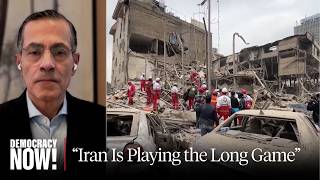
"Iran Is Playing the Long Game": What to Expect from Protracted War in Middle East
Middle East Crossroads: Is Turkey the next target? | Exclusive with Prof. Vali Nasr