Is War With Iran Looming? Vali Nasr & Joshua Landis
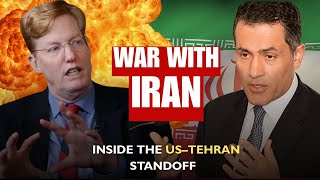
In this hour‑long televised panel hosted by Tom Switzer, senior Middle‑East scholars Vali Nasr and Joshua Landis assess the likelihood of a U.S.–Iran war and the broader reshaping of regional power after a series of crises. They argue that both Washington and Tehran are reluctant to fight, but deep mistrust—especially Iran’s skepticism that any U.S. concession would be permanent—makes a comprehensive nuclear‑missile‑proxy deal unlikely. The United States is pressing for a total disarmament of Iran’s missiles, nuclear program and proxy networks, a demand the Iranians view as a surrender. Nasr notes Iran’s weakened military posture after 2023‑24 U.S.–Israeli strikes, but stresses that its missile arsenal remains a potent deterrent. The panel examines how the weakening of Iran’s “Shia Crescent” is prompting Sunni Gulf states (Saudi Arabia, UAE, Turkey) to prioritize economic stability over confrontation, while Israel pushes for a tougher line. Landis highlights the lack of a unified Iranian opposition, the marginal role of ex‑monarchist groups, and the risk that any regime‑change attempt could trigger a protracted civil war. Both scholars warn that a U.S. war on Iran would be costly, as Iran can threaten Gulf oil infrastructure and could provoke a wider Sunni‑Shia realignment, including a possible resurgence of ISIS. They also discuss the post‑Assad security architecture: a tentative Sunni‑led coalition among Saudi Arabia, Turkey, and a more pragmatic Israel, contrasted with Iran’s diminishing influence. The conversation concludes with speculation on Trump’s domestic political constraints, the competing advice from Gulf allies versus Israel, and the uncertain future of Iran’s regional role.
Chapters
If the Iranians and Americans can't reach a new deal, is war in the Persian Gulf looming?
But if the US insists on Iran surrendering, I don't think the Iranian government would do it, largely again because they don't trust that that would be the end. Would President Trump stop there or then try to go after other issues and then ultimately go after the regime itself?
If Iran were to fall apart and there would be civil strife after some sort of regime change or collapse of this regime, then that would seriously weaken Shiites for a long time to come. But if it doesn't, the Shiites are not over.
Hello and welcome, I'm Tom Switzer. Now Iran, according to Washington, has sought to restart key elements of its nuclear program. And rapidly expand its ballistic missile capabilities. Tehran also continues to support its militia proxies, including Hamas, Hezbollah, and the Houthis. All this as the Iranian regime remains shaken by massive protests in January, weakened by US and Israeli strikes last summer, and a major American military buildup in the region. This is Trump's beautiful armada off Iran's shores. So is war imminent? What now for Iran's Shia militias in their standoff not only with Israel, but also Saudi Arabia and the Sunni Gulf states? And for Syria, 14 months after the downfall of the Assad family dynasty, are we witnessing the resurgence of those Sunni jihadists known as Islamic State? And will Trump's MAGA base stomach another forever war in the Middle East? Let's turn to our panel. Vali Nasr is Professor of International Affairs and Middle East Studies at Johns Hopkins School of Advanced International Studies in Washington. He's also author of Iran's Grand Strategy: A Political History. And Joshua Landis is Director of the Center for Middle East Studies at the University at the University of Oklahoma and publisher of the blog Syria Comment. Vali Nasr and Josh Landis, two of the world's leading experts on Iran and Syria. Today on Switzerland. Vali, let's start with you. As you well know, US and Iranian negotiators are trying to reach a deal, not just on Tehran's nuclear program, but also on long-range missiles. Iran's proxies. Now, if Tehran refuses to meet President Trump's demands, and he says the consequences are very steep, if that happens, what do you think is likely to happen?
Well, I think both sides are hoping to avoid war. I think President Trump weighed in very aggressively when the protests were happening, suggested that he was going to intervene, started building the armada in the Persian Gulf in order to prepare for war. And since then, he's been backing away from war. He didn't intervene when the protesters were in the street and then narrowed the scope of a deal with Iran to focus first on missiles, proxies, and nuclear. But when they met, really the conversation was about nuclear. So, and the Iranians also don't want war. But the key question is, is there really a scope for a deal? And I don't see a big deal happening largely because the US is not able to really enter into a big deal as we're talking. Prime Minister Netanyahu is rushing to Washington to make sure that the US doesn't give too much at the table. And for the Iranian parts, they don't trust President Trump. It's not a question of the terms of the deal. The president and Iranians can arrive at any kind of a deal, but the Iranians don't trust that he will not attack them anyways, like either during negotiations or after negotiations, or actually that the United States will implement the points of a deal. And so the Iranians are skittish, the US is hoping for a deal, but I don't think beyond a very narrow agreement that would create a stalemate, there's much room for something bigger.
What about the argument that enrichment can't be on the program, enrichment of uranium? I mean, how much of a deal breaker is that?
It is a big deal breaker if it is put in a way that sounds like Iran has completely capitulated and surrenders. There are ways to go around that. For instance, that Iran would enrich as part of a regional consortium. So it wouldn't be enriching on its own soil, it would be enriching in one of the other Gulf countries. Technically, Iran is no longer enriching inside Iran. It would be enriching under some kind of an international supervision outside of Iran. And the US can also, both sides in other words, can claim victory. But if the US insists on Iran surrendering, I don't think the Iranian government would do it largely again, because they don't trust that that would be the end. Even if they gave up enrichment, would President Trump stop there or then try to go after other issues and then ultimately go after the regime itself?
Well, according to the Wall Street Journal, Vali Nasr, Iran has an estimated 2,000 mid-range ballistic missiles that can reach across the region. Why would Tehran ever surrender its missile arsenal when it's widely viewed as Iran's ultimate deterrent I don't think they would.
I think essentially what is on the table and what President Trump is asking and also what Israeli Prime Minister is asking the United States to ask of Iran is a total disarmament of Iran. In other words, give up your proxies, give up your missiles, and give up your nuclear leverage. And no country would do that, especially because it's not getting anything in return and it doesn't feel defeated. So, you know, if this is a demand for for Iran to essentially give up absolutely everything like Japan after World War II. I don't think the Iranians feel like that they need to do that. And also they're sending very powerful signals that they will not do that, even if it means going to war with the United States.
Let's bring Josh in here. Josh, it's well known that President Trump lacks patience. If things do spiral out of control and he's not satisfied with Iran's response to his requests, I mean, you can't rule out a long regional war. How much damage do you think Iran could cause?
Well, you know, I think that President Trump is going to discover that he doesn't have good possibilities in Iran. He thought when the demonstrators were on the street that they could be the boots on the ground and that perhaps he could encourage and wind up and exploit these demonstrators in order to have regime change in Iran. The problem today is that they've been largely cowed. It's not clear what he can do. He can't do a Venezuela and he can't do in Iraq. So he doesn't have a good quick in and out in Iran. And I think that's going to dissuade him Also, from a larger point of view, his allies are at sixes and sevens over whether there should be regime change in Iran because the Saudis and the Turks do not want it. They have very different point of view. They want stability. They're trying to get— the Saudis are trying to get their plan for the next decade in place, which requires economic growth. Turkey wants the same thing. They want stability. They do not want another Syria or another Iraq in their neighborhood that will send out millions of refugees. Turkey just had 4 million Syrian refugees. They're trying to send them home. They do not want Iranians coming, pouring into their country if there's regime change, possible civil war. So Saudi Arabia and Turkey and other Arab allies of the United States are saying, don't do this. The Israelis, of course, do. And they're pushing him because they would like to see regime change. They don't mind seeing Iran perhaps fall into civil war and broken into pieces or having a shah return, the son of the shah return. Either option for them would be better than this Islamic regime staying. So I think there's cross messages coming to President Trump, and that's going to dissuade him from taking any radical action.
Vali Nasr says that the rulers of the UAE, Saudi Arabia, and Turkey—these are the Sunni rivals of Shia Iran—they've cautioned Trump against massive strikes against Tehran, which sounds like a change in strategy because these Sunni countries have been historically very nervous about Shia Iran. But could you argue they're doing this because they see Iran as very weak after last summer's attacks by the Americans and the Israelis? This is a so-called 12-day day war?
Well, definitely Iran's weakening in Lebanon and Syria makes it a much less of a problem for the Arab world. I mean, they used to complain about Iran's role in the Levant, and now that is no longer the problem. But also, it is some time that they have decided that war with Iran does not serve their interests, as Josh said. That's why the Saudis went to China 2.5 years ago and made a deal with Iran to create some kind of a ceasefire, Houthis in Yemen. I think the Gulf countries, as Josh said, have an economic vision. They're spending trillions of dollars on AI technology, on trade, on creating supply chain of databases. None of this will work if there is missiles flying over the heads of, you know, these countries. And they no longer have confidence that the United States can actually knock Iran out with one punch, that the war would not drag on, that Iran would not hit oil facilities or hit them directly. And even if the regime in Iran were to collapse, they don't want to see a Syria, they don't want to see a chaos in the region because that will impact direct investment in the Gulf for decades to come. And so they are not sold on the fact that the United States actually has a solution for Iran. They see the escalation is actually putting them in danger. But I think there's also another factor, the diminishment of Iran in this region, the weakening of Iran, the fact that it's lost the argument that people used to make that Iran is in control of 4 Arab capitals just a while back. It no longer is. The diminishment of Iran has gone hand in hand with the rise of Israel as the uncontested military power in this region backed by the United States. And I think Turkey in particular, but also the Saudis now see a complete collapse of Iran, essentially putting them in a situation to be dealing with Israeli hegemony in a way that they don't want to. I mean, Saudis and the Turks don't want Iran to dominate. They don't want Israel to dominate. They're looking for a balance of power situation. So keeping Iran in the game is also important to a broader sense of stability for the region as a whole.
Well, this is very interesting, Josh.
I was going to say, if you're both right, just if you're both right, because remember, before October 7th, and you both wrote about this, Iran arguably stood at the height of its regional power. This is the so-called Shia Crescent, you know, stretching from Tehran through Iraq, which was now under Shia leadership after the fall of Saddam Hussein, Syria, Lebanon. You're both saying that this pursuit of regional hegemony through its militias That's beginning to unravel. So if this axis of resistance has dismantled, Josh, what does this mean for shifting alliances in the region?
Well, we've seen, you know, the old security architecture in the Middle East has collapsed. We saw that with the destruction of Hezbollah, the, the overturning of the Assad regime, and this axis of resistance that stretched, as you said, from Iran all the way over to Lebanon. Hezbollah has collapsed. And Israel came forward, as Vali said, as the sort of hegemon in the region and could bomb Syria at will, Lebanon, so forth. Now what you're seeing is a scramble to establish some new security architecture. And I think as Vali said, you're seeing Turkey, Saudi Arabia, Syria come together in a new rapprochement because Traditionally, Saudi and Turkey were competitors for who would lead the Sunni world, the Sunni Arab world. Today, they're cooperating in a way that they haven't done for a long time, not only to build Syria up, but also in, you know, Saudi Arabia has come into this new competition with the UAE. It's trying to steal the UAE's lunch in a sense with trade and so forth. And the UAE has gravitated towards Israel. Israel's attack on Qatar recently to kill the top PLO, the top, excuse me, Hamas negotiators there, I think scared the whole Gulf. And they realized we do not want an Israeli hegemon that's going to come and attack anybody at will. Now that Iran has been seriously weakened, we need to find some new alliance. And that's what we're seeing is this new alliance that's that's vertical, tying the Sunni powers together instead of the Shia crescent, as you said. And, and that's what we're seeing forming. And it's causing all kinds of new sort of iron filings, new alliances to be built around the Middle East. And Israel has moved out to Greece, it's UAE. So Washington has to, has to step very delicately through this new minefield because it doesn't want to alienate its Arab allies.
To the extent those trends continue, Vali, could you see Israel then being more isolated than it has been over the last decade or so?
Well, it all depends on how this unfolds. I mean, the picture that Josh laid out is really the big scramble for who will dominate the Middle East. The old order collapsed. After October 7th in the Gaza War, in the diminishment of Iran in the Levant, a new order has not taken its place. And in a way, Israel is actually behaving the way we think of every great power or rising power has had in history. In other words, it has a superior military capability. It sees no barriers in front of it. It wants total victory in Lebanon, in Syria, vis-à-vis the Palestinians and also vis-à-vis Iran. And it doesn't want negotiations basically to throw Iran a lifeline. It believes that this is a moment to basically do away with all its enemies. And then also it sees no barriers for asserting its control over the region. And yes, the rest of the region is organizing against Israel, but there are pockets like UAE, which actually are trying to use Israel in order to position themselves in their own rivalry with, For instance, Saudi Arabia. I think the challenge the United States faces is that the US will benefit from an order in the Middle East. And it faces a challenge of having to manage a declining Iran, manage its allies, but manage also the superpower that it has helped create. In other words, at some point, peace in the Gulf requires a deal between Saudi Arabia, UAE, Qatar, and Iran to hold. So there's no war in the Gulf. It requires some kind of understanding between Iran and the United States, but it also requires the United States to manage Israel's ambitions and its interest for total victory. And that's exactly where President Trump is right now sitting. So he's having these conversations with Iran. He's getting phone calls from the Gulf and from Ankara saying, don't go to war. We're going to facilitate talks. We're going to be in between. And then on, uh, next middle of this week, he's going to meet the Israeli prime minister who's flying to Washington ahead of schedule to exactly prevent this and to encourage that the US should not listen to these allies and should listen to Israel, uh, and its vision for asserting, um, its position and the way it sees a new security architecture in the region.
Where do Trump's priorities and interests lie here? Is it with the Saudis and the Sunni Gulf states, or is it with Israel vis-à-vis Iran? Because Israel is obviously more committed to taking a tougher line towards Iran, whereas, as we've been discussing, the Saudis are cautioning against any further military enhancement against Iran.
Josh, I think, I think the wild card here is the midterm elections that are coming up. And we just saw the New York Times, you know, today has a big story about how New Jersey representative in New Jersey, the pro-Israeli groups were trying to hurt the incumbent. And instead of getting the more pro-Israeli candidate in these elections, they got a pro-Palestinian candidate. And that sort of wild card, a lot of young Americans have turned off. There's the Mondani, if you will. New York mayor. New dispensation in American politics. So Trump is facing a rearguard action from his own MAGA people who have been disaffected by the fact that America's been too pro-Israel and given too much money. And we have to remember that another $4 billion were just given in the last bill that passed through Congress to Israel. So there's a lot of resistance. And I think President Trump understands that. He made peace with Memdoni and he reached out to them because I think he wants to get ahead of this. And so I think he's trying to manage Netanyahu in a way that will please his pro-Israeli donors, which are key to the Republican Party, but he's got to also keep young Americans on board who are pretty horrified about what's going on.
Okay. So notwithstanding Josh's sound observations there about the younger Americans and the MAGA movement's opposition to getting embroiled in wars that could spiral out of control, Vali, Trump would also be getting advice that Iran is severely weakened. As you well know, they've seen the collapse of the Assad regime in Syria. You've seen the humiliation of Hezbollah in Lebanon, the assassination of senior leaders such as Hassan Nasrallah, the US-Israeli attacks last northern summer, last June, an economy in freefall, large-scale protests just last month in January. Given all this, Trump is probably hearing that the Islamic Republic is facing its gravest crisis, and wouldn't it be a great victory for Trump if he helped bring down the regime? Vali?
I think, yeah, no, I agree with you. I think that's the way he thought, but then I think he's been increasingly getting intelligence and also advice from American allies that it's not going to be that easy. In other words, there's a danger of overreading into how weak Iran is. Yes, Iran is no longer a factor for the future of the Levant right now. So as Josh said, future of Syria is being decided between Saudi Arabia, Turkey, and Israel. Iran is not a player in Syria. But bringing down the regime or going to war with Iran is going to be costly. The United States can always destroy a country. The question is, how much damage is the United States willing to accept in the process of doing so? And I don't think, and President Trump has indicated that so far that he doesn't like body bags, that he likes wars that are nice and clean. And it's very clear that this war would not, could potentially be bloody. And that's exactly where the Iranian leverage is. So Iran is very weak, but because it can actually exact the cost in the Gulf, they have enough missiles to hit oil facilities across the Gulf, to hit American targets, And if your threshold for pain is very, very low, then the other side is not as weak as you think.
Well, Vali, you have written this in your writings. You quoted the Ayatollah, quote, "America is like a dog. If you back off, it will lunge at you. But if you lunge at it, it will recoil and back off." Well, I think that's exactly what the Iranians are testing.
I mean, within Iran, there is serious criticism of the Supreme Leader, although not said directly. That his weakness has invited the war. In other words, that when the United States killed the Iranian General Qassem Soleimani 3 years ago, that Iran's answer was symbolic. It hit empty buildings in Iraq. And when the leader of Hamas and then Hassan Nasrallah were killed, and then when the United States bombed Iran, that the Supreme Leader decided to react Symbolically, in other words, he didn't lunge at the United States. And this time, I think the danger is that the Iranians have come to the conclusion that, you know, it's now or never. You know, either if they show weakness, if they show that they're not going to hurt the United States, that then the US will surely attack them. And that's why before the negotiations started, they sent the drone over USS Abraham Lincoln fully well knowing the drone would be shot down. But it was a signal to the US that this is the kind of thing that could happen. Josh Landis.
If there's one lesson from the Syrian Civil War and the Syrian regime change is that it took 14 years for the Syrian opposition to coalesce around a leader. The Syrians were extremely leaderless in the beginning of the Arab Spring uprising. There were 1,500 different militias. America didn't know where to turn or who to turn to. And slowly, Ahmad al-Sharif emerged out of this and became a recognized national figure, and today has tremendous amount of revolutionary legitimacy because he was able to endure become the biggest militia, and finally take over. Hmm. In Iran, what we're seeing is that there is no leadership in the opposition, and Iranian opposition members are beginning to tear each other apart and vituperation and attacking each other, which is what we saw in Syria. It's gonna take a long time for Iranians to come together in some kind of some kind of coalition, and that gives this regime, in a sense, a reprieve.
Yeah, but I listen to the BBC World Service quite frequently, and I often hear young Iranians quoted talking about the restoration of the Iranian monarchy. That's through Reza Pahlavi, the exiled son of the late Shah Vali.
Yes, he's emerged, if you would, as a sort of a symbol of hope for Iran, but in reality, the monarchists have no ground game in Iraq. I mean, the point that Josh was making about Ahmad al-Sharif, Ahmad al-Sharif was fighting inside Syria. His militia grew in Idlib, in a corner of Syria. He conquered Syria essentially by fighting against the government forces. The young monarch, the Shah's son, does not have that kind of a ground game. You know, doing, protests outside of Iran, you know, suggests that he has popularity there. But ultimately, inside the country, you cannot serve as an alternative unless you have organization in the country and unless you are able to appeal to segments of this regime or the social base of this regime in a way that you would get defections from And none of that is the case. I mean, the vituperations, the animus that is out there is more divisive than unified, more alienating than unifying.
Okay. Now let's change tack and just refer to Syria and put the collapse of the Assad regime, this was 14 months ago now, let's put the collapse of the Assad regime in a broader historical frame. Now, Josh, as you well know, for centuries up until World War I, the Sunni Ottoman Empire, ran the show. Then you had the Sykes-Picot settlement in the 1920s following World War I. And then Syria, um, was, was led for the last 50 years by, uh, essentially, uh, an Iranian-backed Alaouite/Shia regime. I know these things are very complicated, but now for the first time in more than 50 years, it's a Sunni majority rule. So how significant is all of this, uh, going forward, Josh?
Well, it's very significant. And, you know, much of the violence that we've seen in the Middle East, in the Levant area, is because, first of all, it's a multiethnic, multireligious part of the Middle East. But secondly, and for our purposes, importantly, the colonial powers that occupied the Levant, the French in Lebanon and Syria, and the British in Iraq and Palestine, so forth. All gave the lion's share of power to minorities in that region. In Lebanon, it was the Christians. In Syria, it was the minorities with the Alawites rising to the top. And in Iraq, it was the Sunni Arabs. And of course, in Israel, it was the Jews. And, and what's happened, what you've seen over the last several decades is the majority population in each of these countries trying to overthrow those minorities. And that happened in Iraq when the United States swanned in 2003 and threw the Sunnis, the Sunni minority, 20% down to the bottom of society and catapulted the Shiites to the top. Terrible civil war broke out in order to consolidate that. And this Lebanese civil war was the same as the Christians fell from power and the Muslims tried to take more power. And Syria, what seen is this Alawite minority, which had been favored under the French and, and managed to grab power after the French left, has now been displaced. And so it's a very bad day for minorities in general. They're very worried that the Islamists are going to oppress them. And, um, but that's today. You see this Sunni majority that have gained power and have just recently destroyed the Kurdish autonomous region, attacked the Druze, and attacked the Alawites. And all of them are quaking in their boots today because Sadr is victorious. And that is music to the ears of both Saudi Arabia and Turkey, who are trying to step in, consolidate, help to stabilize. And the United States has put its shoulder to the wheel as well and favored and switched from backing the Kurds as it used to do with the SDF and now backing Shaddaa. And so that's why a new Syria is arising and I think it's going to be a fairly stable Syria that the neighbors are going to invest in.
Okay, stable Syria, but we have seen evidence of the resurgence of the Islamic State through Nikki Haley.
They're suppressing the minorities. And that is is a recipe for possible instability, but the minorities are 30% and this regime is going to get a lot of, I think, a lot of help from its neighbors, which is going to allow it to be rather mean to the minorities. I don't think so far, Schedat has been tiptoeing along in this sort of, a dual regime, much like Iran's, in which he has formed a parliament in order to reassure the more secular Syrians and the minorities that he could move towards some kind of representative government. But at the same time, every time he gives a speech like he did at the anniversary of his, in December, the anniversary of his takeover, he started his speech by quoting Abu Bakr, the first caliph after Muhammad died, and saying, you know, I will rule you so long as God— as you place your trust in me and God places his trust. So he quotes these caliphs, and that's music to the ears of many of his Salafist backers who want Sharia law and a caliphate, if you will. So he's speaking to both those groups, and he has to balance them.
And, uh, And meanwhile, you're seeing the resurgence of these Sunni jihadists like Islamic State. Vali, how worried is Tehran about the resurgence of Islamic State, which let's remember, Iran's Shia militia helped the Americans defeat the Islamic State 10 years ago?
I mean, that's a worry, not only in the Levant, but also in Afghanistan as a consequence. But I think what Josh laid out is the worry is that a successful Ahmad al-Sharif supported by Turkey and Saudi Arabia, and perhaps in some kind of an understanding with Israel, could be a threat to Shia positions in Lebanon and Iraq. And when you talk to the Iraqi Shias, they are really, really worried about what is Sunni-dominated Syria, where you're right, Islamic State could be reborn. But also in their view, the leader of, when they listen to Ahmad al-Sharif, they hear the part that Josh was talking about, which is much more Sunni chauvinist than the part that this is a world statesman. And so, you know, the Shia in the region are worried, the Arab Shia are worried that the gains that they made since 1979, but particularly since 2003 with the changes in Iraq and then under Hezbollah in Lebanon could be unraveled And what worries them about an American war on Iran, and if Iran is really broken down, is that then they are left alone in a sea of Sunnis where they'll be at the mercy of Turkey and Saudi Arabia and Israel. And Schara could very easily, once it's settled in Syria, begin meddling in Lebanon and meddling in Iraq. I mean, I've heard Lebanese Shia say that part of the reason they don't want to disarm It's not about Israel, it's because they're worried that, uh, Schara's fighters will show up in southern Lebanon pretty soon. If there's a civil war, that Syria would meddle in Lebanon again. So, so I think the regional ramification of this is pretty big. And, and when Iran looks at the region, it sees Saudi Arabia and Turkey, Israel and the United States all basically converging on restoring Sunni power in the Levant. Levant, and that ultimately could come at the same time that they're asking for the disarmament of Hezbollah and are pushing for Nouriel Maliki, which is a sort of the more Shia chauvinist political figure, not to become the prime minister of Iraq. So for Arab Shia Iran aside, it's a great worry.
Sunni dominance in the Levant. Final word, Josh.
Well, part of the reason that Assad stayed in power for so long after the Arab Spring in 2011 is because if you take Lebanon, Syria, Iraq as 3 countries, there are more Shiite Arabs in those 3 countries put together than there are Sunni Arabs. And the Shiites from both sides helped Assad, whether it was Hezbollah or Ahl al-Haq and the other Shiite militias in Iraq as well as Iran. So Syria is really a swing state in this region. Now, of course, Saudi Arabia and Turkey are very powerful today and much more powerful than Iran. Turkey has a major army. Saudi Arabia has major dollars. That's going to help the Sunnis of Syria consolidate power. But it's not a foregone conclusion that the Sunnis are going to be dominant in the region because the Shiites, depending on what happens in Iran, if Iran were to fall apart and there would be civil strife after some sort of regime change or collapse of this regime, then And that would seriously weaken Shiites for a long time to come. But if it doesn't, the Shiites are not over. And they've been discriminated against for centuries. And that's part of the reason that you saw the emergence of an axis of resistance and why Iran did so well in the Arab countries, because Iran was offering the Shiites a day in the sun of potential equality, getting armed, standing up for themselves, no longer being the poor dirt farmers in every country that were that were discriminated against, and they've tasted that. They do not want to go back to being oppressed. And that's, that's, you know, that's where the challenge for this new Syrian regime could, can it possibly, can Ahmad al-Shaddaa back away from his Salafi training and his followers who are very Salafi and want to oppress the Shiites? And can he find some kind of understanding with his minorities. You know, I think it's a, I think that's a minority chance, but there are a lot of people who are saying you need to do this. So far, he hasn't found a way to find that, that dialogue. He's made statements to that effect, but he hasn't reached out to any of their leaders in a way that shows a sincere desire to bring them into the tent.
All these Sunni-Shia tensions against the backdrop of potentially another US Iran War. To be continued. Vali, Josh, always great to be with you. A pleasure. Thank you.
More from Vali

Trump has no easy solution for Iran's chokehold on global markets, says Vali Nasr

Why This War Could Be a “Turning Point” for the Global Order - Vali Nasr | Endgame #261
Iran Is Playing the Long Game to Exhaust the U.S. — So Far It’s Working | Vali Nasr
"Iran Is Playing the Long Game": What to Expect from Protracted War in Middle East



Middle East Crossroads: Is Turkey the next target? | Exclusive with Prof. Vali Nasr